One-year anniversary of the startup of former Xiaomi Intelligent Driving executives in the robotics field: Pragmatism, cost accounting, and the ten-thousand-hour embodied law
Text by | Fu Chong
Edited by | Su Jianxun
Fast and pragmatic - these are the work styles of Liu Fang, the former head of Xiaomi's intelligent driving division and the founder of Amiao Robotics. In September 2024, he founded Amiao. Just one year later, Amiao's first batch of robot products had already been deployed in customers' production lines.
According to exclusive information obtained by Intelligent Emergence, since 2025, Amiao has successively completed seed - round and angel - round financing. In the seed round, Anker Innovations and Xinglian Capital jointly led the investment, with Sunwoda and Xianfeng Changqing following. In the angel round, CICC Capital and Junshan Investment participated, and the old shareholder Xinglian Capital continued to increase its investment. The company has cumulatively completed nearly 200 million yuan in financing, and Yuefeng Capital served as the financial advisor for this round.
"In the domestic market, there are no technological secrets. Ultimately, it's about continuously meeting customer needs to form customer loyalty." Liu Fang told Intelligent Emergence.
Liu Fang joined Xiaomi during its startup phase in 2012. Over the past thirteen years, he has been in charge of multiple sectors, including the mobile phone system, AI hardware (such as the Xiaoai Speaker, translation devices, and in - car rear - view mirrors), and intelligent driving cars. He has experienced the "from 0 to 1" process of many businesses. These experiences have shaped his principles of emphasizing cost, focusing on customers, and pursuing ultimate efficiency.
Liu Fang has also brought this business mindset into his startup project, especially in the most core area of "robot application scenarios".
Before the establishment of Amiao, Liu Fang had conducted extensive market research. He found that when broken down, three criteria are very important: clear demand; significant improvement brought by AI technology; and a clear return on investment (ROI).
In Liu Fang's view, embodied intelligence in industrial scenarios is not about replacing automation. Instead, there is a demand for embodied intelligence in areas where labor costs are too high or where automation has difficulty performing well.
Although the monthly salary of Chinese workers is not high, it is difficult to recruit workers, and the turnover rate is high, resulting in a significant labor shortage. At the same time, as the number of small - volume, rapidly iterative orders on factory assembly lines increases, the cost of transforming the original automated production lines is high. Embodied intelligence, which has a faster learning speed, is more suitable for the production of new products.
Amiao's plan is to first tackle the processes in manufacturing industries such as 3C, including sorting, assembly, and inspection, which are "poorly handled by traditional assembly lines and have high labor costs".
Here's how the math works: In factories in the southeast coastal areas, a worker's monthly salary is six or seven thousand yuan, and the annual comprehensive cost is usually between 80,000 and 100,000 yuan. With a three - shift system, the annual cost of a single workstation can reach 200,000 to 300,000 yuan.
Based on this calculation, Liu Fang has set the unit price of Amiao's robots at around 200,000 yuan. As he understands it, if the pay - back period of the robots can be controlled within one to one and a half years, customers will consider it worthwhile to introduce embodied intelligence into the factory; once the pay - back period exceeds one and a half years, enterprises will hesitate.
Liu Fang, who was born in the 1980s, has a deeper understanding of the competition between giants and startups.
Some people say that in the end - game of AI, large companies will enter the market and capture all the market share. However, Liu Fang believes that the net profit margin of factory operations is not high, so technology giants may not be interested, leaving room for startups to survive.
In the long run, Liu Fang believes that the relocation of Chinese factory production capacity driven by geopolitics also brings future opportunities for the overseas expansion of domestic embodied intelligence.
Recently, Intelligent Emergence conducted an interview with Liu Fang. He shared his observations on the know - how of finding application scenarios for embodied intelligence and his views on future technology and industry development. The interview content has been organized by the author.
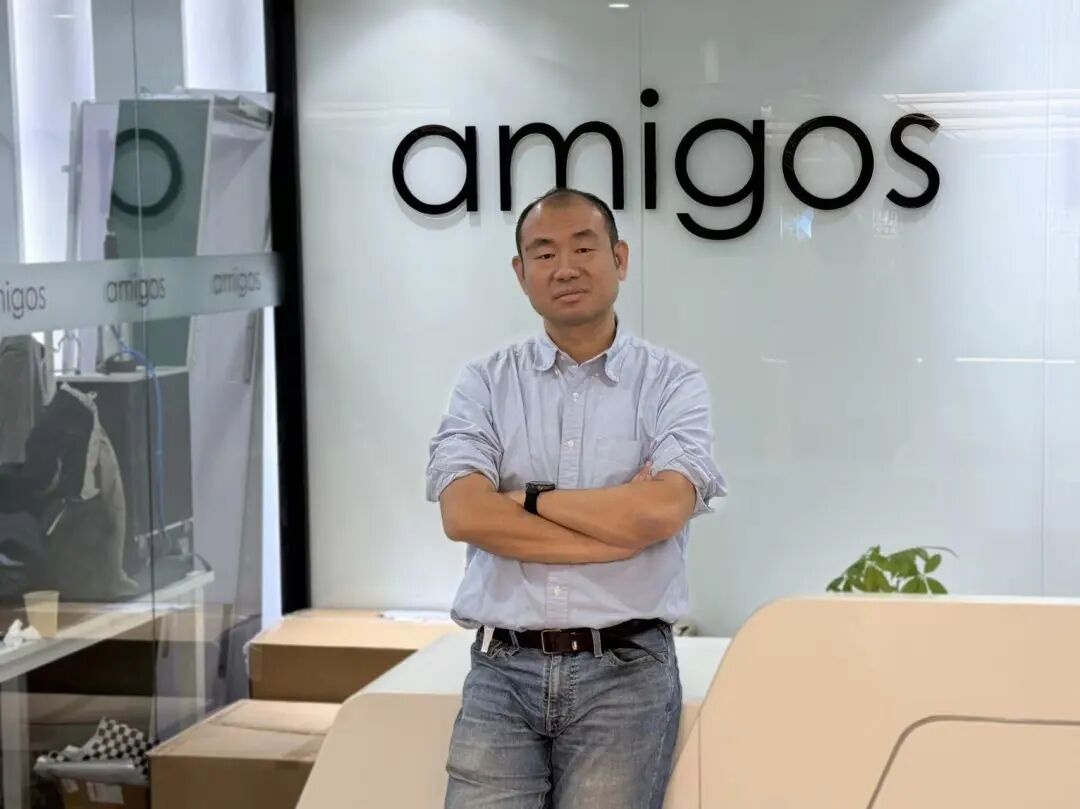
△ Liu Fang, the founder of Amiao. Photo provided by the interviewee
Considered the ToC market but saw no clear demand
Intelligent Emergence: Why did you choose the factory track for your embodied intelligence startup?
Liu Fang: Before starting my business last year, I spent a lot of time conducting market research. After looking around, I found that I had to find a scenario with clear demand and a calculable ROI (return on investment).
To be honest, everyone wants to do ToC business. It sounds good and has a large imagination space. However, after our research, we found that at this stage, neither the technology nor the cost allows it.
For example, in the household service scenario, there are elderly people in Chinese families, and the hourly wage for domestic helpers is not very high. Moreover, I always believe that in addition to technology, in human - machine interaction scenarios, users still have to overcome emotional and moral psychological barriers to truly accept robots.
For instance, when I traveled to Japan, I found that although Japan's high - end service industry is well - developed, in scenarios where efficiency and ROI are more important, Japanese restaurants use self - ordering machines instead of human staff. If customers are willing to pay more for good service, it should still be provided by humans.
In contrast, the logic in the industrial sector is very clear. The annual labor cost for a single workstation is about 100,000 yuan, and with a three - shift system, it's 300,000 yuan. If we can sell a robot for around 200,000 yuan to replace 2 - 2.5 workers, customers can recoup their investment in one to two years. This is why they can make a quick decision to purchase.
Intelligent Emergence: Among many industrial scenarios, why did you target the 3C electronics manufacturing industry? Liu Fang: We have several core criteria for screening scenarios: 1) Clear demand; 2) Significant improvement brought by AI technology; 3) A clear return on investment (ROI).
The 3C manufacturing industry is highly labor - intensive, and factories with tens of thousands of workers are common. The workstations are concentrated, which is convenient for deployment. Moreover, in this scenario, labor costs account for 12% - 15%, which is a significant expense. This gives them the ability and motivation to pay for transformation and upgrading.
Intelligent Emergence: You believe that the implementation of embodied intelligence in factory production - related scenarios for daily repetitive tasks will be achieved around the end of 2026, and it will take another one or two years for complex tasks. How did you calculate this time?
Liu Fang: It is mainly calculated based on the time required for data accumulation, deployment, debugging, and adaptation.
I believe that when the total data reaches tens of thousands of hours, robots can acquire the ability to handle complex tasks such as flexible assembly.
This year, our data collection plan can reach thousands of hours, and the goal for the end of next year is about ten thousand hours. This data volume is the basis for training embodied intelligence to perform tasks such as rigid assembly.
△ Amiao robots. Photo provided by the interviewee
Be a "fast learner" rather than a "jack - of - all - trades"
Intelligent Emergence: How do you think about the "technological barriers" of embodied intelligence?
Liu Fang: In China, there are no technological secrets. Ultimately, it's about how to solve actual customer problems and establish long - term associations with customer scenarios. Our barrier lies in making the right decisions as soon as possible.
Rather than creating a "general - purpose robot" that can do everything right out of the factory, we hope our robots are fast learners. Our core goal is to enable robots to "learn quickly" at a single workstation.
We established a data strategy focused on "first - person view videos" early on. Simply put, we ask workers to wear cameras while working, and robots learn human operations by watching these videos. This causes the least interference to workers' operations and can collect real - world work video data from a first - person perspective.
At Amiao, the ratio of video data to real - machine data is about 6:1. Videos account for the majority of our training data, supplemented by a small amount of real - machine data for calibration and fine - tuning.
It's like a new employee who can quickly take over a job by watching the operation videos of experienced workers and having a small amount of hands - on practice. Our current goal is to reduce the deployment time for a new workstation from several months to less than a week.
Intelligent Emergence: So, you don't pursue a more comprehensive robot ability right from the start?
Liu Fang: We believe in the data flywheel, but we don't blindly pursue "bigness". We are more convinced of the power when the flywheel starts to turn.
In the vertical field, embodied intelligence requires "specialization" and "speed" in specific problems. It should quickly get started with a job and learn through practice.
When a robot learns multiple jobs, it can form relatively general adaptability in the factory.
Intelligent Emergence: How does Amiao achieve the brain and model training of its robots? What special considerations does Amiao have regarding reinforcement learning?
Liu Fang: Major decision - making and path planning follow the VLA paradigm, while detailed strategies for the final steps follow reinforcement learning.
It's worth noting that our reinforcement learning mainly focuses on "real - machine reinforcement learning" rather than reinforcement learning in a simulated environment. Because simulation cannot accurately simulate force feedback and all the details of the real world.
Real - machine reinforcement learning is used to solve two problems: one is precise grasping and assembly in the last few millimeters; the other is the ability to self - correct when abnormalities occur.
For example, in simulation data, embodied intelligence can roughly understand how an action is performed, but in actual operation, it can better determine whether the action is in place. Therefore, having robots perform real - machine reinforcement learning in a real environment can help them master tasks more thoroughly.
Intelligent Emergence: Some people believe that the implementation of embodied intelligence in factory scenarios faces difficulties such as data security (difficulty in uploading customer data) and a lower tolerance for errors. How do you overcome these challenges?
Liu Fang: First of all, most of the factories we are currently cooperating with have a workforce of one or two thousand people. They can provide a certain amount of worker data, and they are more willing to cooperate than many super - large factories. That is to say, at present, our customers are still willing to open up their data to support cross - factory data collection for model training.
If in the future, after the basic model is trained, we receive orders from companies that require data confidentiality, we can then collect and supplement the specific factory data.
It should also be noted that the tolerance for errors in all embodied intelligence work scenarios is similar, not just in factories.
For example, milk tea shops always operate at a high - speed pace, which may even be faster than factories. However, the work space in factories is fixed, and the environmental structure is similar, which is more friendly to the entry of embodied intelligence at this stage.
Intelligent Emergence: How do you view more cutting - edge technologies, such as tactile sensors and world models?
Liu Fang: Embodied intelligence is a cutting - edge technological direction. At this stage, everyone is looking for stable and reliable technologies and engineering solutions.
The evolution of embodied intelligence itself is the development of cutting - edge technology. Currently, VLA, world models, and multi - modal sensors are all areas we are concerned about. In addition to pursuing advanced technologies themselves, we also attach great importance to the role of technology in solving our actual problems. For example, we are currently more concerned about the role of multi - modal sensors in enabling precise operations.
Intelligent Emergence: How is the current order and commercialization progress?
Liu Fang: We currently have three key accounts (KA customers). Our robot products have been running on the customers' factory production lines for a while, and they are also considering increasing their purchase volume. The overall progress is a bit faster than our previous expectations.
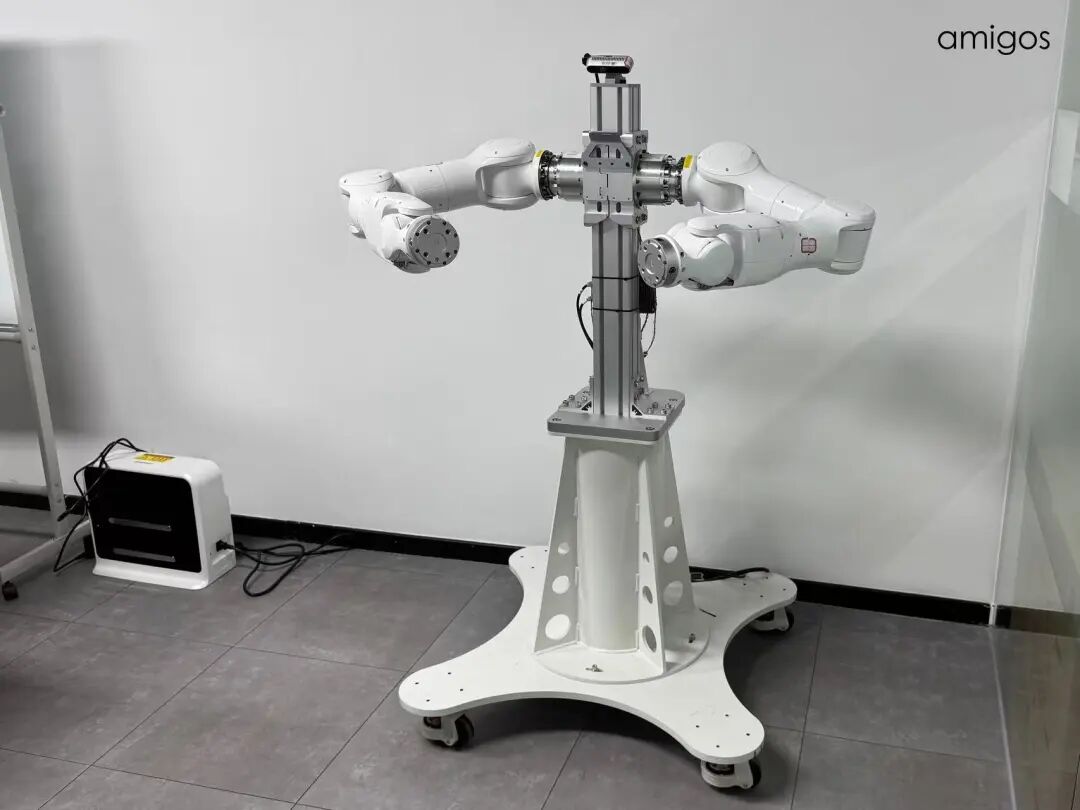
△ Amiao robots. Photo provided by the interviewee
Whether the embodied intelligence bubble will burst next year depends on the industry's commercial development
Intelligent Emergence: Why did you choose to start a business at this time and enter the field of embodied intelligence?
Liu Fang: Like the automotive industry, the robotics industry has a long - standing traditional foundation and has been developing linearly. However, the injection of AI has given intelligent driving the potential for exponential growth. I believe that embodied intelligence presents a similar definite opportunity.
In large companies, although you can clearly see the technological trends, the decision - making process may be more conservative. For those with ambitions in the industrial sector, they may miss opportunities. Therefore, I chose to start my own business.
Intelligent Emergence: Why did you name the company "Amiao"?
Liu Fang: The name is derived from the Spanish word "Amigos" (friends). We are a robotics company, and our ultimate vision is to make robots become human partners. The homophone of "Amiao" sounds nicer.
Intelligent Emergence: There are many young founders born in the 1990s or even the 1995s in the embodied intelligence industry. How do you feel as a "veteran"?
Liu Fang: (Laughs) I am indeed older, but it's not a disadvantage. Having experienced multiple technological waves has given me a deeper understanding and respect for industrial transformation.
My observation is that in each technological wave, the founders of the companies that can truly survive are those who have accumulated experience in previous technological waves. In complex fields that require industrial chain collaboration, the experience of the founders may be more important.
In recruiting technical personnel, we will hire young people who have directly learned the latest technologies to form a complementary team.
Intelligent Emergence: Does Amiao have any overseas expansion plans?
Liu Fang: Yes.
The motivation comes from two aspects: one is the demand of our customers for overseas production capacity relocation; the other is the better ROI in overseas markets.
For example, a Hungarian customer once said that they would consider an embodied intelligence robot with a price of no more than 150,000 euros, which is equivalent to about 1.5 million yuan.
As the world's largest manufacturing country, China has the most diverse demands and scenarios. Our approach is to polish our technology, product, and service capabilities in China. Initially, we will expand overseas along with Chinese customers and then gradually expand to overseas customers.
Intelligent Emergence: What do you think about the "bubble" in the embodied intelligence industry?