Awakening After a Decade of Free Use: The Second Growth Curve of LeboCast Is Booming
In 2025, when the competition for AI entry points was intensifying, a company that had “charged no fees for ten years” suddenly experienced a boom. Not long ago, Lebo Casting officially launched its charging system and made all - out efforts in the To B business market, quickly achieving a five - fold increase in monthly revenue.
In the AI era, the screen is not just a display terminal but also the last mile of human - machine interaction.
In the past, Lebo spent ten years building the “screen foundation” in China. Since its launch in 2013, Lebo has always focused on providing free casting services to users. According to its official disclosure, it has currently established cross - brand, cross - system, and cross - network connections for over 1.6 billion mobile phones and 500 million TVs. Now, it is striving to become the unified entry point for projecting AI achievements.
From free to paid, for the outside world, it is a turning point in the business model; but in Lebo's view, it is the moment to reap the rewards of ten years of hard work and also a great imagination for entry - level business in the AI era.
1. Lebo's Moat: A Connection Standard Compatible with Multiple Devices
Since its inception, Lebo has been committed to achieving wireless interconnection of all smart devices through “software solutions”.
As one of the earliest Chinese enterprises focusing on casting technology, Lebo Technology was the first to launch the Lelink protocol and has made it the de facto standard in the Chinese casting industry. Currently, Lelink has been deeply embedded in over 95% of TV brands, and its partners cover mainstream manufacturers such as Xiaomi, Hisense, TCL, Changhong, Konka, PPTV, Lenovo, JMGO, XGIMI, Haier, Sony, Sharp, Samsung, LG, and Panasonic.
Industry insiders once sighed: “There is almost always Lebo's technology behind every TV that can cast.” Meanwhile, in the mobile phone ecosystem, mainstream mobile phone manufacturers such as Xiaomi, vivo, OPPO, Samsung, Asus, and Nubia have also integrated Lebo's SDK at the system level, forming a complete closed - loop of the Lelink protocol at both the “sending and receiving ends” and truly realizing a seamless casting experience across brands and systems.
After achieving wide coverage in the existing market, Lebo did not rush to monetize but continued to increase investment in basic connection capabilities. From the SDK, TV end, mobile phone end to the PC end, Lebo has completed the construction of a screen interconnection foundation across the country, laying a solid foundation for future multi - screen integration, AI intelligent interaction, and innovation in the large - screen ecosystem.
More specifically, Lebo Casting has solved the casting compatibility problems among different systems of Android devices, Apple devices, and Windows devices. Lebo's SDK has solved the R & D adaptation problems for almost all mobile terminals, OS, APPs, AI speakers, and smart hardware. Moreover, Lebo's SDK has nearly full - scale coverage of smart TVs and can be said to have become the “de facto standard for incremental products”.
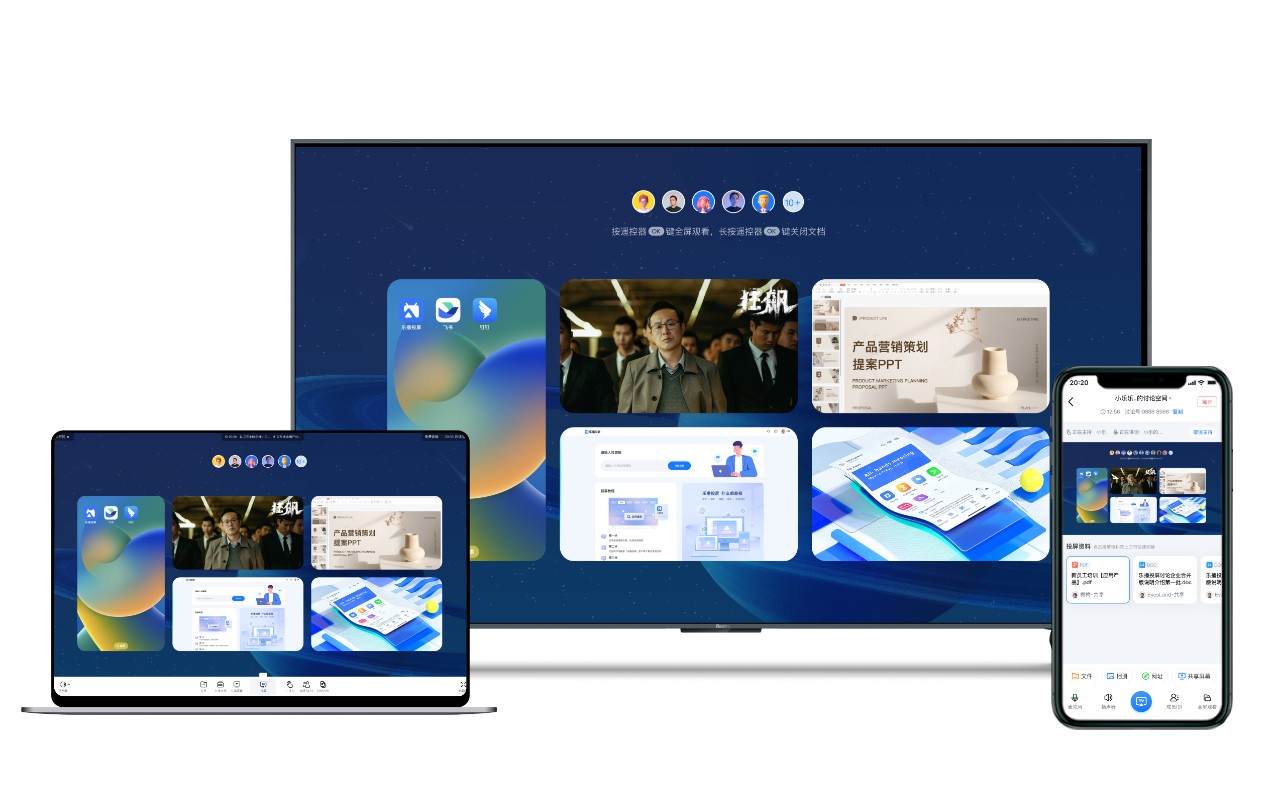
The free service has brought about a “universal connection ecosystem” across the country. The massive resource barriers have become Lebo's ecological advantage. More than ten million users use Lebo Casting every day, with the monthly active user count exceeding 60 million. On average, each casting user casts more than five times a day and the daily casting duration exceeds 120 minutes. This strong demand ultimately results in high user stickiness.
Meanwhile, based on more diverse casting scenarios and users' richer and more extreme casting needs, Lebo has further invested more in promoting the R & D of innovative technologies. Under a positive flywheel effect, Lebo's charging strategy emerged.
2. The Turning Point Has Arrived: The Logic of the Transition from Free to Paid in the Era
In 2025, user needs changed significantly.
Casting is no longer just a function for home entertainment but has also become a necessary entry point in scenarios such as meetings, teaching, and collaboration.
Lebo also found that more and more corporate customers are using casting to replace traditional cable projection and complex meeting software.
“Scan the code to cast”, “No need to download the App”, “Visitors can connect instantly” - these designs have increased the meeting start speed by more than five times and completely changed the efficiency experience of meetings.
Behind this reflects a series of Lebo's thinking on innovation, which has ultimately been refined into a series of innovative functions:
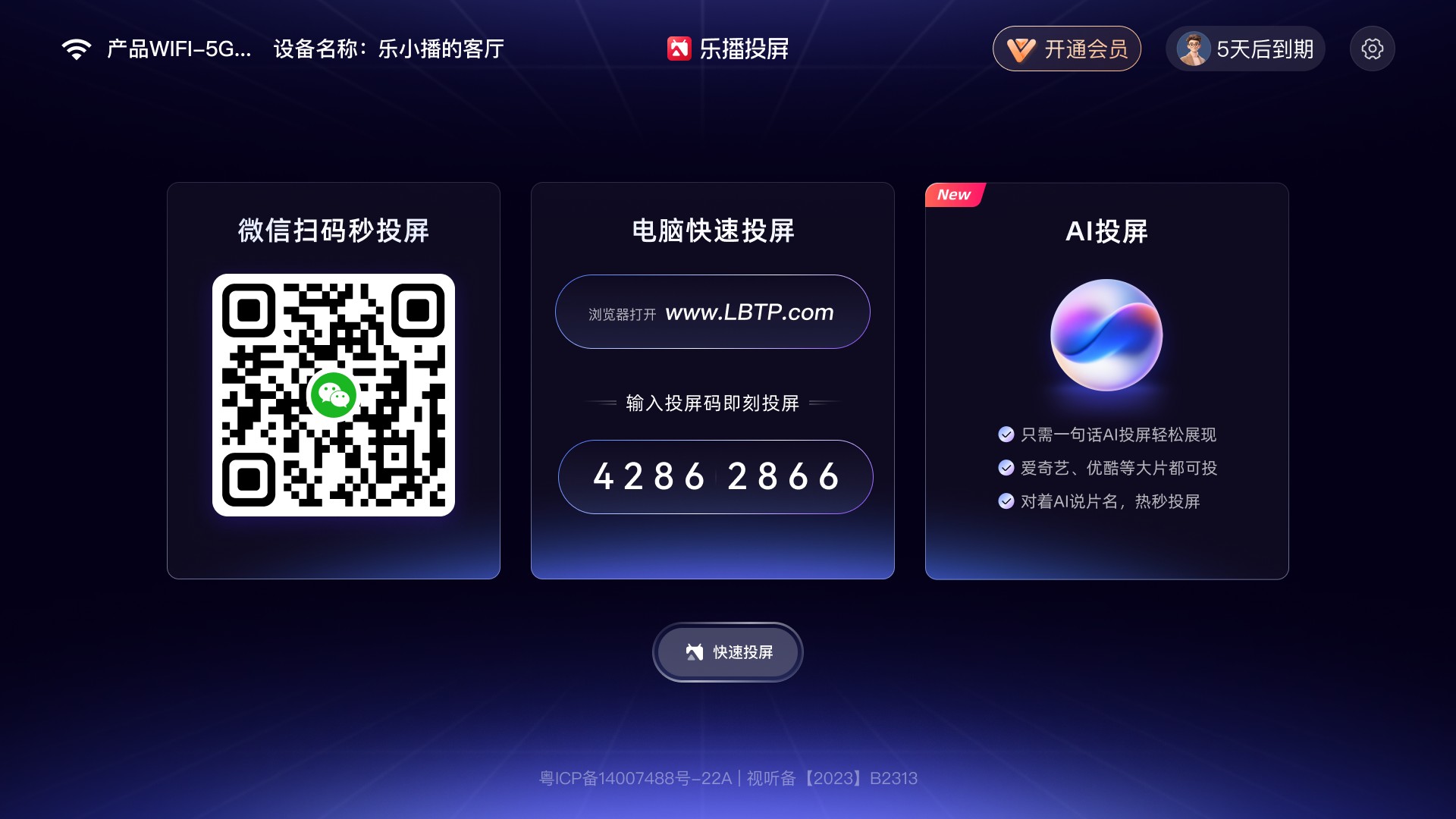
WeChat scan - to - cast. Its core concept is to use WeChat, a widely used app, to completely simplify the casting connection process. Specifically, a QR code is generated on the TV or meeting screen. Users no longer need to carry a computer or adapter. They only need to scan the QR code on the meeting screen with WeChat, and the content on their mobile phones can be projected instantly. This design has reduced the meeting preparation time by 80%, truly realizing “start the meeting as soon as you enter the meeting room”.
If scan - to - cast solves the problem of “being able to connect and project”, the second innovation that Lebo is vigorously promoting and will launch soon - “AI casting” - further considers: what can be done after casting? The answer is interaction. Lebo's second innovation lies in the AI casting solution enabled by MCP + AI, which allows input through natural language commands and then uses the cloud - based Agent for semantic understanding and task planning, such as opening files, joining meetings, or playing movies.
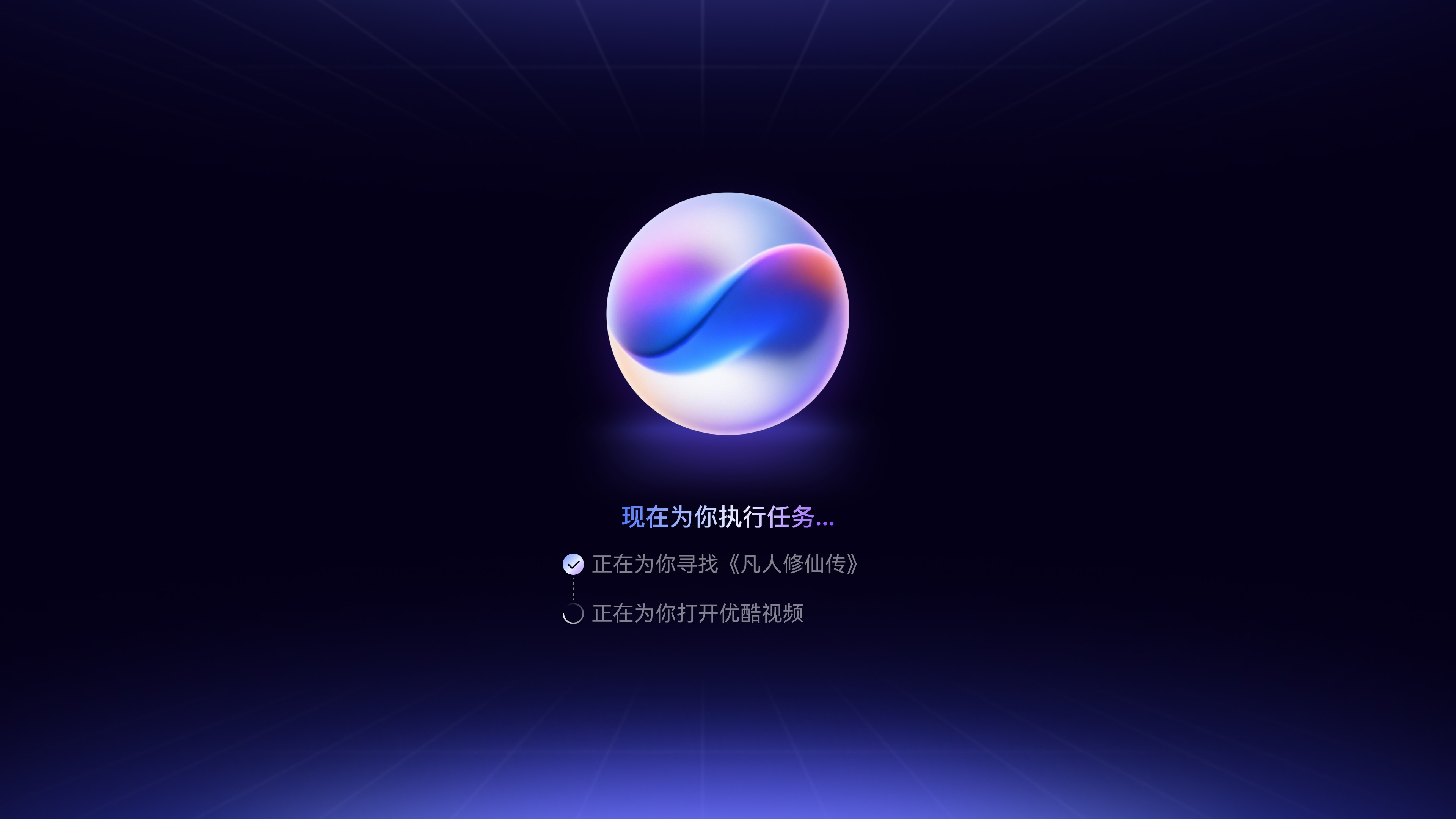
For example, “Join today's Tencent Meeting”, “Open the Q3 report PPT I sorted out last night”, “Play the third episode of 'The Longest Day in Shanghai'”... Whether it's joining a meeting, retrieving a file, or playing a video, all can be done through voice commands. AI can not only understand but also understand the context and plan the task chain, achieving “what you think is what you project”.
In addition to WeChat scan - to - cast and AI intelligent casting, Lebo's Douyin Qinglong Project aims to simplify the process of projecting short - video content from mobile phones to large screens, providing a more seamless and smooth short - video content sharing experience. Users can also interact directly with the large screen through AI. It is worth mentioning that Lebo is one of the few partners whose casting capabilities are integrated into the mobile phone manufacturers' systems. By integrating Lebo Casting SDK at the system level of mobile phones, users can directly cast through the system without downloading a casting app.
It is precisely because it meets users' strong needs in the AI era that the stickiness between users and Lebo has been continuously strengthened. Lebo decided to follow the trend and officially enter the paid era.
According to the sharing, different from the traditional membership model, Lebo's charging logic is more like “value realization”: enterprises pay for convenience and efficiency, and individuals pay for high - definition and stability.
A set of internal data from Lebo also proves the feasibility of this change: since the launch of Lebo's membership business at the beginning of 2025, its monthly revenue has increased nearly five times.
In the Internet field, it has always been a feasible logic to convert user value into commercial value. However, in today's business environment, such a growth rate is still remarkable.
3. Business Explosion: The Hyperbolic Growth Model
Now, Lebo's new story starts from corporate meeting rooms.
There are about 70 million meeting rooms in small and medium - sized enterprises in China, and hundreds of millions of meetings are held every day. In these meetings, casting is the most frequent and painful operation - different systems, different interfaces, and complex operations often lead to embarrassing moments in the first five minutes of a meeting - “frantically looking for cables and often unable to connect”.
The “visitor scan - to - cast” technology launched by Lebo has completely solved this pain point.
Regardless of what kind of mobile phone or network the guests use, they can connect instantly by scanning the code. According to Lebo's sharing, this capability has been piloted in many enterprises and is widely used in scenarios such as intelligent meeting screens, in - vehicle screens, and educational casting.
“We are no longer just a 'tool app' but a connection standard,” emphasized the person in charge of Lebo's relevant business.
Based on this technological barrier, Lebo has quickly formed a competitive barrier in the B - end market. In the next three years, the enterprise - level casting and AI collaboration market is expected to exceed the scale of tens of billions.
It is precisely in such a market space that, in the eyes of the outside world, Lebo's growth is unfolding along two clear curves:
The first curve is the explosive growth of C - end membership. The shift of users from “free trial” to “long - term payment” marks the redefinition of the value of the basic casting function. The growth rate of Lebo's membership revenue is rising significantly and is expected to rank among the top domestic tool - type applications.
The second curve is the rise of B - end enterprise - level business. Casting in meeting scenarios is becoming the underlying entry point for enterprise digital collaboration.
With the addition of functions such as AI voice, multi - person whiteboard, and file sharing, Lebo's enterprise services are entering the “collaborative cloud desktop” stage.
The intersection of these two curves forms the “dual - engine” of Lebo's business model.
4. Seize the New Entry Point in the AI Era
In the AI era, everyone is competing for new entry points. In the wave of AI, whoever controls the screen entry point will master the next - generation interaction standard.
If in the past ten years, Lebo solved the problem of “how to connect mobile phones and TVs”, then in the next ten years, it will solve the problem of “how people interact with all screens”.
Based on the “super casting space”, Lebo is integrating AI, voice recognition, file collaboration, and remote whiteboard to create a super entry point similar to a “cloud desktop”.
Whether in a meeting room, living room, or car, users can enter a unified space by scanning the code to achieve intelligent collaboration across devices, scenarios, and networks.
Especially with the rapid development of technologies such as 6G, the Internet of Things, and in - vehicle chips, a new revolution in intelligent connection will come. This means that Lebo is evolving from a “casting company” to a “screen operating system company” and moving towards the goal of an ecological connector.
The logic of the capital market has already changed. Self - sufficiency in blood - making is becoming the standard for evaluating good companies, and good companies can always breed new opportunities in the cold winter.
Lebo's five - fold growth is not a turn in commercialization but a systematic re - evaluation of value. In the wave of AI, what Lebo holds is “certain value”: it has both underlying standards and a cash - flow model as support.
The technological paving in the past ten years has laid the foundation for Lebo's certain value today. If the past ten years were the “competition for mobile phone operating systems”, the next ten years will be the “competition for screen operating systems”. Lebo will be one of the few infrastructure - level players in this transformation. When AI starts to need a “screen outlet”, Lebo hopes to be that outlet.
Perhaps, as Feng Sen, the founder of Lebo, said: “We are not just making an app. We are rewriting the connection logic between people and screens.”