A Fudan University master's graduate starts a business and secures a record-breaking 400 million yuan in financing: Breaking a 20-year Japanese corporate monopoly with a 600% annual growth rate | Exclusive from 36Kr
Author: Ou Xue
Editor: Yuan Silai
Yingke has learned that Zhejiang Zhongling Technology Co., Ltd. (hereinafter referred to as "Zhongling Technology"), an enterprise specializing in Fine Metal Mask (FMM), has recently completed a Series C financing of over 400 million RMB. We have summarized the information of this round of financing and several highlights of the company:

Financing Amount and Investment Institutions
Financing Round: Series C
Financing Scale: Over 400 million RMB, currently the largest single - round financing in the domestic FMM industry
Leading Investor: Shenzhen Capital Group's Manufacturing Transformation and Upgrading New Materials Fund (a specific investment vehicle of the National Manufacturing Transformation and Upgrading Fund) (the second - largest shareholder of the company)
Follow - on Investors: China Jianyin Investment, Yida Capital, Yueke Financial Holdings, Zhongke Chuangxing, Zhongfeng Venture Capital, Suzhou Chuangyuan, etc.
Use of Funds: 50% for R & D, including product iteration of FMM, localization of Invar ultra - thin metal strips (Invar alloy), and development of new businesses in photovoltaics and semiconductors; 30% for capacity expansion of G8.6 generation FMM and layout in overseas markets; 20% as working capital and reserve for IPO
Historical Financing: Cumulative capital injection of over 900 million RMB

Basic Company Information
Establishment Time: September 2020
Registered Address: Pan - Semiconductor Industrial Park, Haining City, Zhejiang Province
Technological Highlights: Yingke has learned that FMM is the "pixel mold" in the evaporation process of OLED screens. Through micron - sized holes, it enables the precise deposition of RGB light - emitting materials, directly determining the resolution, yield, and display quality of the screen, as well as the power consumption and luminous life of the screen terminal. It is the core "chokepoint" tool in the AMOLED industrial chain.
Zhongling Technology is the only domestic enterprise with the mass - production capacity of 20μm FMM products that Japan has banned from exporting to China, and it has a 100% domestic supply chain of Invar raw materials and the ability to implement G8.6 generation FMM technology and equipment. Its products can cover the full range of scenarios from wearable devices (small - sized) to mobile phones, laptops, and in - vehicle screens (medium and large - sized).
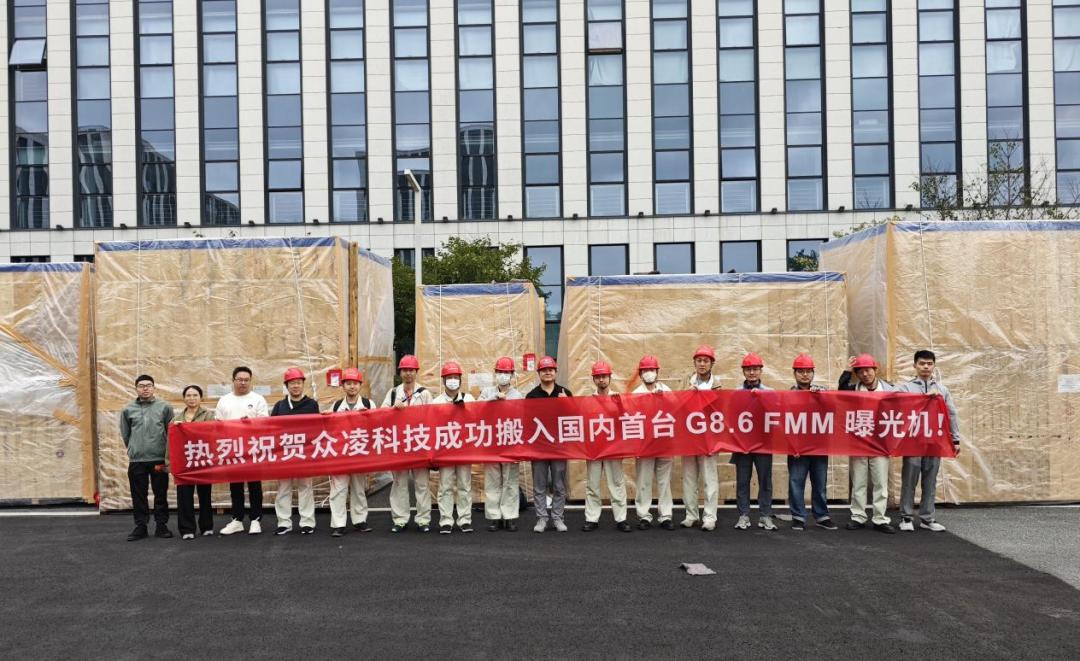
Second - phase core equipment (Exposure machine for G8.6 FMM moved in) (Source: The enterprise)
Currently, Zhongling Technology has achieved large - scale mass production of 20μm - thick FMM, with specifications fully meeting the requirements of clients. It has also supported the mass production of multiple flagship terminal products, including the Xiaomi 17 Pro Max (the world's first high - PPI mobile phone with Real RGB OLED).

Market Size
According to industry analysis, the global FMM market scale is nearly 10 billion RMB, with over 90% of the market share being monopolized by Japanese company DNP for a long time. In particular, it has banned the export of products with ultra - thin specifications of 20μm and below to China, restricting the high - end breakthrough of China's over 600 billion RMB AMOLED industry, which is still continuously increasing investment. As AMOLED upgrades to "medium and large - sized" (such as tablets, laptops, and in - vehicle screens), the G8.6 generation line has become a new track, and there is huge room for domestic substitution of FMM.

Company Performance
Zhongling Technology's revenue has increased from the level of millions of RMB in 2022 to tens of millions of RMB in 2023, exceeded 100 million RMB in 2024, and is expected to double in 2025, with an average annual growth rate of nearly 600%.
In terms of market share, Zhongling Technology accounts for over 60% of the domestic localized FMM market share. The company has passed the verification of most domestic AMOLED panel manufacturers and supplies products in batches, which are applied to many leading brands of display terminals such as mobile phones, tablets, laptops, and in - vehicle screens.

Team Background
The core team of Zhongling Technology is a "technology startup team from downstream clients". Most of its members come from domestic first - tier semiconductor panel manufacturers and metal raw material enterprises, covering the entire chain of "Invar material R & D - OLED pixel design - micron - level etching - mass production testing".
Xu Huawei, the founder of Zhongling Technology, is a master of physics from Fudan University. He is one of the first - batch of technical talents in China's display industry. He has worked at NEC Shanghai Gufa, BOE, Tianma Microelectronics, and Visionox, and once served as a senior executive at Visionox's industrial base.

Thoughts from the Deputy General Manager
Yingke: As a disruptor in the market, how does Zhongling Technology break the long - term monopoly of Japanese company DNP?
Zhao Mingxuan: We have adopted a "high - profile and aggressive" strategy. DNP's monopoly is a rare triple monopoly in the industry: in materials, quality, and business. From the very first day of our establishment, we were determined to break these three barriers simultaneously.
In terms of materials, we are firmly committed to the localization of Invar materials; in terms of process, we use the thinking of semiconductor industry processes to disassemble FMM process factors and disassemble product design based on the technical requirements of client terminals, breaking the process black box in the industrial chain and realizing the high - tech value of products; in terms of business, we must build sufficient production capacity to make clients believe that even if DNP cuts off the supply, we can meet all their needs. This is a difficult but the only available path.
Yingke: What are the current development trends or pain points in the FMM industry?
Zhao Mingxuan: The industry is developing rapidly in two directions: "larger size" and "thinner thickness". On the one hand, the penetration of medium and large - sized OLEDs in tablets, laptops, etc. is accelerating, driving the demand for G8.6 generation FMM; on the other hand, the continuous improvement of the requirements for display effects by terminals drives us to iterate towards products of 18 microns or even thinner, which is also the reason for us to propose the "Zhongling Law".
As for the pain points in the industry, the current biggest pain point is still the autonomy of materials. The technical threshold of Invar materials is high, the market scale is small, and there are supply - chain risks. For example, Japanese company DNP is trying to cut off the supply of German raw materials to China's just - mature FMM industry through patent litigation and other means. Therefore, we must unswervingly promote the localization of materials, which is not only the key to breaking the monopoly but also the key to ensuring the safety of the industrial chain.
Yingke: Materials seem to be very crucial. What is the current level of domestic Invar materials?
Zhao Mingxuan: Domestic materials have already outperformed German and Japanese materials in the main indicators required by FMM, but they are still catching up in terms of production stability and thickness uniformity. Currently, the mass - producible thickness has reached 30 - 35μm, better than the 40μm of German materials, but still thicker than the 25μm of Japanese materials.
However, after more than four years of material development and iteration, the improvement path is very clear, and it is expected that it will be iterated to 25μm next year. The ceiling of domestic materials is very high, and the cost can be reduced by 30 - 40% in the future. The yield rate of FMM produced with domestic materials is also expected to exceed 60 - 70%, reaching the level of conventional manufacturing industries.
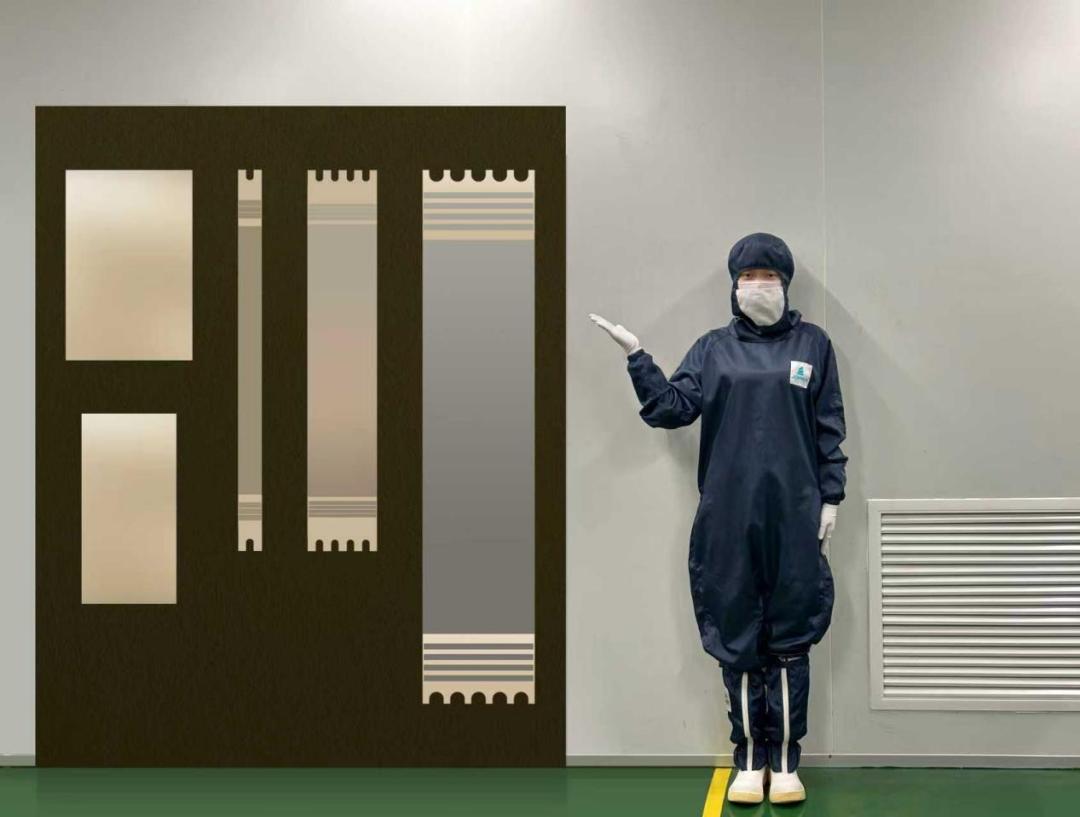
Illustration of domestic Invar materials: G8.6 large - width products and G6 products (Source: The enterprise)
Yingke: Where does the core technological barrier of Zhongling Technology lie?
Zhao Mingxuan: I think it lies in our full - chain autonomy. Firstly, in terms of materials, we have carried out in - depth joint R & D with three steel enterprises including Taiyuan Iron and Steel, achieving the localization of Invar materials, which not only solves the supply - chain risk but also addresses the issues of quality and cost simultaneously. Secondly, in terms of process, we have developed a unique material testing and screening technology and a self - developed high - cleanliness material modification process. Even when using lower - quality German materials, we have increased the FMM yield rate from the industry - average 20% to over 40% under the more difficult multi - cutting full - arrangement process conditions, with the highest batch reaching 70%. Thirdly, in terms of design, we reverse - deduce the design of FMM and the specification and process control of Invar raw materials from the display requirements of terminals (such as mobile phones), which is a unique perspective brought from the panel industry.
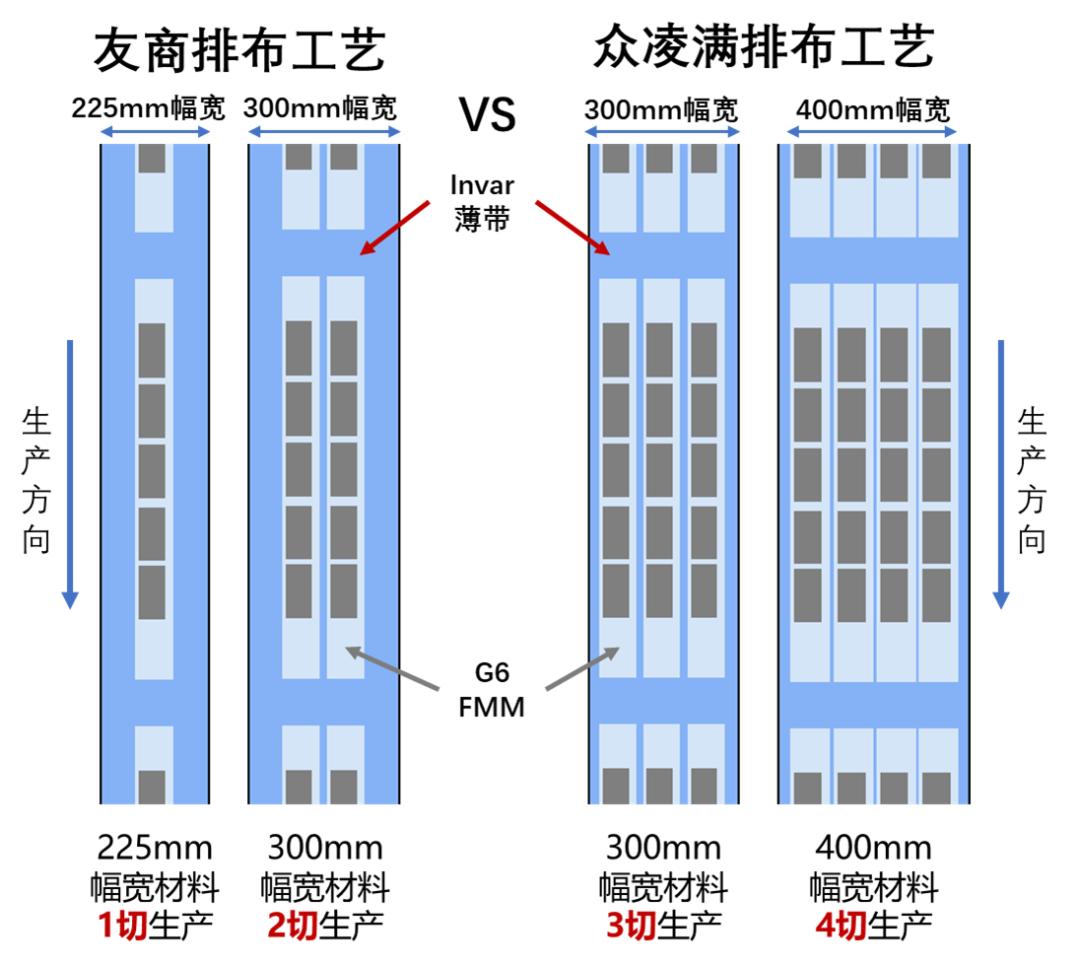
Comparison between Zhongling's process and competitors' processes (Source: The enterprise)
Yingke: What are the specific development goals of the company in terms of products, technology, market, and performance in the future?
Zhao Mingxuan: In terms of product technology, we plan to launch 18μm ultra - thin FMM products in 2026, which is already the highest global mass - production specification. We all know that there is a "Moore's Law" in the semiconductor industry, and there is also one in our FMM industry. Zhongling has now proposed the concept of the "Zhongling Law" - in the future, FMM products will continue to iterate at a speed of reducing the FMM thickness by 1 - 3μm and the pixel pitch by 1 - 2μm every 1 - 1.5 years. Currently, the company's 18 - micron products have entered the sample - sending preparation stage and are expected to achieve mass production next year.
In terms of capacity building, we currently have two production lines. The capacity expansion of the second - phase production line will be gradually released from the end of this year to the first half of next year. This expansion basically doubles the original first - phase capacity, and it is expected that the capacity will double by the second half of next year.
In terms of market expansion, we hope to capture over 50% of the domestic FMM market share. At the same time, we will start to break into the overseas market from 2025, focusing on the supply chains of international panel manufacturers such as Samsung and LG. We believe that the overseas market is a relatively certain investment direction. After the company achieved mass production of 20μm ultra - thin products and started developing 18μm products, in fact, some overseas enterprises have already contacted us.
In terms of performance expectations, the company's revenue this year is expected to be more than twice that of 2024, and it is expected to reach nearly one billion RMB by 2027.
In terms of new business layout, we are extending to the semiconductor and new - energy fields based on ultra - thin precision metal processing technology. Specifically, in the printing materials for photovoltaic cells, by using a process similar to FMM, we can help clients save more than 20 - 30% of silver paste consumption. Currently, we are developing with relevant upstream and downstream industrial chains, and it is expected that new businesses will gradually start to be invested in and mass - produced from 2026 - 2027.