Factory first, family later. Midea's "robotization of household appliances" is expected to achieve large-scale application within 1-2 years | Frontline
Author | Huang Nan
Editor | Yuan Silai
Recently, Midea's 30th Science and Technology Month event was launched, systematically showcasing its comprehensive layout in the field of embodied intelligence. Midea has established a "dual-track parallel" technical path: on the one hand, it continues to advance the cutting-edge exploration of general humanoid robots; on the other hand, it focuses on promoting the robotization upgrade of existing household appliances.
In the field of humanoid robots, Midea has built a complete R & D system from core components to the whole - machine system. Through the Blue - Orange Laboratory, Midea has achieved breakthroughs in core components such as reducers, servo motors, and robot controllers. Its self - developed reducers and servo motors have been mass - produced, and some products have been put into market applications, covering from light - load robots to heavy - load robots up to 300 kg.
At the software level, Midea has built an embodied intelligent robot platform from scratch, integrating the "cerebellum" system for large - model skill learning, the "brain" core for intelligent decision - making, and multi - modal perception capabilities. Combined with digital twin technology, it has constructed the infrastructure for the next - generation intelligent robots.
Meanwhile, Midea has established a specialized humanoid robot innovation center, focusing on the development of different form platforms such as humanoid and super - humanoid, and creating solutions for industrial and commercial scenarios.
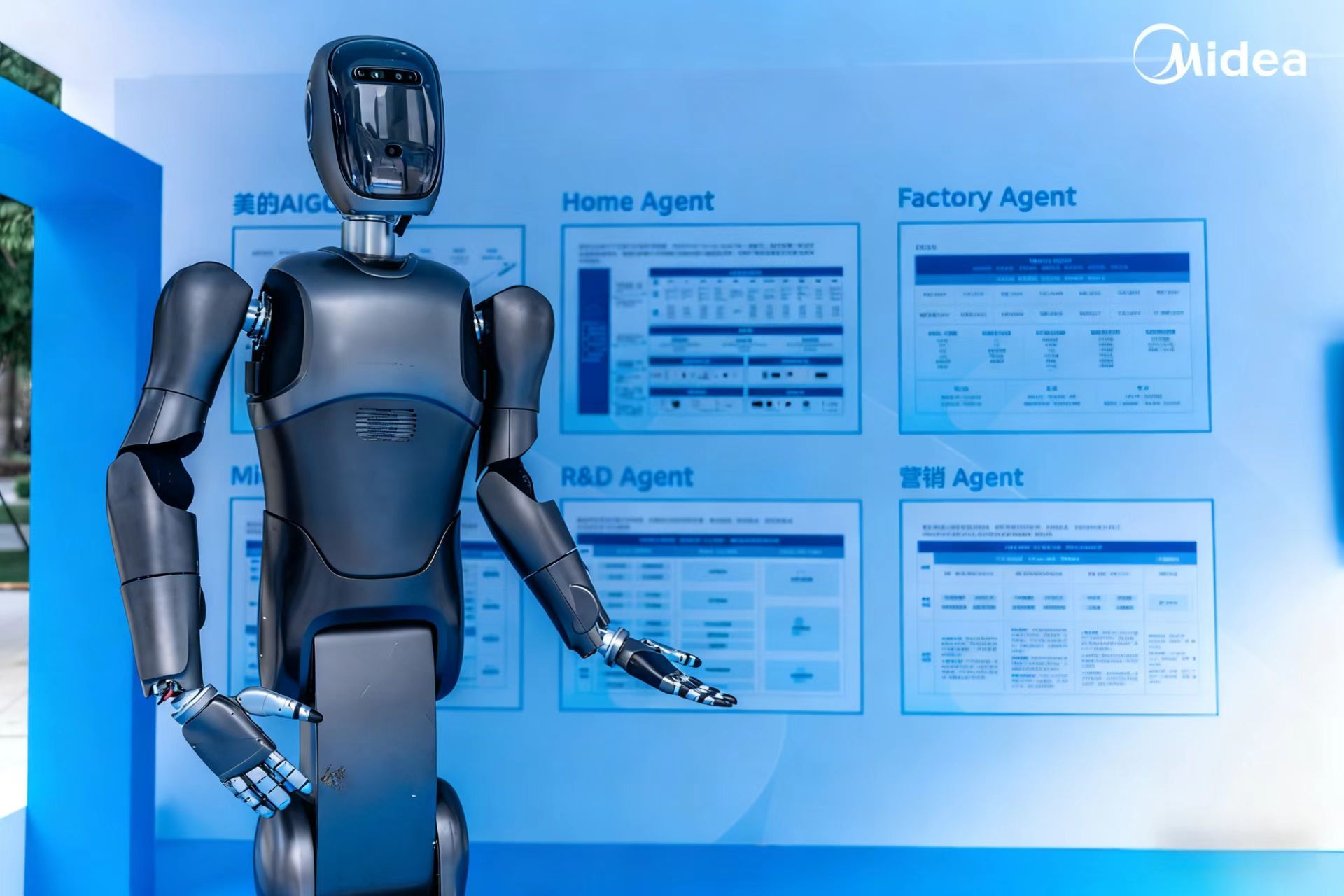
Midea's humanoid robot
Xu Yi, the dean of Midea's AI Research Institute, told 36Kr, "The choice of the industrial scenario as a breakthrough point is mainly based on two considerations. On the one hand, the factory environment is relatively closed and standardized, with clear boundaries of the problem space, which reduces the complexity of technological implementation; secondly, the industrial scenario has a complete operation and maintenance system. When the robot malfunctions, it can be quickly intervened and handled, providing a more controllable environment for technological verification."
From a technical perspective, current embodied intelligence covers three major ability levels: navigation, movement, and operation. Among them, navigation and basic movement technologies are relatively mature, capable of achieving basic functions such as fixed - point movement and path planning; however, fine operation ability remains a bottleneck faced by the entire industry.
"Even for a simple pick - and - place task, it is extremely challenging to achieve a success rate of over 99%. This is the core reason why products such as current sweeping robots are still limited to basic functions," said Xu Yi. "Based on this situation, Midea's advancement path is very clear: overcome key technical difficulties in the industrial scenario, and then extend to the household scenario after maturity. The two scenarios will adopt an asynchronous but coordinated development model. Technological breakthroughs in the industrial scenario will provide verified solutions for household applications, and the demand insights from the household scenario will also feed back into the direction of technological iteration."
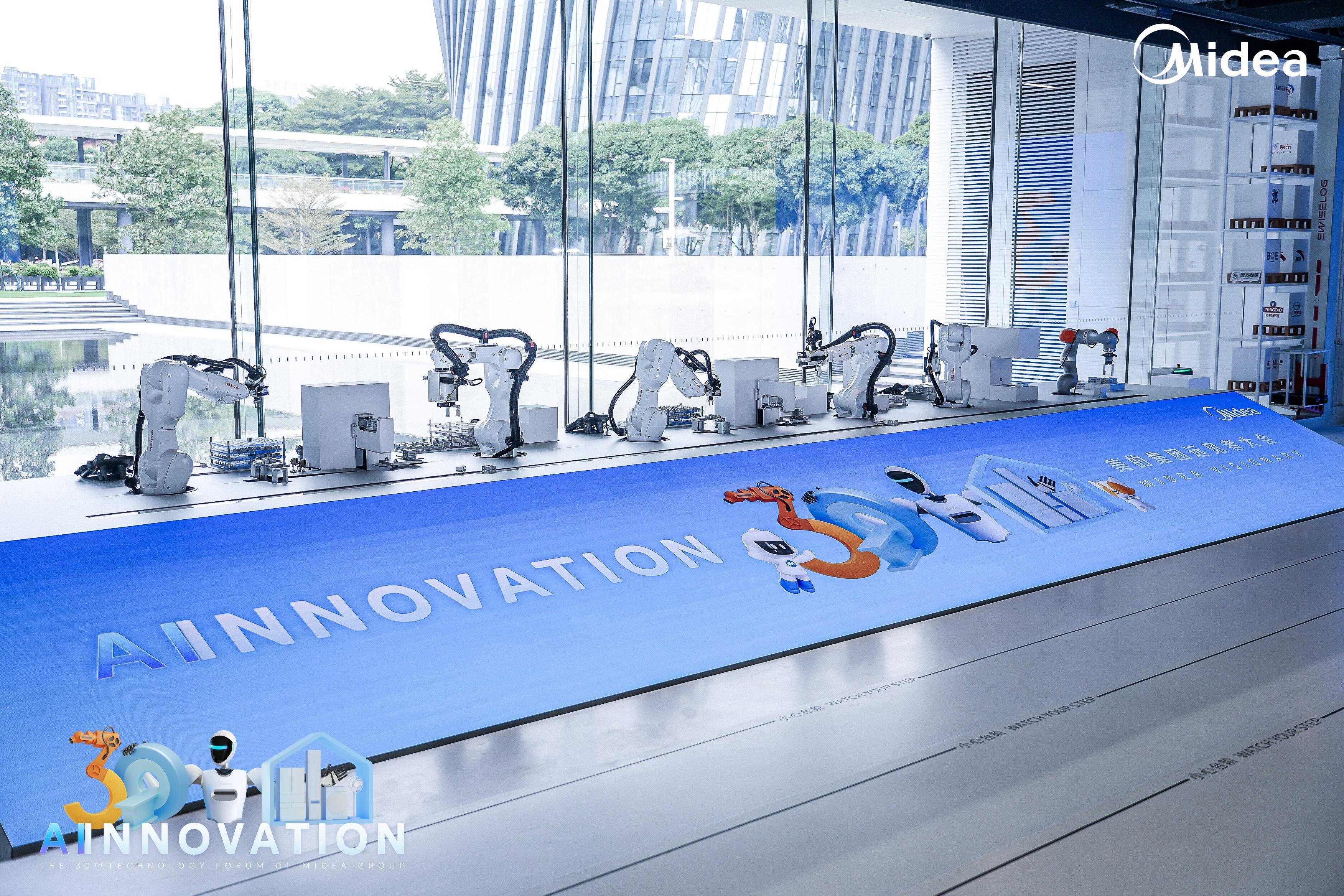
Fine operation ability of the robotic arm
In early May 2025, Midea's humanoid robots started "working" in Midea's washing machine factory in Jingzhou, mainly used for inspection, machine operation and maintenance, equipment repair, and workpiece handling. For commercial scenario applications, relevant products are being developed and launched successively, and are expected to be applied in offline channel stores in the second half of the year to provide services such as guided tours and household appliance operation demonstrations.
On the other hand, as one of Midea's key breakthrough directions, the robotization of household appliances is realizing the transformation from "tools" to "intelligent agents" by injecting environmental perception and autonomous decision - making capabilities into traditional household appliances. This path can not only complete scenario verification and achieve commercialization in the short term but also accumulate key technologies for the long - term development of humanoid robots.
Currently, the household appliance industry is facing dual development bottlenecks. The upgrade space of traditional household appliances in terms of performance parameters is becoming increasingly limited, making it difficult to continuously create differentiated value. Although smart home appliances have achieved device interconnection through the Internet of Things technology, they still remain in the primary form of "passively responding to instructions".
Sun Nianxiang, the dean of Midea's Central Research Institute, pointed out to 36Kr that the key to realizing the leap of household appliances from "passive response" to "active service" lies in how to build a complete technical closed - loop of "user behavior learning - demand prediction - active execution". This closed - loop system relies on multi - modal sensors and AI algorithms to gradually form the service ability of autonomous decision - making.
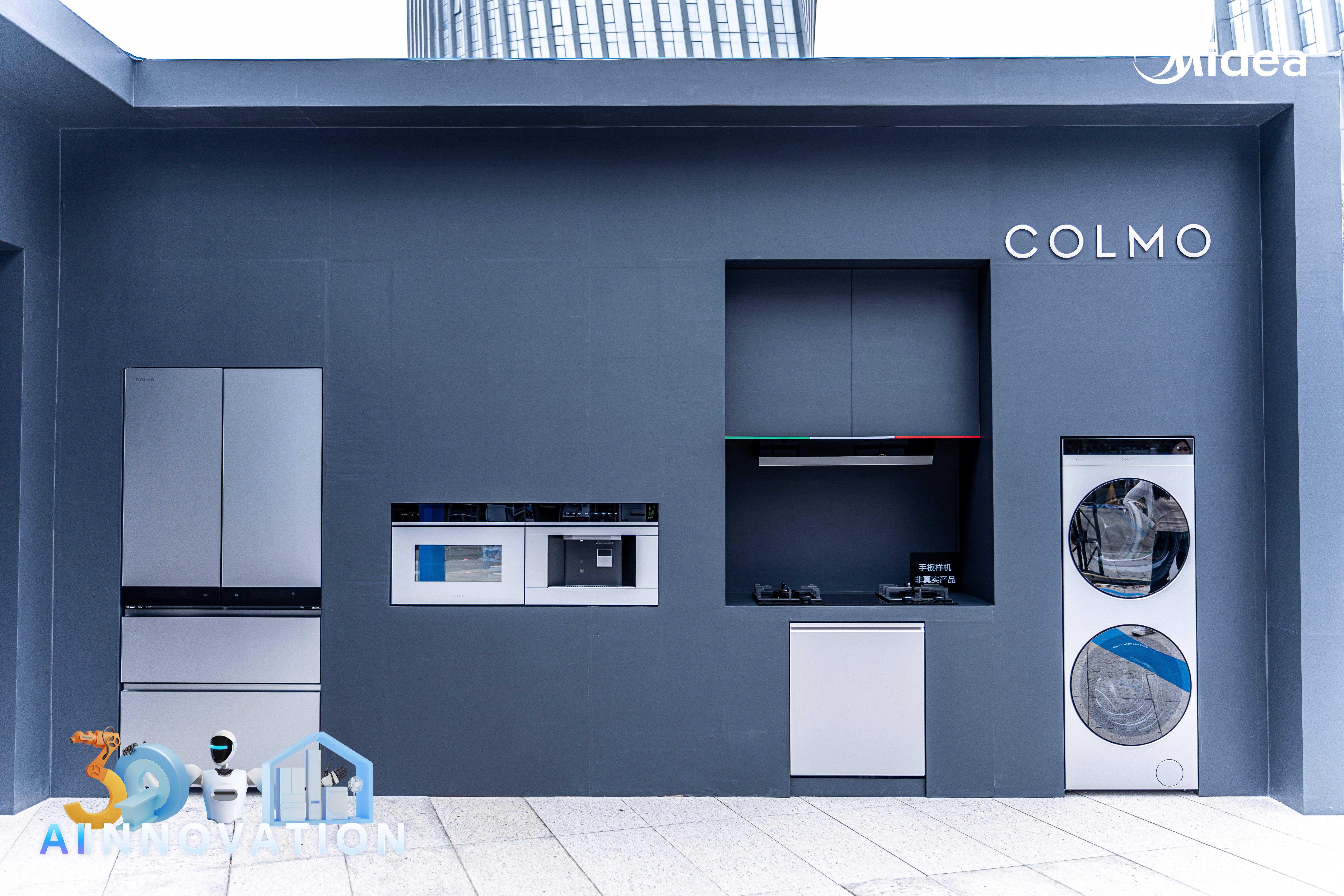
Robotization of household appliances: from "passive response" to "active service"
In the behavior learning stage, it continuously collects data on users' usage habits, such as fixed arrival times at home, preferred air - conditioning temperatures, and periodic cleaning schedules. With the help of AI analysis, it constructs an accurate "user behavior portrait". After entering the demand prediction stage, the system combines real - time environmental data with historical behavior patterns to actively predict user needs. For example, it automatically turns on the air - conditioner in advance on weekday evenings or starts the sweeping robot on weekend mornings.
In the active execution stage, household appliances have the ability to operate autonomously and adjust dynamically without instructions. When the space sensor detects that the user returns home earlier, the air - conditioner will immediately adjust its operating state; when the tactile sensor detects that the user enters the cleaning area, the sweeping robot will automatically pause and actively avoid.
Through this complete technical closed - loop, household appliances are no longer simple tools for executing instructions but intelligent partners that can understand scenarios, predict needs, and provide active services, truly realizing the intelligent experience of "anticipating what users think and doing what users haven't said".
Sun Nianxiang said that compared with the longer R & D cycle required for the technology integration and scenario implementation of general humanoid robots, in the short term, transforming existing household appliances into robots has obvious advantages in terms of technological feasibility and market acceptance. Midea will prioritize the launch of robotized household appliance products, and large - scale application is expected to be achieved within one to two years.