Will the former "King of Shoes" be afraid after being avoided by consumers due to salary cuts?
“I haven't bought any products from your brand yet. How long should the self - criticism be?”
Recently, you can see many similar comments in the comment section of the official social media account of Peak, a sports brand.
According to reports from multiple media outlets such as Guancha.cn, 21st Century Business Herald, The Paper, Jiefang Daily, and Bluewhale Media, in mid - September this year, Peak Group suddenly announced a collective step - by - step salary cut internally, and the whole process was not fully negotiated with employees. Moreover, some employees exposed the company's internal notice. This written document showed that those who refused to accept the salary cut arrangement needed to submit a self - criticism before October 14th, otherwise their salaries would be suspended.
According to 21st Century Business Herald, staff from the local labor security rights - protection center also revealed that they had contacted a Mr. Zhang, a leadership figure in Peak Group, regarding the salary cut issue. The other party said that he himself had also had his salary cut by 50% and was unable to contact his superiors. “The phone call to the top leader was directly transferred to the voicemail, and I'm also powerless to solve the relevant problems.” Currently, the local labor security department has filed a case regarding the issues reported by Peak employees and applied for labor arbitration for the complaining employees.
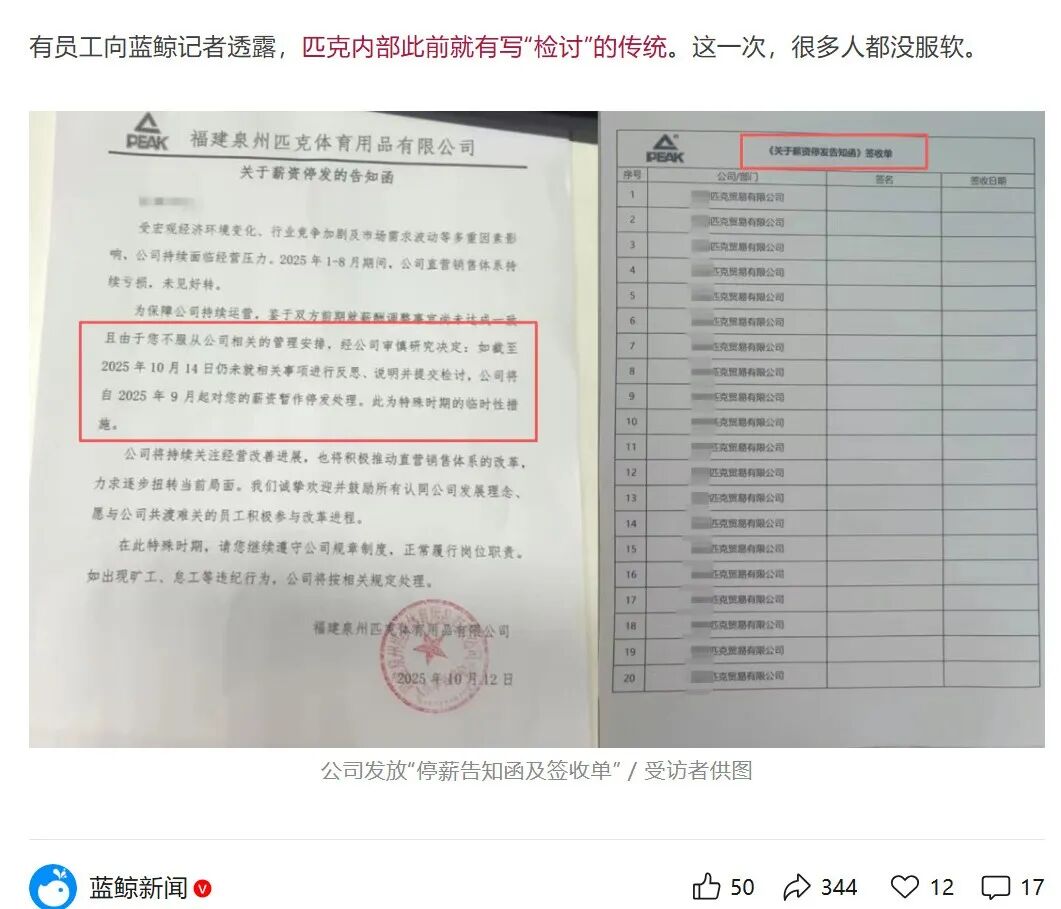
Bluewhale Media interviewed the involved employees and showed relevant document evidence. (Photo/Screenshot from social media)
Some netizens dug out that on September 5th, shortly before the salary cut incident, Peak Group donated 100 million yuan to charity in Quanzhou. Some netizens complained, “They have money to donate but no money to pay employees' salaries.”
For a moment, many netizens who were originally on the sidelines empathized with the employees and posted messages to voice their support. Some even flooded the comment section of Peak's official account, saying “Refuse to buy.”
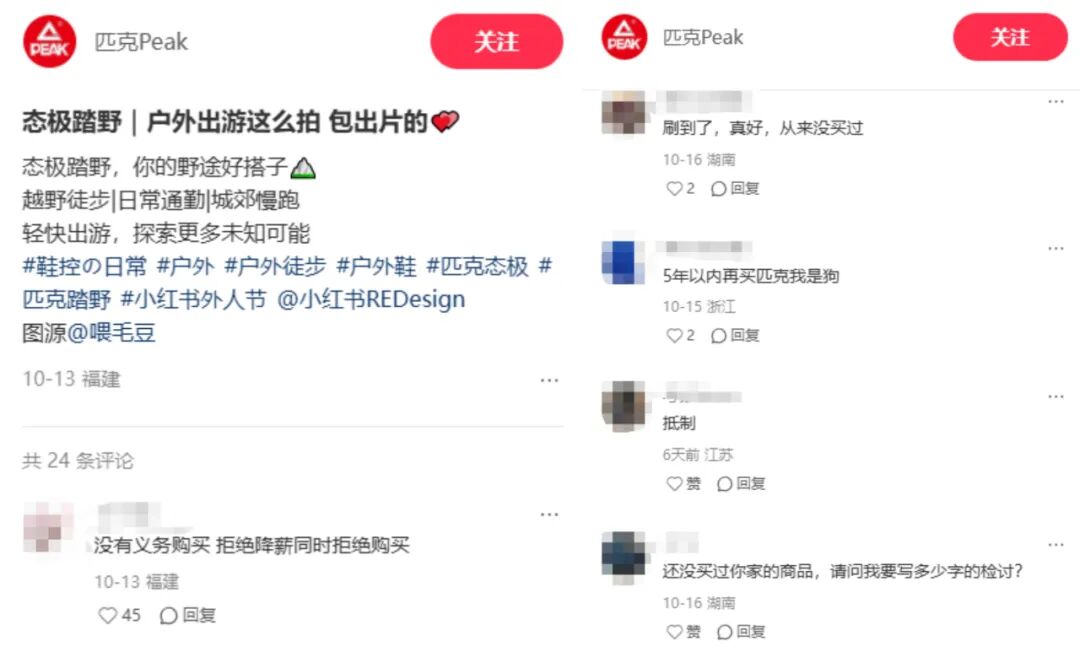
Some consumers expressed their boycott under Peak's official account. (Photo/Screenshot from social media)
This is not an isolated phenomenon. Recently, there has been a popular saying online: “If you don't know which brand of products to buy, just see which company treats its employees better.”
In other words, when consumers, who are also workers, see a company treating its employees badly, they start to spontaneously refuse to buy the company's products. Netizens have even compiled a “white list” in practice, trying to exercise their “voting rights” through consumption decisions — although no one knows whether this tiny “resistance” can really hurt the company's performance or is just a drop in the bucket.
Of course, what's really important is that Peak probably didn't expect that a measure aimed at cost - cutting and efficiency - increasing for employees would actually lead to consumers' aversion to the brand. This means that nowadays, the yardstick people use to measure the value of a brand has long gone beyond simple products and marketing.
Workers' treatment,
Has it become the basis for consumers?
Recently, a netizen posted a message saying that she planned to buy a sweeping robot. But she thought the differences among brands in the market were not significant in terms of technology, cost - effectiveness, and service. So she wanted to ask about the work experience of employees in these companies. She decided to buy the sweeping robot from the company that treats its employees better. This post attracted many employees from these companies to share their experiences.
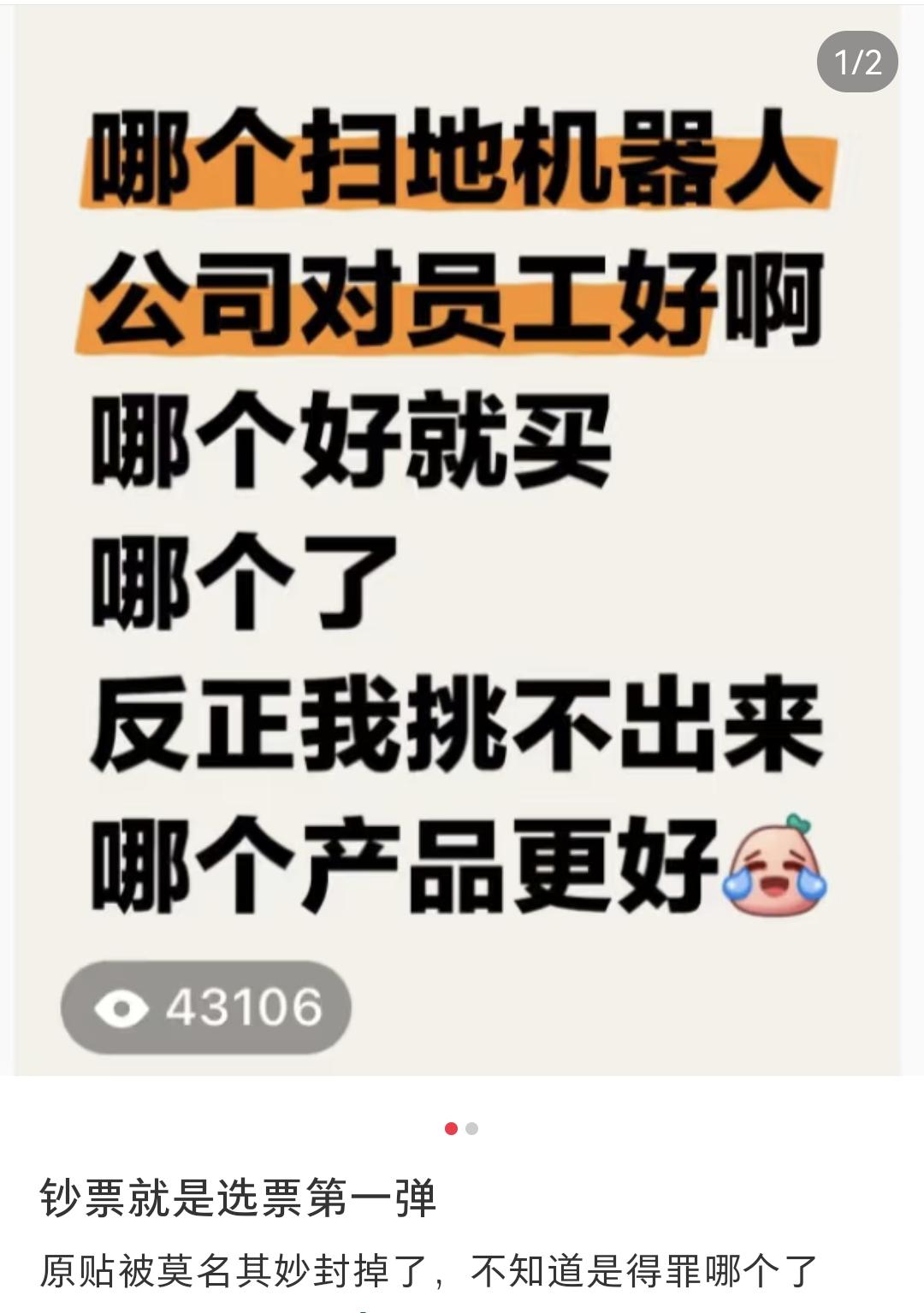
The original post of the blogger who first asked about how companies treat their employees in the sweeping robot industry. (Photo/Screenshot from social media)
After this post became popular, some people followed suit and asked similar questions. Their reasons were simple: “If a company treats its employees badly, why should we believe it will be responsible for consumers?” “Employees who go to work with grievances are more likely to be perfunctory in their work.”
“Every consumption is a vote for the world you idealize.” Many netizens believe that if such factors are included in consumption decisions, it may force companies to care about employees' rights. Therefore, they try to practice the consumption concept of “money is a vote” — although no one knows whether this tiny “resistance” can really hurt the company's performance or is just a drop in the bucket.
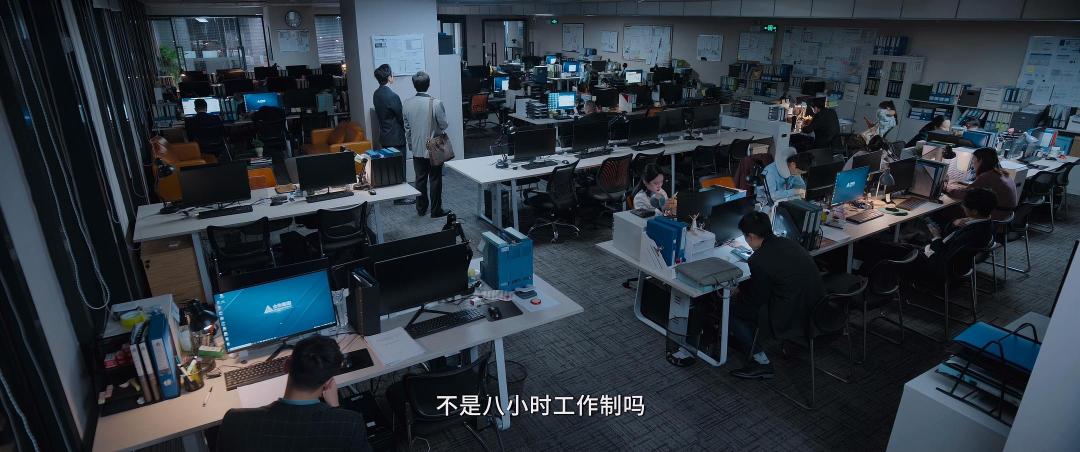
For some people, “voluntary overtime” is the norm. (Photo/“No More Year - End Party!”)
In September this year, when Xibei was pushed to the forefront of public opinion due to the controversy over pre - made dishes, its founder, Jia Guolong, confronted Luo Yonghao head - on. His various remarks only added fuel to the fire, and finally he chose to “keep silent.” In this storm, onlookers may have different stances and views, but Xibei's workers have always been the ones worthy of sympathy.
After the Xibei official apology letter, which was almost ridiculed by the whole network, was released, a netizen's comment received more than a thousand likes: “One can imagine that after the brand's public relations team stayed up all night in a meeting to come up with this letter and submitted it to the boss for review, the boss was still immersed in his own world (insisting on satirizing customers), which led to another disastrous public relations incident.” Jia Guolong's past remarks about overtime work were also dug out, which had a “snowball effect” on the company's reputation.
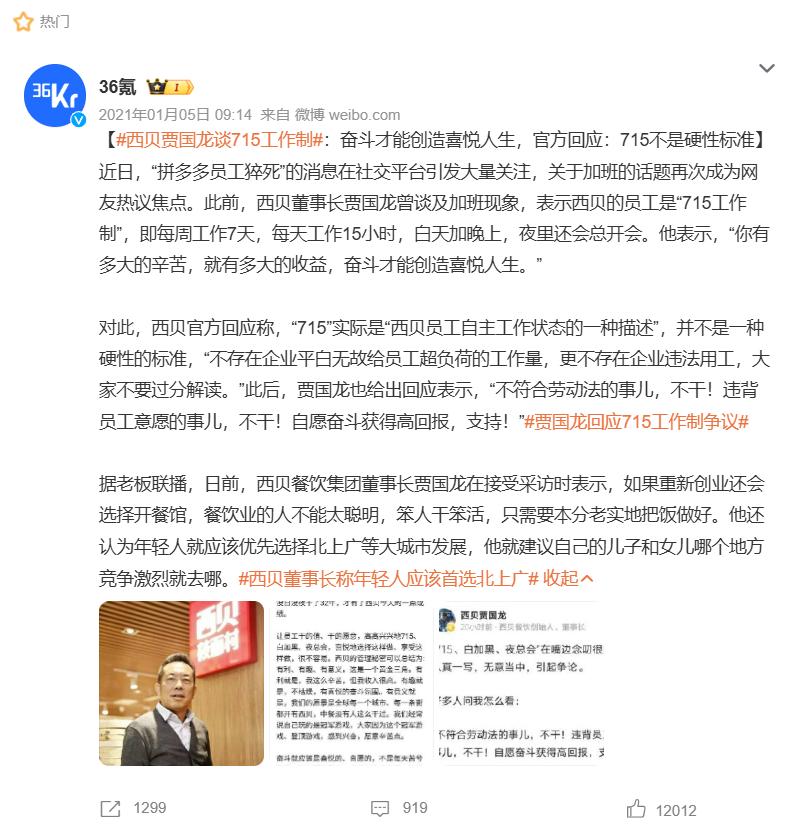
Jia Guolong's past remarks about overtime work. (Photo/Screenshot from social media)
At this point, you have to sigh that the times have changed. Nowadays, consumers can separate the company from the workers and judge a brand more objectively.
Compared with Xibei, Peak may feel innocent. After all, it was not controversial for its product services, but consumers still pointed the finger at the brand itself. Moreover, the company - wide salary cut was an “unavoidable measure.”
This sports brand, founded in 1989, was established earlier than mainstream domestic sports brands such as Li Ning, Anta, and 361°. In the 1990s, it became well - known for its basketball equipment and was once hailed as the “King of Jinjiang Shoes.” However, Peak's development has been on a downward trend. Its strategy has been vacillating, and its product innovation has been weak. In 2016, it was privatized and delisted from the Hong Kong Stock Exchange, and the delisting price was more than 60% lower than the issue price in 2009.
After that, Peak turned to seek listing on the A - share market but has never succeeded. Nearly a decade has passed, and compared with its peers in Jinjiang, Peak has fallen far behind. In 2023, Anta's revenue exceeded 60 billion yuan, and Xtep and 361° also crossed the 10 - billion - yuan revenue mark, while Peak's annual revenue was only 5.86 billion yuan, ranking 96th on the list of the top 100 private enterprises in Fujian Province.
According to Jiemian News, Peak's chairman revealed at an internal meeting this year that the company's domestic direct - sales segment had accumulated a loss of 130 million yuan from January to July this year. In the middle, the company sold three direct - sales companies, but still failed to stop the losses.

There is also a scene in the movie “No More Year - End Party!” that satirizes reality: The group wants to cut costs and increase efficiency by laying off employees but still spends a lot of money on the year - end party. (Photo/“No More Year - End Party!”)
People do sympathize with the company's difficulties, and it's believed that many employees are willing to overcome the difficulties with the company. However, when there is a huge gap between the company's internal management behavior and its externally - declared values, trust may collapse in an instant. Just like Peak's donation of 100 million yuan, which happened to follow the salary cut, it is easily interpreted as “using social responsibility to polish the brand image while avoiding employer responsibility.”
And young people are particularly sensitive to this — they can accept a company's honest admission of difficulties but refuse to “pay for” hypocrisy.
What do young people want by voting for the 'white list'?
A few years ago, the “996 work system” in Internet companies was widely criticized. We still don't know whether the netizens' “anti - involution” actions have really had an effect, but at least this year, phrases like “mandatory off - work” and “no overtime allowed” have frequently made it onto the hot search list.
On social media, some people have compiled a white list of “955 no - overtime” companies, some people insist on telling HR that they only look for jobs with double - day weekends, and some people exchange information about companies that stop work in time during typhoon days. Whenever a brand “falls from grace” in terms of values, there will be an online “boycott” statement. Nowadays, these two paths have converged into a clear consensus: Use the right to choose a job to safeguard workplace dignity, and use the right to choose what to consume to vote for this dignity.
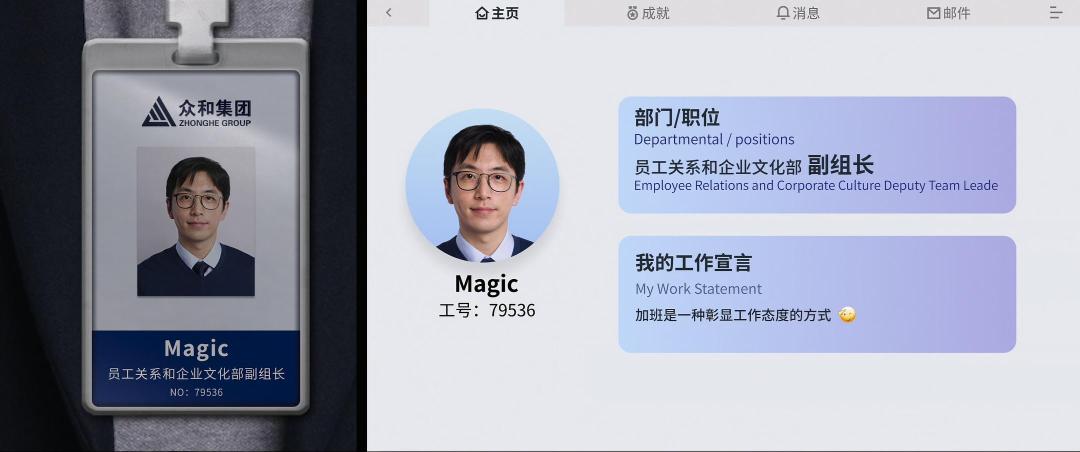
Some large companies have a special department for corporate culture. (Photo/“No More Year - End Party!”)
As young consumers have more channels to obtain information, they no longer only focus on products and services but also comprehensively examine a company's values. Obviously, the boundary between consumer brands and employer brands is becoming increasingly blurred.
An employer brand refers to a company's reputation and image as an employer in the outside world, which is related to its ability to attract and retain excellent talents. Relevant discussions have been around abroad since the last century. In 1984, Fortune magazine in the United States conducted the first “Best Employers” selection. In the 1990s, British scholars were the first to introduce the concept of brand into the field of human resource management and proposed the concept of “employer brand.”
Undoubtedly, the complaints and boycotts from domestic netizens are still just a spark at present, and no one can predict whether they can shake a big tree. But looking back at the economic cycle of human society, there have been precedents of mutual promotion between companies and workers.
A survey by management consulting firm Watson Wyatt showed that in 2002, during the global economic downturn, the three - year total shareholder return of outstanding employers was three times that of ordinary employers. A study by Beijing Institute of Technology in 2015 showed that a company's good employer brand helps consumers develop a preference for its products and increases repeat - purchase behavior; the more proud employees are, the more willing they are to recommend the company's products to others.
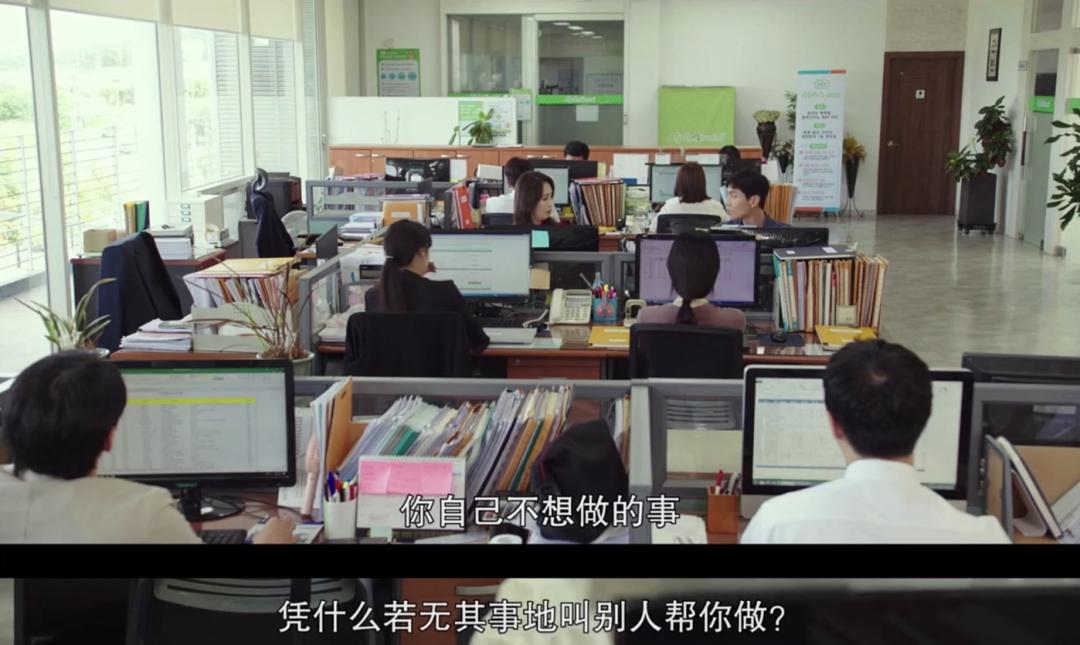
People who have worked can understand that there are many factors that affect a company's reputation. (Photo/“My Liberation Diary”)
In terms of employer brand building, foreign companies in the fast - moving consumer goods industry, such as Procter & Gamble and Mars, are pioneers. Everything from campus recruitment talks to the management trainee system has been emulated by later - comers.
Among domestic companies, the most convincing example may be Fat Donglai. With salary and welfare far above the local industry average, a 30 - day annual leave, and recent kindness shown to released prisoners, the company has an employee turnover rate as low as 1% - 2%. Customers believe that since Fat Donglai is responsible for its employees, it will also be responsible for consumers; employees are enthusiastic about their work and are more willing to provide customers with an excellent service experience. Therefore, even though Fat Donglai has had its share of controversies, most netizens still “spoil” it.
After gaining some work experience, many workers believe that how a company treats ordinary employees in a weak position also reveals how it treats the world. This kind of evidence is difficult to package with unified marketing slogans without showing flaws and is more convincing than fancy brand promises.
A difficult choice between practical benefits and dignity
The ideal is beautiful, but the reality is that when companies offer real discounts to consumers, many people's “stance” becomes less firm.
For example, since Xibei started offering significant price cuts in October, the customer flow has shown signs of returning to its peak. According to multiple media reports, the prices of some dishes in Xibei's national stores have been cut by 20% to 40%. During the National Day holiday, the company also issued 100 - yuan no - threshold vouchers to dine - in customers, and after the holiday, it launched an activity of “giving a 50 - yuan voucher for every 50 yuan spent.” Just a few days ago, the topic “Xibei customers are queuing up again after it kept silent” made it onto the hot search list, and comments on social media and restaurant review apps also confirmed the situation.
Suppose that in the future, Peak also launches amazing new products or services. No one can predict how the market will react.
In a situation where there is a significant gap in product strength, consumers' choices will be more practical. Tesla may treat its employees better, but its newly launched cheap “bare - bones” cars are still ridiculed. When compared with competitors with