The competition among automakers is fierce. Seres teams up with ByteDance to bet on robots.
One word to describe car companies this year: Cut - throat competition!
This year, all car companies have been engaged in a cut - throat competition in intelligent driving, end - to - end solutions, and large cockpit models. In the end, press conferences have become more and more like mobile phone press conferences. It seems that whoever can shout "leading by a large margin" louder can capture consumers' minds.
Recently, Chongqing Phoenix Technology Co., Ltd., a subsidiary of SERES, signed a "Framework Agreement for Embodied Intelligence Business Cooperation" with Volcengine, a subsidiary of ByteDance. According to the agreement, the two parties will collaborate on the project of "Intelligent Robot Decision - making, Control, and Human - Machine Enhancement Technology for Multi - modal Cloud - Edge Collaboration".
Judging from the content of the announcement, the two parties are not aiming to create a smarter cockpit, nor are they stuffing large models into new car press conferences. Instead, they choose to enter the future from the perspective of "robots".
While the fierce competition in the new energy vehicle market is still ongoing, why has SERES turned to embrace robots? Is SERES collaborating with ByteDance on robots to supplement its capabilities or to bet on the turning point of the era?
01 SERES Must Find a New Narrative
The competition in the new energy vehicle market has entered the second half. Scale competition, channel competition, and cost competition are becoming more and more similar to those in the consumer electronics industry, while technological differences are becoming less and less valuable. A highlight launched by a car company today may become the standard for its peers in three months.
So, if SERES continues to focus solely on the cut - throat competition in the automotive field, it will only become a stronger car company, but not necessarily a more valuable one.
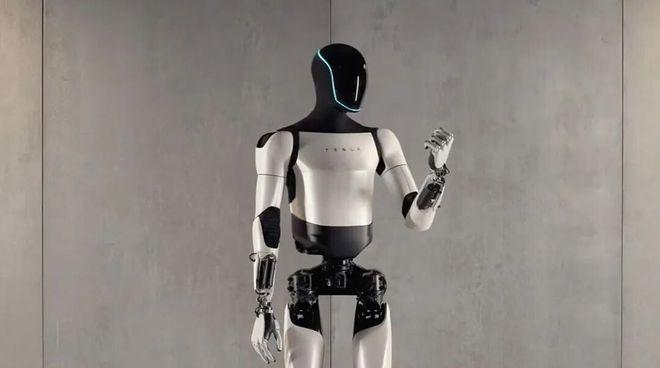
Elon Musk once said, "A car is a robot on wheels." He is willing to place a higher bet on Optimus than on cars. He even publicly emphasized that the real future value of Tesla lies in robots rather than cars themselves.
In the first half of 2025, SERES' cumulative sales of new energy vehicles exceeded 300,000 units, with Wenjie contributing more than 90%. The average price per vehicle exceeded 400,000 yuan, making SERES almost the most successful car company among Chinese new - energy vehicle startups.
In the first half of 2025, SERES achieved an operating income of 62.402 billion yuan, a year - on - year decrease of 4.06%. However, its net profit attributable to shareholders reached 2.941 billion yuan, a year - on - year increase of 81.03%.
In the new energy vehicle market, such achievements can be described as "impressive". However, the capital market is cruel.
Excellent sales and profit growth can only prove that you are a successful manufacturing enterprise, not a technology company with future imagination.
If SERES continues to focus only on cars and only talk about cars, even if it achieves annual sales of one million units, turns a profit, and has a remarkable gross margin, the market will still measure it with the same yardstick: Is your growth rate sustainable? Can your scale rival that of BYD? Can your progress in intelligentization match that of Tesla?
Since 2024, the new model cycle has been compressed, and intelligent functions have changed from "selling points" to "standard features". The industry has become extremely event - driven. A single press conference can change the sales volume for a quarter, and a single product mistake may wipe out the annual profit.
Therefore, SERES must find a second growth curve to break away from the "car company model" instead of being trapped in the growth logic.
SERES needs a direction that can help it escape the red - ocean competition, return to the technology narrative, and regain its imagination. Embodied intelligence happens to be the path that fits the time window, the company's capabilities, the global trend, and is not yet overcrowded.
Data from Tianyancha shows that since 2023, many regions across the country have begun to intensively layout the embodied intelligence industry. The registered capital is high, and the ecosystem is still in its early stage.
In the intelligent vehicle track, no matter how fast SERES is, it can only participate in the competition. However, in the embodied intelligence track, it may participate in defining the rules.
SERES needs a matching technology entry point and a strong AI ally. Then, ByteDance appears.
02 Why the Partner Is ByteDance Instead of Huawei
If SERES is looking for embodied intelligence to break through the ceiling of a car company, then why does it choose ByteDance instead of the more familiar Huawei?
In the automotive business, SERES and Huawei are a deeply - bound community.
Huawei provides intelligent driving, intelligent cockpits, channel influence, and brand leverage. This kind of cooperation is more like "adding features inside the car" with the goal of enhancing the competitiveness of the car. However, the end - goal of embodied intelligence is not the car. It points to a full - scenario operating system that extends from the mobile space to the real world.
Huawei's main battlefields are HarmonyOS, intelligent terminals, the ICT infrastructure, and vehicle - road collaboration. It is a systematic expansion centered around "ecosystem control", rather than releasing computing power, models, and data capabilities without boundaries to a single vehicle manufacturer.
In a sense, Huawei's role in the automotive industry is more like a "system setter" rather than a "partner to jointly experiment with the future". It is good at keeping the results, paths, and rhythms under control. However, the embodied intelligence track requires a high degree of openness, rapid trial - and - error, and an exploration space that may break through control. Huawei pursues certainty, while robot R & D requires uncertainty.
In contrast, ByteDance's approach to AI is naturally in sync with the experimental logic of embodied intelligence.
In the past two years, ByteDance's core focus has been summarized by the outside world as "ALL IN AI". Volcengine provides computing power, models, platforms, and intelligent agent toolchains; the intelligent agent workflow of its subsidiary Coze has begun to accelerate its open - source process; the capabilities of large - model inference, data processing, and AI task orchestration are no longer just an extension of the content field but are trying to become the "behavioral layer center" of the real world.
However, what ByteDance lacks is an embodied entry point. It has neither a vehicle - grade hardware platform nor a data collection channel for long - term iteration in the physical world. It also lacks low - cost, scalable real - world scenarios for closed - loop verification.
In a nutshell, SERES has scenarios, hardware, and large - scale feedback from the real world; ByteDance has models, computing power, and intelligent agent capabilities but lacks a physical carrier.
What embodied intelligence requires is a continuous closed - loop system from "perception - understanding - decision - action - feedback". In the past, this closed - loop only existed in laboratories or simulated environments. Now, it needs to be extended to the real world on a large scale. Car companies are the most natural carriers in the real world, while AI companies are the most natural cognitive and decision - making engines.
Then, why does SERES' cooperation in embodied intelligence not extend from cars but directly target robots?
In ByteDance's view, cars are just one form of embodied intelligence, not the whole. In SERES' view, tying itself to the single dimension of "vehicle intelligence" will lock in its future development rights. Both parties are aiming for the world "after cars" rather than "evolution inside cars".
Huawei provides a certain system, while ByteDance aims to create an "unknown but potentially huge" future operating system rather than optimizing a "certain but clearly - ceilinged" intelligent terminal ecosystem.
Therefore, in the world of cars, SERES joins hands with Huawei; in the world after cars, it chooses to ally with ByteDance.
This cooperation signals that SERES is not satisfied with being "one of the most successful intelligent vehicle companies". It wants to position itself on the timeline of intelligent agents and embodied intelligence.
03 Robots Will Become the Valuation Divide
In the first half of the AI wave, humans solved the problem of the "brain". We use models to understand the world, generate information, and make judgments. In the second half, the battlefield has shifted to the "body", enabling intelligent agents to have the ability to act in the physical world.
The essence of embodied intelligence is to upgrade from "understanding the world" to "transforming the world", turning virtual cognition into real actions, liberating computing power models from the screen, and allowing AI to truly interact with the resistance, noise, and feedback in the physical world.
Tesla has placed Optimus at a higher strategic position than cars, using "millions of humanoid robots" as the future valuation anchor; OpenAI's research has gradually shifted from language intelligence to "general action capabilities"; NVIDIA has fully bet on the embodied intelligence simulation platform Isaac in its software stack, regarding it as the next - generation "operating system - level tool"; Apple has shifted more R & D investment to the robot field, trying to make up for its passive position in the era of large models.
Once AI can perform tasks in the physical world, it is no longer just an information tool but a production tool.
When AI has execution capabilities, its commercial value is no longer limited by the old - world logic of advertising, search, content, and "screen interaction". Instead, it will expand to all "action - oriented scenarios" such as manufacturing, logistics, retail, nursing, household, and transportation.
This is why Elon Musk dares to say that the ceiling of Optimus is several times that of Tesla's market value. It is also why in the past year, cyber factories, intelligent agents, and general - purpose robots have become the keywords that global capital truly focuses on.
The impact of embodied intelligence on the automotive industry is more like an "earthquake - level shift". The greatest asset that car companies have accumulated over the past few decades is not cars or production lines but "real - world data + a large number of controllable scenarios". A car travels on real streets every day, facing weather, lighting, roads, and uncertain traffic participants. Such data cannot be created in any laboratory, and car companies are the only industry that naturally has such resources.
When embodied intelligence becomes the ultimate goal, the meaning of the car as a hardware carrier will shift from a "product" to an "entry point for data and action capabilities".
SERES is not fantasizing about immediately building a robot empire. Instead, it wants to secure the right to enter future scenarios for itself first.
SERES has large - scale real - world scenarios and is still growing at a high speed. 300,000 cars on the road are more meaningful for long - term training than 10 laboratories and 100 simulation environments. In the end, what embodied intelligence competes on is not papers but the number of feedbacks.
Robots will be a market dividend in the future. For early - movers, it also includes the compound interest of algorithm moats, cost curves, and model iteration speed.
Through cooperation with ByteDance, SERES is supplementing its "cognitive layer" rather than the "hardware layer". If a car company solely engages in embodied intelligence, it is likely to fall into the old thinking of strengthening hardware. If an AI company solely engages in embodied intelligence, it may stay in the simulation world. SERES uses a "dual - line superposition" approach rather than a single - point breakthrough.
The industrial cycle of embodied intelligence will not be short. It is not a fast - paced cycle like the software industry but a long - term process that may take 5 to 10 years to show a clear divide. From real - world scenarios to general models, from humanoid robots to cost reduction, and then to truly entering the core of the industrial chain; there is no shortcut on this road.
SERES is not betting on a quick victory but on a long - term and costly future war.
The next - generation technology giants will surely emerge from embodied intelligence. In the next stage, SERES may become the protagonist of the technology industry.
This article is from the WeChat official account “Blueberry Finance” (ID: ITparty), written by Blueberry Jun, and reprinted by 36Kr with permission.