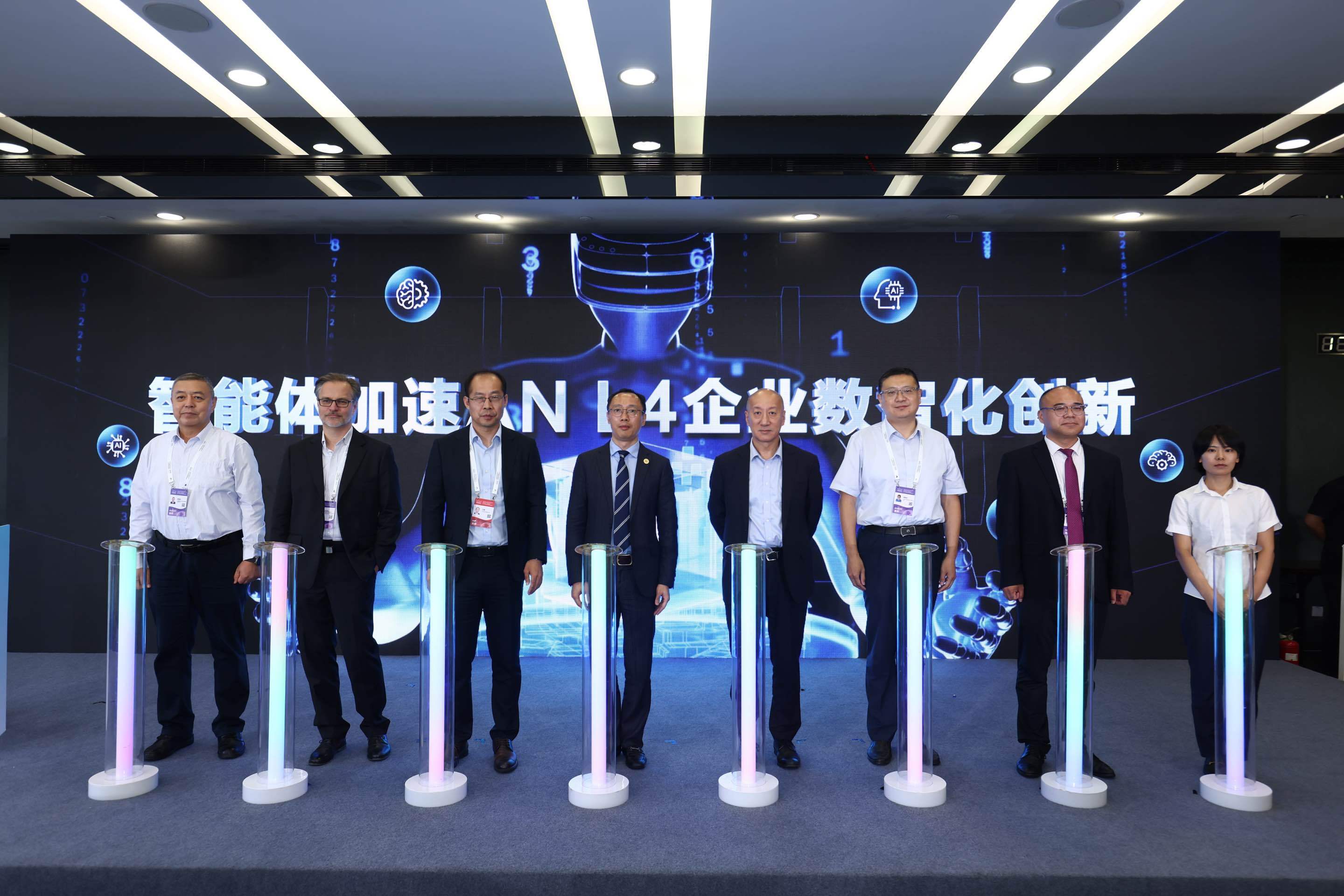
Wang Hui, President of Huawei's NCE - Data Communication Domain: The New Stage of AI's Application in the Real World
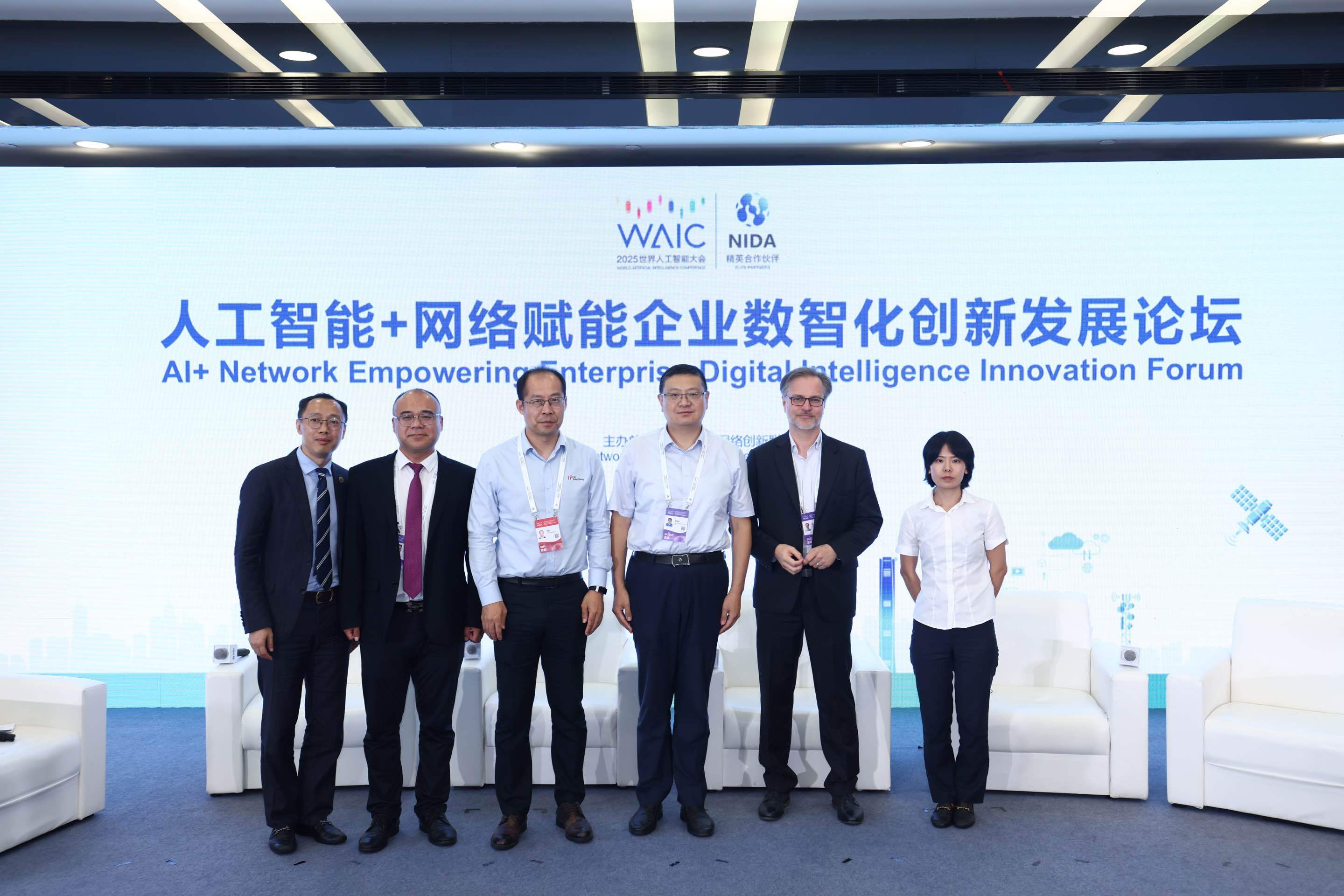
As large models transition from the technological singularity to the industrial foundation, and as intelligent agents move from laboratories to production lines and clinics, the third wave of artificial intelligence is reshaping the global economic fabric with unprecedented sharpness.
China demonstrates dual advantages in this transformation: it is not only a testing ground with ultra-large-scale application scenarios but also launches attacks in deep waters such as chip breakthroughs and algorithm open-sourcing. From breakthroughs in single-point technologies to ecosystem-level innovation, from efficiency tools to new-quality productivity engines, an AI development path with Eastern characteristics is accelerating to emerge.
On July 26, the World Artificial Intelligence Conference (WAIC 2025), themed "Intelligent Era, Global Solidarity", gathered technology giants, academic pioneers, and policy-makers from the AI field. This super feast covering technology, ethics, and art indicates that AI has evolved from an "industrial variable" to a "civilizational constant".
At this grand event on the artificial intelligence industry, 36Kr not only acts as an industry observer but also participates deeply as an industry connector. It has set up the "Krypton Star Live Studio" in the exhibition hall to reveal the underlying logic of the advancement of the artificial intelligence industry through dialogues.
In the dialogue, Wang Hui, President of Huawei's NCE - Data Communication Domain, said: Large-scale learning represented by strong inference models has not reached its ceiling yet; it's still a long way to go. If we empower a large model with knowledge from multiple fields to make it specialized in one field, this will be our main direction of effort in the future.
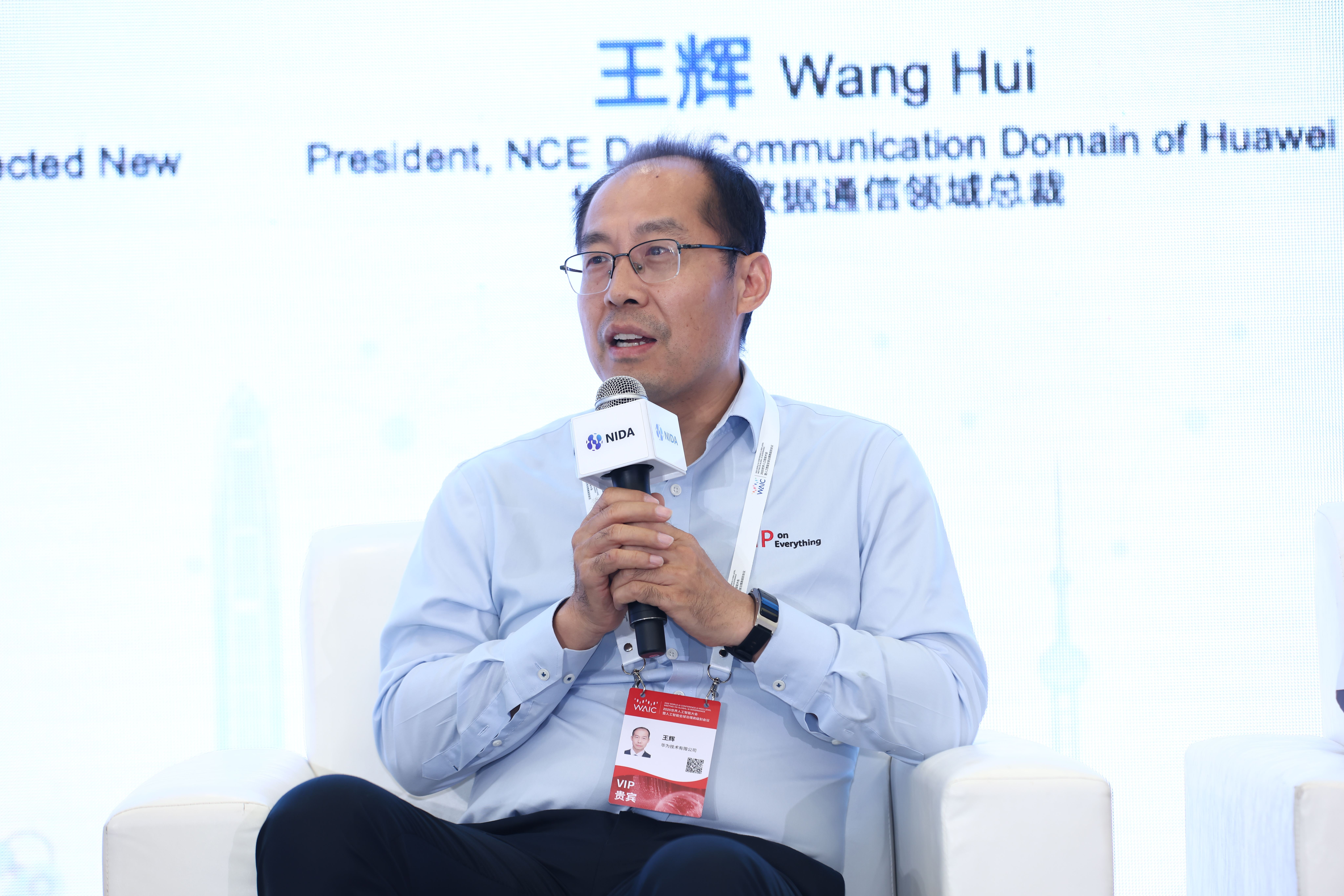
The following is the transcript of the dialogue, edited by 36Kr:
36Kr: Among the issues or trends discussed at this WAIC, which trend do you think is the most obvious?
Wang Hui: The most important trend we've observed at this conference is that AI has truly penetrated into the ToB industry. Previously, many technologies were only presented on PPTs and in videos, but this time, we've seen that many AI applications have entered production workshops and factories. From robots screwing to modern teaching, schools can use AI for auxiliary teaching, and there are even some AI digital teachers helping schools with many courses. So, I think the biggest change is that, imperceptibly, AI has penetrated into every industry and truly become a productivity tool.
36Kr: What do you think is the biggest impact of AI penetrating into the industry on our current work?
Wang Hui: I'm in charge of autonomous driving networks at Huawei, not the autonomous driving of cars, but using AI to drive networks. Many people may wonder, does the network need to be driven by AI? Indeed, the network is very complex. From large-scale telecom networks of operators to small-scale enterprise networks, for example, Tsinghua University has tens of thousands of devices to form its campus network, which serves tens of thousands of teachers and students. In this case, the high-level intelligence of network operation, experience, management, and security becomes very important and necessary.
Taking network security as an example, more than 80% of global network attacks are actually initiated by AI. Many ransom attacks are automatically carried out by AI, making AI ransom the third-largest black industry after drug smuggling. In this case, it's unrealistic to use humans to fight against AI. During this year's Harbin Asian Winter Games, the event system was attacked by the network up to 270,000 times.
Therefore, we must apply many AI technologies to the network to solve network traffic problems and then address network attack issues. From this perspective, AI has profoundly changed the network industry.
The above is about AI for network. The other part is called Network for AI, that is, how our network serves AI.
Nvidia's network business is very valuable, with revenues expected to exceed 10 billion this year. Huawei is also a large - scale company. Compared with the previous ones, the communication network has changed greatly. It requires high - speed, non - blocking, and long - term stable operation. The training of a large model often lasts for 45 to 60 days. If the training process is interrupted, it needs to start over or at least resume from the previous checkpoint. Why is OpenAI's training of its new model so slow? A very important reason is the frequent interruptions. So, we must empower the network with AI to ensure the long - term stable operation of the entire AI training process.
In summary, I think AI has profoundly changed the network, and at the same time, the network has also profoundly changed AI.
36Kr: Can you give a more specific example to show how AI adds value to customers?
Wang Hui: Take Tsinghua University for example. Its network is actually very complex. There are tens of thousands of Wi - Fi devices that we usually see. A significant change is that in the past, especially in classrooms, the network wasn't that important. Many teachers didn't want students to be on their phones all the time, which would affect the quality of teaching. But now, it's different.
With the development of smart classrooms, in class, students need to use tablets or laptops to interact with teachers through the network. They need to submit answers, view AI - assisted teaching content, or download a large number of course materials, which places high demands on the network. In the smart classrooms of Tsinghua University, there are often one or two hundred students in a class. When everyone downloads a large number of course materials simultaneously, the network becomes very congested. And once the network fails, it may take an hour or even two hours to repair, which is unacceptable as the class is over.
However, by introducing AI, we can make the network signal more uniform and sense the quality of each student's application. For example, when you submit exam answers, it ensures that your network is secure and reliable; when you download course materials, it ensures high - speed and smooth operation. Therefore, through these AI means, we effectively ensure the stable operation of the entire smart classroom. Whether it's AI - assisted teaching or smart education, with the support of AI, we can ensure a good network experience for each student.
36Kr: What do you think is the biggest technical or engineering difficulty that AI or artificial intelligence technology is currently facing?
Wang Hui: This is a common problem in the ToB industry. The most core issue is still accuracy.
When AI enters the engineering field, it's different from the ToC scenario. If it writes a poem not very accurately, it doesn't matter; it may even make the poem more beautiful. If it sings a song not very accurately, it's also okay. However, when it comes to each vertical ToB industry, the requirements are different. For example, we've also developed a lot of AI - assisted medical applications. If there's an error in diagnosis, it may affect a patient's life. For self - driving cars, if there's a misoperation when braking, it may cost someone's life. So, when AI enters the industrial field, its accuracy is the biggest challenge at present.
36Kr: It may be easy to achieve 99% in the ToB industry, but it's very difficult to eliminate the 0.01% error from 99% or even 99.9% to 100%. What kind of efforts do you think the industry needs to make to truly achieve 100% accuracy for AI?
Wang Hui: Personally, I think there may still be a lot of inaccuracies in the current data. In fact, it's also very difficult to reach 99%. Reaching over 90% or even over 95% is acceptable because each industry has different thresholds. For example, the automotive industry sets an indicator of the number of failures per 100,000 kilometers. For an individual, there may be an average of one driving accident per 100,000 kilometers. If self - driving or AI can exceed this threshold, it's acceptable. The same goes for other fields. A doctor's diagnosis is not 100% accurate either. Even the most experienced doctors will make misjudgments in their careers. So, it's a matter of threshold. I think in different fields, if it can reach 90% or even 95%, it can be used first, and that's okay.
A very crucial factor is the technology of large and small models. Although we're currently using a lot of large - model technologies, objectively speaking, in the short term, whether it's large - scale reinforcement learning or other technologies, it's very difficult to make large models very accurate. So, the many small models or specialized models in niche fields that we've accumulated in the industrial field are very important. Just like asking a large model to do math problems. Although it may get high scores now, there are still actually errors. If you use a calculator, its accuracy is almost 100%.
More importantly, the combination of current AI technologies, including large - model AI technologies, original domain - specific AI model technologies, and many non - AI incentive model technologies, can truly improve its intelligence level, generalization ability, and at the same time, its accuracy. This is a relatively reasonable path in engineering at present.
36Kr: What kind of information do you think this WAIC conveys to ecological partners or to ourselves?
Wang Hui: A significant change is that large models are no longer compared by scores but by commercial value. Previously, large models liked to compare scores. The time to top the leaderboard has changed from one month to one week, then to one day, and finally to only one hour. Now, people don't really care about this anymore. Robots are no longer compared by performing magic tricks or martial arts but by how well they can screw in a factory.
So, from this phenomenon, I think people don't really care about the so - called technological breakthroughs in indicators but have shifted their focus to commercial value. For example, whether AI can truly be implemented in each industry and ultimately generate commercial value is what people care about the most.
In the past two days, I've talked with many well - known experts in the AI circle, including many university professors, about this matter. From a pure technical perspective, since the emergence of strong inference models like DeepSeek and OpenAI, there hasn't been a revolutionary qualitative change because we haven't found the technological variable. Large - scale learning represented by strong inference models should still be far from reaching its ceiling. Empowering a large model with knowledge from multiple fields to make it specialized in one field will be our main direction of effort in the future.
36Kr: If you come to the next WAIC, what kind of expectations do you have for it? What new phenomena or trends do you hope to see?
Wang Hui: Tickets for this WAIC were in short supply. Many people couldn't get in, which shows the popularity of AI. WAIC provides a great platform for the global AI industry to meet and for enterprises and customers to communicate intensively. This is a very good thing.
Looking to the future, an obvious trend is that AI and large models will penetrate deeper into all industries. Next year, we may see not only robots screwing but also performing end - to - end tasks in factories. WAIC can also be more focused and build a platform for each niche industry to communicate with each other and promote commercial implementation.