Someone took the principle of engraving words on stones and made a hard drive with it.
To be honest, I just got a 4TB hard drive.
The reason is that I used to have a mechanical hard drive dedicated to storage, which was filled with all my old photos, novel documents, and study materials from my college days to the present.

But one night when I was about to use it, I found that I couldn't read the data on the hard drive suddenly, which really scared me.
Is my digital life, which I've built up for so long, going to start all over again today?
Fortunately, I'm good at DIY. After some tinkering, it came back to life, and the reassuring clicking sound filled my bedroom again.
But since then, I've been anxious about hard drive storage. Although an ordinary hard drive has a lifespan of 5 - 10 years, it can break down at any time without warning. An ordinary optical disc can only store data for a few decades, and it needs to be kept away from light and high temperatures.
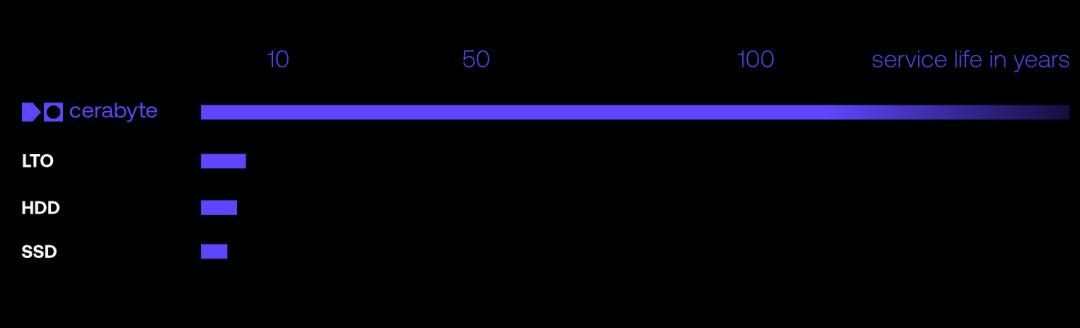
However, recently when I was surfing the Internet, I found something even more outrageous. A German company called Cerabyte claims that you can store your data for 5000 years with just a piece of glass.
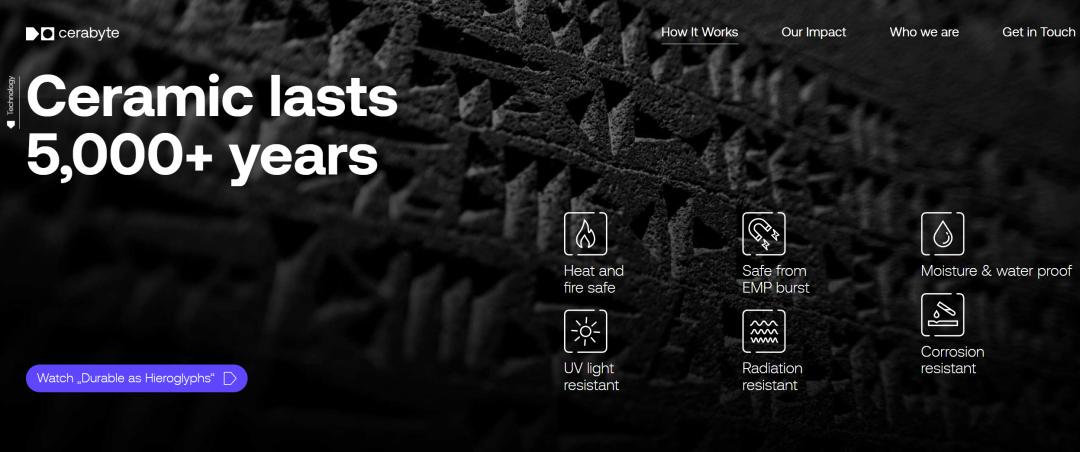
What does 5000 years mean? At that time, the most advanced writing was cuneiform, and China was still in the Stone Age. So, if this thing really works, your study materials won't be just materials anymore; they can be promoted to cultural relics.
The hard drives and optical discs we use now can hardly store data for a few decades, mainly because they are very fragile.
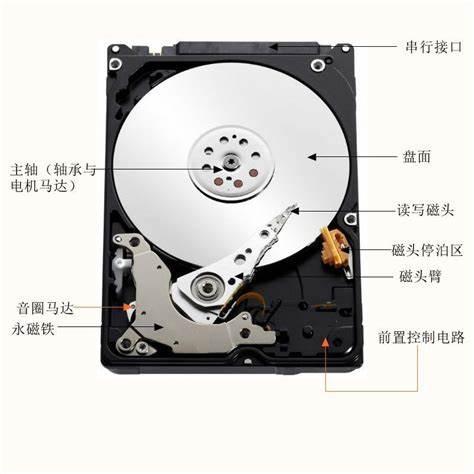
For example, a mechanical hard drive is as delicate as a mechanical watch. The magnetic head that reads data flies just a few dozen nanometers above the disk surface. A slight bump or an improper power - off can cause physical bad sectors. Moreover, the magnetism of the disk will gradually weaken over time.
As for a solid - state drive, it relies on the floating gates in the flash memory particles to store data. Every time data is written, it's like a high - voltage breakdown, which wears down the oxide layer between the floating gate and the substrate. As you use it, the oxide layer becomes thinner, and the electrons can't be trapped, so the data is lost. This determines its write lifespan.
An optical disc can't withstand scratches on the storage surface, oxidation of the reflective layer, high temperatures, or moisture.
So, to verify whether this "5000 - year" claim is true, I went to their official website to do some research.
To my surprise, the principle of this thing is actually a bit like our ancestors' way of "recording events by carving on stones".
01
To put it simply, they coat a special ceramic nano - coating on a glass substrate. Then, they use a femtosecond laser to engrave tiny holes on this coating to record data. When reading, they use a microscope - level reader to identify and decode these hole patterns.
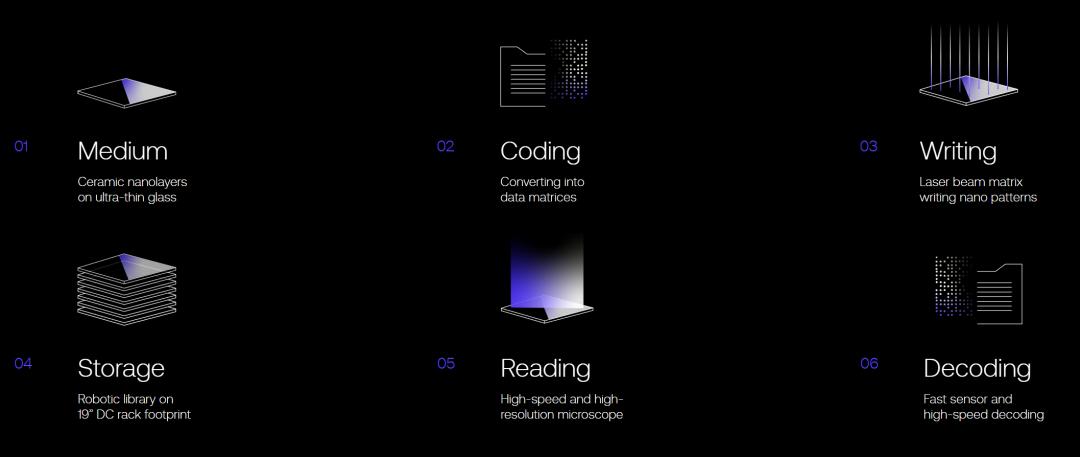
Since the data is physically engraved rather than relying on fragile magnetism or charges like current hard drives, its durability is much greater than that of current hard drives.
Moreover, it's not only durable in normal use but also in extreme environments. To prove how "tough" their hard drive is, Cerabyte's employees demonstrated it on - site: they threw the storage medium into saltwater at over 90 degrees Celsius and boiled it for six hours.
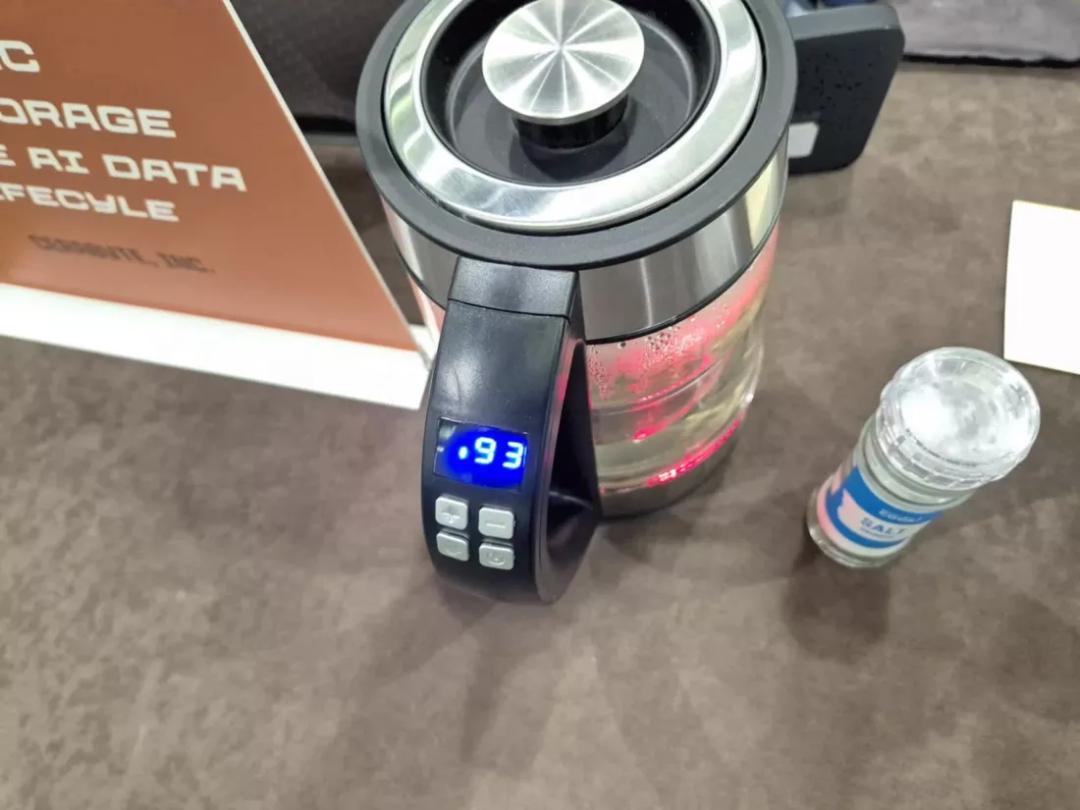
As a result, the kettle was almost worn out, but the data retrieved was still intact.
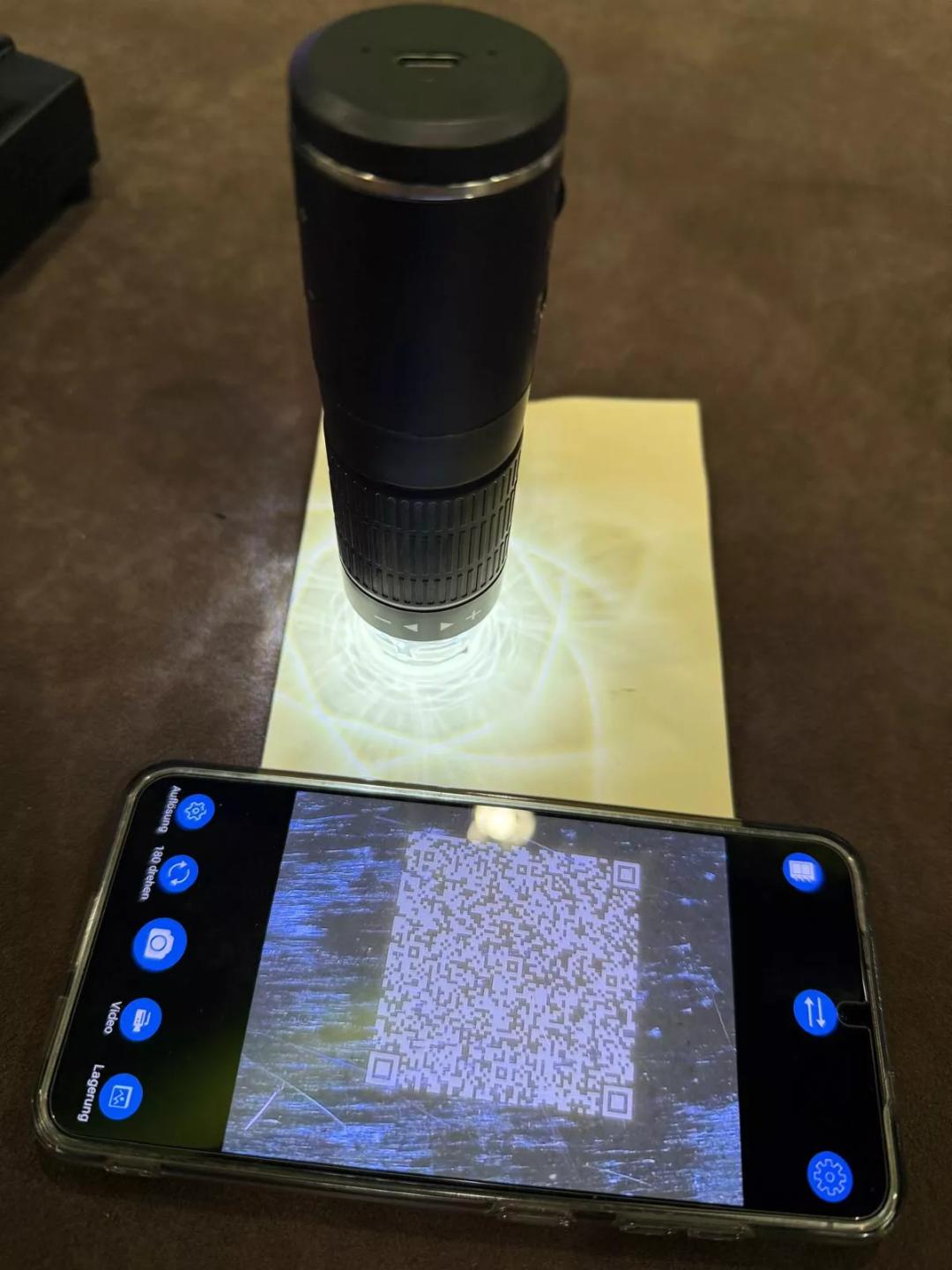
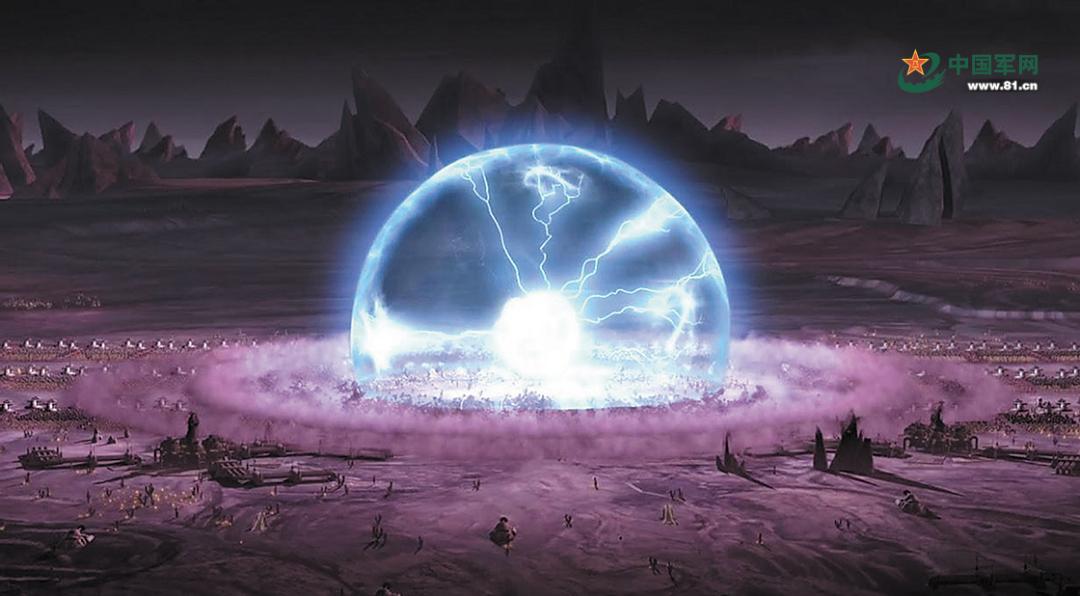
According to their official statement, this ceramic glass storage can not only withstand high - temperature fires, moisture, and ultraviolet radiation but also resist various chemical corrosions and even withstand electromagnetic pulse attacks.
Yes, it's the same kind of powerful move in science - fiction movies that can make all electronic devices in a city stop working instantly. That means if aliens really invade in the future and all our hard drives are destroyed, this thing can still firmly preserve the spark for human civilization.
Even more amazingly, its storage density is extremely high. Cerabyte says that their goal is to lay the foundation for the upcoming Yottabyte (YB) era. Maybe you don't know what YB means - 1 YB = 1 trillion TB.
While we're still worried about our C - drives always running out of space and our hard drives being full, they're already planning for a future of 1 trillion TB.
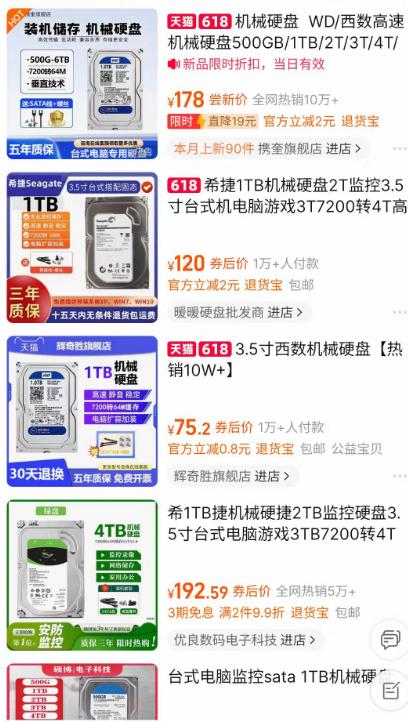
Of course, the most important thing is the price. No matter how good it is, it's useless if we can't afford it. On this point, Cerabyte also gave an amazing answer: they expect to reduce the storage cost to less than $1 per TB before 2030.
Wow, even the cheapest 1TB mechanical hard drive nowadays costs dozens or even hundreds of dollars. Once this thing comes out, will our solid - state and mechanical hard drives still have a place?
02
In my opinion, there's no need to get too excited. From the current information, this thing is more like a modern version of "carving words on stones".
It only emphasizes how strong its storage ability is, but the official website doesn't mention key indicators such as read speed, random performance, and the number of rewrites at all.
But I also found the white paper provided by Cerabyte. It says that the current prototype has a read speed of only 5MB/s. I can only say it's even slower than an optical disc.
Just like I can't write articles on a stone tablet every day and use a chisel to correct my mistakes when I make them. For daily scenarios such as playing games, editing videos, and writing documents, which require high - speed reading and writing and repeated modifications, we still rely on our current solid - state and mechanical hard drives. So, Cerabyte's technology is more suitable for being a data graveyard, where data only goes in and never comes out.
Actually, its positioning is quite similar to that of an optical disc, which is for "cold data archiving". In other words, it's used to store extremely important but rarely used data. For example, the materials in national archives, the original data of scientific research institutions, and the backup data of large - scale cloud service providers.
Although the official mentioned that its read - write speed may reach over 1TB/s in the future, we can't jump to conclusions yet. After all, tech companies are good at making empty promises.
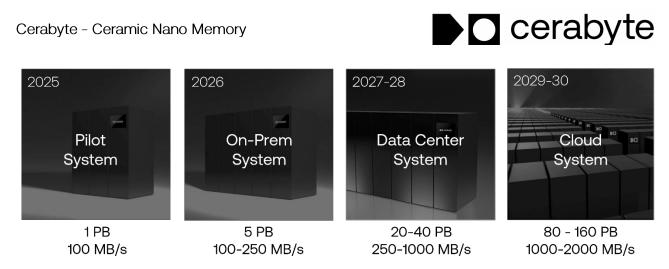
But I'm also curious. Can this thing really be commercially mass - produced and challenge current storage devices?
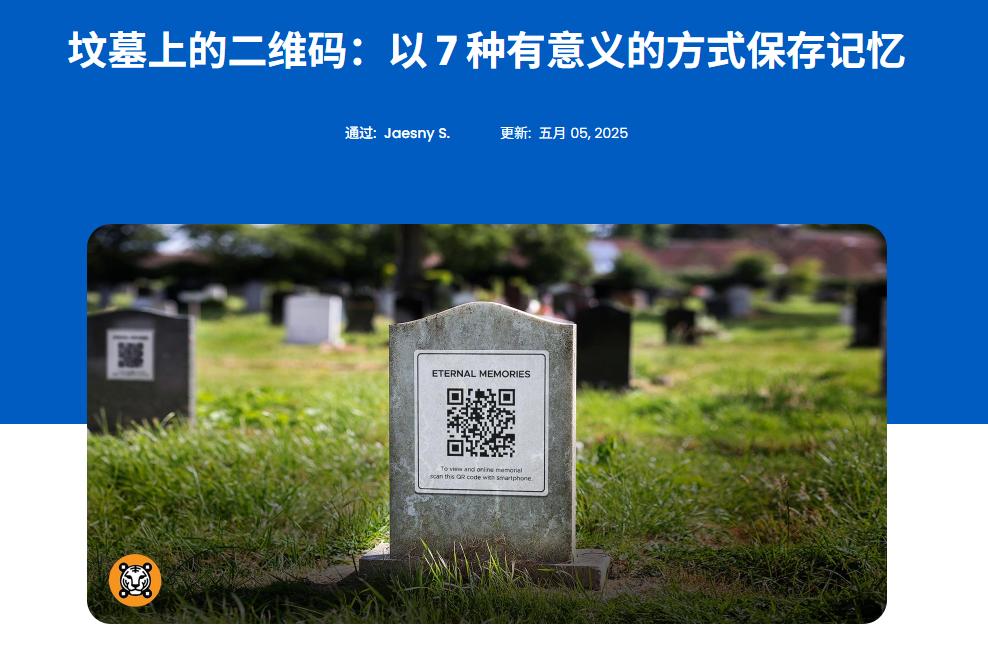
If it's made to look like a current hard drive and you can plug it into the motherboard interface, I guess besides people like me, only those who engrave QR codes on tombstones might buy it, because ordinary people don't have such a need.
Those who really have such a need may have already bought optical discs, because this thing has withstood the test of time.
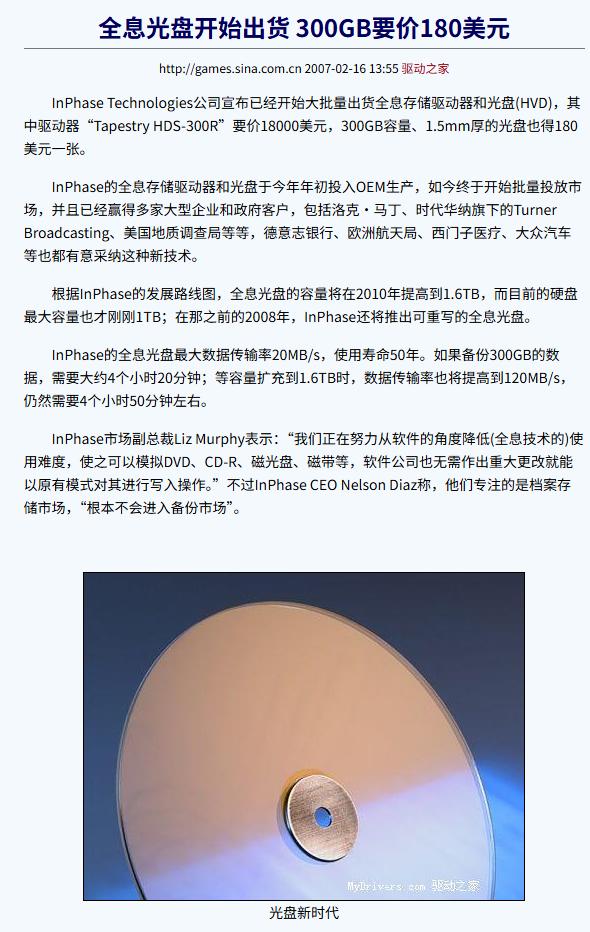
I still remember that in the early 2000s, there was a technology called "holographic optical disc". At that time, it was hyped up a lot, claiming that it could store 1TB per square inch, and a 50TB disc was expected to be launched in 2015. Where is it now? It's long gone.
So, whether Cerabyte's eternal glass can move from the laboratory to real life still needs some time to tell.
However, if all this is true, maybe humans (or aliens) 5000 years later will dig out our electronic heritage from some ruins and discover the abstract art from the 21st century in it.
I wonder if they'll doubt our level of intelligence.
This article is from the WeChat official account "ChaPingX.PIN", author: ShiChao. It is published by 36Kr with authorization.