BYD, das monatlich 400.000 Fahrzeuge verkauft, kommt in Indien nur auf 686 Einheiten, während Maruti Suzuki 190.000 Fahrzeuge verkauft. Indien: Ohne Technologiezugang gibt es kein Stück vom Kuchen.
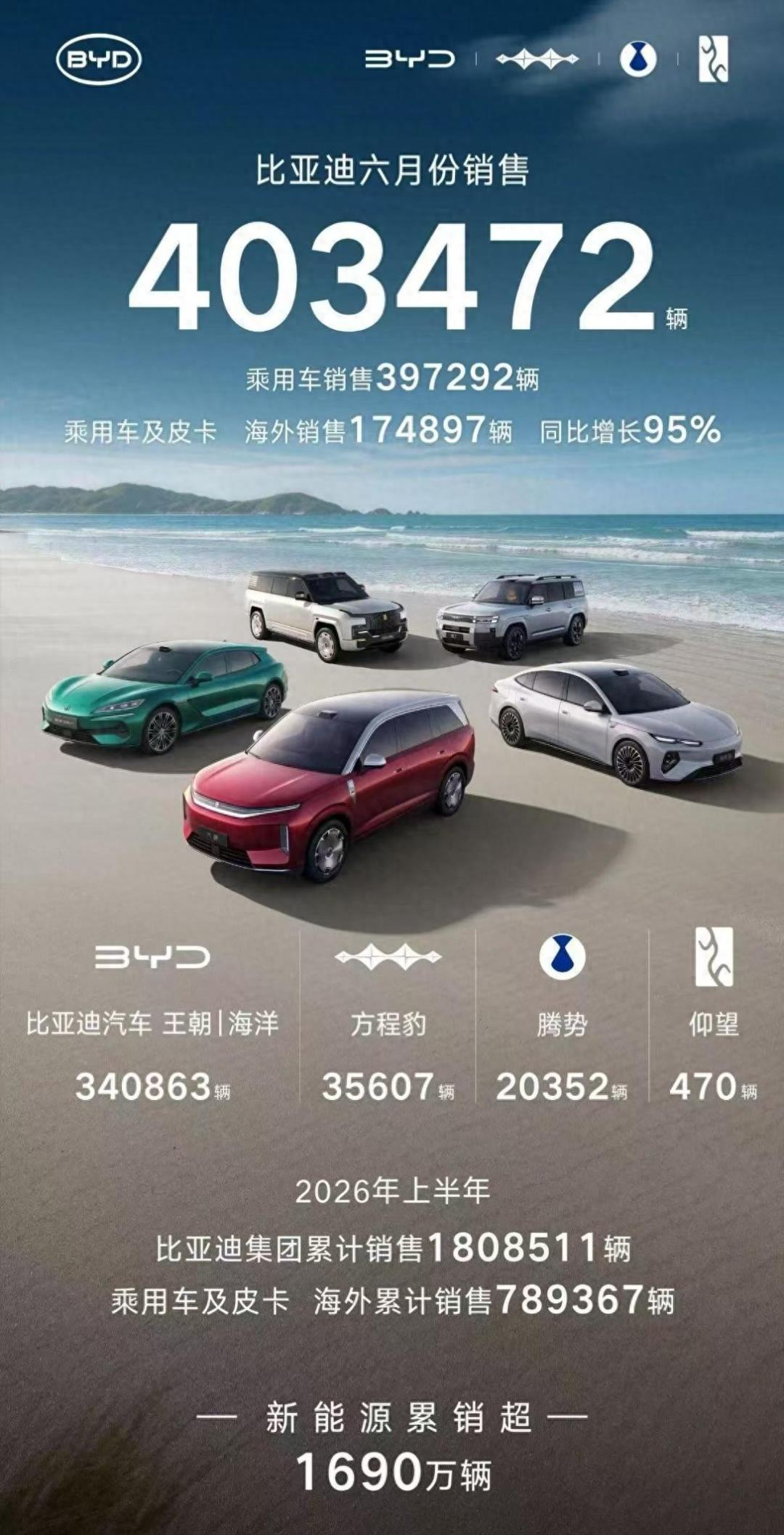
Recently, some data are quite interesting. On the one hand, BYD sold 403,000 vehicles in June 2026. On the other hand, the entire Indian automotive market reached a historical high in May 2026 and only sold 440,000 vehicles. BYD's monthly sales are almost as high as the entire monthly sales in India.
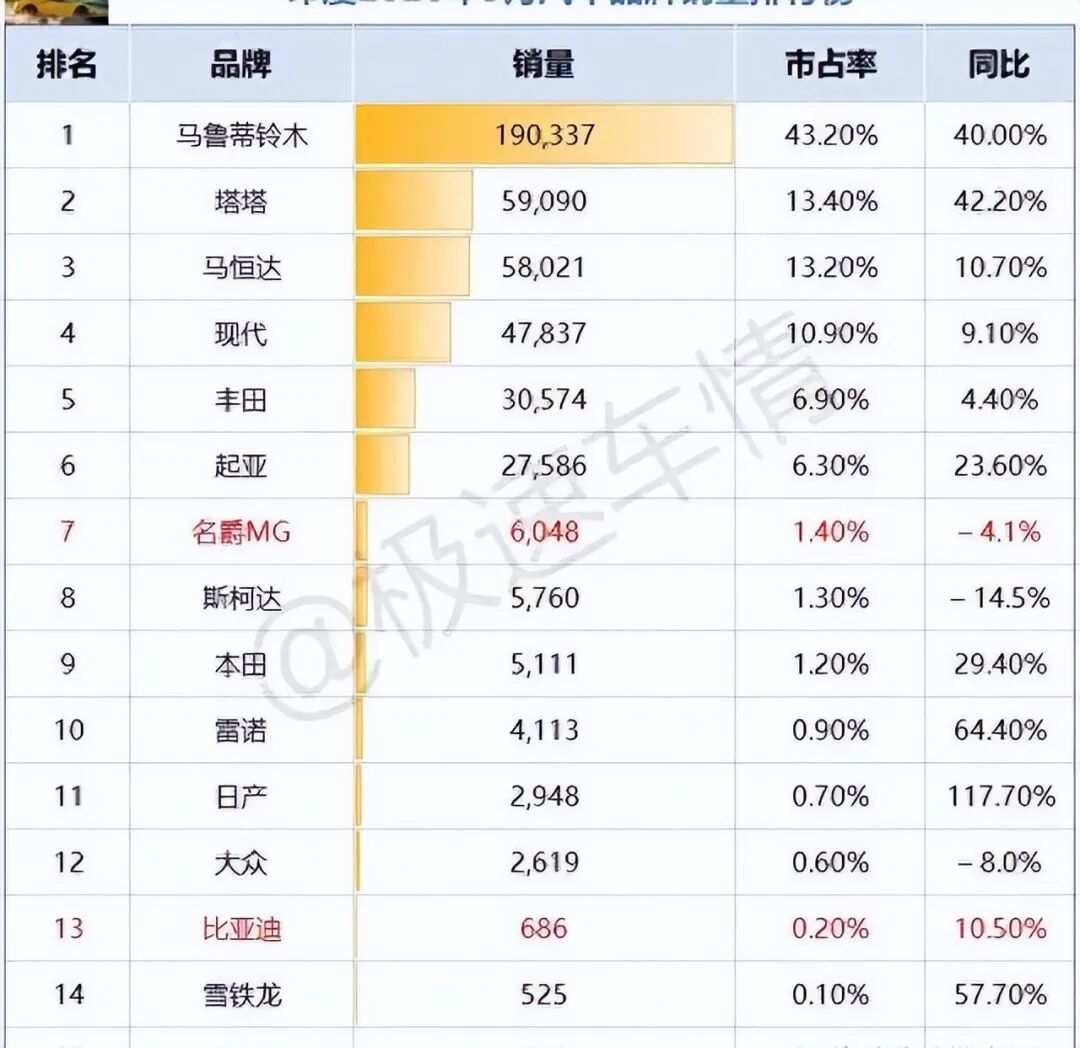
However, BYD only sold 686 vehicles in the Indian market in May, which corresponds to a market share of 0.2%. Even VinFast from Vietnam sold more.
On the one hand, BYD is unbeatable in the global market. On the other hand, it has great difficulties in India.
The market leader in India, Maruti Suzuki, sold 193,000 vehicles in India in May and achieved a market share of 43%. It has almost unchallenged dominance.
In the 1980s, Suzuki founded a joint venture with the Indian government, Maruti Suzuki. At that time, the Indian government held 74% of the shares, while Suzuki only had 26%.
After Suzuki was established in India, it directly brought the Japanese small - car production line there. Since the Indian side held the majority of the shares, it took a thorough localization path from the beginning.
What does thorough localization mean? It is not simply local assembly, but the production of core components such as engines, transmissions, and chassis, as well as stamped parts, interiors, plastic parts, and engine parts, almost completely in India. The proportion of locally produced parts is over 95%.
By not importing parts, one can avoid high tariffs, and the cost of parts is reduced to a minimum.
Suzuki's factory is in India, the suppliers are in India, 99% of the employees are Indians, and the vehicles are specially developed for the Indian market - narrow body, high chassis, fuel - efficient and durable, suitable for Indian road conditions and income levels.
In India, Suzuki is not a Japanese brand. In the eyes of Indians, it is their own national vehicle.
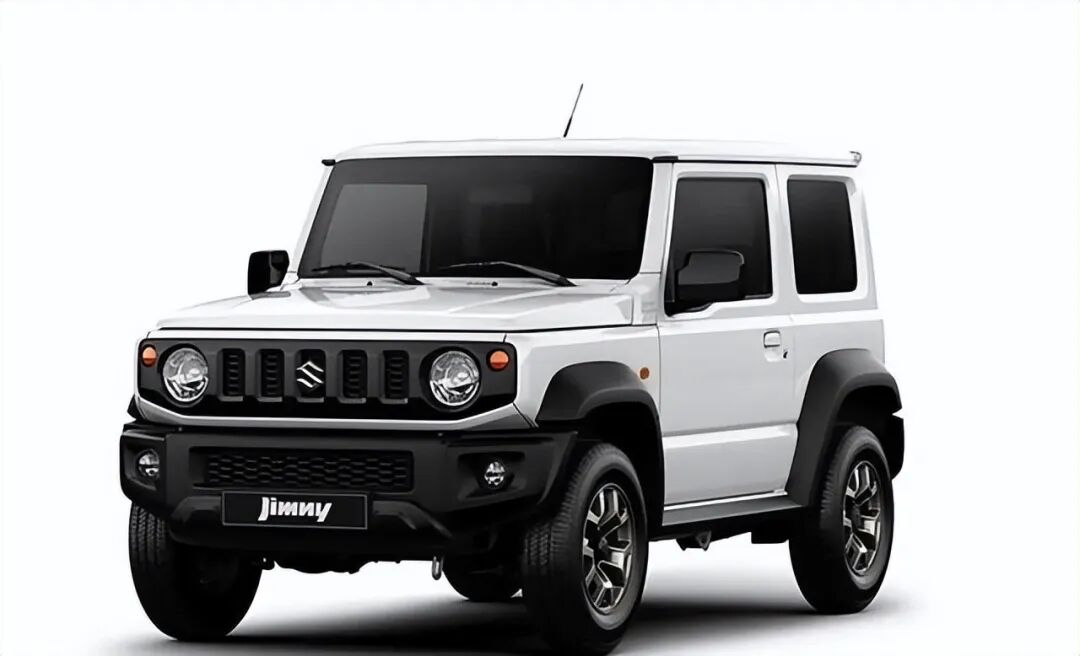
The small cars offered by Suzuki, such as Alto and Swift, cost between 30,000 and 60,000 yuan. The 1.2 - liter engine with a small displacement consumes very little gasoline and fully meets the needs of the Indian middle class for daily commuting.
Suzuki's success in India is also closely related to the Indian government's protectionist policies. High tariffs keep imported vehicles away, and foreign automakers must form joint ventures and localize if they want to enter the Indian market.
Suzuki has acquired market dominance in India by fully integrating into the Indian market and localizing its technology. Essentially, it is now an Indian automaker. Currently, Suzuki, Tata, and Mahindra in the top three of the Indian market account for almost 70% of the market. It is almost impossible for outsiders to gain a foothold here.
Why does BYD sell so poorly in India?
BYD has also thought about localization in India. In 2023, it planned to invest 1 billion US dollars to build a factory in India with an annual capacity of 100,000 vehicles. Using the CKD (Completely Knocked Down) method, it wanted to avoid the 70% - 110% tariffs on imported finished vehicles and thus significantly reduce vehicle prices.
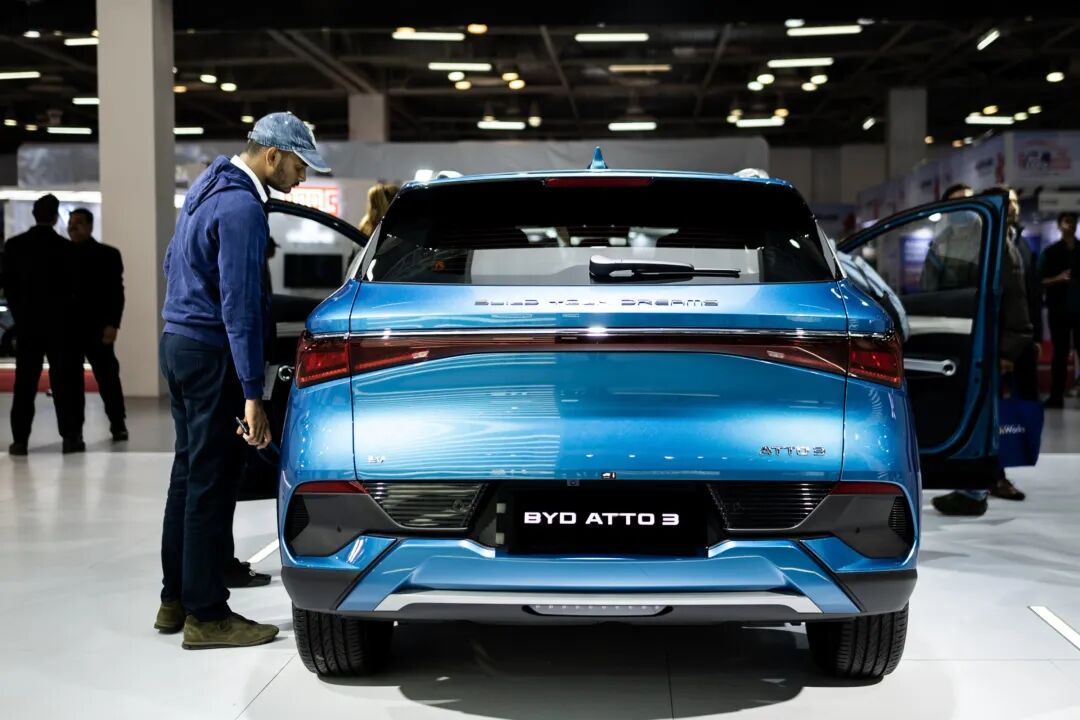
But the Indian government set two conditions that completely foiled the plan.
The first condition is that the share of foreign investors must not exceed 49%. That means BYD must form a joint venture with an Indian company, and the control must be in Indian hands.
The second condition is even tougher. BYD is required to transfer the core technologies of the three electric technologies (Blade battery, electric motor, electronic control) and the patent drawings to India so that Indian suppliers can directly produce them. Basically, one has to give up one's most important technologies.
Therefore, the negotiations could not be successfully concluded, and the construction plan was put on hold. Without a factory in India, only the import of finished vehicles remains.
The maximum tariffs on imported finished vehicles in India can be up to 110%. For a vehicle that costs 200,000 yuan, the tariffs alone are 200,000 yuan. Since BYD's vehicles are not cheap in India anyway, the cost - effectiveness is completely gone after adding the tariffs.
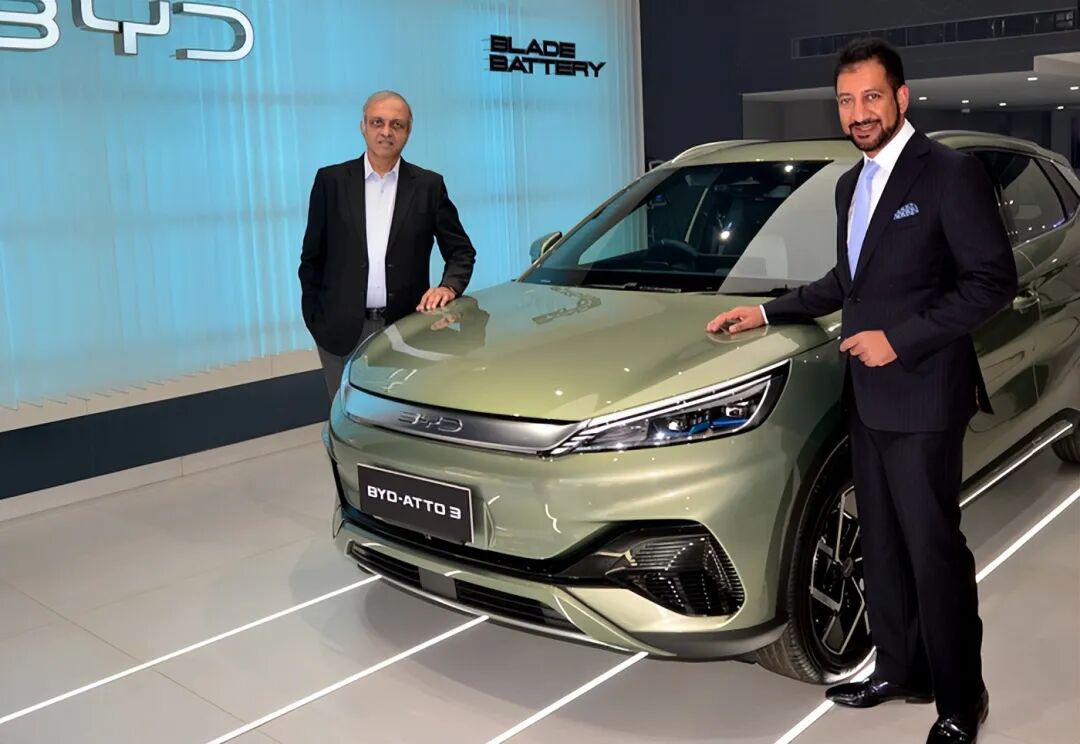
In addition, there are few sales outlets in India, too little charging infrastructure, and various hidden administrative barriers. So it's no wonder that only 686 vehicles are sold.
That is, if one does not give up technologies, one will not be allowed into India. The barriers for imported vehicles are set as high as never before, and the restrictions are strict. The huge difference between the sales figures of Suzuki and BYD in India shows with figures that foreign companies cannot get a share of the Indian market if they do not build factories in India and do not give up technologies.
And the phenomenon of teaching students techniques and ultimately threatening one's own existence occurs with almost every manufacturer that builds a factory in India.
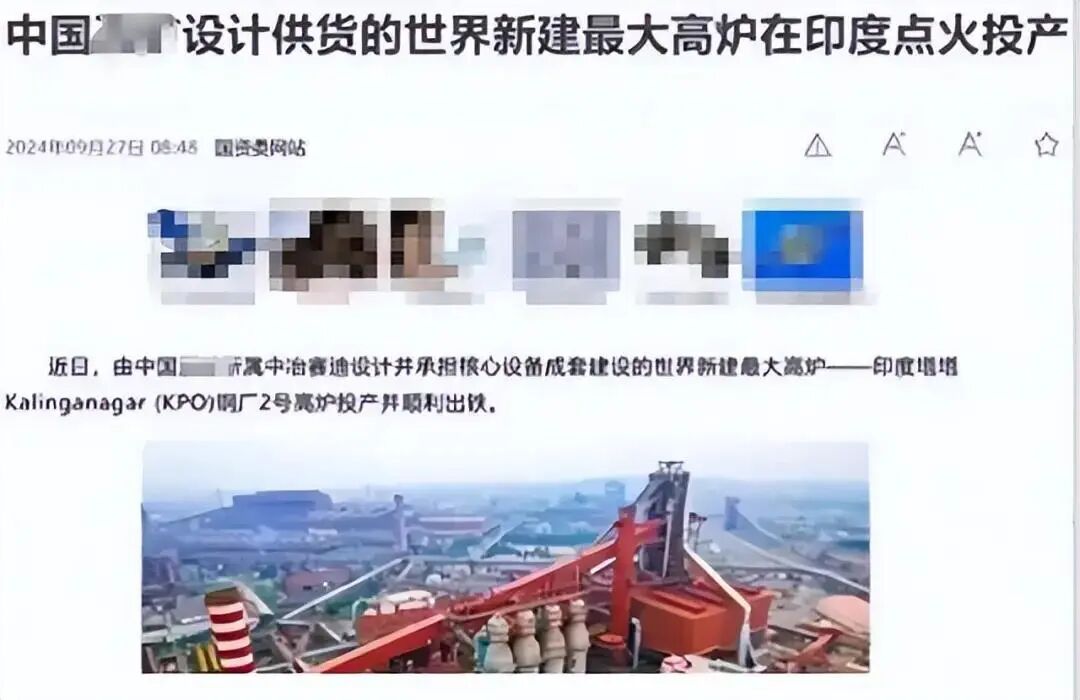
For example, the establishment of factories by Chinese mobile phone manufacturers in India has promoted the local industry. Today, India is the largest production base for American iPhones. The Five - Ring Group Company under the Chinese Chemical Engineering Group has built the Indian project for the production of coal fertilizers in Talcher. Later, a Chinese company also built the world's largest blast furnace in India, but it had to expect a tariff surcharge of 15% - 25%.
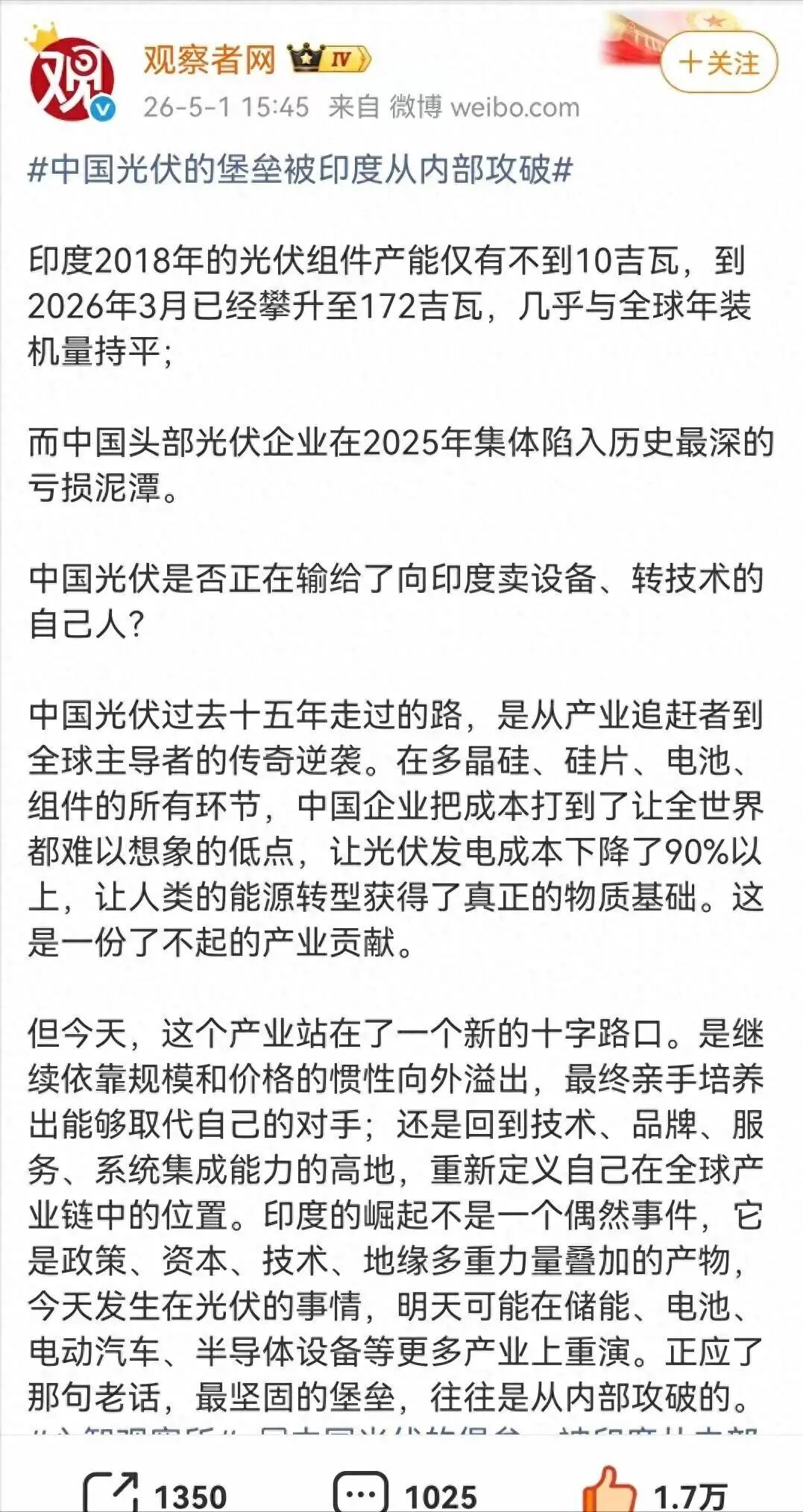
In the field of photovoltaics, after the support of Chinese companies that increased the capacity to over 100 GW, India introduced high tariffs to restrict Chinese products and export its own products globally.
The production capacity of photovoltaic modules in India has risen from less than 10 GW in 2018 to 172 GW in 2026, which is almost equivalent to the global annual installation volume. Chinese photovoltaic companies, on the other hand, are in a collective slump.
In the fields of electrical transformers and high - voltage equipment, petrochemical pipes, and construction machinery, Chinese companies have also made high investments in factories and technologies and trained local talents. In the end, they are either driven out of the Indian market or their companies are taken over.
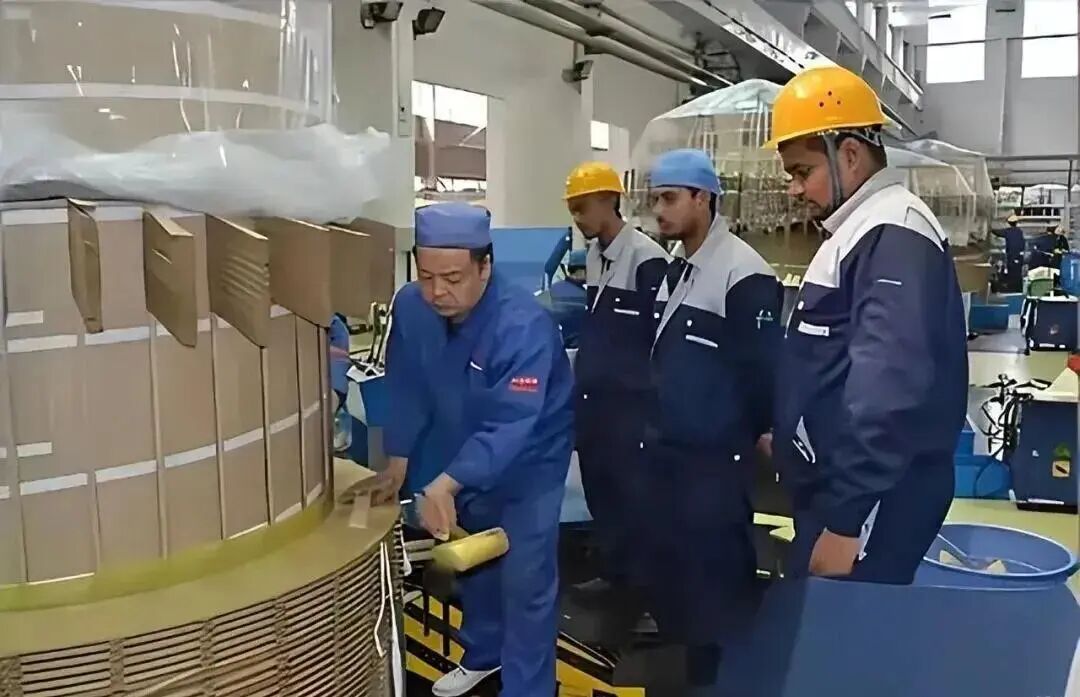
India lets companies into the country and then destroys them when the industries are established. As a result, Chinese investors are left with a bunch of problems and leave the country frustrated.
It's not only Chinese investors who get into trouble this way. From Vodafone to Amazon to Samsung, there is a long list of companies that have fallen into India's strategy. The Indian expert Jayant says, that even France's Rafale fighter jets, Japan's Shinkansen, and the US - American Ford could not fight against this strategy.
For Chinese investors, India's strategy is to use Chinese money and Chinese technologies to defeat Chinese products. The Indian media has already made this very clear. India can only implement this strategy if it gets Chinese investors to build factories in India and transfer technologies.
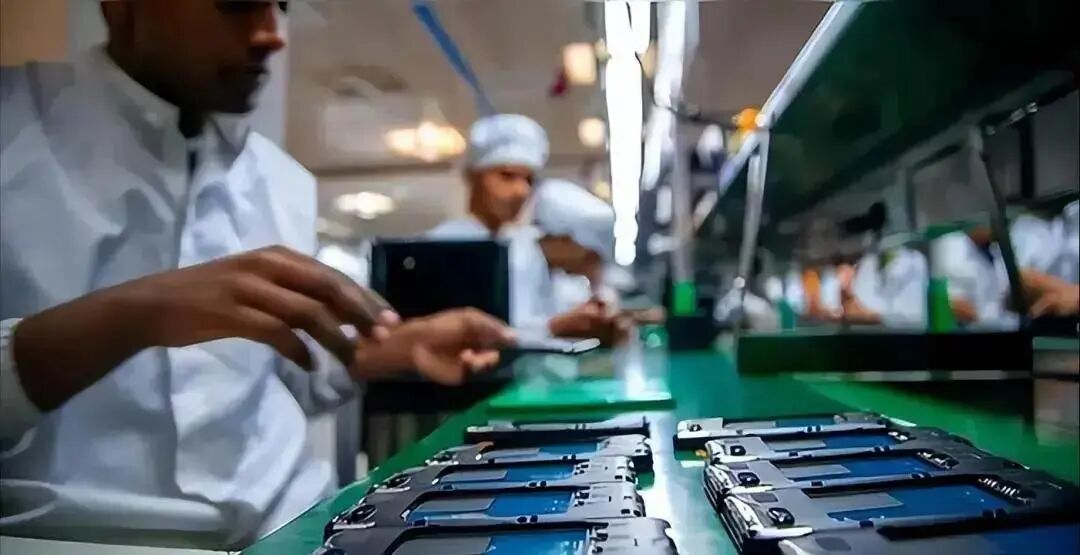
BYD has been working on the development of electric mobility for more than 20 years. Only in 2025, the research and development expenditure was 3.2 billion yuan, and the cumulative expenditure exceeds 16 billion yuan. Technologies such as the Blade battery, the DM - i hybrid system, the eight - in - one electric module, and the vehicle interface are the core competencies that make it successful in the global market.
What would happen if these technologies were transferred to an Indian joint venture?
One can look at the development of combustion - engine vehicles: Local giants such as Tata and Mahindra could quickly understand the technologies through the joint venture, build their own production lines, and produce similar vehicles that are 30% cheaper than BYD's. In a few years, BYD would have no place in the Indian market.
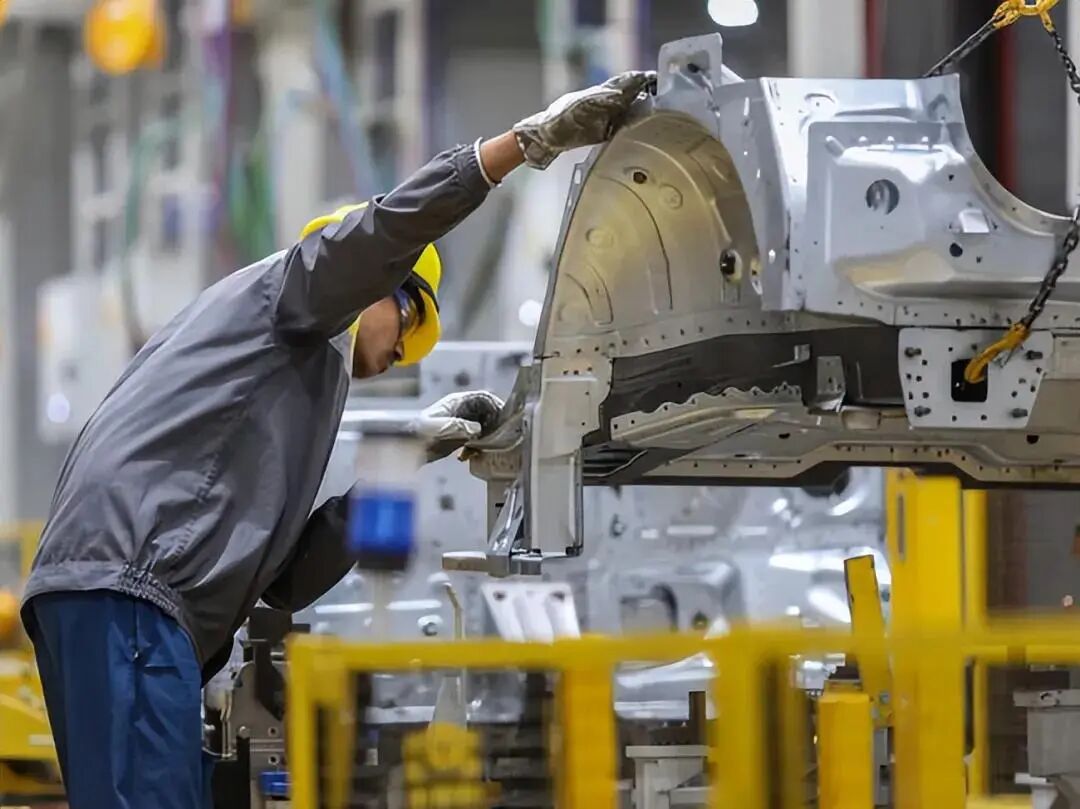
BYD would not only lose the Indian market but also create a strong competitor in the markets of Southeast Asia, the Middle East, and Europe and America.
In fact, the penetration rate of electric mobility in India is currently only 4.3%. In the entire fiscal year 2026, less than 200,000 electric vehicles were sold in India, which is less than BYD's half - monthly sales.
Tata and Mahindra dominate this market. They buy parts from China and assemble them, but they do not have core technologies.
India is very hungry for Chinese electric vehicle technology. Chinese automakers must have strategic strength.
India currently has a very strong desire to develop electric vehicles and have its own battery technologies. Since India is highly dependent on oil imports, the development of electric mobility would significantly reduce the pressure on oil imports.
India wants everything that China has.
The foreign media organization Ember has found that India urgently wants to demonstrate a modernization - oriented development opportunity that is not highly dependent on fossil fuels.
According to a report by Bloomberg...