Die Verkaufszahlen von SAIC Passagierfahrzeugen steigen rasant – haben Roewe und MG den richtigen Weg gefunden?
At the annual general meeting of shareholders, SAIC's top management could not avoid the doubts of investors regarding the stock prices.
However, an analysis based on the data may better reflect SAIC's current situation.
In the first half of this year, the cumulative sales volume of SAIC's self - owned brands reached 1.469 million vehicles, accounting for more than 70% of the group's total sales.
This also means that SAIC has achieved an important change in its sales structure. As Wang Xiaoqiu (Secretary of the Party Committee and Chairman of the SAIC Group) said: "The self - owned brands have already become the core driving force for SAIC's development."
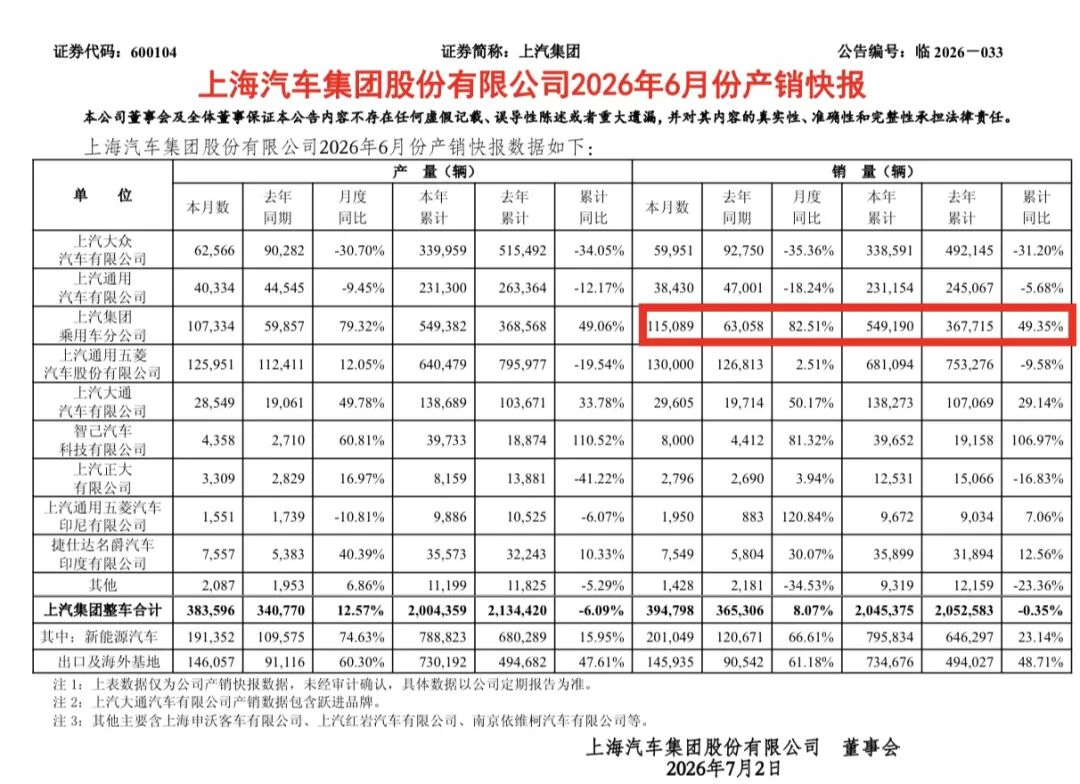
SAIC's production and sales report for June
In the first half of the year, only three brands under SAIC Motor Co., Ltd. were able to achieve positive growth compared to the previous year: SAIC Passenger Vehicle, SAIC Maxus, and IM Motors. Among them, SAIC Passenger Vehicle contributed the largest increase, with a cumulative sales volume of 549,000 vehicles, representing a 49.35% increase compared to the previous year and accounting for more than 26% of the group's total sales.
NO.1 [Repeatedly Striving for the High - end Class - Roewe Does Not Follow the Old Path]
In recent years, Roewe's situation has been a bit delicate.
Starting from a relatively high point, Roewe targeted the high - end market in the 200,000 - yuan range when it was founded in 2006. The initial price of its first vehicle, the Roewe 750, was set at 250,000 yuan. The Roewe RX5, launched in 2016, created a new category of Internet cars. At its peak in 2017, the monthly sales volume once exceeded 20,000 vehicles.
But the good luck didn't last long. On the one hand, Roewe wanted to quickly increase sales volume, and on the other hand, it didn't want to give up its high - end position. Therefore, the price range of its products kept changing between "high - end" and "cost - effective".
The Roewe Marvel X, launched in 2018, was the result of this fluctuation. The officially recommended price was between 268,800 and 308,800 yuan. Slogans such as "The world's first mass - produced intelligent car" and "Definer of intelligent cars" were coined. The equipment list was also not weak compared to other vehicles in the same price range. But after its market launch, the monthly sales volume quickly dropped from thousands to single - digits, and finally, it was taken out of production and off the market in 2021.
The reason behind this is not hard to understand. As a brand that had already established a foothold in the 100,000 - yuan market segment, suddenly bringing an electric super - SUV in the 300,000 - yuan price range to the market. Neither the pricing nor the assessment of product performance could accurately meet the actual market needs at that time.
At the beginning of this year, after Roewe turned 20 years old, it once again focused on "striving upwards" and clarified the strategic direction of re - entering the high - end class.
But the approach this time is a bit different from before. Zhang Liang's phrase "High - end and at the same time exciting" doesn't mean blindly pursuing high prices.
Compared with the attempt with the Roewe Marvel X, the Roewe Marvel X was a single flagship model that was developed completely independently without the support of derivative models on the same platform. The Roewe Jiachen is a series. The first vehicle in the series, the Jiachen 07, is designed for the 150,000 - to 200,000 - yuan price range and forms a hierarchy with Roewe's existing product portfolio. Later, vehicles such as the Jiachen 06 and the Jiachen 09 will also be introduced, forming a hierarchical product reserve.
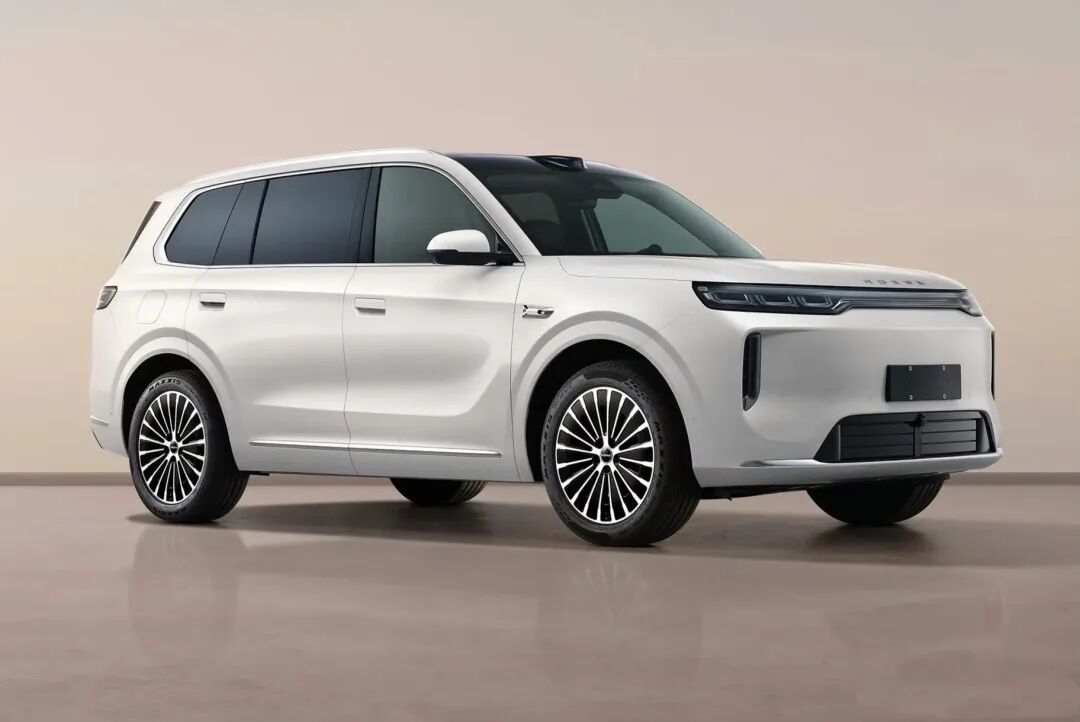
Registration pictures of the Roewe Jiachen 07 at the Ministry of Industry and Information Technology
The Jiachen 07 has given itself the label "AI - Original". Among the hundreds of new vehicles that have entered the market in the first five months of this year, it's not unusual for vehicles to call themselves "AI cars". But Roewe is the first to call itself "AI - Original".
Zhang Liang believes that many so - called AI cars currently essentially add some AI functions to existing products, while Roewe wants to produce real AI - Original cars.
It should be noted that Roewe hasn't given up the basis of the main market for family cars. The Roewe i6, launched in April, has an officially recommended price between 74,900 and 84,900 yuan and is targeted at the A + segment of fuel - powered family cars to directly compete with vehicles such as the Geely Emgrand, the Nissan Sylphy Classic, and the Volkswagen Lavida Xinrui.
The monthly sales volume of 2,001 vehicles of the Roewe i6 in its first month on the market can't be called a "blockbuster". But considering the strong shrinkage of the fuel - vehicle market, the task of this vehicle was not to stand out, but to stabilize Roewe's confidence in the sales channel and its customer base in the lower - end market segment together with the Roewe i5, whose final price is less than 50,000 yuan. Last year, the annual sales volume of the Roewe i5 was 81,000 vehicles, accounting for almost half of Roewe's total sales.
From product line planning to pricing logic, Roewe's approach this year is obviously clearer than before. This clarity is closely related to a series of organizational structure adjustments of SAIC Passenger Vehicle since last year.
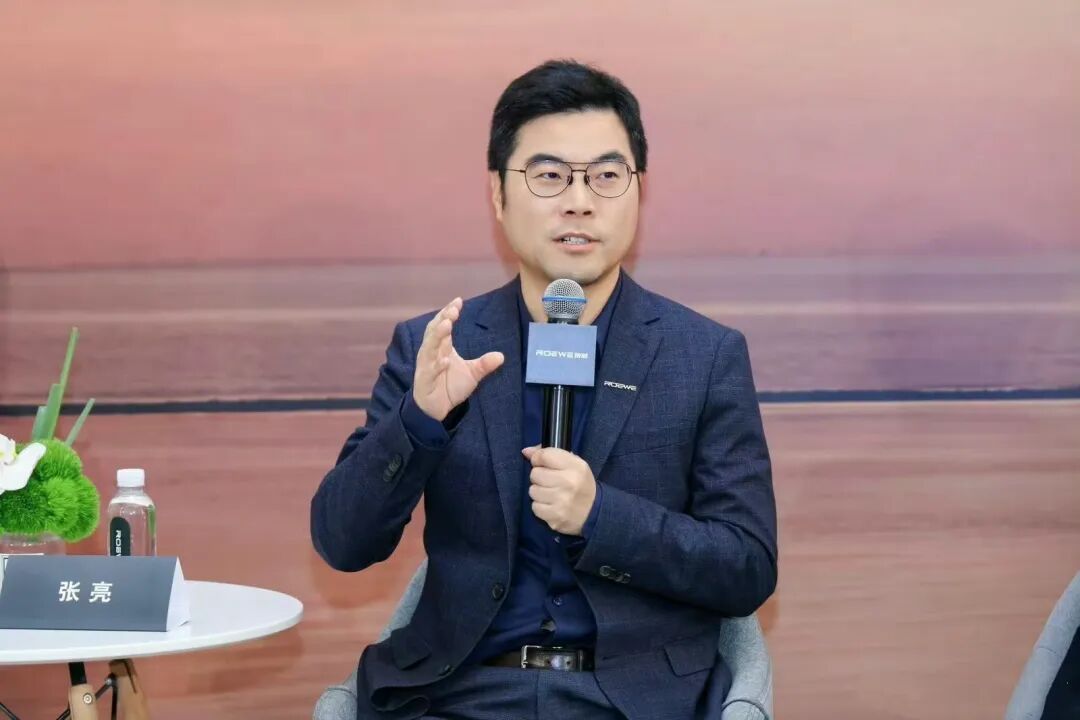
Zhang Liang, Deputy General Manager of SAIC Passenger Vehicle and General Manager of the sales company
Last year, SAIC Passenger Vehicle began to collectively model itself on Huawei's management model and planned to establish an independent sales company led by Zhang Liang as the general manager. The core task is to integrate the previously relatively independent systems of product planning and marketing - service and build an overall, closed - loop process from product definition to customer service.
At the same time, a series of young leaders began to take key positions. Qian Yang, who was appointed as the business leader of the Roewe brand department in March last year, is a person born in the 1990s. He worked in premium marketing at SAIC Volkswagen for two years in the early days and was also involved in the Shangjie project group before joining Roewe.
Naturally, the market for vehicles over 200,000 yuan has become saturated in the past two years. Products such as the Xiaomi SU7, the AITO M6, and the Li Auto i6 are entering the market. Just having a new concept like "AI - Original" is not enough. The delivery performance and customer perception of the Jiachen 07 after its market launch in the third quarter will be the most direct test of this approach.
NO.2 [Expanding the Electric Vehicle Product Portfolio - MG Is Going All Out]
SAIC Passenger Vehicle's organizational adjustment is not only aimed at Roewe. Chen Cui, the business leader of the MG brand department, is also a person born in the 1990s and was also involved in the Shangjie project group before taking the position. The fact that the leaders of both brands come from the same "incubator" is not common in the SAIC structure. Behind this is the intention of SAIC Passenger Vehicle's sales company to distribute resources uniformly and enable personnel exchange.
However, the problems that MG and Roewe need to solve are not the same. In the past two years, MG's focus has mainly been overseas. In 2025, its sales volume in Europe was 307,000 vehicles, representing a 26% increase compared to the previous year.
In contrast, MG has always given the impression of being a bit erratic in the domestic market. The product lines were renewed slowly, the transition to electric vehicles was delayed, and its popularity and market share have been steadily declining. In 2023 and 2024, MG's domestic sales volumes were 99,000 and 86,000 vehicles respectively.
But now this situation is starting to change. In the first five months of this year, MG's domestic sales volume was 73,000 vehicles.
MG's recovery mainly comes from the MG 4, which was launched in the second half of last year. This vehicle has brought the semi - solid battery into the 100,000 - yuan price range and has sold an average of over 10,000 vehicles per month since its market launch.
However, a brand's ability to withstand crises is weak if its growth depends heavily on a single vehicle. MG has obviously recognized the weaknesses of its product portfolio. Zhang Liang summarized MG's approach this year in four words: "Prepare and Develop Further".
"Prepare" simply means transferring the successfully tested experiences of the MG 4 to all products. Based on the successful experiences of the MG 4's technological suitability, MG further promoted the semi - solid battery technology in the first half of the year, from being an exclusive equipment for higher - end configurations to a standard equipment for all models. The SUV model of the MG 4 family, the MG 4X, launched at the end of May, is already equipped with a semi - solid battery in its basic configuration.
One must consider that a year and a half ago, the semi - solid battery was still a selling point for vehicles over 200,000 yuan in the electric vehicle market.
But the real highlight is obviously not "Prepare", but "Develop Further". Zhang Liang believes that in the future, MG must interpret the new meaning of the brand in the new era through the optimal solution for niche markets. "MG will focus on the market for individual electric vehicles of young people in the 100,000 - to 200,000 - yuan price range and balance the impossible triangle of design, space, and energy consumption in coupe models."
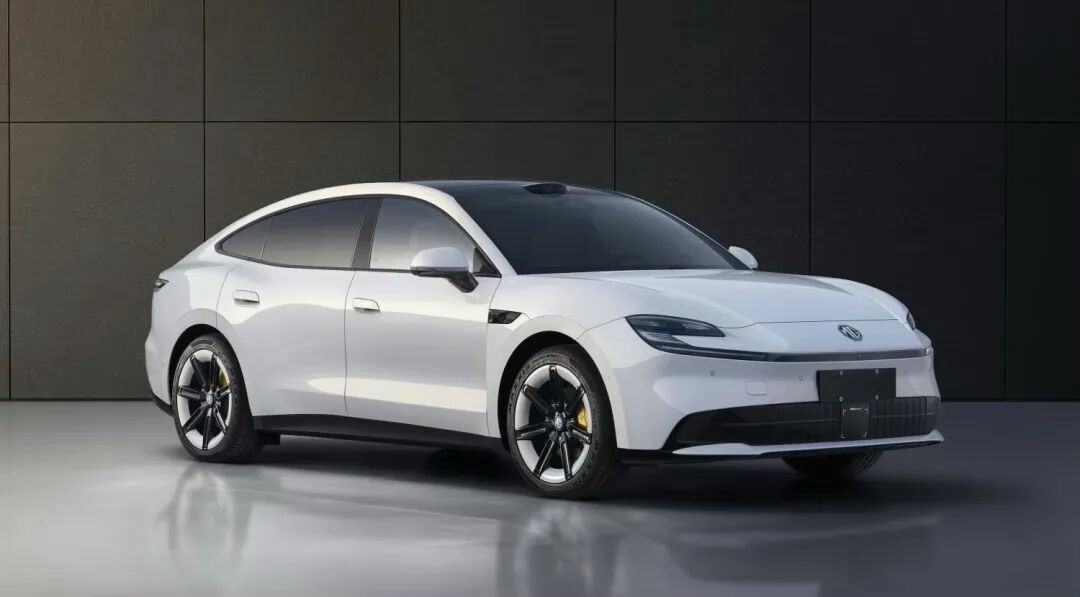
Registration pictures of the MG 07 at the Ministry of Industry and Information Technology
The MG 07, as a key model in the "Develop Further" phase, uses a new "0" - naming system and is designed for the electric vehicle coupe market in the 150,000 - to 200,000 - yuan price range. It is based on SAIC's new electric vehicle platform and offers two drive types: pure - electric and hybrid. It is expected to enter the market within this year. As Zhang Liang said, it is the "real representative model" of the MG brand in the era of electric vehicles.
However, the market reaction before the launch of a new vehicle sometimes doesn't come entirely from the product itself. On June 29, Chen Cui, the business leader of the MG brand department, showed a live - stream for the first time to introduce the new vehicle MG 07. The comment section was full of entries like "Copy of Xiaomi" and "Similar to Porsche". Chen Cui responded with "Not a single detail is copied", but the effect was limited, and the live - stream was ended prematurely.
This scandal explains on one side the awkward situation of MG's low popularity in the domestic market. In recent years, MG has always conveyed an image of youth, individuality, and trendiness. But its brand history has not automatically translated into product differentiation in the era of electric vehicles, and public perception is still passive.
Therefore, MG's problem lies not in design or positioning, but in the fact that the transition to electric vehicles was half a step too late. There were three and a half years between its first pure - electric vehicle, the EZS, and the second one, the MG MULAN. And in the first half of this year, the presentations of the MG 4X and the MG 07 have already shown the pace of supplementation.
Naturally, it will be decided whether the MG 4X and the subsequent MG 07 can form a continuous hierarchy, and whether MG's growth in this round is impulsive or sustainable. But compared to the situation two years ago, when the monthly domestic sales volume was only a few thousand and MG was almost forgotten by the market, MG has at least returned to the table. What it needs to do now is to transform the success of one vehicle into the success of a system.