Mit einer Bewertung von 9,5 Milliarden Yuan hat Jensen Huang in ein Startup für Weltmodelle investiert
According to information from Zhidongxi on June 18, the British "Financial Times" reported yesterday that the US AI unicorn and world model company Odyssey has received a financing of $310 million (about 20.96 billion yuan). After the completion of this round of financing, the post - investment value of the company will be $1.45 billion (about 98.05 billion yuan).
The investors include Amazon, NVIDIA, AMD Ventures, the venture capital firm Natural Capital, the risk - capital firm In - Q - Tel founded by the US intelligence agency CIA, Google DeepMind's chief scientist Jeff Dean, and Silicon Valley investor Elad Gil, among others.
In addition, AWS will become Odyssey's preferred cloud service provider. Odyssey will optimize its own model for AWS Trainium chips and at the same time use Amazon's latest chip products.
The training and continuous inference of world models require enormous computing power. If Odyssey alone bears the costs of hardware and cloud services, the cost pressure would be very high. Through cooperation with chip manufacturers, Odyssey can share the high costs of training and operating world models.
01 Release of various types of world models and its own PROWL algorithm to fix simulation errors
Odyssey was founded in 2023. The company specifically trains world models based on physical rules and interaction logics between objects to overcome the limitations of pure language models. Odyssey's outstanding core ability is to generate detailed and interactive video content based on text prompts.
Currently, Odyssey has released several world models for different application scenarios, including the largest and most powerful universal world model to date, Odyssey - 2 Max, the world's first real - time multi - modality world model Starchild - 1, and the multi - agent world model Agora - 1, among others.
Specifically, Odyssey - 2 Max represents a long - term interactive video simulation for individuals. An example of the simulation with this model can be seen in the following picture. It can be seen that the model can almost perfectly predict the rotation of a cup in the real world, and the generated physical accuracy is at a high level.

Most traditional world models can only learn and generate images but cannot provide audio output. However, Starchild - 1 released by Odyssey can generate audio and video content synchronously in real - time and continuously respond to the user's input.
Agora - 1 is equivalent to a game engine that has been trained through learning processes. This model supports up to 4 players who can interact in real - time in a generative virtual world. It calculates the interaction behaviors based on the actions of each player, manages the global state of the world, and sends the generated image pixels to all players.
With Agora - 1, Odyssey has realized a world simulation with multi - agent cooperation for the first time. The following picture shows a simulated scene of a common deathmatch driven by Agora - 1.
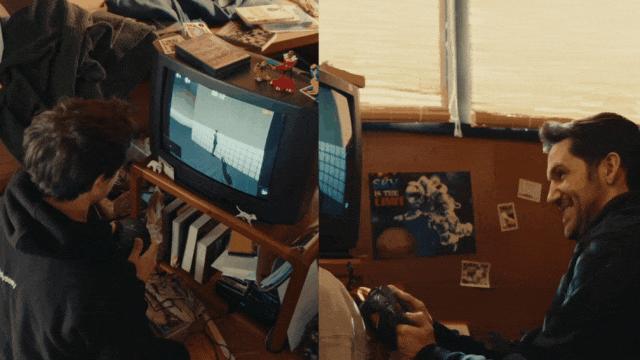
Currently, even the best world models still have deficiencies in terms of pixel details and physical simulations and cannot always strictly follow the input actions.
To solve these problems, Odyssey has developed the PROWL algorithm. This is an Adversarial Test Framework based on Reinforcement Learning that enables agents to discover systematic deficiencies in world models. At the same time, the agent is guided to efficiently uncover potential problems of the model and detect deficiencies that are difficult to capture with traditional methods.
PROWL uses reinforcement learning agents to collect deficiency samples and train the world model. The optimized model in turn improves the efficiency of the agents' error detection. This creates a closed feedback loop in which the deficiencies are continuously converted into training data and the accuracy of the model is improved.
Overall, the world models developed by Odyssey can help customers generate interactive virtual scenes with a single click. This solves the long - standing problems of the film and game industries, such as the long production time of traditional CG - 3D scenes and multi - player interaction levels, as well as the high labor costs. At the same time, the models can shorten the production time and reduce the costs.
In addition, with the scaling of the models and the improvement of simulation quality, the application areas will be expanded to scientific research, robotics, defense, and medicine. For example, users can use these models to create interactive virtual training scenes for factory workers and robotics maintenance.

▲ World models for practical training scenes of employees (Source: Odyssey)
In robotics, these world models can enable robots to simulate complex tasks before actual execution by learning human actions. This includes actions such as grasping, navigating, and operating. As a result, intelligent robots with universal environmental manipulation capabilities can be developed for billions of users.
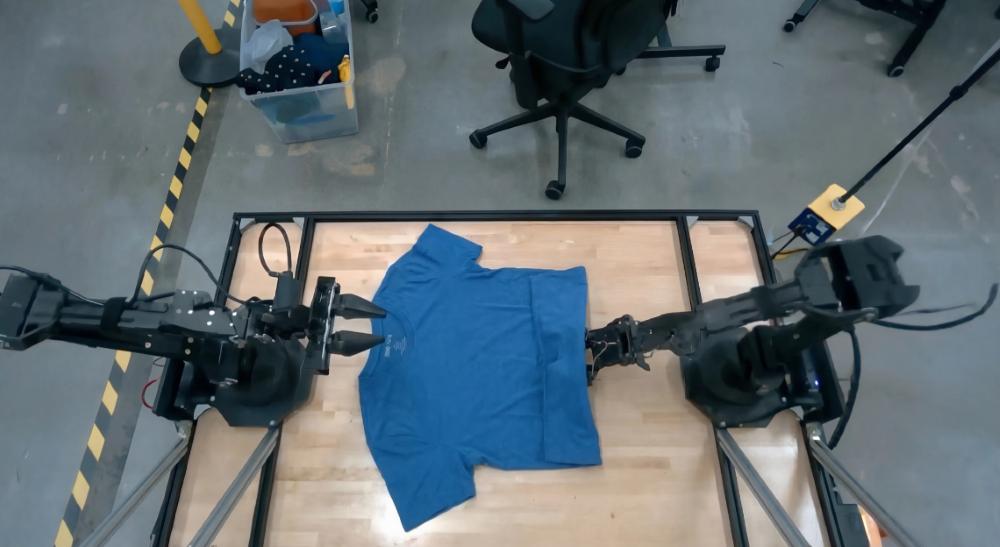
▲ World models for practical training scenes in robotics (Source: Odyssey)
02 Co - founders were former autonomous driving experts, parts of the team are from DeepMind and Apple
The co - founders of Odyssey are Oliver Cameron, co - founder and former CEO of the autonomous driving company Voyage and former product vice - president of General Motors' autonomous driving company Cruise, and Jeff Hawke, former technology vice - president of the autonomous driving firm Wayve.
Cameron graduated from Sheffield Hallam University in the UK with a Bachelor of Science.
He has shown a demonstration example: Only with pixels, actions, and sound effects as input prompts, Odyssey's model can reproduce the multi - player version of the 1997 Nintendo game "GoldenEye" without the need for special training on the physical rules of this game.
Cameron said: "Odyssey's model can understand the real world more comprehensively, including physical laws, body movements, and dynamic changes. It can understand everything that is difficult to describe with human languages."
He also announced that Odyssey's development tools run on NVIDIA H200 and B200 chips, and the usage cost per person per hour is about $2 to $4. However, these costs do not include the costs of model training.
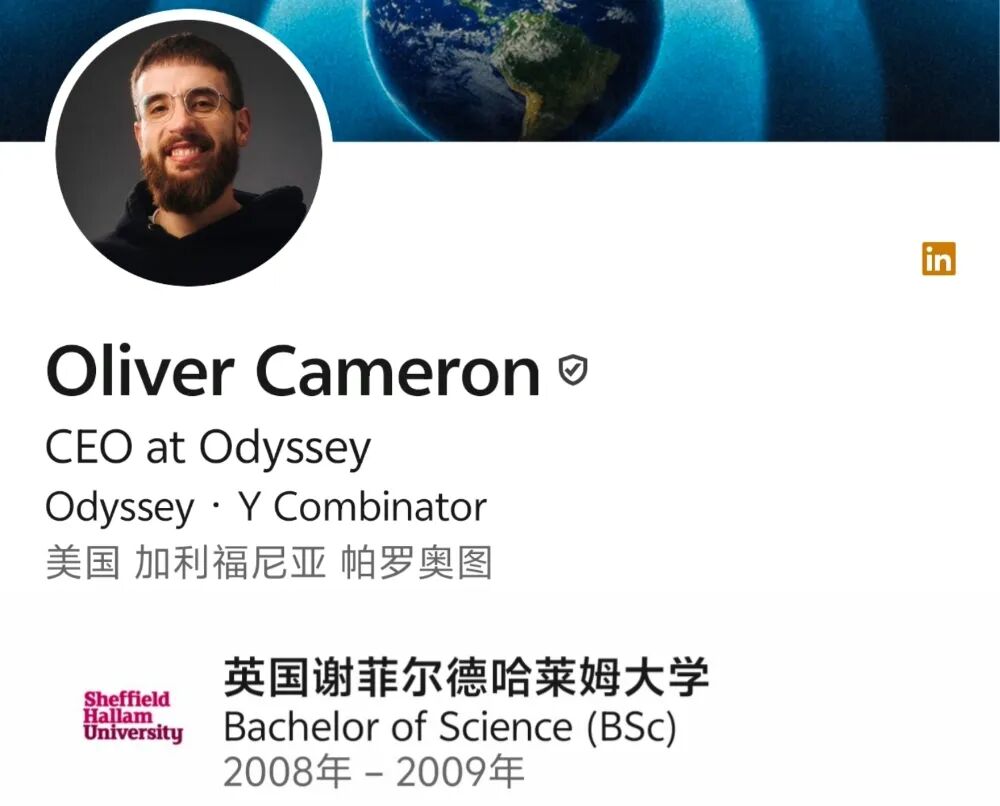
▲ Oliver Cameron's educational background (Source: LinkedIn)
Before founding Odyssey, Cameron founded the start - up Everyme for private social media apps and was the CEO of the company. In 2013, after Everyme's business, Origami Labs, was acquired by eFamily and the team was taken in by Google Nest, Cameron joined the US online education company Udacity as the technology vice - president.
After leaving Udacity, he founded Voyage with others. In 2021, Voyage was acquired by Cruise, and he became the product vice - president of Cruise, a position he held for over two years.
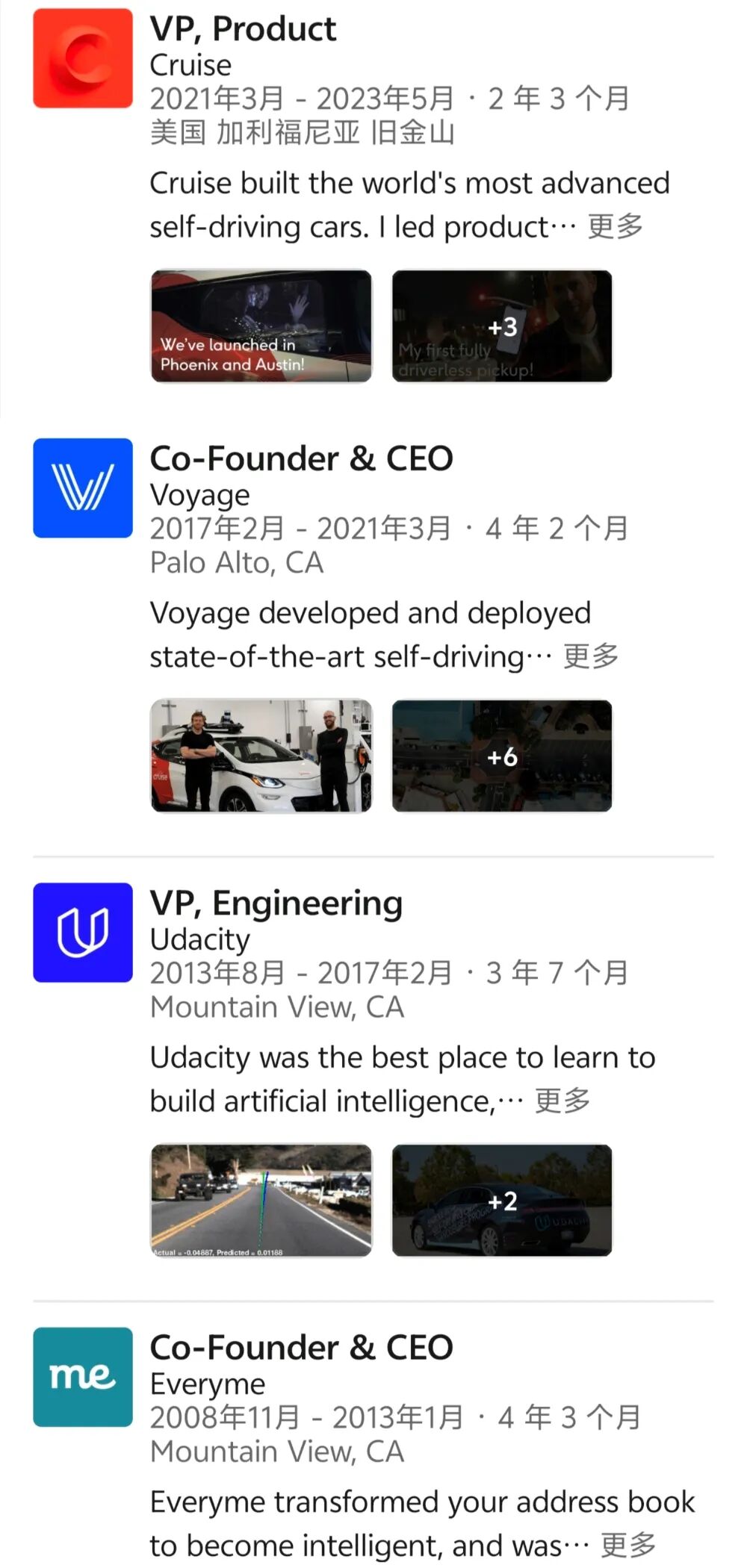
▲ Oliver Cameron's career (Source: LinkedIn)
The other founder of Odyssey, Hawke, has a Bachelor of Science and a Bachelor of Engineering (Honors) from the University of Auckland in New Zealand. He completed his master's degree at the Georgia Institute of Technology in the US. Then he obtained his doctorate in engineering sciences at the University of Oxford in the UK and worked at the Oxford Robotics Institute and the Applied AI Lab.
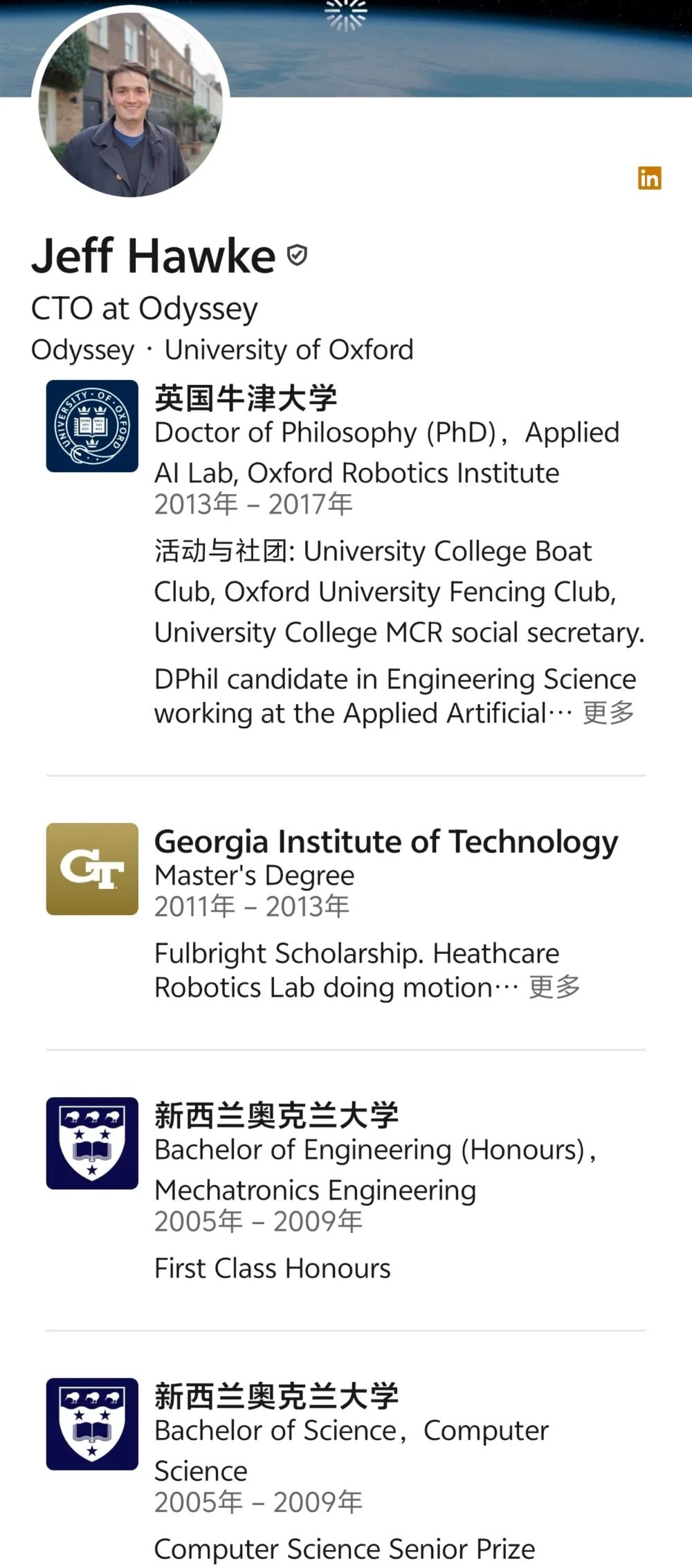
▲ Jeff Hawke's educational background (Source: LinkedIn)
Before joining technology development, Hawke was a senior consultant at the Boston Consulting Group (BCG) in the US. One year later, he joined Wayve as a founding researcher and technology vice - president and led the development of many core areas and technical modules of the company.
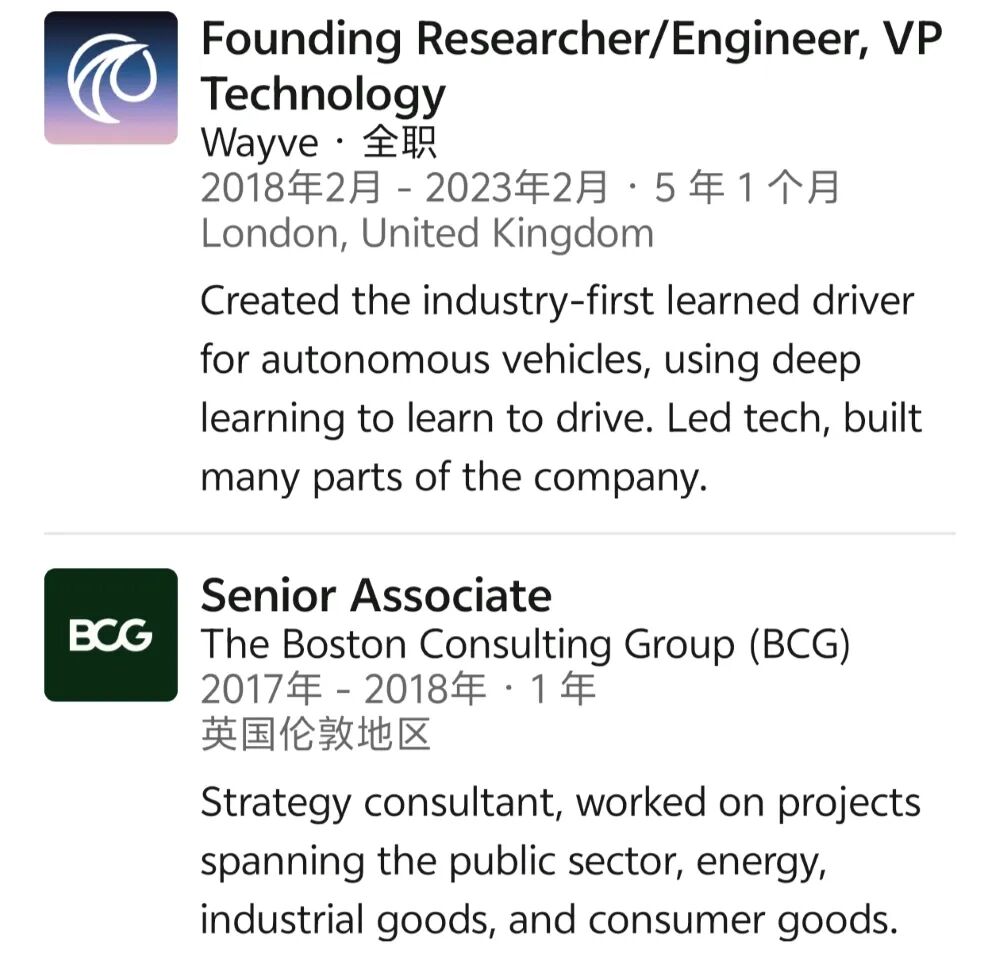
▲ Jeff Hawke's career (Source: LinkedIn)
Odyssey currently has 55 employees, distributed in London, Zurich, and Palo Alto. Most of the team members come from large AI labs and autonomous driving start - ups, including DeepMind, Meta, Apple, the autonomous driving company Waymo, and Tesla, among others.
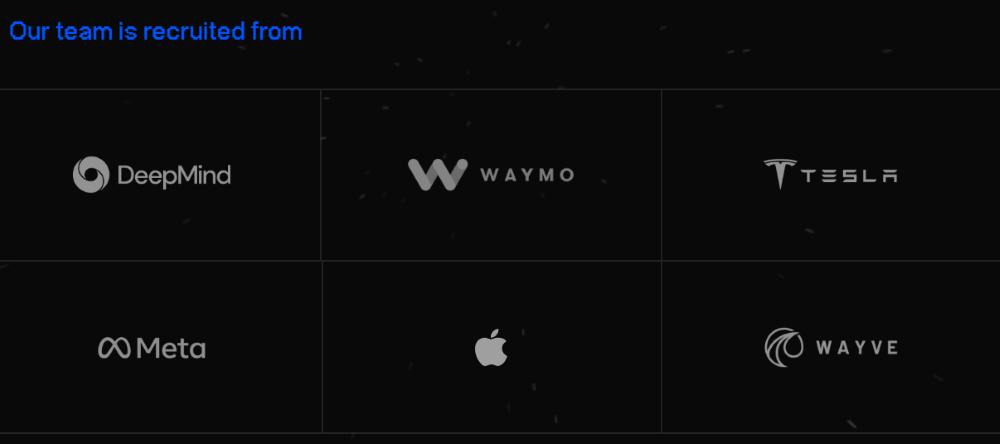
▲ Origin of Odyssey's team members (Source: Odyssey)
03 Conclusion: Large corporations invest in world models, and ecological cooperation will determine long - term competitiveness
Odyssey's financing list includes cloud providers, chip manufacturers, and top AI scientists. This impressive list of investors also reflects to some extent that AI capital currently views the technology of physical simulation world models as promising.
In addition to providing Odyssey with funds for research and commercial implementation in this round of financing, the underlying computing power provided by AWS, NVIDIA, and other providers will also help the company reduce the high costs of model training.
With the continuous increase in model training and inference costs, the cooperation between model companies and cloud and chip manufacturers will become closer. In the field of world models, future competition may not only depend on the model's own capabilities but also on the speed of building industry ecosystems.
This article is from the WeChat account "Zhidongxi" (ID: