Chinesische Unternehmen treten in die Weltmeisterschaft ein
Open the live broadcast of the 2026 FIFA World Cup in the United States, Canada, and Mexico, and many will notice a detail.
The Japanese brands that once dominated the World Cup screens have completely disappeared. In contrast, Chinese companies have already established a firm foothold in this global top - level sports event for three consecutive World Cups and have developed from mere advertising placements to core partners for the technical support of the event.
Experienced football fans may still remember that JVC (Japan Victor Company) held the main sponsor position at the World Cup for a total of twenty years from 1982 to 2002. At the 2002 World Cup in South Korea and Japan and the 2006 World Cup in Germany, Toshiba briefly took over the sponsorship role, thus strengthening the dominant position of Japanese brands on the field. At the 2010 and 2014 World Cups, Sony was the core sponsor for display devices. In those decades, the logos of Japanese companies on the edge of the football field and the technology of Japanese firms behind recording and broadcasting became the collective memory of football fans worldwide.
However, today, Japanese brands are completely absent from the lists of official top - level sponsors of the 2018, 2022, and 2026 World Cups.
Instead, Chinese companies such as Hisense, Lenovo, and Mengniu are intensively represented in the stadium. Outside the stadium, even more Chinese companies use the World Cup as a stage to expand globally.
The "Chinese eyes" that decide the game
Let's first discuss the most exciting topic - the VAR system.
VAR stands for "Video Assistant Referee System", the most loved and hated element of the World Cup. An off - side or a handball - a wrong decision can fundamentally change the result of a game. At this World Cup, the "eyes" that make these decisions come from China.
Hisense is the provider of display devices for the 2026 World Cup's VAR system. Their self - developed RGB Mini - LED display devices are directly integrated into the international broadcast center and the video referee center in Dallas, USA. The referees look at the images on the Hisense screens frame by frame, draw lines, and make decisions.
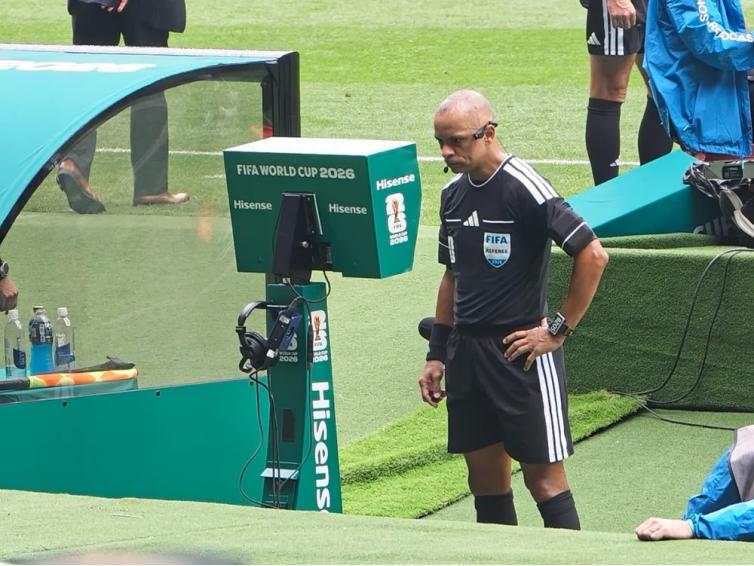
In the opening game between Mexico and South Africa, the referee issued a total of three red cards and three yellow cards, which is a record for World Cup opening games. The referee went to the sideline twice to check the VAR and then immediately issued red and yellow cards. Behind these decisions is Chinese technology.
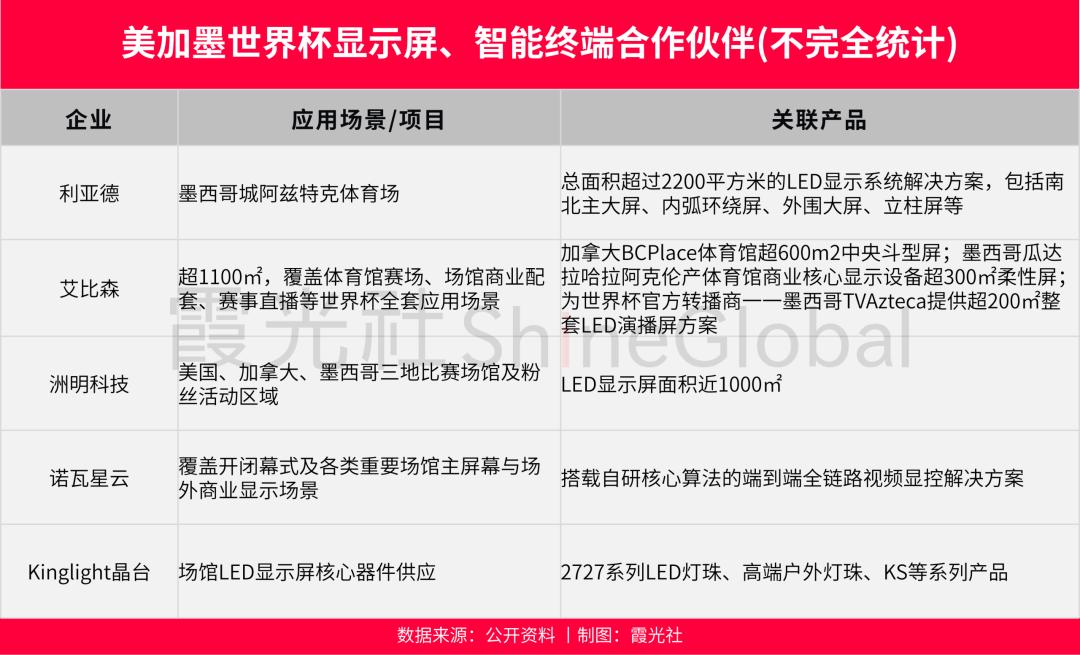
The most important display device in the stadium, which shows the game result, replays, and advertisements, is also a product from China. According to incomplete statistics, companies such as Liard, Unilumin, Absen, Lighthouse, NovaStar, and Kinglight have participated in the World Cup and provided technical and productive support from stadium screen systems, control and drivers, LED components to referee display devices and personal spectator devices.
The same goes for the transmission technology. The company HiVideo from Shenzhen has developed self - developed 4K - UHD audio and video codecs, streaming recording cards, and integrated transmission systems, which are used in the transmission channels of many important Chinese online media for the World Cup.
And this year, Chinese technology is not only responsible for "seeing" but also for "calculating".
Lenovo is the official technology partner of the World Cup. For this purpose, it has built a technology control center and an observation platform in the United States, Canada, and Mexico. With the help of digital reconstruction of stadiums and AI visualization, employees can track the status of devices, network conditions, and the game progress in 16 cities in three countries in real - time on a single platform and quickly respond to unforeseen problems.
In addition, Lenovo, together with FIFA, has developed a football AI super - intelligent system, a 3D digital person visualization concept, and an AI video enhancement system from the referee's perspective, which are used in referee decision - making, game analysis by coaches and players, and the output of high - resolution real - time images.
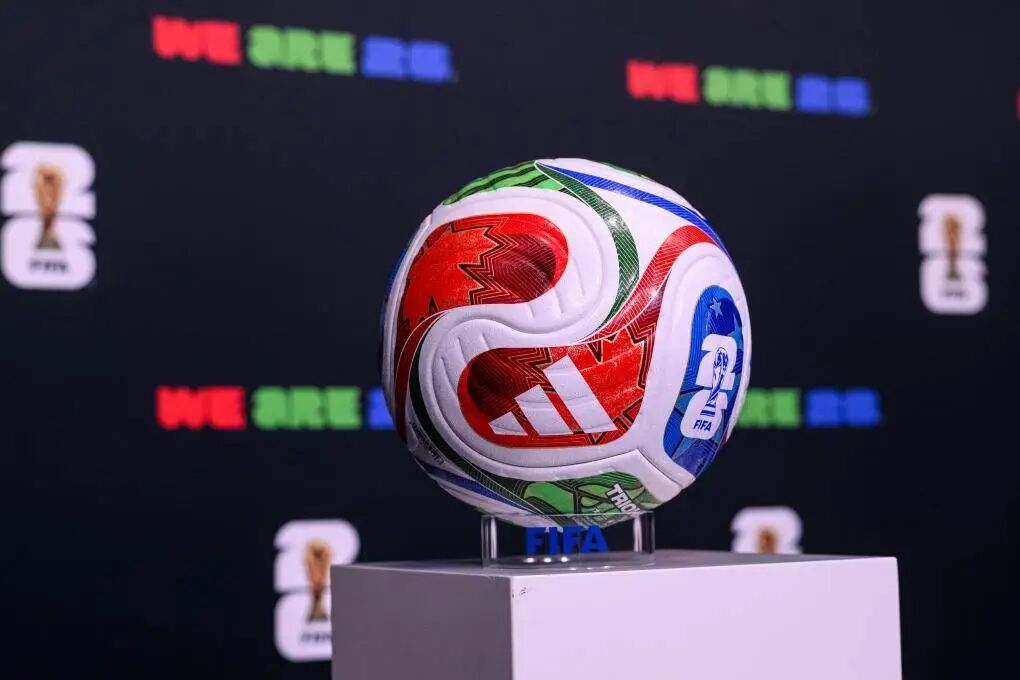
There are also less well - known examples.
The official World Cup ball "Triple Wave" is exclusively manufactured by a company from Guangdong. It has a four - segment construction, which is the smallest number of segments in history. An embedded 500 - Hz motion sensor collects data on ball contact 500 times per second to assist the VAR system in making accurate decisions. This ball is used in all 104 official games, and the technical requirements are much higher than those for normal footballs.
Thus, from the decision - making system that affects the game to the ball under the players' feet and the smooth images on mobile phones worldwide, everything is "Made in China".
The "Chinese vehicles" outside the stadium
After looking at the stadium, let's now turn our attention outside the stadium.
Since the World Cup is held in different cities in the United States, Canada, and Mexico, the traffic situation is the biggest obstacle.
How can we ensure that thousands of fans arrive at the stadium on time for a game? The answer is: with vehicles.
In Mexico, 115 new subway trains developed by CRRC run in the three host cities of Mexico City, Monterrey, and Guadalajara. They transport over 1.25 million passengers daily and are the main means of transportation for Mexican fans to get to the stadium.
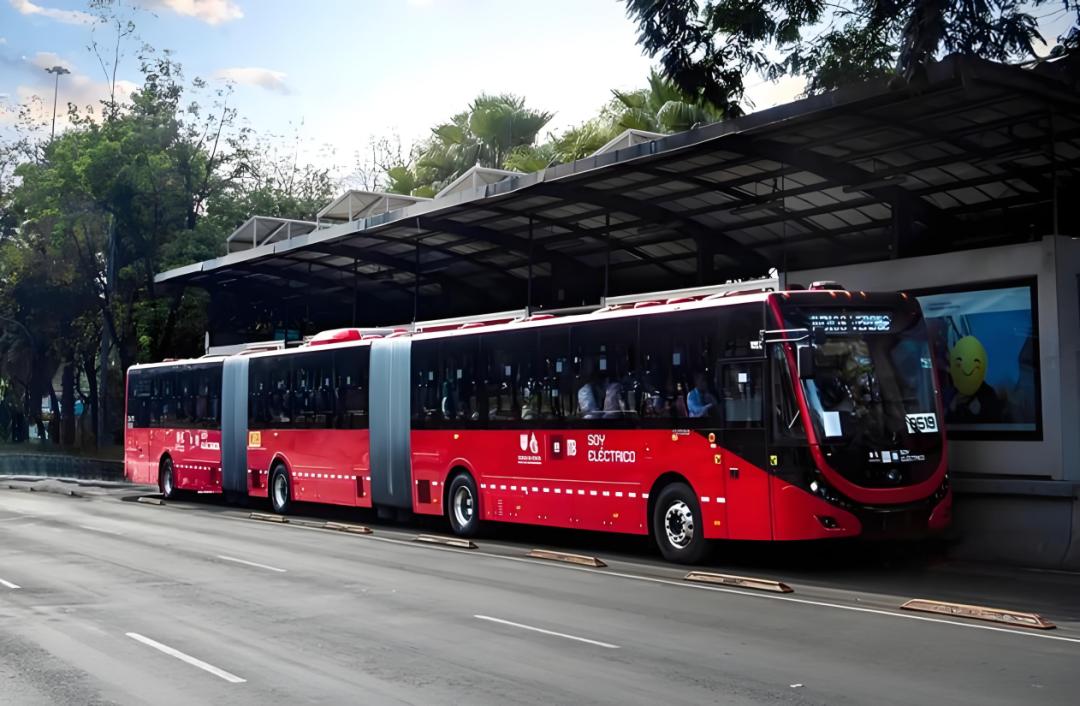
If we regard the subway as the "main artery", then buses are the "capillaries".
In Mexico City, the authorities have set up a fleet of 800 electric buses for the commuting of players and staff. More than 95% of these buses are of Chinese origin, with Yutong and BYD being the most represented.
After looking at the vehicles on the road, let's now look at the "things above us".
The Aztec Stadium in Mexico City is the first stadium in the world to have hosted the World Cup three times - in 1970, 1986, and now in 2026. To prepare for this World Cup, the stadium was completely renovated in a 20 - month project.
Who was responsible for the renovation? The answer is: the Chinese company Zoomlion.
Its RT75 wheeled crane participated in the installation of the stadium's steel structure and steel girders and contributed to the project being completed on time and the stadium getting a new look with its efficient, stable, and reliable performance. In addition, Zoomlion's intelligent high - lift vehicle also participated in the construction of the temporary outdoor stage in Mexico City for the World Cup.
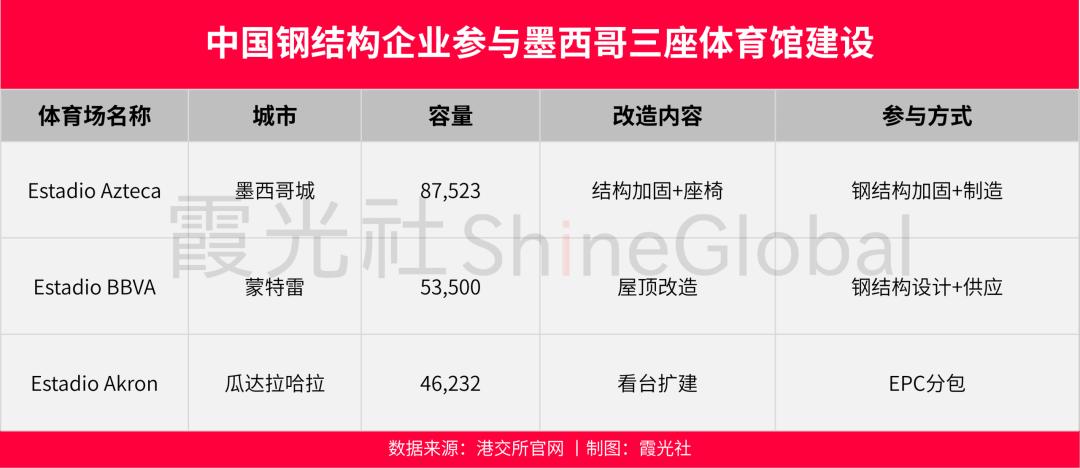
In the three stadium renovations in Mexico, Chinese steel structures have had a 100% "presence". Taking the Aztec Stadium as an example. The stadium was built in 1966 and passed the tests at that time, but it no longer meets today's standards. Since it is located in an earthquake - prone area, the Mexicans have required that the stadium must withstand an earthquake of magnitude 8.
During the renovation, the Chinese construction company used about 5,500 tons of steel structures in the main stand, the roof, the stair exits, and the foundation reinforcement. By October 2025, when the project was completed and inspected, the earthquake resistance was improved from level 6 to level 8, and the costs were reduced by 15% (24 million US dollars).
One month later, the president of the Mexican Football Federation commented: "The Chinese team has breathed new life into our 60 - year - old stadium. This is a model example of cooperation between China and Mexico."
When the broadcast signals fly over the stadium and the city streets and the fans enjoy the convenient transportation and the exciting games, behind all this are the "Chinese equipment" and the "Chinese technology".
The "Made in Yiwu" that surrounds the world
So far, we have dealt with "big things". Now let's talk about something lighter - the small things in the hands of the fans.
One month before the World Cup, the businessmen in Yiwu were already fully occupied.
This is not an exaggeration. Look at these figures: In 2025, the export of sports goods and equipment from Yiwu was 11.65 billion yuan, a year - on - year increase of 20.3%. In the first two months of 2026, the export already reached 2.34 billion yuan, a year - on - year increase of 38.5%. In the first quarter, the export further increased to 2.83 billion yuan, a year - on - year increase of 12%. A large part of these exports were World Cup - related products.
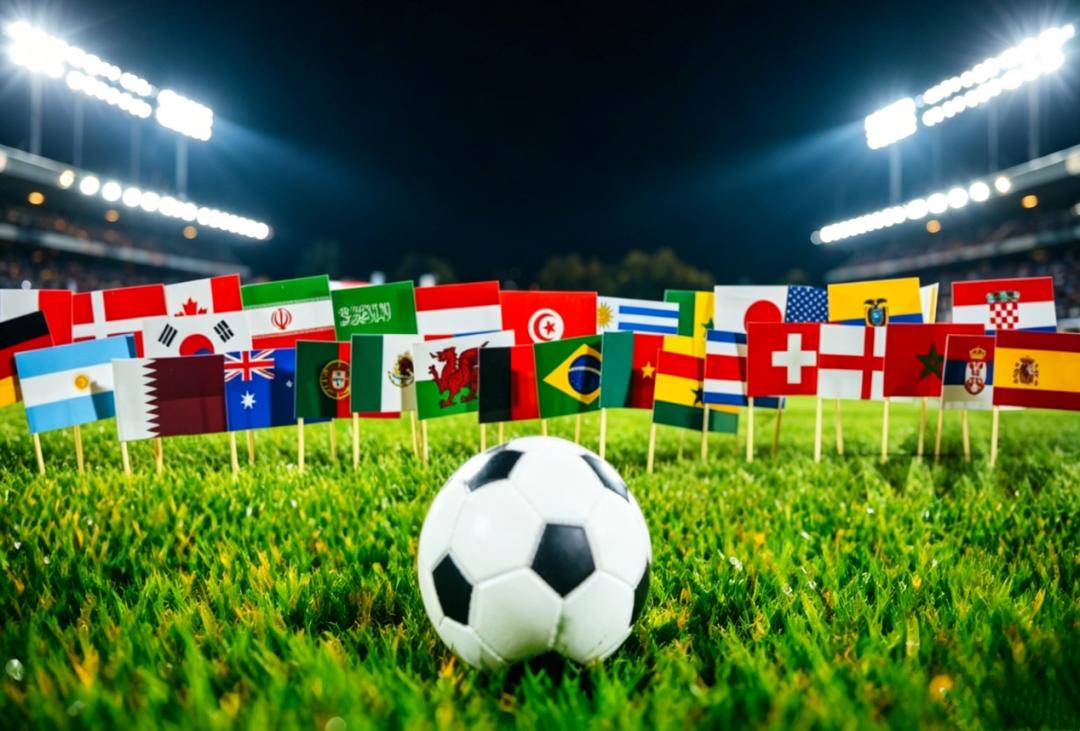
Although the figures for this year are not yet available, the proportion of products from Yiwu in World Cup souvenirs in previous World Cups was about 70%. Footballs, fans' jerseys, whistles, air horns, small flags, team sunglasses, hats, wigs, scarves, beer glasses... Almost all the "mood - makers" are from Yiwu.
But there is a new development this year.
In the past, the souvenir products were mainly cheap and available in large quantities. This year, Yiwu has begun to "improve creativity".
The data shows that in 2025, 1,546 new intellectual property protection rights were registered with the customs in Yiwu, a year - on - year increase of 29.05%. To meet the high demand of merchants, the market supervision department of Yiwu has integrated an intellectual property protection center directly into the trading market, which offers 34 services from patent application, trademark registration to international legal assistance.
In a report by the "Global Times", it was mentioned that on the official website of the American retail giant Target Corporation, World Cup - related products were successively launched and are in the hot - selling phase. The prices are mainly between 10 and 25 US dollars. About 30% of the products of this company, which has thousands of branches in the United States, come from the Chinese supply chain. "Made in China" dominates the main product categories.
Why should one be interested in the "Chinese strength" behind the World Cup?
At this point in the article, you may have noticed that "Made in China" at this World Cup is completely different from what it was ten or twenty years ago.
In the past, "Made in China" was a synonym for "cheap contract production". When a customer bought a World Cup souvenir T - shirt and turned over the label, it said "Made in China", but the brand was Nike or Adidas, and most of the profit went to others.
Today, "Made in China" is moving towards "technology integration" and "brand expansion overseas".
On the one hand, four Chinese companies among the 16 global sponsors of the World Cup in the United States, Canada, and Mexico participate and "shine on the stage". On the other hand, the "silent" companies speak with their products and technologies and directly participate in the service and operation of the event.
Two ways to secure a place in the global market.
From the organization of this global top - level event, we can see that in the past few decades, Chinese and Japanese companies have... (The original text was incomplete here.)