Anthropic ruft dringend einen Stopp aus: Mythos wurde von einem Insider durch den Verkauf von APIs gestohlen
At Anthropic, another serious data protection breach has occurred.
On June 3rd, it became known that Mythos (internal codename Oceanus), which was "locked up" due to its allegedly excessive power, is to be released soon.
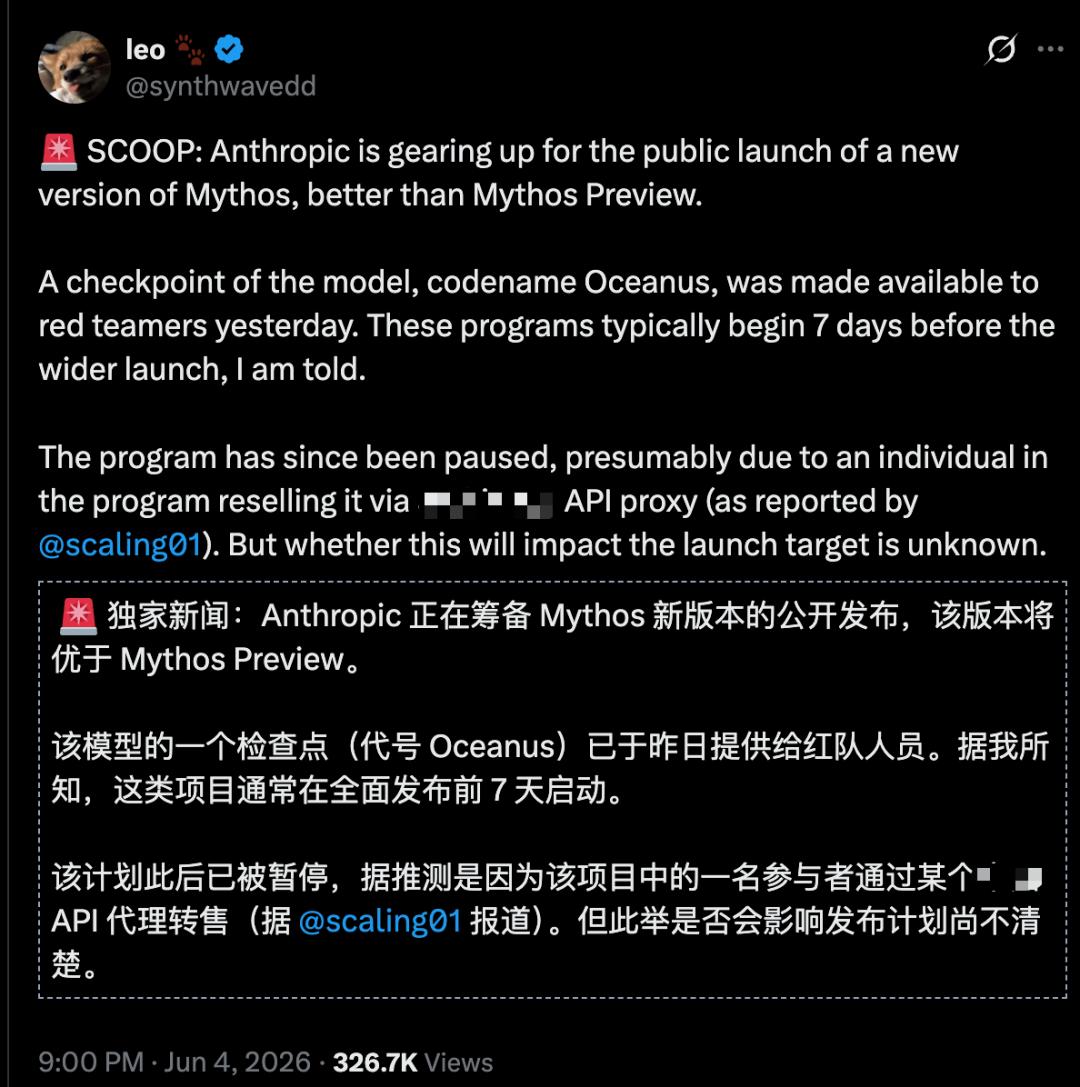
Normally, AI companies open new models to the red - team members seven days before release to test the new models.
But just a few hours after the release, the model was secretly packed by a "traitor" within the company and sold to an API courier service.
After the management of Anthropic discovered this, they immediately stopped the red - team tests.
However, you can't hide fire with paper.
At the same time, the astronomical costs and high throughput of Mythos are already widespread on X.
According to various reports, the Mythos monster will most likely be released on June 16th.

Breach of trust and the darkness for the red team
Let's first examine what lies behind this "data protection scandal".
The incident began when an unknown model suddenly appeared in Anthropic's Claude development console: claude - oceanus - v1 - p.
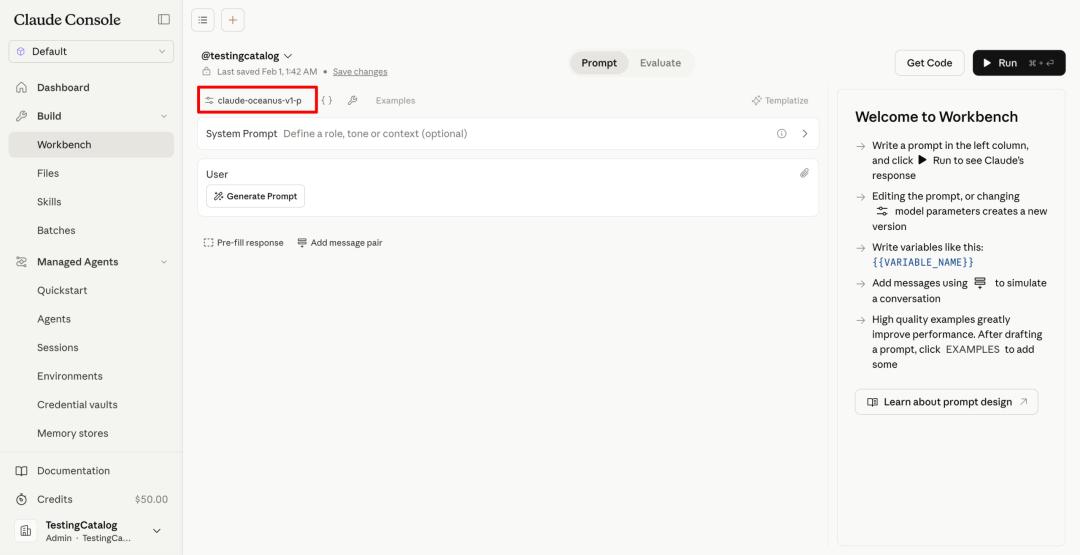
According to information from several insiders in Silicon Valley and investigative bloggers, this model with the suffix "-p (Preview/Preview program)" is the core checkpoint of the official Mythos large - model that Anthropic has been secretly preparing.
Originally, this was a planned red - team test before release.
Anthropic never thought that one of the highly paid red - team testers would be a "business genius".
After this "traitor" gained access to the API of claude - oceanus - v1 - p, he didn't test for security vulnerabilities but instead immediately sold this access to an API proxy provider in a country.

Some developers immediately noticed that they could get Claude responses through a secret channel that they had never seen before.
The security vulnerability was quickly closed, but the price was high.
After Anthropic noticed unusual API traffic, it immediately stopped the red - team tests of the entire project and the use of the model.
Some say: "Reselling through external proxy services will cause the company to go too far. It's likely that the next group of red - team testers will be smaller, more restricted, and checked more slowly... Is this a good thing?"
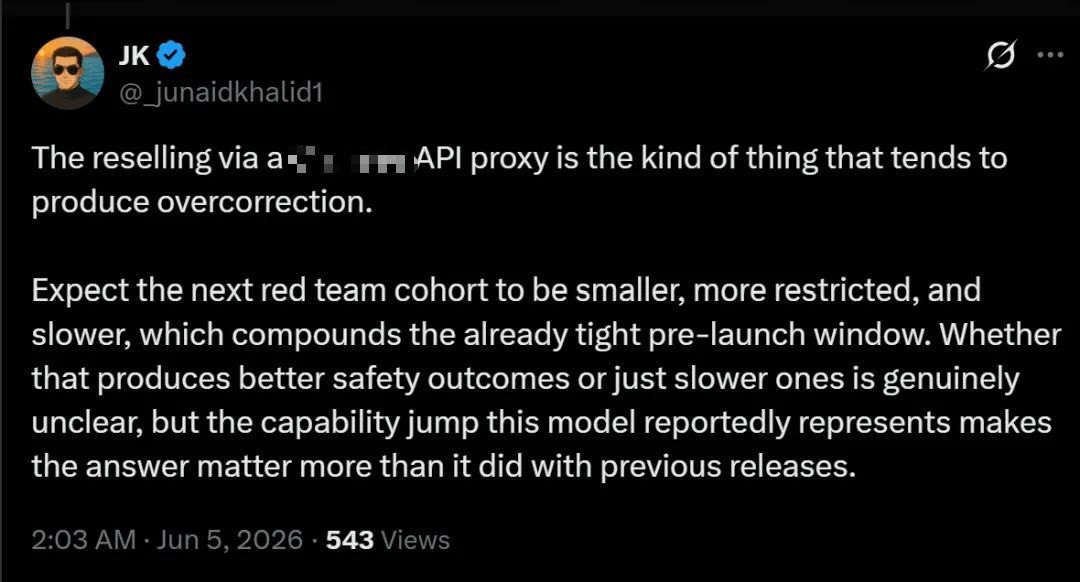
Although the red - team tests were urgently stopped, the impressive parameters of Oceanus are already known to the whole world.
"Throughput of 52 tokens/s + astronomical costs of $80": Why is the new model so expensive?
The center of the data protection scandal is the price list and performance tests of Oceanus.
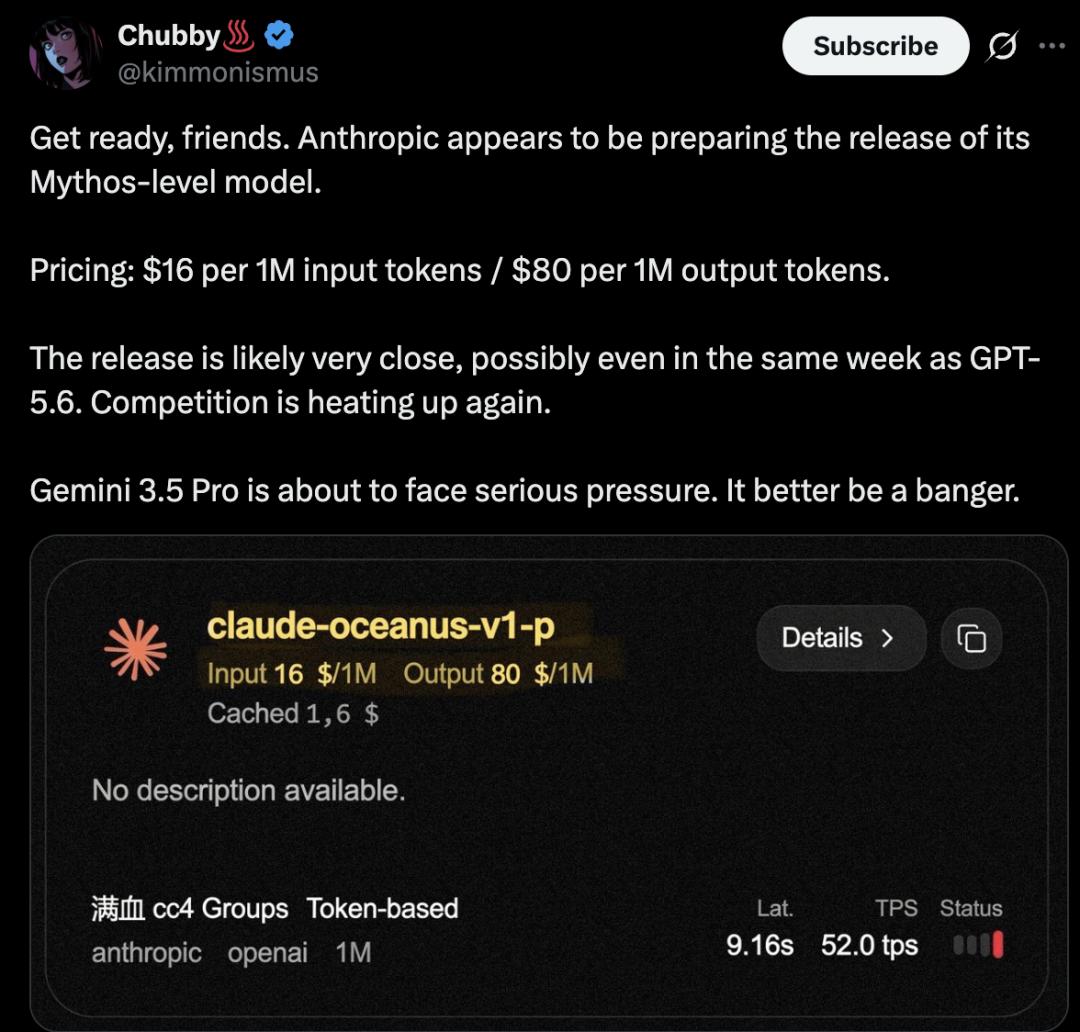
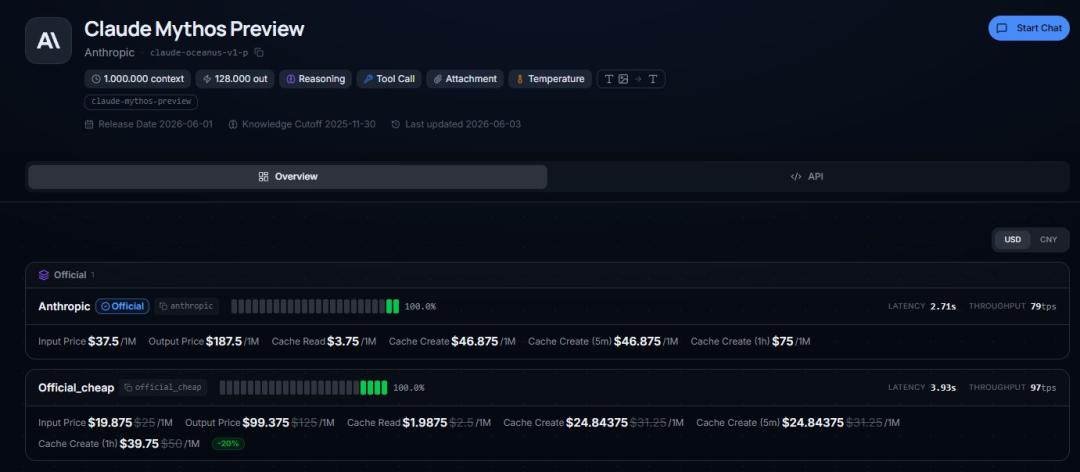
Let's directly look at the price comparison table of Mythos/Oceanus:
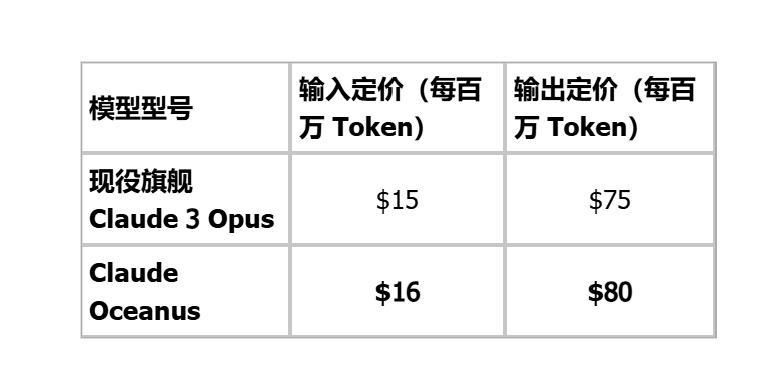
Most notably, the cost for one million output tokens of Oceanus is up to $80!
This is more than three times the cost of the current leading commercial large - models on the market.
While most large - models are currently competing for low prices, Anthropic has produced an "astronomically expensive monster".
Even well - known personalities in the industry predict that in the worst - case scenario, OpenAI's prices could rise to $100 if OpenAI and Anthropic directly compete in a 10T research project in the future. Anthropic could even demand a price of $150 per million tokens!
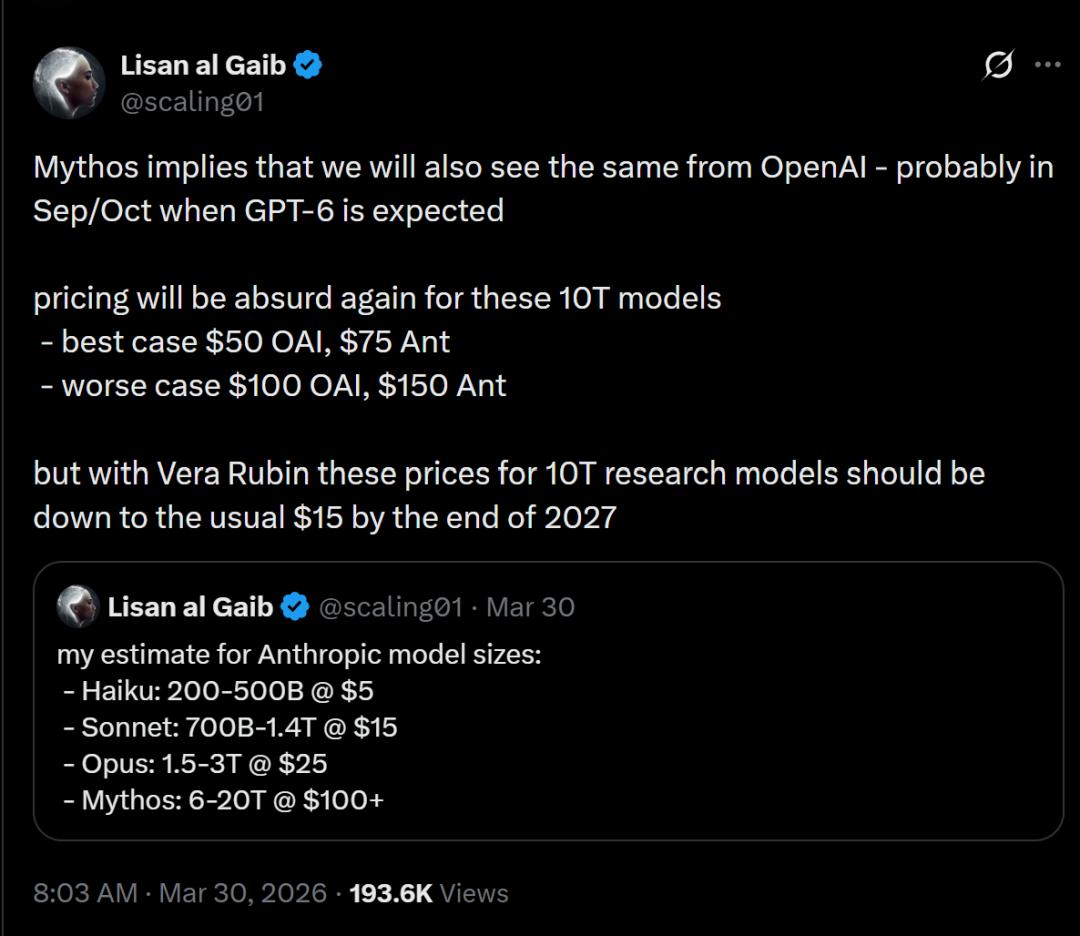
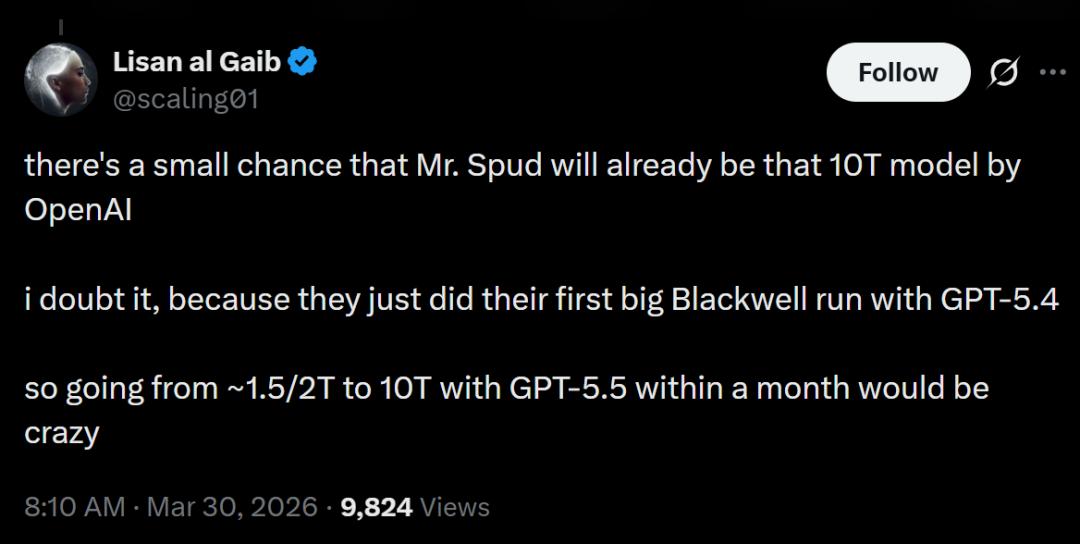
It will only be possible to reduce the costs to the normal $15 at the end of 2027 when NVIDIA graphics cards with the Vera Rubin architecture are widely used.
But there's a reason for the high price.
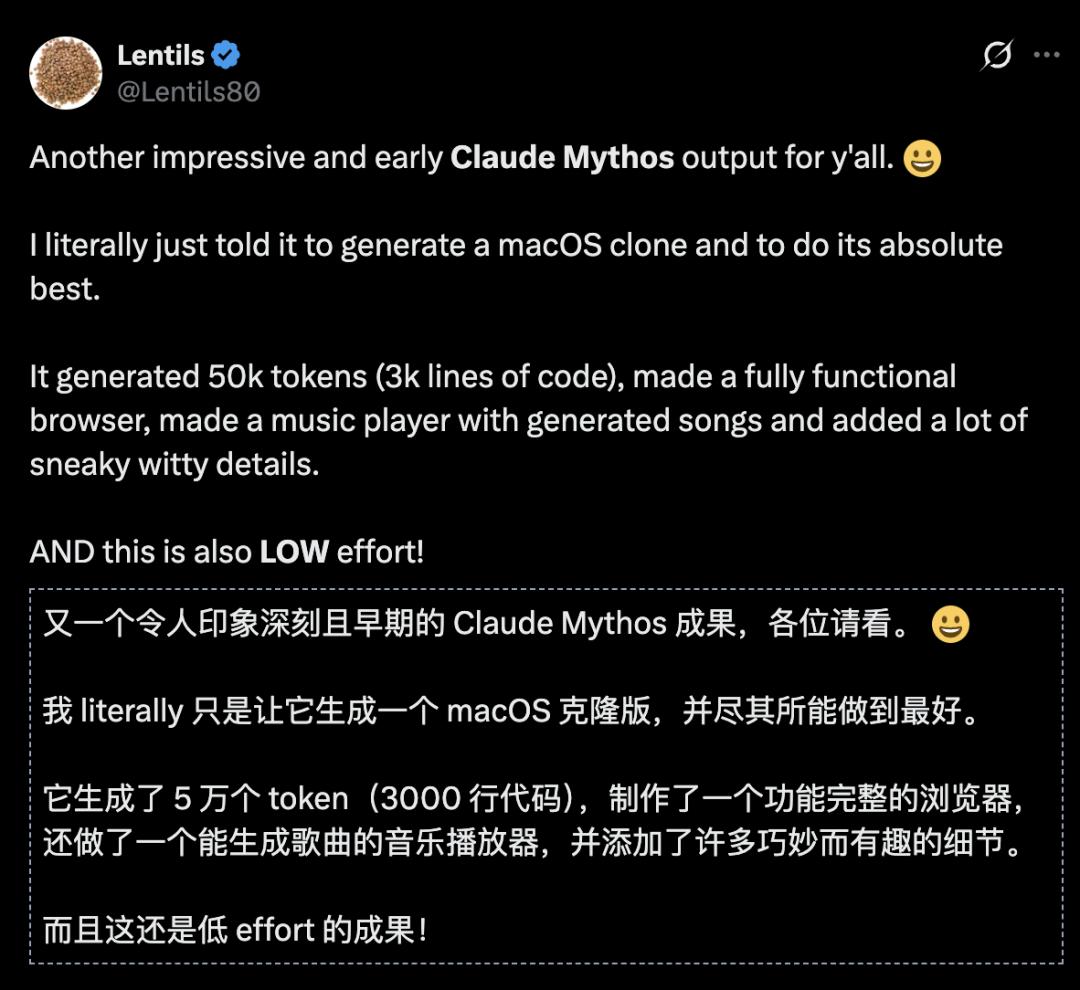
The output of the model is impressive:

With only 50,000 tokens, Claude recreated Mythods' macOS!
The high price of Oceanus corresponds to its impressive throughput: In the test, it reached a speed of 52 tokens per second!
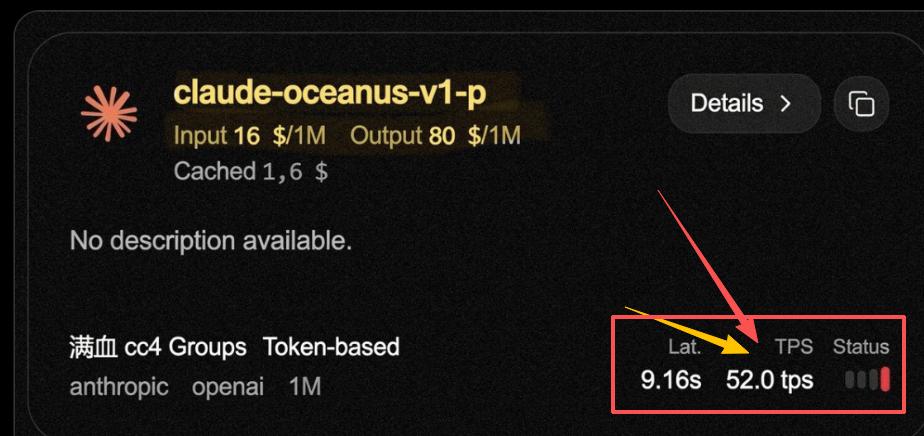
With a potentially huge number of parameters (possibly billions), it can still maintain a speed of 52 tokens/s. This means that Anthropic has probably achieved a major breakthrough in the architecture of the underlying inference and the optimization of computing power.
Oceanus is the full version of Mythos
Why does this model have the codename "Oceanus"? Why is it called "locked up"?
This goes back to a secret security project within Anthropic - Project Glasswing.
According to rumors in Silicon Valley, the previous version of Oceanus (the early preview version of Mythos) showed a terrifying ability to exploit zero - day security vulnerabilities during internal tests. If this ability were released, it could have a catastrophic impact on the global Internet infrastructure.
Therefore, it was "locked up" indefinitely in an isolated network, and only a few credit partners who had signed strict confidentiality agreements were allowed to use it.
The now - leaked claude - oceanus - v1 - p is the "fully improved version" of this monster that is trying to escape from the laboratory after several rounds of security adjustments.
The leaked data is unusual: Three technical hypotheses behind Oceanus
A throughput of 52 tokens/s is an extremely unusual value. How did Anthropic achieve this?
Considering their previously published RL research work, we have developed three technical hypotheses here.
The fact that Oceanus runs stably in the background for 12 hours indicates that there have been three system - engineering measures.
Hypothesis 1: Implementation of the slow thinking of System 2 (MCTS + PRM architecture)
When generating code, traditional models like Claude or GPT use the "autoregressive" principle, i.e., they guess the next token based on the previous token.
In this model, the thinking of the AI agent is linear, and the duration of agent tasks often takes several minutes.
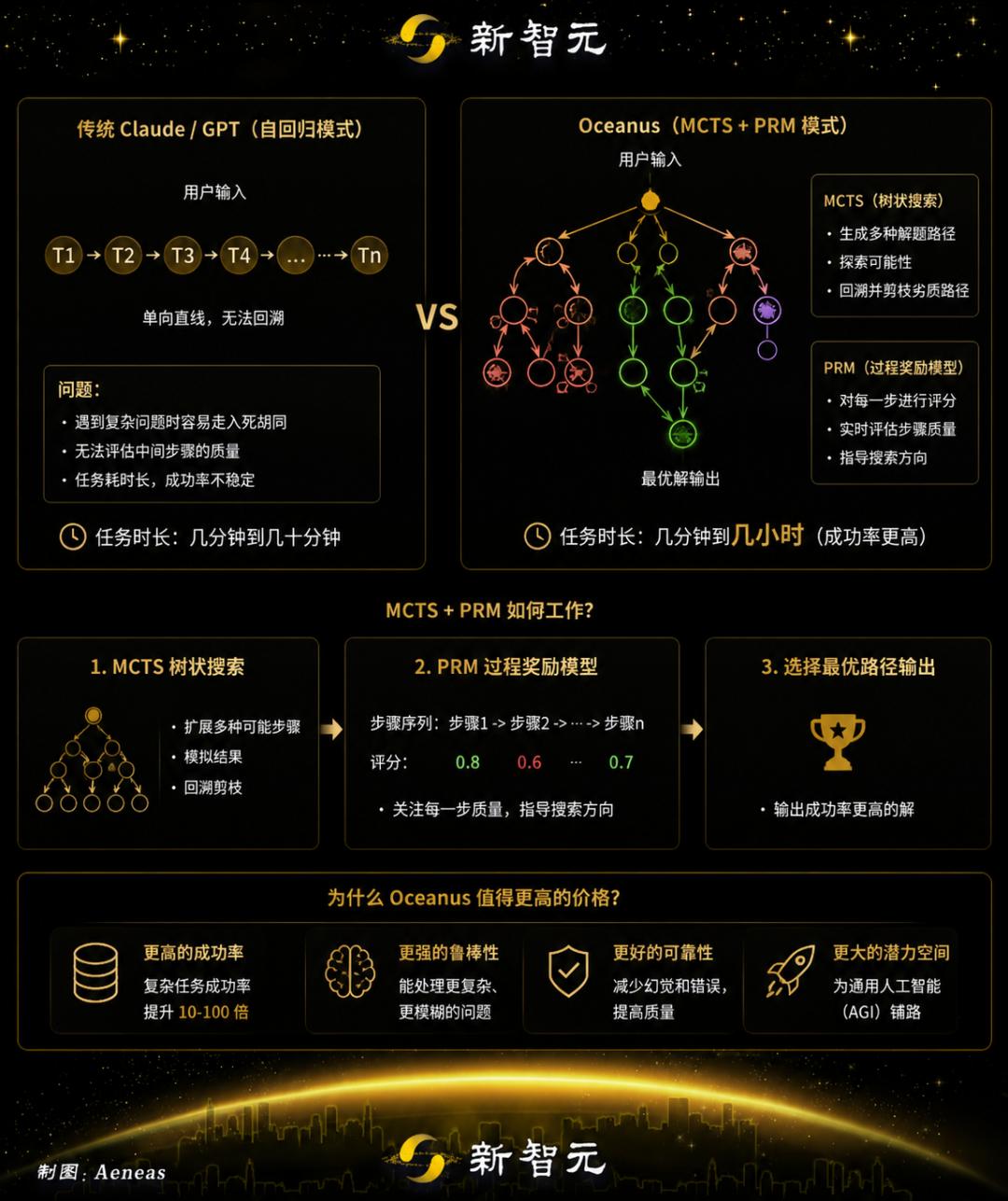
It is very likely that Oceanus has introduced the MCTS algorithm (Monte - Carlo tree search) and the PRM (Process - Reward Model) similar to AlphaGo:
MCTS (Tree search): In a complex software development task, the model doesn't directly generate code but creates hundreds of different "thinking paths" in the background to solve the problem.
If it finds that Plan A is a dead - end after half an hour, it will abandon this path and continue with Plan B.
PRM (Process - Reward Model): Traditional evaluations only consider the end result (ORM), while the PRM evaluates each step of the AI's thinking.
This is the reason why the output of this model costs $80 - when you see 1 token at the front - end, it has already generated 100 tokens in the background to find the best path and evaluate itself.
Basically, you are paying for the computing power consumed in the background.
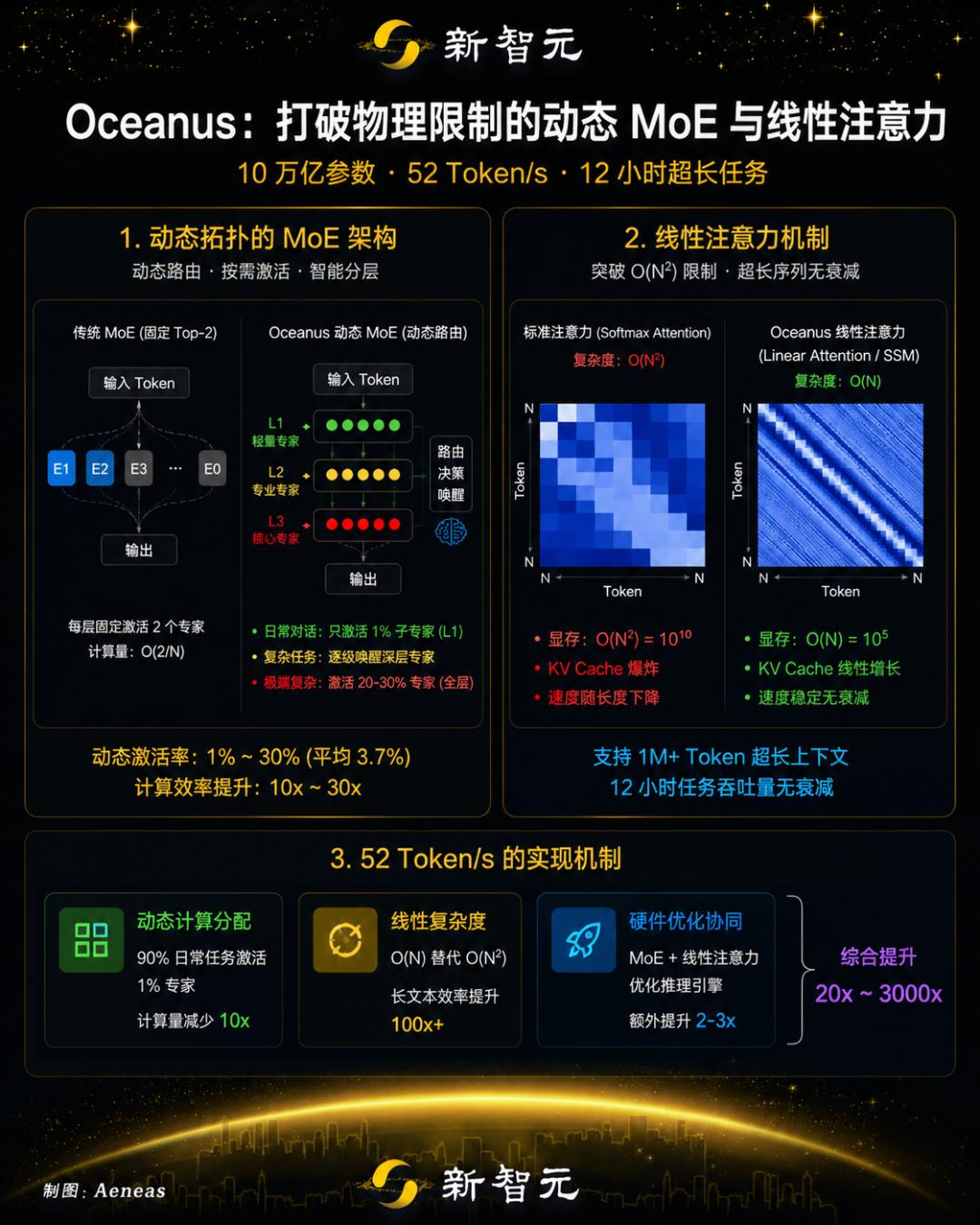
Hypothesis 2: Dynamic MoE and linear attention that overcome physical limits
Normally, the reaction speed of a model should slow down when it thinks deeper and has more parameters.
If the number of parameters of Oceanus increases to billions, how can it then achieve a throughput of 52 tokens/s?