Auf Keling's Kopf fehlt eine Wolke, die Wind und Regen abhält.
It is reported that Keling is currently seeking a pre - IPO round of financing, and the pre - investment value is 1.8 billion US dollars.
Financial reports show that Kuaishou intends to spin off Keling to attract external financing. The core reason lies in the two money - burning areas of computing power and research and development.
In terms of research and development, expenditures in the first quarter reached 3.6 billion yuan, representing a 9.8% increase compared to the previous year. The financial reports clearly attribute this to "the increase in employee welfare expenditures and the enhanced investment in AI".
In the sales cost area, the costs for bandwidth and server hosting (corresponding to the resource consumption in AI training and inference) reached 1.749 billion yuan, a 18.4% increase compared to the previous year; the depreciation of real estate and equipment and the amortization of intangible assets (corresponding to the depreciation of the previous AI computing power infrastructure, which is included in the current costs) reached 1.775 billion yuan, a 43.7% increase compared to the previous year.
There are even larger figures. In Kuaishou's financial report discussion, it was announced that the group's total capital expenditures in 2026 will be about 26 billion yuan, which is about 11 billion yuan more than the previous year. The additional part will be mainly used for investments in Keling and large models.
Despite these high expenditures, most of the revenues that Keling generates for Kuaishou mainly come from subscription fees.
As one of the top three video models in China, this performance lags far behind that of Alibaba's Happy Horse and Bytedance's Seedance 2.0. Happy Horse can give new growth impetus to e - commerce and Alibaba Cloud, and Seedance 2.0 can bring new growth to Bytedance's short - films and Huoshan Cloud.
Take Seedance 2.0 as an example. According to reports, the MaaS revenue of Huoshan Cloud this year has already achieved a ten - fold increase compared to the actual turnover of the previous year. This increase is almost entirely due to the success of Seedance 2.0.
Obviously, Keling is currently greatly underestimated in Kuaishou's structure, which has no cloud business, although it is also in the first league of the top three video models in China.
Poor people have to look around to succeed. To grow, it may be the best choice for Keling to separate from Kuaishou.
Keling Beyond the AI Model
Compared with the visible hard costs, Kuaishou promotes user growth and payment conversion through a combination of global social communication, KOL creation incentives, and discount promotions.
In other words, Kuaishou's growth is not only driven by natural technological development but also by the platform's tireless global promotion.
Data from the analysis platform Similarweb shows that since its release in June 2024, Keling has invested about 2.3 million yuan in keyword promotion on mainstream platforms such as X and YouTube in three months. The CPC cost for the search is over 0.46 US dollars.
Several phenomena are shifting Keling's marketing focus from search engines to social presence.
First, as the second - strongest video model after Sora, Keling has generated great enthusiasm on international social media. Self - studying the registration method and asking for test access were popular topics for a while.
Second, Elon Musk highly praised Keling on X and said that the AI would accelerate the entertainment industry. This statement was quoted by the media and is a strong recommendation for Keling in the overseas market.
Third, while the number of Keling users increased significantly and it was about retaining users, Keling's "Everything Expands" template unexpectedly became popular during the Chinese New Year in 2025. Users enthusiastically uploaded landmarks and created dynamic videos with the look of plush toys.
As a result, Keling has recognized the communication ability behind the video model. Compared with advertising placement, it may be a more effective growth strategy to penetrate the short - video space and ask users about the production method themselves.
This is a path that Sora, Veo, and Runway have not yet taken. All three focus their attention on the enterprise market.
For example, Runway has integrated more than 30 tools in its product, from simple functions such as automatic image cropping and simple cutting to complex functions such as chroma - keying, image repair, and dynamic tracking. Compared with Keling's "one image, one sentence", Runway wants to replace AE and PR and become a professional video editing tool.
As the second - largest short - video platform in the world, Kuaishou understands the rules of social communication better due to its genetic advantages. It knows that users are not so much interested in the technical parameters of the video model as in the successful templates with which they can start quickly.
The result is that Keling has taken over international social media three times within six months, from pet dance videos to paper mobile phones and then to the baseball spectacle. Each of these successes has led to a strong increase in downloads and revenues.
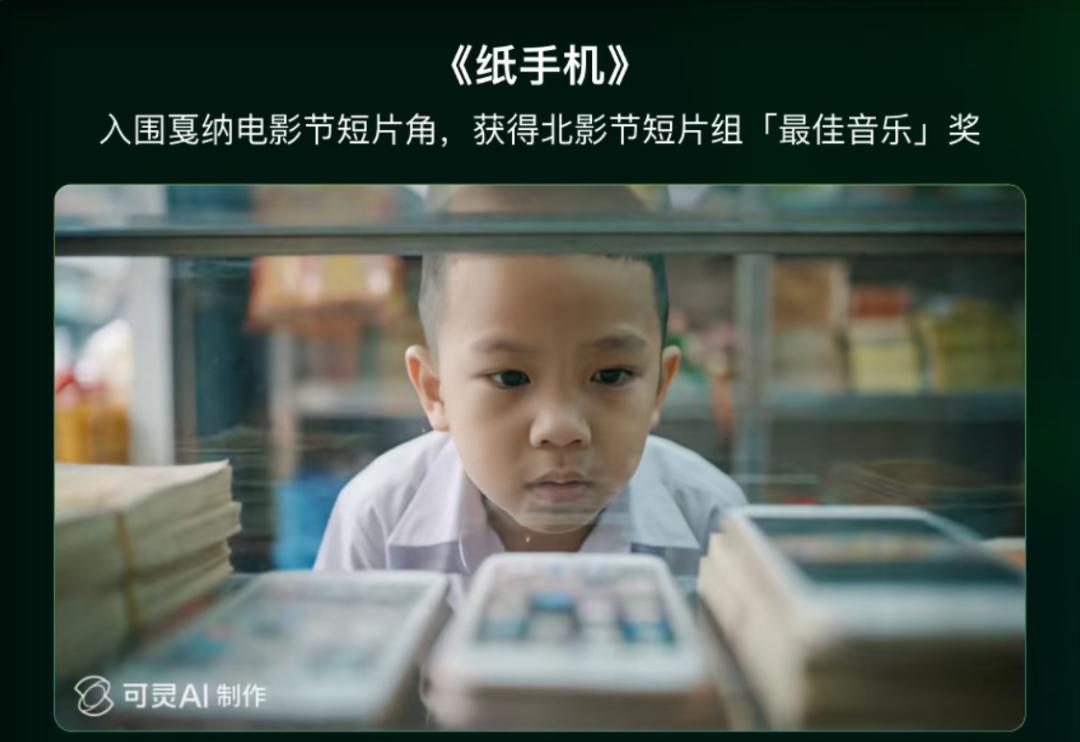
From the perspective of traditional exposure costs, Kuaishou has achieved a propaganda effect in the billions with zero cost. But behind this are sharply increasing investments in Keling creation competitions and creation incentives.
In the first Keling Creation Championship in 2024, the total prize pool was 300,000 yuan. By the first quarter of 2026, there were almost ten special competitions. In the 4K Image Creation Championship, the gold prize alone was 10,000 US dollars.
In the Keling AI Creation Program 3.0, Keling plans to offer one million yuan in prizes and ten million inspiration points as incentives every month and operate this program permanently.

The super - creators recognized by the platform receive a monthly gold membership value of 1,314 yuan and strategic resources such as the opportunity to exhibit at international film festivals.
In Kuaishou's financial report, the sales and marketing expenditures in the first quarter of 2026 were 10.3 billion yuan, a 4.4% increase compared to the previous year. The financial report clearly attributes the increase to the increase in promotion expenditures.
Does it have to be independent if it has no cloud business?
According to accounting standards, discounted sales should reduce revenues instead of being included in sales costs to avoid the suspicion of over - inflating turnover.
This rule also applies to Keling, which is in the pain phase of price competition.
Keling has tried to increase prices to counter the rising computing power costs. For example, in version 1.6, the number of inspiration points required to generate a 5 - second video was 35. In the Keling 2.0 Master Edition, which was released in April last year, this was increased to 100. However, this led to user dissatisfaction, and in version 2.1, the price was lowered again.
In Keling 2.5 Turbo, the price has dropped to 25 inspiration points.
Regarding the subscription price, when Keling 2.6 was released, it directly offered a 34% discount on the annual subscription. Since April 1, 2026, Keling has significantly reduced the prices of its AI products. Platinum members and higher - level members of the Keling 3.0 model get a 20% discount, and some image functions are even free.

Accordingly, the pressure from competitors is increasing.
In the Chinese market, Alibaba's Happy Horse entered the market in April with low prices and a top ranking in the charts. For example, the subscription price of Happy Horse for generating 1080P videos is about 0.78 yuan per second, that of Keling is about 0.84 yuan per second, and that of Seedance 2.0 is about 1 yuan per second. There are rumors that Bytedance will introduce a Seedance 2.0 Lite version in the future, which will cost only 0.5 yuan per second.
This is a dangerous signal for Keling. Compared with Keling, which mainly lives on subscriptions, Happy Horse focuses on connecting Alibaba's cloud business with the token economy.
In the overseas market, Google's Veo also follows a similar cloud - ecosystem logic.
In December 2024, the API price of Google's Veo 2 was still 0.5 US dollars per second. In less than a year, the price of Veo 3 dropped to 0.4 US dollars, and Veo 3 Fast has reached 0.15 US dollars, which is a real halving of the price.
By April this year, Veo 3.1 has launched a price war in the industry - the Fast version costs only 0.1 US dollars per second for 720p, and the Lite version only 0.05 US dollars.
This is not just a price decline. Google is re - positioning the video model.
The uncomfortable exit of Sora has warned the industry - if one only focuses on production quality, the pure video device content lacks the admission ticket to the next era. If the operating costs of a product are far higher than the revenues and there is no profit point in sight, exit is the most rational choice.
Google's approach is to use Veo as an access point for Google Cloud and open it to paying developers through Google AI Studio. Instead of selling subscriptions, the use of tokens is billed. As long as the sales of computing power and storage space of Google Cloud increase, one doesn't have to worry about the profit situation of Veo itself.
In other words, Google doesn't want to sell the ability to generate video device content but to offer a video product for Google Cloud and market it to enterprises and developers.
Keling's business model is to build a more open ecosystem and select professional creators from it. Kuaishou CEO Cheng Yixiao said in the financial report discussion that almost 70% of Keling's revenues come from P - subscribers, that is, professional creators who stand between ordinary consumers and enterprises.
Therefore, Keling is the only one that commits to a broad social media presence. While competitors operate the cloud and the model in parallel, Keling has no other choice but to persevere to the end.
Between a Rock and a Hard Place
"The real opportunities in this field may only belong to a few pioneers who can maintain their brand positions." An AI expert told "Shi Xiang".
This is exactly where the challenge for Keling lies.
According to reports in "Intelligent Emergence", Seedance 2.0 has achieved monthly revenues of over 1 billion yuan. In comparison, Keling's revenues in the entire first quarter of this year were over 650 million yuan.
"All companies release their products during the iteration." An industry observer said that companies must constantly develop new models to prove their strength in front of the capital market and users. Users' expectations are also changing from focusing on top - notch products to choosing the most cost - effective product.
Olivia Moore, a partner at venture capital firm a16z, analyzed the reasons for Sora's exit - the user retention rate on the first day was 10%, after 30 days it was only 1%, and after 60 days it dropped to 0%:
"Although the model was viral in nature, most users did not use the app permanently."
This is in line with the impression of most users of video models: they are excited about new functions for a few days and then disappear quickly.
Data from Sequoia Capital shows that the user retention rate of traditional apps in the first month is about 63%, while that of AI apps is only 42%, and the daily activity is even lower.
Kuaishou's solution is to constantly create new successful content to convince users out of their curiosity.
In a public statement, Ma Hongbin, the senior vice - president of Kuaishou, described Keling as a... (The text seems to be incomplete here)