Globales Kapital strömt nach Hongkong, um sich 120.000 Studentenwohnheimplätze zu sichern
Zhongyuan Investment, a subsidiary of the Zhongyuan Group, has officially launched the rental of two projects under its student accommodation operation service brand, Yishe, in Hong Kong, involving more than 750 beds.
This company, which has been deeply involved in the student accommodation market in the UK and the US for 10 years, chose to enter the Hong Kong student accommodation market in 2024. In less than two years, it has invested more than HK$2 billion.
Behind this is a huge business opportunity. Colliers released a report in 2025 predicting that the shortage of student accommodation in Hong Kong will reach 120,000 by 2028. According to incomplete statistics from "Hotel Management Finance", Hong Kong capital, mainland capital, international capital, etc., have invested nearly HK$10 billion in the past three to five years.
Facing the temptation of an annualized return rate of nearly 6%, various capitals are likely to continue their investment plans. Many existing hotels have become important targets for acquisition and renovation.
However, whether the domestic student accommodation market can be commercially operated remains to be seen. For traditional hotel investors, how can they participate in this investment feast?
Nearly HK$10 billion invested in Hong Kong student accommodation
Two projects under Yishe, the student accommodation operation service brand of Zhongyuan Investment - the monthly rent for single beds at One Step Residence on the Mid-Levels West starts from about HK$13,500, and the monthly rent for beds at One Hui Residence - Kai Tak Phase 1 in Kowloon City starts from HK$6,128.
This project originated from an acquisition last August. At that time, Zhongyuan Investment spent HK$335 million to purchase the entire serviced residential building at No. 38C Bonham Road on the Mid-Levels West under the YWCA (Young Women's Christian Association) in Hong Kong and converted it into a modern student dormitory.
Coincidentally, on June 2nd, market news reported that China Merchants Group is in talks to acquire the South Apartments Hotel in Aberdeen for about HK$950 million, with an average value of about HK$2 million per room and a price per square foot of about HK$8,711. Some voices suggest that China Merchants Group started to enter the student accommodation market in the past year, and this acquisition may continue to be converted into a student dormitory.
These two companies represent the importance that Hong Kong local capital and state-owned enterprises attach to the Hong Kong student accommodation market respectively.
The Zhongyuan Group, to which Zhongyuan Investment belongs, is a real estate agency group founded in Hong Kong. It has long been deeply involved in the student accommodation market in the UK and the US. In 2024, the Zhongyuan Group began to enter the Hong Kong student accommodation market and has made significant investments.
In September 2024, Zhongyuan Investment spent HK$180 million to acquire the The Fleming Hotel in Tsim Sha Tsui, Hong Kong, and converted it into a student apartment with about 121 beds. This was the group's first project in Hong Kong. In March 2025, Zhongyuan Investment spent another HK$1.5 billion to acquire the Regal Oriental Hotel in Kowloon, Hong Kong, and plans to invest a total of HK$2 billion to convert the project into a student apartment in Hong Kong.
Wing On Properties, also a Hong Kong local capital, jointly purchased a hotel in Mong Kok with the US private equity fund Angelo Gordon for HK$435 million in July last year. The market expects it to be used as a student apartment.
Earlier, these two institutions also spent HK$2 billion to purchase the Hotel ICON in Kowloon, Hong Kong, and converted it into a student apartment called "Rixin She".
For China Merchants Group, its first move was at the end of last year. China Merchants Commercial REIT disclosed that it acquired a hotel property for HK$206 million and plans to convert the hotel into a student apartment with 85 beds, targeting the international student group in Hong Kong.
Another state-owned enterprise, China Resources Land, a subsidiary of China Resources Group, also took over a hotel on Castle Peak Road in Kwai Chung in late 2025 for HK$950 million. At that time, there were reports that China Resources Land planned to convert it into a student dormitory, which is expected to provide more than 1,000 beds. Roughly calculated, just for the above projects, the investment of various capitals in Hong Kong student accommodation has exceeded HK$7 billion.
"Hotel Management Finance" simply sorted out that investing in the Hong Kong student accommodation business has extremely high thresholds.
Hong Kong is a land-scarce city, and the investment in any property project often amounts to hundreds of millions of yuan. This also means that this business is a game among big investors. Therefore, its participants are mostly large developers and international funds. At the same time, existing hotels in Hong Kong have become an important carrier for the transformation into student dormitories.
Almost all of the above projects are renovated from local hotels. In addition, a company under the United Publishing (Group) purchased the Star Net Hotel on Lockhart Road in Wanchai for about HK$205 million at the end of last year and will also convert it into a student dormitory.
Colliers International pointed out that in February 2026, there were 21 transactions of hotels and entire residential buildings in the market, equivalent to the total transactions from 2020 to the third quarter of 2024. "Hotels already have complete room layouts, independent bathrooms, and fire protection facilities, which can significantly shorten the renovation time and cost, and at the same time enable investors to quickly enter the market to meet the peak rental season."
Although there are many policy differences between Hong Kong and the Chinese mainland in terms of student accommodation, the above trends can still provide many inspirations for the existing hotel assets on the mainland.
How big is the Hong Kong student accommodation market?
Different from universities on the Chinese mainland, which generally provide dormitory beds, the dormitory supply rate of universities in Hong Kong is generally low.
"Hotel Management Finance" mentioned in March this year that a company called "Student Living EduVation" in Hong Kong described the Hong Kong student accommodation market in its prospectus for listing in the US: In the 2024/25 academic year, the average student-to-bed ratio of the eight major universities in Hong Kong was 2.55:1, indicating a serious shortage of student accommodation. This shortage has left more than 62,500 students unable to obtain on-campus accommodation, reflecting the extreme scarcity of student accommodation resources in Hong Kong.
The rental market for student apartments in Hong Kong is experiencing rapid expansion. It is expected that the total market size will increase from HK$480 million (US$61.5 million) in 2020 to HK$5.7 billion (US$731.4 million) in 2030, with a compound annual growth rate of nearly 24%.
In order to enable everyone to have a more comprehensive understanding of the Hong Kong student accommodation market, "Hotel Management Finance" found more relevant data.
One is the shortage of student accommodation in Hong Kong.
According to data cited by Rui Si Wang, the number of students at the University of Hong Kong in the 2025/26 academic year reached 45,303, but there were only about 7,800 dormitory beds, with an overall coverage rate of only 17.2%. Among them, non-local students accounted for 55.3%, but only 40% - 50% of the dormitory beds were available to them, and more than 17,000 students needed to rent accommodation off-campus.
The total number of dormitory beds in the eight major universities in Hong Kong is between 42,000 and 44,000. Facing more than 192,000 full-time students, the overall coverage rate is only about 23%, and on average, 3.4 students compete for one dormitory bed, highlighting the imbalance between supply and demand.
In September 2025, Colliers disclosed that the government-funded and self-financed institutions in Hong Kong, together with the private market, only provided a total of 48,000 student dormitory beds. Compared with the number of non-local students and local tertiary students in the 2024/25 academic year, the shortage exceeded 90,000 beds, and it is expected that the shortage will expand to 120,000 by 2028.
On the other hand, it is the growth of students in Hong Kong.
According to data cited by Times Finance, since the 2024/25 academic year, Hong Kong has increased the upper limit of non-local student admissions in government-funded institutions from 20% of local quotas to 40%; and plans to further increase it to 50% in the 2026/27 academic year. At the same time, the upper limit of self-financed quotas for over-enrollment in funded research postgraduate courses has also been increased from 100% to 120%, directly boosting the overall number of admissions, and most of the non-local students come from the Chinese mainland.
Zhongyuan Investment estimates that the number of non-local students in the top five universities in Hong Kong will increase to 67,800 in the 2027/28 academic year, an increase of more than 35%.
On the one hand, there is a huge existing shortage, and on the other hand, the number of students is continuously increasing (and most of them need accommodation) - this means that the Hong Kong student accommodation market has been and will continue to be a very worthwhile investment business for a long time to come.
Zhongyuan Investment has been continuously increasing its investment in Hong Kong student accommodation. It is understood that in March this year, the company has raised its supply target to 6,000 beds, while only six months ago, the company only increased its short-term target to 3,000 beds.
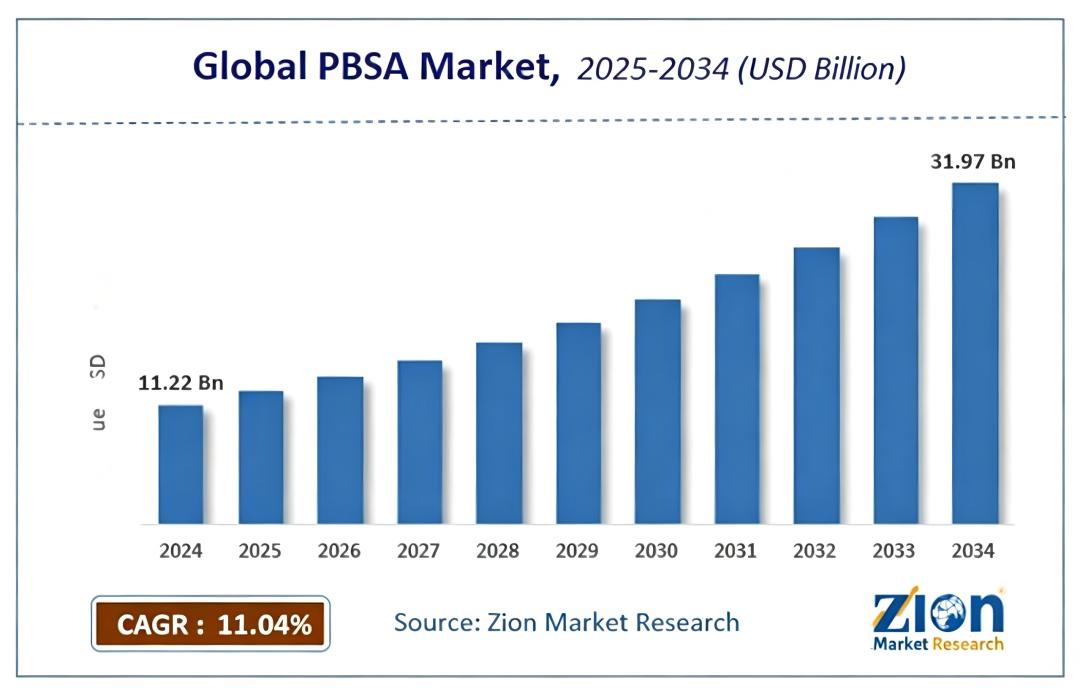
Prediction by ZionMarketResearch
Globally, according to the prediction of the market research institution ZionMarketResearch: the global PBSA (Purpose-Built Student Accommodation) market is expected to grow from US$11.22 billion in 2024 to US$31.97 billion in 2034, with a compound annual growth rate of about 11.04%, indicating the rapid expansion potential of student apartments as a global asset class.
The market space is large, but what about the investment return?
According to a report titled "New Perspectives on the Student Accommodation Market" released by Knight Frank in November last year, the market return rate of student accommodation in Hong Kong is 4.5% to 5%, that of traditional Grade A office buildings is 3.7%, and that of small and medium-sized residential properties is only 3.2% and 3.6% respectively.
Ye Minghui, the President of Zhongyuan Investment Management Co., Ltd. (Cayman), said that student apartments are a new concept in Hong Kong, but new policies will drive fundamental changes. The team will increase the value of the assets and hopes to achieve a return rate of more than 5%, and the return period is expected to be 5 to 6 years, similar to that in the UK and the US.
She mentioned that the team will first purchase the target property and renovate it into a student apartment in the first year. Then, the project will be split into rooms for rent, and the property will be sold after about 5 years to realize the capitalization of returns.
"Before acquiring a project, the team needs to consider the current market fundamentals, the number of nearby students and rental performance, and whether there is room for renovation. The after-tax rental return of the project is expected to be between about 4% and 5%," Ye Minghui said.
Is it possible to replicate the model of Hong Kong student accommodation on the Chinese mainland?
The market for student accommodation in Hong Kong is large, but it is not applicable to traditional hotel investors on the Chinese mainland. If existing hotels really want to enter this business, the supply situation of student accommodation on the Chinese mainland is still worthy of attention.
However, we need to emphasize a basic fact: currently, the commercial supply of student accommodation on the Chinese mainland is due to the sharp increase in the number of students caused by the expansion of university enrollment, which is temporarily unmatched with the number of university dormitories. The external commercial supply is only a supplement. This is the essential difference between the Chinese mainland and Hong Kong in the student accommodation field.
"Hotel Management Finance" believes that the potential of student accommodation on the Chinese mainland lies in two aspects.
One is the overflow of students.
Since the expansion of university enrollment in 1999, the shortage of dormitories has been the most prominent problem. The results of a research project on "Investigation and Optimization of the Allocation of Student Dormitory Resources in Liaoning Universities" by the China Education Logistics Association published in December 2025 showed that the existing dormitory area of universities in Liaoning Province is 11.6196 million square meters, with a gap of about 2.6529 million square meters compared with the actual demand, and the overall gap rate is as high as 18.59%. Among the 105 universities in the province, 79 have a shortage, and only 26 meet the standards.
It was also reported that the dormitory area gap of Hefei University of Technology reached 162,100 square meters; the dormitory area gap of the South Lake Campus of China University of Mining and Technology (Xuzhou) was about 137,600 square meters; and the dormitory gap of Central South University was about 200,000 square meters.
On the other hand, the conditions of student dormitories are being improved, and the traditional 8-person dormitories have basically been gradually phased out.
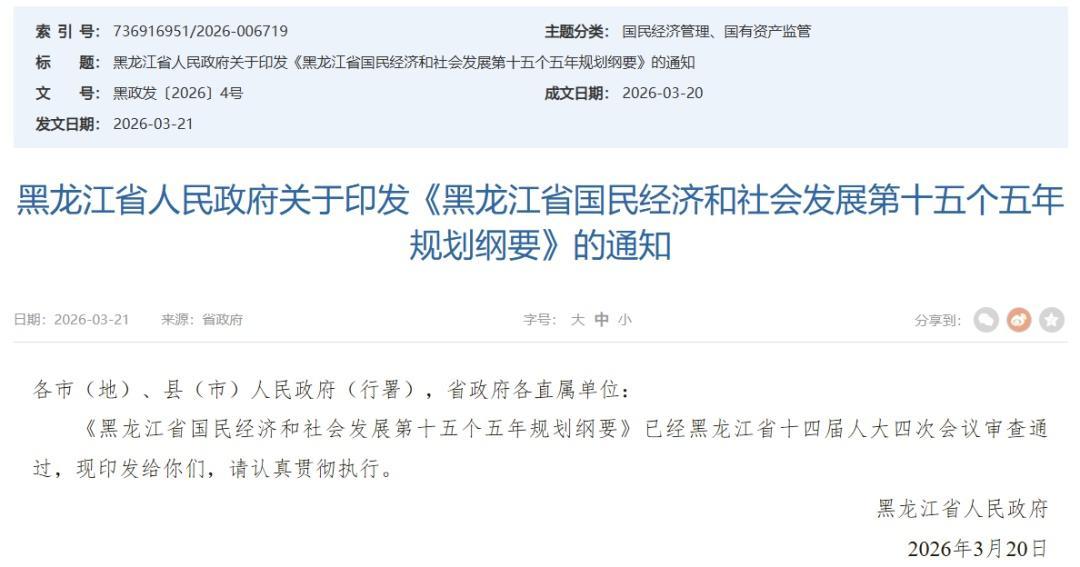
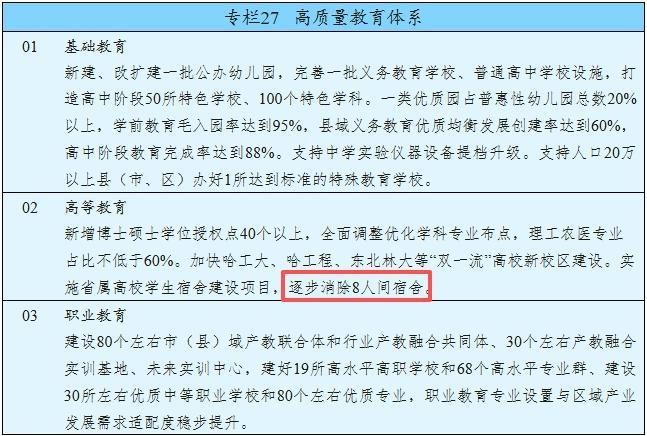
In March this year, the "14th Five-Year Plan for National Economic and Social Development of Heilongjiang Province" mentioned that the construction project of student dormitories in provincial universities will be implemented to gradually eliminate 8-person dormitories.
The "Implementation Plan for Strengthening the Construction of University Student Dormitories in Guangdong Province (2024 - 2028)" proposes that the newly built dormitories should meet the standards of "four-person rooms for undergraduates (with a per capita dormitory construction area of 10 square meters), two-person rooms for postgraduate students (with a per capita dormitory construction area of 15 square meters), and single-person rooms for doctoral students (with a per capita dormitory construction area of 20 square meters)." for planning and construction.
However, having a gap does not necessarily mean having a market. The most important reason is that there is no such habit for student accommodation on the Chinese mainland.
When many universities face a shortage of dormitories, the first thing they think of is to expand the dormitories or directly purchase dormitories.
The "Guiding Opinions on Strengthening the Construction of University Student Dormitories" issued by the National Development and Reform Commission and other departments at the beginning of 2024 mentioned that universities are encouraged to supplement dormitory resources by purchasing or renting social housing such as talent apartments and commercial and residential buildings around the school, and strengthen the supporting service management in accordance with the same standards as on-campus.
However, based on existing cases, basically only local state-owned enterprises and platform companies are involved in the construction. Almost no existing hotel properties