Nach 2 Jahren im Startup-Business erzielt 27 Milliarden: Dieses Robotikunternehmen hat enorm viel verdient.
200 employees, two years of establishment, 34,000 orders, IPO – Is Humanoid a genius or a fraudster?
The British humanoid robot company Humanoid has been doing quite well recently. According to foreign media reports, the company is considering listing on the US stock exchange between 2029 and 2030.
Its CEO Artem Sokolov revealed: The company has received a total of 34,000 pre - order sales so far and plans to deliver them within three years. At a price of about $120,000 per device, this corresponds to an order volume of about $4 billion (about 27 billion yuan). Considering the planned annual delivery rate, the annual sales could be over $2 billion (13 billion yuan).
These figures are really impressive.
According to estimates by Morgan Stanley and several industry institutes, the global delivery volume of humanoid robots in 2025 will be about 18,000 devices.
In other words, the “pre - order volume” of Humanoid alone is already almost twice as high as the entire global annual delivery volume. Even more astonishing is that the company was only founded in May 2024 and has therefore only existed for two years.
According to public information, Humanoid currently employs about 200 employees, who come from companies such as Apple, Tesla, Google, Boston Dynamics, Sanctuary AI and NVIDIA.
Employees with a Chinese robot background are also represented.
Public information on LinkedIn and other platforms shows that the Chief Product Officer Sotirios is a doctor of automation and robotics at Tsinghua University. After graduation, he worked at Ubtech as the head of robotics products.
A company that is only two years old and suddenly talks about 34,000 orders – Can it really make money, or is it just a huge promise for investors?
Humanoid has hit the jackpot
In recent years, the biggest problem in the humanoid robot industry has been that “they can walk, but they can't make money”. Many robot companies have remained on the stage for a long time, dancing, doing jumps, showing demo videos or conducting laboratory experiments.
The real problem is who is willing to pay continuously. Humanoid has not focused on “household robots”, but on industrial applications. This is the crucial point, because there is actually money to be made in the industry.
Take the European and American manufacturing industries as an example. The labor costs for German manufacturing workers are about $60,000 to $80,000 per year, and the costs for American auto factory workers are about $70,000 to $100,000 per year. Considering night shifts, insurance, training, work accidents and staff turnover, the long - term costs are even higher. The price of a Humanoid robot, on the other hand, is about $120,000.
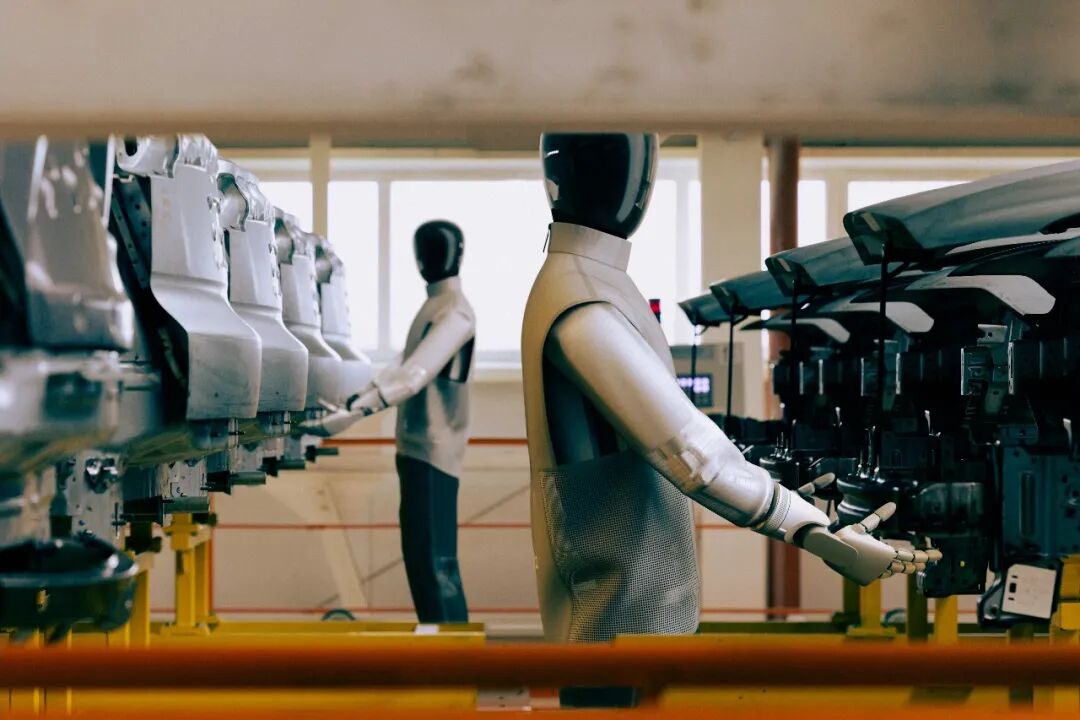
The two - legged version of the HMND 01 could already walk stably 48 hours after assembly.
If the robot can work stably for 3 to 5 years and can be used 24 hours a day, it is probably cheaper than a human. This means that industrial robots are approaching the “real ROI” for the first time.
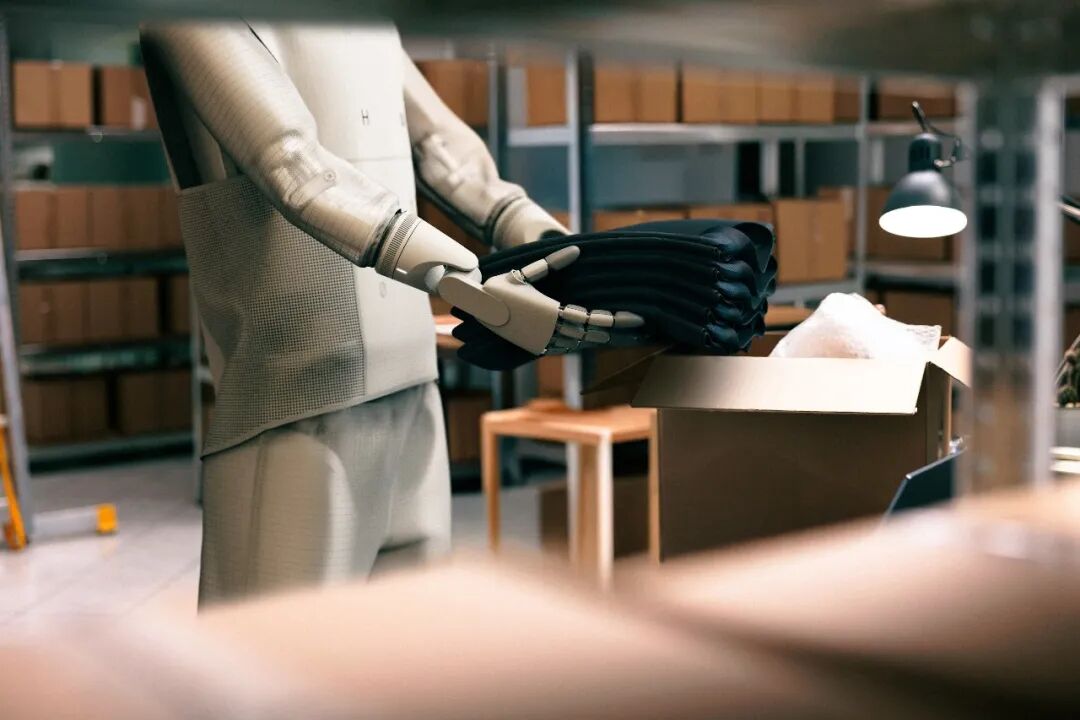
The rolling version of the HMND 01 performs transport tasks in the industry.
Therefore, it did not cooperate with consumer goods companies first, but with Bosch, Siemens, Ford and Schaeffler. These companies do not pay for “tricks”, but are only interested in one thing: Can the robot reduce costs?
Selling hardware is not exciting, renting is exciting
Many people think that robot companies make money by “selling hardware”, but the real business model is probably “continuous rental”.
Humanoid uses the RaaS model (Robot as a Service), in which the robot is not sold once, but billed monthly, by working hours or by productivity.
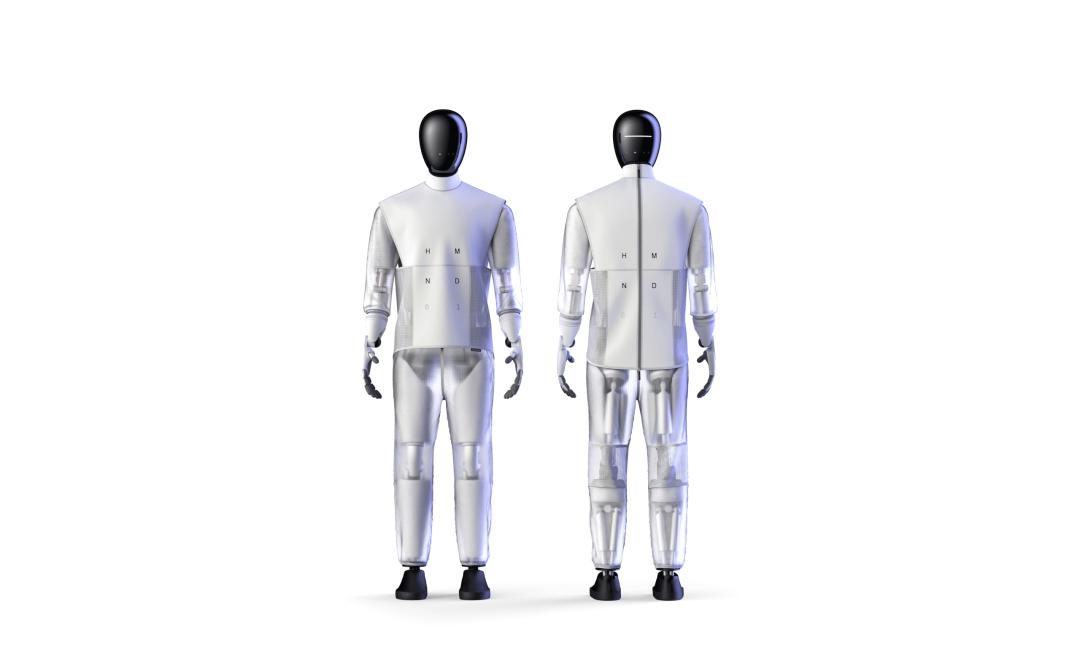
The rolling version of the HMND 01 is 220 cm tall and can carry a load of 15 kg.
Let's take an example: If a robot is sold for $120,000 and the customer pays $3,000 to $5,000 per month for maintenance, the sales per robot over a 5 - year lifespan could be between $180,000 and $300,000.
With 34,000 robots, this means that the potential cumulative income in the future may not be limited to $4 billion in hardware income, but could be over $8 to $10 billion in long - term service income. This is the reason why the capital markets are so excited.
Because a one - time sale of devices is not exciting, but the continuous subscription fee is. Investors are not betting on the “robot sales figures”, but on the question of whether there will be a “Robot - AWS” in the future.
Why was the development from establishment to release so fast in only 16 months?
Another point that has attracted the industry's attention to Humanoid is the development speed.
In September 2025, the company released the rolling version of the HMND 01. Only 16 months passed from the establishment of the company to the product release. And according to its own statement, the two - legged version of the robot could already walk stably 48 hours after assembly.
Why was it so fast? The key lies in “simulation first”.
The biggest problem with traditional robot companies is that real - world training is very expensive, because the hardware can be damaged when it falls, the efficiency of training with real devices is very low, and data collection is very slow.
Humanoid, on the other hand, makes extensive use of NVIDIA's Isaac Sim simulation platform. The logic is similar to “first training the robot to be an expert in a game and then putting it into the real world”.
According to public information, Humanoid has already generated about 52.5 million seconds of simulation data. It even claims that two days of simulation training is equivalent to over 19 months of training in the real world. This means that the robot industry may be shifting from “mechanical development” to “AI training efficiency”.
If this path works, the development speed of robots will be exponentially accelerated like that of large models.
This is also the reason why capital is taking “AI robots” into its arms again, because suddenly people have found that robots may finally have the “software update speed”.
How many of the 34,000 orders are real?
Naturally, the question arises: Are the 34,000 orders real? The answer may be “there is some exaggeration, but not all are false”.
Because there are many types of “orders” in the robot industry: letters of intent, pre - purchase agreements, POC tests, LOI, small pilot projects and real purchase contracts.
Many companies count all POCs, pilot projects and cooperation intentions as “orders”.
Therefore, 34,000 orders do not necessarily mean 34,000 real payments. But even if only 20% of the orders are fulfilled, it is still 6,800 devices. This number is still considerable, because there are currently very few companies in the world that can supply humanoid robots on a large scale.
A $7.5 trillion market: Why are investors betting on it?
This market is really huge.
Morgan Stanley predicts that the demand for humanoid robots in China will be about 262,000 devices in 2030, about 2.6 million devices in 2035, and that the global market volume could reach $7.5 trillion in 2050.
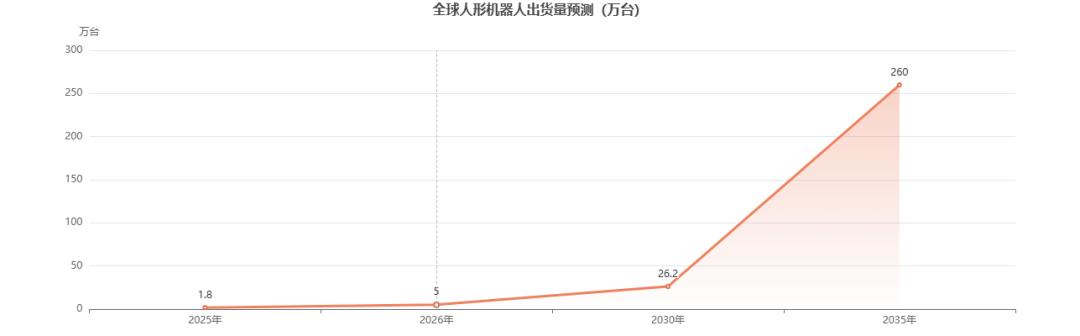
Why is there a sudden breakthrough? Because humanity has been lacking a “general - purpose worker machine” in recent decades. Industrial robots are powerful, but can only perform fixed movements.
Humanoid robots are trying for the first time to penetrate into “unstructured environments”. Simply put, robots could only work on fixed production lines before, and now they are trying to penetrate into transportation, sorting, inspections, loading, factory logistics, warehousing and even supermarkets, hospitals and households.
If this path works, it will not only affect one industry, but the global labor market.
Risk: It won't reach the goal because it runs out of money
The real problem with Humanoid is not that “the robot doesn't work”, but that it may run out of money before it reaches the goal.
Because the humanoid robot industry is very capital - intensive. Compared with its competitors: Figure AI has an estimated value of about $30 billion, Apptronik has raised a total of about $1 billion in capital, Unitree Technology has been listed on the stock exchange, and Ubtech is already listed on the Hong Kong Stock Exchange.
However, Humanoid has so far only had a relatively small public financing. As of May 2026, Humanoid has only reported a $50 million seed round from the founders and has not released any other institutional financings. But Reuters, PitchBook and other sources show that the cumulative financing in the seed round and the pre - A round is already over $250 million and that funds from Middle Eastern sovereign funds and European - American industrial capital sources have flowed in.
It's like “a man with light weapons entering a heavy - industry battle”. Therefore, it must quickly prove that the robot can actually work stably in the long term, that factories are actually willing to pay continuously, that mass production actually works, and that the cost per device can actually be reduced. Otherwise, the 34,000 orders may end up being just a capital story.
From tricks to ROI: The turning point has been reached
The most interesting thing about Humanoid is not only the 34,000 orders, but that it represents a new trend: The robot industry is actually moving from the “trick” era to the “ROI era”.
Whoever can really save money for factories, replace real workers, and bring robots from the “stage” to the “production line” may really be able to make a lot of money.
And this could be the real turning point in the humanoid robot industry.
This article does not constitute an investment recommendation.
This article is from the WeChat account "Pencil News" (ID: pencilnews), author: Aiyu. 36Kr has obtained permission for publication.