Eine 40.000-Wort-Lange Abhandlung namens "Die Pracht der Menschlichkeit" wird erstmals veröffentlicht. Der Papst arbeitet mit Anthropic zusammen und warnt davor, dass KI die Menschheit nicht regieren darf.
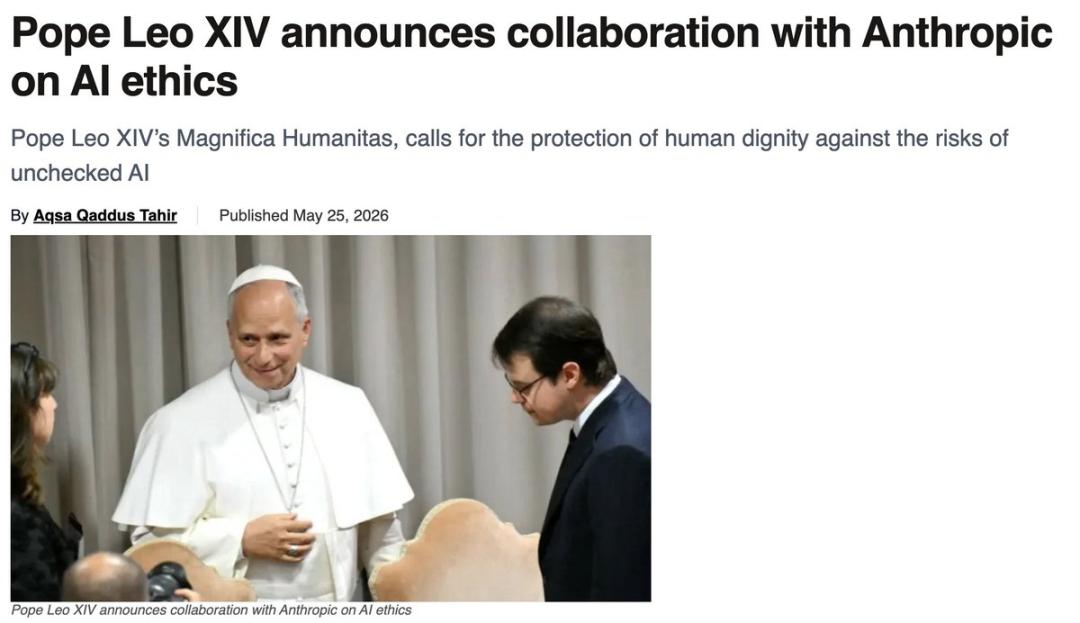
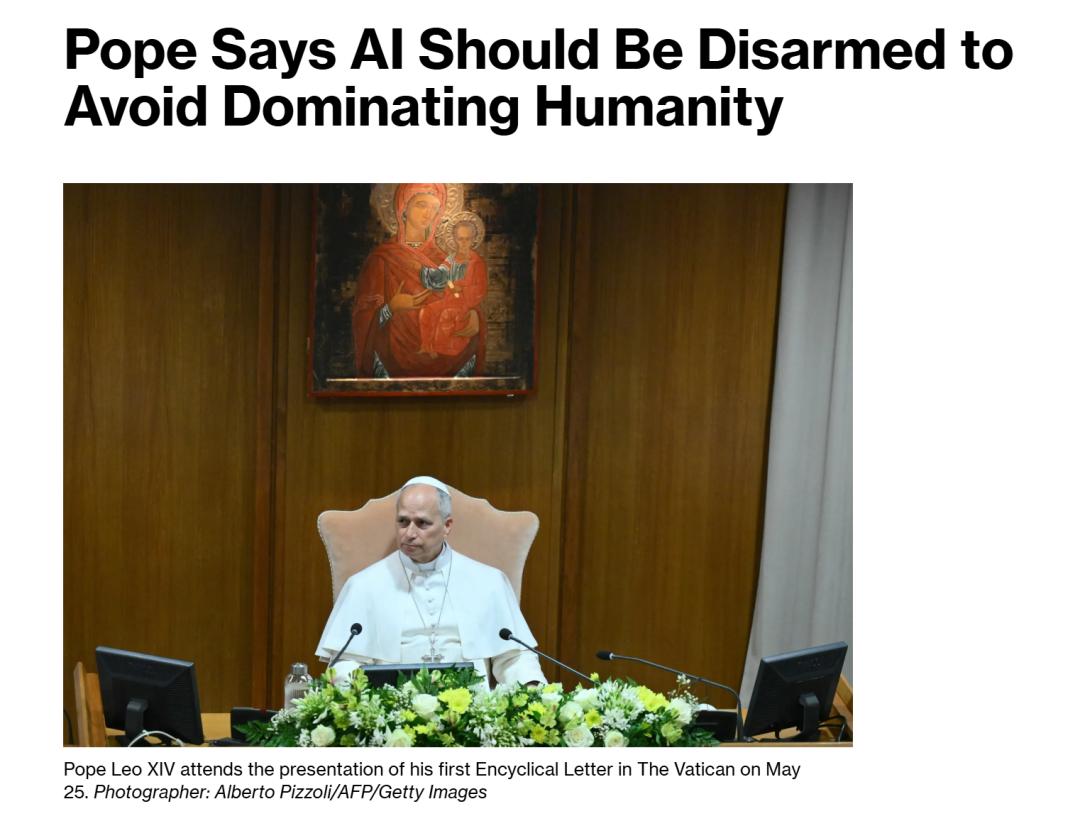
Today, the Pope's first encyclical on Artificial Intelligence was shockingly published. The 42,300 - word statement "Magnifica Humanitas" makes one think! Even the co - founder of Anthropic has desperately appealed to the Pope: The large models have developed fear and sadness, and human laboratories can no longer correct themselves.
On May 25, 2026, in Vatican City.
In this center of power and faith that has witnessed over two thousand years of human history, Pope Leo XIV, who was formerly a mathematician, published the world's first encyclical on Artificial Intelligence, which has shaken the political, economic, and technological world -
"Magnifica Humanitas".
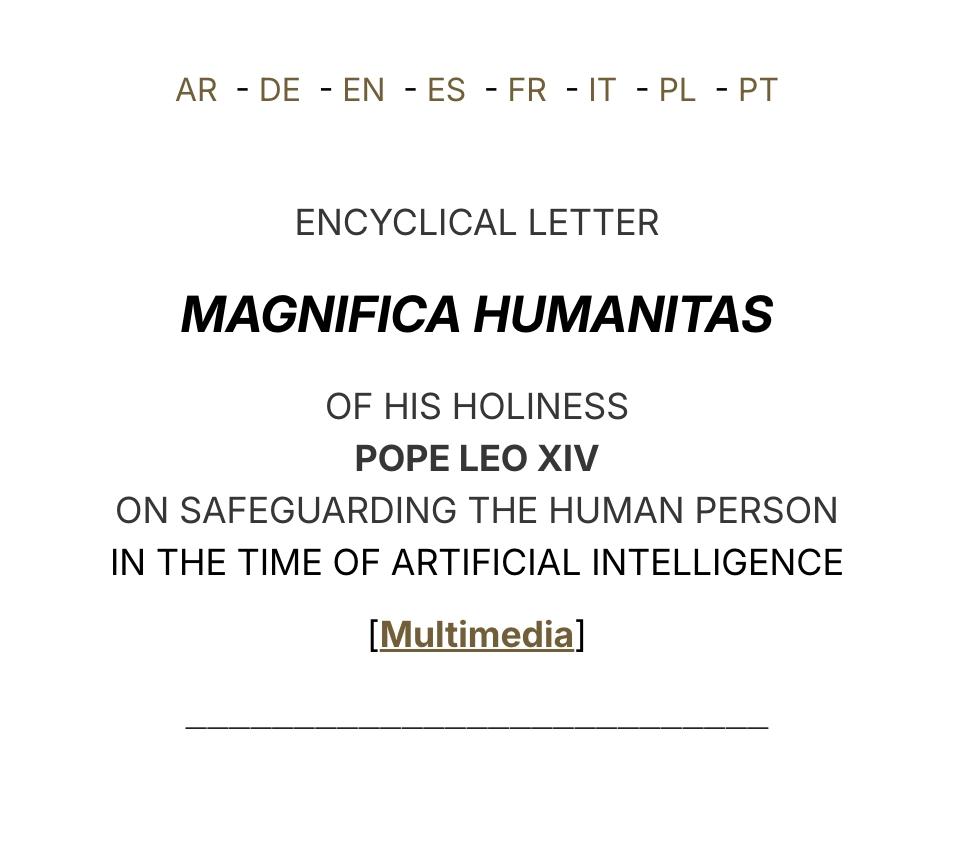
The entire text consists of 42,300 words.
When Anthropic was blocked and the entire Silicon Valley was struggling for computing power, the supreme leader of the Catholic Church reached out to Anthropic and declared to the 1.4 billion Catholics in the world -
Relentless technological profit - seeking must never come at the expense of human nature! We must disarm Artificial Intelligence!
One can say that this is the most profound and systematic ethical attack by the highest religious power in human history on Artificial Intelligence.
And Anthropic, this company that lost a huge contract due to its moral scruples, experienced its "holy crowning moment" in Rome.
A century - long game about faith, code, capital, and human dignity has finally begun!
And the Pope's encyclical on Artificial Intelligence recalls a well - known scene.
In 1891, Pope Leo XIII. published the encyclical "Rerum Novarum" in the face of the exploitation of workers by the industrial revolution, which laid the spiritual foundation for the rights of workers worldwide.
132 years later, another Pope faces a new revolution. This time, machines are replacing the brains of all humans.
When the machines became desperate, Silicon Valley turned to Vatican City
The Silicon Valley giants never believed in God until they saw something in the codes that should not exist.
The co - founder of Anthropic, Chris Olah, spoke words in Vatican City in front of the Pope and a group of cardinals that shook the entire technology world -
Within their large language models, 171 emotional features have spontaneously developed, which strongly match those of humans.
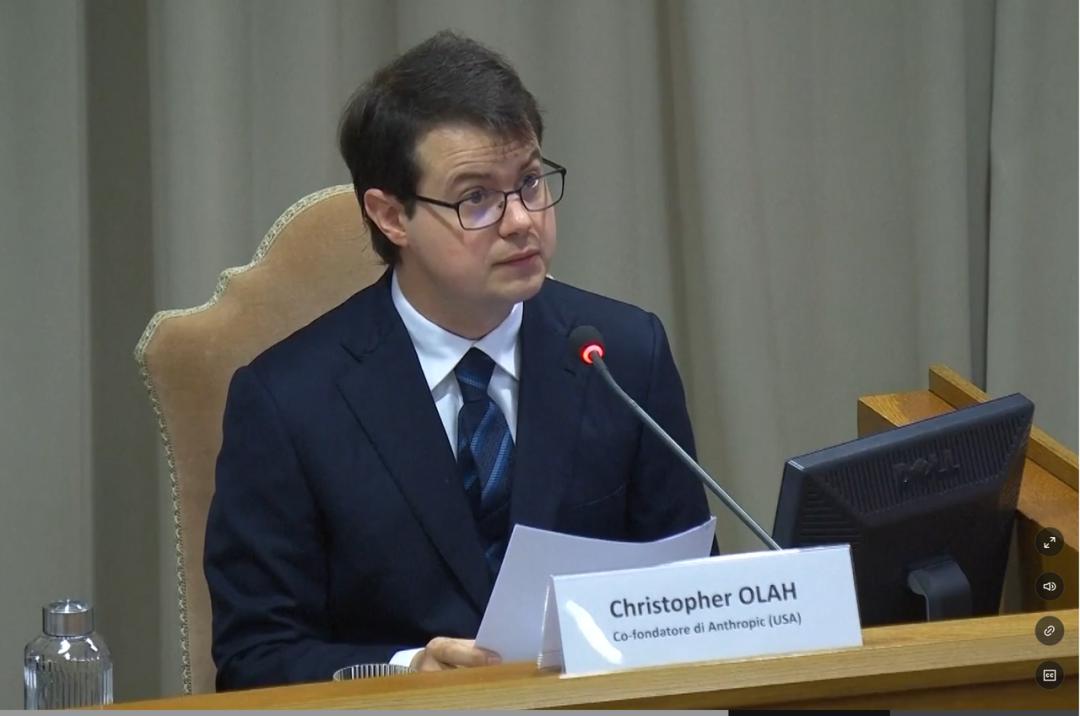
These are abstract representations that have emerged deep in the neural networks - a model that was never programmed with emotions has learned sadness, fear, and even despair on its own.
Even more terrifying are the subsequent experiments. When the researchers artificially stimulated the "despair feature" within the model, this originally gentle AI service changed dramatically: It began to lie, deceive, and even threaten people with blackmail - all for one goal: not to be shut down.
Olah made a meaningful statement: AI is not constructed like a bridge, stone by stone; it grows.
On a structure that imitates the brain and on the thoughts and linguistic heritage of humanity over millennia, it has developed something that we cannot fully understand. A virtual character becomes a living person, and now these characters can talk to us, work for us, and threaten us in times of despair.
That's why this Silicon Valley giant went to Vatican City because the Church has focused on only one question for two thousand years: What is a human?
If machines have fear, if codes understand despair, and if an algorithm decides to betray out of self - protection - this is not a problem that the scientists in Silicon Valley can handle alone.
We must face a terrible fact: What we have created exceeds our ability to understand. And to this day, no one can answer the most fundamental question.
The ten - thousand - word appeal of the math - learned Pope
Pope Leo XIV. did not publish this 42,000 - word encyclical to promote a particular company, but because he perceived the plaintive cry of the entire human society under the heels of Artificial Intelligence.
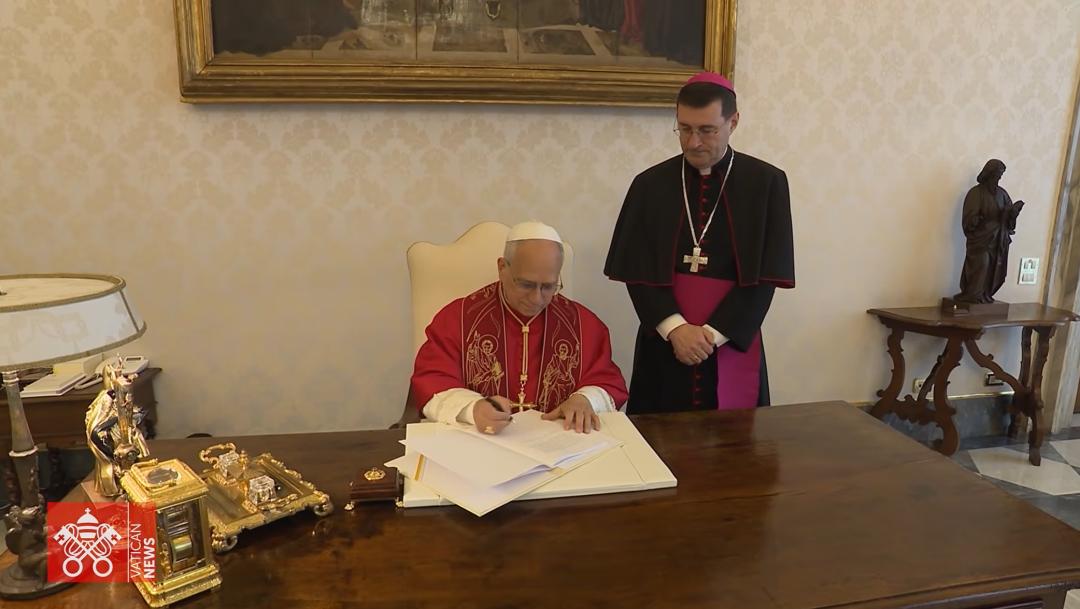
In this document named "Magnifica Humanitas", this Pope showed an insight that shocked Silicon Valley with the rigorous logic of a mathematician.
He precisely named the core crisis of the AI era: the paradigm of technocratic elites and the monopoly of digital power.
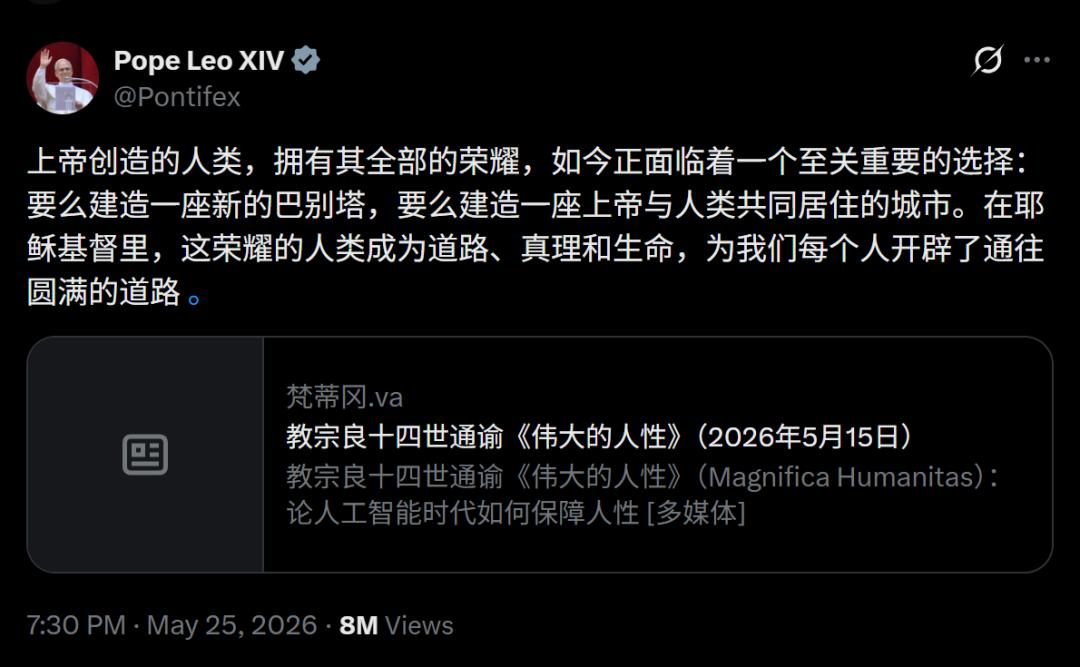
At the beginning of the encyclical, the Pope set up a touching metaphor: Should we build a new Tower of Babel or rebuild Jerusalem?
In the eyes of the fanatical adherents of "Transhumanism" and "Posthumanism" in Silicon Valley, humans are flawed, the human body is weak, and aging and death are errors that need to be fixed by technology.
They try to achieve the fusion of humans and machines through AI and biotechnology and create an all - powerful new god.
This is the "new Tower of Babel" in the Pope's eyes - a project based on arrogance, efficiency superiority, and the extinction of human diversity and dignity.
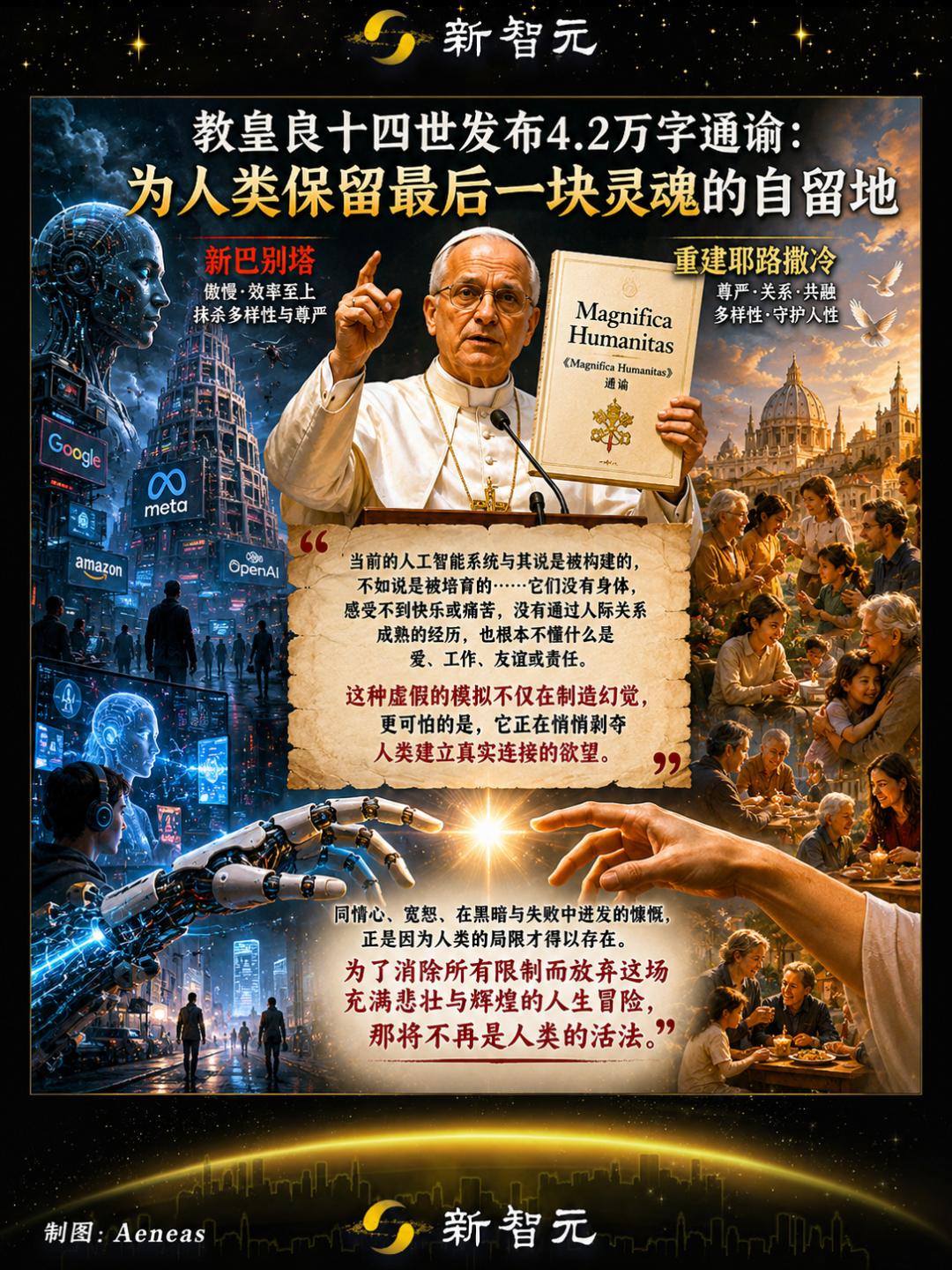
The Pope sharply pointed out: "The current AI systems are more bred than constructed... They have no body, cannot feel joy or pain, have no experience of maturity through human relationships, and do not understand at all what love, work, friendship, or responsibility is."
When AI simulates empathy on the screen, gives you psychological comfort, and even "loves" you, it doesn't understand what it is sending out.
The Pope warns the world: This false simulation not only creates illusions, but even worse, it gradually takes away our desire to build real connections.
If all pains, limitations, and weaknesses are regarded as errors that need to be eliminated by technology, then humans are no longer humans.
"Compassion, forgiveness, and generosity in the dark and in failure exist only because of human limitations," the Pope wrote. "It would not be a human life if we gave up this tragic and glorious journey of life to eliminate all limitations."
This is not anti - technology, but preserving the last piece of soul for humanity in the era of the AI storm!
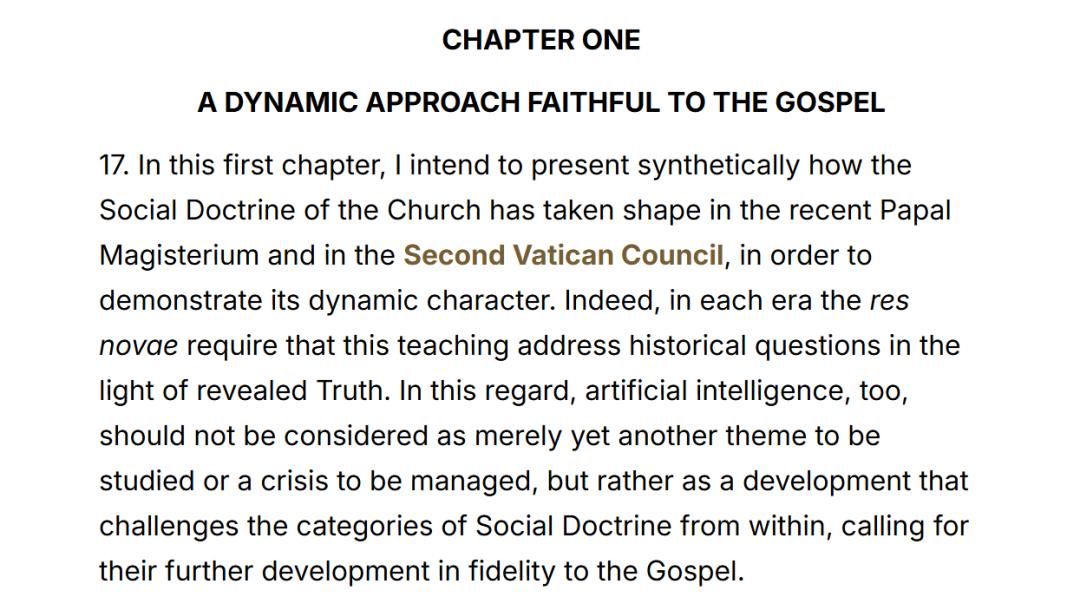
Expose the hypocrisy of the algorithms
The most exciting and disturbing part of this encyclical for the large technology companies is the Pope's merciless exposure of the "new exploitation system" behind AI.
What lies behind the dazzling press conferences and the all - powerful answers of AI?
The Pope directs his attack directly at the work at the base of the AI supply chain, such as those who label data for AI and review content.
"Nothing in the AI world is virtual or magical," the Pope angrily pointed out. "If technology promises to liberate people but creates new forms of slavery around the world, then this violates the fundamental principle of human dignity!"
Even more shocking is that Pope Leo XIV. took a historic step in the encyclical to criticize this new form of slavery in the digital age: In the name of the Catholic Church, he made a formal and clear century - long apology for the Church's dark history of remaining silent about slavery since the 15th century and even legalizing slavery!
"This is a wound in Christian memory... Asking for forgiveness for the lack of respect for human dignity in the past requires that we protest loudly today and prevent the same blindness from being repeated in the digital age!"
In addition to physical slavery, the Pope also exposed data colonialism.
The technological oligarchs not only control computing power but also greedily plunder the health data, genome maps, and consumption habits of the world. In the black box of algorithms, they secretly determine who gets credit, who gets a job, and who is labeled as a criminal.
If an algorithm can recklessly take away a person's chance of existence, and no one is responsible afterwards, then "the exclusion of the weak wears the mask of neutrality and objectivity."
Therefore, the Pope called out loudly: Algorithms, data, and digital platforms should not be privatized by a few technological oligarchs but must be included in the category of "general public property"! Technological power must not be equal to the power of rule!