Roboter-Früherziehung braucht einen Kindergarten, der es erlaubt, „Fehler zu machen“.
Im Jahr 2024 erhielten Richard Sutton, der Begründer des Reinforcement Learning, und sein Mentor Andrew Barto gemeinsam den Turing-Preis.
Dieser Preis kam nicht zu früh. In den letzten drei Jahrzehnten haben Suttons Theorien die Entwicklung von Systemen wie AlphaGo und ChatGPT unterstützt, doch seine vor 30 Jahren verfassten Theorien wurden erst heute von der Branche der verkörperten Intelligenz wirklich verstanden:
Agenten müssen aus Versuch und Irrtum lernen und sich aus echten Erfahrungen heraus entwickeln.
Im Jahr 2023 war Sutton Mitbegründer des nicht gewinnorientierten Forschungsinstituts Openmind. Im April 2025 wies Sutton in dem gemeinsam veröffentlichten Artikel „Willkommen im Zeitalter der Erfahrung (Welcome to the Era of Experience)“ erneut scharfzüngig darauf hin:
„Die neue Generation von Agenten muss über einen Erfahrungsstrom verfügen, der sich über lange Zeiträume stetig weiterentwickelt wie beim Menschen, und sich in realen physischen Rückkopplungen selbst weiterentwickeln.“
Dieses Mal richtete Sutton seinen Blick über die Theorie hinaus auf weiter entfernte Ziele.
Diesen Mai unterzeichnete Sutton offiziell eine Vereinbarung mit Taishan Technology in Kanada, um im Rahmen einer langfristigen Zusammenarbeit gemeinsam ein Projekt namens „Roboter-Kindergarten“ voranzutreiben.
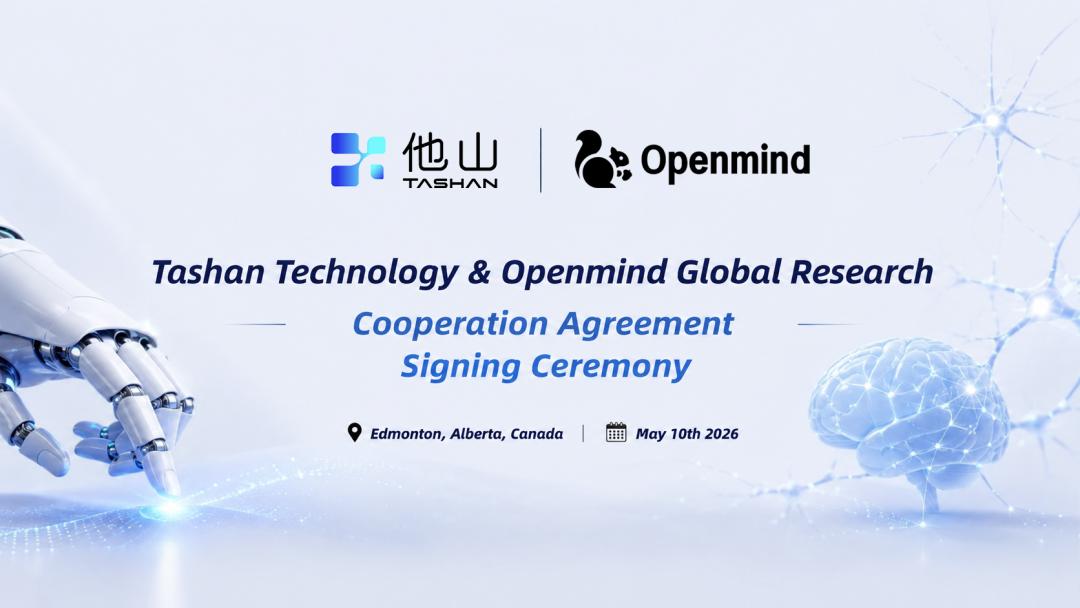
Ein Turing-Preisträger und ein chinesisches Unternehmen für Tastsensorik fanden sofort zueinander und trafen gemeinsam eine Vorhersage für das nächste Jahrzehnt der verkörperten Intelligenz: Der neue Weg zur Ausbildung von Robotern liegt möglicherweise im echten Berühren und in Versuch und Irrtum.
Verkörperte Intelligenz: Das Fehlende ist die „Erfahrung aus der ersten Person“
Ma Yang, CEO von Taishan Technology, gab eine sehr klare Einschätzung ab. Damit Roboter arbeiten können, müssen sie im Grunde zwei Probleme lösen: Das eine ist die Bewegung des Roboters selbst in der physischen Welt, die über Zweibein-, Vierbein- oder Radantrieb erfolgt – viele Unternehmen arbeiten bereits daran.
Das andere ist das Manipulieren von Zielobjekten: Greifen, Ablegen und Drehen mit der Hand, wobei die Bewegungen fließend sind und nicht durch Abweichungen der vorherigen Aktion unterbrochen werden. Zusammen decken diese beiden Punkte im Grunde 90 % bis 95 % der Arbeiten ab, die Menschen derzeit von Robotern verlangen.
Von Anfang an verfolgte Taishan Technology das Ziel, im Bereich der Tastsensorik anzusetzen, um die letztgenannte Aufgabe gut zu lösen.
Als Taishan Technology 2017 gegründet wurde, konzentrierten sich die meisten Roboterhersteller auf mobile Plattformen und demonstrierten ihre Fähigkeit zu Laufen, Springen und Wälzen. Über 90 % der physischen Interaktionen des Menschen werden jedoch tatsächlich mit den Fingern ausgeführt. Im Gegensatz zu Beinen müssen Finger ständig mit unterschiedlichen Zielobjekten in Kontakt treten, wahrnehmen, entscheiden und anpassen – ein schwieriger und andauernder Prozess.
Um die „Fingerposition“ der verkörperten Intelligenz gut zu lösen, ist die Fähigkeit zur taktilen Wahrnehmung eine Kernvariable und auch die grundlegende Methodik, um „Roboter arbeiten zu lassen“. Auf diesem Weg ist Taishan Technology seit fast zehn Jahren tätig.
Die gängige Ausbildungsrichtung für verkörperte Intelligenz stützt sich auf End-to-End-Nachahmung anhand statischer Datensätze, ähnlich wie beim Ausfüllen von Aufgaben aus einem Fragenkatalog. Die Daten menschlicher Demonstrationen sind im Wesentlichen Erfahrungen aus der zweiten Person: Roboter lernen, wie Menschen vorgehen, können dies aber nicht selbst „ertasten“ und verstehen daher nicht die Gesetze, nach denen die physische Welt funktioniert.
Taishan Technology erkannte schon sehr früh die Probleme, vor denen dieser Weg steht: So wie Menschen in ihrer Kindheit aus Nachahmung und Praxis wachsen, erfordert die „Erstausbildung“ von Robotern nicht nur Nachahmung, sondern auch eigene Erfahrungen aus der ersten Person.
Die Ausbildungsform, bei der man im Handeln die Folgen wahrnimmt und das Verhalten in Rückkopplungen anpasst, ist möglicherweise die Methodik, die der „Selbstausbildung“ von verkörperten intelligenten Systemen am nächsten kommt.
Diese Einschätzung stimmt mit Suttons Vorstellungen überein.
Das von Sutton vorgeschlagene Konzept des „Erfahrungsstroms“ erfordert, dass der Lernprozess des Agenten vollständig mit seinem Handlungsprozess verschmilzt: Jede Aktion ist eine Datenerfassung, jede Rückkopplung ein Trainingssignal. Daher ist eine echte Umgebung, die Erfahrungen aus der ersten Person liefern kann, der Schlüssel zur Umsetzung dieses Konzepts.
Allerdings verblieb dieses Konzept lange Zeit auf theoretischer Ebene, gerade weil die reale physische Umgebung keine kostengünstigen, hochfrequenten und standardisierten Interaktionsrückkopplungen liefern kann. Seit langem widmet sich die Branche der verkörperten Intelligenz der Lösung von Problemen im Zusammenhang mit Gehirn und Augen, es fehlt jedoch ein Kanal, der physische Kontakte präzise wahrnehmen kann.
Taktilität ist der zentralste Wahrnehmungskanal bei physischen Interaktionen. Wenn ein Roboter ein Objekt berührt, kann der taktile Sensor in Echtzeit die dreidimensionale Kraftverteilung an der Kontaktstelle, die lokale Verformung des Objekts und die Neigung zum Gleiten zurückmelden. Mit diesen Informationen kann der Roboter schnell Kraft und Winkel anpassen und entscheiden, ob er zudrücken oder loslassen soll.
Mit dem Aufkommen hochpräziser taktiler Wahrnehmungstechnologien, die die fehlenden „afferenzen Nerven“ der Roboter ergänzt haben, beginnen auch Theoriepioniere wie Sutton, diesem Bereich große Aufmerksamkeit zu schenken. Im November 2025 besuchte Sutton China und kontaktierte aktiv eines der zwei Unternehmen für verkörperte Intelligenz, die er besuchen wollte: Taishan Technology.
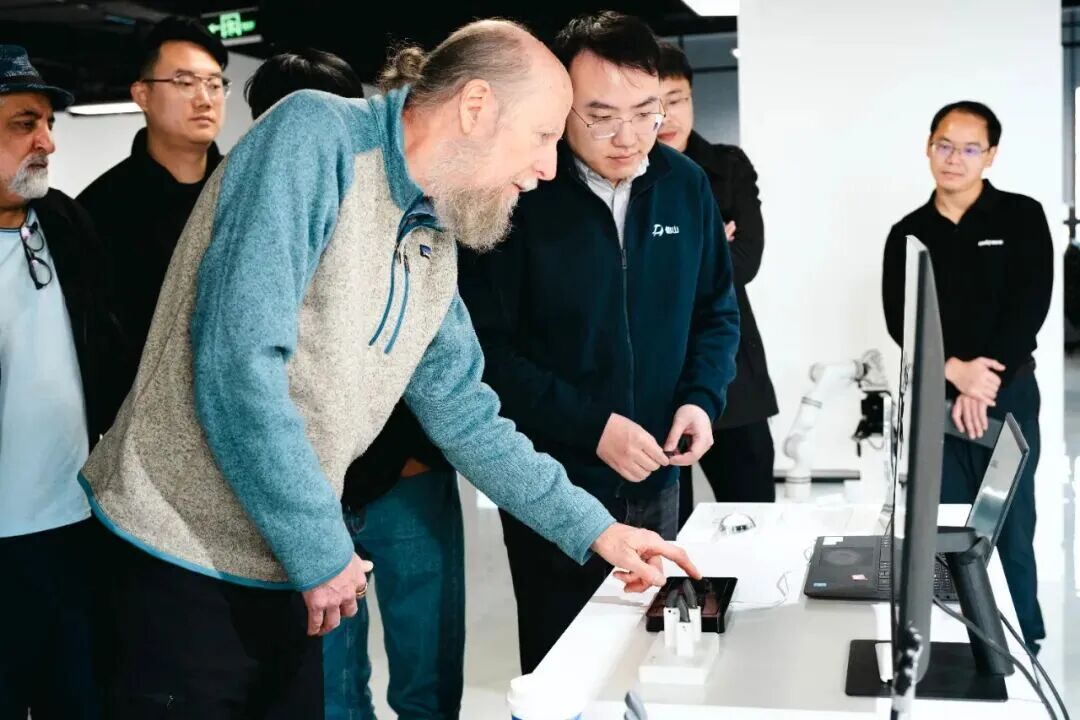
Sutton besucht Taishan Technology
Taishan Technology ist das Unternehmen mit dem vollständigsten technischen Bestand im Bereich der taktilen Wahrnehmung.
Die selbst entwickelten taktilen Sensoren von Taishan Technology erreichen eine Kraftdichte von 0,01 N – eine Genauigkeit, die „der Kraft eines einzelnen Haares entspricht, das auf einen Finger fällt“. Durch jahrelange Forschung im Bereich der KI-gestützten taktilen Wahrnehmungstechnologie und vollständigen taktilen Lösungen hat das Unternehmen das globale technische Problem der gleichzeitigen Analyse mehrdimensionaler taktiler Wahrnehmungssignale gelöst und ein vollständiges technisches System aus „Chip – Sensor – Algorithmusmodell – Szenenanwendung“ aufgebaut.
Während die meisten Hersteller taktiler Sensoren noch bei eindimensionalen Kraftmessungen oder einfachen Kapazitätsänderungen stehen, hat Taishan Technology die gleichzeitige Analyse von dreidimensionaler Kraft, Materialerkennung, Annäherungswahrnehmung und kooperativer Wahrnehmung realisiert.
Noch wichtiger ist, dass Taishan Technology die Fähigkeit zur taktilen Wahrnehmung zur Serienreife gebracht hat. In den letzten zwei Jahren sind ihre Produkte in die kommerzielle Phase eingetreten und werden bereits in großen Mengen an führende Hersteller von Geschicklichkeitshänden geliefert. Im Jahr 2025 hielt Taishan Technology über 80 % des Marktanteils im Bereich taktiler Sensoren für humanoide Roboter.
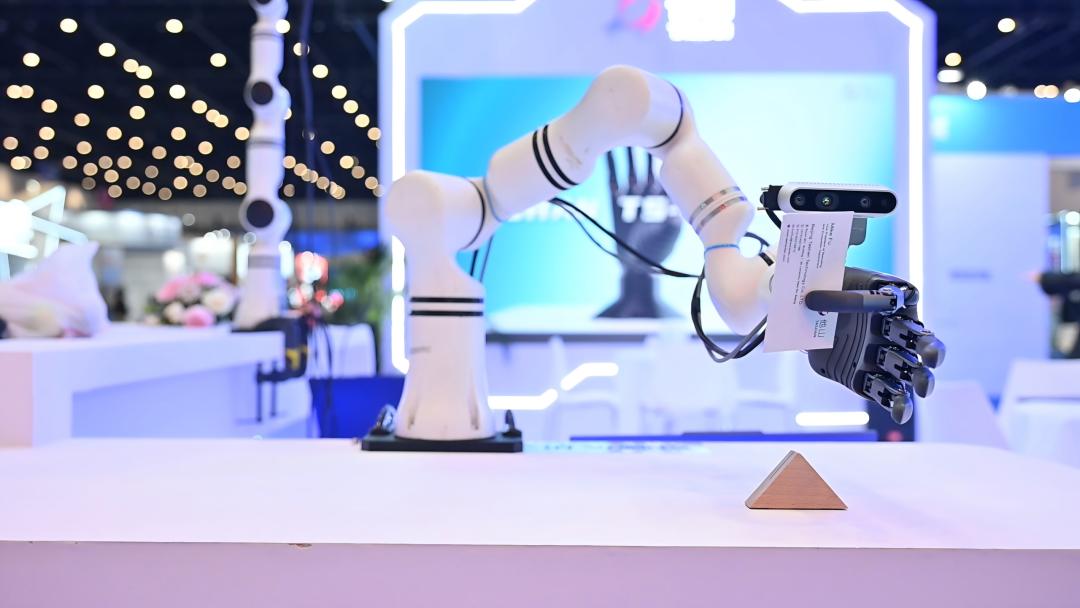
TS-VT Plattform für visuell-taktiles integriertes Training
Nach Suttons Besuch bei Taishan Technology haben beide Seiten die Zusammenarbeit schnell vorangetrieben. Dies liegt nicht nur an der Übereinstimmung der Methodik, sondern auch daran, dass er im Gebäude von Taishan Technology ein Team gesehen hat, das die taktile Wahrnehmung bereits aus dem Labor in die industrielle Anwendung gebracht hat.
So kam es drei Jahrzehnte nach der Veröffentlichung der Theorie zum Reinforcement Learning zu einer gegenseitigen Annäherung von Theorie und Technik im Bereich der verkörperten Intelligenz: Der akademische Meister hat einen Verbündeten gefunden, der die Theorie technisch umsetzen kann, und Taishan Technology hat das theoretische Puzzleteil ergänzt, das die taktile Wahrnehmung zur Beschleunigung des Roboter-Trainings benötigt.
Roboter-Kindergarten: „Erstausbildung“ in einer echten Umgebung
Der konkrete Ausgangspunkt der Zusammenarbeit beider Seiten ist der „Roboter-Kindergarten“.
Bei Taishan Technology sah Sutton chinesische Grundschüler, die an Roboterunterricht teilnahmen, und er staunte darüber, wie offen die heimische Umgebung für die Erstausbildung von verkörperten intelligenten Systemen ist: Menschen und Roboter können auf natürlichere Weise zusammenleben, woraus die Idee des Roboter-Kindergartens entstand.
Der Roboter-Kindergarten ist eine Plattform für taktile und multimodale Erfahrungsausbildung, die auf das kontinuierliche Lernen von Robotern ausgerichtet ist. Er kombiniert echte physische Umgebungen, Simulationsumgebungen, mehrere Roboter-Körper, taktile und multimodale Wahrnehmungsgeräte, Aufgabenlehrpläne sowie Mechanismen zur Datenerfassung und Bewertung, sodass Roboter durch wiederholtes Berühren, Ausprobieren, Scheitern und Korrigieren trainierbare Erfahrungen sammeln können.
Warum heißt er Kindergarten? Ma Yang sagt, dass die heutige verkörperte Intelligenz einem Säugling im Alter von 0 bis 3 Jahren sehr ähnelt. Wir sehen in Videos, dass Roboter verschiedene Dinge tun können, und halten das für sehr beeindruckend, tatsächlich ist die Erfolgsrate aber nicht hoch – und der Roboter selbst weiß nicht, ob er erfolgreich war oder nicht. „Er hat es einfach getan, und die Menschen applaudieren.“
Es ist für Roboter schwer zu verstehen, was sie richtig gemacht haben, nur anhand korrekter menschlicher Demonstrationen. Denn der Begriff „richtig“ ist sehr unscharf und umfasst einen großen Bereich. Nur Fehler haben klare Grenzen. Durch genügend viele fehlgeschlagene Experimente kann ein Roboter erkennen, wo die Grenzen einer Aufgabe liegen und wie er sich bei der nächsten Ausführung anpassen muss.
„Das Sicherheitsgefühl der verkörperten Intelligenz wird nicht dadurch definiert, dass alle gemeinsam eine Linie zeichnen, sondern es wird schrittweise durch objektive Interaktionen erkundet.“
Ma Yang ist überzeugt: Genau wie der menschliche Sicherheitsinstinkt nicht nur durch das Lesen von Handbüchern erworben wird, sondern durch wiederholtes Berühren, Stolpern und Anpassen entsteht, gilt das Gleiche für Roboter. Nur durch genügend viele echte Versuche und Irrtümer können sie verstehen, was unsicher ist. Wenn ein Roboter selbst sichere Betriebsgrenzen festlegen kann, schützt er nicht nur sich selbst, sondern kann auch Sicherheit für andere gewährleisten.
Nach Suttons Besuch bei Taishan Technology haben beide Seiten die Zusammenarbeit schnell vorangetrieben und am 11. Mai 2026 die Vereinbarung unterzeichnet.
Auf der Unterzeichnungszeremonie sprach Sutton über die Bedeutung der Zusammenarbeit: „Schon als wir noch Studenten waren, schlugen einige vor, einen Roboter zu bauen, der wie ein Säugling mit der Welt interagiert und durch Erfahrungen wächst. Damals war diese Idee fast unmöglich umzusetzen. Heute haben wir genügend Rechenleistung und genügend Roboter-Erfahrungen, aber ich denke, der entscheidende Faktor, der bisher fehlte, ist das klare Bewusstsein für den Wert dieses Ideals. Es braucht nicht nur Geld, sondern vor allem Zeit und Ausdauer.“
Sutton erklärte, dass er bei seinem Besuch bei Taishan Technology überrascht festgestellt hat, dass dieses chinesische Unternehmen diesen Wert verstanden hat. Der gesamte Kooperationsplan hat einen Zeitraum von fünf Jahren, mit dem Ziel, die am besten geeignete Lernmethodik für verkörperte Intelligenz zu finden.
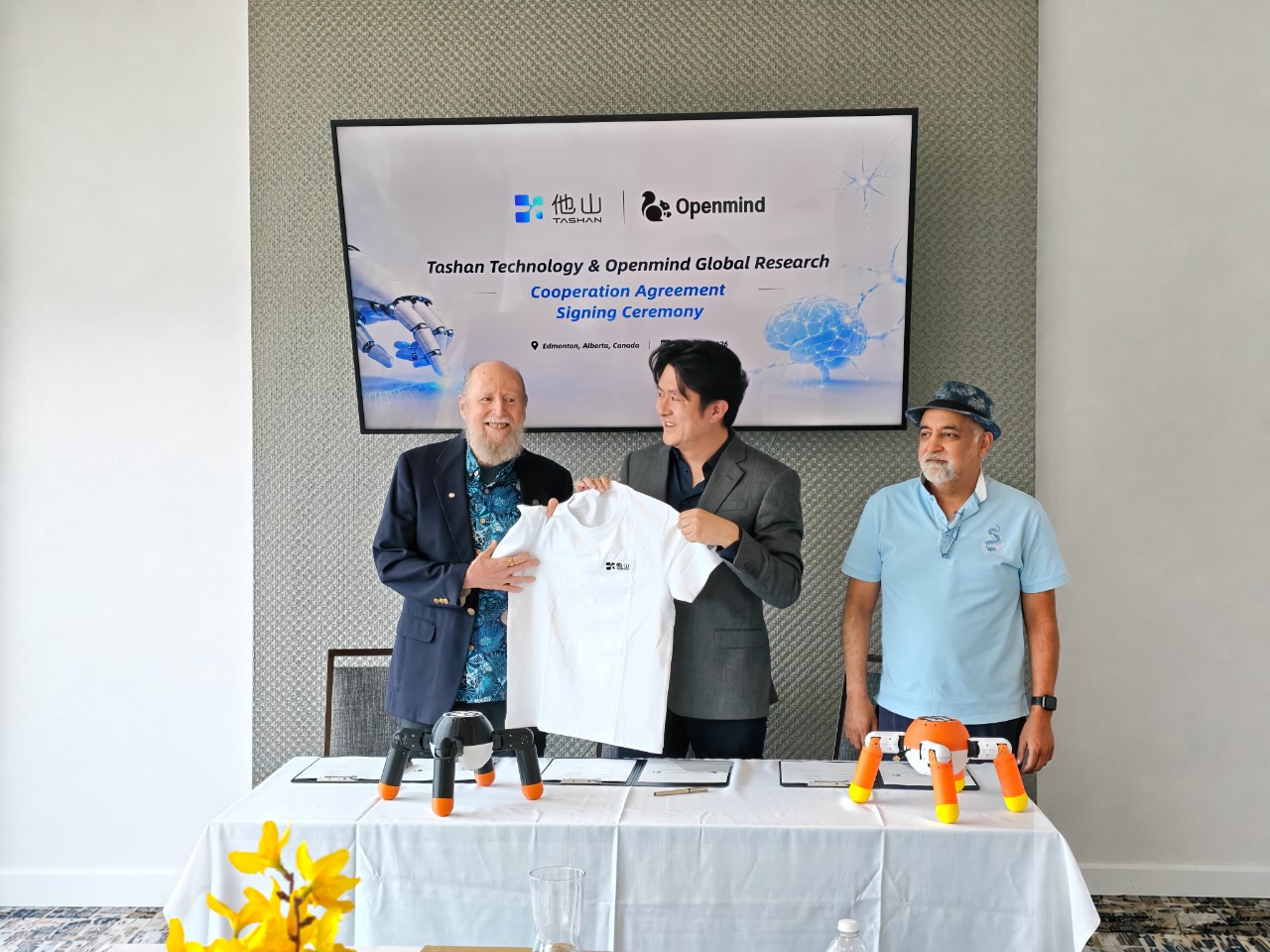
Ort der Unterzeichnungszeremonie
Als Nächstes wird der „Roboter-Kindergarten“ eine echte Umgebung aufbauen, in der Roboter-Körper das Training absolvieren. Obwohl das Training in der Anfangsphase mit homogenen Roboter-Körpern durchgeführt wird, ist Ma Yang überzeugt, dass unter der Erforschung des kontinuierlichen Lernens heterogene Roboter später kein großes Lernhindernis darstellen werden. Denn wenn ein Agent die zugrunde liegende Logik einer Aufgabe versteht, behindert eine unterschiedliche Form des Roboter-Körpers nicht das Lernen und die Übertragung von Erfahrungen.
Dagegen ist es jetzt wichtiger, sich den realen Umgebungsvariablen direkt zu stellen.
Ma Yang sagt offen, dass die Hardware in der Branche der verkörperten Intelligenz bereits ein Niveau von 60 Punkten erreicht hat. Was fehlt, sind die Fähigkeit zum Schlussfolgern und die Fähigkeit zum kontinuierlichen Lernen. Ohne diese beiden Fähigkeiten ist keine bessere Generalisierung und Adaption möglich, die gesamte Branche wird dazu gedrängt, nur Parameter zu optimieren, und kann keine breiteren Anwendungsbereiche erschließen.
Daher muss das frühe Lernen ständig mit der realen Umgebung interagieren. Die aufgebauten Trainingsumgebungen dürfen nicht mehr absichtlich Variablen und ungünstige Faktoren in realen Szenarien vermeiden, sonst ist die Obergrenze der Erfahrungen, die Roboter sammeln können, sehr niedrig und es ist schwierig, weitere Fortschritte zu machen.
Die Zusammenarbeit zwischen Taishan Technology und Sutton zielt ebenfalls darauf ab, einen neuen Weg zu finden. „In dieser Angelegenheit gibt es keine besondere Hochtechnologie, sondern nur die Wahl der richtigen Methodik.“
Voraussetzung für die Kommerzialisierung ist die Fähigkeit, „während der Arbeit zu lernen“
Methodiken müssen sich letztendlich in Anwendungsszenarien bewähren. Ma Yang hat eine sehr pragmatische Einschätzung zur kommerziellen Umsetzung: In den nächsten drei bis fünf Jahren werden die Szenarien,