Die Geschäftsleute aus Yiwu bringen gerade KI in die Fabriken ein.
Winning the trust of business people from the real economy could be the first step to changing the world through AI.
In 2026, the "shovel sellers" in the upper echelons of the AI industry, who sell hardware and tokens, have already become rich. However, when looking into the factory halls and from internet companies to the core areas of the manufacturing industry, a more urgent problem arises: Can AI actually penetrate the capillaries of the Chinese economy - into small and medium-sized manufacturing enterprises that have an annual turnover of a few million yuan, teams of less than a hundred people, and no IT department?
The skeptics have good reasons. The digitalization foundations of small and medium-sized enterprises are weak, the data is distributed across WeChat groups and Excel spreadsheets, business leaders are naturally skeptical about implementing systems, and employees instinctively resist new tools.
Most importantly, the scenarios in the manufacturing industry involve the supply chain, production planning, cross - language communication, and multi - platform operations. The implementation of AI in each individual step cannot simply be solved through a dialog box.
But in Yiwu, known as the "World Market", a star - lamp factory named "Youkela" offers a new solution.
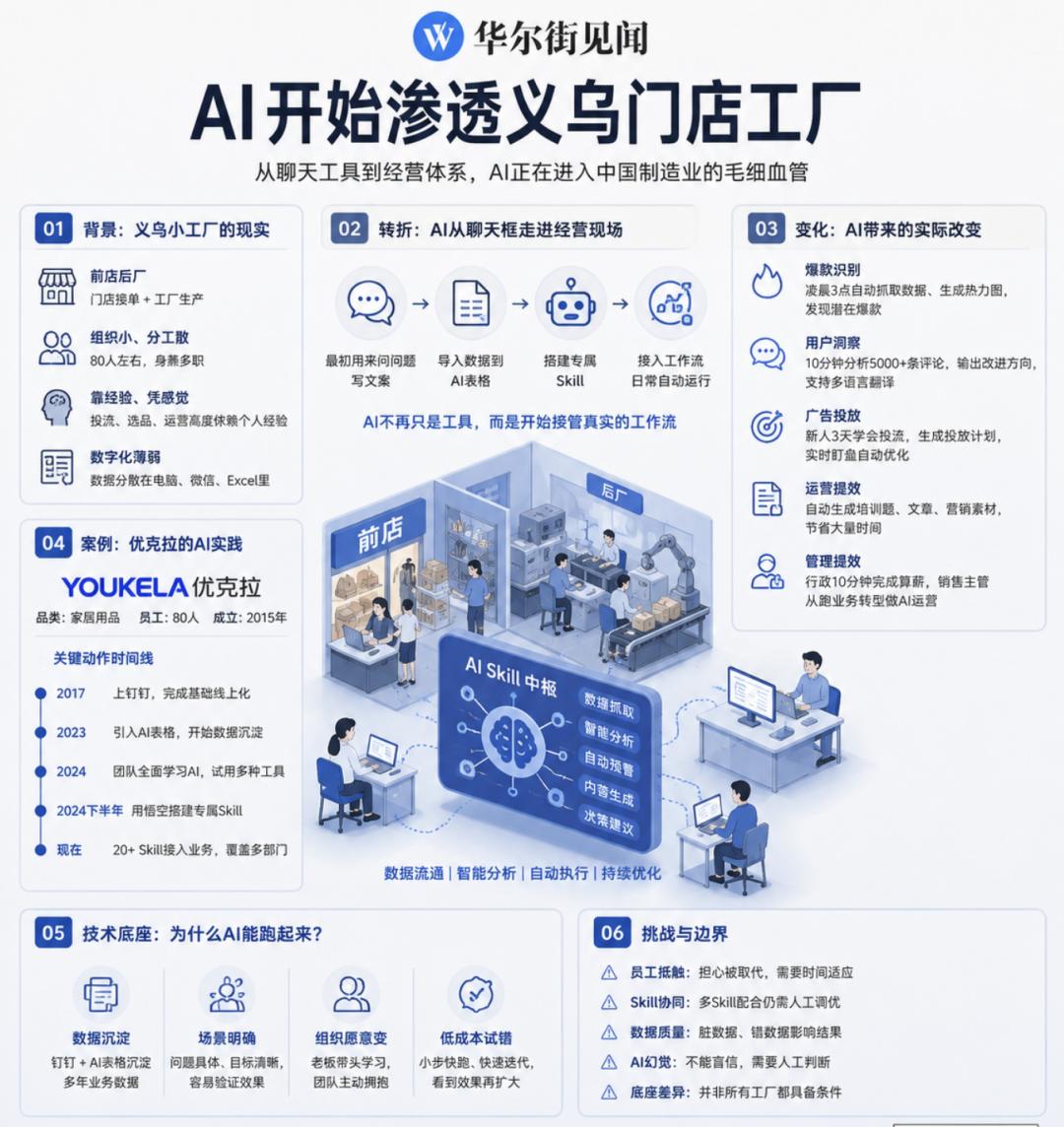
This company, which has been in existence for over 18 years and has a team of less than a hundred people, completed the full implementation for all employees within two weeks after the release of DingTalk's AI Intelligent Agent "Wukong" in March 2026.
Three months later, the success rate of the initial release of new products rose from 60% to 92%, the daily turnover of the Douyin team increased from a few thousand yuan to over twenty thousand yuan, and the salary calculation for one person in the administration was shortened from two days to ten minutes.
Behind these figures, there is no grand digital transformation project and no extensive IT team support. It is based on an AI Intelligent Agent that can directly operate with the DingTalk workflow, a group of ordinary employees willing to "try" for three or four hours, and a business leader who studied computer science but hasn't written code for twenty years.
This story is worth looking into not only because it shows how AI creates value but also because it reveals the real frictions that AI encounters when penetrating the real economy.
Taking Over the Factory and the Store
Before examining the value that AI creates in Youkela, one must first understand the business characteristics of this company.
Youkela is a typical example of the Yiwu model of "front store, back factory". It has an offline store in the Yiwu International Trade City to receive global business partners and its own factory responsible for research, development, and production. The products are sold through multiple platforms such as Tmall, Amazon, Douyin, and 1688. Wei Jun, the CEO, graduated from Nanchang University in 2005 with a major in computer science. In 2007, for family reasons, he came to Yiwu to start a business and began selling glowing ceramic mugs in a Taobao store.
"In 2012, these mugs were sold seven or eight thousand times a year, and the turnover exceeded twenty thousand yuan." He recalled to Wall Street News. After more than a decade, Youkela has become a hidden champion in the star - lamp category and holds licenses for well - known IPs such as Disney, Ultraman, and Sanrio, as well as more than forty patents.
His background in computer science has given Wei Jun a natural affinity for digitalization. He told Wall Street News that he has been talking to AI since the release of the first version of GPT. Youkela started using DingTalk in 2017 and fully implemented the DingTalk AI table in September 2023 - "at a time when most Yiwu business leaders were still doing business with WeChat and Excel," he emphasized this time difference.
Two months ago, DingTalk's AI work platform "Wukong" was released. Since Youkela's data was already online, the AI only needed to be connected, not rebuilt. It quickly took over repetitive, mechanical, and time - consuming tasks that required a lot of manpower.
In the Yiwu International Trade City, Youkela's store "IP Magic Castle" receives international business partners from the Middle East, Southeast Asia, Africa, and South America every day. Language barriers and information losses have long been an old problem for the front - line store employees.
Wei Jun told Wall Street News that his solution is to attach an AI recording card next to the counter, which automatically performs speech recognition and multi - language translation. Regardless of whether the business partners speak English, Arabic, or Spanish, the content of the conversation is synchronized in real - time to the company's AI table.
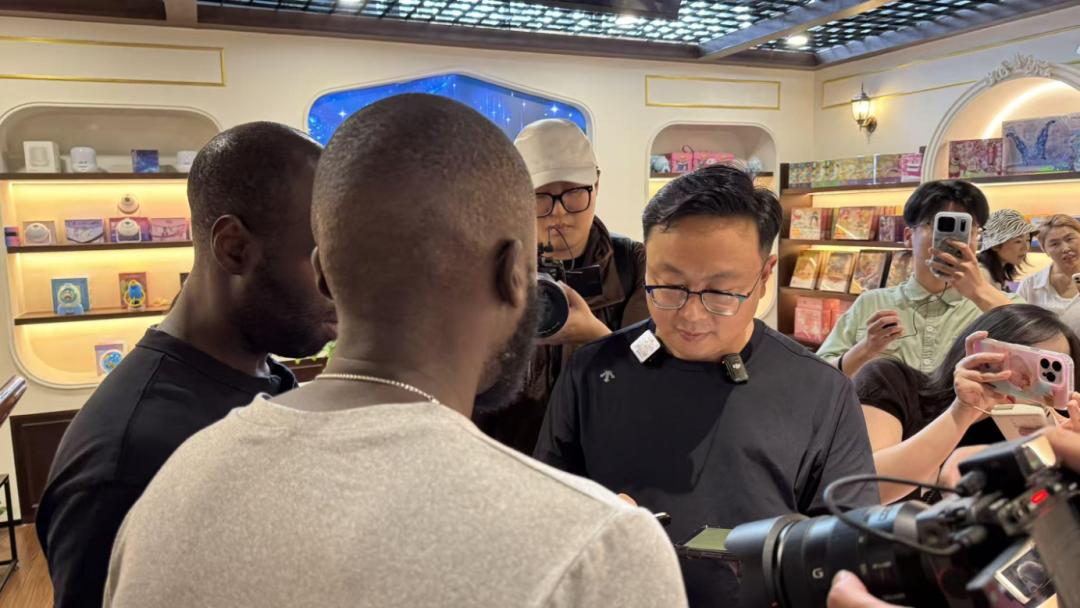
Back at the headquarters, the product development and supply chain teams no longer need to repeatedly ask, "What exactly did the Middle Eastern business partner say?" They only need to ask the agent: "Which business partners came to the trade city today and what individual requirements do they have?" The AI conducts an immediate search, summary, and analysis and provides a structured list.
"From the moment the business partner enters the store, their requirements already flow in the digital chain. From the storefront to the headquarters, from the sales department to product development, from a verbal statement to a detailed product requirement list, no manual transfer is required anymore." Wei Jun described.
For an industrial and commercial enterprise with the "front store, back factory" model, this data highway from the "storefront" to the "factory hall" is no less important than getting connected to the Internet back then.
The same logic was also applied to e - commerce operations.
Previously, Youkela's operations team had to spend two hours every day manually copying data from the Taobao Business Advisor and pasting it into an Excel spreadsheet, and then analyzing based on manual experience why the competitors' models were successful.
"There are countless concerns about successful products every day. A product from a neighboring factory suddenly sells over ten thousand pieces a day, and you don't know why." Wei Jun told Wall Street News. "Now, the agent he created automatically fetches the data of successful products on all platforms in this category at midnight; in the morning, the analysis report is sent to the DingTalk group.
But moving information is only the beginning. After the data no longer needs to be manually moved, Wukong begins to intervene in higher - level tasks that were originally based on the business leader's intuition and operational experience.
What impressed Wei Jun the most was the correction of cognitive blind spots by AI.
"Our traditional operations team had a habitual way of thinking and always focused on high - unit - price products, completely neglecting the market for low - unit - price products. We were lagging behind in the competition." He admitted. The AI analyzed the market and found that products under 100 yuan have great potential to reach young consumers, and details such as color preference have a significant impact on sales.
"These are visual blind spots that a manual analysis would never notice. To be honest, we had to gain experience before changing our way of working." Wei Jun admitted.
In the area of product development, Youkela had the agent analyze more than five thousand user reviews and extract pain points such as "glare", pleasure points such as "Bluetooth control", and excitement points such as "a bedtime ritual for children". "Previously, the decision was made by the business leader or depended on the graphic designer's creativity. We occasionally looked at the review section, but these unstructured information was quickly forgotten."
In the area of costly advertising, there were even more radical changes.
Youkela built an automated system for the investment and production heat map on Wukong. For links with a high ROI, it is recommended to increase the investment. They also set up an AI quality controller. If the click - through rate of the main image of a link is below 3%, the link is directly blocked by the system before it is published.
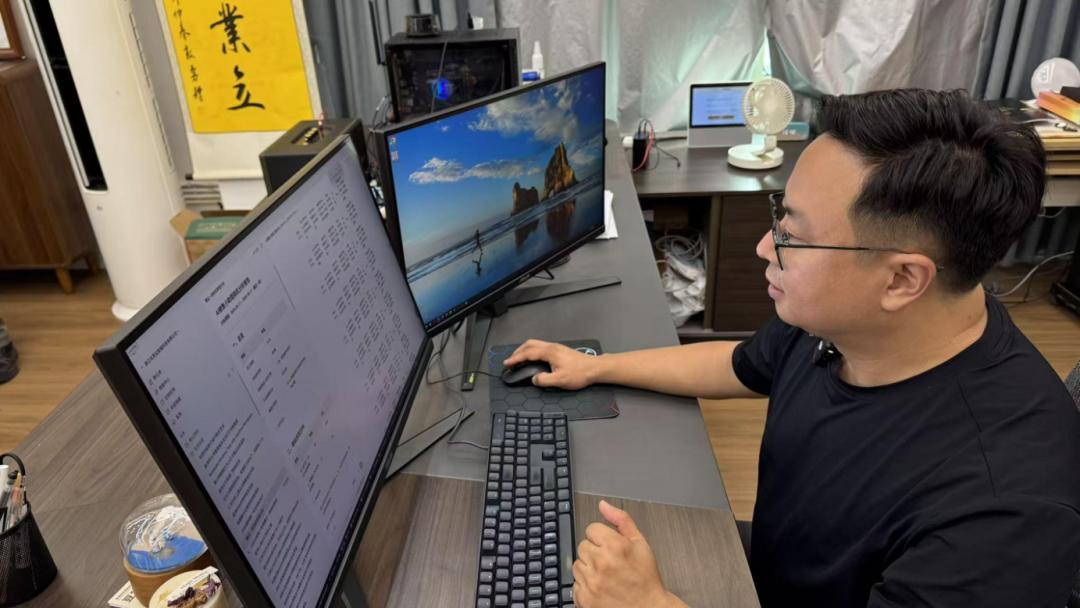
"The traditionally mysterious operations and advertising management has become a simple operation. A novice can master it in just three days." Wei Jun said. There is also another blind spot in traditional product analysis: "The spread of short videos and the emotional value were not taken into account, which led to a low success rate of products and a serious overstock of inventory. Previously, we blindly followed the trend and lost a lot of money. Now, the AI integrates parameters such as industry cycles, growth during holidays, and the target audience and combines them with the design trends of successful articles on Xiaohongshu. The success rate of products has actually increased."
From moving information to analysis and decision - making, and finally to implementing decisions, AI gradually penetrates deeper into Youkela along a clear logical chain. But what actually sets this chain in motion comes from the restructuring of the organization.
The Sales Manager Becomes a Skill Developer
"In our company, the sales department used to be the most important, now skill development is the most important." Wei Jun said directly to Wall Street News.
But behind this is a real organizational adjustment. The former head of the sales department has changed jobs and is now exclusively responsible for the development and maintenance of AI skills. The operations assistant has transformed into the content department, and the company has added new positions such as skill trainer and design director trainer.
As customized AI skills that structure natural language and stably enable Wukong to perform a "certain task", Youkela currently has 50 to 70 skills that cover all areas from capturing successful products, analyzing reviews, quality - controlling advertising to salary calculation and attendance control.
Wei Jun believes it is important that people with an operational background take on this task. "People who understand the business should take on the corresponding tasks to solve systemic problems rather than individual problems." He directly criticized external solutions: "Simple emotional value trainings and external consultants who don't understand the business cannot contribute to the company's continuous growth."
The logic behind this choice is: The upper limit of AI tools does not depend on the technology itself but on the depth of the user's understanding of the business. An operations manager who understands why the ROI of a certain link is low can build a quality - controlling skill that is much more effective than that of an engineer who can only write code.
A detail in the interview confirms this.
Xiao Dong is the only human resources manager and personnel officer of the company. She studied hotel management and previously worked as a human resources manager and cashier in the catering industry. In 2023, she came to Yiwu with her husband and joined Youkela when the company had never had a full - time HR and everything had to be built from scratch.
What really changed her work was the salary calculation. Youkela's team consists of seventy or eighty people, and the attendance rules do not fully match the standard rules of DingTalk. The rules vary from department to department, and there are also special situations such as holiday adjustments.
Every month, she has to export the attendance records from the backend, manually transfer them person by person and entry by entry, and convert them into the company's own salary calculation format before calculating the salary. It takes a person a full two days.
After the company's technical colleagues understood her workflow, they helped her build a skill, and the work was shortened from two days to less than ten minutes.
"This is a monthly task, and I will use it." Xiao Dong told Wall Street News. She can't write code and doesn't understand what prompt engineering is, but after the technical colleagues explained the logic of Wukong to her, she tried and adjusted it herself. When creating the skill, she did most of the adjustment work herself and spent three to four hours on it.
For a person who is busy with work all day, this means that AI penetrates from the "chat window" into the "work environment".
When asked, "What changes when AI is integrated into work", she thought for a while and said: "It doesn't seem easier, but I can pass many problems to AI and let it analyze them. Then I can try to apply the methods it suggests, and maybe I can save a lot of detours."
Wei Jun has his own methodology for implementing company - wide AI integration. His approach consists of four steps: "Collect data, bring it online, visualize it, introduce an incentive system". Company meetings are automatically evaluated by AI - "70 points, 68 points, 72 points. The AI tells you everything.