Warum ist die Integration von Fahrerassistenz- und Cockpit-Systemen im Jahr 2026 zu einem beliebten technologischen Trend geworden?
Assisted driving and intelligent cockpits are the most typical features of intelligent cars. In the past, however, they were independent of each other in a car. The first attempts at integration began in 2022. The combination of the cockpit and parking assistance, as well as the combination of driving and parking assistance, can be regarded as early technological explorations.
It was not until 2024 that the concept of the "unified concept of cockpit and driving assistance" was systematically proposed as an architecture that fully integrates the intelligent cockpit and the assisted driving system on a single chip or a central computing platform. This architecture was first implemented in October 2025 in the Jihu Alpha T5, which was launched on the market. The Leapmotor D19 and the Geely ZEEKR 8X, released this year, have each built an integrated platform for the cockpit and driving assistance based on the Qualcomm 8797 and NVIDIA Thor chips respectively.
The topic of "End-to-End" was still a hot topic in 2024, but one year later, it was replaced by the "world model". This year, the "unified concept of cockpit and driving assistance" is the central topic. The intelligent development of Chinese automobiles is taking place at an unprecedented speed.
However, the industry still has two opinions on the unified concept of cockpit and driving assistance. Supporters see the advantages of this concept in reducing computing delays and costs and also consider it the best means to unify the experiences in the intelligent cockpit and intelligent driving. Opponents, on the other hand, believe that a high level of integration means more complex engineering work and more uncontrollable experiences.
Cost reduction: The greatest demand of automobile manufacturers
The automobile industry is currently in an extreme phase. On the one hand, manufacturers must design the car in terms of functional equipment and intelligent driving experience so that it has a high cost - performance ratio and at the same time quickly update the products to attract consumers' attention. On the other hand, automobile manufacturers also have to bear high research and development expenses.
The price competitions in the past three years combined with high financial investments have brought the profit situation of the automobile industry to a historical low. Statistics from the National Bureau of Statistics on January 27 this year show that the profit rate of the automobile industry last year was 4.1%. In the first quarter of this year, the sales profit rate of the automobile industry dropped to 3.2%, as shown in the analysis report of the China Passenger Car Association.
The rising raw material prices have not yet triggered a price - increase movement in the automobile industry, but automobile manufacturers are even more focused on cost reduction. As core components of electric vehicles, the intelligent driving assistance system and the intelligent cockpit account for a significant proportion of the total vehicle costs.
Since the offers from suppliers to different automobile manufacturers vary and also change from model to model, this proportion is not a fixed number. According to the research report of Guojin Securities, the cost proportion of the intelligent driving assistance system (including chips, cameras, radars, etc.) in the total vehicle cost is between 5% and 8%. According to the public speech of Shen Shaojie, CEO of Zhuoyu Technology, at the China Electric Vehicle 100 Forum, the appropriate proportion should be between 3% and 5%.
The chip is the core component of the intelligent driving assistance system. The industry estimates that it accounts for between 25% and 30% of the costs of the intelligent driving assistance system. In total, the chip accounts for a maximum of 0.75% to 2.8% of the total vehicle costs, and this proportion increases with the increasing computing power requirements of the vehicle. For example, NIO initially used four Orin chips, and many flagship models of new automobile manufacturers use at least two Orin chips.
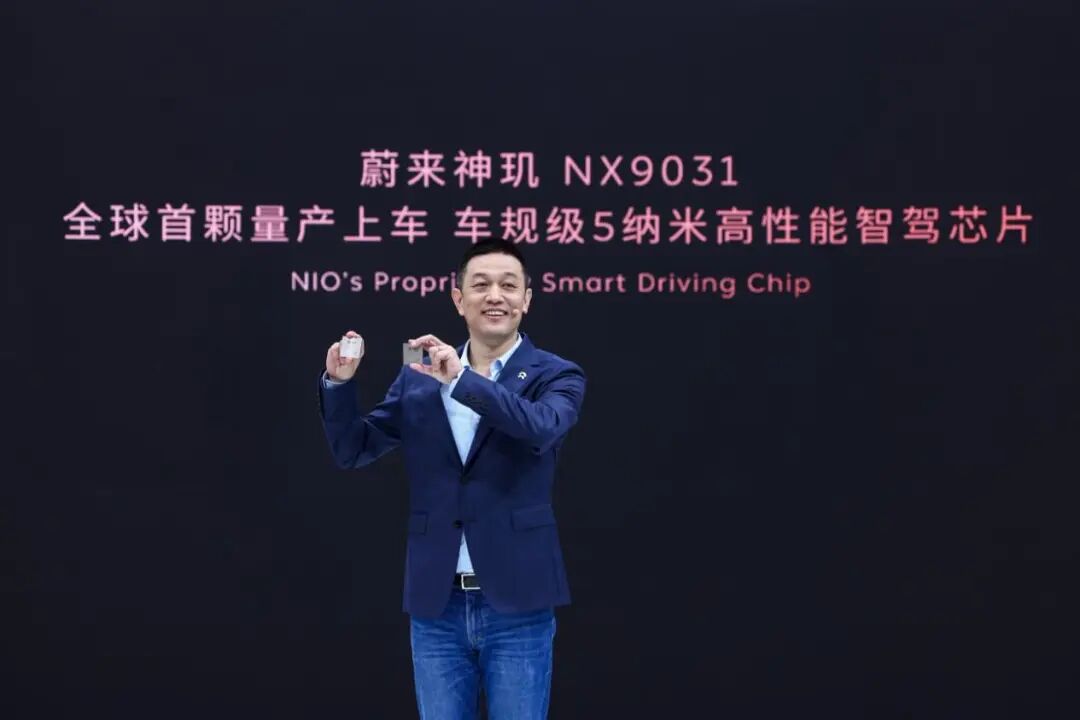
At this year's High - Level Forum for the Development of Intelligent Electric Vehicles, Li Bin, Chairman of NIO, presented a cost calculation: NIO has long procured NVIDIA Orin - X chips for the intelligent driving assistance system. At the peak of demand, the annual procurement amount reached up to 300 million US dollars. Considering the progress of chip development and NIO's annual sales volume, the cost of the four Orin chips per vehicle is between 1,900 and 2,500 US dollars.
The next topic is the intelligent cockpit. The common chip for the cockpit is Qualcomm. In the past two years, automobile manufacturers have begun to use the Qualcomm 8295 chip in flagship models and the 8155 chip in common models. The proportion of the cockpit system in the total vehicle costs is higher than that of the intelligent driving assistance system and is usually between 10% and 12%. The cost proportion of the cockpit chip is between 1% and 3%, depending on the equipment.
Since 2025, the price of memory chips (DDR) has increased by more than 300%, which has further increased the costs of the intelligent driving assistance system and the intelligent cockpit chip. The high - quality intelligent driving assistance system is more affected by the fluctuations of suppliers.
In the traditional architecture, the domains of the intelligent driving assistance system and the intelligent cockpit are independent of each other. Two different architectures correspond to different chips, different integration solutions, two sets of memory configurations, and two sets of cooling and cabling. This not only creates a large space requirement in the vehicle but also requires two teams to update two products. Enormous investments are required both financially and personnel - wise.
Last year, no Chinese automobile company achieved a net profit per vehicle of more than 10,000 yuan. The highest value was 9,936 yuan for Seres. Five companies achieved less than 2,000 yuan, including SAIC, Leapmotor, and Changan with 1,647 yuan, 1,810 yuan, and 960 yuan respectively. Excluding the high values from abroad, the net profit per vehicle of BYD and Chery in the Chinese market is only about 1,000 yuan.
Yu Kai said that in the long run, automobile manufacturers, the supply chain, and customers would all lose. Automobile manufacturers conduct price competitions, the profits in the supply chain are squeezed, and customers easily lose post - purchase security. Eventually, the entire industry falls into a vicious cycle of a zero - sum game. In the best - case scenario, a car priced at 160,000 yuan could be sold for 190,000 yuan because of a good intelligent driving experience. Then customers would be willing to buy it, and companies in the supply chain would have considerable profits that could be invested in the research and development of the next - generation technologies.
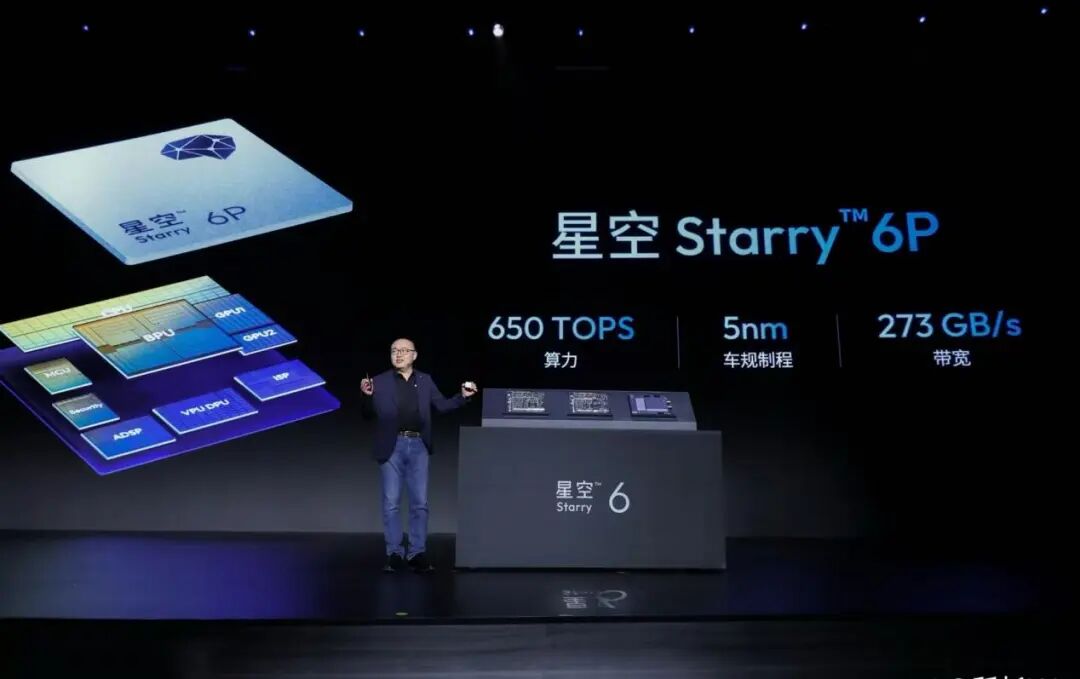
Therefore, cost reduction and efficiency improvement are the main reasons why automobile manufacturers choose the unified concept of cockpit and driving assistance. Yu Kai, CEO of Horizon Robotics, has also shown with a specific cost calculation how much costs can be reduced: The total hardware costs for the unified concept of cockpit and driving assistance on a single chip are reduced by 20% to 30%. The space requirement for intelligent hardware in the vehicle is reduced by 50%, and the total cost per vehicle is reduced by 1,500 to 4,000 yuan. The research and development time is shortened from 18 months to 8 months.
Li Bin mentioned at the High - Level Forum for the Development of Intelligent Electric Vehicles in April that the standardization of battery cells and the unification of chip types could offer a potential cost - reduction potential of 100 billion yuan. The standardization of battery cells has already started. He has called on the relevant authorities to urge automobile companies to unify chip types as soon as possible and increase the number of unified chips per vehicle.
The change in the organizational structure accelerates the "unified concept of cockpit and driving assistance"
The unified concept of cockpit and driving assistance is already an obvious trend. Before it is reflected in products, there is first an adjustment of the organizational structure within the company. New automobile manufacturers, especially XPeng and Li Auto, have responded to the trend most quickly.
In February this year, XPeng merged the first two levels of intelligent development, the Center for Autonomous Driving and the Center for Intelligent Cockpits, into a general Intelligence Center. It is led by Liu Xianming, the former head of autonomous driving. He Xiaopeng believes that the functional partitioning development model cannot meet the requirements for high - quality intelligence. It must be coordinated by a unified basic large - model, a central computing architecture, and a closed - loop data cycle.
The organizational form of Li Auto is different from that of XPeng, but the general direction is similar. Li Auto changed its organizational structure earlier than XPeng. It split the originally independent autonomous driving team and formed three parallel teams: the Basic Model Team led by Zhan Kun, the Software Team led by Gou Xiaofei, which has integrated the software, data, and mass production of the intelligent cockpit and intelligent driving, and the Hardware Team, which was originally led by Lang Xianpeng and is now taken over by Zhan Yifei.
Based on the Software Team led by Gou Xiaofei, Li Auto has achieved unified management of the intelligent cockpit and intelligent driving at the software and business levels. This also breaks the previous functional partitioning development model and enables holistic cooperative intelligent decision - making.
However, Li Auto promoted the integration of the cockpit and driving assistance earlier than the adjustment of the organizational structure. Li Xiang said at the Li Auto Technology Day 2025: "The car has two 'brains' that function independently, and the driving experience always remains separate. Starting from 2025, all new models of Li Auto will be developed based on the integrated architecture of the cockpit and driving assistance."
In the product area, NIO, Leapmotor, Changan, and IM Motors have already implemented the integrated technological architecture of the cockpit and driving assistance. Taking NIO as an example. At the hardware level, NIO has upgraded from domain - control separation to the central computing platform ADAM. The central computing platform of the models on the NT 2 platform integrates four NVIDIA Orin chips and a Qualcomm 8295 cockpit chip. In the latest ET9, ADAM integrates two self - developed Shenji chips of NIO and a Qualcomm 8295P chip. At the software level, it is NIO's holistic operating system SkyOS·Tianshu.
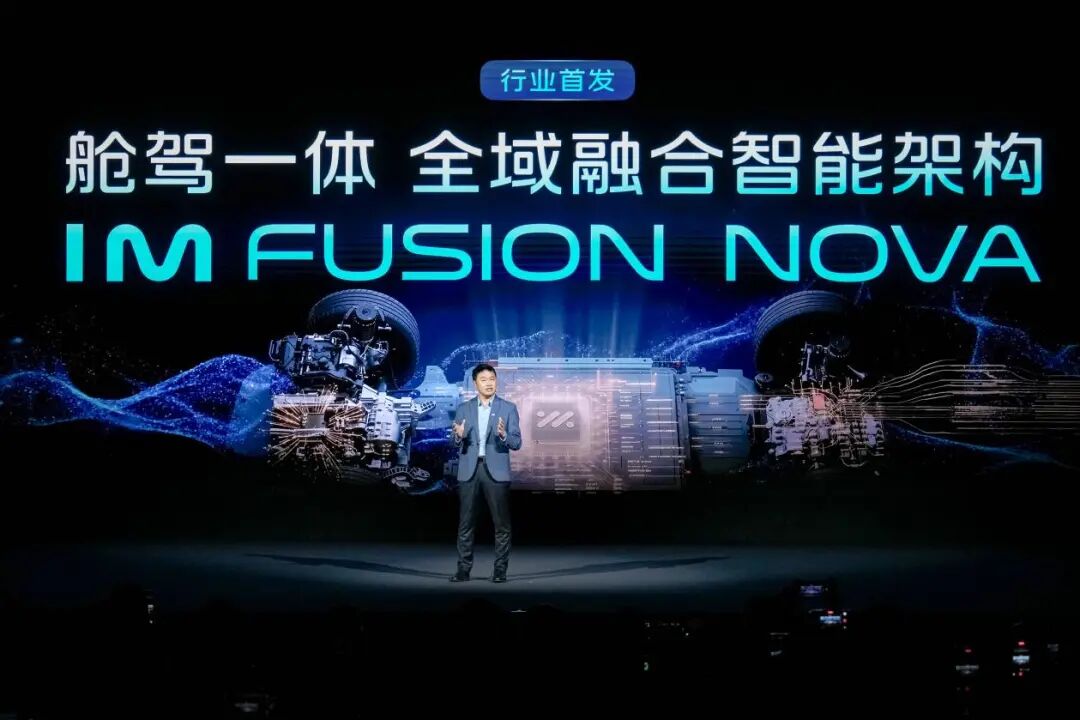
Strictly speaking, the Shenji chip is not yet a unified chip for the cockpit and driving assistance. It mainly supports intelligent driving, but due to the upgrades of the central computing platform Cedar ADAM, its computing power can also support some tasks of the intelligent cockpit and enable cross - domain computing power distribution.
Both XPeng and NIO have gradually increased the proportion of self - developed chips. XPeng's Turing chip and NIO's Shenji chip are both designed with high computing power, with 750 TOPS and 1,000 TOPS per chip respectively. In the flagship models, XPeng uses four Turing chips and NIO uses two Shenji chips. They are also two of the companies that had a negative net profit per vehicle in 2025. The third company is the GAC Group.
XPeng's net profit per vehicle was only a loss of 1,071 yuan. If the entire model range can be switched to self - developed chips, there is hope that the net profit per vehicle will quickly become positive. NIO's net profit per vehicle was the lowest, with a loss of 38,080 yuan. However, NIO's average selling price per vehicle is much higher than that of XPeng. The proportion of this loss in the average selling price is less than 20%, and there is hope that it can be reduced with good cost control.
The real problems of the unified concept of cockpit and driving assistance
In terms of cost - reduction potential, the technical concept of the unified concept of cockpit and driving assistance is very attractive to automobile manufacturers. The fact that this concept has only really been put on the agenda this year is because there are still many challenges in practical application.
The first problem is the integration of the two domains. The intelligent cockpit must be designed according to the safety and reliability standards of the intelligent driving assistance system. The intelligent driving assistance system requires a safety level of ASIL - D, while the intelligent cockpit usually only requires a safety level of ASIL - B or lower. In the system area, the intelligent driving assistance system is mainly based on the QNX system of BlackBerry, a closed - loop operating system known for its high safety and real - time capabilities.
