Die KI beobachtet mich, wenn ich auf die Toilette gehe, und hört auch zu, wenn ich schnarche.
On a trip of tech enthusiasts in the new era, there is no free space on their bodies.
One must wear a smartwatch on the wrist, which shows mood swings. One must hang an AI necklace around the neck, which monitors the heart rate. One must wear AI rings on the fingers, which measure the sleep quality...
Due to people's innate health anxiety, countless AI hardware teams have repeatedly brought new products to the market. As a result, the scenarios in which AI supports people's daily lives are becoming increasingly "challenging".
For example, when going to the toilet and sleeping.
These two scenarios don't sound very decent, but they fit very well with the business logic. An adult goes to the toilet 7 - 9 times a day and spends about one - third of their life in bed... A person may forget to wear the watch or leave the ring on the nightstand, but it's hard not to go to the toilet for a long time or not to sleep for a long time.
Once the devices are integrated into these scenarios, data collection no longer depends on willpower but becomes part of life itself.
Just like the default settings of short - video platforms: When you open the software, recommended videos will be played automatically. Everything happens very simply.
The toilet sees your bowel movement
In contrast to traditional smart toilets, the main advantage of AI toilets lies not in automatic flushing and automatic lid opening, but in the seamless data collection of users and analysis with AI to assess a person's health status.
Then the question arises: How can a toilet assess a person's health status?
The answer is not mysterious: It looks at the excrement. Yes, people see with their eyes, and the toilet "sees" with cameras and other sensors.
This topic sounds a bit offensive, but many companies are seriously engaged in this business. Kohler's Dekoda is a typical example.
This product is a health monitoring device that is mounted on the edge of the toilet and looks like a large plastic clip. Through the downward - facing camera inside the toilet, this device can observe changes in the hydration state of the stool, stool shape, etc. Simply put, it is interested in whether you have drunk too little water recently, whether the stool shape is normal, and whether there are noticeable signs such as traces of blood in the excrement.
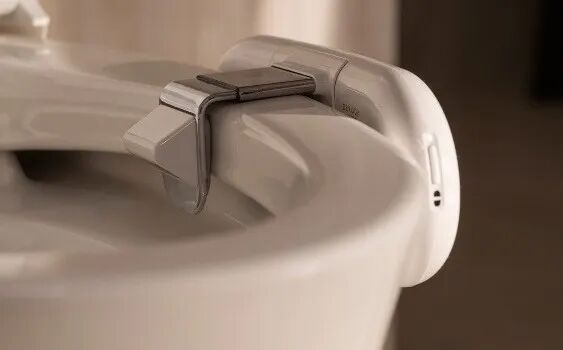
Photo of the device | Source: Kohler website
This device is not cheap. It costs $599. If you want to get long - term stool observation reports, you have to subscribe to the software. The cost is $7 per month or $70 per year.
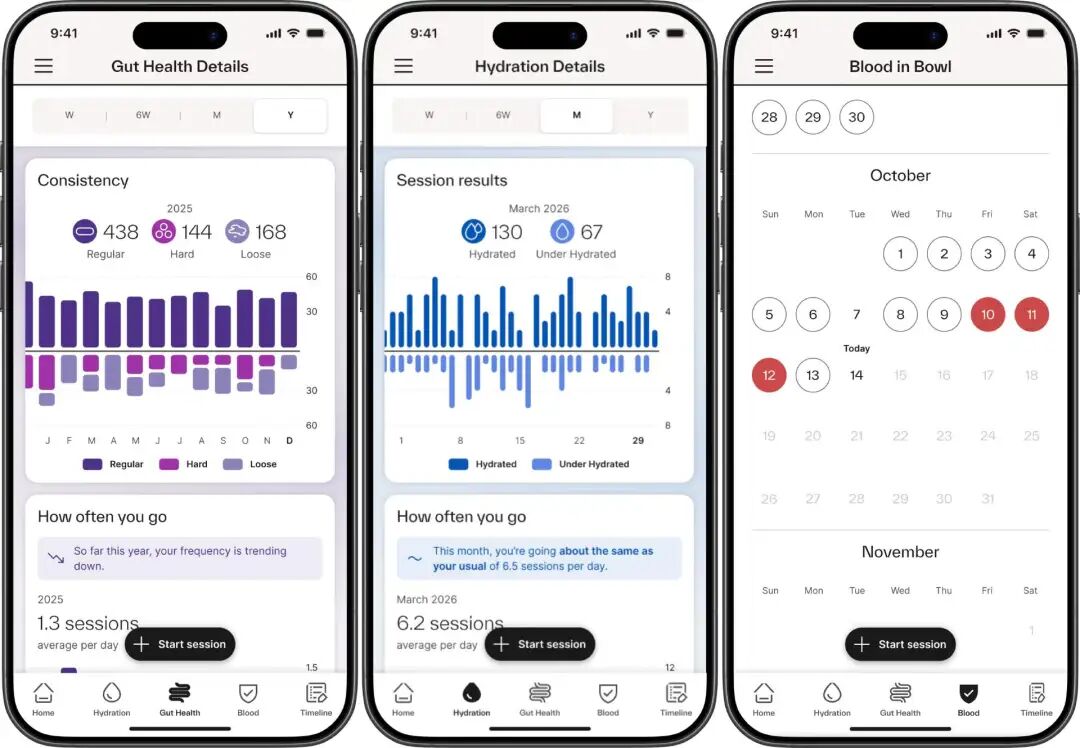
Software subscription | Source: Kohler website
The concerns raised by this type of products are not only about the risk of privacy infringement but also about the practicality of the functions. Is it meaningful to spend more than 4,000 yuan on exploring the stool shape with a camera when you can just take a look?
If this type of toilet health hardware wants to prove its value, it must show that automatic and continuous recording makes more sense than our occasional human observations. Otherwise, it's just an expensive subscription service trying to attract people worried about their gastrointestinal health.
To avoid the discomfort regarding privacy caused by cameras, the Japanese toilet brand TOTO has chosen another way. It doesn't use a camera but LED light sources and reflection signals to determine the shape, color, and amount of the stool.
There are also Chinese companies that regard the toilet as an entry point for health data.
The Shenzhen - based company SHANMU focuses on urine testing. Compared with stool shape, there is a more direct connection between urine indicators and the metabolic state, which is closer to traditional medical examination scenarios.
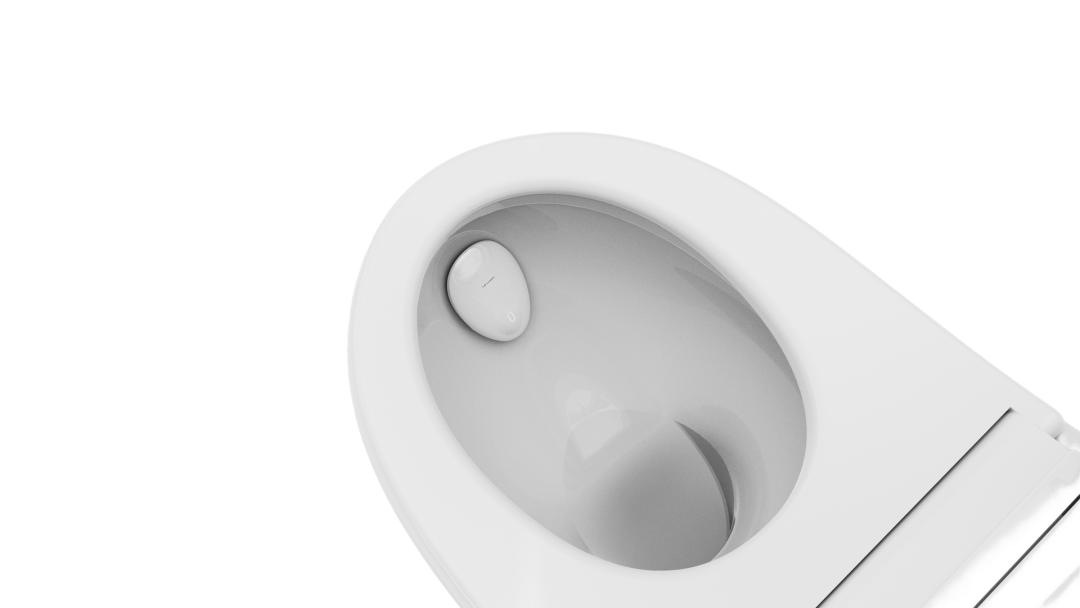
Early product form | Source: SHANMU website
The development of the product is based on the concern of the founder Lin Hequan about his own health. During an examination, he found that he had elevated uric acid and cholesterol levels, but he didn't feel unwell. Only then did he realize that chronic diseases such as nephritis and diabetes show no symptoms in the early stage. If you only go to the doctor after symptoms appear, you often miss the best treatment time.
So he tried to develop a product that can give him a warning before the onset of a disease. The test results can tell patients how they can do self - treatment at home, so as to reduce their dependence on medical care and increase their self - responsibility for their own health.
After installing such hardware in the toilet, one can get daily analyses on the smartphone and thus gain an overview of one's long - term health status. On the product website, the test indicators and the associated diseases can be viewed.
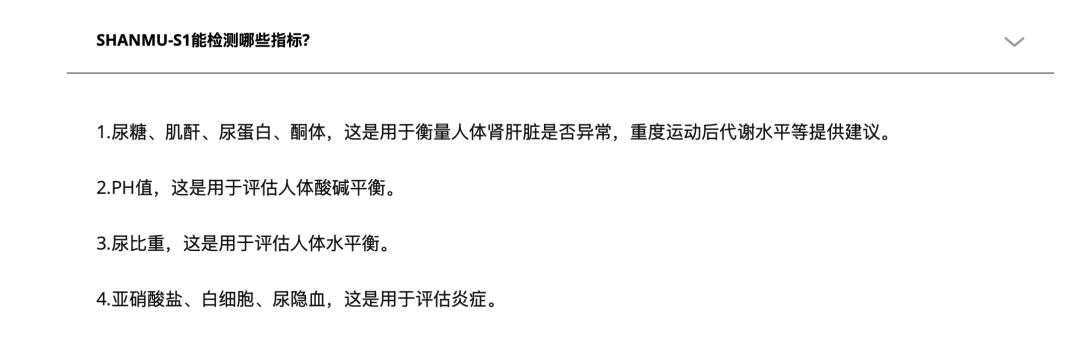
Source: SHANMU website
Of course, this product also has new problems - the battery life. After all, this device is inside the toilet and is constantly flushed... In the official instructions, the company states that the product is specially developed for the toilet environment, is waterproof, and is installed on the toilet so that no dirt can get inside.
According to a report by 36Kr, the company completed a Series A financing of nearly 100 million yuan this month and introduced a new product form called Dotmax. This time, the device is installed outside the toilet and can collect the morning urine sample within 2 seconds while using the toilet.
The bed hears your snoring
Besides the toilet, there is another place in the house that is suitable for long - term data collection - the bed.
As soon as a person lies on the bed, the mattress doesn't need to prompt the user to "start the measurement". It can just lie there and record the heart rate, breathing rate, and temperature changes, and even adjust the temperature and support settings.
The most representative company in this field is Eight Sleep. Eight Sleep doesn't sell mattresses. Or rather, the price of their products doesn't directly depend on the mattress but on their "sleep operating system".
After entering the Chinese market this year, the minimum price of the Pod 5 series is 19,999 yuan. Pod 5 is the core product of the brand, an about 1 - inch - thick smart bed cover that can be placed over an existing mattress. Through an array of pressure sensors, this product can directly monitor a person's heart rate and breathing rate. This is nothing new, but another function is more interesting. Through the water circulation, biosensors, and AI algorithms, this bed cover can set different temperatures under the left and right parts of the body, so that two people in the same bed can each enjoy their individually comfortable ambient temperature and don't have to argue about the air - conditioning.
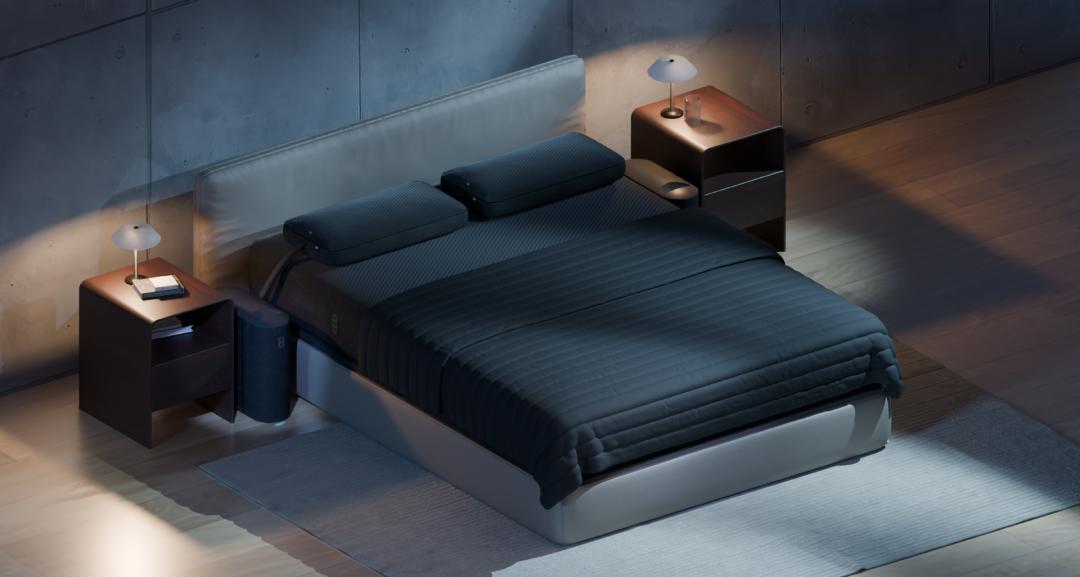
Source: Eight Sleep website
Besides temperature regulation, this bed can also change the inclination. When snoring is detected, the bed is automatically raised to clear the airways and reduce snoring. This not only protects the health of the snoring person but also the sleep quality of the roommates.
Capital also bets on this logic.
In 2025, Eight Sleep announced that it had received a financing of $100 million and that it would continue the development of AI sleep optimization and medical applications, including the fields of menopause sleep and sleep apnea.
Chinese competitors have quickly caught up, and there is more than one. The most representative company is Stareep, a brand of Dreame. In early 2026, it completed a second financing of nearly 100 million yuan, and the post - financing company value is 1 billion yuan.
It also tells the story of "mattresses in sleep management", but the functions focus on the "changeable form".
When a person changes their sleeping position, the AI mattress detects this first and then automatically adjusts the hardness and height to provide support or reduce pressure. In addition, this product has the function of scenario regulation, such as rocking to sleep and intelligent waking up. Its goal is to give people the feeling of sleeping like in childhood and enjoy a deep sleep.
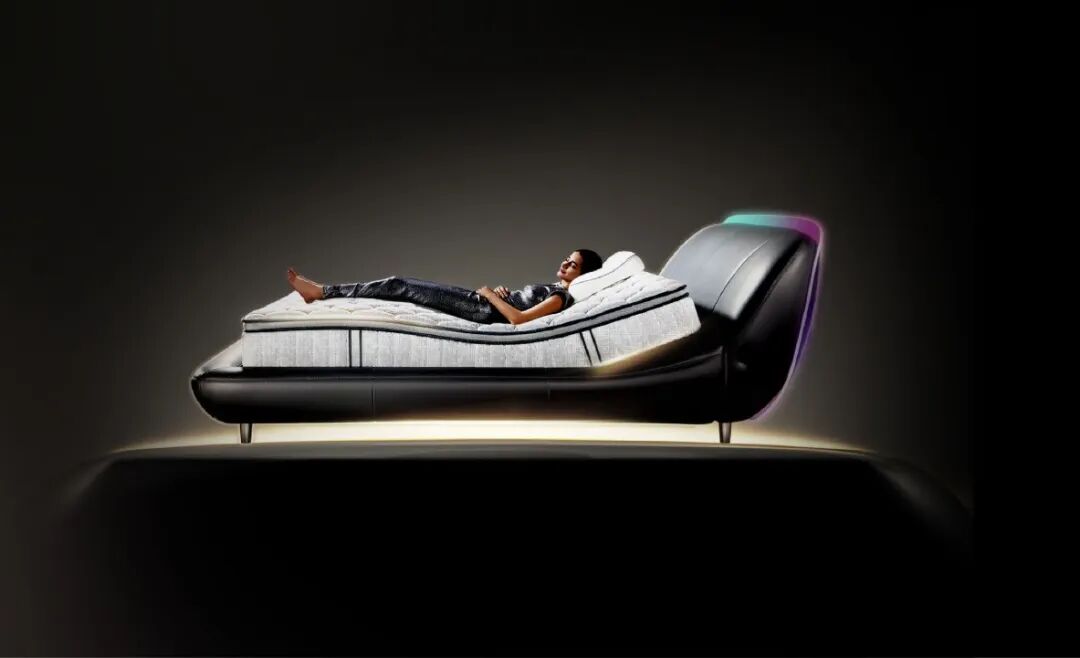
Source: Stareep website
Another company worth noting is "Jinri Yixiu".
It was founded by Wang Teng, a former high - level manager of Xiaomi, and focuses on sleep health and energy management. In January 2026, Jinri Yixiu received a seed financing of several million yuan. The investors include the mattress brand Simmons, etc. In May, another round of financing was completed.
The start of the company was also a bit dramatic. According to Wang Teng's description on his Weibo account, after leaving Xiaomi, he was so stressed that he wanted to buy a new mattress. He compared for a long time in the furniture market and finally bought an intelligent mattress from Simmons. But after using it, he found some "defects". So he complained to Mr. Chen, the chairman of Simmons. In excitement, he blurted out: "I have many product ideas. Why don't you invest in me and let me give it a try?" And Simmons actually invested.
Why has this area become so popular among capitalists recently? Home health monitoring is not a new field. Products such as blood glucose meters, blood pressure monitors, and body fat scales have already entered the market, but in recent years, they have been discarded by the market. Why are toilets and mattresses the most popular AI health products under the wave of AI hardware?
Why the toilet and the bed?
The biggest problem with blood pressure monitors and similar devices is that they rely too much on people.
They assume that users are self - disciplined enough to measure regularly, record carefully, and analyze continuously. But in reality, most people put the devices in the drawer after a short time.
Health anxiety is real, but the ability to take action is really lacking.
Portable devices have solved part of the problem. Watches, rings, and headphones make detection easier and can continuously record heart rate, sleep, and stress. But they still depend on use, and the scope of collected data is limited.
The advantage of toilets and mattresses is that they are "passive" enough. Users don't need to turn on the device, learn new actions, or remember to use it every day. As long as one lives a normal life, data will be generated. This is also the reason why AI health hardware is increasingly entering home scenarios. For health monitoring, the truly frequent access points are the items we have to use every day.
For the traditional furniture industry, this is also a new story.
In recent years, the weakening of the real estate industry has affected furniture sales. Mattresses, sanitary ware, and customized furniture need new growth stories. AI