Boston Dynamics ist ins Alltägliche versunken. Die leitenden Angestellten sind kollektiv gegangen, und bei der "Serienproduktion" von Robotern können nur vier Stück hergestellt werden.
Just now, Boston Dynamics has released a new demo video of Atlas.
In the demo, the Atlas robot performed a series of challenging gymnastic movements, such as handstands, arm support exercises, and perfect body coordination. Everything was very smooth.
It is known that this is the new Atlas, the standard version that was presented at CES in early 2026.
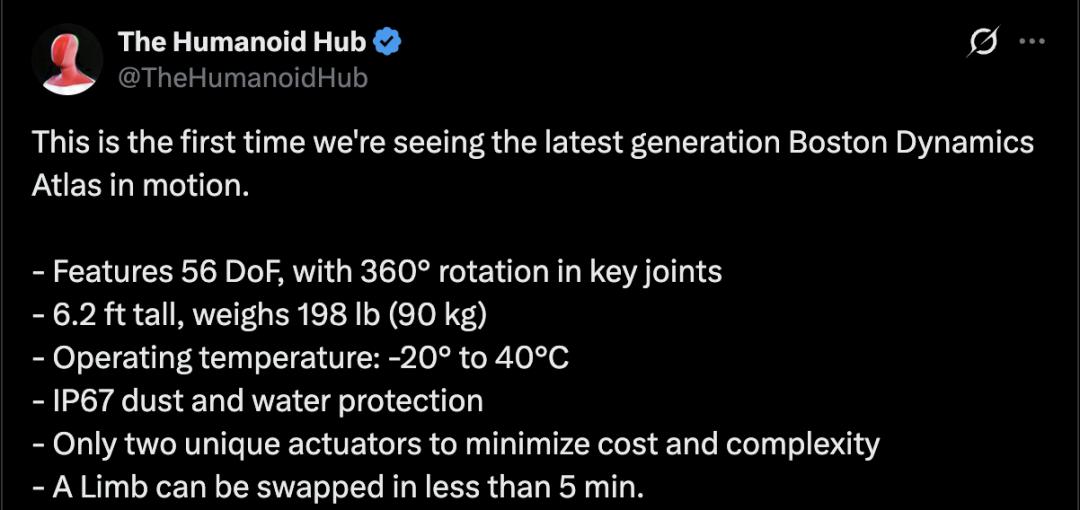
It has:
56 degrees of freedom, with important joints allowing 360° rotation
A height of 6.2 feet (about 1.9 meters) and a weight of 198 pounds (90 kilograms)
An operating temperature between -20°C and 40°C
IP67 dust and water resistance
Only two different types of actuators throughout the body to reduce costs and complexity
A limb can be replaced in just 5 minutes
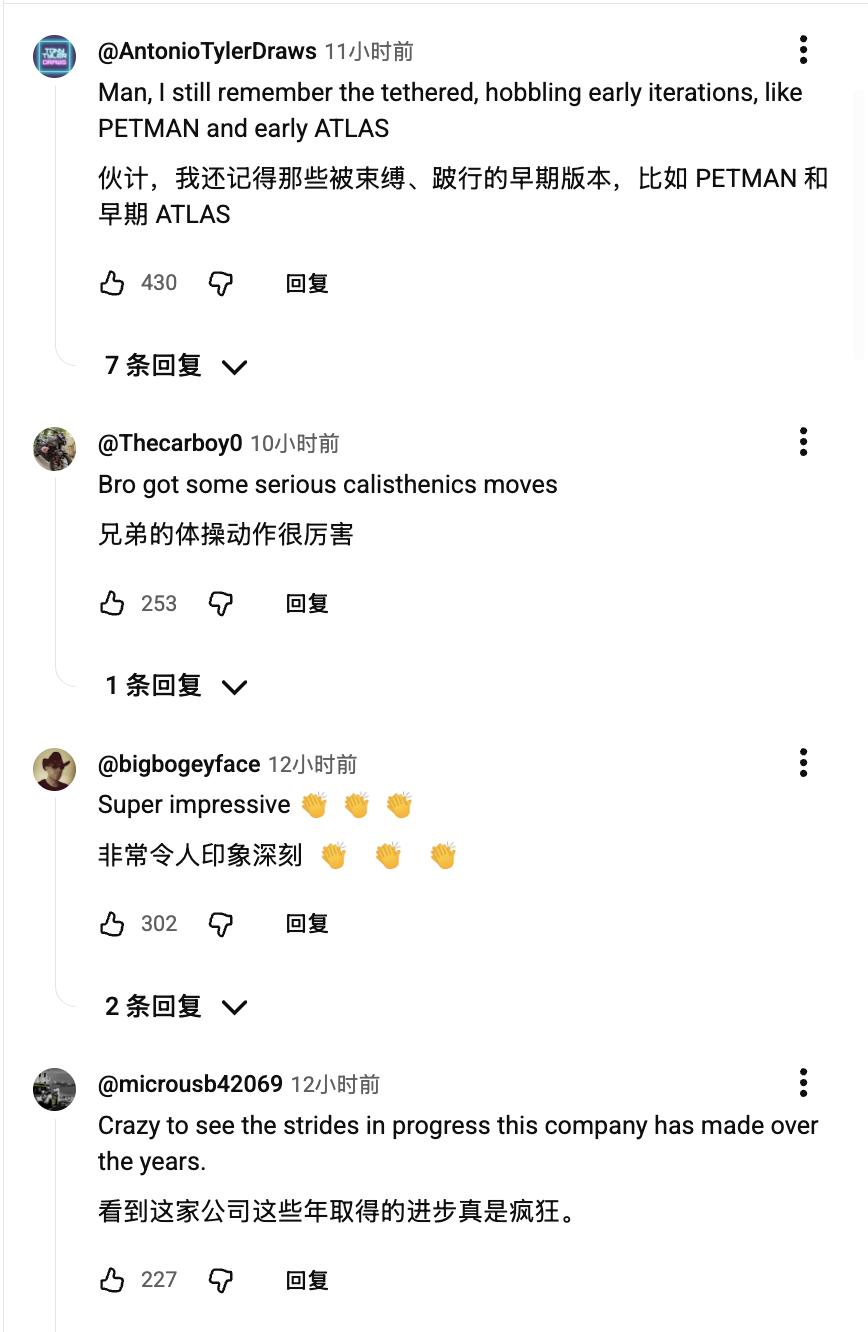
In the comments, many internet users have described the robot's movements as impressive.
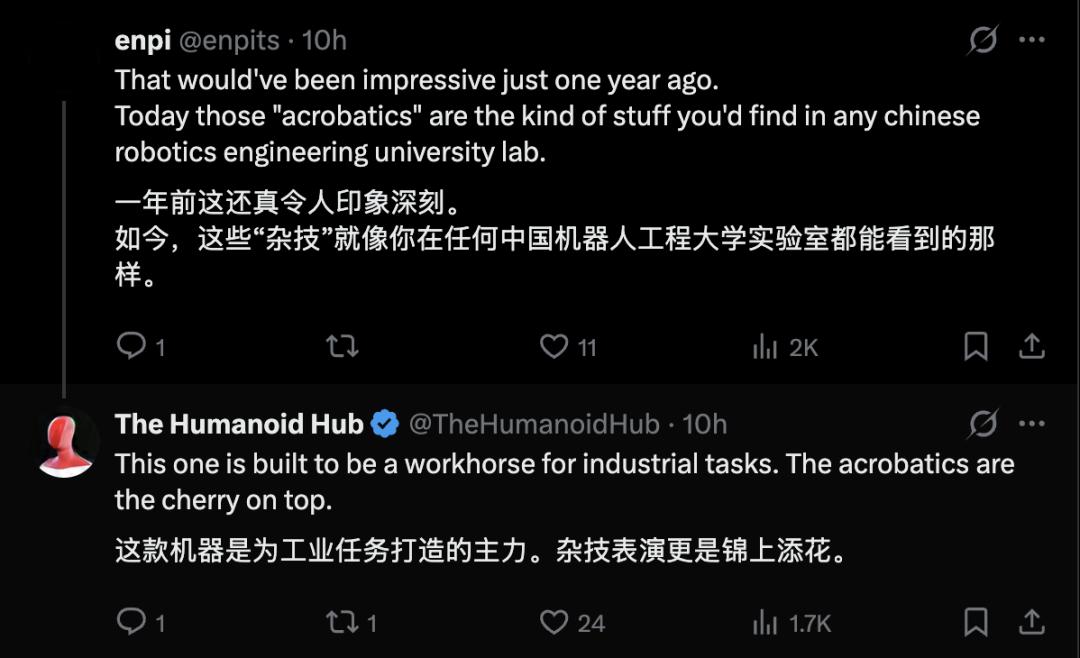
Of course, compared to Chinese robots, it is still behind.

While the new demo video has attracted a lot of attention, there are also rumors about a change in leadership at Boston Dynamics just before the IPO.

What's even crazier is that it is said that the monthly production of Atlas is only 4 units...

Standard Version of Atlas
It is known that the new Atlas in the current demo video is publicly shown for the first time as the standard version that was presented at CES at the beginning of the year.
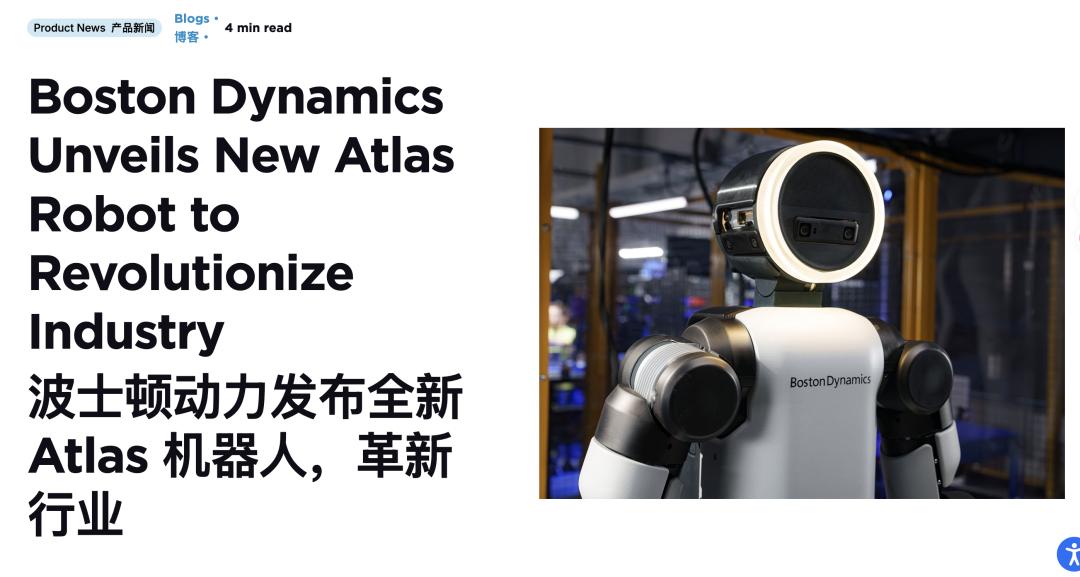
The goal of this generation of Atlas is corporate application. It can perform various industrial tasks such as material transportation and order processing.
In previous demo videos, Atlas has already completed transportation tasks in the automobile factory, and the execution speed was quite good.
According to the official blog, the core concept of this standard version is "Function over Form".
In contrast to many competitors who try to give their robots a human appearance, Boston Dynamics is moving towards the "Superhuman". The head, hips, and lower back can rotate 360° and can perform movements that are impossible for humans.
As shown in the initial demo, Atlas can move its arms, shoulders, and head in a very unnatural way.
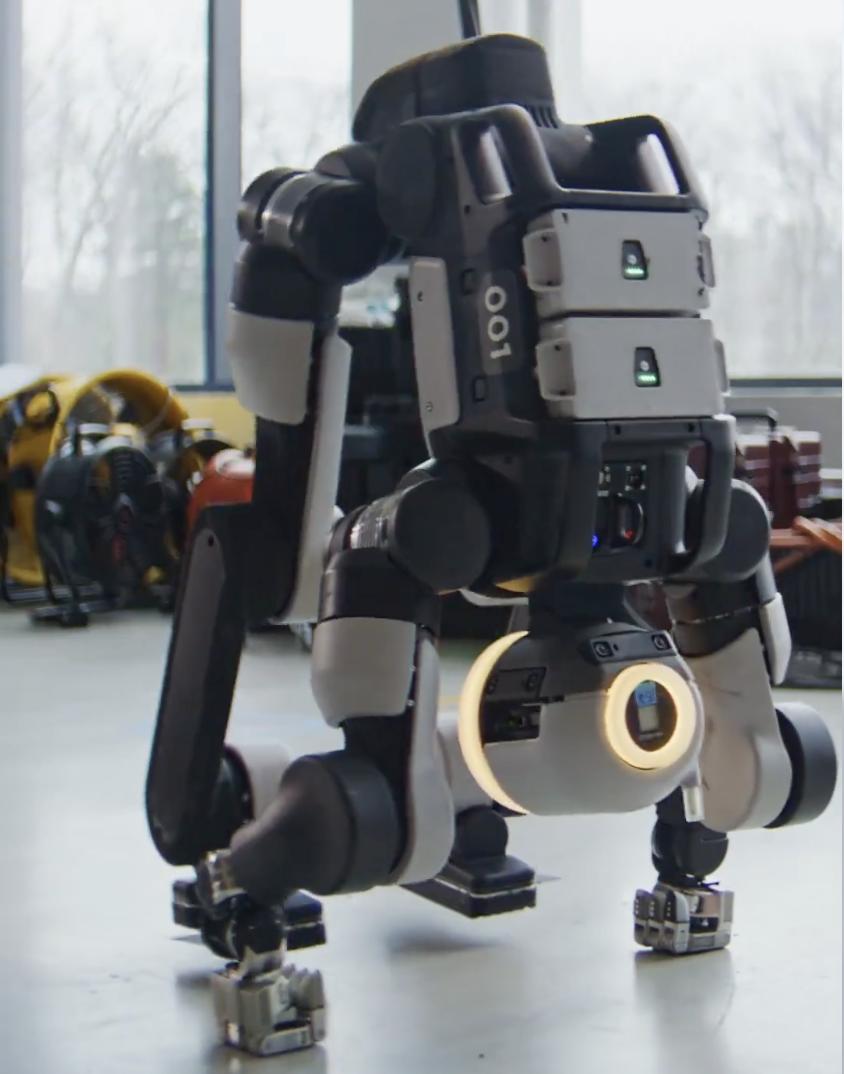
When Atlas was presented at CES, the first reaction of many people was "a bit creepy", but that is exactly the design goal.
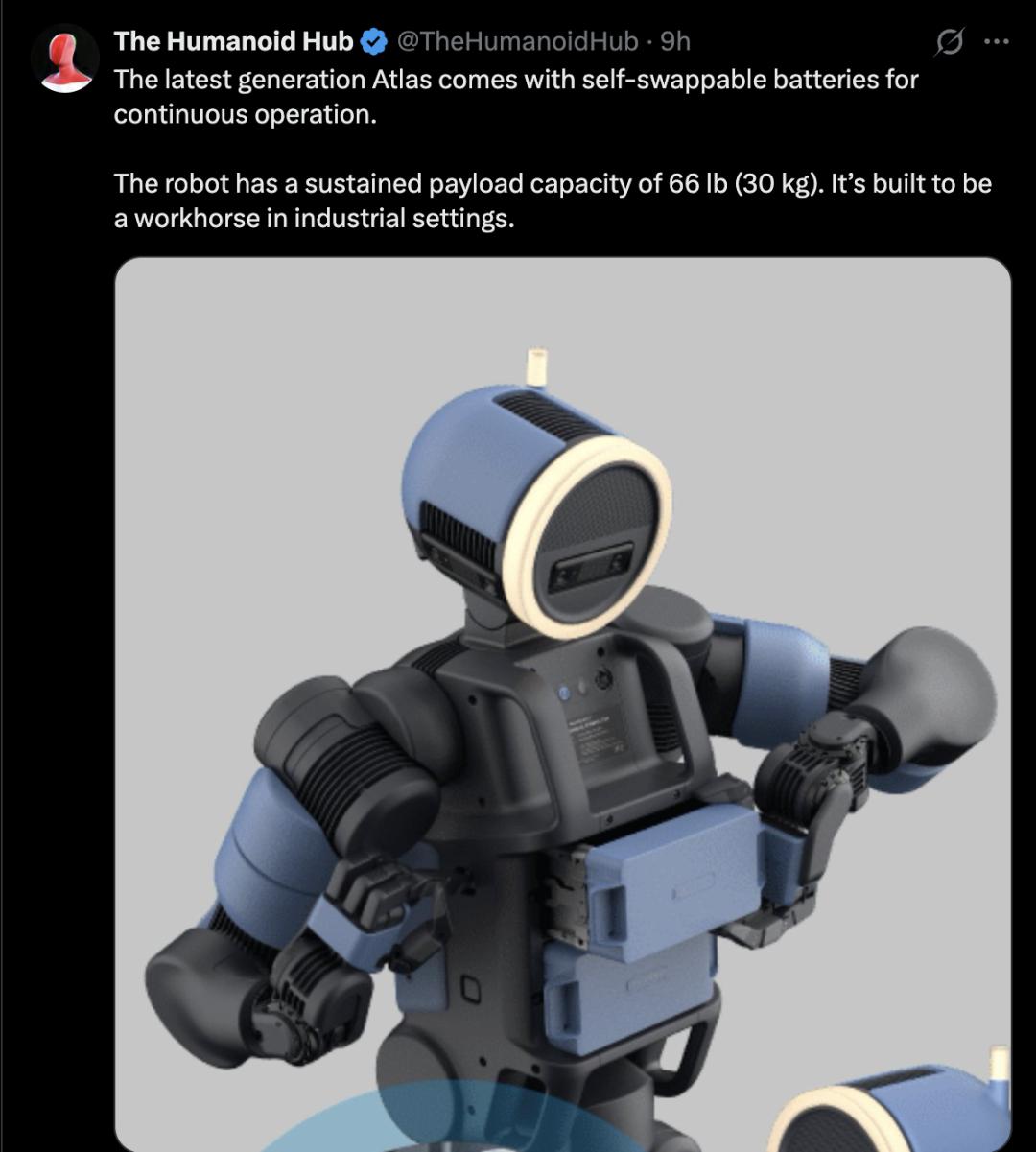
Regarding the hardware details, according to a tweet from the blogger the humannoid hub, Atlas uses only two types of actuators throughout the body. The left and right arms are identical, as are the left and right legs.
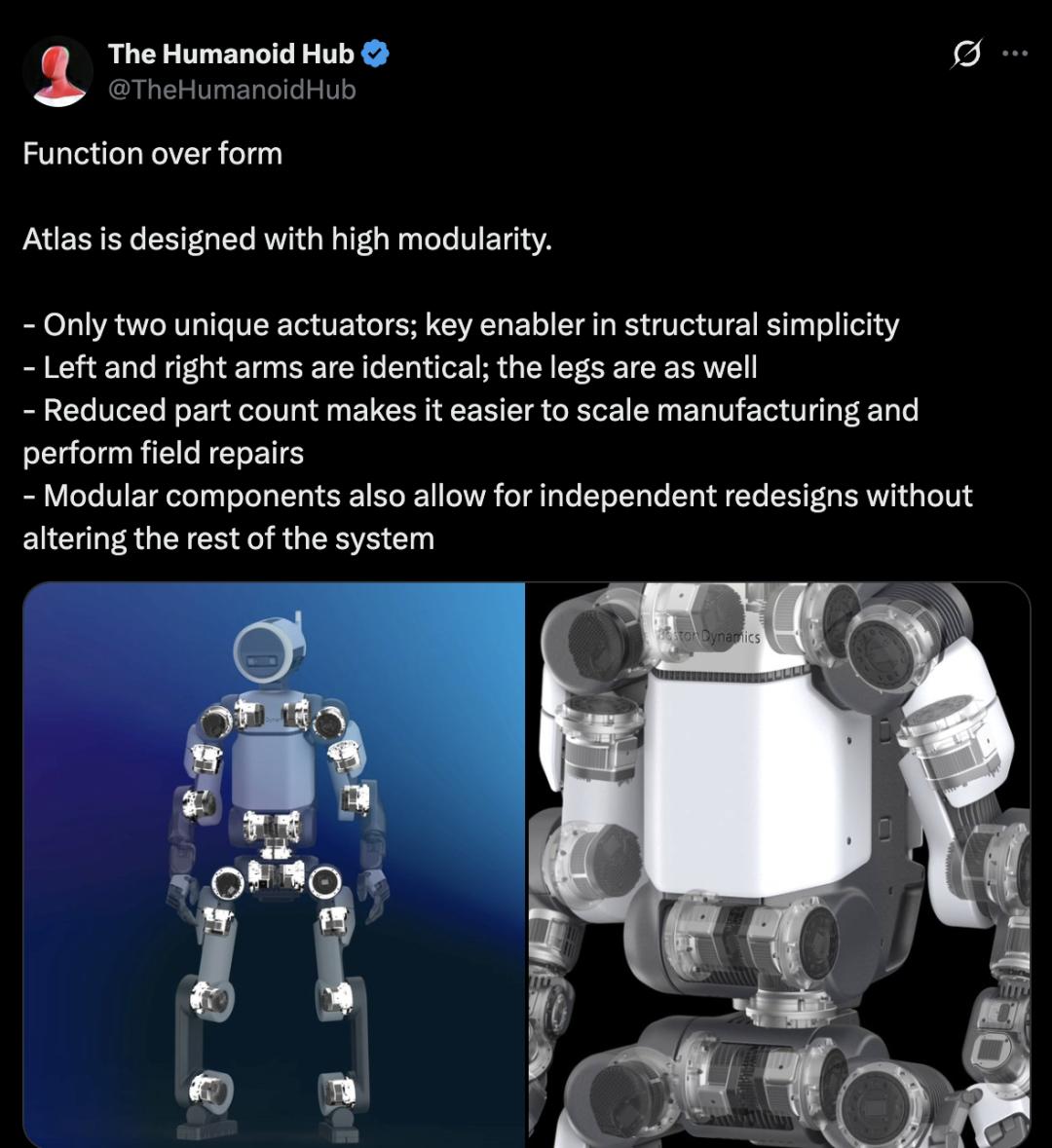
The number of different parts is greatly reduced, which facilitates both mass production and on - site repair. In case of a defect, an entire arm can simply be replaced. In addition, each module can be independently improved without changing the other parts of the design.
Atlas has a four - finger gripper, three fingers and a thumb. Both the fingertips and the palm have tactile sensors.
This configuration is a compromise between three and five fingers. Boston Dynamics believes that four fingers are the best solution for reliability and flexibility in industrial applications.
The cooling concept is also remarkable. The entire robot has only one fan, which is located in the head and cools the computing module.
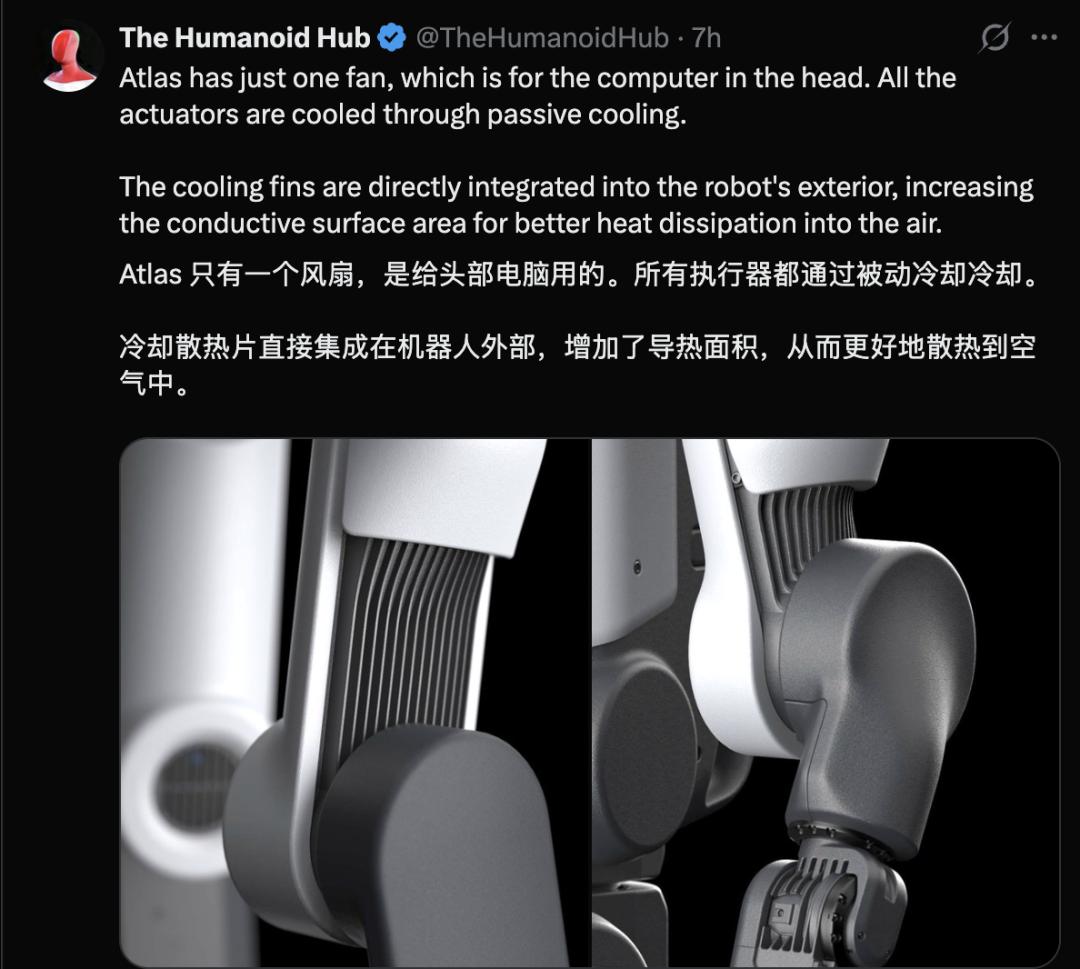
All actuators are passively cooled. The cooling fins are directly integrated into the robot's housing. The housing itself acts as a heat sink and cools by increasing the heat - conducting surface in contact with the air.
This makes Atlas very quiet during operation and reduces a common source of interference.
The robot has three lights. The first two indicate the charge status of the two batteries, and the third indicates the storage space on the hard drive.
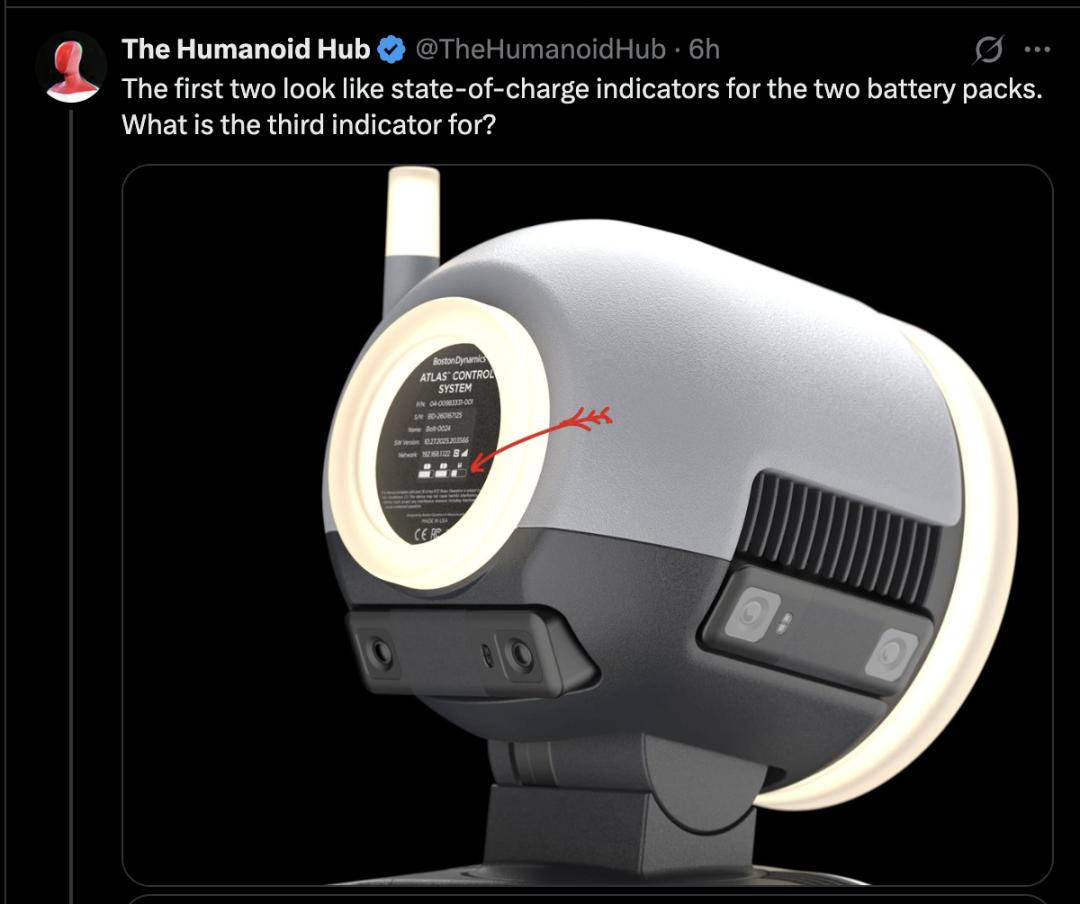
The batteries are attached to the outside of the abdomen. Atlas can move itself to the charging station and change the batteries without human intervention. Thus, it can work continuously. A full charge is sufficient for 4 hours of operation and a continuous load of 30 kilograms. Its goal is clear: an industrial working robot.
Regarding mass production, Atlas has already started production at the Boston headquarters. The production capacity for 2026 is fully allocated to the RMAC (Robot Manufacturing Application Center) of Hyundai and Google DeepMind.
From 2027, production will be offered to more customers. Hyundai plans to build a new robot factory with an annual target volume of 30,000 units.
Currently, however, the production capacity of Atlas is very limited, only 4 units per month.
Leadership Restructuring Just Before the IPO
Although the demo video has surely attracted attention, Boston Dynamics is not calm just before the IPO.
Last week, Semafor published an exclusive story titled "C - suite exodus", which translated means "Collective departure of the leadership".
On February 10, CEO Robert Playter announced his retirement. He has worked at Boston Dynamics for 32 years and joined in 1994 when the company had only been independent from MIT for two years. He is almost a half - founding member.
After his departure, the COO and the CSO also left the company. Semafor quotes a former employee who says that these two were pressured by the management.
CTO Aaron Saunders has moved to Google DeepMind. CFO Amanda McMaster is temporarily taking on the role of CEO.
The background of this series of departures is that Hyundai's patience with Boston Dynamics is quickly running out.
Hyundai acquired a majority stake in Boston Dynamics for $1.1 billion in 2021. Last year, it also promised to invest $26 billion in the United States, including an order for "thousands of robots". At CES, an annual production of 30,000 units was mentioned, but the actual production is only 4 units per month.
At this rate, it would take over 200 years to produce 10,000 units.
The management is worried about the competition. Tesla's Optimus is on the rise, Figure as well, and Agility's Digit has already entered the factories.
Many internet users have directly reacted in the comments of Boston Dynamics: How could you lose your advantage?

Boston Dynamics is the oldest player in this field, but age is not a shield for a subsidiary under pressure to start mass production.

The company's official explanation to Semafor is that these changes are being prepared for the next phase of Boston Dynamics. They need an organizational structure that supports mass production and rapid industrial scaling.
Can Boston Dynamics still keep up?
Reference Links
[1]https://www.youtube.com/shorts/UoHfGhLHRkg
[2]https://x.com/TheHumanoidHub
This article is from the WeChat account "Quantum Bit", Author: Focus on Frontier Technology, published by 36Kr with permission.