AI-Hardware, stoppen Sie die Erweiterung der Sinne wie bei "Smartphones der nächsten Generation".
Over a long period of time, the history of technology was more like a "development history of human artificial limbs".
From newspapers, railways, telephones, radio, television to computers and mobile phones - all technological logics have the same goal: "to extend outward". The power of vision, hearing, the reach of touch, the ability to connect, and the way people interact with the world are all expanded.
This is also the reason why McLuhan's theory "The medium is the extension of man" is so enduring. It is simple enough and has enough explanatory power. Almost every wave of media technology can find its position within this theoretical framework.
But with the current wave of AI hardware, this theory seems to ring a bit hollow for the first time.
In the past two years, almost all portable devices such as smart glasses with screens or "screen - less" pins have been drawn into a grand narrative: They will become the "next mobile phone", replace the mobile phone, and even bring about the revolution of the mobile phone.
The problem, however, is that when the industry likes to refer to AI hardware as the "next mobile phone", many products don't really shorten the distance between people and information, between people and services. Instead, they simply break down an operation that was originally performed on the mobile phone into a longer chain of steps. The devices seem lighter, but the interaction may not be easier; the devices seem more free, but often rely more on the mobile phone.
Therefore, the most discussed question for AI hardware today may not be "Who can replace the mobile phone", but a much deeper question: Does it extend the mobile phone or understand humans anew?
If the first question still falls within the scope of the competition for end - devices, the battle for accesses, and platform fantasies, the second question really touches on the underlying philosophy of this wave of technology. Technology no longer only strives to "extend humans outward", but begins to turn inward, approaches the body, and tries to relocate intelligence back into the body itself.
In this sense, concepts like "companion intelligence" and "portable intelligence", which the industry has not yet fully explained, may be more important than the "next mobile phone".
They represent not only a new product category but also possibly a new human - machine relationship.
AI hardware won't easily become the next mobile phone
First, admit: The mobile phone has indeed been the most successful "extender of humans" in the past few decades.
It has packed communication, photography, social interaction, navigation, payment, note - taking, entertainment, and office work almost all into a pocket - sized device. It is light enough, close enough, and used so often that it is almost constantly on the body. In a way, the mobile phone is successful not only because it is powerful but also because it implements the "extension" almost imperceptibly: One is not constantly aware that one is "using a medium", but simply sees, hears, speaks, takes notes, pays, travels, and communicates naturally through it. It not only extends humans but also integrates into humans to some extent.
That's why almost all AI hardware products today automatically look to the mobile phone. Everyone wants to become the next central end - device and take over the proven narrative of the super - access. So smart glasses are often described as the "next mobile phone", AI headphones are presented as a new voice access, and AI pendants, audio recorders, brooches, and hangers are marketed as "screen - less" companions.
But the reality is that many products don't really replace the mobile phone but first become an extension of the mobile phone or even a peripheral device of it.
A typical example is the AI Pin from Humane. It was marketed as a representative product of the "post - smartphone era" and tried to reinvent personal computer access with a screen - free, voice - controlled, projection - based, and AI - controlled system. But this narrative quickly hit reality: Less than a year after its market launch, Humane sold its core business to HP, and the cloud services related to the AI Pin were shut down in February 2025.
Humane's failure exactly highlights the most embarrassing problem of this type of AI hardware: If a device can neither perform tasks independently nor perform tasks faster, more smoothly, and more cost - effectively than the mobile phone, it will be difficult to become the next central end - device. It seems to be revolutionizing the mobile phone, but in fact, it only adds another layer that has to be learned, maintained, and its instability has to be tolerated.
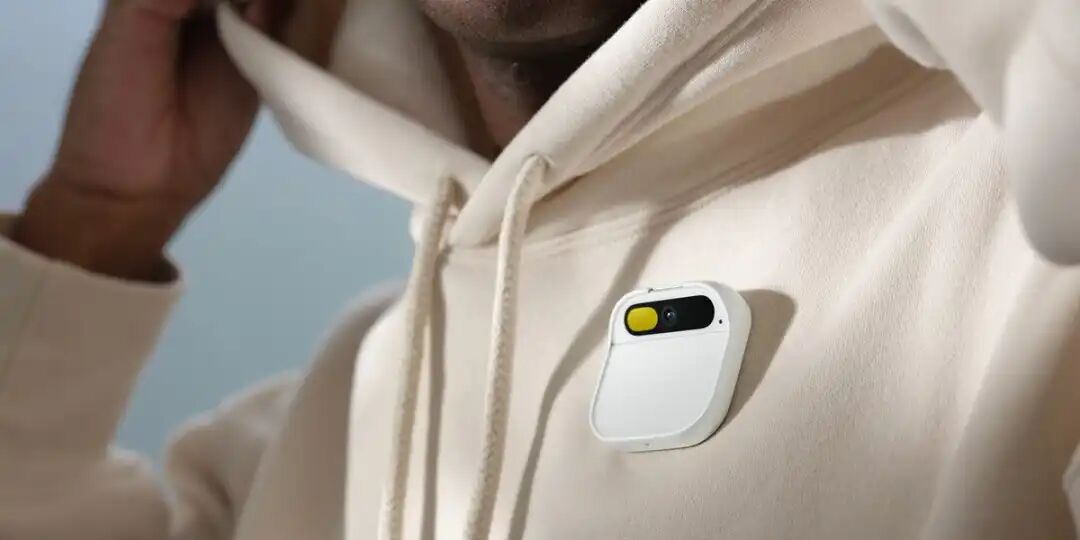
Source: Humane
Therefore, many AI hardware products today don't feel "freer" but "more cumbersome" to users.
This doesn't mean these products have no value. On the contrary, they will probably become important secondary accesses in the future. But access is not the same as the goal, and a peripheral device is not the same as the next platform. The most common mistake in the industry is to consider the "new" as the "better" too early.
The biggest problem with many AI hardware products today is not that the technology is not advanced enough but that the narrative is too hasty. They try to take on the mission of the "next mobile phone" before they can solve basic problems like "shorter chain, easier use, more stable tasks". The mobile phone has become so successful because it not only combines different functions but also hides the complexity. On the contrary, any AI hardware product that increases the usage cost for users will have a hard time replacing the mobile phone.
This is exactly what AI hardware must pay attention to. It must ensure that it doesn't become a burden on humans rather than an extension of them.
Old media extend humans, new hardware reads them
But the depth of the matter goes beyond "they couldn't replace the mobile phone". What's important is that the hardware in the AI era may not simply be understood as the "extension of humans" at all.
Old media are suitable to be described as "extensions" because they actually enlarge a human ability outward. They all do the same thing: They bring human abilities out and allow humans to reach further into the world.
But many AI hardware products today do more than that.
Currently, there are still some products in the industry that continue the technological philosophy model of the "extension of humans". For example, many smart glasses still emphasize "Ask what you see" and "Answer what's in front of you". Many AI headphones and voice devices also still emphasize "With one command, you can control the functions of your mobile phone, car, household appliance, or other physical device". This logic hasn't disappeared but remains a strongly presented product line.
But at the same time, more and more new hardware products are turning to another way: They not only strive to extend human senses outward but also start to obtain data directly from the body itself.
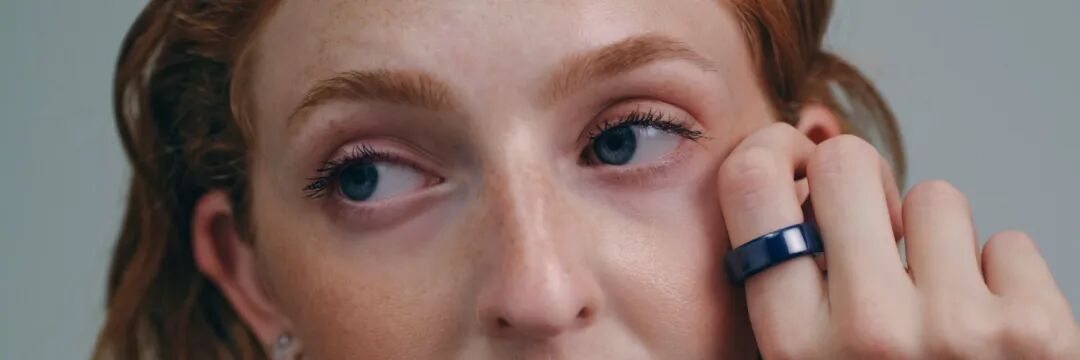
Source: Oura
For example, the core ability of a smart ring like the Oura Ring is not "to see more for you" but to continuously collect physiological data such as heart rate, body temperature trend, oxygen saturation, activity, and sleep over 24 hours through sensors and convert this continuous data into recommendations for recovery, stress management, sleep, and health. Oura even explicitly describes this ability as individual understanding based on continuous data.
The characteristic of these products is that they no longer simply "help humans see" or "help humans hear" but understand humans in the long - term, closely, and continuously. They understand your rhythms, your state, what you're currently doing, saying, and where you are, and even your physiological changes and behavior patterns in the past. They don't simply extend a sensory organ outward but build a long - term active perception and computing layer at the edge of the body.
Therefore, it's not completely wrong to still explain these products with the theory of the "extension of humans", but it's no longer sufficient.
The concept of "extension" presupposes that the device is attached outside the body and is an external medium. But more and more AI hardware products today are no longer satisfied with being an external medium but try to become an infrastructure layer at the edge of the body. Therefore, the "extension" framework in technological philosophy no longer seems so reliable in the AI era for the first time. It can't explain: Why are today's hardware products increasingly dependent on the continuous collection of humans rather than on the connection to the outside world?
In this sense, the technological philosophical basis that should really be discussed for AI hardware today is not whether it can still be classified into the category of the "extension of humans" but whether it makes humans its data source, its object of understanding, and its interaction goal again.
One of the future paths of AI hardware: The exploration of one's own body
If the "next mobile phone" still has a inertia from the past era of consumer electronics, then "companion intelligence" and "portable intelligence" are rather new concepts that emerged in the AI era.
For the new generation of AI hardware products, it is no longer just a "means" but begins to become a "subject" - it is the place where the interaction takes place, it is the end of the task, it is the front line where the model understands you, reacts to you, accompanies you, and shapes your behavior.
"Companion intelligence" is not just another name for a portable device but rather a new type of intelligence relationship: "It uses a human's real data as input in the long - term, can continuously understand, actively react, and constantly develop, and integrates into daily life in the least noticeable and least disturbing way possible." This is the definition that Jasper, who became independent after unsuccessful consultation attempts with the Oura Ring group and developed the Wilo smart ring, gave in an interview. In his opinion, this is what he wants to achieve with his hardware: A constantly active system that continuously collects the individual context data of each person and builds human - machine interaction based on this data.
A similar concept, "portable intelligence", follows a similar principle. Whether it's a neck - hanging AI pendant or future, possibly even smaller and invisible devices, their common direction is to function more like an intelligence adjacent to the body. They place more emphasis on the collection and feedback of information about your body and the environment.
Therefore, we should ask the question: How should the next generation of the human - machine relationship be integrated into the body?
From an industrial perspective, this may be the real crossroads for AI hardware.
One group of products will continue to hold on to the narrative of the "revolution of the mobile phone" and try to capture access, replace the screen, and take over the app system to become the next central end - device. Naturally, there will still be people who take this path, and there will surely be temporary successes. But the difficulties are also very obvious: Manufacturers not only have to develop new forms but also win back the usage habits of users, which have almost become instinct.
Another group of products will be more realistically focused on the body, the situation, and continuous data. They may not talk about a revolution from the start, but it's more likely that they will gain a foothold in certain real - world scenarios: health management, meeting protocols, cognitive support, situation memory, personal knowledge archiving, emotion and stress recognition, long - term habit accompaniment, and even the further development of physical intelligence.
This path may not be as exciting as the "next mobile phone", but it is more the direction where AI is truly powerful. Because the greatest potential of AI should not lie in replacing all the functions of an established end - device but rather in converting a large amount of continuous, fragmented, and implicit personal data into a long - term, dynamic, and individual understanding ability.
In this sense, the future of AI hardware lies in how well it understands a human. It doesn't necessarily have to extend human abilities into the outside world but can rather transform the body, behavior, and state of a human into a data source; it doesn't necessarily have to continue the task of traditional media, "to communicate outward", but increasingly takes on the task, "to interpret inward". The medium not only enables humans to see the world but also enables the intelligent system to see humans themselves.
Therefore, the next generation of AI hardware could be what finally makes humans get used to its existence. It quietly stays at the edge of the body, inside life, in a place where you hardly notice it, but it continuously understands you, reacts to you, and shapes your behavior.
At this moment, AI hardware is no longer just a new explanation for the proposition