WENJIE teilt Ladestationen mit Mercedes-Benz und BMW. Chinesische Automobilhersteller stehen wieder auf der gleichen Startlinie wie Luxusmarken.
It's already 2026, and autonomous driving is approaching almost Level L3, but the charging experience still remains a pain for many car drivers.
On Wednesday afternoon, in the underground parking lot of the office building in Beijing Guomao Center, Mr. Li had just finished a two - hour online conference. He planned to find a place to eat and charge his car at the same time, and then continue his afternoon schedule. But when he opened the charging app, the screen only showed: "No available charging stations nearby". On the weekend afternoon, the commercial area of Blue Harbor was crowded with people. Mr. Li took his wife and child shopping. He wanted to park his car in the underground parking lot of the shopping center, charge it, and watch a movie with his family. But there was already a long queue in the charging area. He had to sit in the car and surf on his phone while his child on the back seat cried: "When can we finally go?" The otherwise relaxed and pleasant family time was thus in a mess...
Such scenarios were the common experience of many electric vehicle drivers before. To improve this experience, automobile manufacturers are also tirelessly making more investments.
On April 17th, Yianqi announced that Seres would join the company as a new investor and have the same shareholding ratio as BMW and Mercedes - Benz. The three shareholders will each hold 33.3% of the joint venture. Through this capital participation, the luxury brand Wenjie of Seres Group will support Yianqi's infrastructure for luxury fast - charging stations. With the entry of the new shareholder, Yianqi will continue to offer a luxury charging experience through advanced technologies and digital services and create an exclusive charging experience for the customers of BMW, Wenjie, and Mercedes - Benz.
This partnership means far more than "just an additional charging option" for Wenjie drivers. Wenjie wants users to have a charging experience that matches their luxury cars.
So far, the charging experience of luxury cars has actually been insufficient. For example, most third - party charging stations are still designed for 400V, which is slow and often has no available stations. Luxury models usually have an 800V system, which is incompatible. During peak seasons, when charging stations are in short supply and the maintenance condition is poor, drivers have a very bad charging experience.
How can we create a "luxurious" charging experience for luxury cars? Wenjie has decided to join forces with global luxury giants Mercedes - Benz and BMW to offer charging advantages to users.
Why does Wenjie invest in a charging brand?
In 2026, the new competitive direction of the automobile industry has already emerged.
In the first quarter of this year, many automobile manufacturers began to intensively focus on the progress in the field of energy charging. In the past, actions such as BYD's fast - charging function, Zeekr's comprehensive upgrade of the 900V system, and Li Auto's expansion of its own fast - charging network clearly indicate a trend: The focus of competition for intelligent cars in 2026 is shifting from visible product strength to invisible user experience.
The charging experience has a direct impact on users' driving confidence and brand loyalty.
Perhaps out of an understanding of users' needs, Seres has announced its participation in Yianqi. After the partnership was announced, many Wenjie drivers commented on Weibo: "I can't wait" and "Finally, this day has come".
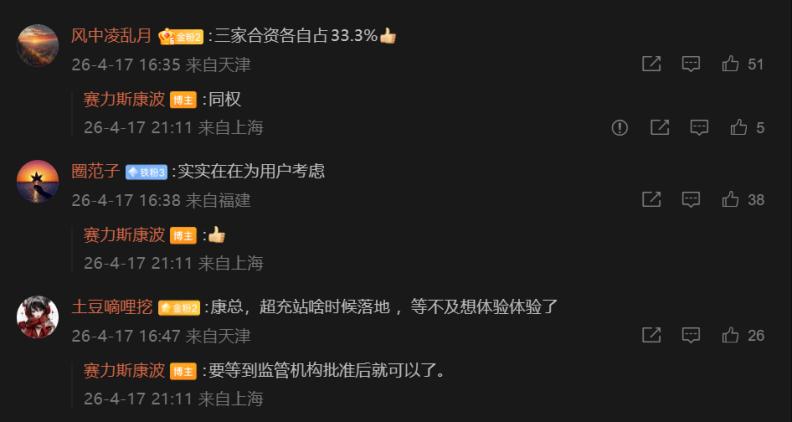
The warm response from drivers shows the urgent needs.
A Wenjie driver told Guangzhui Intelligence: "Before, I always had to check at the charging station if there were any available stations. Now I can make a reservation via my phone and just go there, which saves me a fruitless trip." When asked why he doesn't like to go to public charging stations, he said: "Often I have to 'compete with others for a charging station'. My car supports fast - charging, but when the power is split, it becomes 'slow - charging'."
After Wenjie joins Yianqi, the charging experience of Wenjie drivers will be greatly improved.
Firstly, joining Yianqi means that Wenjie users will have the same luxury charging advantages as BMW and Mercedes - Benz drivers, including reserved charging spots and priority in power allocation.
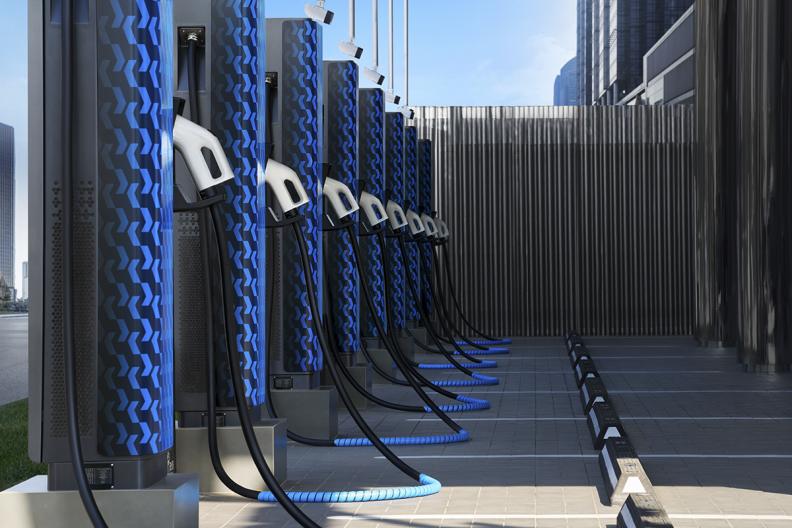
There will also be a significant improvement in charging efficiency. It is known that Yianqi only uses pure liquid - cooled fast - charging stations, with a rated power of 600 kW and a maximum current of 800 A, which support intelligent dynamic power allocation. Simply put, each station at Yianqi's locations is a fast - charger. With real - time vehicle verification in the cloud, the station can allocate power to high - power - demand vehicles to ensure that its own users receive "VIP" treatment preferentially.
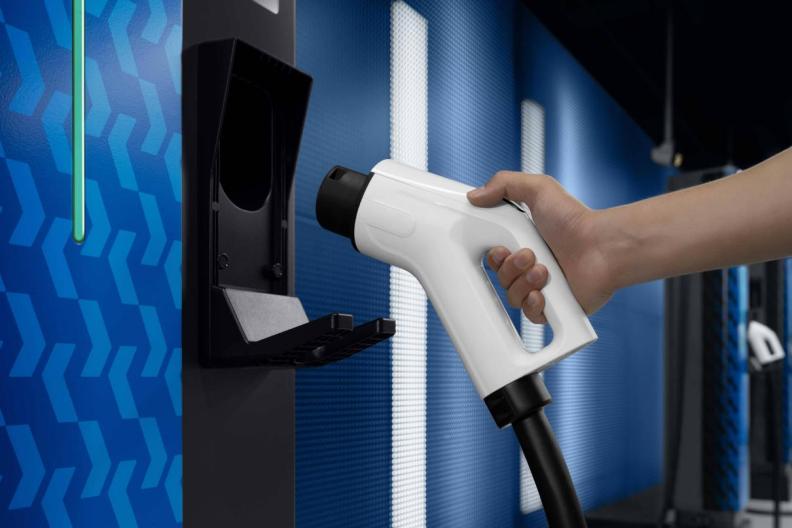
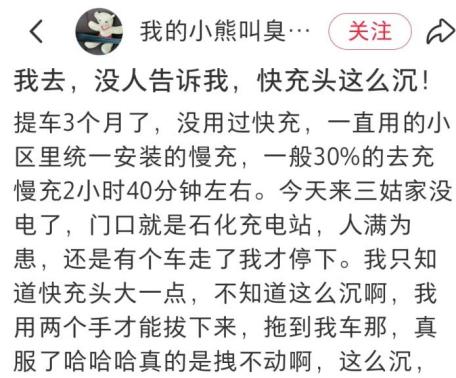
Notably, the chargers at Yianqi's stations also have some improvements. For example, the charging adapter has a lightweight design and only weighs 3.15 kg, so that even women can hold it with one hand. On social media, there are often complaints that "the adapters at some charging stations are too heavy and the cables are too stiff".
More importantly, Yianqi's station construction strategy targets users' living spaces. They will be preferably built in the core commercial areas of cities, established shopping centers, business districts, and main roads, such as in Beijing Wanda, Blue Harbor, Guomao, and Chaoyang Joy City. Wenjie drivers can also go shopping, eat, or work while charging. The philosophy is: "Where the drivers are, there is the service."
"Actually, I always go to the same places, to work on weekdays and on weekends to the courses I book for my child in a shopping center. The most important thing is that parking and charging are convenient," a driver told Guangzhui Intelligence.
In summary, after using Yianqi's service, Wenjie users will not only have a faster charging speed, but there will also be a leap from "usable" to "easy to use".
However, some Wenjie drivers are worried that the service quality of Yianqi might decline if suddenly so many new users join.
The answer is that there is no need to worry too much. Yianqi's service capacity has already been thoroughly tested during the Chinese New Year in 2026. According to Yianqi's data during this year's Chinese New Year, Yianqi's fast - charging has served a total of over 70,000 users in 37 cities and at 478 stations across China, completed over 90,000 charging orders, and achieved a total charging volume of 3 million kilowatt - hours. Especially during the peak return travel times on February 22nd and 23rd, the charging volume on these two days exceeded 300,000 kilowatt - hours. Such operating data should reassure new users.
Energy charging is a compulsory course in the second half of the luxury car competition
Actually, building charging stations is not a very profitable investment for automobile manufacturers.
According to the industry statistics of the China Charging Alliance, the average utilization rate of public charging stations in the fourth quarter of 2025 was only 6.2%. The utilization rate of normal charging stations is not high. But the cost of building fast - charging or large - scale stations is about 2 to 5 million yuan, which results in the payback period of the project usually being over 5 years, and some even 8 to 10 years.
Therefore, from a commercial point of view, the construction of differentiated charging stations for automobile manufacturers should actually be regarded as "operating costs", not as a "profit - making project" aiming at maximizing profits. One can even say that the decision of whether to build its own charging stations or not shows how much a brand is willing to care for drivers.
Then why did Wenjie decide to join Yianqi? Behind this decision is the intention to offer users a better usage experience after buying the car.
Firstly, energy infrastructure is one of the main reasons why the Chinese intelligent car market is leading globally. A major reason for the low penetration rate of electric vehicles in the United States is also the lack of energy infrastructure. According to the statistics of Cui Dongshu, the general secretary of the China Passenger Car Association, the penetration rate of electric vehicles in China in the fourth quarter of 2025 was 49.3%, while in the United States it was only 7%.
Therefore, during the entire phase of automobile electrification, it has been quickly recognized that energy - charging infrastructure is essentially a driver for sales volume. After all, users can only drive safely when they can charge at any time. For automobile brands, this means that users are more likely to buy brands that offer convenient energy charging. Energy infrastructure is the key to enhancing brand loyalty.
"Before, I always thought that the brand should invest as much as possible in the car, because the product quality speaks for itself. But only after I bought a car did I realize how important charging stations are," a driver of a Chinese luxury intelligent car told Guangzhui Intelligence. An exclusive charging station can not only bring convenience but also a sense of brand pride.
But due to the high cost of energy infrastructure, a special partnership model has developed in the era of electric vehicles. Yianqi, in which Wenjie participates, is such an example.
In 2023, the two international luxury giants Mercedes - Benz and BMW decided to jointly establish Yianqi to improve the energy - charging infrastructure for luxury car drivers. With Wenjie's participation this year, Yianqi's potential will be further unleashed to offer its own users the same experience as global luxury giants.
Wenjie delivered over 420,000 vehicles in 2025. Among them, the top - of - the - line model, the Wenjie M9, delivered over 11,000 vehicles throughout the year. As a car priced over 500,000 yuan, the Wenjie M9 represents almost the pinnacle of Chinese ultra - luxury intelligent cars. It can be predicted that after Wenjie's participation in Yianqi, a large number of existing and new users can be expected. With the increasing use by more users and the expansion of stations, more Wenjie drivers can also enjoy the energy - charging services of global luxury automobile brands.
"Before, it was always said that my car was far ahead in terms of intelligence. Now I can charge together with Mercedes - Benz and BMW. I finally have a place that matches my status," a driver of a Wenjie M8 told Guangzhui Intelligence. For Wenjie drivers, the investment in infrastructure means a sense of respect and security.
Perhaps the cooperation in the era of intelligent cars should be open. When Chinese brands are increasingly "on the same page" as global luxury brands, this is proof of the successful high - end transformation process of Chinese domestic brands and their participation in setting global industry standards. At the same time, the in - depth participation in the development of green energy infrastructure also shows the responsibility and commitment of the Wenjie brand to the "dual - carbon" goal and the upgrading of energy infrastructure.
Conclusion
Building a luxury brand is more difficult than one thinks. Because luxury not only means that the product has many functions, but also that the user feels "important" in every driving situation.
And there are no shortcuts to creating "luxury".
In the R & D processes of international luxury automobile brands, there is a step called "Perceived Quality". In this step, an expert team (internal engineers + external users) must subjectively evaluate aspects such as appearance, feel, sound, smell, gap uniformity, operating feel, etc. to decide "whether it conveys a sense of luxury and quality". These difficult - to - quantify indicators can...