Der "Erbe" Tim Cook tritt als CEO zurück: Abgesehen von seinem Abschied hat er nichts mehr für Apple übrig.
Yesterday evening, Apple, the company based in Cupertino, California, announced that the current Chief Executive Officer (CEO), Tim Cook, will transition to Executive Chairman of the Board as of September 1, 2026; the current Senior Vice President of Hardware Engineering, John Ternus, will succeed him as the company's CEO.
Apple bids farewell to the Cook era as Hardware Vice President takes over as CEO
Apple has stated that this personnel change was unanimously approved by the board of directors and is the result of a "thoroughly considered long - term succession plan." For months, the public has speculated that Cook might step down, and Ternus was regarded as the favorite to replace him.
Apple will release its quarterly earnings on April 30. In after - hours trading, Apple's stock price fell 0.5 percent to about $271.
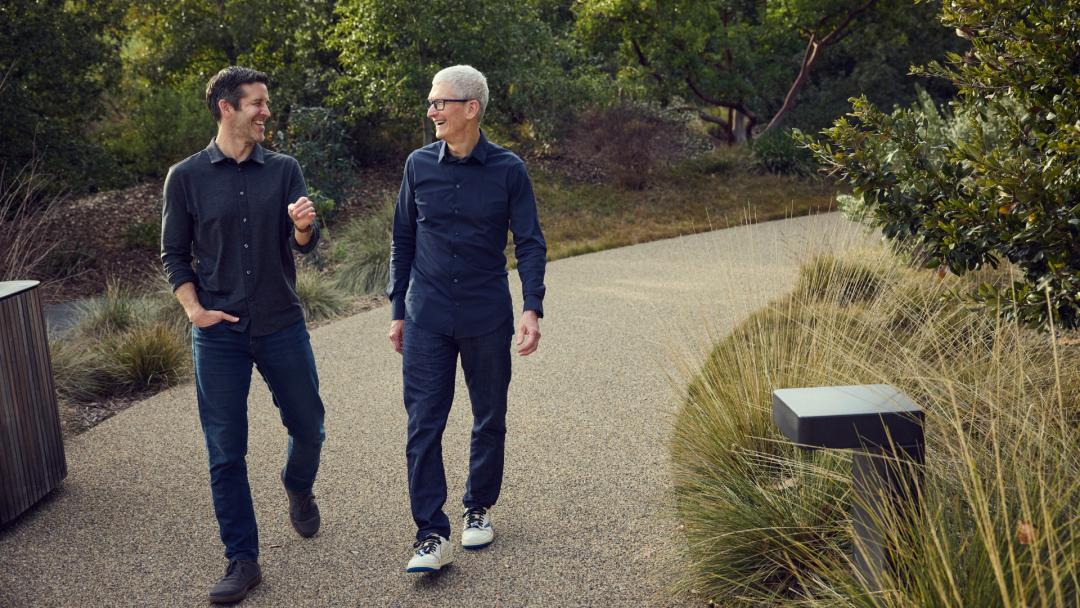
Before the official handover, Cook will continue to serve as CEO throughout the summer and work closely with Ternus to ensure a smooth transition. In his future role as Executive Chairman, Cook will still be involved in some corporate matters, including communication with global politicians.
Cook said: "It has been the greatest privilege of my life to serve as CEO of Apple. The trust placed in me to lead such an extraordinary company is an immense honor for me. I love Apple with all my heart, and I am truly grateful that I could work with a group of extremely creative, talented, and responsible colleagues. We have always been committed to enriching the lives of our users with the best products and services."
He also evaluated his successor, Ternus: "He has both the mind of an engineer and the soul of an innovator, as well as the qualities to lead a team with integrity and responsibility. His contributions at Apple over the past 25 years are countless, and he is the best choice to lead Apple into the future."
Ternus said: "I am infinitely grateful to be able to take on this task. My career at Apple has accompanied almost my entire professional life. I was fortunate to grow up in the era of Steve Jobs and develop under the leadership of Cook. Apple has changed the way people interact with the world and with each other, and I will continue to drive this mission forward."
Those who haven't followed Apple for a long time may only know Ternus from the highly - debated label of "Cook's successor." In fact, this 51 - year - old Senior Vice President of Hardware Engineering has been involved in the hardware development of almost all of Apple's core products over the past 25 years, from the first Mac monitors to the Vision Pro. His footprints can be seen in every significant stage of Apple's hardware development.
Ternus was born in California, USA, in 1975 and completed his bachelor's degree in mechanical engineering at the University of Pennsylvania. During his studies, he was a member of the university's swimming team. His technical career began at a virtual - reality device manufacturer called Virtual Research Systems, where he worked as a mechanical engineer for four years and was involved in the hardware development of VR glasses. This early experience later played an important role in Apple's Vision Pro project.
In 2001, Ternus joined Apple's product development team and initially worked on the development of external Mac monitors.
"Always assume that you are as smart as anyone else in the room, but never assume that you know as much as they do," Ternus said in a speech. "With this attitude, you can find both the confidence you need to progress and, above all, the humility to ask questions." Ternus recalled these words in a commencement speech at the University of Pennsylvania, which also reflect a core aspect of his thinking as an engineer and leader: the balance between confidence and humility.
Ternus' rise at Apple has been clear and solid. In 2013, he was appointed Vice President of Hardware Engineering and became the most important deputy to then - Hardware Chief Dan Riccio. Since then, he has led Apple's hardware projects for more than a decade, promoted the transition of Macs to self - developed chips, and supported his team in the development of the iPhone 12 series hardware and the M1 chip.
In January 2021, Ternus was appointed Senior Vice President of Hardware Engineering and officially joined Apple's executive team. He is now responsible for the hardware development teams of all Apple products such as the iPhone, iPad, Mac, Apple Watch, AirPods, and Apple Vision Pro. Since then, he has been behind the hardware development of every groundbreaking Apple product line.
One of the most important achievements in Ternus' career was leading the historic transition of Macs from Intel chips to Apple's self - developed M - series chips.
In 2020, Apple officially announced that the Mac product line would move away from Intel X86 - architecture processors and switch to self - developed ARM - architecture chips. This decision was not initially well - received externally - both chip development and the transition of computer architecture are huge projects that require a large amount of research and development investment and the support of developers.
Nevertheless, Apple's implementation was significantly faster than expected. Three years later, almost the entire Mac product line had transitioned from the X86 architecture to self - developed ARM chips. Almost every update of the M - series chips meant a multiple increase in performance and continuously raised the performance ceiling of the Mac product line.
At WWDC 2023, Apple presented the new Mac Pro with the M2 Ultra chip, marking the completion of the transition of all Mac products to self - developed chips.
This transition brought remarkable commercial results. The Mac product line with M - series chips achieved significant breakthroughs in both performance and energy consumption, which increased the sales of Macs and raised the market share year by year. This enabled the business segment to achieve positive growth even in a declining PC market.
These successes laid the foundation for the trust that was later placed in him when he took on the CEO position at Apple.
What has Cook brought to Apple in nearly 15 years as its leader?
The board evaluated Cook's leadership as follows: "He has made Apple one of the best companies in the world."
When Tim Cook took over the leadership of Apple from Steve Jobs in 2011, the public sentiment was clear: Doubts far outweighed expectations.
Jobs was a contemporary who changed the world, while Cook seemed more like an "inheritor."
But 15 years later, history has delivered an almost counter - intuitive result - Cook has not only preserved Apple but also brought it to an unprecedented height.
Looking at the numbers, Cook's achievements are almost flawless.
The market value has risen from $350 billion to $4 trillion, representing an increase of more than tenfold; the income has almost quadrupled; the number of installed devices has exceeded 2.5 billion. Behind these numbers lies the transformation of Apple from a "big product company" to a "global business model with an extremely stable structure."
Cook's most important ability was not to "invent the next iPhone," but to systematically reshape Apple's business model:
Transform one - time hardware income into continuous service income (Services)
Build an "ecosystem protection wall around the iPhone" with AirPods and Apple Watch
Promote the development of self - developed chips (Apple Silicon) to take control of performance and costs
He has made Apple more predictable and risk - stable and turned it more into a "money - making machine".
Another key aspect in the Cook era was the value system.
He has integrated the proposition that "privacy is a fundamental right" into Apple's product logic, which sets it in sharp contrast to the competition in the advertising - driven internet world.
He has promoted environmental awareness, accessible design, and diversity and inclusion. Topics that were not of central importance in the Jobs era have become corporate strategies.
As a result, Apple is no longer only regarded as a profitable company from the outside, but also as a "company with a stance."
In the face of stricter regulations worldwide and the increasing trust crisis among technology companies, this strategy has brought a high brand premium and a political buffer zone for Apple.
But this is exactly where the problem lies - Apple under Cook's leadership was too stable.
When the industry entered the wave of generative artificial intelligence, Apple was not at the center of the story like OpenAI, Google, or Microsoft.
It has continued to work on chips, end - devices, and ecosystem integration, but at the level of "intelligence itself" - the central productivity in the era of artificial intelligence - Apple was cautious and even conservative.
To some extent, this was the result of Cook's path dependence:
He was better at optimizing established systems than betting on uncertainty
He placed more emphasis on profit margins than on aggressive acquisitions
He was more focused on "product implementation" than on "technology paradigm leadership"
This has led to the fact that Apple has not created a "defining product" like the iPhone in the era of artificial intelligence. The Vision Pro tries to initiate the era of spatial computing, but it is more of a continuation of the hardware paradigm than a breakthrough in the field of artificial intelligence.
A few days ago, Apple's Senior Vice President of Global Marketing, Greg "Joz" Joswiak, and Ternus gave an exclusive interview to Tom's Guide in a program titled "50 Years of Apple." In this conversation, they answered the public's concern that Apple is "mediocre" in the race for artificial intelligence.
Ternus said during the discussion about artificial intelligence that he would describe it not as a "crossroads" but as an "early stage."
Ternus said: "We have been using intelligent technologies for years to improve our products and features. Generative artificial intelligence allows us to do even more. But this is not a sprint, but a marathon - we will invest in the field of intelligence over decades, not just months or years."
With these words, Ternus implicitly meant that Apple is not pushing for short - term goals but wants to build sustainable strength in the long - term competition.
Joswiak added: "Apple doesn't bring technologies to the market just for the sake of having technology. We think about how we can use technology to offer our users excellent products, features, and experiences. You have already seen many examples, such as real - time translation on AirPods. We want technology to come to you and improve your daily life - whether you are aware that you are using artificial intelligence or not."
He recalled that Apple initially didn't even use the words "machine learning" or "artificial intelligence," but "activity": "Your device can become active because it learns your habits. For example, when you stand at the bus stop in the morning and swipe the screen down, the bus app appears first - it knows when, where, and what you need."
When the concern that artificial intelligence could "kill" the App Store was raised, Joswiak replied with a smile: "The App Store is in great shape, and we receive a large number of excellent app submissions every day. Rumors about its death are highly exaggerated."
In a sense, Cook has made Apple an unprecedentedly huge business empire - it has an optimal supply - chain management, a precise marketing rhythm, and stable financial reserves. On the other hand, Cook has also set the boundaries of Apple.
Why is this the case?
A relatively sober conclusion is: He is the most successful "second CEO" in the history of technology, but possibly also a "man who cannot open the third act."
During his leadership, he has achieved three extremely important things:
He has prevented Apple from collapsing after Jobs
He has led Apple to a massive, systematic business peak
He has established a stable global order and value system for Apple
But at the same time, he has gradually brought Apple to a state of "optimal solution" - the company has almost no weaknesses, but it is becoming increasingly difficult to make real groundbreaking leaps.
In other words, Cook has made Apple the "strongest Apple," but possibly not the "Apple of the next generation."
Therefore, Cook's successor must be a completely different type of leader.
Why must the baton be passed now?
From the background of the successor, Ternus, it is clear that Apple is sending a clear signal: It is returning to a "product - and engineer - driven" approach.
Ternus is a typical hardware development expert who has long been responsible for the core product lines. This means that in the next phase, Apple may place more emphasis on product innovation, the deep integration of hardware and artificial intelligence, and more aggressive technological paths.
This is in sharp contrast to the Cook era, which was characterized by "operational optimization + ecosystem expansion."
In the past 15 years, Apple's success has been based on an extremely stable technology paradigm - with mobile internet at the core, through the integration of chips, self - developed operating systems, and hardware, it has created a solid ecosystem. In this system, Apple has taken an advantageous position in almost every key area, from the A - series and M - series chips, iOS and macOS, to the developer ecosystem around the App Store, forming a highly self - consistent growth model.
But the development of large models was so rapid that Apple couldn't react in time and was carried away by this wave.