Ein Volkswagen, drei Geschmäcker
For a long time, the impression of SAIC Volkswagen and FAW - Volkswagen was that they were almost identical. Passat vs. Magotan, Lavida vs. Bora...
Most customers don't really care which company manufactures the car when they buy a vehicle. They simply place an order at the nearest 4S dealer that offers the best discounts. After all, they are all buying a Volkswagen.
From 2026, when Volkswagen launched a comprehensive attack with new electric models in the era of Joint - Venture 2.0, the "copy - paste" method was finally abandoned.
At the Volkswagen Brand Night that took place a few days ago, the first production model of the ID.AURA series from FAW - Volkswagen, the T6, was officially presented.
When the new car appeared on the stage, most of the audience was surprised. Given the tradition of SAIC Volkswagen and FAW - Volkswagen of selling the same car under different names, people would normally have assumed that the first model of the ID.AURA series, similar to the ID.ERA 9X of SAIC Volkswagen, would be a large six - seater SUV.
However, in terms of size, the ID.AURA T6 is only a compact SUV and is targeted at the broad mass of family customers.
Although the ID.AURA T6 was still covered with thick camouflage, it can be seen from the body lines and surfaces that its design language is more conservative than that of the ID.ERA series of SAIC Volkswagen.
In comparison with the Yuzhong 08 of Volkswagen Anhui, the ID.ERA series in turn appears more conservative.
This may sound a bit confusing. In short: Within the last month, the three joint - venture companies of Volkswagen in China have each presented their electric models for the "era of Joint - Venture 2.0", and these models have completely different styles.
This has never been the case in Volkswagen's history. The Germans have broken the old habit, trust their joint - venture partners, and give them sufficient decision - making power. As a result, the audience could experience three completely different Volkswagen models. This is an inevitable result of the wave of electromobility and at the same time a new opportunity for Volkswagen to overcome old problems.
"Volkswagen will not put all its eggs in one basket. We remain open, learn continuously, and optimize ourselves to find the best way for the future. Of course, all our efforts are based on German craftsmanship and Volkswagen standards," said Bernd Rücker, CEO of Volkswagen China.
NO.1
The three joint - venture companies each have their missions
Can today's joint - venture automakers sell electric vehicles well?
The answer is yes. GAC Toyota and Dongfeng Nissan have already set a good example. As long as the products meet the standards of intelligent equipment and the prices are attractive, many consumers who have previously believed in the quality of joint - venture models will choose the electric models of the same brand.
Since its entry into China more than 40 years ago, Volkswagen has won over 50 million customers. Even if only one - tenth of them want to buy an electric vehicle, that results in an additional demand of 5 million vehicles. The task of winning over these consumers seems to have largely been transferred to FAW - Volkswagen.
In fact, FAW is the most stability - oriented of Volkswagen's three joint - venture partners. Therefore, the transformation process of FAW - Volkswagen is a bit slower, and the product definition and design are less aggressive.
The ID.AURA T6 can currently only be seen as a camouflaged vehicle, but the solid Volkswagen style can already be felt from the body shape and surfaces. One can also still recognize something from the current ID models.
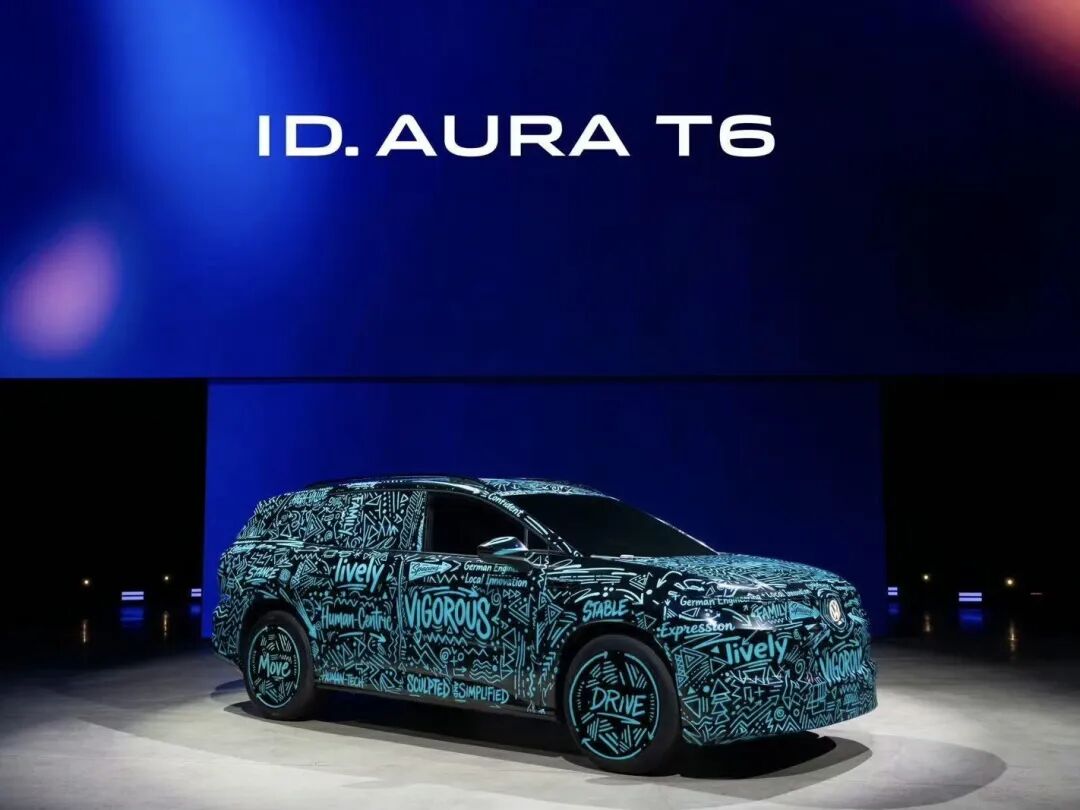
The camouflaged ID.AURA T6
According to the information released so far, the ID.AURA T6 is a pure electric vehicle. It will be equipped with the CEA electronics and electrical architecture, which comes from the cooperation between Volkswagen and XPeng. The intelligent driving assistance system comes from the joint - venture company Coreco, founded by Volkswagen Cariad and Horizon Robotics.
Not much is known about this vehicle so far, but one can already predict that it will be a typical Volkswagen electric vehicle. It must find the right balance between price, quality, and functions and hold its own in the mid - class family car market.
In contrast to the ID.AURA T6, the ID.ERA 9X of SAIC Volkswagen and the Yuzhong 08 of Volkswagen Anhui target the high - end market and want to compete on an equal footing with the new forces in the market. This is something that other major market joint - venture brands have not yet tried in the era of Joint - Venture 2.0.
It must be noted that although both vehicles target the high - end market, their orientations are clearly different.
The ID.ERA 9X of SAIC Volkswagen is the largest and most expensive SUV model that Volkswagen has ever produced in China (excluding imports). It has ventured into the fierce competition of the full - size SUV 9 - series and wants to make a mark in the high - end family car market.
The pre - sale price of this vehicle is between 329,800 and 379,800 yuan. The competitors in this price segment include the Lynk & Co 900 and the Li L8. It can also represent a niche competition to more expensive models such as the Li L9 and the Wenjie M9.
Looking at the product strength, the ID.ERA 9X is equipped with a robust and imposing design. It has retained both the features of the electromobility era and some of the German substance. In terms of equipment, it has an intelligent language model and a driving assistance system from Momenta. The hardware such as dual - motor all - wheel drive, two - chamber air suspension, and active rear - axle steering is also up - to - date.
Measured by the pre - sale price, the ID.ERA 9X has no obvious weaknesses and can keep up with its competitors in this price segment. However, the market for six - seater SUVs has been oversaturated with over a dozen new models in the last 1.5 years. Only two or three vehicles can sell over 5,000 units per month, and 80% of the competitors have failed.
In such a highly competitive market, it is not enough to have no weaknesses. There must be something special that sticks in the consumers' minds. The Gold - REX developed from the EA211 engine and the strict Volkswagen standards are technically the special features of the ID.ERA 9X. However, the understanding threshold for consumers is a bit high, and it is still unclear whether these features can be translated into higher sales numbers.
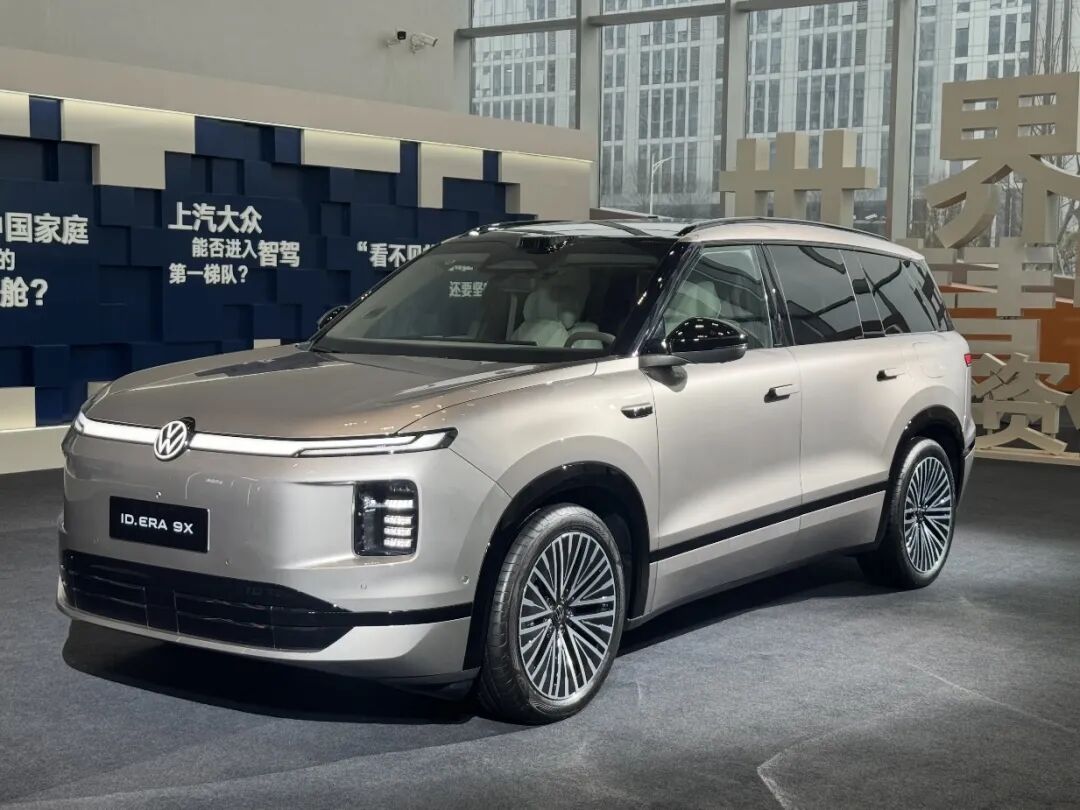
The ID.ERA 9X
In comparison with SAIC Volkswagen and FAW - Volkswagen, Volkswagen Anhui is like a blank sheet of paper without historical burdens. This allows Volkswagen to let its imagination run wild and explore future possibilities.
The Yuzhong 08 is actually the boldest production vehicle in Volkswagen's history. At first glance, it looks more like a product of a new brand than a Volkswagen. The "Smile - Line" design of the front, the narrow and upward - curved lights, the frameless doors, the hidden door handles, and the coupe shape completely break the previous mediocre and solid image of Volkswagen.
Even Tang Tingwan, CEO of Volkswagen Anhui, said: "When I saw the design drawing for the first time, I was very surprised." But then he thought it made sense. "Volkswagen Anhui has to be something special. If it were just a repetition of SAIC Volkswagen and FAW - Volkswagen, there would be no reason for its existence."
The mission of the Yuzhong 08 is to blaze new trails. It not only has an avant - garde design but also a computing power of 1,500 TOPS, an 800 - V silicon carbide high - voltage platform, and an intelligent driving assistance system developed in cooperation with XPeng that guides the driver from the parking lot to the destination.
With these features and a price between 200,000 and 300,000 yuan, the Yuzhong 08 wants to compete with the new market leaders such as the Zeekr 7X, the Tesla Model Y, the IM LS6, and the Wenjie M7 and at the same time present a new image of Volkswagen.
The market prospects of the Yuzhong 08 are still uncertain, but the courage to explore and surpass itself deserves respect at first.
NO.2
[Has Volkswagen finally reached the harvest time after 9 years and 80 billion yuan in investments?]
Volkswagen was one of the first multinational automakers to implement an electromobility strategy in China. According to incomplete statistics, Volkswagen has invested at least 80 billion yuan in the transformation to intelligent electromobility in the last 9 years since the establishment of the first joint - venture company for electromobility, Volkswagen Anhui.
What does 80 billion yuan mean? This is almost equivalent to the total loss of NIO in the last ten years, approximately the total research and development investment of leading new automakers in 4 to 5 years, and is enough to build 5 Tesla super - factories in Shanghai.
With this money, Volkswagen has invested in XPeng and developed the latest electronics and electrical architecture. It has founded a joint - venture company with Horizon Robotics to complete the local development of the driving assistance system. At the same time, it has set up a first research and development center outside the German headquarters and built a team of over 7,000 employees to make Hefei the "eastern Wolfsburg".
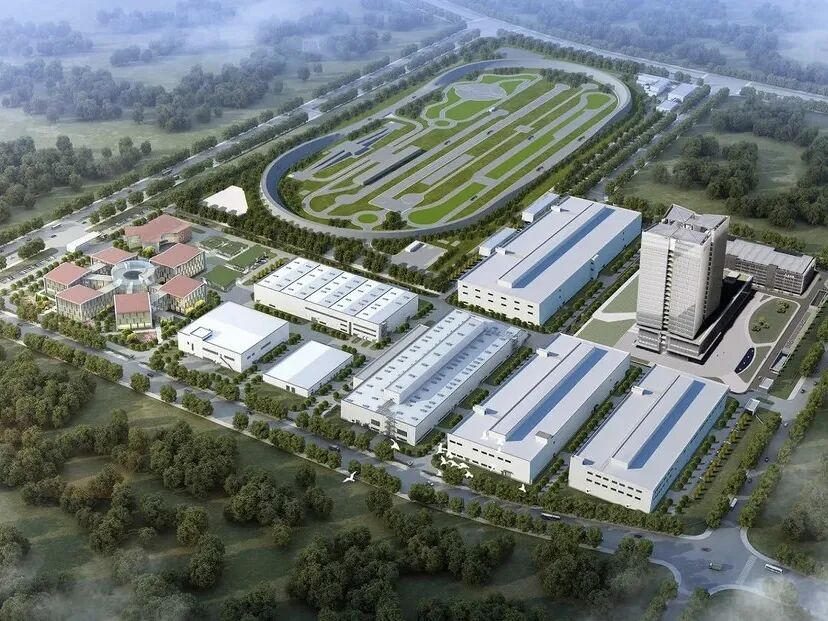
The Volkswagen VCTC research and development center in Hefei
From these investments, it can be seen that Volkswagen is very determined to venture into electromobility. However, the return on investment is not yet positive.
The failure of the early "gasoline - to - electric conversion projects", the weak sales numbers of the ID series, and the difficulties of CARIAD in China were expensive lessons for Volkswagen. These lessons also directly led to the departure of the former CEO of Volkswagen China, Herbert Diess.
From 2023, Volkswagen has finally learned its lesson. It gives up on self - developing all technologies and instead seizes the opportunities offered by Chinese technology companies such as XPeng and Horizon Robotics. At the same time, it has transferred greater decision - making power in research and development to FAW - Volkswagen and SAIC Volkswagen.
In other words: Volkswagen only opened the "era of Joint - Venture 2.0" from 2023, and the new joint - venture products will only enter the market in 2026. In the three years in between, it has managed with repairs and improvements of the old models.
Three years is not a short time. The data shows that the model change cycle of Chinese automakers has been shortened to 1.3 years. In three years, some Chinese brands have already carried out a complete product line conversion. Even in comparison with other joint - venture manufacturers, the market launch of Volkswagen's electric models is not particularly fast.
In the highly competitive Chinese automobile market, "speed" means a lot. Let's remember the time before the Auto China 2024, when Jia Jianxu, then general manager of SAIC Volkswagen (now president of the SAIC Group), said: "The range - extender models of SAIC Volkswagen will enter the market in 2026." At that time, there were not so many range - extender vehicles and no such large six - seaters. Today, when the ID.ERA 9X finally enters the market, the market is already oversaturated.
This slowness has to some extent made SAIC Volkswagen miss the first train. But Tao Hailong, the current general manager of SAIC Volkswagen, said: "SAIC Volkswagen has a'standard' to decide whether a vehicle can enter the market. Stable test resources, a comprehensive development and validation system - all this is absolutely necessary."
In front of this standard, time is not the most important factor. Therefore, it may already be very fast for Volkswagen to develop a new product line in three years.
They will surely pay a price for this "slowness". But perhaps in this slowness lies the secret of how Volkswagen can overcome crises again and again, and why SAIC Volkswagen and FAW - Volkswagen can still maintain a certain sales volume in the wave of joint - venture withdrawals.
NO.3
Conclusion
In 2025, Volkswagen's sales volume in China exceeded 2.69 million vehicles. Although the decline could not be stopped, China still accounts for about one - third of the global sales and is the second - largest market. In the peak year of 2019, this share was almost one - quarter.
In six years, Volkswagen has lost a market share of 10%, which is equivalent to the annual sales volume in South America or the two - year sales volume in North America.
For Volkswagen, the Chinese market...