Keine Preiswettbewerbe um das Billigste, keine Verfolgung von Luxusmarken. Keep hat sich zum Decathlon der neuen Ära entwickelt.
In 2025, Keep opened the gates to profit.
In the annual report for 2025 published on March 25th, this sports technology company achieved an annually adjusted profit for the first time.
Behind this success lies a long - planned strategic shift by Keep. The most remarkable signal lies in the structural changes in the consumer goods business. Although the consumer goods business declined to 780 million yuan in 2025 due to the elimination of inefficient operations, the gross margin increased from 31.7% to 35.8%.
In the first quarter of this year, the effects of this strategic adjustment became clearly noticeable. By March 15th, Keep had already achieved 100% of its first - quarter sales target for sports equipment. The total sales of equipment and outdoor products in the 2C segment increased by about 19%. Not only were the products sold out in all Chinese sales channels, but there was also a 366% increase in the US area on Amazon.
From "able to sell everything" to "selling the right things" - Keep redefines the value of sports consumer goods with a new logic. From these business changes, we can also see that the company clearly understands that in the era of stagnant competition, in business management, it's not only about speed but also about consumption.
1. "Shaping" the consumer goods business
Now is no longer the time to rush blindly forward.
This means that when we look at an annual report, the quality of profits is often more important than the increase or decrease in sales.
To put it vividly, in 2025, Keep deliberately "shaped" the consumer goods business. In recent years, the consumer goods business accounted for half of Keep's sales, but the product structure was not perfect: High - margin equipment and clothing coexisted with low - margin smart hardware and large devices. Although the latter contributed to scaling, the high investment costs, high logistics costs, and fierce competition also lowered the overall result.
Therefore, in 2025, Keep decided to do two things: First, stop the losses, and second, focus on specific areas.
Stopping the losses means actively reducing low - margin and low - turnover product groups. The large household appliances and bracelets in smart hardware were strategically reduced. The food business deliberately reduced products with low margins and high refrigeration costs. Focusing means directing resources towards high - margin and high - frequency sports equipment.
Wang Ning announced at the earnings meeting that the core margin of sports equipment increased from 40% to 55% in 2025, that of clothing from 45% to 60%, and that of some food groups even reached 70%. In terms of inventory, the inventory turnover times of sports equipment, food, and clothing were controlled to 30 - 50 days, 20 - 30 days, and 100 - 150 days respectively, and the long - tailed inventory was liquidated in 2025.
The result of this "shaping" was that although the sales in the consumer goods business declined, the product structure was optimized, which creates a lot of room for future development. Along with the optimization of cost management, the gross margin increased by 4.1 percentage points.
In stagnant competition, size does not mean competitiveness, but profitability is the protective wall. Keep no longer aims to "be able to sell everything" but begins to think about "what should be sold and what shouldn't". At this crucial point of overall success, the consumer goods business in a healthier form becomes an indispensable part of the corporate ecosystem.
In fact, the reason why Keep's consumer goods are becoming more and more "right" is that it no longer only looks at sales figures but at the people who "seriously do sports".
In 2025, the added value of the sports industry exceeded the GDP growth rate with an average annual growth rate of 10.5%. The data from the "Survey Results on National Fitness Activities in 2025" also shows that the proportion of people who regularly do sports increased to 38.5% in 2025, and the average sports expenditure of residents aged 19 - 59 increased by 38.1% compared to 2020.
Everyone knows that sports and fitness are an irreversible trend. But when the national fitness wave and the trend of sports consumption upgrading come together, a point is often overlooked: the structural change in consumption demand. When sports change from a "fashion phenomenon" to a "basic part of life", users neither need the most expensive products nor trust the cheapest ones. They need products that are reliable in terms of professionalism, sophisticated in design, and reasonable in price.
In the structural adjustments of Keep's consumer goods business, a particularly remarkable signal is that the sales share of the sports equipment category has increased to over 60%, which is 15 percentage points more than in 2024.
In the past, Keep's users were more like "beginners" who simply stuck to the app. But now, the user structure is changing.
The annual report shows that the average monthly active user number of Keep in 2025 was 21.8 million. Although the total number fluctuated a bit, the user structure improved significantly: The main losses were among the low - frequency sports groups driven by current trends, while the remaining core users are people with stable sports habits, especially outdoor specialists such as runners and cyclists. Users under 30 accounted for about 70% of the base, and these users have a good understanding of sports and growing purchasing power.
People who seriously do sports pay for "the right products".
The results of the first quarter of 2026 confirm this trend. Wang Ning said at the earnings meeting that the core categories such as yoga, muscle building and loss, and sports electronics achieved a year - on - year increase of 40% in the January - March period. The monthly sales on the TikTok platform increased by over 40% in the first quarter compared to the previous year, and the sales on the platforms Tmall, JD.com, and Pinduoduo increased by 20%, 29%, and 40% respectively.
When users change from "casually doing sports" to "seriously doing sports", the demand for equipment also increases from "it works" to "good, professional, and high - quality". Keep predicts that sports equipment will achieve a 20% growth in 2026.
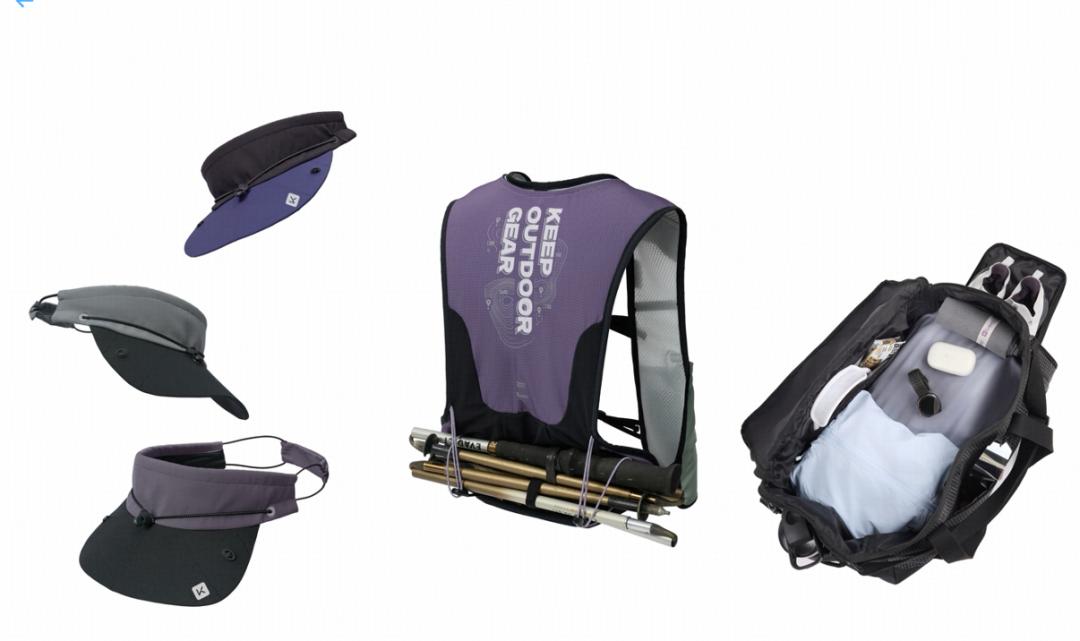
There are also positive signals in foreign markets. Keep's yoga mats have risen to the top 10 in the US category on Amazon, the yoga blocks to the top 10, and the yoga balls to the top 20. The sales in the first quarter increased by 366% compared to the previous year. Keep's management announced that the foreign consumer goods business could achieve a GMV of nearly 100 million yuan in 2026 and thus become a new growth engine.
Developing products for the core target group is the right way.
2. Keep becomes the "new Decathlon"
If we understand Keep's strategy, why should core users choose Keep?
In other words, what ecological niche do Keep's consumer goods occupy in the market? Wei Zhe, the chairman and founder of Joy Capital, once expressed an idea: In the era of stagnation, a brand should shift from the "cost - benefit ratio" to the "benefit - cost ratio".
The so - called cost - benefit ratio means that if my performance is the same as that of the competition, I can only compete on price and sell cheaper. The benefit - cost ratio, on the other hand, means maintaining the price, not engaging in price comparison, and winning the market by significantly improving performance (design, professionalism, emotional values).
Keep's strategic shift in the consumer goods business in 2025 can be regarded as a victory of the "benefit - cost ratio".
What does this mean?
Have you noticed that in the sports market, the upper and lower limits of consumption are very clear and stable? Upward, premium brands like Lululemon and Arc'teryx not only emphasize the products but also the social premium value and brand trust. Downward, there are many unnamed brands that sell extremely cheaply and have little to offer in terms of professionalism.
Keep has inserted itself precisely into the niche of "professional sports basic products" and is looking more and more like Decathlon.
Take the "Cloud - Sense - Square Dumbbell" (the same model as in Sun Yingsha's course) released in March this year as an example. Keep didn't try to compete with unnamed brands at 9.9 yuan including shipping but maintained the price for professional equipment. However, in terms of design, ergonomic grip, and connection with content, it offered an experience far beyond products in the same price range.
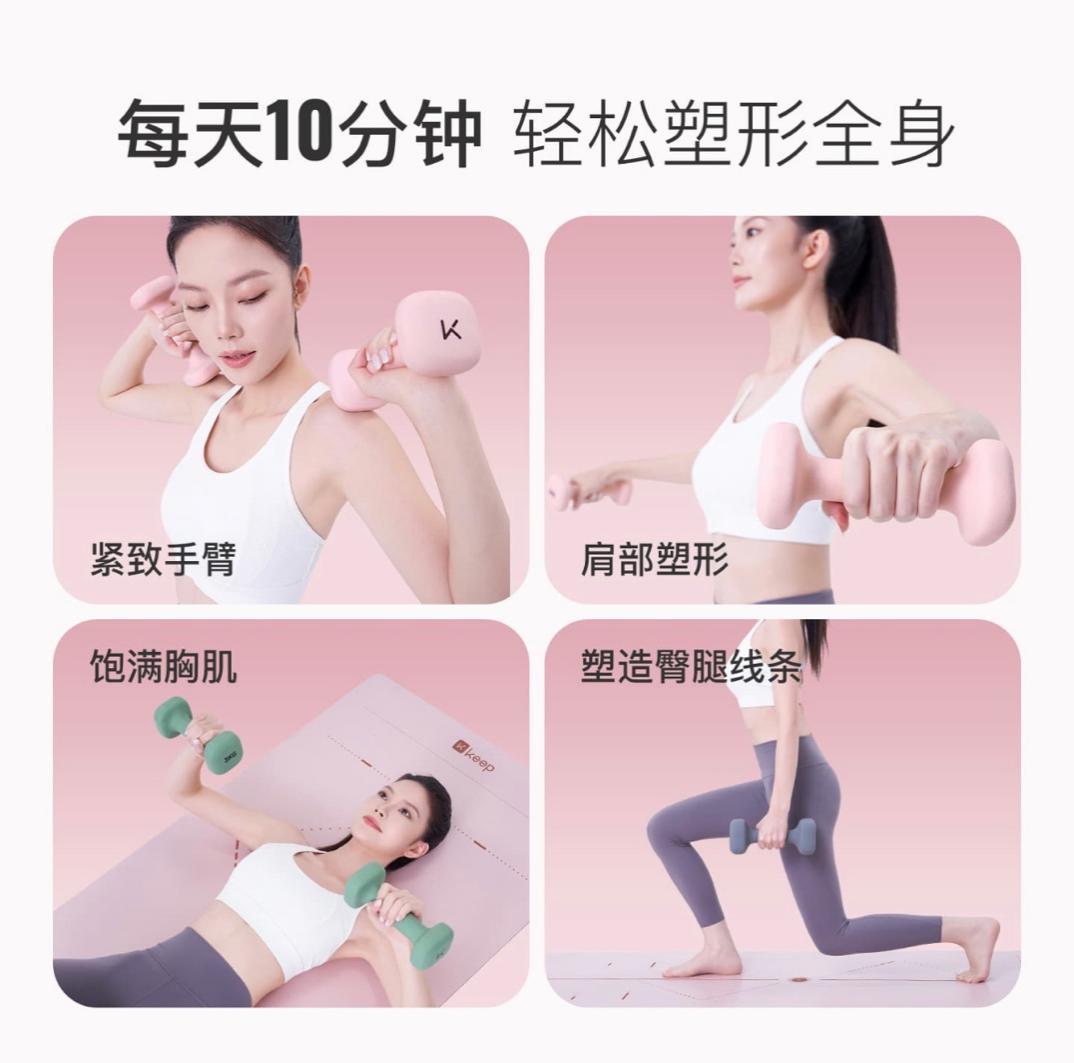
This is the "benefit - cost ratio": I'm not necessarily the cheapest, but in this price segment, I have clear advantages in terms of professionalism, brand loyalty, and accompanying content. This "two - way compatibility" strategy has enabled Keep to win the middle - target group, which is looking for "both professionalism and cost - performance", in the wave of rational consumption.
And the reason why Keep can do this lies in its business model.
The purchasing decision for sports consumer goods often occurs between the "awareness of sports" and the "start of sports", and Keep precisely covers the entire process of users from "wanting to do sports" to "finishing and sharing the training".
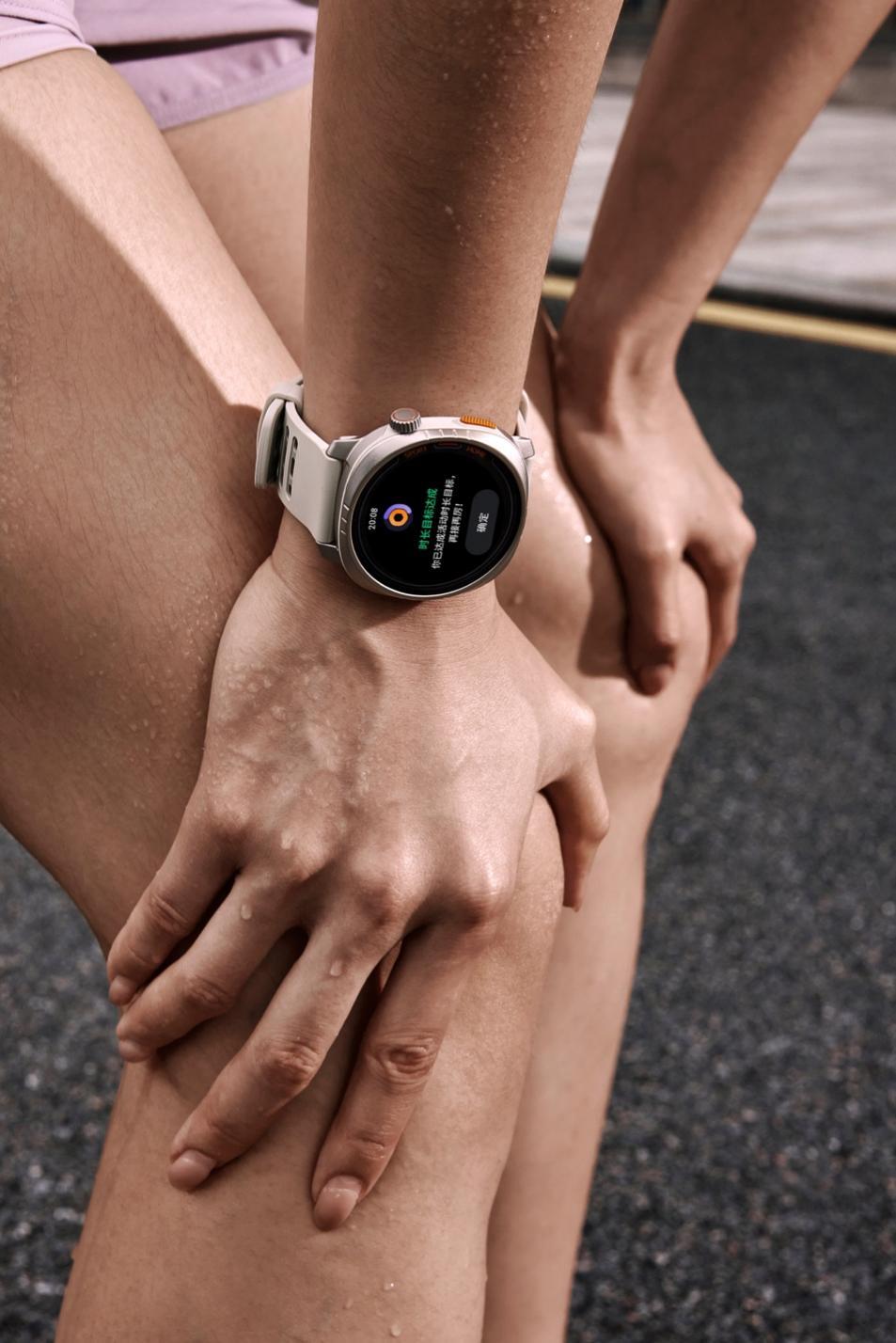
When a user has completed a training in the Keep app, the system can recommend suitable equipment based on the sports data. If a user has completed strength training three times in a row, Keep can send a discount message. When a user starts running, the battery life of the watch, the shock absorption of the running shoes, and the sweat - wicking of the clothing become natural needs.
Keep's consumer goods business is essentially a precise translator that converts users' sports data into consumption demand. The 14 billion sports records and 700 sports indicators collected in the app ultimately lead to one result: It better understands what users need.
Therefore, Keep's products can solve users' real problems. For example, the soft rubber kettlebells that don't damage the floor and the ergonomically designed push - up stands are small but crucial improvements compared to traditional models. These improvements are not about "functional parameters" but about the details of the user experience in real - life usage situations.
Moreover, there is a deep connection between products and content. The success of the Cloud - Sense - Square Dumbbell is related to the release of Sun Yingsha's course. Users don't just buy "a dumbbell" but "the same training experience as Sun Yingsha". This "content + equipment" cycle is Keep's core advantage compared to pure sports brands.
By actively eliminating non - core businesses, Keep has got the opportunity to develop real "benefit - cost ratio" hits. And the sold - out situation of products like thicker fitness mats in all sales channels shows that users accept these "professional basic products".
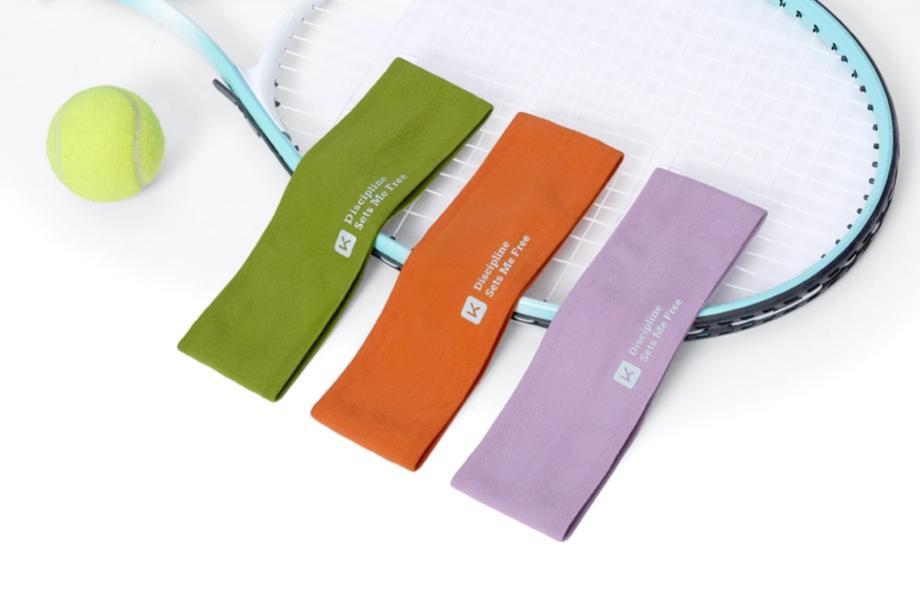
In 2026, there is still more room for the development of this business, as the equipment category continues to grow, the foreign business expands, and new markets such as bicycle equipment, pickleball and tennis rackets, and the youth brand are explored.
In the era of stagnation, it's either moving forward or backward. But for Keep, which has found the right rhythm, this marathon has just reached the acceleration phase.