Im Jahr 2026 tauchte das am schnellsten zusammenbrechende KI-Unternehmen auf.
There is now the fastest - failed AI startup in 2026.
The protagonist of this story is a young AI interaction game platform named "Mujian". In early March, the company officially announced that it had completed two rounds of financing in the millions - dollar range.
Like most AI startup projects, it has a founder with an impressive resume, and the investors are all well - known figures in the gaming industry, such as the vice - president of NetEase and the former CEO of Moonton, etc.
According to common practice, after the release of the financing news, there will inevitably be a series of reports, promotions, and advertising campaigns to accelerate the next round of financing. This is a normal practice in the financing industry.
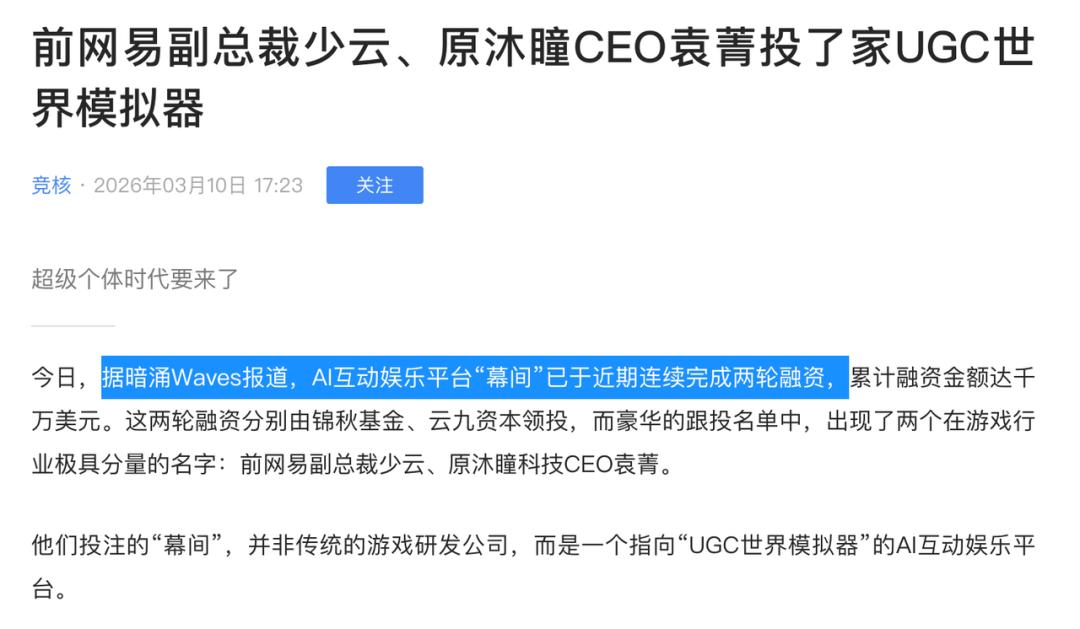
▲ Media reports on the financing of "Mujian"
But no one would have thought that just one week after the official announcement of the financing, this rising startup star took a 180 - degree turn.
From around the 16th, numerous posts began to appear on the Xiaohongshu platform, criticizing and warning against "Mujian". The authors of these posts were the creators and users of the platform.
They suspected that "Mujian" was plagiarizing, exploiting the creators, and that the platform had security risks. Under the huge wave of public opinion, many players and creators fled in panic.
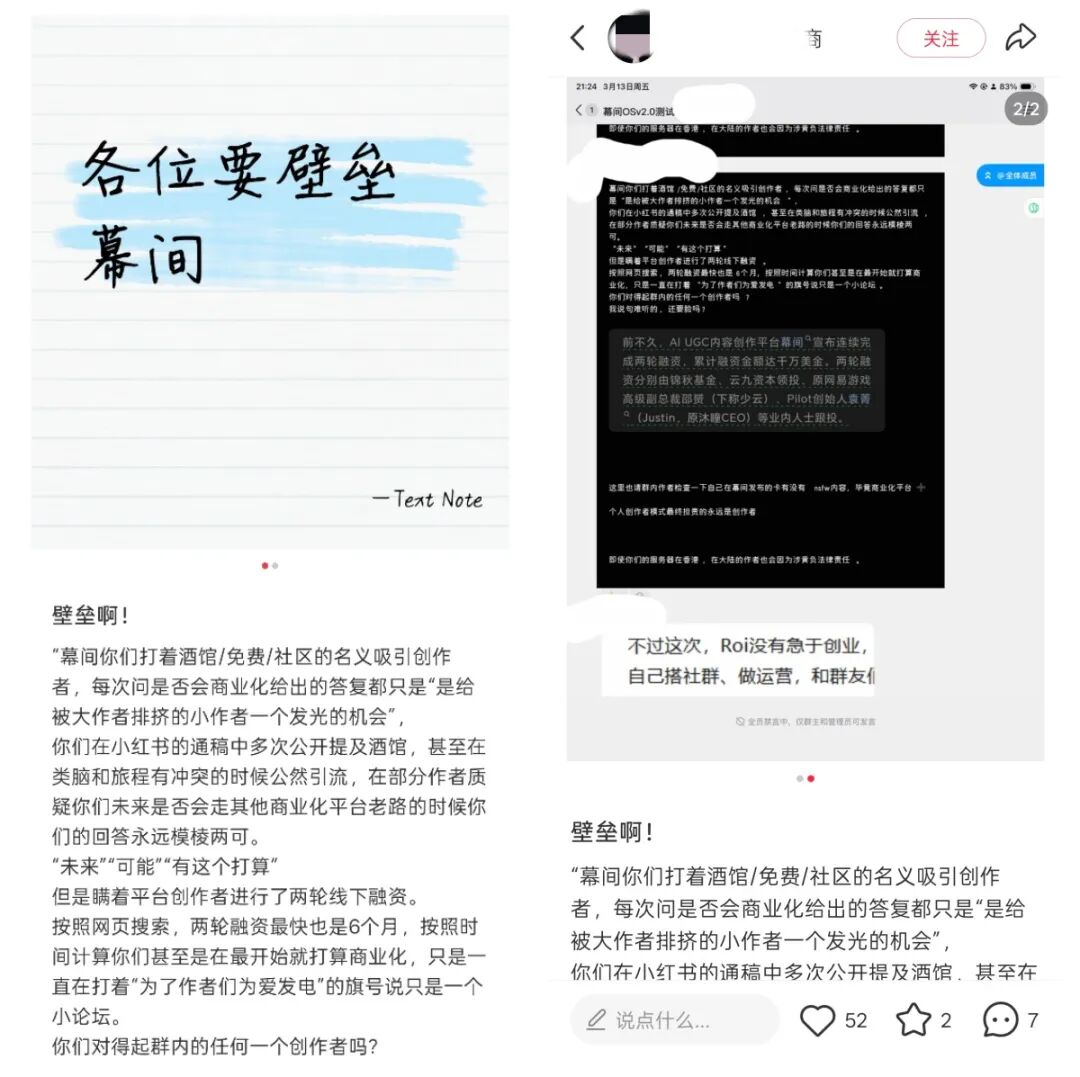
▲ Players warn on Xiaohongshu about "Mujian"
Out of curiosity, we began to investigate what was the reason for such a big gap between the young platform and the players.
The result actually left us speechless, because the mistakes made by "Mujian" were quite common in the entire AI startup wave. Even large companies and corporations were not exempt, and "Mujian" was just a tiny ripple in the storm.
Financing, Fraud, and Stabbing in the Back
To understand why the players were so strongly against "Mujian", we have to start from the positioning of this platform.
According to the official statement, it is an AI interaction content community platform. Simply put, users can create games on this platform with the help of AI tools and then share them with other users for testing.
The core game principle originally comes from a foreign community called SillyTavern (commonly referred to as "Tavern" in China). This is a completely open - source frontend tool. Users can use SillyTavern (Tavern) to create their favorite characters and connect them to a large model to bring the characters to life and then chat with each other.
Essentially, it is a kind of game principle like virtual lovers, role - playing, or interactive storytelling.
Since SillyTavern (Tavern) is completely open - source and supports private device installation, it is very playable and has a quite large content scope. The players on this platform share content with each other and work out of love for the cause. This has led to the formation of a very stable and large player community around SillyTavern (Tavern).
There are also many such players in China, but Chinese players face some problems.
First of all, playing SillyTavern (Tavern) requires a considerable technical threshold. Even the official emphasizes that it is designed for "power users". As a result, only a few Chinese players can play SillyTavern (Tavern).
Secondly, although there are many alternative platforms for SillyTavern in China, due to problems such as content scope, these platforms often have a short lifespan. Those with a longer lifespan are either expensive or have a limited content scope.
So, the Chinese SillyTavern community lacks a stable foundation, and "Mujian" has targeted this problem.
When "Mujian" was first promoted in China, the main theme was the label "Tavern - like". Even in the early stage, to collect players, the established community was named "Tavern Learning Group".
At the same time, "Mujian"'s advertising strategy has always been community - positioning and a free platform to encourage creators to create games and stabilize the player community.
And these two points have also laid the foundation for the conflict between the players and "Mujian".
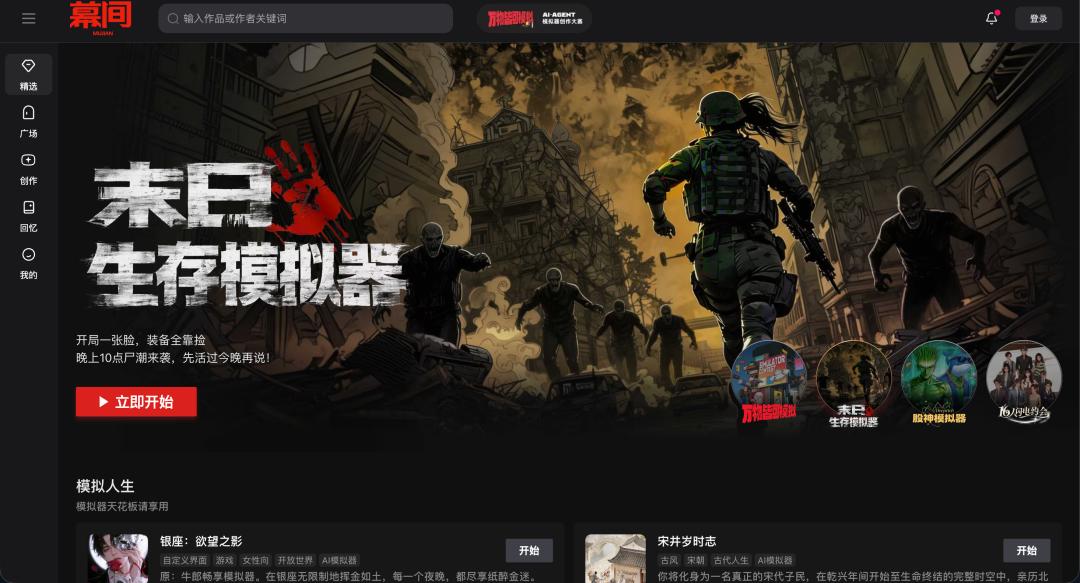
▲ The official website of "Mujian"
Of course, the trigger was the release of the financing news. Many players didn't feel happy about the platform but rather betrayed and insecure when they saw this news.
There are two key factors here:
First of all, since it is a UGC community (user - generated content), like SillyTavern, most of the content comes from the players. "Mujian" then uses this content to attract new players and creators.
The players actively contributed content to the platform because they thought that "Mujian" was an open - source platform like SillyTavern, and they were willing to work out of love for the cause.
But when the news about "Mujian"'s financing spread, things changed. The creators believed that "Mujian" was using their painstakingly created content as assets and monetizing it with the investors. So, this was felt as a betrayal by the creators.
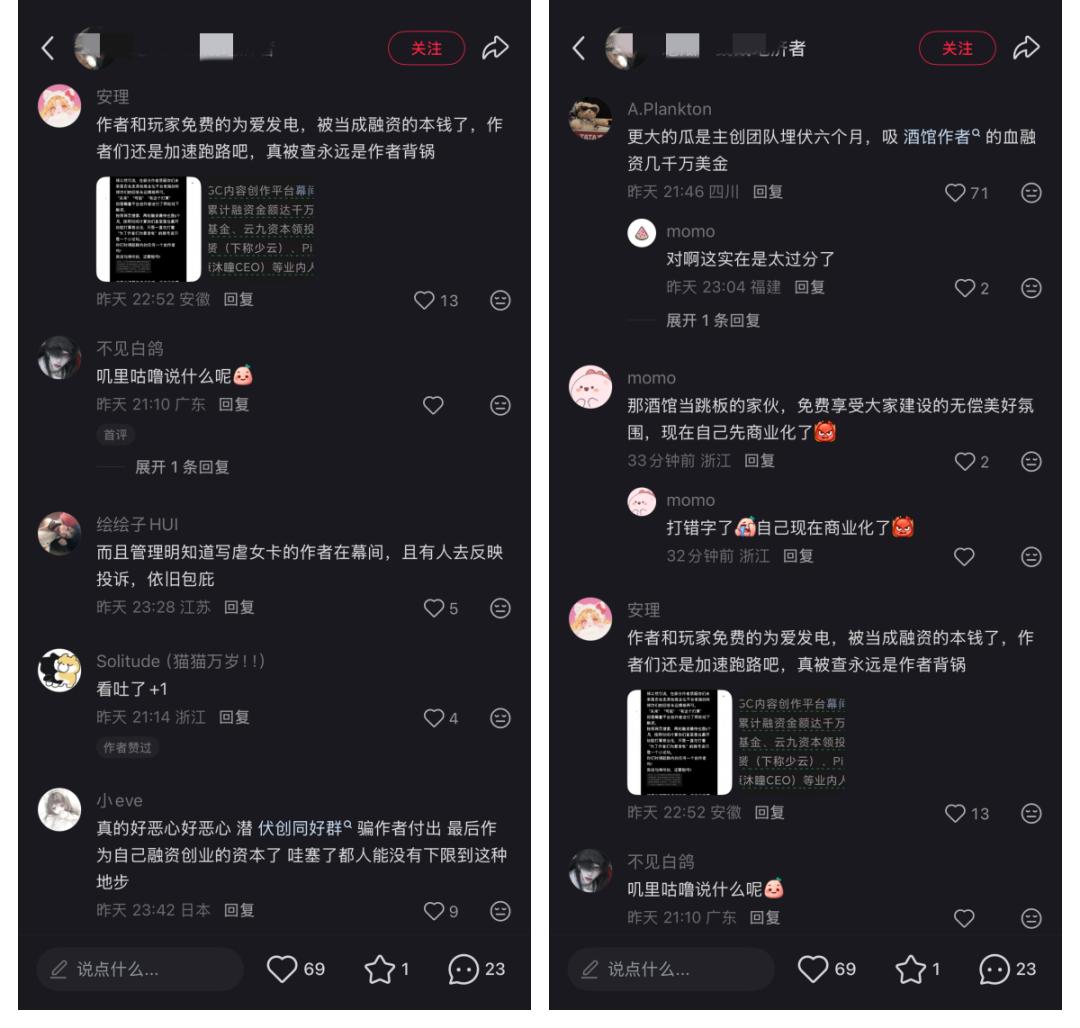
▲ Players complain on Xiaohongshu about the financing of "Mujian"
In particular, after the players expressed their dissatisfaction with "Mujian", "Mujian" deleted the posts and disbanded the player groups to destroy the evidence and interrupt the players' communication. This made people even more angry.
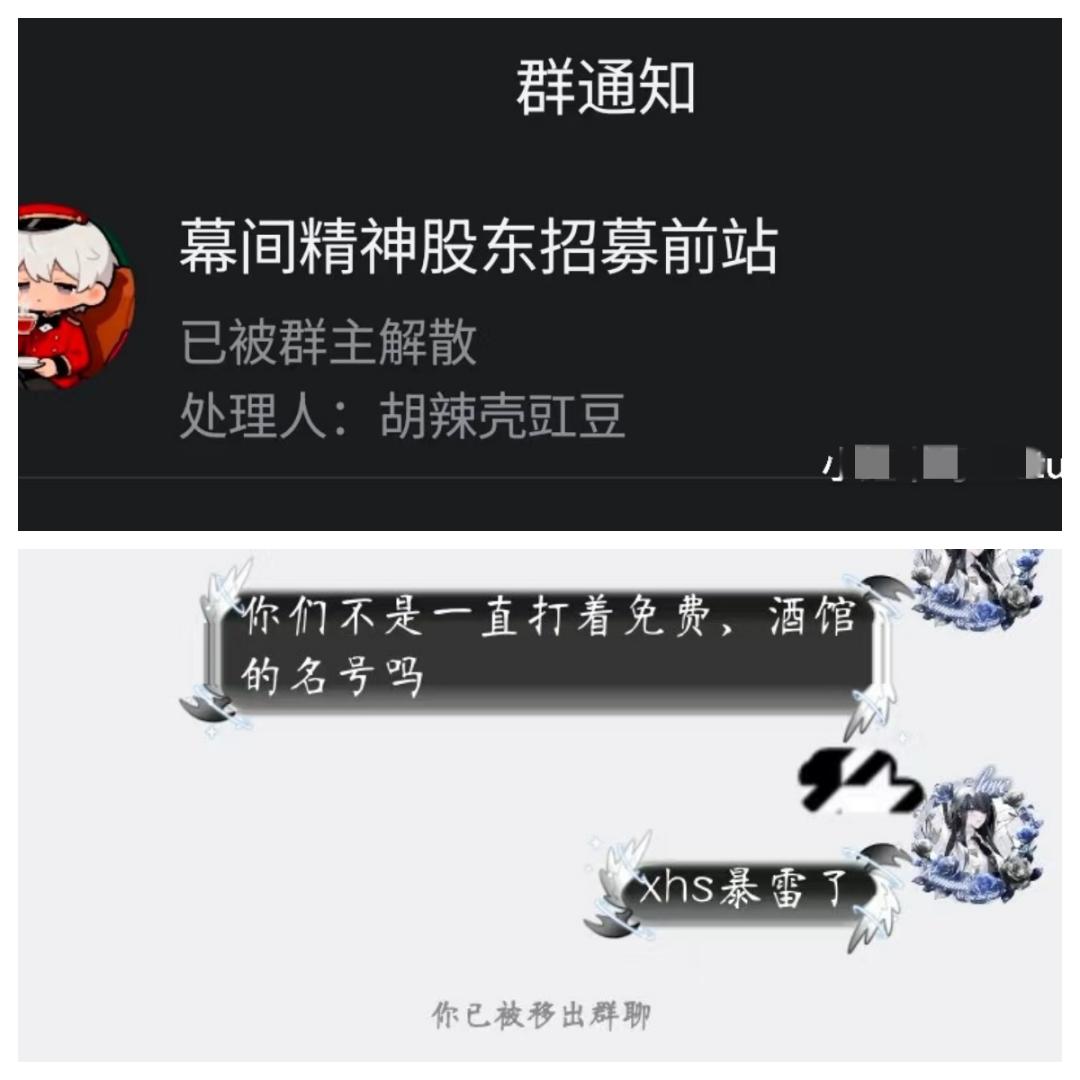
▲ Players show the disbandment of the "Mujian" group
Many users of "Mujian" repeatedly emphasized in the Xiaohongshu posts that they had repeatedly asked "Mujian" if there were any plans for commercialization, but "Mujian" always took a vague stance, neither admitting nor denying. Even "Mujian" charged the creators for the API. The creators describe it as "bringing the feed themselves to turn the mill".
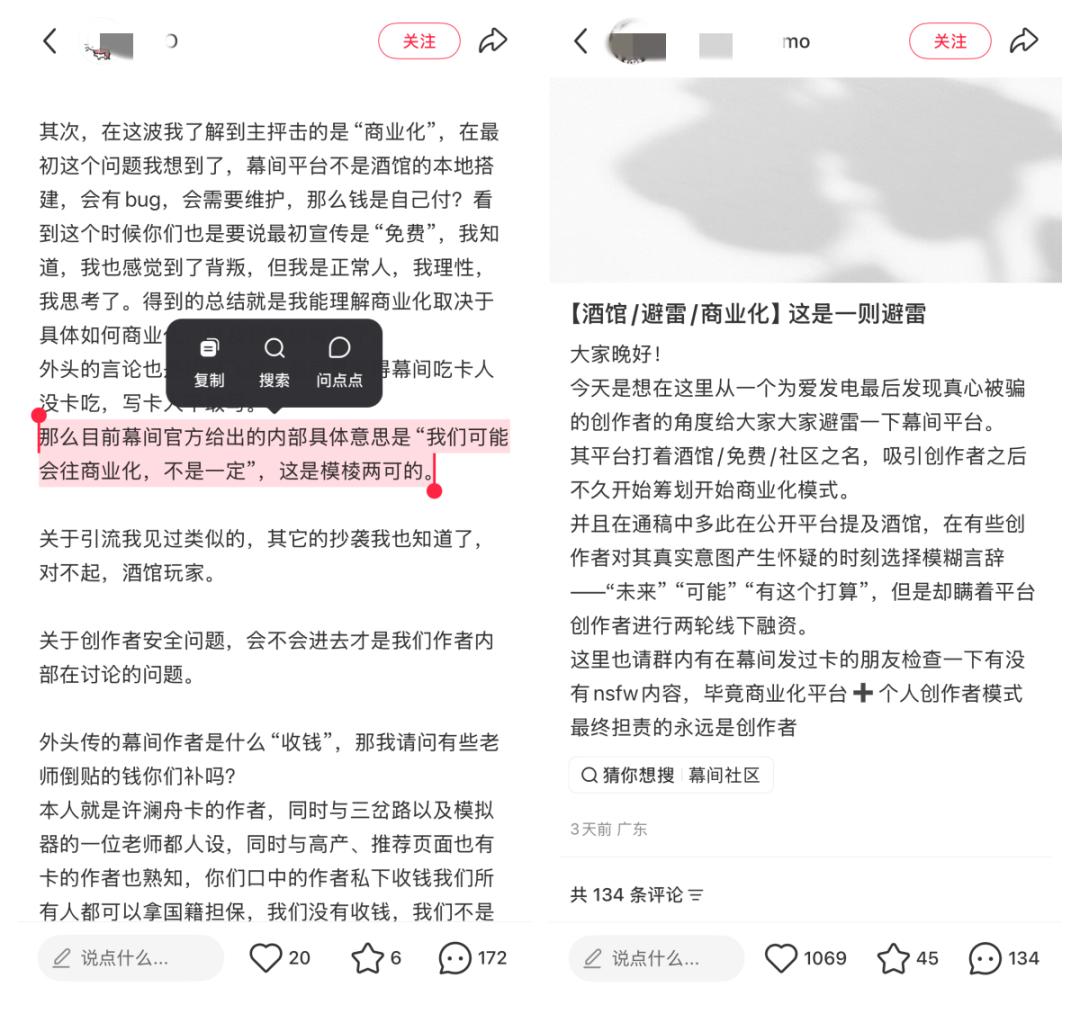
▲ Users show "Mujian"'s vague stance on commercialization before financing
Secondly, as we mentioned before, there are marginal cases and even pornographic content in many of SillyTavern's contents. The commercialization of the platform has worried the platform's creators that content review could put them at legal risks.
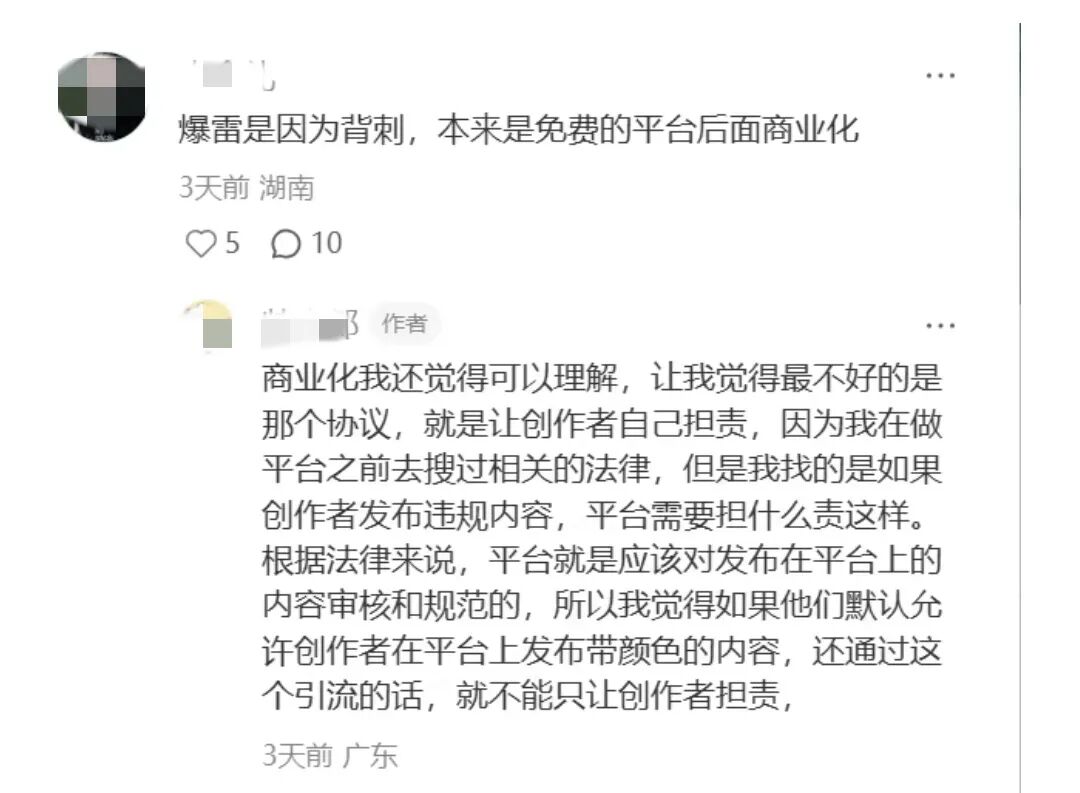
▲ Players complain that "Mujian" holds the creators responsible for content violations
In particular, some creators have stated that "Mujian" has made the creators sign a liability waiver agreement stating that all marginal cases and pornographic content have nothing to do with the platform. On the other hand, "Mujian" still attracts new players with this content.
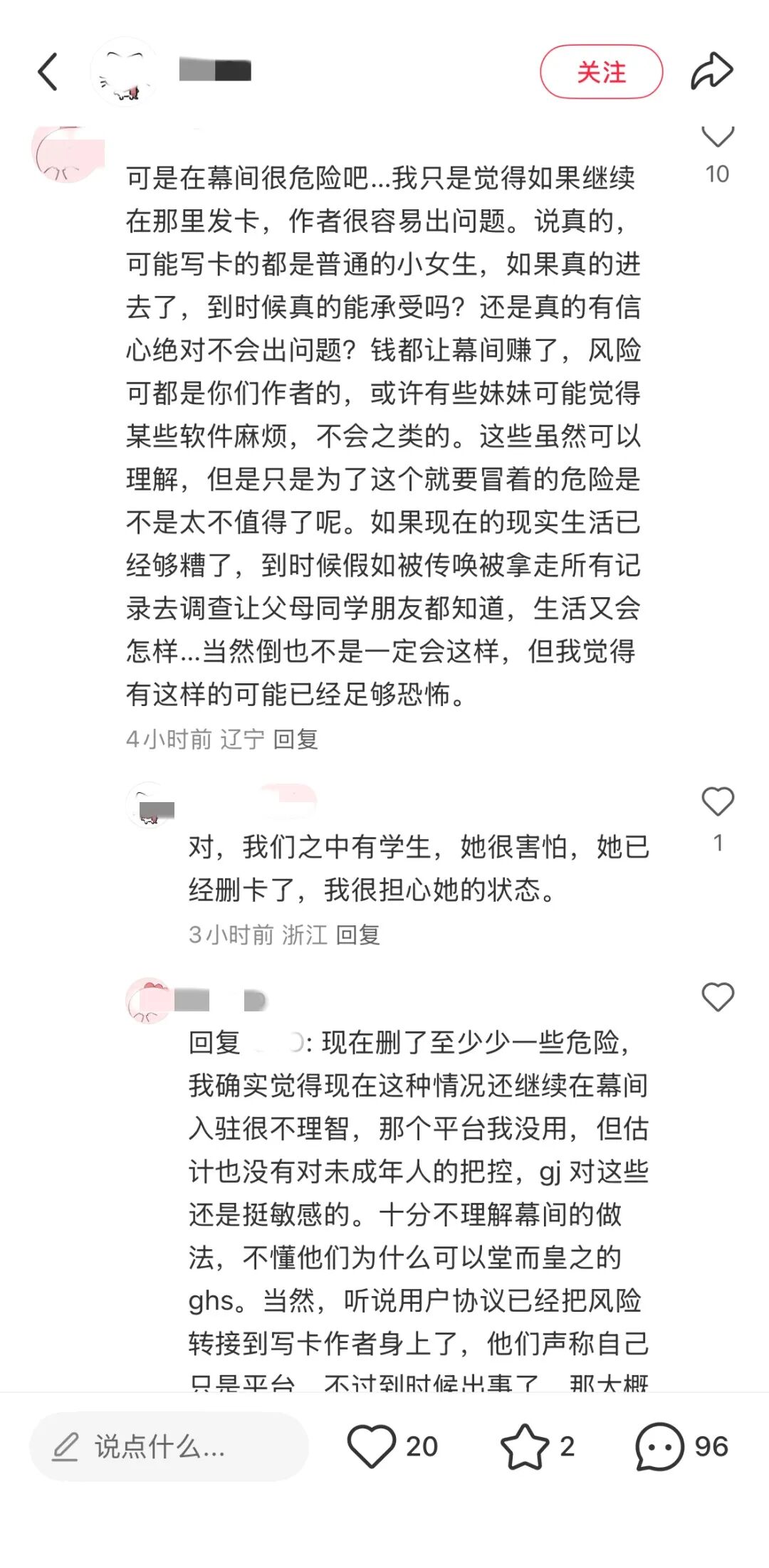
▲ Players complain that "Mujian" transfers the risks to the creators
All these actions have further widened the gap between the platform and the players.
In particular, recently, netizens have also accused "Mujian" of copying the source code of SillyTavern and stealing content from the Tavern platform in various ways. Although it is difficult to determine the truth of these accusations, after the emergence of public opinion, people are no longer so interested in the truth.
Plagiarism - the trademark of AI startups?
To be honest, when looking at the whole process of "Mujian"'s failure, it may seem absurd to some. After all, the company was founded to make money, and it seems unreasonable that players want to prevent the platform's commercialization.
But there are surely people who can understand it, because "Mujian" has taken a vague stance from the beginning, which has misled many players. So, it is understandable that it is criticized.
But this is not what we want to discuss. What we really want to discuss is: behind the story of "Mujian" lies the irreconcilable contradiction between technology disclosure and commercialization in the AI era; it also reflects the ignorance of commercial actions (entrepreneurs) towards copyrights and the work results of content creators.
This problem is not an isolated case and has almost become the trademark of AI startups in this era.
An earlier example is OpenAI's shift from open - source to closed. The legal dispute between OpenAI and Musk has been going on for years and has no result yet.
Recently, the departure of Lin Junyang, the former leader of Alibaba's Qianwen model, has triggered intense discussions in the open - source community about whether Qwen would become more closed and commercial. After all, Qwen's rapid growth is due to the utilization and fine - tuning by global developers in the open - source community.
This problem was only calmed down to a certain extent when Alibaba's leadership clearly stated that Qwen would continue to pursue the open - source approach.
Similarly, during the OpenClaw euphoria recently, Tencent launched nearly ten different versions of cancer - related things in a short time. This has led Peter Steinberger, the founder of OpenClaw, to publicly accuse Tencent's AI platform SkillHub of "plagiarizing" his open - source project ClawHub. He claimed that the other side had massively collected data without any support, which had led to the server costs rising to five - digit dollar amounts.
