After the "price war" loses its effectiveness, will high-level intelligent driving become the new anchor point in the automotive market?
The automotive market in early 2026 can be described with one word - sluggish.
Data from the China Association of Automobile Manufacturers shows that in January 2026, domestic automobile sales reached 1.665 million units, a year - on - year decline of 14.8%. Among them, the sales volume of new energy vehicles was 643,000 units, a year - on - year decrease of about 19%. In February, domestic automobile sales were 1.133 million units, a year - on - year decrease of 32.9%, and the sales volume of new energy vehicles was 483,000 units, a year - on - year decline of as high as 36.6%.
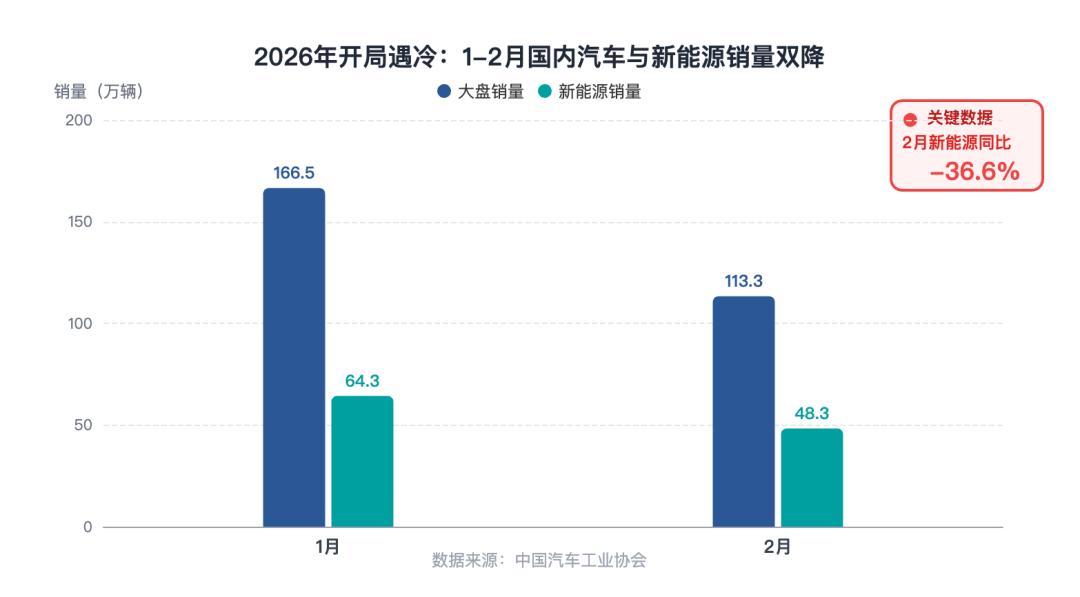
January and February are always the off - seasons for the auto market. However, when the phasing - out of new energy vehicle purchase tax subsidies coincides with the transition of the "Two New" policies, the market is filled with anxiety.
More than 20 automakers, including Tesla, Xiaomi, Li Auto, XPeng, and NIO, have intensively launched low - interest car purchase plans with a super - long 7 - year cycle. They are trying to lower the threshold for car purchases and boost automobile sales by extending the loan cycle and reducing the monthly payment pressure.
No matter how ingenious the "financial tricks" are, they are essentially over - drawing on demand. When the marginal utility of price stimulation becomes weaker and weaker, where is the next growth engine for the automotive market?
01 The data doesn't lie. Is the market really "failing"?
Let's start with the conclusion: The market decline is an indisputable fact. What's more interesting than the "decline" is the structural differentiation hidden behind the data.
A direct example is the new energy market in February.
While the sales of BYD and XPeng declined year - on - year, Leapmotor, NIO, Zeekr, and Hongmeng Zhixing all presented a "growth" report card.
Zeekr's sales increased by 70% year - on - year, NIO's sales increased by 57.6% year - on - year. Even Hongmeng Zhixing, whose sales were "halved" month - on - month, still had a 31% year - on - year growth... One piece of information that should not be ignored is that price is no longer the dominant factor in sales growth. For example, the average transaction price per vehicle of the Zeekr brand is over 300,000 yuan, much higher than XPeng's 150,000 yuan.
The same phenomenon is more intuitively reflected in NIO's system: The high - end NIO brand delivered 15,159 vehicles in February, a year - on - year increase of as high as 65.80%. The more affordable LeDao brand only delivered 2,981 vehicles in February, with a year - on - year sales decline of 26%.
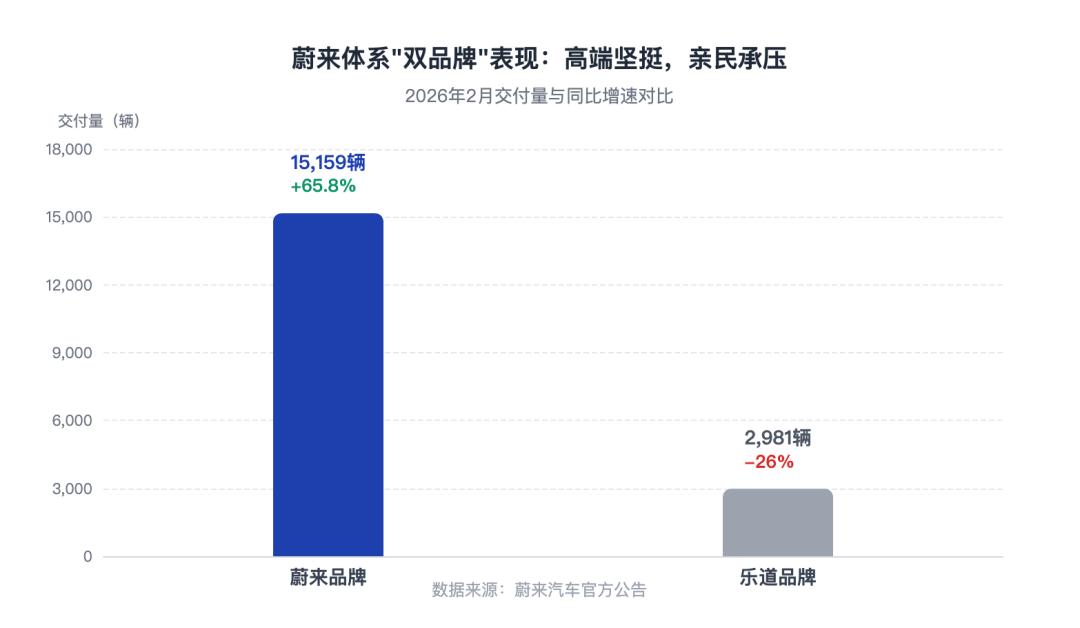
Perhaps the sales volume in a single month and the performance of individual brands are somewhat accidental, but they also reveal the transformation of consumption logic to some extent.
In the past few years, in order to seize market share, some automakers have continuously adopted aggressive pricing strategies. In some cases, the selling price of certain models has fallen below the critical point for healthy profitability, dragging the entire industry into the quagmire of "increasing revenue but not profit".
As a result, in December 2025, the State Administration for Market Regulation issued the "Guidelines for Compliance of Price Behaviors in the Automotive Industry (Draft for Comment)", targeting the disorderly price war in the industry and trying to promote the industry's return from "price involution" to "value competition" at the policy level.
The sluggish start in 2026 doesn't seem to be bad news - the failure of the strategy of seizing the market with low prices will force automakers to change their business concepts.
Next, there may be two obvious diverging paths:
The first is the rebound after the "price - sensitive demand" is over - drawn.
The price war in the past two years has turned users into "wait - and - see parties". Price cuts are no longer a button to stimulate consumption but a lever to over - draw brand credit. Even if the car price is a little cheaper, users may not place an order immediately. Once there are problems in quality, delivery, or after - sales service, the brand's reputation will quickly collapse.
The second path is the stabilization of "value - sensitive demand" in the counter - cycle.
As shown in the situation in the first two months of 2026: Some automakers are under pressure due to the weakening marginal effect of price and financial policies. Some automakers are reaping dividends in the "toughest" market cycle due to the realization of values such as technological innovation, service systems, and brand awareness.
Ultimately, the industry will be pushed towards a "cruel but healthier" new equilibrium: Price no longer determines victory or defeat. What can cross the cycle is the compound interest of system capabilities and user trust. In other words, in 2026, victory is not just about price, and the weight of value will become increasingly important.
02 In the era of stock competition, will intelligent driving be the "new anchor point"?
This gives rise to a new question: In a market of stock competition, how can we provide users with perceivable and verifiable value?
If it were ten years ago, the answer might be brand, appearance, power, fuel consumption, space, etc. However, with refrigerators, color TVs, and big sofas becoming standard in the new energy market and the configuration of fuel - powered vehicles catching up with that of new energy vehicles, the industry narrative has long been reconstructed.
Nowadays, new energy vehicles are becoming more and more like smartphones, with the same in - car chips, the same high - voltage fast - charging, and the same zero - gravity seats... When all automakers are "fishing" in the same supply - chain pool, product homogenization is an irreversible trend.
Automakers urgently need a new value anchor point to redefine the value of products and widen the gap with competitors. In the context of 2026, the only function that meets the requirements of high - tech barriers and subversive experience seems to be "intelligent driving".
Compared with functions such as seat comfort, interior luxury, and chassis stiffness, which are highly subjective and vary greatly among individuals, intelligent driving has a natural advantage in user perception:
Firstly, the ability can be verified. Whether the lane - changing is like that of an experienced driver or a novice, whether the decision - making when dealing with cut - ins is decisive, whether there are "phantom emergency brakes", whether the car - following process is smooth, and whether the decisions meet expectations... Users can make a rough judgment after just half an hour of test - driving.
Secondly, the value can be realized. Compared with functions such as ambient lights and seats that provide emotional value, intelligent driving provides time value. Whether it's the stop - and - go traffic during peak hours or the boring cruising on long - distance highways, it effectively helps drivers reduce driving fatigue.
Finally, the word - of - mouth can spread. The shift in user habits is often accompanied by an irreversible "threshold effect". That is, once the experience exceeds the user's psychological threshold, they "can never go back". They may even become "preachers" for the brand, accelerating the spread of word - of - mouth in their circles.
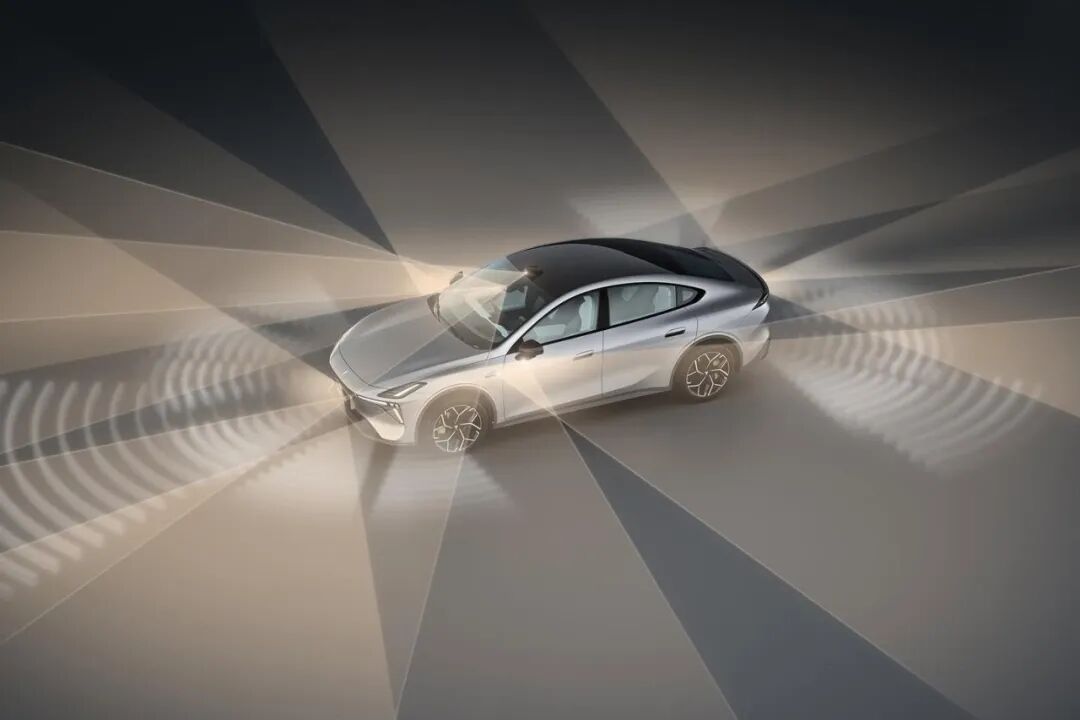
For example, Hongmeng Zhixing, which takes high - level assisted driving as its core selling point, delivered a total of 589,107 vehicles in 2025, a year - on - year increase of 32%. According to the data officially released by Hongmeng Zhixing, the active rate of assisted - driving users in 2025 was as high as 98%.
Putting these two sets of data together, it's not difficult to conclude that intelligent driving is no longer an optional gimmick but has become a direct incentive for consumers to buy cars.
However, the prerequisite for equating intelligent driving ability with user value is to provide certainty in the driving experience of "ready - to - use and getting better with use".
As early as the beginning of 2025, many automakers shouted the slogan of "equal access to intelligent driving" and introduced intelligent driving systems to models in the 100,000 - yuan class. As a result, there were endless "negative feedbacks" such as conservative lane - changing, hesitation when dealing with cut - ins, and frequent phantom emergency brakes, which "scared off" many consumers.
It also verifies the correct paradigm for competing in intelligent driving: Listing the number of lidars, millimeter - wave radars, ultrasonic radars, and cameras on PPTs no longer works. Consumers will only pay for real experiences.
03 "Good money drives out bad money". Time is running out for automakers
When consumers no longer pay for performance through component - stacking and shift their attention from hardware stacking to experience and safety, it will force automakers to change their survival strategies.
In 2025, when the slogan of "equal access to intelligent driving" was shouted, some automakers took the opportunity to play "word games". They only did well in one or two scenarios and were eager to promote it at press conferences. In 2026, the path of shouting slogans first and then fulfilling them through OTA is doomed to fail.
Firstly, there are regulatory constraints on OTA.
Back in August 2025, the State Administration for Market Regulation and the Ministry of Industry and Information Technology jointly issued the "Notice on Strengthening the Recall, Production Consistency Supervision, and Standardizing the Promotion of Intelligent Connected New Energy Vehicle Products (Draft for Comment)", clearly proposing a filing, verification, and liability - tracing mechanism for OTA. The approach of "releasing functions first and then completing them through OTA" has been put on hold.
Secondly, there is a demonstration effect at the market level.
When brands like Hongmeng Zhixing opened a gap in the high - end market through intelligent driving, the decision - making process for car purchases has changed subtly: "A car without high - level intelligence is like a Nokia without an intelligent system. It not only lags behind in experience but also will depreciate faster in the second - hand market in the future." High - level intelligent driving will quickly change from an "elective course" to a "compulsory course" and from a "novelty" to a "necessity".
Referring to the research report of Guojin Securities, driven by both supply and demand, it is estimated that the penetration rate of urban NOA hardware configuration in 2026 is expected to increase from 16% in 2025 to 25%, and the sales volume of models equipped with the urban NOA function is expected to reach 5.45 million, with a year - on - year growth rate of over 50%.
According to the technology diffusion theory proposed by Everett Rogers: When the penetration rate of a new technology exceeds 15%, it begins to enter the early mass - adoption stage; when the penetration rate reaches 50% or even 60%, it will become the "entry threshold" for the industry.
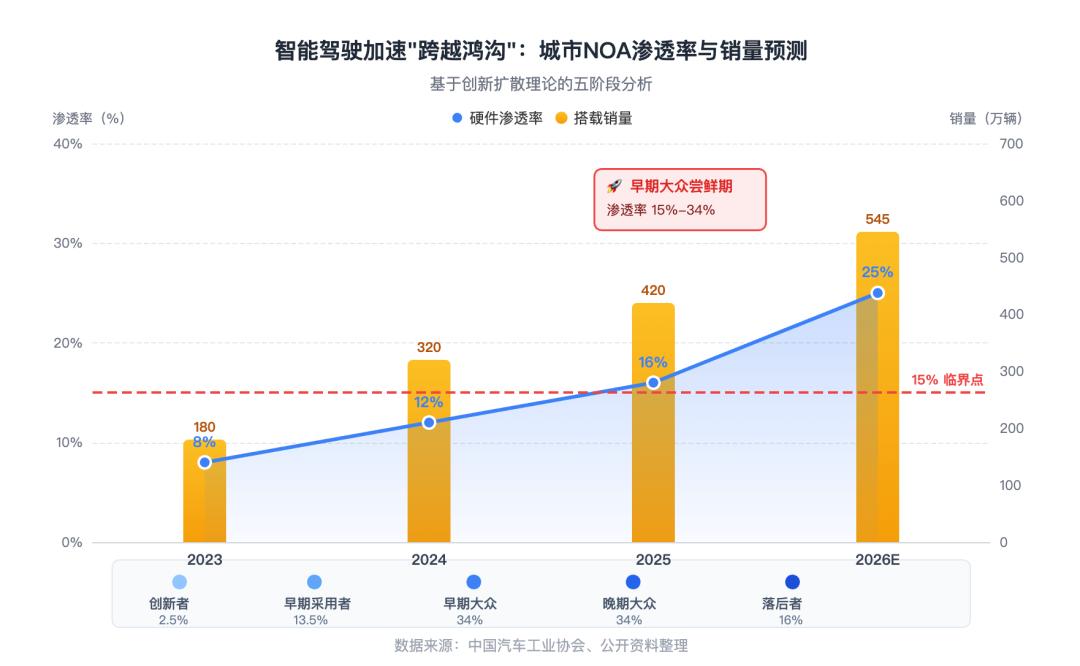
2026 will be a crucial year for intelligent driving to "cross the chasm". The time window for most automakers is rapidly narrowing.
There are only two paths for automakers: Either make the leap from "usable" to "good - to - use" in intelligent driving and provide users with an irreplaceable value anchor point; or lose their moat in the intensifying "price war" and continue to suffer from low sales.
Behind the cruel elimination competition, there are often new growth opportunities.
Currently, high - level intelligent driving is mainly concentrated in models priced at 200,000 yuan or even 250,000 yuan and above. However, the sales report of the new energy market in 2025 shows that models in the 100,000 - 200,000 - yuan price range sold 6.941 million units, accounting for half of the entire market.
The automaker that can establish the image of "high - level intelligent driving is good - to - use and standard" in the 150,000 - yuan - class market and build the user perception of "high - level intelligent driving is trustworthy, usable, and lovable" in the mainstream price range first will have the opportunity to take the initiative in the next round of industry reshuffle.
It's not just automakers that are in a do - or - die situation. Whether startups in assisted driving such as Horizon and Momenta can compress the price of a set of good - to - use software and hardware to less than 10,000 yuan to meet the needs of the 150,000 - yuan - class market is directly related to their survival in the next three years.
04 In conclusion
The end of the "price war" has never been lower prices but a complete reconstruction of the industry's underlying logic.
When the physical attributes of cars (space, power, sofas) are completely leveled, cars are irreversibly evolving from "means of transportation" to "intelligent mobile robots". A car without high - level intelligent driving ability is like a smartphone without an internet connection - it is doomed to be marginalized by the times.
The sluggish start in early 2026 is not so much the industry's winter as the painful period of transformation for the automotive industry. When financial tricks and price involution lose their "magic", the industry's spotlight will eventually shine on real technological innovation.
This article is from the WeChat official account "Alter Talks about Technology" (ID: spnews), written by Gu Qingyun and published by 36Kr with authorization.