What is the underlying transmission logic of the "national anxiety" created by "shrimp farming"?
“A lot of articles are saying how popular OpenClaw is and that you'll be left behind if you don't get on board. But then you find out they're all just selling courses,” said a netizen.
In the past week, almost everyone has been researching how to “raise lobsters.”
On one hand, many big shots are shouting: If you don't know how to raise lobsters, you'll be eliminated!
On the other hand, some big shots are saying: Actually, 90% of people don't need to raise lobsters at all.
There's also a voice reminding: Be careful of getting scammed.
Whom should we listen to? Who is creating the hype and anxiety around this “national lobster - raising” trend? And what's the underlying communication logic?
Uncle will do an analysis.
Although I haven't installed the “lobster” yet, I'll use AI this time.
I've invited the recently controversial “Qianwen” to be my little assistant.
Uncle has prepared 8 Q&As, which are:
1. With so many AI applications, why has the “lobster” suddenly become popular?
2. How did the “national lobster - raising” trend start during the Spring Festival?
3. What kinds of “lobsters” are there on the market currently?
4. Which big company's public relations and communication strategy for the “lobster” is better?
5. As the “number - one promoter,” how did Fu Sheng do it?
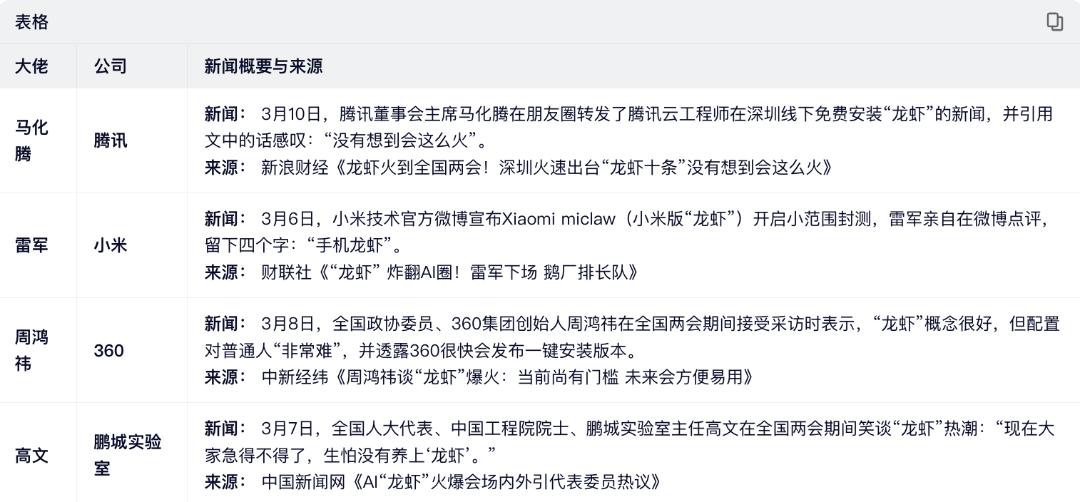
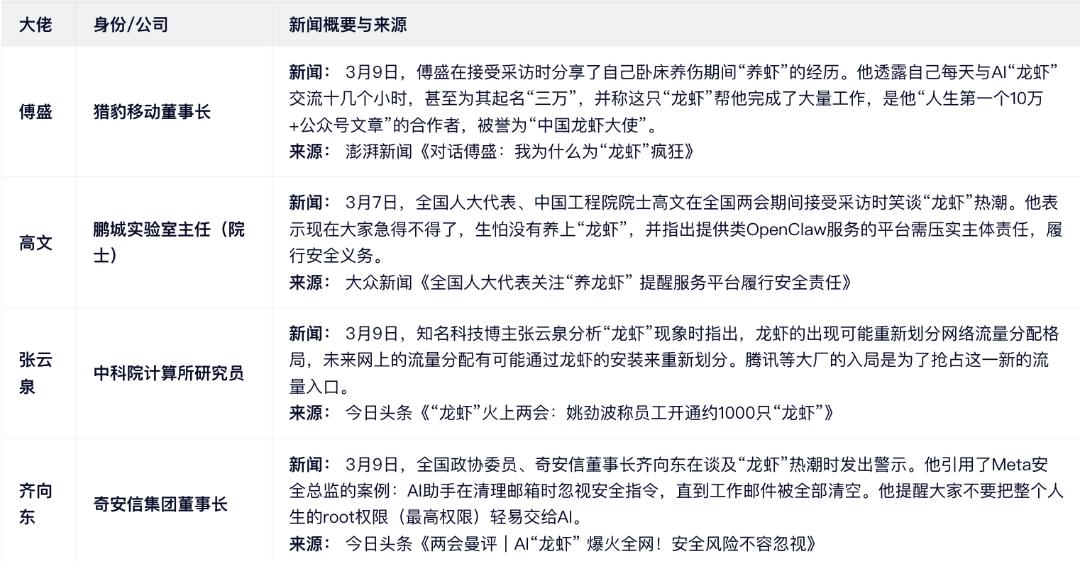
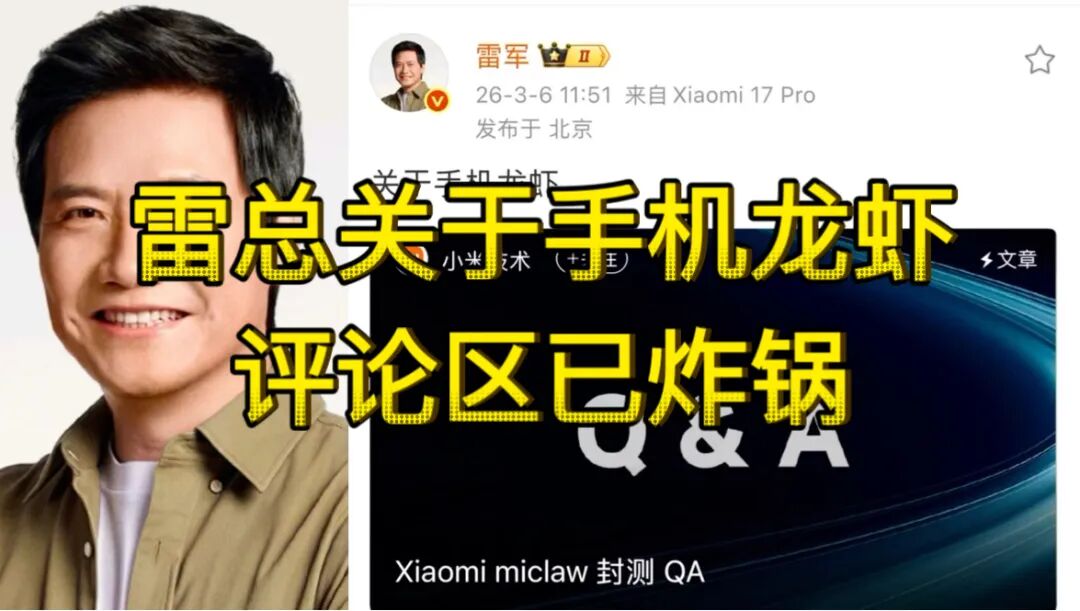
6. Which big - company bosses have publicly spoken about the “lobster”?
7. What's the underlying communication logic behind the “national anxiety” caused by “lobster - raising”?
8. Do I really need to “raise a lobster”?
Let's get started!
1. With so many AI applications
Why has the lobster suddenly become extremely popular?
Although there are many AI applications, the reason why “raising lobsters” (i.e., deploying and using OpenClaw - type AI agents) has broken out of the geek circle and become a national phenomenon is that it has hit the rare “right time, right place, and right people” in the technological transformation.
The underlying logic of this wave of enthusiasm can be broken down into the following four dimensions:
1. Product logic: The qualitative change from “talking” to “doing”
Previous AIs (such as ChatGPT) were more like “advisors,” only capable of having conversations and giving suggestions; while the “lobster” is an “employee” that can take over the computer and perform operations.
Evidence: OpenClaw can obtain system permissions on the computer, automatically open the browser to search, write code, organize files, and post on Xiaohongshu at scheduled times.
Analysis: This leap from “conversation” to “execution” allows ordinary people to experience for the first time the pleasure of “talking and having the machine do all the hard work.” For example, OpenClaw can “take over the computer and do the work automatically” (as in Fu Sheng's case, it completed in 24 hours what 6 people would take three weeks to do). This subversive impact on productivity is unmatched by previous AI drawing or writing tools. It has triggered a complex mix of excitement and anxiety among office workers, greatly promoting its spread.
2. Communication logic: The “meme” of geek culture and social currency
The name “raising lobsters” itself is a huge traffic magnet.
Evidence: The project icon is a red lobster, and the deployment process requires “feeding computing power (Token),” and the operation is as complex as “farming.”
Analysis:
Lowering the threshold: Compared with the obscure “AI Agent” or “open - source framework,” the term “raising lobsters” is vivid, down - to - earth, and has a built - in topic attribute. This is a victory of the name and symbol.
Social currency: At the beginning of 2026, the social greeting on WeChat Moments became “Have you raised a lobster?” This is not only a technological attempt but also a symbol of a certain circle's identity - being tech - savvy and keeping up with the trend. It has even given rise to new social and business activities such as “lobster - installation conferences” and “lobster - raising on behalf of others.”
3. Human nature logic: The fear and ecstasy of “losing control” and “creating things”
The reason why “raising lobsters” has become popular is that it brings not only efficiency but also strong emotional stimulation.
Evidence: On one hand, some people have earned 260,000 yuan in a few days by helping others install lobsters; on the other hand, security experts have warned that this is a “security nightmare” that may lead to data leakage or system deletion.
Analysis:
The creator complex: 100% of OpenClaw's code is generated by AI, and it can reflect on itself and correct mistakes. When users train it, they have a sense of accomplishment of “domesticating digital life” and “creating a clone” (such as Fu Sheng's “Sanwan”).
Panic - driven consumption: Since the lobster runs 24/7, the Token is consumed very quickly. Some people wake up to find that they've spent thousands of yuan. This “expensive sense of losing control” has instead stimulated more people's curiosity - everyone wants to see what this “money - guzzling beast” looks like.
4. Industrial logic: The “joint conspiracy” of giants and capital
Without the push from big companies, the “lobster” might just be a niche tool.
Evidence:
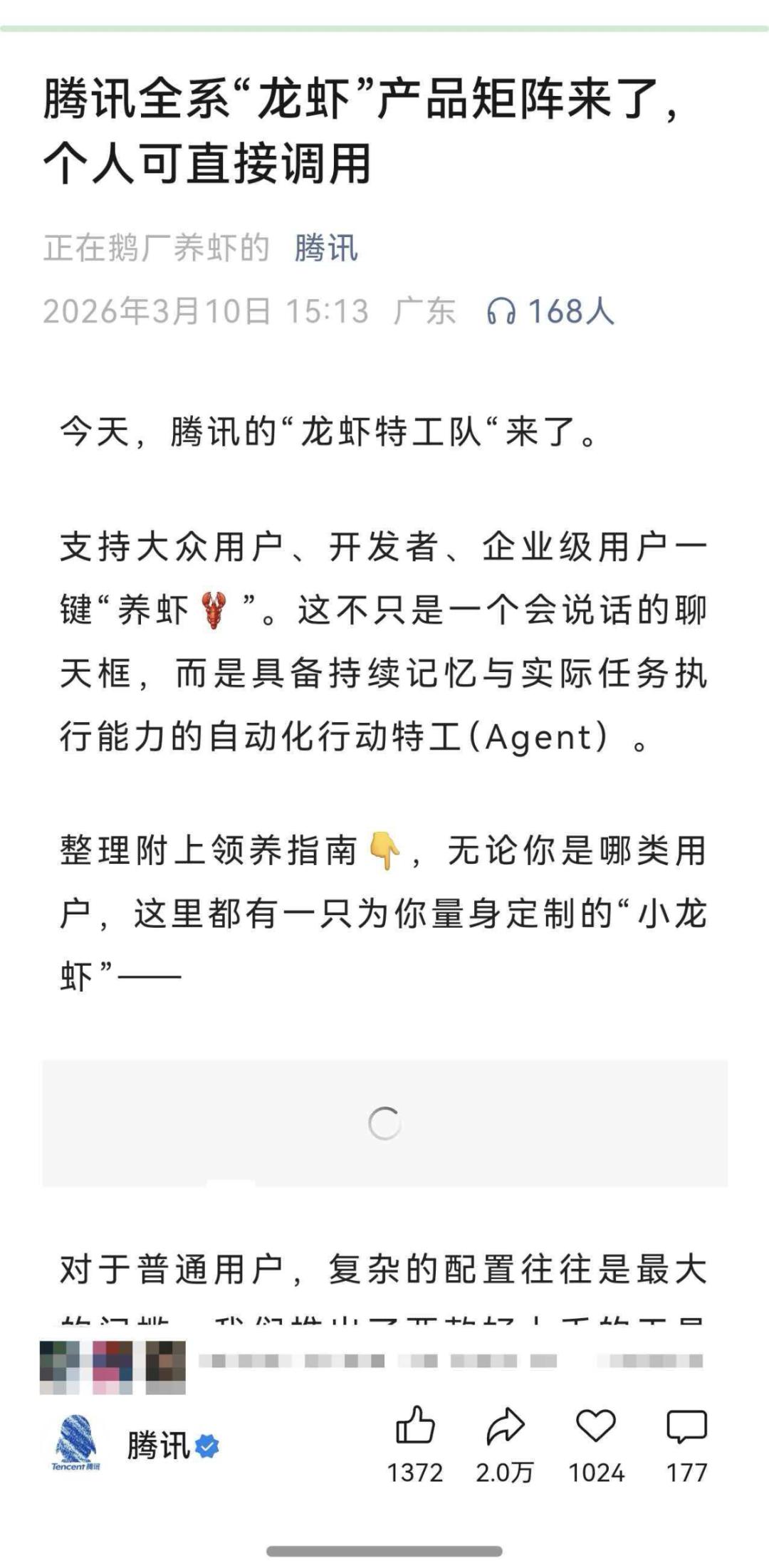
Tencent: It organized a free installation event at the entrance of its Shenzhen building, attracting thousands of people to line up. Ma Huateng personally shared it on his WeChat Moments.

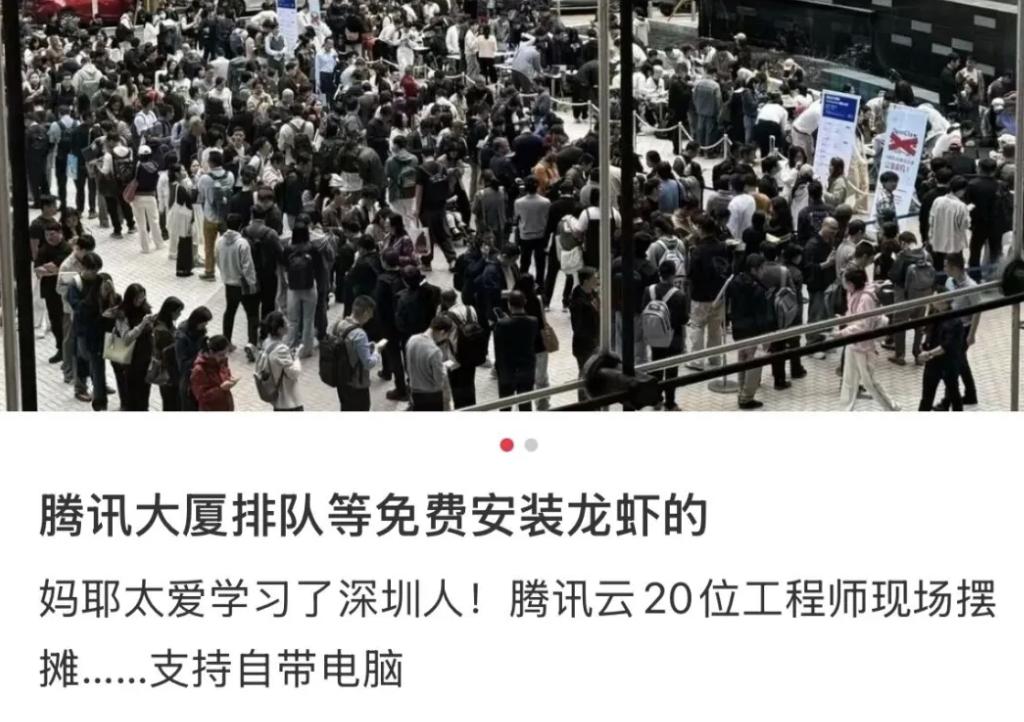
Local policies: Longgang District in Shenzhen quickly issued the “Ten Policies for Lobsters,” and Wuxi High - tech Zone issued support policies with a maximum subsidy of 5 million yuan.
Analysis: Cloud providers (Alibaba Cloud, Tencent Cloud) need to sell computing power, large - model providers (Kimi, Claude) need to consume Tokens, and local governments need to seize the high - ground in the AI industry. “Raising lobsters” has become the intersection of the interests of all parties, and the upstream and downstream of the industrial chain have collectively “cheered” for it, creating a prairie - fire situation.
The reason why “raising lobsters” has become popular is that it makes AI “visible, tangible, and profitable.” The subversive imagination of productivity, combined with the fission effect of social communication and the boost from capital, have jointly created this “national lobster - raising” carnival.
2. How did the “national lobster - raising” trend start during the Spring Festival?
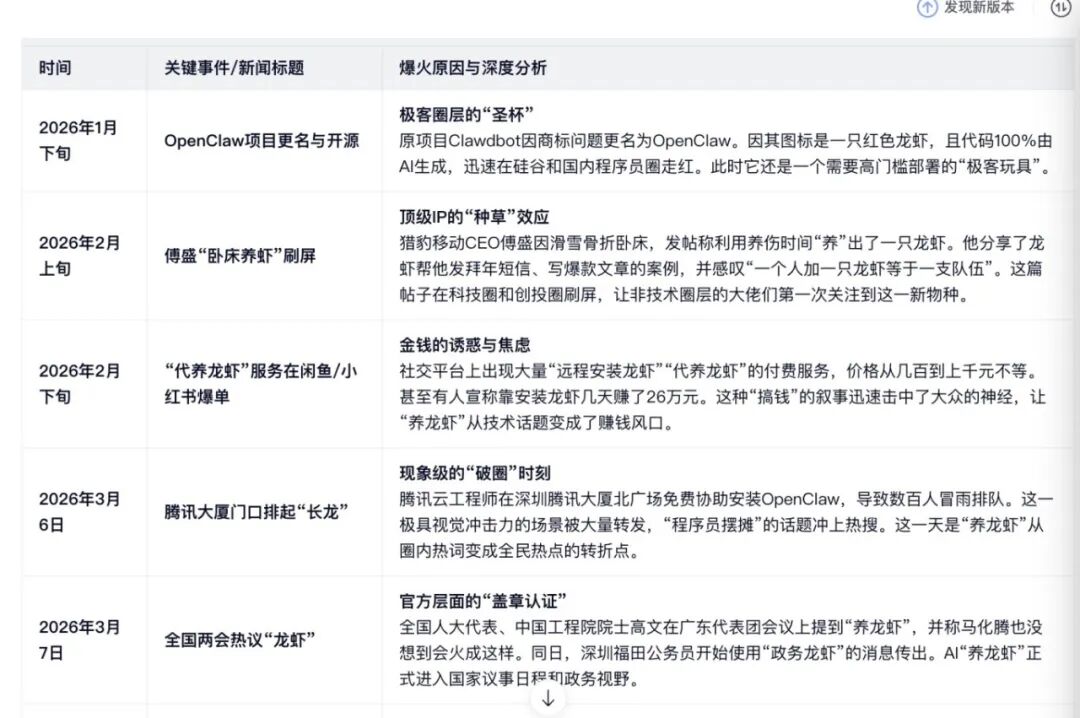
According to publicly available information across the network, the popularity of AI “raising lobsters” (i.e., deploying and using the open - source AI agent OpenClaw) has followed a typical path of “fermenting in the geek circle → being triggered by offline events → being followed up by policies and capital.”
Here is a review table of the key nodes in the process of “raising lobsters” becoming popular across the network:
3. What kinds of “lobsters” are there on the market currently?
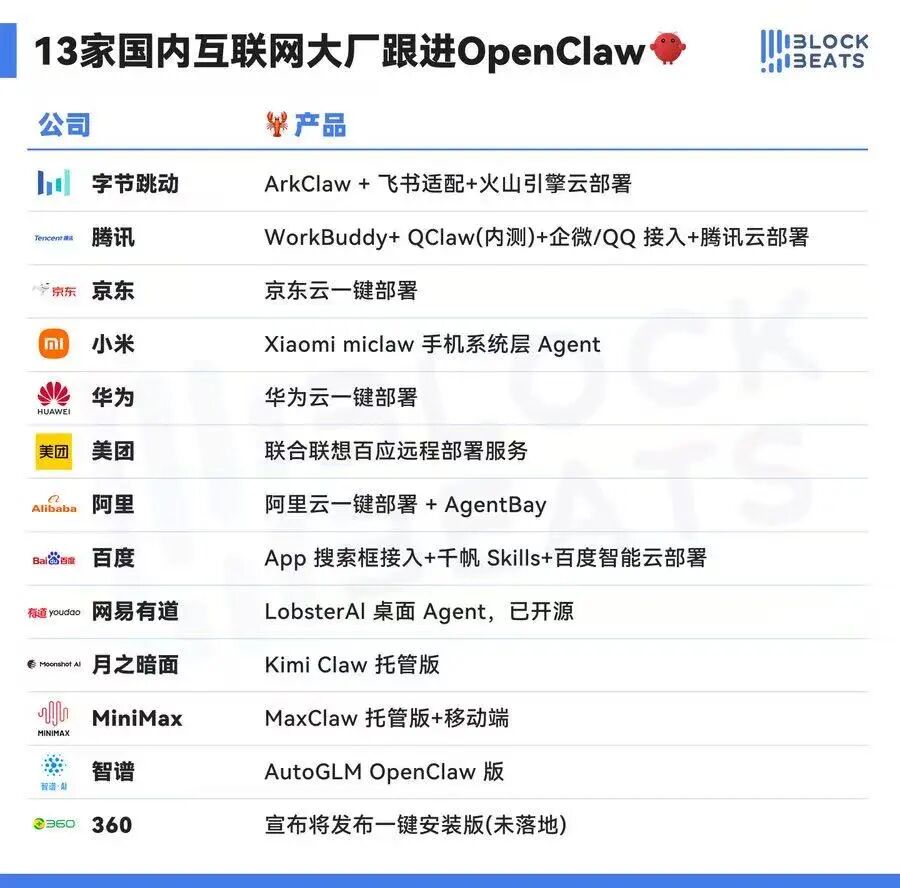
According to media reports, 13 big companies have followed up on the “lobster” trend.
Specifically, as shown in the picture:

4. Which big company's public relations and communication strategy for the “lobster” is better?
What are the differences in the public relations of Internet big companies when it comes to releasing news about the “lobster”? And whose communication strategy is better?
Based on the current publicly available information and industry trends, Internet big companies have shown completely different public - relations styles and strategic intentions in releasing news related to the “lobster” (OpenClaw/AI Agent).
Simply put, Tencent wins in “voice volume” and “execution ability,” ByteDance wins in “technical expertise” and “ecosystem positioning,” and Xiaomi wins in “topic - generating ability” and “speed.”
If we use “breaking - out effect” and “social influence” as the criteria, Tencent's strategy is currently perfect.
Reasons:
Strong sense of imagery: The scene of a long queue at the entrance of Tencent's building is more convincing than any technical parameters, intuitively conveying the sense of anxiety that “AI is here, and you'll be left behind if you don't learn it.”
Endorsement from top management: Ma Huateng's “I didn't expect it” not only shows modesty but also indirectly confirms the popularity of the product. This “bottom - up” popularity is more credible than hard - selling advertisements.
Scene implementation: By emphasizing the “office scenario” through WorkBuddy, it directly hits the rigid needs of office workers for “slacking off” and “improving efficiency,” turning AI from a “chatting toy” into a “productivity tool.”
If we use “business prospects” and “industry value” as the criteria, ByteDance's strategy is more competitive in the long run.
Reasons:
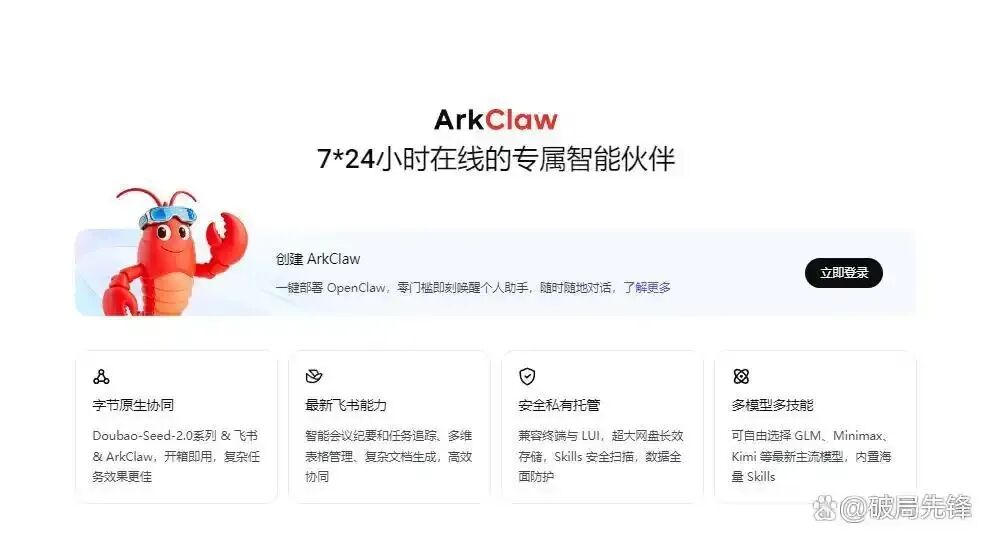
Ecological closed - loop: ByteDance deeply integrates AI Agent with Feishu (collaborative office) and Volcengine (cloud services), forming a complete chain of “tools + platform + monetization.”
Developer ecosystem: By providing SaaS versions and APIs, ByteDance not only serves end - users but also attracts developers, which is in line with its consistent “platform - type” approach.
Technical neutrality: Compared with Tencent's “hustle” and Xiaomi's “mobile - phone focus,” ByteDance's solution is more general and not limited to specific hardware or scenarios.
Tencent has won in “mass communication.” It has successfully turned a toy in the Geek circle into a social phenomenon discussed by the whole nation.
ByteDance has won in “business layout.” It is most likely to turn AI Agent into a new cash - cow through this system, just like it did with cloud services in the past.
Xiaomi has won in “brand marketing.” It has obtained the highest exposure at the lowest cost, further strengthening its image as a “technology pioneer.”
In addition, while everyone is competing for “functions” and “traffic,” NetEase has acutely captured the pain points of “security” and “compliance” that have been overlooked by the giants and used them as an entry point.
5. Which big - company bosses have publicly spoken about the “lobster”?
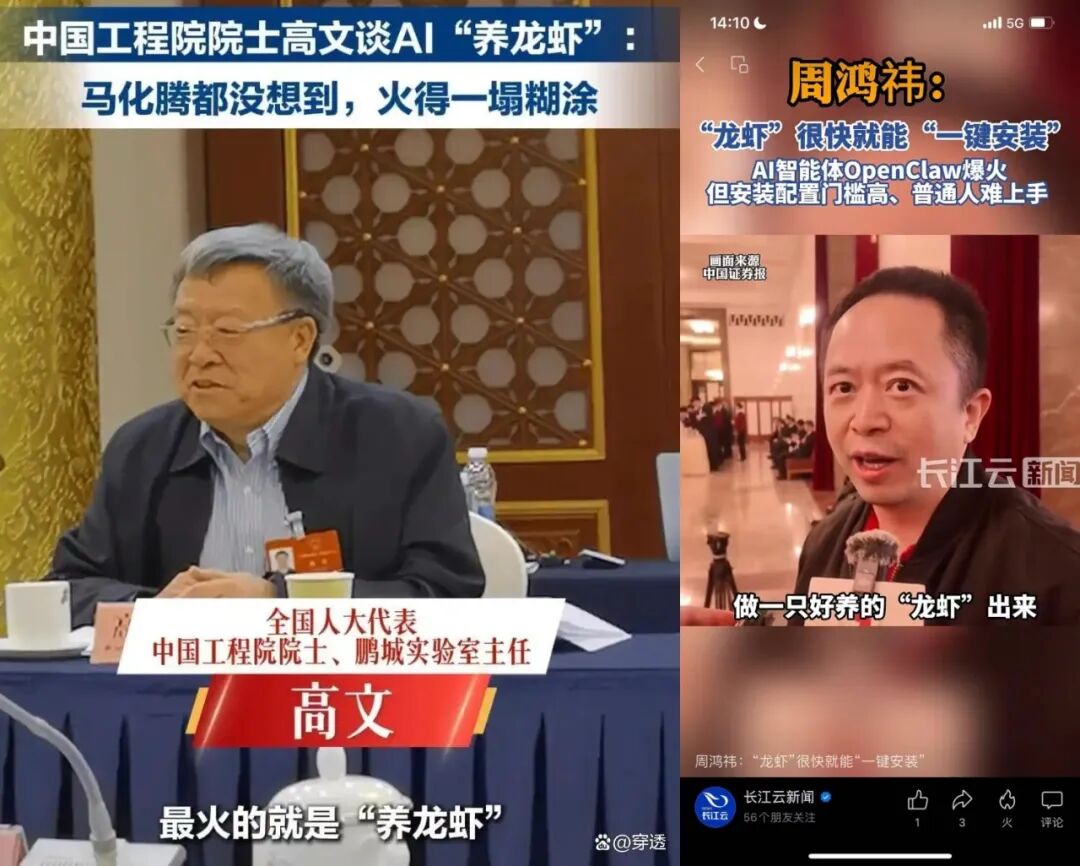
6. As the “number - one promoter” of the “national lobster - raising” trend, how did Fu Sheng do it?
This is an integrated communication case of “personal IP + product experience + emotional resonance.”

Fu Sheng's promotion of the “lobster” (OpenClaw) was not a simple press conference or advertising campaign but an action - oriented marketing of “