A fire in the Strait of Hormuz has revealed the true value of China's nuclear power.
In March 2026, the flames of war in the Middle East reignited global anxiety in the energy market.
As soon as the news of Iran blocking the Strait of Hormuz broke, international oil prices skyrocketed instantly. Brent crude oil opened with a 13% surge, breaking through $82 per barrel. Some analysts even claimed that if the conflict persists, it's not a dream for oil prices to reach $120 or even $150.
The Strait of Hormuz, a waterway with a narrowest point of only 39 kilometers, carries 20% to 30% of the world's seaborne crude oil.
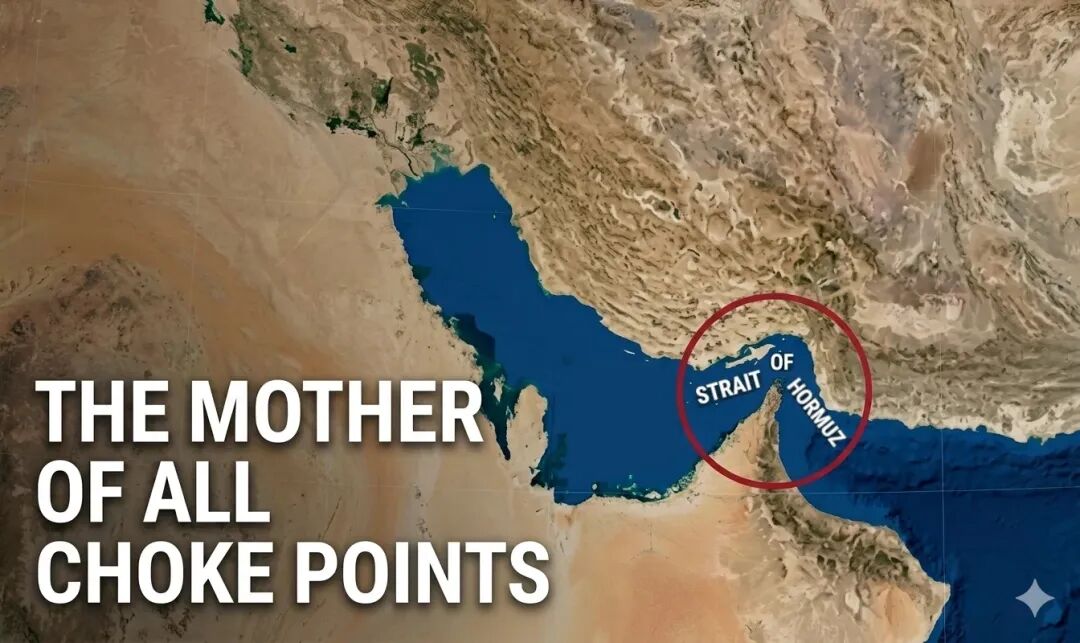
And China happens to be one of the biggest users of this passage.
China's external dependence on crude oil exceeds 70%, and more than 45% of its total imported crude oil comes from the Middle East.
Some people may say, isn't China strong in new energy, wind and solar power? Is there any need to panic?
The problem is: no matter how good wind and solar power are, and no matter how advanced energy storage technology is, there is still one scenario that cannot be replaced - that is the high - temperature heat used in industrial production.
China's heavy industries such as chemical, steel, cement, and glass use a large amount of natural gas and heavy oil as high - temperature heat sources, not just for power generation. Ethylene cracking requires over 800°C, industrial steam requires 300 - 600°C, and coal chemical gasification requires high - temperature catalysis.
Wind and solar power cannot provide industrial heat at all. Although converting electricity to heat is theoretically feasible, it is extremely inefficient and costly. The export temperature of the high - temperature gas - cooled reactor reaches 571°C, which directly matches industrial steam and some chemical processes. This is something that no other renewable energy can achieve.
In other words, apart from natural gas, nuclear power plants may be the only alternative to fill the industrial heat gap.
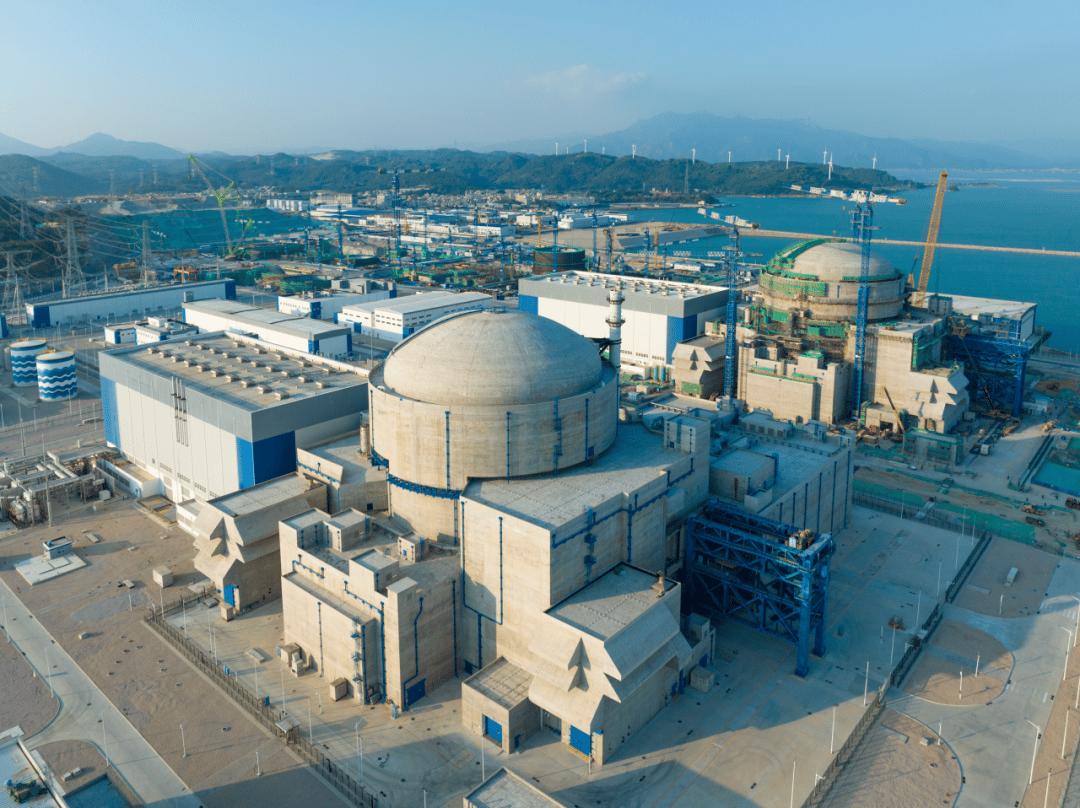
▲ In January 2025, Unit 1 of the Zhangzhou Nuclear Power Plant of "Hualong One" was officially put into commercial operation.
However, while the world was in panic due to the war in the Middle East, China's nuclear power industry was doing something big. In 2025, among the 11 newly - started nuclear power units in the world, 9 were in China. By the end of 2025, there were a total of 112 nuclear power units in operation, under construction, and approved for construction in China, with a total installed capacity of 126 million kilowatts, ranking first in the world for the third consecutive year.
In 2026, it is expected that 9 new nuclear power units will be put into operation, with a total installed capacity of 9.44 million kilowatts.
Today, let's talk about China's nuclear power.
China's Nuclear Power: Not Just Built Fast, but Built Advanced
When it comes to China's nuclear power, many people's first reaction is "the infrastructure powerhouse". With a large population and great strength, the Chinese can build anything quickly.
But this is only half - right.
First, look at the quantity. By the end of 2025, the United States ranked first in the world with 94 operating units, while China ranked second with 59 units.
But in terms of "newness", the United States is no match. The average age of the 94 units in the United States is 43.7 years, and two - thirds of them are "antiques" from the 1970s to 1990s. Most of China's operating units were built in the past 15 years, with an average age of less than 12 years. And China also leads the world with 44 units under construction.
What China has is not the most nuclear power plants, but the newest ones.
Especially in the new technology directions such as fourth - generation reactors and SMRs, China has achieved a generational lead.
Let's start with fourth - generation reactors.
In December 2023, the Shidao Bay High - Temperature Gas - Cooled Reactor Demonstration Project in Shandong was officially put into commercial operation. This is the world's first commercially - operated fourth - generation nuclear power plant. It is not an experimental reactor but a demonstration project built according to the standards of a commercial power plant.
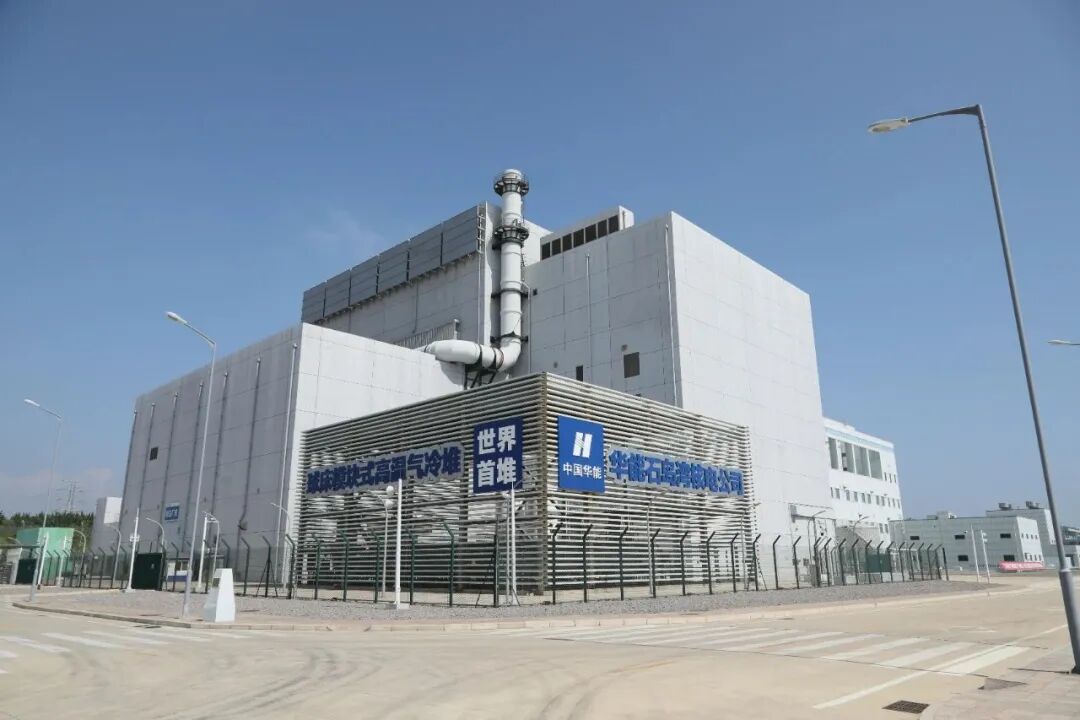
▲ The world's first fourth - generation nuclear power plant - Huaneng Shidao Bay High - Temperature Gas - Cooled Reactor
What is a fourth - generation reactor? Simply put, it is a nuclear power plant that "theoretically will not melt down".
Traditional nuclear power plants are like "a pressure cooker boiling water". They heat water to over 300 degrees under high pressure. Once the pressure vessel is broken, the water will instantly vaporize, causing an explosion. This is how the Fukushima nuclear accident happened.
The high - temperature gas - cooled reactor is completely different. It uses helium instead of water as the coolant. Helium can be heated to 750 degrees or even 900 degrees without high pressure. More importantly, it adopts a "pebble - bed" design. The nuclear fuel is wrapped in graphite balls, each about the size of a tennis ball.
Even if all cooling systems fail, the temperature of these fuel balls will not exceed 1600 degrees, while the melting point of the fuel itself is 2800 degrees. In other words, it will never melt down.
This is "inherent safety" - it is guaranteed by physical laws themselves, not by people or equipment.
The localization rate of equipment in the Shidao Bay project exceeds 93.4%, and it can reduce carbon dioxide emissions by about 900,000 tons per year. Moreover, China is promoting commercial replication. The first - phase project of the Xvwei Nuclear Energy Heating Power Plant in Jiangsu has been approved, adopting a coupling scheme of a high - temperature gas - cooled reactor and Hualong One, specifically supplying industrial steam to the petrochemical base.
In addition to the high - temperature gas - cooled reactor, China is also promoting other fourth - generation reactor technology routes simultaneously.
The Thorium - based Molten Salt Reactor in Wuwei, Gansu, is the world's only operating reactor that realizes the conversion of liquid - fuel thorium to uranium. In November 2025, this 2 - megawatt experimental reactor first achieved the operation with thorium fuel.
The so - called Thorium - based Molten Salt Reactor is simply "burning fuel dissolved in salt". The nuclear fuel (thorium/uranium) is dissolved in high - temperature molten salt in a liquid form and operates at a high temperature of 700°C without the need to maintain high pressure like traditional reactors. Once the temperature rises abnormally, the nuclear reaction will automatically weaken and stop, naturally having the characteristic of "self - extinguishing in case of runaway".
Moreover, China has rich thorium resources. The proven industrial reserves reach 287,000 tons, ranking second in the world. Among them, the reserves in the Bayan Obo Mining Area in Inner Mongolia exceed 220,000 tons, accounting for more than three - quarters of the country's total. If thorium can be used to replace uranium, it is equivalent to holding the "rice bowl" of nuclear fuel in one's own hands.
Now let's look at SMR (Small Modular Reactor). In 2026, the global nuclear power industry is keeping an eye on Changjiang, Hainan, where the world's first "Linglong One" reactor stands. Currently, 90% of the installation progress has been completed, and it is in the core equipment commissioning stage. It is expected to be officially connected to the grid in the first half of this year.
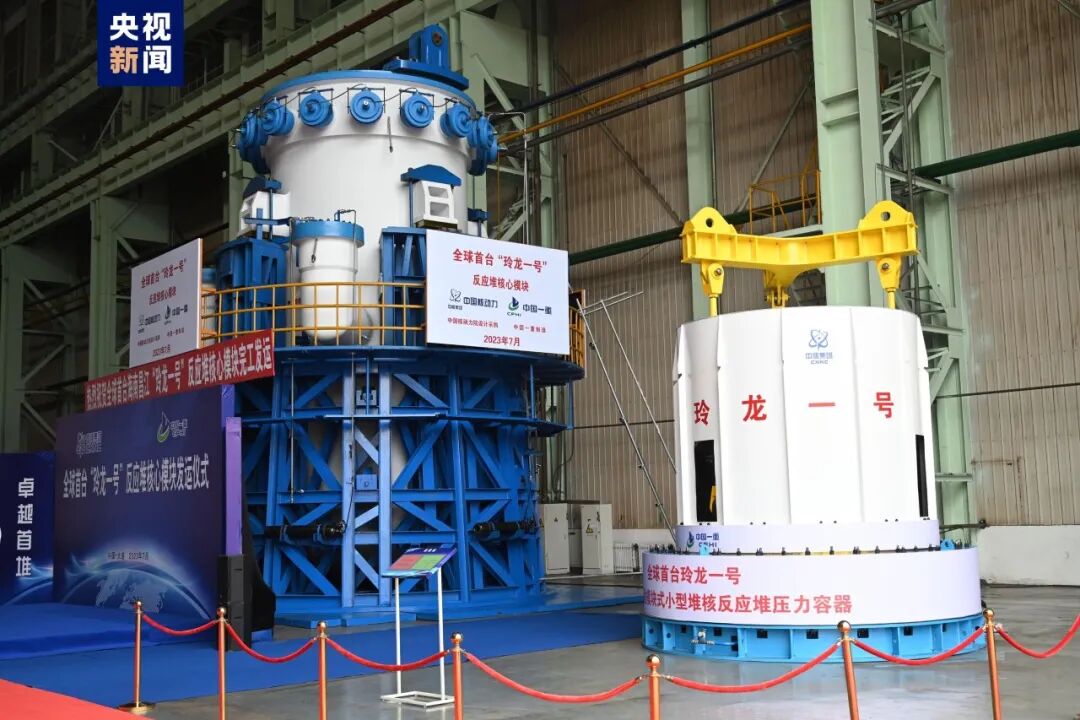
▲ The construction site of the world's first on - shore commercial SMR "Linglong One" (Changjiang, Hainan)
This small reactor (SMR) has many advantages. First of all, it is flexible. It can be assembled as needed like building blocks and can be placed by the sea or in industrial parks. It also saves a lot of land. It can be built on an area the size of a football field, which is especially suitable for places with scattered energy demand.
In terms of safety, in traditional nuclear power plants, there are thick pipes connecting the reactor and the external cooling equipment. In a nuclear accident (such as the Three - Mile Island accident), the most feared thing is the "rupture of the main pipe". If all the water leaks out, the reactor core will burn out.
The trick of SMR is that it has a "one - stop" design. It puts the reactor, steam generator, and main pump all into the same iron tank (pressure vessel), directly eliminating the external large pipes.
Since there are no pipes, there is no danger of "pipe rupture and water leakage". It directly eliminates the probability of the most fatal accident at the root.
Now, Linglong One is the world's first on - shore commercial modular small reactor that has passed the safety review of the International Atomic Energy Agency. It is a major breakthrough in China's independent innovation in nuclear power.
In contrast, the SMR project of NuScale in the United States has been cancelled. Currently, the closest one is the Natrium sodium - cooled fast reactor of TerraPower, which started construction in June 2024 and is expected to be put into operation between 2030 and 2031.
China leads the United States by at least 5 to 6 years in the SMR field.
The technological advancement and safety are deeply interlocked. The new - generation reactor designs eliminate fault scenarios at the design level, and this structural safety advantage is precisely the most difficult threshold for the old regulatory logic to replicate.
Nuclear Power Safety: Not the Stricter, the Safer
When it comes to nuclear power, safety is an unavoidable topic.
Many people have a misunderstanding: isn't nuclear power safety that the stricter the review, the safer, and the slower the process, the safer?
Actually, it's the opposite. This is actually a sign of inefficiency. The United States is a negative example.
The core reason for the slow nuclear power approval in the United States is not "too high safety standards", but "absurd procedures". Anyone, including environmental protection organizations, local residents, and even competitors, can initiate a hearing, and a single lawsuit can freeze a project for several years.
It took 17 years for the AP1000 to be approved from the submission of the design, not because of technical problems, but because it was dragged down by endless legal procedures.
In contrast, Hualong One only took five years to pass the UK GDA review (one of the strictest in the world). The UK's safety standards are not lower than those of the United States, but the process is transparent and the schedule is fixed.
"Strict" and "complicated" are two different things.
China's Nuclear Safety Administration is also strict. Linglong One still has to pass the general reactor safety review of the IAEA, and the standards are globally unified.
But the "strictness" of the US Nuclear Regulatory Commission (NRC) lies in "unlimited addition". It's not enough to meet the standards, but it requires proving that "all risks have been reduced as low as possible". This becomes a bottomless pit. If you say a magnitude - 9 earthquake is enough today, the NRC may require considering a magnitude - 10 earthquake tomorrow because "it may theoretically exist".
The real killer behind this is the political and capital game deeply embedded in the US system: The natural gas interest groups have long provided funds to well - known environmental protection organizations such as the Sierra Club. In turn, these organizations use legal means to continuously initiate hearing lawsuits against nuclear power projects, turning the "environmental protection flag" into a weapon to block nuclear energy.
For natural gas companies, every delay in a nuclear power plant means more decades of market space for their power plants.
At the same time, the marginal cost of a large number of depreciated old units is extremely low. As long as they continue to operate, it is pure profit. Building a new reactor means high capital expenditure and a long pay - back period. Therefore, capital tends to put pressure on the NRC to extend the service life of old reactors instead of promoting new construction.
As a result, the regulatory authorities, politicians, fossil energy capital, and anti - nuclear NGOs form an invisible interest alliance under the institutional framework of "weaponizing hearings", jointly turning nuclear power approval into an endless marathon.
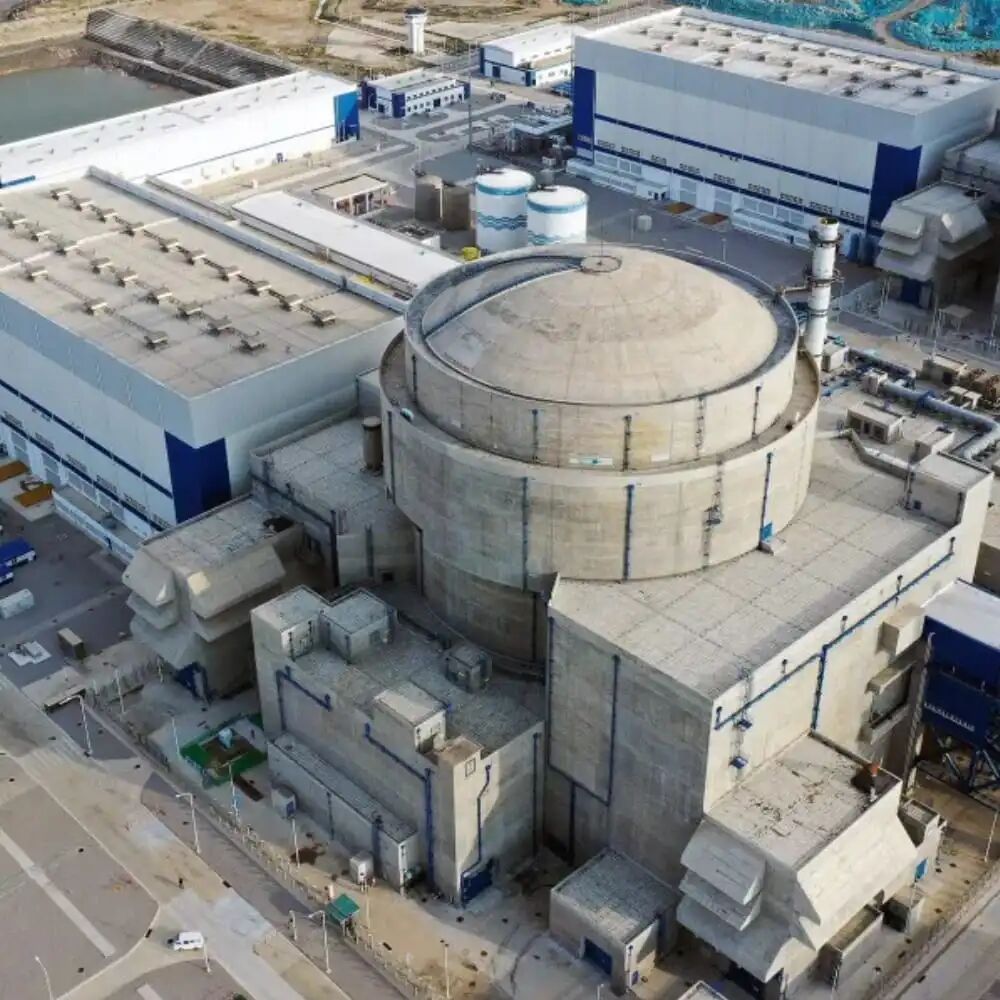
▲ The world's first Hualong One reactor has been operating safely and stably for more than 1000 days.
If the "slow" and "strict" in the review are not necessarily related to safety, then what is a truly "safe" nuclear power plant?
There is an objective standard here, which is the safety generation gap of nuclear power plants.
Nuclear power safety is divided into three generations. The first generation relies on people and emergency response plans; the second generation relies on engineering redundancy (multiple sets of backup systems); the third generation relies on passive safety (relying on gravity, natural circulation, and physical laws to automatically cool down even when people are asleep).
More than 30% of the operating reactors in China are third - generation reactors, and all newly - built reactors are of the third generation or above. Hualong One and CAP1400 adopt passive safety designs. The double - layer containment can resist large - plane impacts, and the mobile emergency power supply can be driven to where it is needed like a fire truck.
In contrast, two - thirds of the 94 units in the United States are first - and second - generation reactors, which rely on active cooling and require external power supply and continuous human operation. Most of these units were built from the 1970s to 1990s, with an average age of over 40 years, facing the pressure of aging and retirement.
There is a problem of "pressure vessel embrittlement" in nuclear reactors. Long - term neutron bombardment will make the steel brittle, just like plastic becomes brittle when it ages. The US Nuclear Regulatory Commission just approved the service life extension of several units to 80 years last year. Technically, they can operate through strict monitoring, but the safety margin is constantly being compressed, just like a rubber band stretched to the limit.
If comparing "inherent safety" (at the design level), China leads by one generation. The technical