Focusing on intelligence, energy replenishment, and safety, the proposals from the automotive industry during the Two Sessions in 2026 focus on new possibilities for travel.
On March 5th, Li Qiang, the Premier of the State Council, delivered the government work report. While presenting the economic report card for 2025, he outlined the direction for industrial development in the first year of the 15th Five - Year Plan. The automotive industry has been given new connotations in the new era, shifting from "industrial support" to "ecosystem construction" and from the single - thread development of "new energy vehicles" to a diversified layout of "intelligent terminals + low - altitude economy + future industries". A super - long - term special treasury bond worth 250 billion yuan supports the replacement of old vehicles with new ones, deepens and expands the application of "artificial intelligence +", and intensively rectifies "involution - style" competition.
Under the favorable policy environment, entrepreneur deputies and members of the Chinese People's Political Consultative Conference (CPPCC) responded promptly. Many "leaders" from the automotive industry, such as Zhu Huarong, Feng Xingya, Li Shufu, Yin Tongyue, Zhang Xinghai, Lei Jun, and He Xiaopeng, submitted a large number of proposals during the 2026 National Two Sessions, offering suggestions on topics such as autonomous driving legislation, the cultivation of embodied intelligence industry, and high - quality development of enterprises.
Driven by Intelligence and Safety, Make up for the Shortage of Regulations and Standards
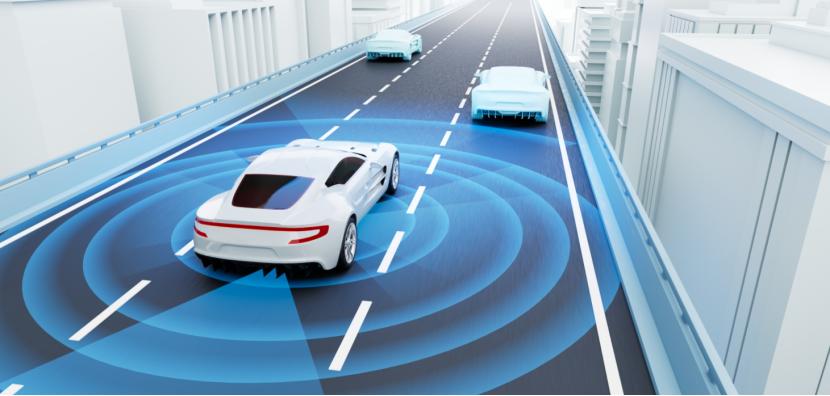
During this year's Two Sessions, the commercial breakthrough of high - level autonomous driving has become the hottest topic.
Intelligent connected vehicles and autonomous driving are the strategic high - points in the global automotive industry competition and also the core track for the Chinese automotive industry to overtake others on a curve and lead the global transformation. After years of technological research and market cultivation, L2 - level assisted driving has been widely popularized in China. L3 and L4 - level autonomous driving have achieved demonstration operations in scenarios such as closed industrial parks, port logistics, and RoboTaxis. China's technological strength and scenario implementation ability have entered the global first echelon.
In 2025, China's automobile production and sales both exceeded 34 million vehicles. The penetration rate of L2 - level and above assisted driving exceeded 60% and is rapidly moving towards L3 - level and above. Changan and BAIC have obtained the first - batch vehicle access permits for L3 - level conditional autonomous driving; Huawei's Kunlun has accumulated more than 8.7 billion kilometers of assisted driving mileage; Baidu, WeRide, and Pony.ai have carried out public road tests of Robotaxis in the Middle East, Europe, Singapore and other places.
Currently, China's current "Road Traffic Safety Law" is formulated based on traditional human - driving scenarios. It does not clearly define the legal status of autonomous driving systems, and the definition of accident liability is vague. Once a safety accident occurs, there is a lack of a unified basis for dividing the responsibilities of automobile enterprises, users, and platform parties. The testing, access, and operation standards for L3 and L4 - level autonomous driving are fragmented, with different requirements in different regions and scenarios. Enterprises face high costs and low efficiency in cross - regional operations. Moreover, supervision involves multiple departments such as the Ministry of Industry and Information Technology, the Ministry of Transport, the Ministry of Public Security, and the Cyberspace Administration of China. The coordination mechanism is not perfect, and there are gaps in the supervision of data security, algorithm filing, and network security. At the same time, intelligent electric vehicles integrate knowledge from multiple disciplines such as mechanical engineering, electronics and electrical engineering, artificial intelligence, big data, and cloud computing. The traditional talent training system is difficult to meet the industrial needs, and the shortage of high - end R & D, algorithm engineers, and system integration talents continues to expand, becoming a key shortcoming restricting technological iteration and industrial upgrading.
In response to the above pain points, many deputies to the National People's Congress and members of the CPPCC submitted targeted proposals, paving the way for the large - scale development of autonomous driving from four dimensions: legal revision, standard unification, regulatory coordination, and talent training. Shi Wenxian, the deputy director of the Science and Technology Committee of AVIC, suggested improving the safety supervision mechanism for AI driving, accelerating the formulation of special laws and regulations for autonomous driving, clarifying the liability boundaries of different levels of autonomous driving, establishing a cross - departmental information sharing and coordinated disposal platform, strengthening technological testing and certification, and innovating the insurance system to strengthen the safety bottom - line of autonomous driving. Jiang Haoran, the senior vice - president of Baidu Group, proposed accelerating the revision of the "Road Traffic Safety Law", granting legal status to autonomous driving at the national level, opening up core testing scenarios such as highways and urban expressways, supporting the commercial operation of L3 - level autonomous driving for C - end users, and promoting the large - scale demonstration of L4 - level autonomous driving in scenarios such as logistics and transportation, so as to accelerate technological iteration and cost reduction through large - scale scenarios.
Talent is the core competitiveness of the intelligent automobile industry. Li Shufu, the chairman of Geely Holding Group, submitted a proposal on "Accelerating the Establishment of a First - Level Interdisciplinary Discipline of 'Intelligent Electric Vehicles'". He called for breaking the traditional disciplinary barriers, establishing intelligent electric vehicles as a first - level interdisciplinary discipline, integrating the resources of universities, research institutions, and enterprises, and building an integrated talent training system for undergraduates, postgraduates, and doctoral students. The focus is on cultivating compound innovative talents integrating mechanical, electronic, AI, algorithm, and data knowledge, so as to solve the problem of insufficient talent supply at the source and provide intellectual support for the long - term development of the industry.
In addition to the popular proposals related to autonomous driving and Robotaxis, the low - altitude economy is also a forte of listed automobile enterprises. Feng Xingya, the chairman of GAC Group, suggested including the low - altitude economy in the 15th Five - Year Plan and constructing low - altitude corridors in urban agglomerations. He Xiaopeng, the chairman of XPeng Motors, proposed a phased tax exemption for flying cars and clarifying the tax classification. If the tax exemption for flying cars is implemented, it will reduce the R & D costs of enterprises such as EHang and XPeng Huitian.
Collaborative Upgrade of the Energy - Replenishment Ecosystem to Solve Involution and Disordered Competition
The popularization of new energy vehicles has completely changed the global automotive energy landscape. China's penetration rate and ownership of new energy vehicles rank first in the world, and the core industrial chains such as power batteries, motors, and electronic controls have global competitiveness. However, in the rapid expansion of the industry, problems such as non - coordinated energy - replenishment systems, single energy paths, disordered market competition, lack of a closed - loop industrial chain, and insufficient people's livelihood guarantee have become increasingly prominent, which have become the key factors restricting the high - quality development of new energy vehicles.
In terms of the energy - replenishment system, the battery - swapping mode has become an important energy - replenishment solution for new energy vehicles, especially for operating vehicles, due to its advantages such as fast energy replenishment, separation of the vehicle and the battery, and reduced vehicle purchase costs. However, the current battery - swapping interfaces, battery specifications, and operation standards are not unified. Battery - swapping stations of different brands and enterprises cannot be shared, resulting in serious repeated construction of facilities and waste of resources. The user's range anxiety has not been fundamentally alleviated.
Clean energy paths such as hydrogen and methanol are in the initial stage of industrialization. The standards for hydrogen refueling and methanol filling are not perfect, the infrastructure layout lags behind, and a pattern of coordinated development of multiple energy sources has not yet been formed. In terms of market order, the automotive industry has been trapped in the involution dilemma of "trading price for volume" in the past few years. Frequent occurrences of low - price dumping, inventory - pressing sales, and vicious competition have led to a continuous decline in the profits of automobile enterprises, a sharp increase in the survival pressure of dealers, and difficulty in safeguarding the rights and interests of consumers. The industry has entered the stage of "improving the quality of the existing market" from "expanding the incremental market", and there is an urgent need for policy guidance to standardize the competition order.
Regarding the upgrade of the energy - replenishment system, deputies and members of the CPPCC focused on "standard unification and multi - energy coordination" and offered suggestions. Li Xia, a member of the National Committee of the Chinese People's Political Consultative Conference, and Feng Xingya, the chairman of GAC Group, suggested establishing a national unified battery - swapping standard, promoting the implementation of the vehicle - battery separation mode, and constructing a national shared system for battery - swapping networks. By breaking down enterprise barriers, it can achieve the goal of "a vehicle can travel across the country and swap batteries anywhere", fundamentally solving the problems of range anxiety and facility waste.
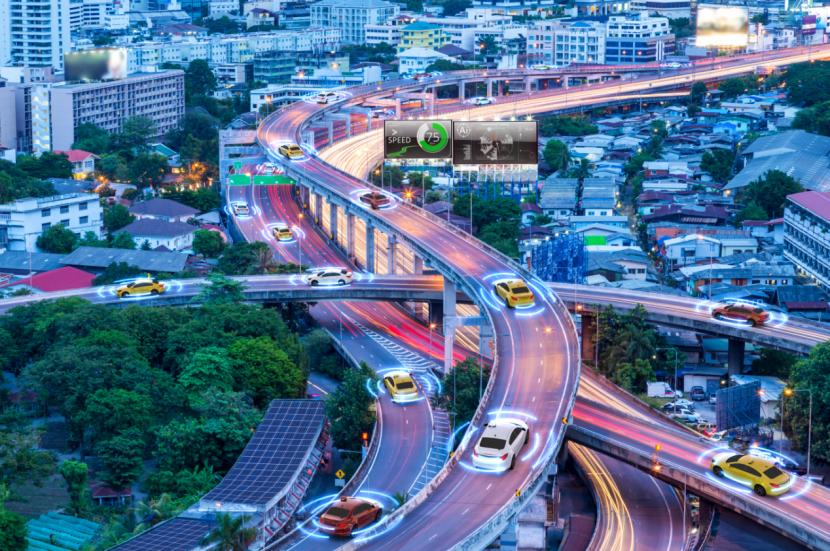
Feng Xingya also proposed improving the 70MPa hydrogen refueling standard and regulatory system, strengthening research on core technologies, and supporting the industrialization of hydrogen - fuel vehicles. Li Shufu, the chairman of Geely Holding Group, focused on green freight and suggested promoting methanol - electric trucks. Relying on their advantages such as long - range, low - cost, and strong cold - resistance, refueling facilities can be arranged along the logistics channels to create a green and low - carbon freight corridor, forming a multi - energy complementary pattern of "pure electric + hydrogen + methanol" to ensure the implementation of the dual - carbon goal.
In response to industry involution and disordered competition, Zhu Huarong, the chairman of Changan Automobile, suggested promoting industry integration and mergers and acquisitions, optimizing the production capacity structure, increasing market concentration, and creating leading automobile enterprises with global competitiveness to get rid of low - level homogeneous competition. Luo Laichang, the president of Jiangling Motors Co., Ltd., focused on standardizing the market order and suggested rectifying behaviors such as inventory - pressing and low - price dumping to ensure the reasonable profits of dealers and the legitimate rights and interests of consumers, and promoting the industry to shift from "price war" to "value war" to reshape a healthy and sustainable industrial ecosystem.
The suggestions on the automotive field put forward by deputies to the National People's Congress and members of the CPPCC during the 2026 National Two Sessions are the crystallization of wisdom based on the new stage of China's automotive industry development, responding to new industrial pain points, and conforming to new trends of the times. Dozens of proposals in six major directions not only focus on cultivating core competitiveness in areas such as intelligent connected vehicles, autonomous driving, and new energy energy - replenishment, but also build a comprehensive policy system of "technological innovation + institutional improvement + ecosystem construction + people's livelihood improvement".
Currently, China's automotive industry and market are at a critical stage of moving from "the largest in the world" to "the top in the world". The proposals of many representatives and members of the CPPCC in the automotive industry directly address the industry's pain points, promoting the strategic transformation of industrial policies from "scale expansion" to "quality improvement, ecosystem optimization, and collaborative innovation". With the gradual implementation of the relevant policies in the proposals, the regulations and standards for autonomous driving will be more complete, and the large - scale application of high - level autonomous driving will be accelerated; the construction of a national unified energy - replenishment network will be accelerated, and a pattern of coordinated development of multiple energy sources will gradually take shape; the disordered competition in the industry will be effectively curbed, and the industrial concentration and profitability will steadily increase; the green closed - loop system for power batteries will be more sound.
This article is from the WeChat official account "Automotive Market Insights", author: Yang Shuo. It is published by 36Kr with authorization.