Das ophthalmologische Implantat, das dünner als ein Haar ist, und das chinesisch gegründete Unternehmen Avisi hat eine Finanzierung im Wert von zehn Millionen erhalten.
Recently, the ophthalmic medical device company Avisi Technologies, founded by Chinese entrepreneurs, announced the completion of its Series A financing round, raising $10.7 million. This round of financing was led by MedVenture Partners. New investors in this round include Sherpa Healthcare Partners, SNBL - Gemseki, SBI US Gateway Fund, Golden Seeds, OneOneFive, etc. Existing shareholders include Good Growth Capital, Accanto Partners, Life Sciences Greenhouse Investment, Quaker Capital Investments, etc.
The funds from this financing round will be used to advance Avisi's key clinical study, SAPPHIRE, and further develop Avisi's product portfolio, which offers new treatment options for the full spectrum of glaucoma diseases.
As of this financing round, Avisi has completed a total of 10 rounds of financing, with a total financing amount of $21.7 million. It is worth noting that this includes three rounds of non - dilutive grant financing from the US National Science Foundation (NSF). Although the total financing amount is less than the single - round amount of other companies, Avisi has gained the trust of investors a total of 10 times up to this Series A financing and received "non - repayable" capital investments three times, which is a concrete manifestation of patient capitalists committed to long - termism. But what does Avisi rely on to achieve all this? It makes one think.
Developed at the University of Pennsylvania, Core Technology from Interdisciplinary Collaboration
If we trace back to 2017, the founding team established Avisi Technologies through the University of Pennsylvania's Y - Prize program, with the vision of using new nanotechnologies to solve the problem of vision loss and prevent blindness. This is the common "routine" for founding US technology and medical companies. It also means that Avisi has a solid and strong team of scientists.
The founder, Rui Jing Jiang, recalled her motivation for founding the company in an interview. Before founding Avisi Technologies, she was not sure what she would do in her future career. Rui Jing Jiang comes from a medical family. For a long time, she thought she might go into medical research. She also did internships at a pharmaceutical company and a large bank. At that time, she had many options.
The turning point in the story occurred at a competition called the "Y prize" at the University of Pennsylvania. This is a competition event organized by the University of Pennsylvania to encourage students from different majors to apply their learned knowledge to promote the commercialization of existing technologies. At that time, Professor Igor Bargatin from the Department of Mechanical Engineering invented a very novel material, a very thin material using nanotechnology that has both stiffness and toughness. When Rui Jing Jiang and her co - founders saw this technology, they couldn't help but exclaim: "This is a very interesting material. If we could use these materials to influence human health, that would be really cool?" "Are there micro - implants in the human body?" "If these implants could be made smaller, would human health benefit?" With these thoughts, Rui Jing Jiang and her partners embarked on the path of ophthalmic research.
In the early stage, Avisi received support from accelerators of several institutions such as the US National Science Foundation, the Glaucoma Research Foundation, and the UCSF Rosenman Institute, which laid the foundation for technology transformation and the clinical path and also accelerated the development speed.
After that, Avisi also joined well - known medical innovation platforms such as Johnson & Johnson JLABS and MedTech Innovator and continuously improved its clinical, regulatory, and commercial capabilities.
In this process, Avisi's core technology - VisiPlate - emerged from the interdisciplinary collaboration between the materials science and technology team and ophthalmic experts.
Focus on the High - Demand Glaucoma Sector, Concentrate on a Single High - Value Indication
Glaucoma is the leading cause of irreversible blindness worldwide. According to the "Glaucoma Surgical Instruments Market Report 2025" by Market Scope, there are over 133 million glaucoma patients worldwide, and there is currently no cure. Glaucoma patients suffer from an excess of fluid in the eye, which puts pressure on the optic nerve and ultimately leads to permanent vision loss. Open - angle glaucoma (OAG) and closed - angle glaucoma are the most common types of glaucoma.
Current glaucoma treatment methods include solutions such as medications, lasers, surgeries, and medical devices. However, these interventions are highly dependent on patient compliance, require repeated treatments, or tend to clog and form scars over time, thus becoming ineffective. Therefore, there is still a great need for safe and effective long - term treatment methods.
Based on the research of the clinical problems of glaucoma, Avisi currently has a total of three product lines planned. VisiPlate is its core product, an "ultra - thin multi - channel aqueous drainage shunt" for patients with open - angle glaucoma, which belongs to the minimally invasive filtration implants. For different types and severities of glaucoma, Avisi has also developed the VisiPlate - S version for mild to moderate glaucoma cases. The other product lines also include an early - stage project targeting the anterior chamber of the eye.
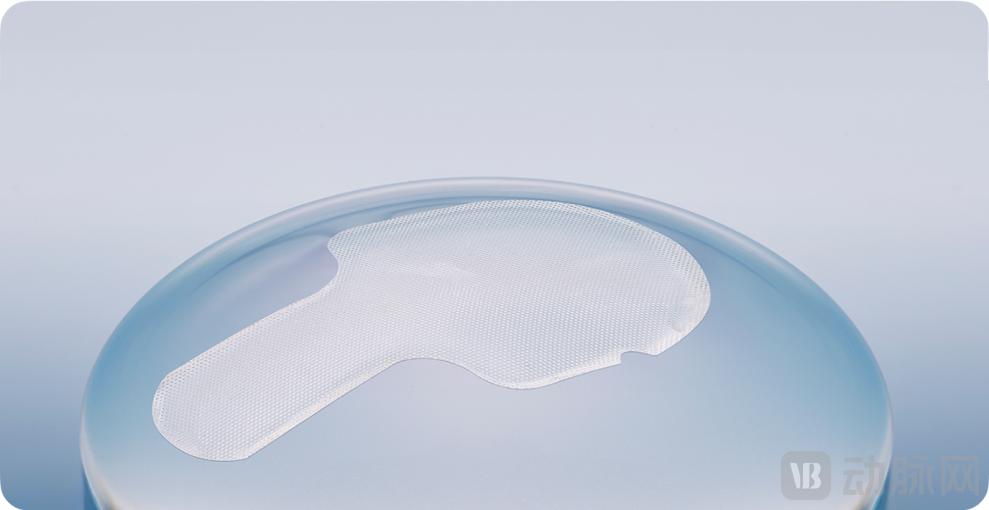
Rendering of VisiPlate (Source: Avisi website)
A thin product portfolio and a single indication might be interpreted as a lack of core competitiveness in other companies, but that's not the case for Avisi. Avisi is in the segment of minimally invasive glaucoma surgeries (MIGS) in the field of ophthalmic medical devices. This niche market is driven by the global aging population and the high blindness rate among glaucoma patients, and the clinical demand remains high in the long term. According to the Glaucoma Treatment Market Analysis Report 2025 by Bēi Zhé Sī Consulting, the global and Chinese glaucoma treatment market sizes in 2025 are estimated to be 46.453 billion yuan (Renminbi) and 13.648 billion yuan respectively. It is predicted that the global glaucoma treatment market size will reach 59.926 billion yuan by 2032. The industry has broad development potential.
Directly Target the Core of Intraocular Pressure Reduction, Innovative Design Improves Patient Experience
Safely reducing intraocular pressure is the key to glaucoma treatment and the clinically proven effective intervention element so far.
The core of minimally invasive glaucoma surgery is to develop interventions for different target points of the aqueous outflow pathway. Depending on the site of action, they can be divided into three main surgical techniques: techniques related to the trabecular meshwork, techniques for dilating the Schlemm's canal, and techniques for drainage into the suprachoroidal space.
VisiPlate selects the suprachoroidal space as the site of action. The suprachoroidal space is located between the sclera and the choroid. Under normal circumstances, there is no aqueous drainage in this area. This surgical technique creates an artificial path from the anterior chamber to the suprachoroidal space by implanting a stent to divert the aqueous into the suprachoroidal space and be absorbed by the choroidal vessels, thereby increasing the aqueous outflow.
Based on these principles and starting from the eye structure, VisiPlate uses a design concept that employs an internal network of interconnected micro - channels to guide the blocked aqueous from the anterior chamber to the second drainage zone of the eye, thus enabling a continuous aqueous outflow with a smaller structure and reducing intraocular pressure. In addition, compared to other common sites of action such as the subretinal space and the vitreous cavity, VisiPlate is more minimally invasive, bypasses the retinal barrier, and reduces direct damage to the retina.
In terms of material composition, VisiPlate has chosen innovative components such as aluminum oxide and polyimide C as materials to reduce the foreign - body reaction as much as possible and lower the risk of scar formation on the premise of effective pressure reduction.
In terms of patient experience, VisiPlate shows a more human - centered design. The eye is an important organ that supports humans in their daily basic needs and ensures both the maintenance of individual appearance and the perception of basic body functions. For glaucoma patients, implant treatment is extremely important from both aesthetic, psychological, and physical function perspectives.
Based on this, VisiPlate uses an ultra - thin material, whose overall thickness is many times thinner than the diameter of a human hair and appears almost invisible and transparent at a social distance. This ultra - thin property improves the comfort and aesthetic appearance for patients after implantation.
Driven by Clinical Data, Multi - Channel Design is Confirmed
The key clinical study SAPPHIRE mentioned in the financing announcement reached a regulatory milestone in October 2025 and received the Investigational Device Exemption (IDE) approval from the US Food and Drug Administration (FDA). This study will evaluate the safety and effectiveness of VisiPlate in US patients with open - angle glaucoma.
In terms of clinical validation, Avisi has conducted several pre - and key studies around VisiPlate. Before SAPPHIRE, VisiPlate was evaluated in the VITA study, and the six - month results were published at the 2025 Annual Meeting of the American Glaucoma Society. The data shows that the average intraocular pressure of the test eyes at baseline was about 24.1 mmHg. With the sole implantation of VisiPlate, the average intraocular pressure decreased by 40.4% to 14.0 mmHg after six months, and the average number of medications taken decreased from 2.0 to 0.8. About 78.6% of the test eyes achieved a reduction in intraocular pressure of more than 20% and took the same or fewer medications, exceeding the preset primary efficacy endpoint. About 57.1% of the test eyes no longer needed intraocular pressure - lowering medications after six months. The data demonstrates the potential of this product in controlling intraocular pressure and reducing medication use.
Dr. Eydie Miller - Ellis, Vice - President of the American Glaucoma Society, Head of the Glaucoma Department at the Scheie Eye Institute of the University of Pennsylvania, and Chief Researcher of the SAPPHIRE study, shared her experience of the difference between VisiPlate and trabecular meshwork - related surgical techniques. "After a trabeculectomy or other filtration surgeries, the filtration bleb can be under high tension, which causes some discomfort to the patient," she said. "This trend of high - tension filtration blebs is partly due to the uniform outflow design of existing stents. When all the aqueous flows out through a single outflow path, the aqueous is more concentrated in the middle of the filtration bleb, leading to higher tension in this area." VisiPlate's multi - channel design solves exactly this problem.
She added that surgeons in the VITA study believed that the VisiPlate surgery was easier and faster than the standard trabeculectomy and required less follow - up care.
Currently, Avisi is conducting several clinical validation studies around VisiPlate at six research centers in Arizona, California, Colorado, Texas, Wisconsin, and New York. When more clinical data is available, Avisi will offer a new narrative for investment in the intersection of ophthalmic instruments and super - materials.
This article is from the WeChat account “Arterial Network” (ID: vcbeat), author: Zhang Mengli, published by 36Kr with permission.