In the unmanned restaurant, the robot gave me a lesson.
In March in Barcelona, the wind from the Mediterranean carries the heatwave of technology.
MWC 2026 is held as scheduled.
Over the past 20 years, MWC has been like an accurate prophet, continuously shaping the future of the mobile industry. For example, 5G and foldable screens in 2019, and AI and robots in 2025.
There is no doubt that the keyword of this year's MWC is The IQ Era, or more accurately, the New Era of Intelligence. The entire exhibition area is centered around two themes: firstly, AI has finally evolved from an APP plugin capability to a system capability; secondly, communication capabilities are moving towards platformization.
As a participant for many consecutive years, I can clearly feel that what fills the air at the exhibition site is no longer the hustle and bustle of technical jargon, but something more intangible: services are starting to come to life.
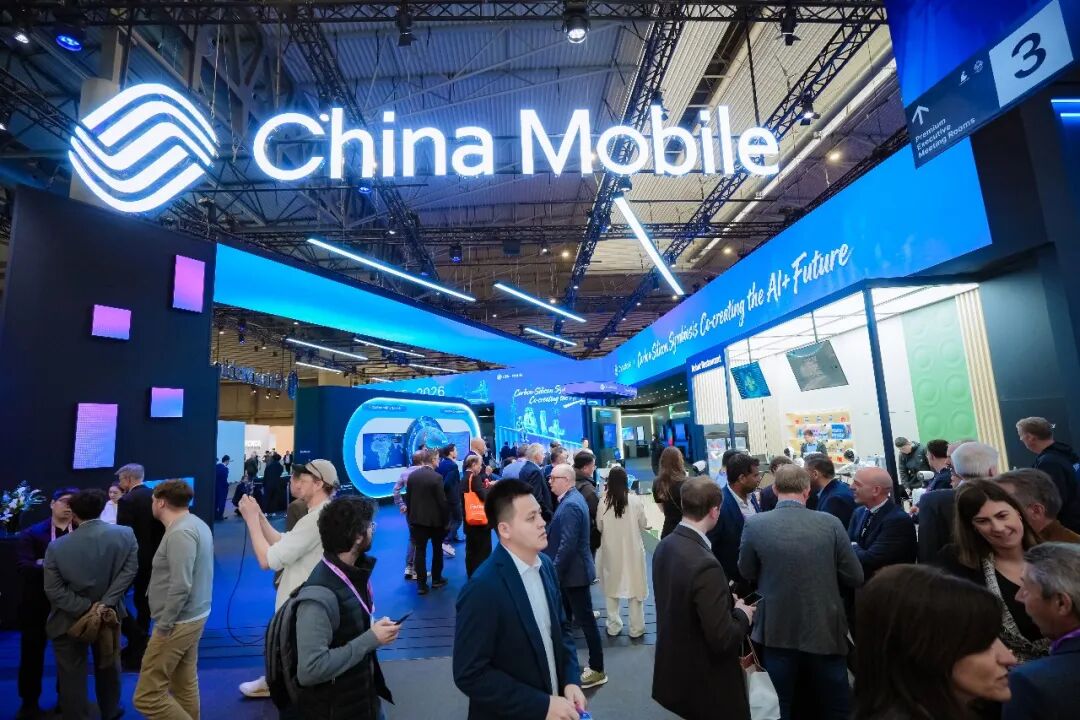
Chinese tech companies have upgraded from being mere "exhibitors" in the past to "definers" today. What's most surprising is China Mobile, which has almost become a model for intelligent services at the entire venue.
From daily life scenarios to industrial driving forces, a service revolution centered around "Seamless Intelligence" is taking shape here.
01
China Mobile Treats:
Robot Chefs and Silicon-based Waiters
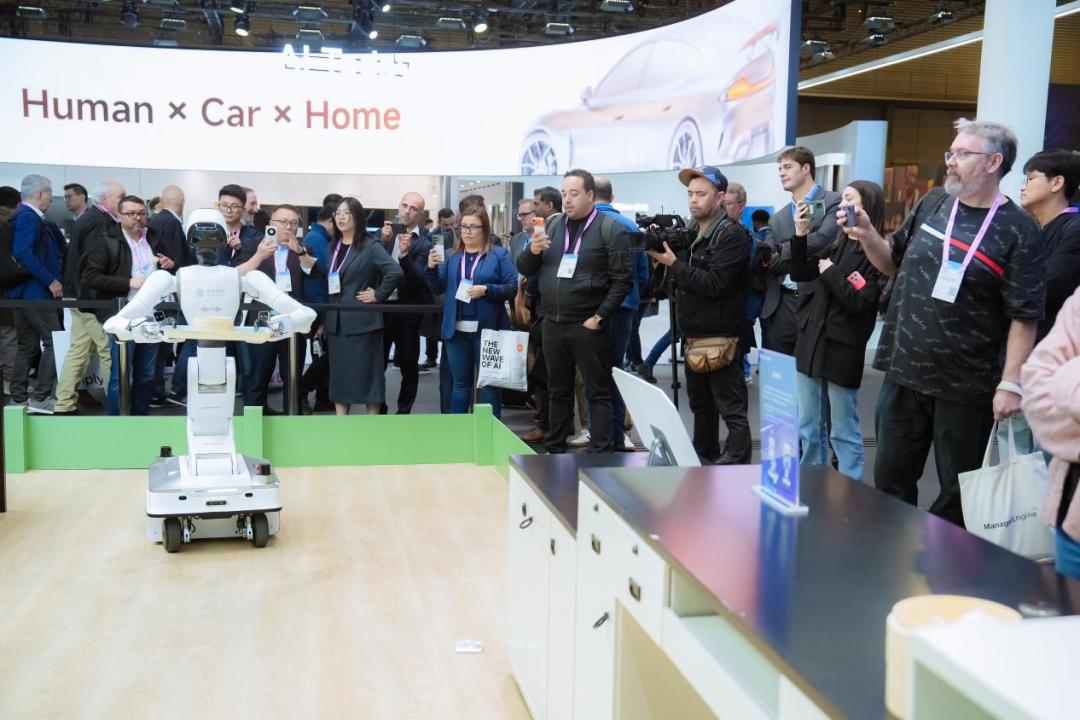
At the China Mobile exhibition area, humanoid robots are dancing in unison to the music.
They are not just for show: they can handle reception, guidance, and intelligent operation, taking on all the tasks of a small evening party single - handedly.
This is not just a display of technology. It is a sign that "carbon - silicon symbiosis" is happening: silicon - based intelligent agents are moving from the exhibition booths into daily life and starting to learn to provide services.
On the other side of the exhibition area, in the Mobile Star Chef Unmanned Restaurant, four robotic arms are each performing their duties: delivering food, brewing drinks, arranging dishes, and baking, all in a smooth and unhurried manner.
Most likely, you've experienced situations like these:
Arriving at the airport in the early morning when all restaurants are closed, and having to wait hungry until dawn; being in the middle of enjoying a scenic spot but deciding to endure hunger because going out for a meal and coming back would mean queuing again; staying up late to study and finding only instant noodles in the dorm when you're hungry.
The unmanned restaurant aims to fill those moments when you "decide to endure".
We had a hands - on experience on - site: from placing an order to getting the food, the response was instant, without any glitches.
Behind this smooth operation is the manifestation of intelligent technology. The End - to - End VLA Large Model enables the robots to handle tableware of different shapes. The first - created VLA - RAIL Asynchronous Real - Time Inference Framework has solved the robots' problem of shaking hands. Network - connected Scheduling ensures that multiple robots can cooperate smoothly during peak dining hours.
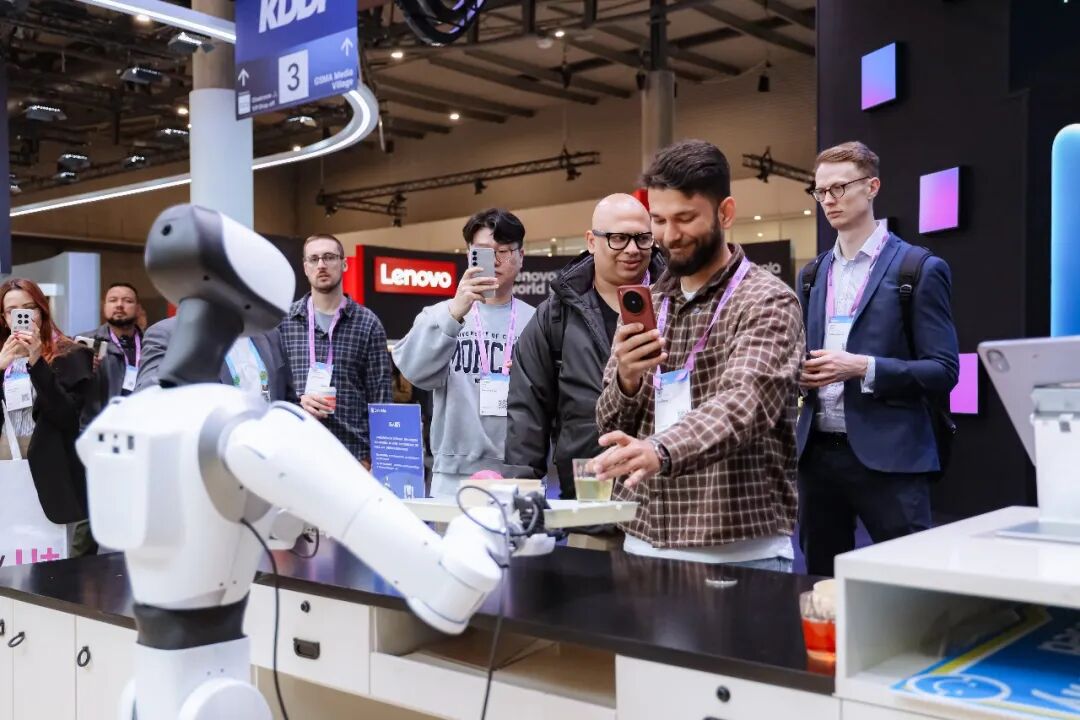
For ordinary people, it is a savior when hungry and also great material for a WeChat Moments post. Who can resist taking a video of a robot creating a latte art for them?
For merchants, standardized operation allows the restaurant to be replicated quickly like building blocks. Silicon - based employees don't need social security and never get tired, making 24 - hour operation possible without having to persuade people to work night shifts.
For telecom operators, getting involved in robot development is a necessary step in the intelligent transformation. China Mobile has integrated its years of accumulated computing power, network, and AI capabilities into the robots. The Jiutian Large Model is the brain, the 5G private network is the unimpaired nerve, and the installation and maintenance system is the training ground. The robot is a carrier of intelligent services.
After learning to serve dishes, the next step is to enter people's homes.
02
With the Same Lingxi Brain,
Let AI Move from the Phone into the Home
In the past two years, we've gotten used to saying things like "Retouch a photo" or "Write a summary" to our phones. It's cool, but the phone is ultimately a personal item. It knows your preferences but doesn't understand your parents' dialects or care about your child's desire to play badminton.
The Lingxi Family Intelligent Agent aims to change this: Let AI move from an individual's phone into the whole family's home.
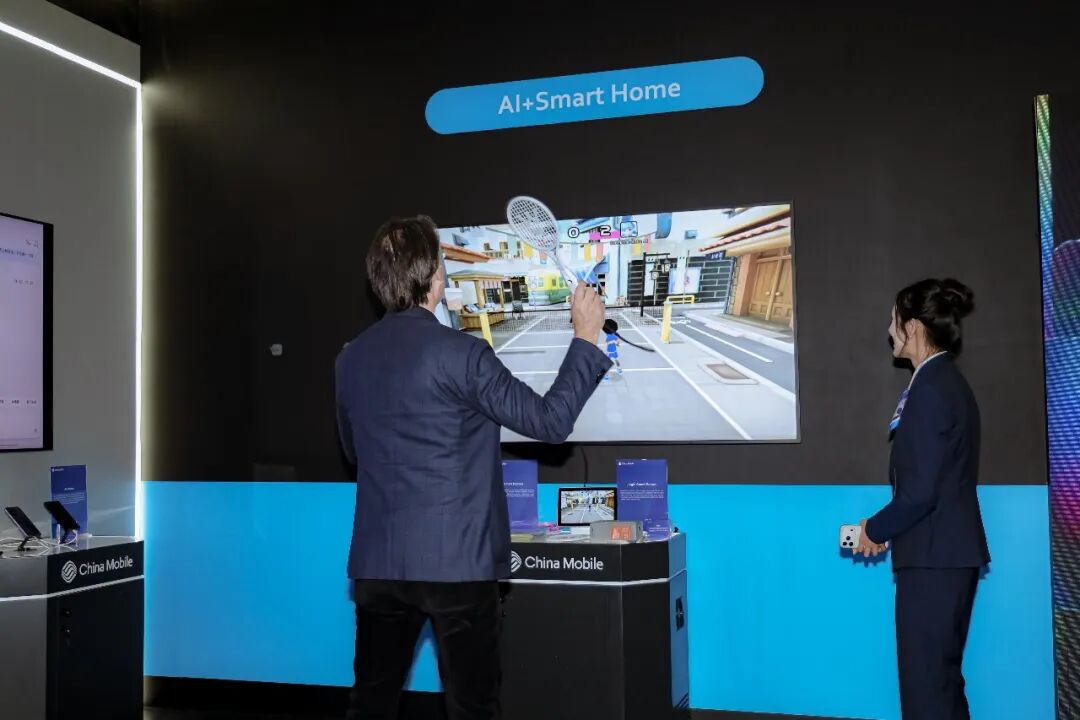
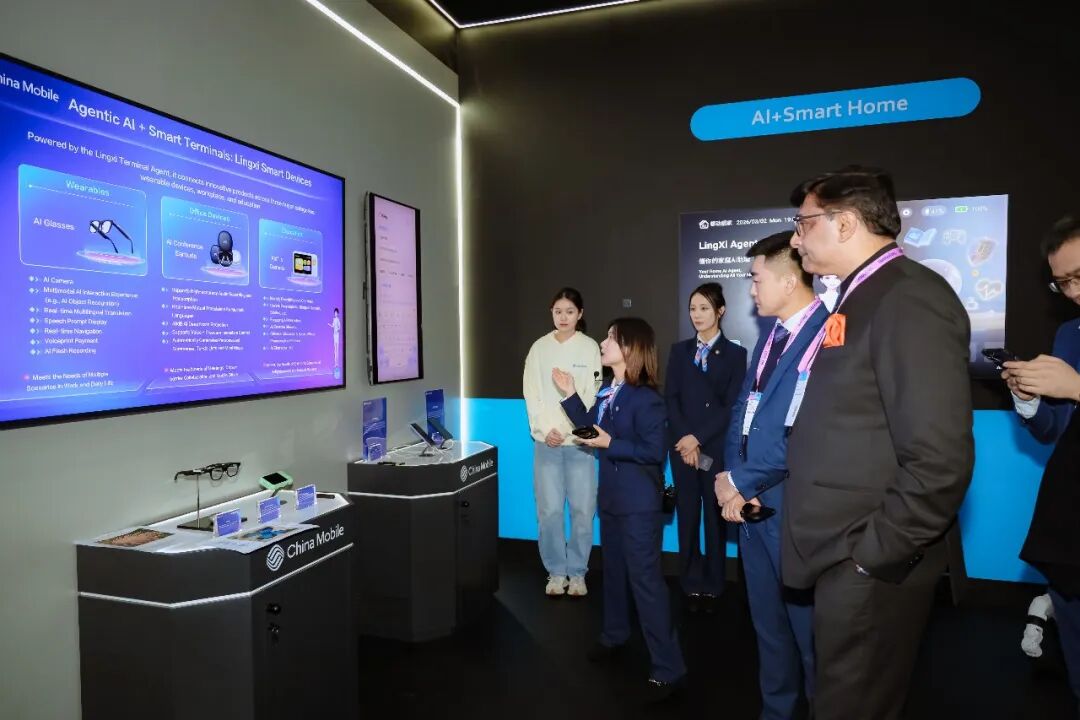
Walking into the exhibition area, it looks no different from an ordinary TV at first glance. But softly calling "Lingxi, Lingxi", you'll immediately realize that the "box" that could only passively play programs has become an all - in - one terminal that combines a TV, a speaker, a computer, a learning tablet, and a video phone. With just a voice command, it can take on any role you need.
When an elderly person asks "How's my blood sugar?", the screen clearly shows the data curve, along with diet suggestions and an eight - section brocade video. Managing chronic diseases is as easy as a single sentence.
When a child says "I want to play badminton", it immediately starts a motion - sensing game, turning the living room into a sports arena.
When you miss your loved ones and say "Call my son", a high - definition video call is instantly connected, so parents don't have to search laboriously in the contact list.
All this is thanks to the "Lingxi" core, which can accurately analyze complex intentions, continuously learn the family's habits, and think like a real butler. That's why the elderly in the family are often the first to fall in love with this "digital family member".
Behind this is the warm side of technology: Voice interaction removes the barriers to using smart devices, and the ability to recognize local dialects allows AI to truly "understand human language". It addresses the urgent need of China's 280 million elderly population for simplified smart devices and provides a key to a trillion - level incremental market.
A visitor at the scene sighed, "I used to think the TV was just a cold glass screen, but now it seems like a member of the family."
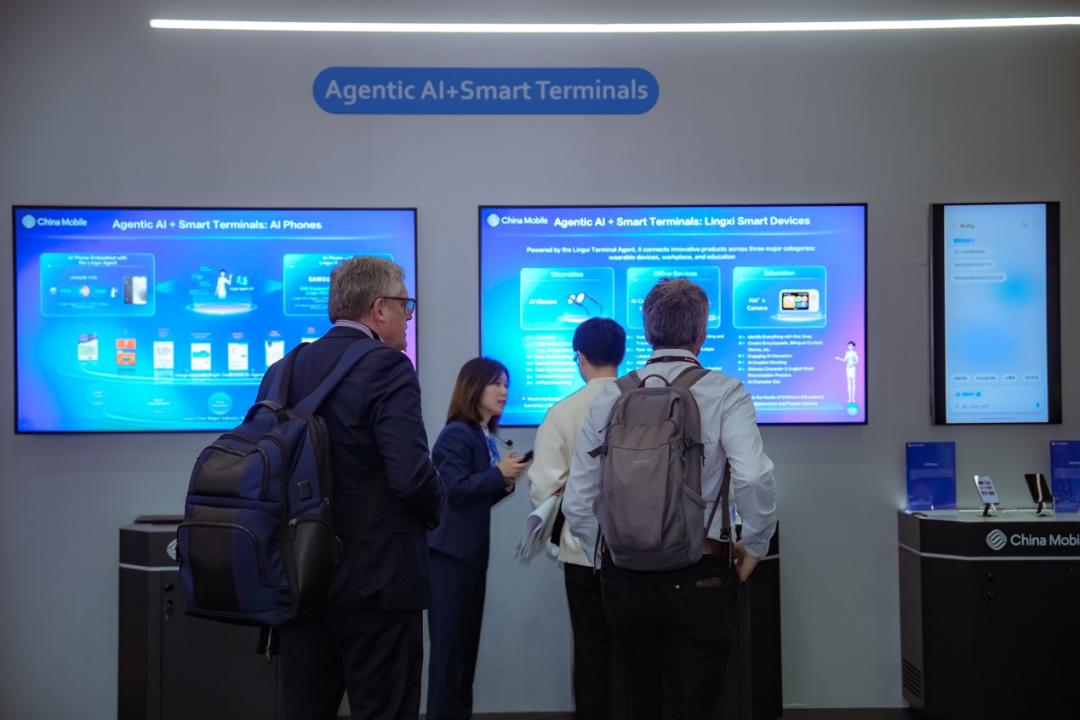
Most importantly, in the past, developers were troubled by the "App islands". You had to open Meituan to order takeout and Ctrip to book a hotel. Users were just moving between different apps. At this year's MWC, everyone is promoting A2A - Agent to Agent.
We interacted with the "Lingxi Terminal Intelligent Agent" on - site:
By directly waking up the voice assistant on the phone and saying "Find a Chaoshancai restaurant nearby suitable for a group dinner, with an average per - person cost of 200 yuan and a rating of over four stars", based on self - developed intelligent execution technology, it can complete the entire process of understanding the demand, location search, cuisine selection, price filtering, rating optimization, and route planning within one minute, and even arrange post - dinner activities.
The traditional terminal entrance is evolving into an intelligent operating system that integrates communication and services.
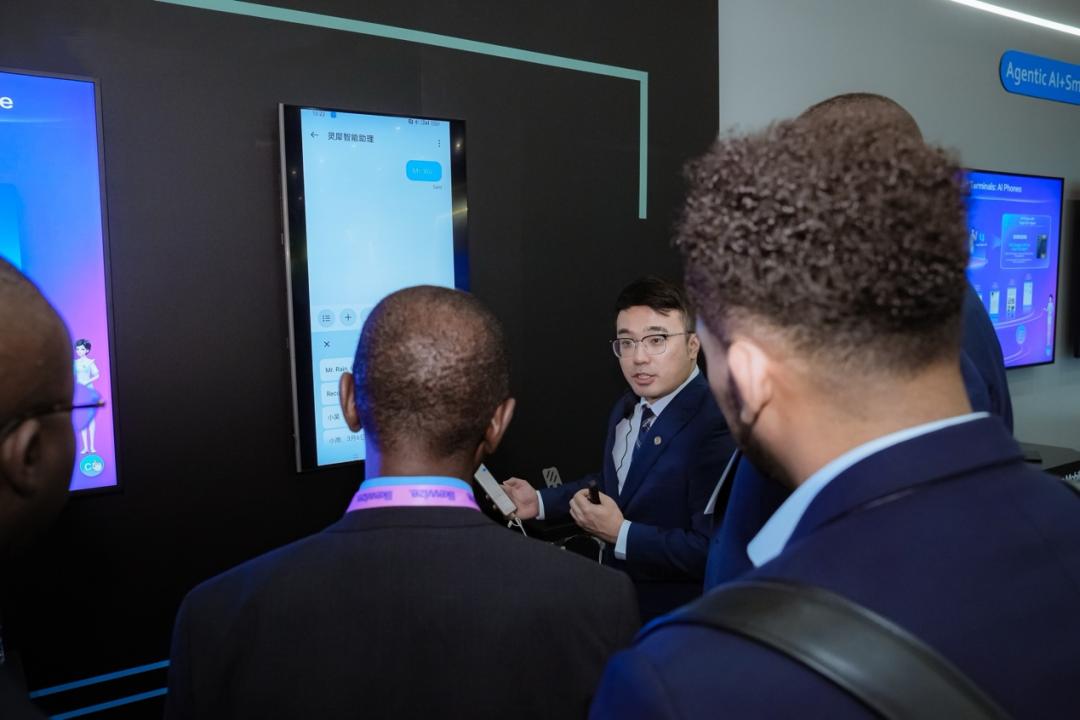
By typing "Please help me create a 4 - day and 3 - night travel guide to Guangzhou for a family of three. The itinerary should not be too packed, for a leisurely trip" in the SMS dialog box, the Lingxi Message Intelligent Agent responds immediately, generating a personalized guide with one click. It integrates information about scenic spots and hotels, recommends the best travel plan, and completes intelligent budget planning, achieving fully intelligent arrangement throughout the process.
SMS has evolved from a simple communication tool to a combination of AI and life services, gradually becoming an "invisible butler" for many users.
Behind this is the MoMA Intelligent Decision - making Engine, which breaks down complex requirements into atomic tasks, automatically matches the optimal expert model and dedicated intelligent agents, and arranges the optimal execution path.
Data shows that the number of Lingxi intelligent agent users has exceeded 70 million, and the cumulative number of AI + product users has exceeded 210 million. The new interaction mode has quietly become the mainstream, shifting from the past situation where "people had to search hard for applications" to the current situation where "services actively adapt to people".
03
From Family to Industry,
AI Intelligent Services are Taking Over More Scenarios
The trend shown at the China Mobile exhibition area is clear:
The "Lingxi family members" at home, who have just learned to serve tea and accompany children to play badminton, are now expanding into larger areas, deeply integrating into factory production lines and low - altitude drones. Essentially, it's all about providing services without people having to worry, truly achieving intelligence.
The skills of experienced industrial workers are integrated into the system.
The most likely stumbling block in industrial intelligence is not that "the model can't be generated", but rather that the task gets stuck halfway. The local end understands the intention, the cloud makes a plan, but the third - party service fails, and all efforts are in vain.
China Mobile has built a highly reliable channel using 5G + the Industrial Internet.
At the BOE intelligent factory, the 5G network creates a "millisecond - level" data channel. AI acts like a super supervisor with pixel - level vision, precisely controlling the production line in real - time.
At overseas oil platforms farther away, construction reports that used to take one day to transmit and required multiple people to verify are now automatically generated by the AI construction management system in just one hour, with zero manual omission rate. The experience of experienced workers accumulated over a lifetime has become digital assets that can be called up at any time.
It truly hands over people's needs to the system and lets the system worry on behalf of people.
Drones with a brain are flying across the globe.
Actually, the low - altitude economy has been talked about for many years, but drones have always been one step short. Issues such as limited range, unauthorized flight, and disconnection in extreme environments have persisted. China Mobile has solved these problems with the 5G network - connected drone system, replacing the traditional self - built link with 5G cellular technology to achieve beyond - visual - line - of - sight remote control and real - time transmission of massive data.
The exhibited "Hubble One" terminal has transformed drones from simple aerial photography tools into "flying smartphones". With the "Four - in - One Network - connected Code" technology, unauthorized flights can be detected, connected to, and managed. Drones equipped with intelligent brains have been deployed at the Hong Kong Police Force and Greek ports.
Flying from China to the world, it's an extension of the same intelligent service capabilities, just like a digital family member controlling the lights and curtains at home, it controls drones in the sky.
The sensing network forms a net covering "sky, land, sea".
Whether it's the skills of experienced workers being integrated into the industrial system or drones with intelligent brains taking to the sky, this logic of "worrying on behalf of people" is spreading from industry scenarios to the entire city.
Previously independent sensing terminals are now integrated into a network by China Mobile's integrated IoT device management platform.
In Shenzhen, intelligent buoys along the coastline collect seawater data. Deep in Wutong Mountain, drones patrol to monitor forest fire risks. Video monitoring points all over the city capture subtle changes. Sensing terminals that used to operate independently in the sky, on the ground, and in the sea are now woven into an intelligent environmental monitoring network covering "sky, land, sea".
As the net is cast from the sky, the scope of concern spreads from the doorstep to the neighborhood.
In the Mudan Community in Shenyang, an old residential area with a building age of over 40 years, a "cockpit" manages everything on a single screen, and it can automatically alert when an elderly person falls. AI brings a sense of security to people's doorsteps.
After visiting the entire MWC 2026, the biggest impression is that AI is evolving from a tool for solving individual needs to an operating system that reshapes production, life, and public services.
The scenarios in the exhibition area still linger in my mind - the robotic arms working in harmony in the unmanned restaurant, Lingxi understanding dialects in front of the family screen, the drones autonomously patrolling over the city, and the "cockpit" silently guarding against elderly falls in the old residential area.
What makes them moving is not the flashy technology, but the fact that they are quietly bridging a gap that we've long taken for granted: the gap between the digital world and the physical world.
04
This May Be the Real Watershed in 2026
It's not about which big company has released a large - scale model with hundreds of billions