Live aus der MWC: Huawei, Qualcomm, NVIDIA, SpaceX und andere starten den "Platzierungskampf" um 6G.
At the Mobile World Congress (MWC26) in Barcelona, 6G was undoubtedly the absolute star. Although according to the schedule, the technical standards for 6G will only be finally determined in 2029 and a preliminary commercial implementation may possibly begin then, the impressive atmosphere at this MWC shows that the "positioning battle" in the industry has already broken out, and various forces are fiercely competing with each other.
This is not only a technological iteration but also a reshaping of the power balance. From the establishment of a globally unified "test plan" by the International Telecommunication Union (ITU), to the presentation of technological roadmaps by traditional giants such as Huawei, ZTE, and Ericsson, to the strong entry of "players" from other industries like Nvidia and the frequent participation of "space forces" like SpaceX – The signals emanating from this MWC are unambiguous: 6G is no longer just a future vision on paper but has already entered the real tracks of technological validation and interest conflicts.
A multi - layered picture of the 6G competition is unfolding.
Amid this commotion, although 5G is no longer at the center of public attention, it is still a "headache" for industry giants: Ensuring the return on 5G investments and completing the evolution to 5G Stand - Alone Networks (SA) is a threshold that must be overcome on the way to 6G.
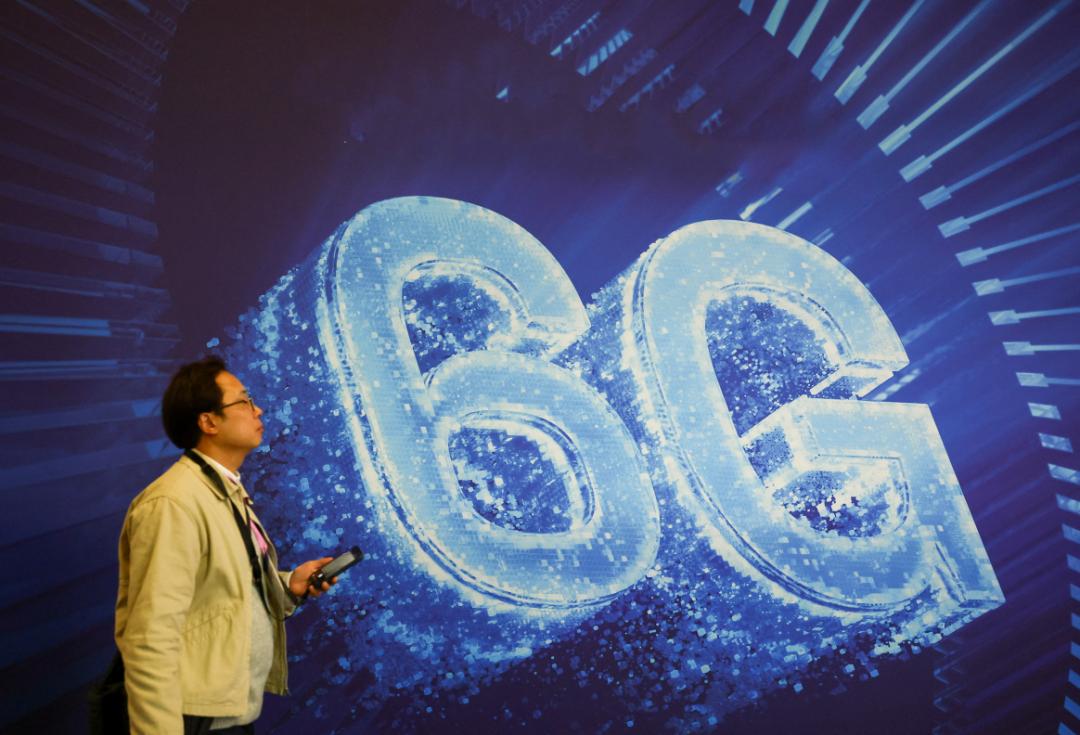
Source: Oriental IC
1
Globally unified "test plan" for 6G established
If you recall Barcelona more than a year ago, 6G was also very popular at the MWC back then, but it was more like a "draft" for the future. This time, a large number of real objects have appeared at the fair – prototypes and prototype systems that allow people to gradually recognize the "construction site sketch" of 6G development.
All of this is the result of the joint efforts of the industry.
One month before the opening of this MWC, the International Telecommunication Union (ITU) released two key documents that established a globally unified "test plan" for 6G research and also made it possible for the first time to provide concepts such as "AI - native" and "connectivity and perception in one" with measurable technical indicators.
In "Report on the Performance Indicators of the IMT - 2030 Radio Interface", the ITU has for the first time defined more than a dozen key performance indicators with a globally unified standard. In addition to a significant increase in traditional indicators such as peak rate, user experience rate, and radio interface delay, the report has also for the first time defined specific capability requirements for the transformative features of 6G, such as centimeter - accurate positioning, the ability of connectivity and perception in one, and an AI - native architecture.
The subsequent "Minimum Technical Performance Requirements for IMT - 2030 (6G)" systematically defines the prominent new capabilities of 6G. The most exciting part is that the radio interface must support the bidirectional functions of "network support for AI" and "AI - enhanced network" – This means that AI is no longer just an application on the network but becomes the most fundamental architecture of the network itself.
The publication of these two reports marks the transition of 6G from the vision to the implementation phase and lays a solid foundation for the submission and evaluation of future candidate technology solutions and the formation of a globally unified standard.
2
The "positioning battle" of the giants begins
Although the standards have not yet been determined, the "positioning battle" is already in full swing. At this MWC, various manufacturers have presented their progress in 6G technology, and the situation is becoming clearer.
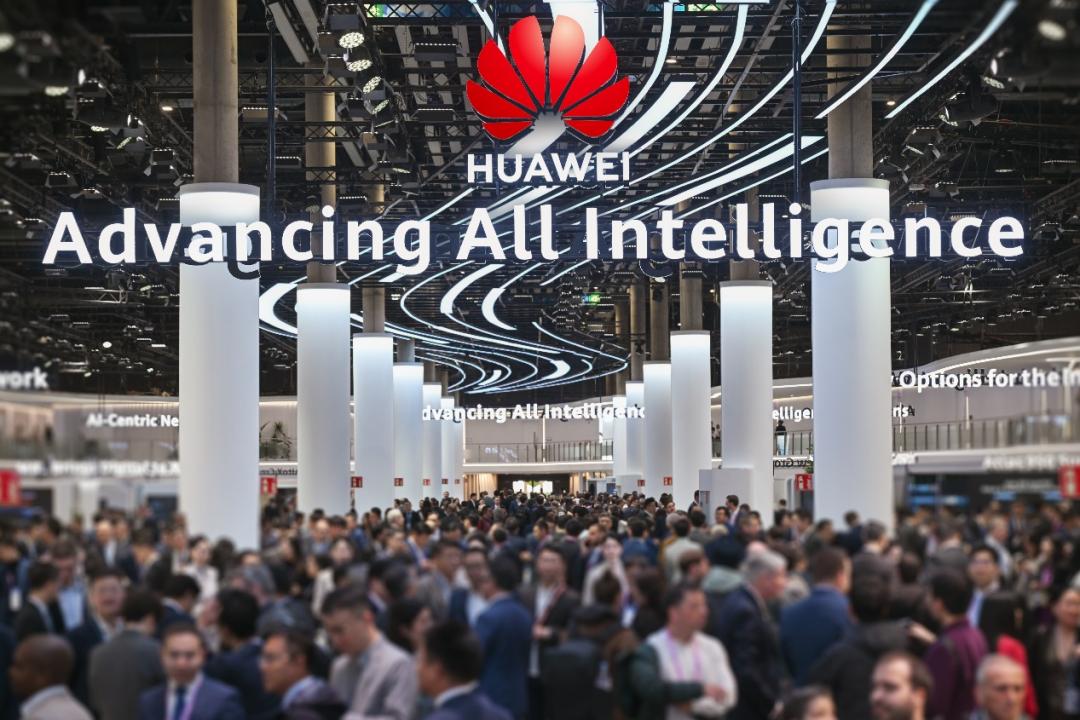
Huawei's strategy is to bet on the "smooth evolution from 5G - A to 6G". At this fair, it used a significant part of its presentation to illustrate the path to a smooth transition to 6G based on the U6GHz band (the upper half of the 6GHz band, 6425MHz - 7125MHz). For example, Huawei presented the first 256T U6GHz AAU, which achieves a similar range to the C - band through an ultra - large antenna array and a digital - analog hybrid beamforming algorithm. Another Chinese device manufacturer, ZTE, also showed its own U6GHz band 2000+ antenna - element 6G prototype system at the MWC, which is said to be able to achieve a ten - fold increase in capacity compared to 5G - A in AI - algorithm - driven operation.
Ericsson also attaches great importance to the smooth evolution from 5G to 6G to reduce resource waste and signaling expenses of network operators. Ericsson demonstrated the Multi - Radio Spectrum Sharing (MRSS) technology at the MWC. One system operating a 5G network and another system simulating a 6G network can both be connected to Ericsson's TDD mid - band base station to validate the real - time interoperability and performance of MRSS.
These manufacturers, which are at the forefront of the global RAN market positioning, hope to leverage their existing advantages and establish themselves firmly in the future 6G era through a close connection to 5G and 5G - A. Naturally, this is very beneficial for the entire industry, especially for telecommunications network operators, because 6G does not build on new ground but builds on the "shoulders" of 5G.
This is also the deeper reason why 5G still remains in people's minds today.
In the opening speech, the president of the MWC organizer GSMA (Global System for Mobile Communications Association), Vivek Badrinath, emphasized that the mobile industry still has "three mountains" in its way, with the first being "the completion of the journey to 5G SA". He called out: "If we want to realize the full promises of 5G and create a healthy foundation for future 6G, we must recognize the urgency – We must first complete the journey to 5G SA."
This call is based on a harsh reality: Although 5G has been commercially deployed worldwide for six years, Non - Stand - Alone Networks (5G NSA) are still the main form of 5G deployment.
Ericsson's CEO, Börje Ekholm, also made a similar call at the MWC: "We are entering a new era, and everything will be possible based on 5G SA."
The path from 5G NSA to 5G SA and then to 6G is a clear evolutionary path. If the path of 5G is not completed, it will be difficult to successfully launch 6G.
3
From spectator to actor
Compared with the strategies of traditional telecommunications device giants such as Huawei and Ericsson in the 6G industry, an even more remarkable trend is that computing power and chip companies are transforming from "spectators" to "actors", moving from the "periphery of the stage" to the "center of the stage", and the value chain dominated by traditional communication device manufacturers is facing the challenge of reshaping.
Two years ago, during the MWC24, the AI - RAN Alliance was founded, led by Nvidia and jointly initiated by 11 companies and institutions. Its goal is to promote the deep integration of AI and wireless access networks and build a technological system for an "AI - native communication network".
In the past two years, the AI - RAN Alliance has developed rapidly. Not only has the number of its members increased significantly, but also remarkable progress has been made in technological breakthroughs and ecosystem partnerships.
During the MWC26, Nokia, as an investment target and a firm ally of Nvidia, announced that it has validated many capabilities of AI - RAN in cooperation with network operators such as T - Mobile, SoftBank, and IOH (an Indonesian network operator). For example, in cooperation with IOH, the first AI - controlled 5G call in Southeast Asia was realized, and the real - time application of remotely controlling a robot dog via a 5G network was completed.
"We will start the first commercial pilot phase in 2026 and present the first commercial version in 2027. This is incredibly exciting." said Pallavi Mahajan, the Chief Technology Officer and AI Officer of Nokia, at the MWC26.
The rapid development of AI - RAN poses an enormous challenge to the traditional "software - hardware integration" model, and the "route battle" is becoming more and more intense.
So far, telecommunications device manufacturers have supplied special base stations with integrated software and hardware, while the core of AI - RAN is to handle the most basic physical layer processing of base stations with GPUs. This means that the core of future base stations will no longer be the special chip of the device manufacturer but a general GPU computing platform.
The arrival of 6G is undoubtedly a huge opportunity for AI - RAN and Nvidia. Once it becomes a mandatory option in the 6G standards, Nvidia will occupy a central position in the communication landscape. The importance of traditional device manufacturers may decline, and they may even face the risk of being "sidelined". The networks of network operators could transform into "AI factories".
The advantage of the AI - RAN model lies in Nvidia's strong ecosystem attraction and a clear "profit" story, but the challenges are also obvious: the high GPU costs and the concerns of network operators regarding the TCO (Total Cost of Ownership).
Huawei and others are taking the path of "evolutionary enhancement", adhering to the professionalism and continuity of communication technology and achieving a natural transition from 5G to 6G through the continuous improvement of special hardware and embedded AI while preserving the existing investments of network operators. Their advantage lies in the in - depth understanding of communication networks and the ability for system - wide optimization, but the challenge is to be able to compete against Nvidia's CUDA hegemony in the global ecosystem.
In addition to Nvidia, Qualcomm's development is also very remarkable.
At the MWC26, Qualcomm founded the 6G Development Alliance together with nearly 60 companies. The members include Google, Microsoft, Meta, Ericsson, as well as global top - tier network operators such as China Mobile, China Telecom, and Deutsche Telekom. This is a strategic measure with a clear intention and shows Qualcomm's determination to move to the center of the 6G industry.
Qualcomm also showed innovative results regarding 6G basic technology, end - device products, and network connections at the MWC26, including an end - to - end 6G prototype system, results of 6G RF calibration and interoperability tests, the Qualcomm X105 Modem, and the RF system.
Qualcomm's advantage lies in its in - depth understanding of communication standards and its broad presence on the end - device side. The founding of the 6G Development Alliance is a crucial "positioning" step to connect the upstream and downstream of the industry and to more closely connect "connectivity" and "intelligence" in the 6G era, in order to develop from a chip manufacturer to an infrastructure architect of the future "AI - native world".
4
"Space forces" enter the battle
Those who are actively positioning themselves before the arrival of 6G are not only "terrestrial forces" such as Huawei, Ericsson, Nvidia, and Qualcomm, but also "space forces" such as SpaceX.
Space communication was a highlight at the MWC26. Application demonstrations were carried out in two exhibition areas, and prominent figures such as the president of SpaceX and the CEO of the Eutelsat company were also present.
The president of SpaceX, Gwynne Shotwell, and the senior vice - president of SpaceX Starlink, Michael Nichols, announced in the keynote speech on the first day of the conference the latest progress of the Starlink mobile service with direct satellite connection: More than 16 million users are already connected, and it is expected that the number will increase to over 25 million by the end of this year; the monthly active users are 10 million; the partners include T - Mobile, Rogers, KDDI, and others.
What is even more impressive is that the SpaceX management announced at the MWC26 the expansion plan for the second - generation mobile satellite constellation...