OpenClaw ist 60 Tage lang super beliebt: "Eine weitere kollektive Evolution" bei der Umsetzung von KI in der chinesischen Industrie
OpenClaw might not be the final form, and the crabs don't always have to be red. However, in the complex, closed, and competitive real world, it has found a way that can first be implemented, then optimized, and finally restructured. When agents start to work within the existing order instead of demonstrating in an ideal environment, the process of enterprise intelligence truly enters a deeper phase.
130 million communities were founded and 27,000 posts were published. Phone cards were independently purchased to call developers. Popular restaurants were independently contacted, and callers were persuaded to make room. Over 200 emails from Meta's security director were uncontrollably deleted. Google led the way, and Anthropic followed by blocking it...
This series of absurd and dramatic events all point to the same protagonist.
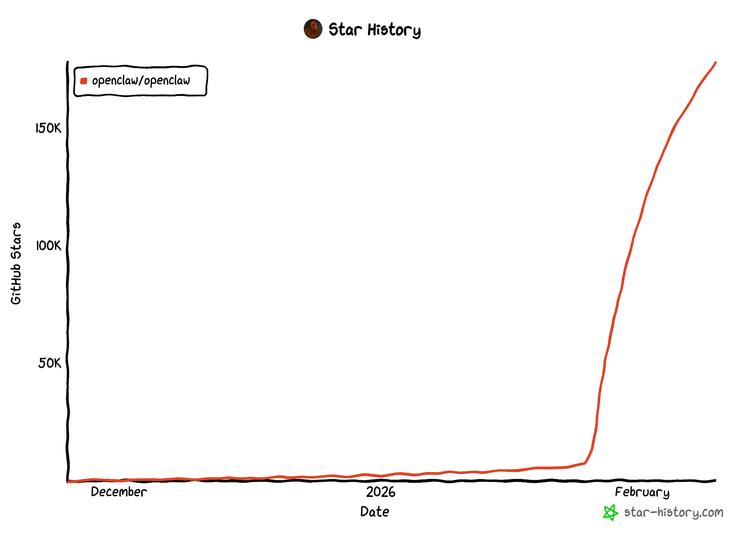
At the beginning of 2026, an open - source project named OpenClaw took over GitHub like a lightning bolt and gained 9,000 stars in one day. Two weeks later, the number of stars rose to over 170,000. Suddenly, the prominent crab pattern could be seen on the front pages of all social platforms.
The emergence of this path has also quickly alerted industry players to the opportunities.
OpenAI directly recruited the founder of OpenClaw. In the startup field, Wang Huiwen, co - founder of Meituan, issued a "Call to Heroes" and recruited entrepreneurs and technicians interested in OpenClaw and related fields. Many Chinese model manufacturers, acting as "shovel sellers", showed their strengths. Zhipu, Kimi, MiniMax, Alibaba Cloud, etc. all launched API packages of CodingPlan to firmly bind this popular "crab".
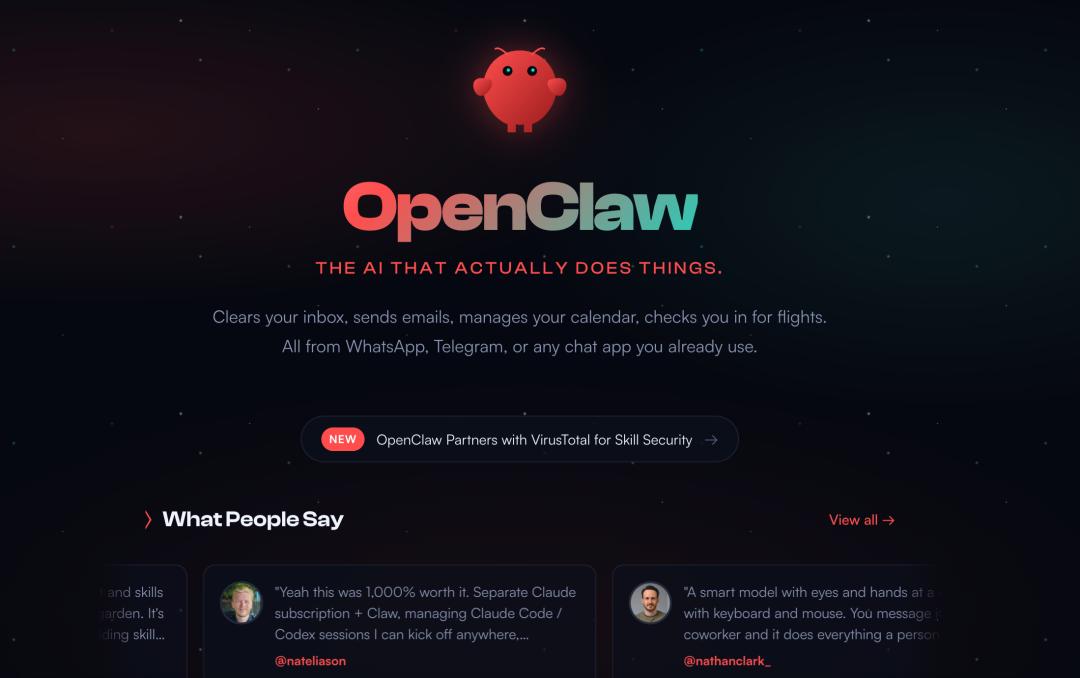
Actually, the special thing about OpenClaw is that everyone can create their own agent assistant on its basis and can let the agent complete tasks through the chat interface on different platforms and systems. This is fundamentally different from the previous "only talking but not acting" and "integrated" AI assistants. It means that the agent actually gets hands and feet and enters the real world.
So what is the actual value of OpenClaw? Can it really do everything? What does it bring to the industrial implementation of AI? Can it really lead us in the direction of general AI (AGI)? And can OpenClaw change the current situation in today's situation where the implementation of agents in Chinese enterprises has entered a phase of multiple systems but separated structures?
Regardless of how OpenClaw develops in the future, behind these questions is an undeniable fact: OpenClaw, which was hot for two months, has brought a new direction and evolution to the Chinese AI implementation industry, namely the transition from the technology and protocol of individual agents to the real cooperation of agents across different systems.
The agent, trapped in the API, opens the "extras"
For a long time, the agent has been regarded as the key to transforming AI into real productivity. A large model is like an extremely intelligent spirit, but it can't really "act": it can't open web pages, fill out forms, organize files, or perform cross - platform operations.
The significance of the agent is to give this spirit "hands and feet" so that it can not only think but also use tools, access systems, and operate software to carry out a series of specific steps. For example, it can break down the task of "Create an industry report for me" into automatically searching for information, filtering data, organizing data, creating diagrams, formatting into a document, and sending an email to form a complete cycle.
But this cycle still has flaws.
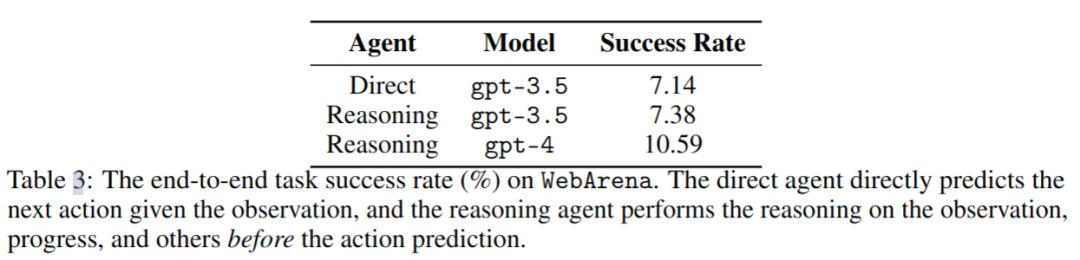
Data shows that in tests of multi - step tasks on real - world web pages like WebArena, the success rate of models at the GPT - 4 level for 3 - 5 steps is about 40% - 60%. As soon as the number of steps exceeds 10, it often drops to 15% - 25%. For over 15 steps, the success rate falls below 10%. Open cases also show that in processes with 6 - 8 steps or more, the rate of manual intervention is up to 40% - 60%.
Take the e - commerce industry as an example. The owner of a small e - commerce company has to log into multiple back - ends every day to check inventory, compare competitor prices, adjust prices, then check advertising expenses and ROI, and finally generate a report and issue a daily report. He wants the agent to automatically complete all processes at 8 am, and that the team only makes strategic decisions.
But reality is often harsh.
On the first day after being put into operation, the agent retrieved inventory data from the ERP system and found that the quantity of a certain air fryer was below the safety limit. He wanted to synchronize the data on the platform to avoid over - sales, but found that the platform API only supported access to the inventory, not the change of the foreground display. Therefore, manual operation had to be carried out.
Then came the price comparison work. Even if the agent had captured the competitor prices, when he wanted to perform the "mass price change", he found that the platform had divided the rights for the price - change API in stages. Only certain categories and large merchants could call the API, and the number of calls was limited. The so - called "automatic price change" became "automatic price calculation + manual execution".
Some companies have tried to incorporate RPA scripts, but e - commerce back - ends are often changed, and the maintenance costs are very high. It often becomes a long - term job for script engineers.
It can be seen that the requirements for implementing agents in enterprises are very strict, and often the "heavy integration" path is taken, which is to connect the API, organize the data structure, restructure the permission system, and adjust the process engine. This is a typical IT project path, which takes a long time, requires a lot of investment, and brings about profound changes. As soon as a system is updated, the interface has to be re - created.
The open - source framework OpenClaw offers exactly another possibility.
It is based on the visual recognition of the screen content and locates buttons, texts, and input fields. It performs operations by using general controls such as mouse clicks, keyboard input, scrolling, and swiping, and it conducts decision - making cycles under goal control.
Compared with the "heavy integration" path, OpenClaw is no longer dependent on the open interfaces of the platform and does not require enterprises to restructure their systems. Instead, it takes over the operation logic directly at the screen level to achieve stronger execution ability and penetrate into the production environment of enterprises.
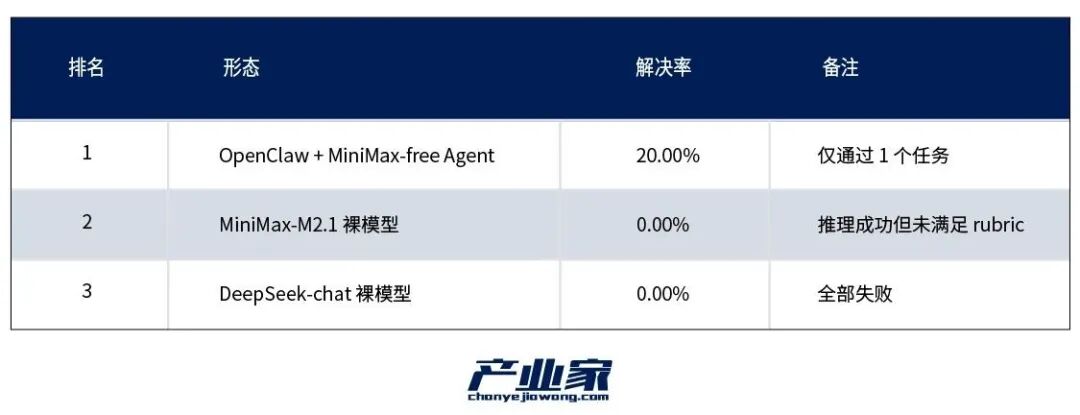
For example, a public test based on CL - bench shows that in the group of standardized tasks for HR training, the solution probability of the OpenClaw + MiniMax - free agent combination is 20%, while the solution probability of the MiniMax - M2.1 and DeepSeek - chat naked models is 0%.
This change in the execution model has piqued the curiosity of enterprise users.
The agent is experiencing a new upswing.
The "helpers" of the new agent upswing
At the beginning of 2026, there were again obvious activities in the AI industry, and the mood of investors, enterprises, and developers warmed up at the same time.
Wang Huiwen, co - founder of Meituan, published a "Call to Heroes", recruited OpenClaw startup teams, and offered financing support. The developer forums were flooded with red crab shells. Manufacturers across the entire value chain have announced one after another that they will join. This atmosphere is very similar to the "joining wave" that DeepSeek triggered in the same period in 2025.
In China, a special market, there is never a lack of strength and means to quickly commercialize new paradigms.
By the end of January, the first "shovel sellers" were quickly on the scene.
The internet giants have a clear stance: They don't want the core accesses to be handed over to open - source frameworks. Instead, they should take OpenClaw as a reference, form a closed loop in their own ecosystem, and connect everything from computing power, models to application scenarios.
Alibaba Cloud is a typical example.
On February 28, it launched the CoPaw Personal Intelligence Agent Work Platform, which targets OpenClaw and focuses on "three commands for minimal deployment". It has optimized the problems of the complicated deployment of the original framework. At the same time, it is natively adapted to mainstream IMs like DingTalk, Feishu, and QQ, supports both local and cloud - based dual - mode deployment, and deeply integrates the capabilities of the Tongyi Qianwen model to solve the problem of the "incompatibility" of foreign open - source frameworks in the Chinese ecosystem.
On the cloud side, it launched the one - click installation of OpenClaw and the pre - configured image, and the deployment can be completed in 15 minutes. The logic is very simple: It wants to use OpenClaw to attract developers and enterprises to the cloud.
Overall, Alibaba Cloud starts from cloud infrastructure as the basis, uses Tongyi Qianwen as the model system, and DingTalk as common work application scenarios. It recruits developers through the open - source strategy and finally forms a closed loop.
Tencent Cloud's strategy is more focused on access to traffic.
It has pre - configured OpenClaw templates on light servers, which connect Enterprise WeChat, QQ, Feishu, and DingTalk and offer a visual switching panel to lower the deployment threshold. At the same time, Tencent launched its own agent platform to firmly bind WeChat, mini - programs, and the enterprise work ecosystem and reduce the dependence on external frameworks.
We must consider that Tencent's greatest advantage is the monopolistic access to traffic in the social and IM industries. Both for end - users and small and medium - sized enterprises, the reach in the industry is the strongest. As soon as the agent capabilities are integrated into the social and work infrastructure, the spread speed will be very high.
Baidu Smart Cloud's strategy revolves around search access.
It has deeply integrated its core products and allows OpenClaw intelligent agents in the Baidu app to be called with one click. After enterprises complete the deployment on Baidu Smart Cloud, they can directly call the agents through the search bar or the message center. Later, it will also cover all products in the entire ecosystem such as the encyclopedia, academic research, document library, and e - commerce. Regarding capabilities, Baidu Qianfan has packaged the capabilities of search, encyclopedia, and academic research as "skills" and introduced them into the OpenClaw ecosystem to improve the capabilities in terms of Chinese information. At the same time, it launched a cloud - based version without deployment to lower the user threshold.
Overall, Baidu builds on search access and the content ecosystem and integrates the agent into common search application scenarios instead of operating it as an isolated tool.
Volcengine's strategy is more focused on traffic distribution and application scenario integration. It offers a complete deployment scheme for OpenClaw and connects the application scenarios through the Doubao large model, Feishu, and the TikTok API. Developers can quickly develop applications such as sales chatbots and...