Backed by Didi and led by Horizon Robotics, Karr Power secures $100 million in financing. Can driverless trucks achieve commercial success?
On March 2nd, Karl Power announced the completion of a Series B financing round exceeding $100 million (approximately RMB 680 million). This round of financing was jointly led by Horizon Robotics and Banyan Capital, with joint investments from Hongqi Investment, Fengshang Capital, Orient Jafu, etc., and some existing shareholders also participated. So far, Karl Power has cumulatively received nearly RMB 2 billion in financing.
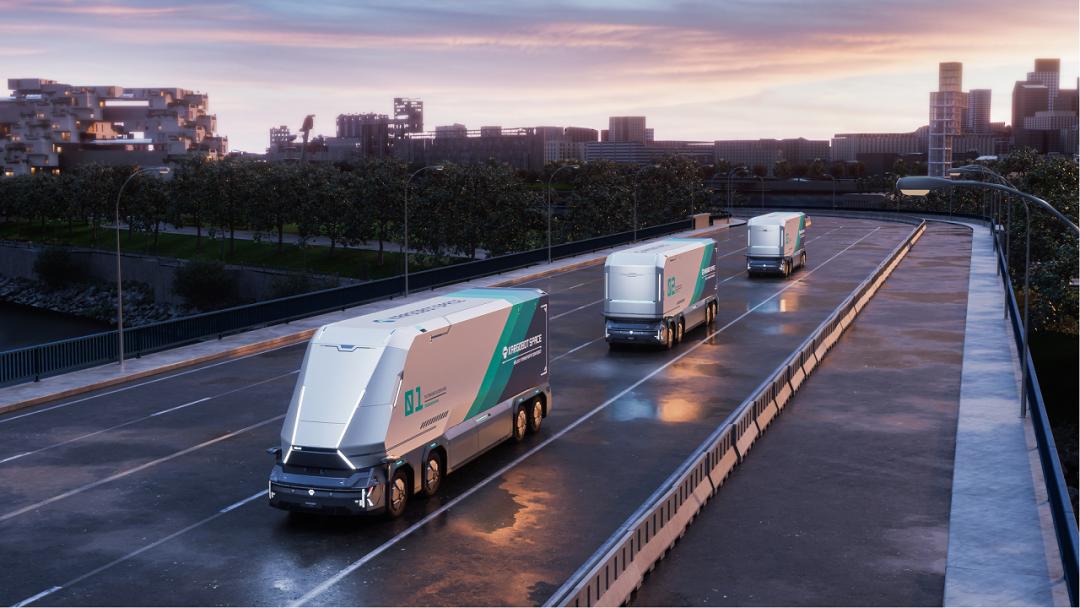
△Image source: Karl Power
Karl Power was founded in February 2021, incubated by Didi. It focuses on the unmanned logistics business and has already achieved unmanned commercial operations for bulk long - haul logistics in some regions of China.
Reporters from Time Weekly learned that the funds from this round will be mainly invested in the large - scale implementation of unmanned long - haul freight. According to the plan, Karl Power expects to deploy 1,000 autonomous trucks within this year.
Karl Power's predecessor was the autonomous driving freight business "KargoBot" under Didi.
The "KargoBot" project started in 2021 and became an independent entity as Karl Power after receiving over RMB 450 million in angel - round financing in 2023. Tianyancha information shows that the largest shareholder of Karl Power is "Beijing Hangji Technology Co., Ltd.", which holds 40.59% of the shares.
Beijing Hangji is an affiliated company of Didi, and its legal representative is Cheng Wei, the founder, chairman, and CEO of Didi.
Regarding the latest equity ratio, Karl Power told reporters from Time Weekly: "The industrial and commercial change work related to the Series B financing is in progress. The content after the change is completed shall prevail."
In addition to Didi, the state - owned assets of Ordos and local state - owned assets in Shenzhen, Shaanxi and other places are also important shareholders of Karl Power.
Including this Series B financing, Karl Power has completed four rounds of financing successively, with a cumulative financing amount of nearly RMB 2 billion. In addition to the major shareholder Didi and local state - owned assets, Karl Power has also won the favor of companies or investment institutions such as Horizon Robotics, Banyan Capital, Hongqi Investment, Fengshang Capital, and Orient Jafu in several rounds of financing.
"We firmly believe in the long - term value of autonomous driving in reshaping the trillion - level long - haul logistics market," said the investment team of Horizon Robotics regarding this investment.
Most of Karl Power's core executives come from the shareholder system. For example, CEO Wei Junqing once served as the CTO of Didi's autonomous driving and held senior positions in several autonomous driving companies; COO Li Xiaoxiao once served as the person - in - charge of the innovative logistics business of Ordos Group, the director of the capital operation department of Ordos Group, and also has work experience in several investment institutions.
Reporters from Time Weekly inquired with Karl Power about the purpose of this financing, subsequent financing, and IPO plans.
Karl Power said that the funds from this round will be mainly used to accelerate the large - scale expansion of unmanned long - haul freight. By building an intelligent transportation system of "transportation robots + logistics operating system", it aims to build an intelligent transportation capacity network covering the whole region. The company also expects to empower and deploy 1,000 autonomous trucks within this year and achieve the intelligent empowerment of tens of thousands of Robotrucks (autonomous trucks) in the next few years.
Regarding the IPO plan, Karl Power replied that "the company will focus on business operations and will disclose any progress in a timely manner."
In the view of many industry insiders, the resistance faced by autonomous driving technology in the logistics field is smaller than that in the passenger car field.
In long - haul logistics, due to its fixed routes, relatively regular scenarios, and urgent need for cost reduction and efficiency improvement, it is regarded as one of the most commercially promising tracks in the autonomous driving field. Autonomous driving technology has also been widely used in short - distance and small - scale logistics in daily life scenarios.
Currently, autonomous driving technology has been widely used in logistics scenarios. For example, the autonomous trucks of Karl Power and TuSimple, the unmanned transport vehicles of JD, Meituan, and Alibaba, and the delivery robots of Yunji Technology.
Wei Junqing once said that the choice of autonomous driving freight is because the bulk logistics field has a huge transportation scale, relatively concentrated routes, and an increasing shortage of freight drivers year by year, which is relatively suitable for the development of autonomous driving technology.
Karl Power has developed quite rapidly: In 2024, it was approved to conduct autonomous driving public road tests in many places in North and Northwest China; in 2025, it was awarded the first batch of national commercial pilot qualifications for fully unmanned fleets; in January this year, it was approved in Ordos to conduct public road tests of L4 - level autonomous driving fleets "1 towing 3" in an orderly manner within the compliance framework.
According to Karl Power, it has currently put 7 models and more than 400 autonomous trucks into operation, with a cumulative operating mileage of more than 35 million kilometers. It has carried out autonomous driving freight tests and operations in more than 10 provinces and cities, and has more than 20 logistics customers.
In this context, Karl Power claims to be the first company in the industry to achieve a commercial closed - loop for long - haul unmanned freight. It has taken the lead in completing the full - chain verification from technology to business, with a cumulative freight volume of 1.2 billion ton - kilometers. "Currently, the company has taken the lead in achieving unmanned commercial operations for bulk long - haul logistics and successfully completed the closed - loop operation of the first positive - profit model for unmanned long - haul transportation," Karl Power said.
Does this mean that Karl Power has achieved profitability? Reporters from Time Weekly inquired about Karl Power's profit situation, and it responded that "it has been able to create value for customers through autonomous driving technology on some core routes, reduce labor costs, improve operational efficiency, and increase the gross profit of a single route."
Although there are not many truly profitable players in the domestic autonomous driving field as a whole, it does not prevent investment institutions and investors from being optimistic about the unmanned logistics business.
"Robotruck is a trillion - level track no less important than Robotaxi. The commercial implementation of Robotruck has entered a stage of rapid development," said Xin Wang, a partner of Banyan Capital, which participated in this investment.
Xiao Yiting, a partner of Chentao Capital, who has participated in investing in many autonomous driving - related enterprises, also told reporters that compared with the large - scale implementation of autonomous passenger cars, the prospects for autonomous driving and unmanned logistics in closed scenarios are more optimistic.
This article is from the WeChat official account "Time Weekly" (ID: timeweekly). Author: Wu Kai. Republished by 36Kr with permission.