The "out-of-print" Meizu phones have left the most heartache for online fans.
Financial writer Yu Sheng once recorded Meizu's confusion in "The Mobile Phone War": In 2015, it focused on Xiaomi and launched the "Meilan" series to engage in price wars. In 2016, it learned from OPPO and vivo and adopted the "mass - model strategy" to compete in the offline market. In 2017, it turned to learn from Huawei and started making business phones.
After vacillating for a decade, Meizu phones gradually disappeared from the market. Currently, Meizu has denied the rumors of "bankruptcy restructuring, business suspension, and phone delisting", but admitted that the self - developed hardware project for new domestic mobile phones will be suspended. No matter where Meizu is headed, Meizu phones have truly become the tears of the era.
Compared with the lackluster mobile phone business, intelligent in - vehicle systems and intelligent cockpits may be Meizu's more profitable cash cows now. After all, idealism can never be a meal. It was true in the era of a hundred flowers blooming in the past, and it is even truer in today's highly homogeneous era.
There's nothing to regret about Meizu's disappearance.
After several years, Meizu has been pushed into the public spotlight again, and this appearance is still not very decent.
On the second day after the Spring Festival holiday of the Year of the Horse, when office workers were still slacking off with lingering enthusiasm, Meizu "timely" provided the "first scoop of the new year". According to the news exposed on multiple social platforms and by multiple media, Meizu's mobile phone business "has substantially stopped" and will be officially delisted in March this year.
Industry insiders and Meizu fans were initially stunned, thinking it was another "wolf is coming" story. After all, in the past few years, the Internet has spread the news of "Meizu's bankruptcy" from time to time, but nothing happened in the end. However, as more and more explosive news about Meizu emerged, people seemed to realize that this time the wolf has really come.
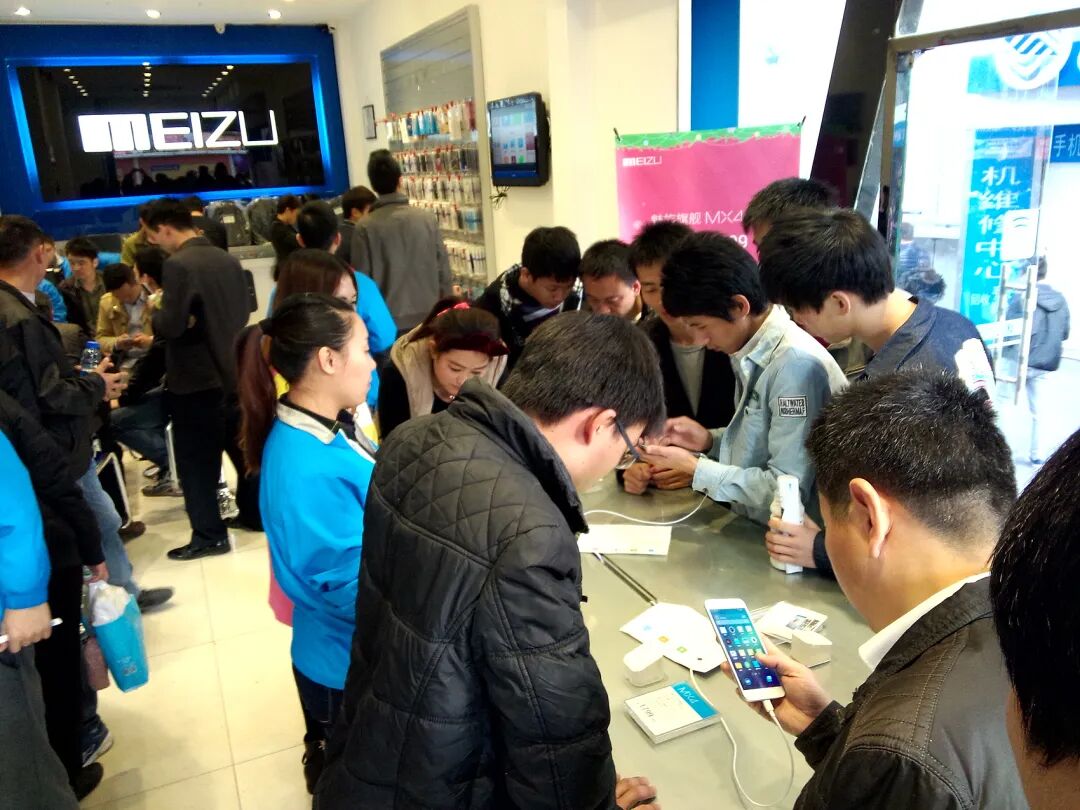
On the second day after the Spring Festival holiday of the Year of the Horse, the news of "Meizu's mobile phone business suspension" spread like wildfire on major social media. (Photo/Visual China)
People close to Meizu revealed to the media that Meizu's mobile phone project has been in arrears with suppliers since the first half of last year, and now it has basically become a bad debt. On a workplace social platform, a Meizu employee revealed that the company's Spring Festival holiday this year was as long as 15 days, "suspected to be a forced clearance of annual leave", and the work group was also set to the "mute all" mode.
What attracted the most attention was the Weibo post made by Wan Zhiqiang, the CMO of Xingji Meizu Group's China region, on February 9. This veteran who has been working at Meizu since the MP3 era typed the six - character classic slogan of Meizu, "Pursuit stems from love", on his Meizu 22 at three o'clock in the morning.
What secrets are hidden behind the veteran's late - night emotional outburst? It's really thought - provoking.

Although it's only six short characters, it's enough to arouse people's imagination. (Photo/Weibo @A Veteran Wan)
The rumors and speculations were all responded to on February 27. That morning, Meizu announced a "strategic transformation announcement" through its official Weibo, emphasizing that the rumors of "bankruptcy restructuring, business suspension, and phone delisting" were all untrue, but admitted that the self - developed hardware project for new domestic mobile phones would be suspended. The market rumors that had been fermenting for many days were indirectly confirmed.
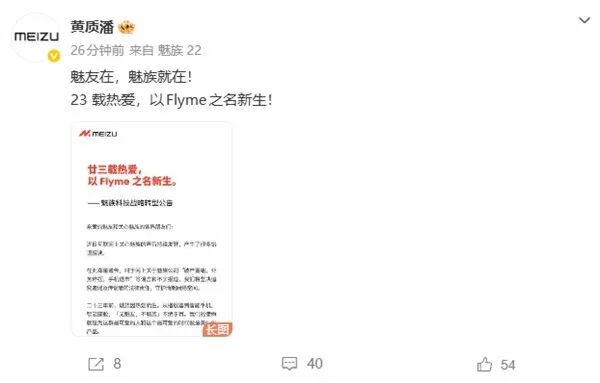
Huang Zhipan, the CEO of Xingji Meizu Group, who hadn't updated his Weibo for a long time, also reposted this strategic transformation announcement. (Photo/Weibo @Huang Zhipan)
On the Internet, the discussion about Meizu continued. Some people nostalgically recalled their past love for Meizu, while others sneered at Meizu's repeated setbacks after changing its track. Of course, some people clicked in through the hot search and were shocked: "What? Meizu phones are still alive?"
Yes, it's still alive. However, the "small and beautiful" Meizu in the hearts of Meizu fans has long become a wisp of ashes in the technology era.
01
Meizu, a small "others" factory,
was once charming
In the digital era dominated by "Huawei, Xiaomi, OPPO, VIVO, and Honor", most ordinary young netizens don't know what Meizu is. This once - famous mobile phone company currently has almost negligible influence in the digital market.
Data disclosed by digital blogger @RD Observation shows that in 2025, Meizu's annual mobile phone sales were less than one million units, a year - on - year decrease of more than 40%, and it shared a 5.91% market share with a group of unknown "others" small factories.
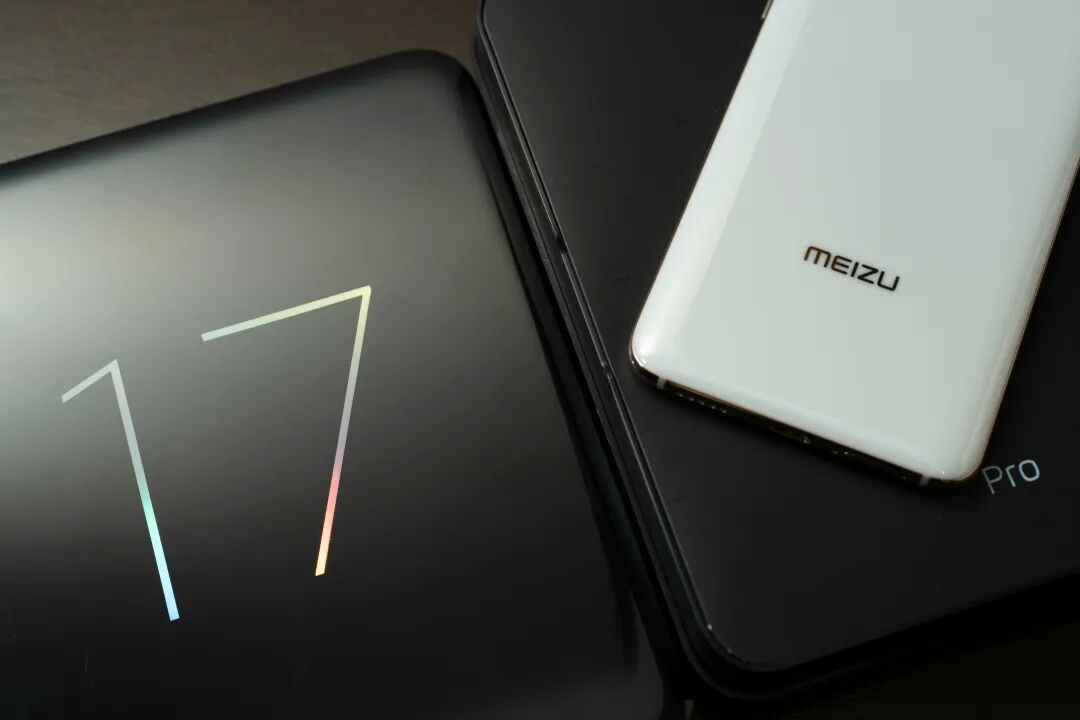
Meizu, which once created many benchmark products, now has a negligible market share. (Photo/Unsplash)
However, the time when Meizu was classified into the "others camp" by the market was actually earlier than its acquisition by Geely. In 2018, Huang Zhang, the founder of Meizu, decided to cut the Meilan brand, known as the "good product for the youth", and focus on the "small and beautiful" route to maintain Meizu's unique brand image.
The market quickly gave Meizu a lesson. In the year after Meilan was cut, Meizu's mobile phone sales were only 4.05 million units, a year - on - year plunge of 79%, and its market share dropped to less than 2%. Meizu left the leading camp of the new forces in the smartphone industry in an unseemly way.
Even though Meizu still diligently announced new phone release plans and constantly tried to stay in the spotlight with new products, it could no longer arouse the attention of "Meizu fans" and only received disgust from ordinary users: "You haven't even sorted out your previous generation of products. What are you talking about being exquisite?"
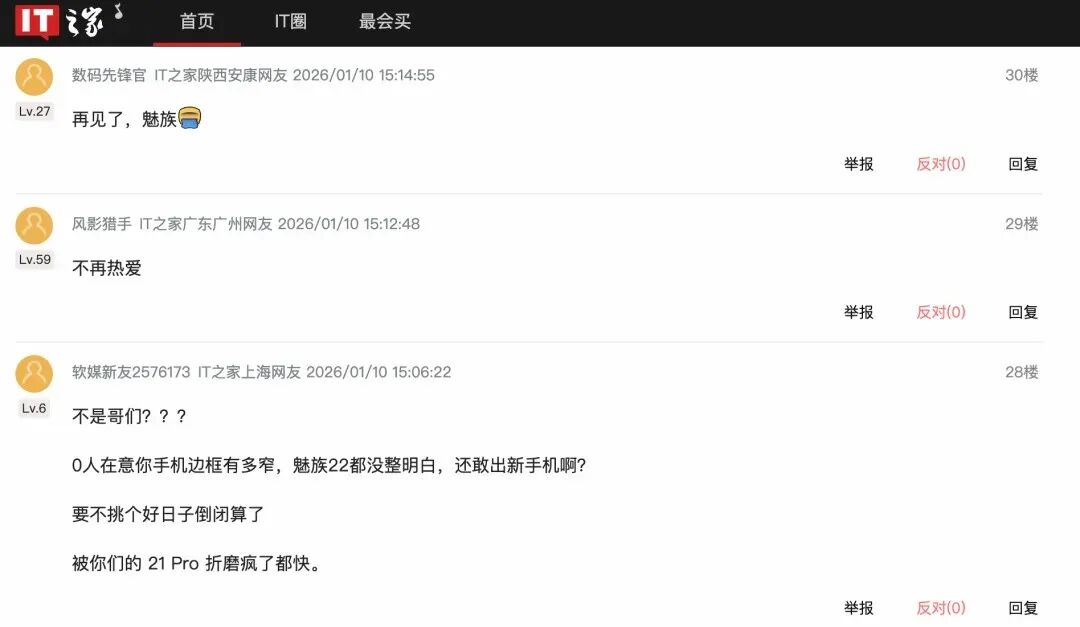
The evaluation Meizu gets now is mostly users' disgust, like "No one cares how narrow your phone's bezel is". (Photo/IT Home)
It's really sad! Is this really what Meizu used to be?
You know, Meizu was one of the earliest players in the Chinese smartphone industry and once created many benchmark products in succession. It was truly "charming".
In 2003, Huang Zhang, who had become a celebrity on the iMP3 flash memory forum, recruited Bai Yongxiang, a colleague who had left the joint - venture company "Aiqin", and founded Meizu Technology in a two - story gray building in Gongbei, Zhuhai. At first, Meizu captured a large number of die - hard fans with MP3 players. Soon after, it created the well - known "Chinese version of iPod" miniplayer and became the leader in the MP3 industry.
This was just the beginning of Meizu's rise. In February 2009, a touch - screen smartphone named M8, which was similar to the iPhone in appearance and function, was launched. It sold 100,000 units in two months, leading most well - known manufacturers at that time by a large margin.
This epoch - making phone was later collected and exhibited by the Microsoft headquarters and became a milestone work for Meizu and even the Chinese mobile phone industry. Its successor, the M9, once caused thousands of people to line up to buy it in Beijing, Shanghai, Guangzhou, and Shenzhen.
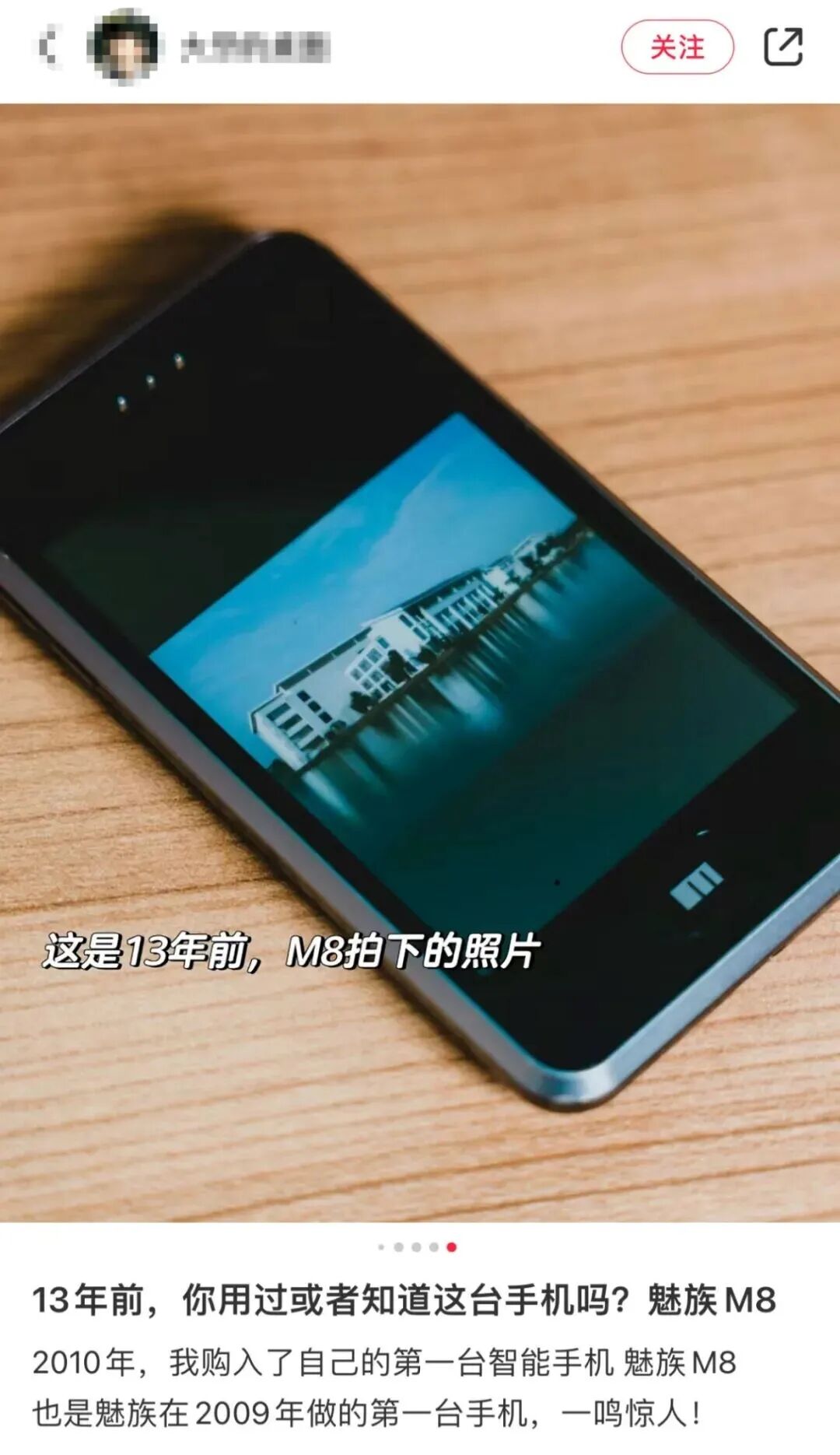
How many people's first mobile phone was the memorable Meizu M8? (Photo/Screenshot from Xiaohongshu)
The following story is more well - known. The "Dream Series", the Meizu MX series, which Meizu fans love to talk about, was the first to be equipped with the deeply customized Flyme system. In terms of design, the MX1 adopted black glass that reflected the aesthetics of the off - screen state and a metallic bezel full of texture, making it stand out among a group of plastic - bodied phones. Later, the MX2 and MX3 were all masterpieces in the history of mobile phone development without exception.
The ultimate pursuit of industrial design thus became Meizu's calling card.
In the Meizu building beside the Zhuhai Harbor Avenue, there were many people who came here admiringly, including Lei Jun. According to the record in "The Boiling New Decade", from the end of 2009 to the beginning of 2010, Lei Jun made several long - distance trips to Zhuhai to have in - depth talks with Huang Zhang, asking him for advice on making mobile phones. Huang Zhang even kept chilled Coke that Lei Jun liked to drink in the refrigerator in his office.
Lei Jun once showed Meizu phones at multiple public occasions and praised their design. However, when Lei Jun proposed to invest 1 billion yuan for a 30% stake in Meizu and tried to become the chairman, Huang Zhang only wanted him to be the CEO and was not willing to transfer the shares. The negotiation between the two parties broke down in less than a month. Then Lei Jun founded Xiaomi in April 2010.
02
Success and failure both come from "small and beautiful"
If Huang Zhang had been eager to seek talents and actively accepted external investment, maybe Lei Jun would not have founded Xiaomi, and there would not have been a fierce struggle between Meizu and Xiaomi for several years. Looking back now, we can find that Meizu's ending was actually written a long time ago.
The Meizu MX4 series released in 2014 witnessed the pain of this company's forced transformation from "small and beautiful" to "big and comprehensive".
Although the MX4 achieved a breakthrough in sales with an aggressive price of 1,799 yuan, the subsequent flagship MX4 Pro suffered from overheating and lag due to the blind addition of a 2K screen and an immature hardware architecture. This "negative optimization" caused by the unwillingness to compromise with Qualcomm seemed extremely discordant in the eyes of consumers who pursued extreme cost - effectiveness. At the same time, Meizu's proud Flyme team was facing the dual dilemmas of talent loss and system stability, and Meizu suffered its first blow to its reputation during the brand expansion process.
Maybe feeling the so - called "scale pressure", Huang Zhang, who had "retired" for four years, decided to come back in February 2014, sincerely reflect on the problems, and announced to "rectify" the leaky Meizu.
Subsequently, Meizu officially launched the sub - brand Meilan, positioned as the "good product for the youth", in December 2014, accurately capturing the hearts of students who desired style and young people who had just entered society. At the beginning of 2015, Meizu received a strategic investment of 590 million US dollars from Alibaba. The MX5 launched in the same year, with its all - metal body and the iconic mBack interaction logic, finally "saved the day" in terms of reputation, pulling Meizu out of the quagmire of the MX4 Pro and starting the most glorious year in Meizu's sales history.
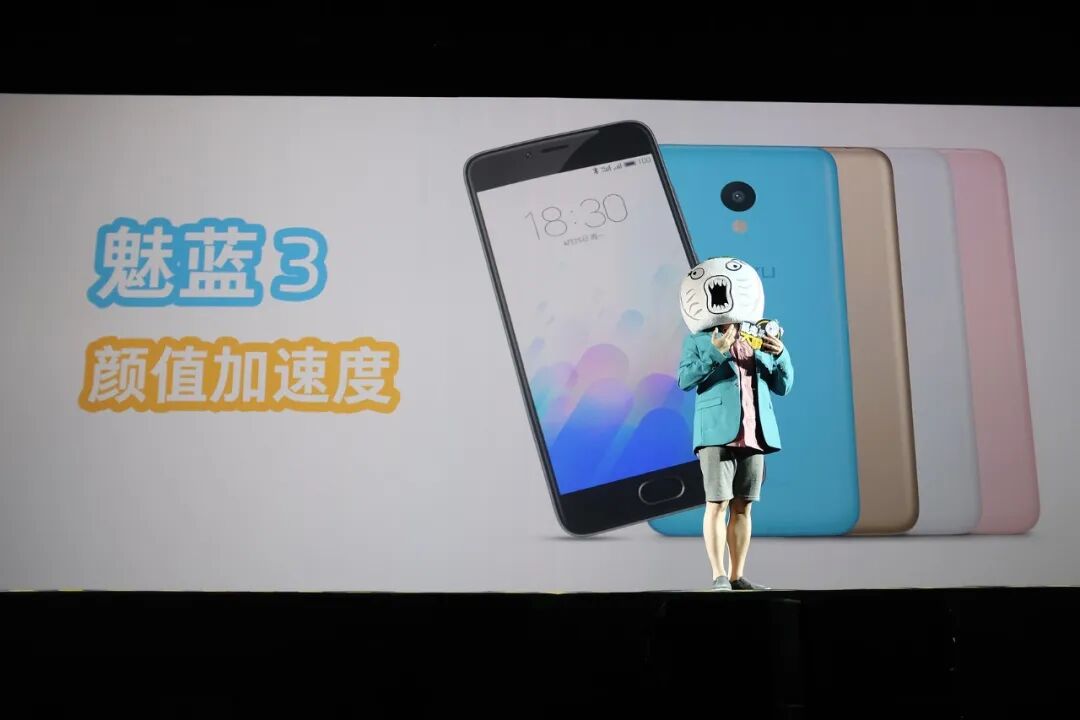
The Meilan series of mobile phones was packaged by Meizu as the "good product for the youth" and captured a large number of students and young people who had just entered society. (Photo/Visual China)
That was a moment when Meizu was both in the spotlight and in a strange situation. The frequent iterations and doubled sales brought by the huge strategic investment made the newly - joined young Meizu fans enjoy it, but also left the old - generation Meizu fans puzzled: Dozens of new phones were being promoted in succession, and there were even concerts. Why is the old craftsman also getting so active?
The means of gambling with capital was obviously very effective, but it couldn't solve the problem once and for all. Or rather, it was more like Meizu's helpless move.
Although Meizu's shipment volume had reached the scale of 20 million at that time, it showed no advantage in front of "Huawei, Xiaomi, OPPO, VIVO, and Honor". Moreover, MediaTek, which had regarded Meizu as a "VVIP customer", was not a match for Qualcomm in terms of technology for a long time. While other competitors obediently paid patent licensing fees to Qualcomm, Huang Zhang hesitated for a long time.
So there was the off - beat Meizu PRO 7. Its "special" secondary screen behind looked out of place in the wave of full - screen phones, and it was still equipped with the under - performing "ancestral MediaTek" chip. Not surprisingly, this flagship model ended in failure.
Later, Huang Zhang decided to cut the low - profit Meilan and proposed the "Only the best and the purest" strategy to focus on flagship phones, aiming to make Meizu return to the "small and beautiful" route. However, this also led to the disintegration of the "Meizu Three Musketeers" and accelerated Meizu's marginalization in the mobile phone market.
