Tesla's performance has declined and it has halted production of two models. Is Musk unable to compete with BYD and planning to switch to a new track?
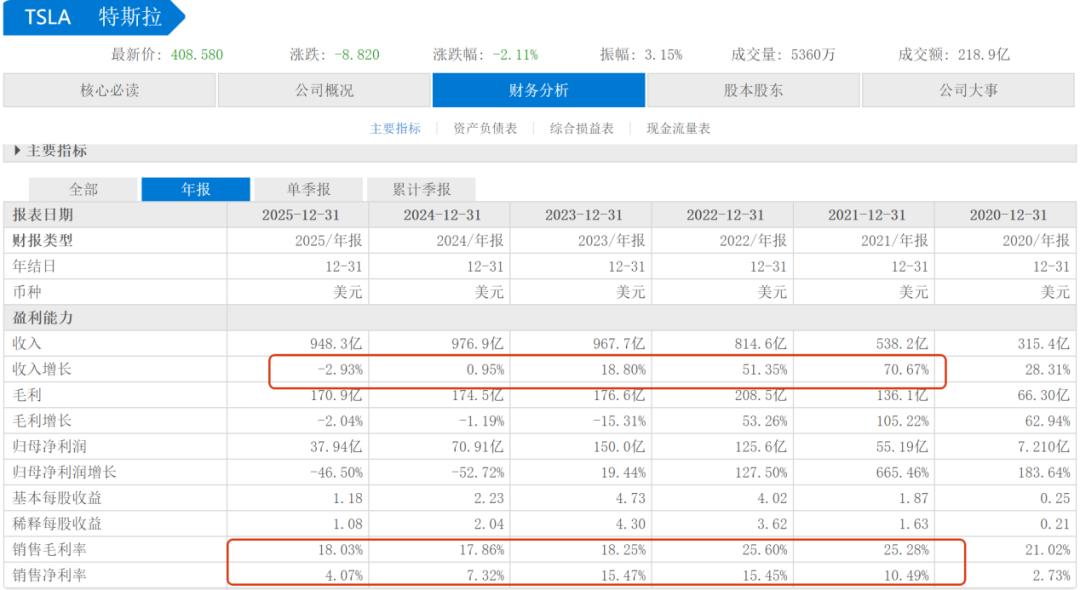
Tesla's financial reports for the last quarter and the whole year of 2025 shocked the outside world. Its performance declined for the first time since the company was founded. The revenue data showed a 3% drop compared with that of 2024. Its net profit attributable to shareholders suffered a significant decline, almost halving to only $3.794 billion, a full 46% drop compared with 2024. The year - on - year decline in the net profit attributable to shareholders in the fourth quarter of 2025 was even more severe, reaching as much as 61%. In the domestic market, Tesla even found it difficult to boost sales by reducing prices. It slipped from its former leading position to the fifth in terms of sales volume.
Tesla's stock performance in 2026 was also unsatisfactory. As of the close of U.S. stocks on February 26, Tesla's stock price was $408.58, with an annual decline of about 11%. Its market value evaporated by about $184.4 billion. Calculated at the latest exchange rate of 6.8554, Tesla's market value has evaporated by 1.3 trillion yuan since the beginning of 2026.
Why did this happen? The financial reports also provided some explanations. The main reasons were that the number of vehicle deliveries last year decreased, while the relevant R & D investment and operating costs increased, further squeezing the profit margin. Is this really the main reason?
Recently, Tesla held a conference call for its fourth - quarter 2025 financial reports. At the meeting, Tesla's founder and CEO, Elon Musk, announced high - profile that Tesla would officially discontinue the production of two high - end models, the Model S and Model X, before the end of the second quarter of 2026. Musk's statement shocked the global automotive industry. Musk believed that the missions of the Model S and Model X had been accomplished, and they would be retired honorably in a decent way. This decision marked the official end of Tesla's luxury car era.
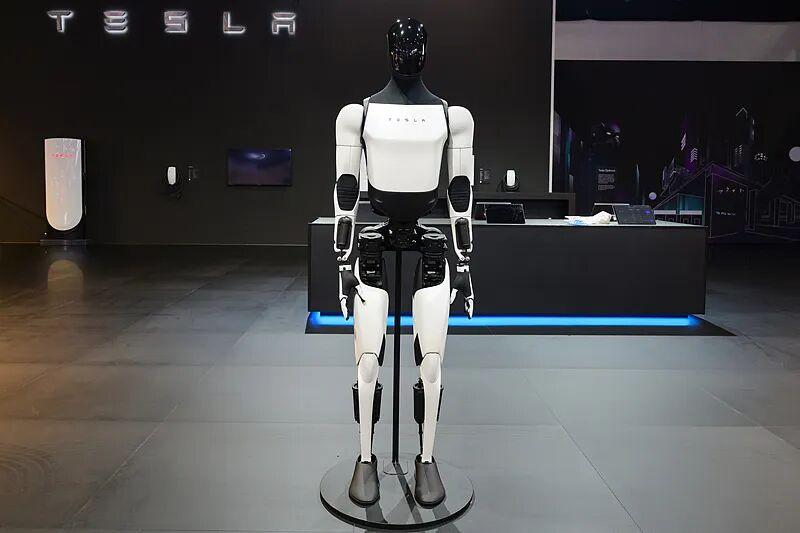
Meanwhile, Tesla's Fremont factory in California will undergo a full - scale transformation. The original Model S/X production line will be converted into a mass - production base for the Optimus humanoid robot, with a target annual output of one million units. A transformation from an "electric vehicle manufacturer" to an "AI + robot company" has officially begun.
Musk believes that Tesla's strategy should not stop at vehicle manufacturing. To meet users' power needs, the company will extend its business to the field of energy production and management: through energy storage products and solar power generation systems, it will create a closed - loop of "power generation - energy storage - power consumption". On the other hand, Tesla will transfer the control and algorithm capabilities accumulated in the field of autonomous driving to new scenarios such as humanoid robots, achieving in - depth expansion of core technologies. What's more surprising to the outside world is that Musk has also entered the real estate market. Tesla has officially launched smart homes, centered around energy, AI, and vehicle - home interconnection, to create a real future home.
Although about 80% of Tesla's revenue still comes from the automotive business, Musk has repeatedly described the ultimate scenario of the automotive industry moving towards intelligence and networking at performance meetings in the past two years. Has Musk really lost interest in car - making?
Is Musk planning a strategic transformation?
Tesla was once Musk's "beloved". He slept on the office floor of the Tesla factory for many consecutive years, worked more than 120 hours a week, and on average more than 17 hours a day, almost putting all his energy into Tesla. Over the years, he has mastered the art of time management at Tesla. He spends the first 10 hours of each day on Tesla without fail, focusing on engineering details and production line optimization. He only switches to other businesses after 6 p.m., and one - on - one reports are often postponed from 11 p.m. to 1 a.m. At that time, Tesla was the apple of Musk's eye.
Musk said bluntly, "I sleep on the factory floor because I want to be in a worse situation than anyone else; when my employees are in pain, I feel it even more." He also knew that "no one should work so hard, as it is harmful to the brain and heart", but except when his children are around, Musk has always worked in the office seven days a week.
During Tesla's globalization process, Musk was always present wherever there was a Tesla factory. Especially at critical moments, he was on - site. For example, when the Berlin factory caught fire in 2022, Musk flew to the scene immediately to stabilize the team. He closely monitored the 4680 battery cells and body - making processes for a long time, overcame local environmental protection resistance, and increased the production capacity to over 370,000 units per year. When Panasonic's battery supply was delayed, he sent engineers to the Osaka factory. When the drive - shaft supplier withdrew, he led the team to set up a temporary production line in the parking lot and used a "human - powered supply chain" to ensure deliveries.
At that time, Musk almost poured all his efforts into Tesla. Tesla really lived up to Musk's efforts. According to the mainstream rich lists, Musk reached the top of the global rich list four times thanks to Tesla, all between 2021 and 2025. About 70% - 80% of his wealth comes from Tesla stocks, and each time he reached the top, the core driving force was the sharp rise in Tesla's stock price. For example, in November 2021, Musk became the world's first billionaire with a net worth of over $300 billion, mainly because Tesla's market value exceeded one trillion dollars.
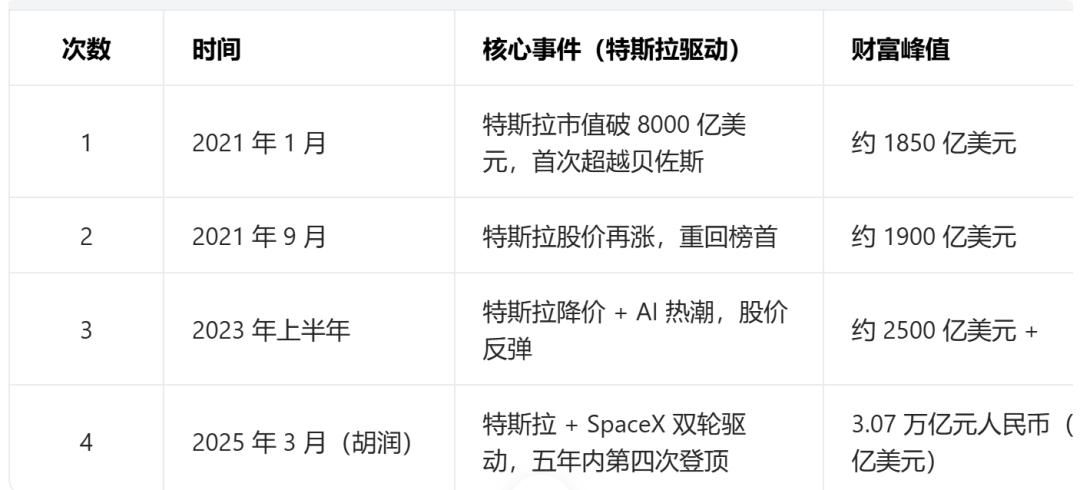
In recent years, Musk's wealth has increased sharply again, but the proportion of Tesla in his wealth has been significantly weakened. After his space exploration technology company, SpaceX, completed the merger with the artificial intelligence enterprise xAI, Musk's personal wealth exceeded $800 billion for the first time, becoming the world's first billionaire to cross this threshold and firmly holding the top position on the global rich list. This sharp increase in wealth mainly came from SpaceX and artificial intelligence. This may be one of the reasons for Musk's "change of heart".
Musk said in the conference call, "It's time for the Model S and Model X to be retired honorably..." "Tesla will convert the production space for the Model S/X at the Fremont factory into a factory for the Optimus humanoid robot." "The only vehicles we will launch will be autonomous vehicles."
The topics were about the dreams of Robotaxi, Cybertruck, AI, chips, and humanoid robots. Musk also clearly stated that "in the long run, the Cybercab will be the sales pillar of Tesla, and its annual sales volume will be several times that of other models." However, when learning about this model, it was found that the vehicle uses a two - seat layout, and the traditional driving control devices in the car have been removed - there is no steering wheel, no pedals, and no conventional control interfaces, only a central control screen is retained.
When such an advanced intelligent vehicle can open up the market still needs time to verify.
Is Tesla's performance on a roller - coaster ride?
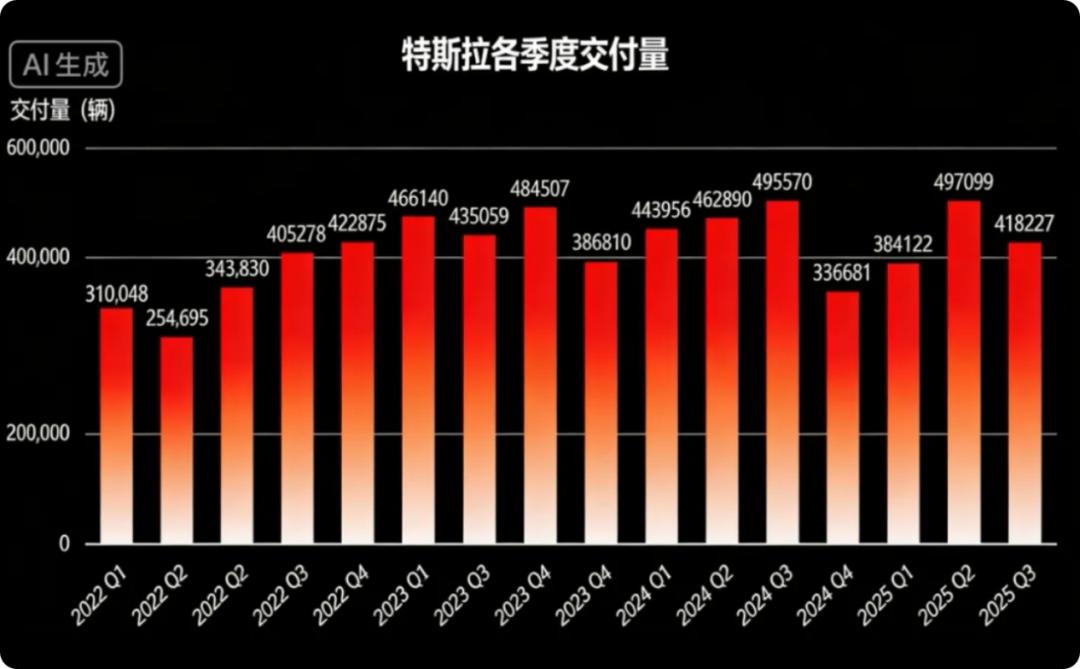
According to the financial reports, Tesla's global sales volume in 2025 was 1.63 million units, a year - on - year decline of 8.6%. As Tesla's long - time rival, BYD's sales volume in 2025 was 4.6024 million units, a year - on - year increase of 7.73%. BYD's sales volume was 2.82 times that of Tesla, leading by a huge margin of nearly 3 million units.
Looking at the quarterly sales volume, Tesla's sales volume was almost like a roller - coaster ride. The sales volumes in the four quarters were 336,000 units, 384,000 units, 497,000 units, and 418,000 units respectively. The sales were sluggish in the first quarter, recovered somewhat in the second quarter, reached a high point in the third quarter, and unexpectedly dropped sharply in the fourth quarter. Tesla also joined the price war, which it was reluctant to enter.
Tesla faced challenges in the Chinese market. Its annual sales volume in 2025 was 851,700 units, a year - on - year decline of 7.08%. In January 2026, the Model Y was overtaken by Xiaomi's YU7, losing the monthly sales championship. BYD overtook Tesla in global pure - electric vehicle sales. In 2025, BYD's pure - electric vehicle sales volume was 2.2567 million units, exceeding Tesla's 1.636 million units.
Tesla's sales volume has declined for three consecutive years. In 2023, its sales volume reached 1.808 million units, and it declined to 1.789 million units in 2024. The total sales volume in three years declined by 178,000 units. Interestingly, 2023, the year when Tesla set a sales record, was also the year when it had the largest price cuts. The price of the rear - wheel - drive Model 3 dropped from 265,900 yuan to 229,900 yuan, a reduction of 36,000 yuan. The price of the rear - wheel - drive Model Y dropped from 288,900 yuan to 259,900 yuan, a reduction of 29,000 yuan. The price cuts for the whole series ranged from 29,000 yuan to 48,000 yuan, setting a record for price cuts.
To reverse the downward trend of continuous sales decline, Tesla has introduced various price cuts and preferential policies. In January this year, it launched a series of new sales policies such as "seven - year ultra - low - interest loans" and "temporary insurance subsidies", trying to offer the greatest sincerity and benefits to potential consumers without touching the terminal pricing system.
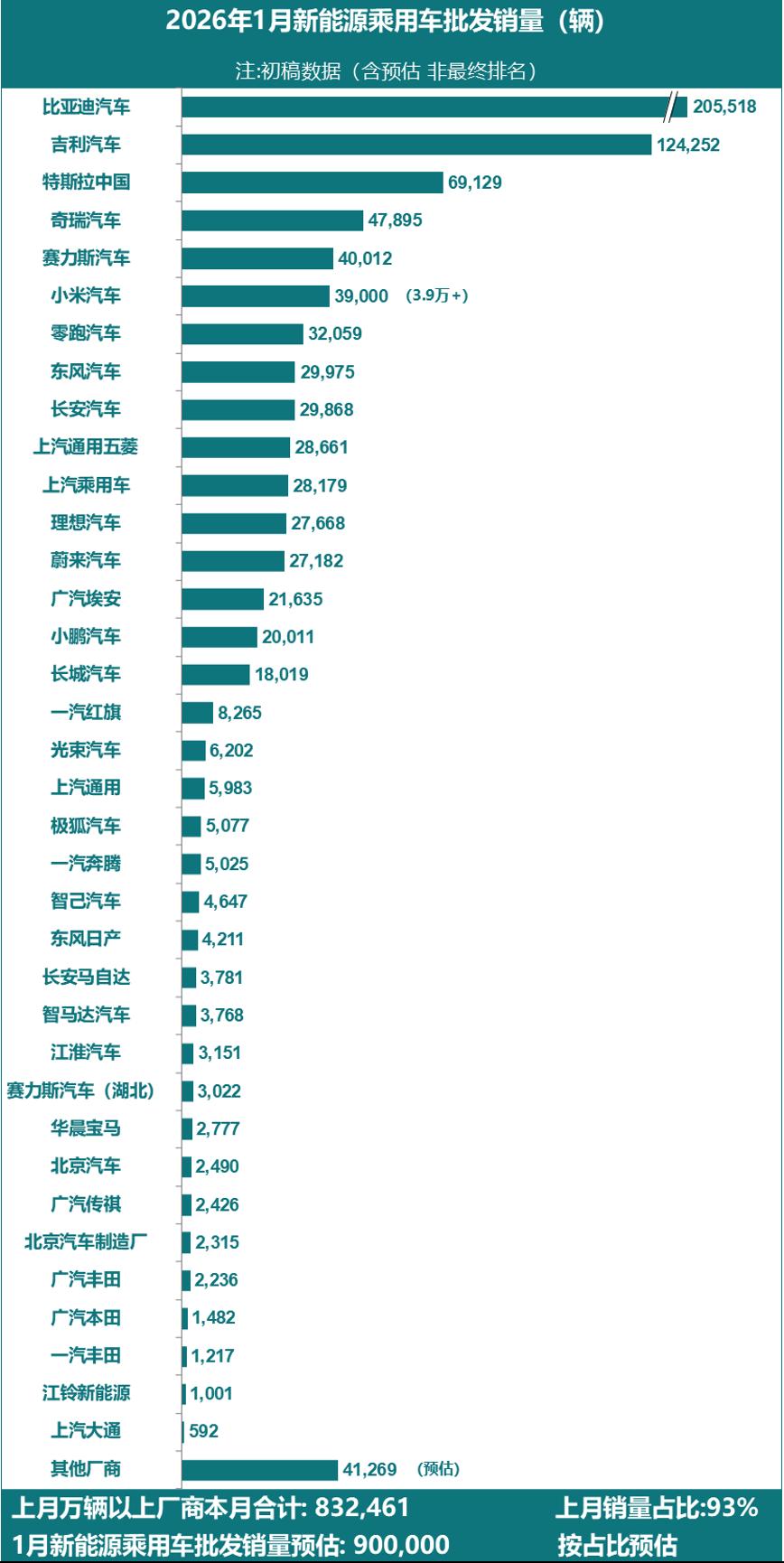
Data from the China Passenger Car Association showed that the wholesale sales volume of the Shanghai factory in January reached 69,129 units, a year - on - year increase of 9%. The wholesale sales volume in China has achieved positive growth for the third consecutive month. Although the wholesale volume seems good, it is unable to shake the advantages of the top two. BYD, which ranked first, had a wholesale sales volume of 205,518 units in the same period, and Geely, in the second place, also had 124,252 units. Tesla's wholesale sales volume was almost only one - third of BYD's.
Not long ago, Tesla released its fourth - quarter 2025 financial reports. If such reports were from any domestic automaker, it would be explosive news. Tesla's total revenue in the fourth quarter was $24.901 billion, a year - on - year decline of 3.14% and a quarter - on - quarter decline of 11.37%. Among them, the revenue from the automotive business was $16.750 billion, a year - on - year decline of 10.23% and a quarter - on - quarter decline of 17.73%.
In 2025, Tesla's revenue was $94.83 billion, a year - on - year decline of 2.9%. Its net profit was $3.794 billion, a year - on - year decline of 46.5%. The net profit was almost halved. It is worth noting that Tesla's revenue growth declined significantly. From 2021 to 2024, the revenue growth rates were 70.67%, 51.35%, 18.8%, and 0.95% respectively, and it declined by 2.9% in 2025. The situation of net profit was basically similar. In 2021, the net profit increased by 665.46%, and it was as high as 127.5% in 2022. However, due to the price war in 2023, the net profit growth rate suddenly dropped to 19.44%, and then in 2024, the net profit declined significantly by 52.72%. The net profit was halved for two consecutive years, reducing Tesla's net profit from $15 billion in 2023 to $3.794 billion.
BYD's net profit in 2024 was already approaching that of Tesla. BYD's net profit in the first three quarters of 2025 was 23.3 billion yuan, which was already on par with Tesla. Calculated based on the average of the first three quarters, BYD's net profit will exceed Tesla's for the first time.
It is worth affirming that Tesla's revenue from the energy business and other businesses reached a new high, which also proves that Tesla's business model transformation has achieved initial results. Therefore, the company's overall gross profit margin in the fourth quarter ended at 20.12%, a year - on - year increase of 3.86% and a quarter - on - quarter increase of 2.13%. This may be the reason why Musk can remain calm even in the face of such embarrassing performance.
Even though the net profit has declined significantly by 46.5% and is facing huge challenges, the overall performance and feedback from the capital market are quite forgiving and calm. Investors may understand Tesla's painful period.
Why is Musk following the Chinese trend?
Musk is known for his genius - like sense of smell. In the increasingly fierce AI wave in the entire automotive industry, Musk has also keenly sensed what is the key to determining Tesla's upper limit. Tesla was once the cornerstone that helped him become the world's richest man, but it definitely won't be in the future. His clear statement at the conference call shows that his top priority in 2026 is obviously no longer selling cars.
From Musk's remarks, the core of Tesla's business is once again clear. Providing transportation services has become the new core, replacing the original "car - selling". Musk disclosed in his speech that the driverless taxi, CyberCab, is planned to be mass - produced in April this year, and a platform similar to Airbnb will be launched, allowing millions of car owners to join the autonomous driving fleet to make money. Musk's statement directly updated the company's mission. He put "extreme abundance" in the center, aiming to move towards a future of "high - income for all" through AI and robot technologies. It is worth noting that the trend Musk is targeting is exactly the hot trend in the Chinese technology field.
To avoid supply - chain risks, Musk said that he plans to set up a "giga - wafer factory" including logic chips, memory chips, and packaging processes. He also officially announced that Tesla will manufacture its own chips. As