Merz besucht China, und die deutsche Automobilindustrie ist noch stärker auf China angewiesen.
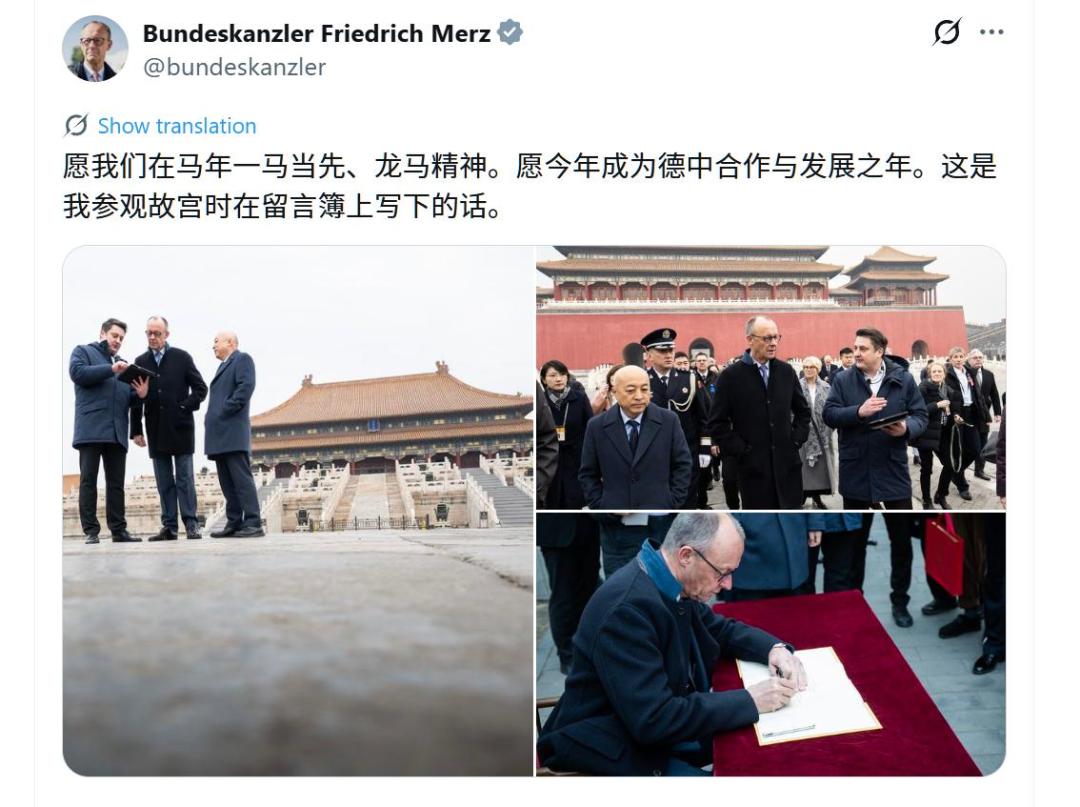
At the beginning of 2026, German Chancellor Merz traveled to China together with the global chiefs of Volkswagen, Mercedes - Benz and BMW, as well as more than 30 executives of German core enterprises. This highly respected diplomatic interaction between China and Europe has long exceeded the pure framework of bilateral economic and trade.
As the world's second - and third - largest economies, the in - depth dialogue between China and Germany influences the international political and economic structure. For the automotive industry, the presence of all three German automotive giants, the frequent contract signings between Chinese and German automotive companies, and the in - depth discussions between political and corporate leaders are clear signs: Although the cooperation between China and Germany is a win - win scenario, from the perspective of industrial reality and economic data, the German automotive industry and even the German economy are already more deeply dependent on China.
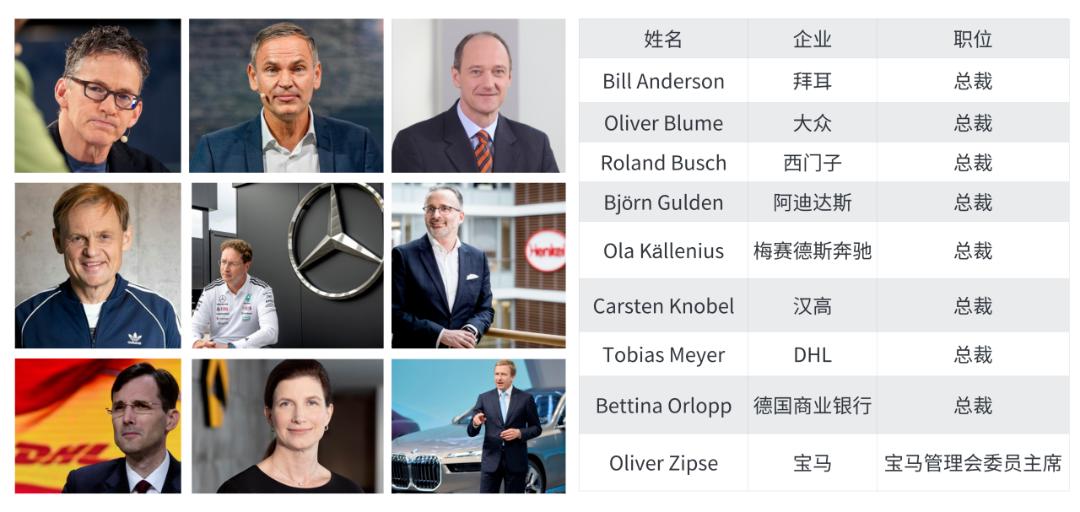
In other words, Germany's trip to China is less about seeking an economic "balance" and more about reversing the situation where Germany and the German automotive industry are forced to yield to the Chinese market and Chinese technology in the wave of electrification and the restructuring of the global order.
During Merz's trip to China, the automotive industry was undoubtedly the core theme and the starting point of cooperation between China and Germany. From the implemented substantial agreements to the core content of the discussions between politics and business, this marks the transition of cooperation between the Chinese and German automotive industries from the former "market for technology" strategy to a new phase of "bilateral technological co - creation". Behind each agreement lies the urgent demand of German automotive companies for Chinese technology and supply chains.
BMW and CATL signed a Memorandum of Understanding (MoU) on the use of cross - border industrial data. Although it seemingly aims at data management, it is actually a key step for BMW to stabilize its electrified supply chain.
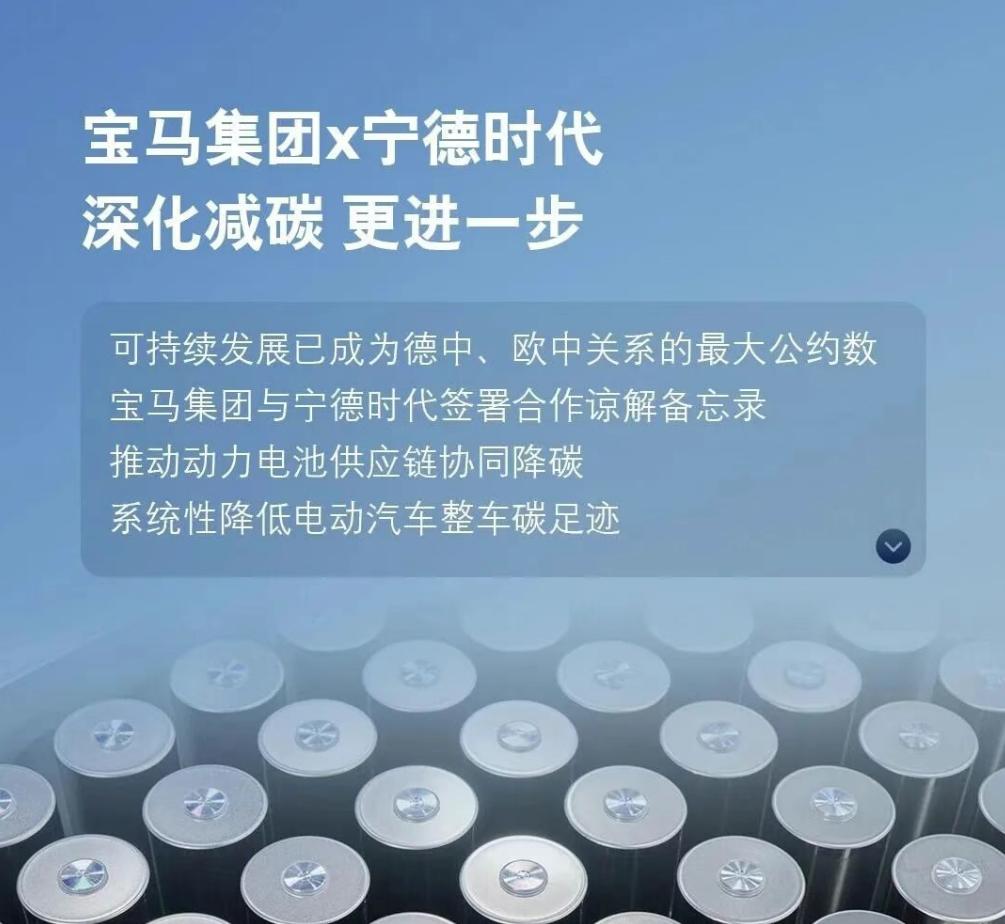
In the battery sector, CATL has a global market share of over 35% and is world - leading in core technologies such as solid - state batteries. The mass production of BMW's battery center in Shenyang and the battery supply for new generations of vehicles are highly dependent on CATL.
This consensus not only solves the core problems of BMW's local operation and management but also confirms China's power in data management regulation. As a result, the cooperation between China and Germany has been upgraded from simple "product supply" to in - depth "regulation co - creation".
Mercedes - Benz signed an enhanced strategic cooperation MoU with Momenta. Chancellor Merz also visited the Beijing - Benz factory and test - drove the new Mercedes - Benz S - Class model to experience Chinese technology and capabilities in autonomous driving. This marks that Sino - German automotive cooperation has brought technological cooperation into practical implementation.
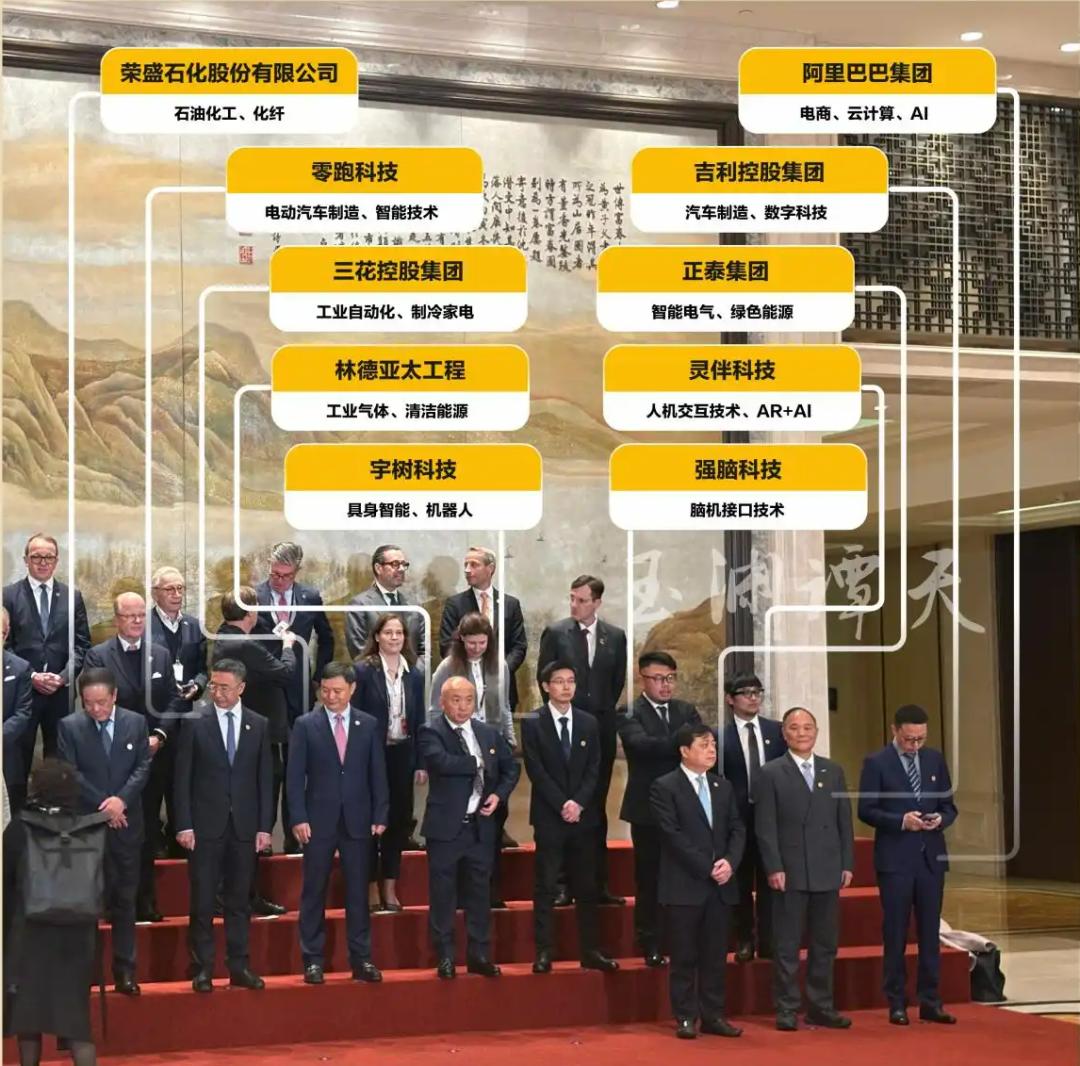
At the meeting of the Sino - German Business Council on the 25th, more than 60 Chinese and German entrepreneurs intensively discussed electrification, green manufacturing, local supply chains, and R & D cooperation. Chinese automotive companies such as Geely, Xiaomi, and NIO directly communicated with German giants. The resulting agreements were finally included in a package of cooperation documents after the talks between the Chinese and German premiers, elevating Sino - German automotive cooperation from the corporate level to the national strategic level.
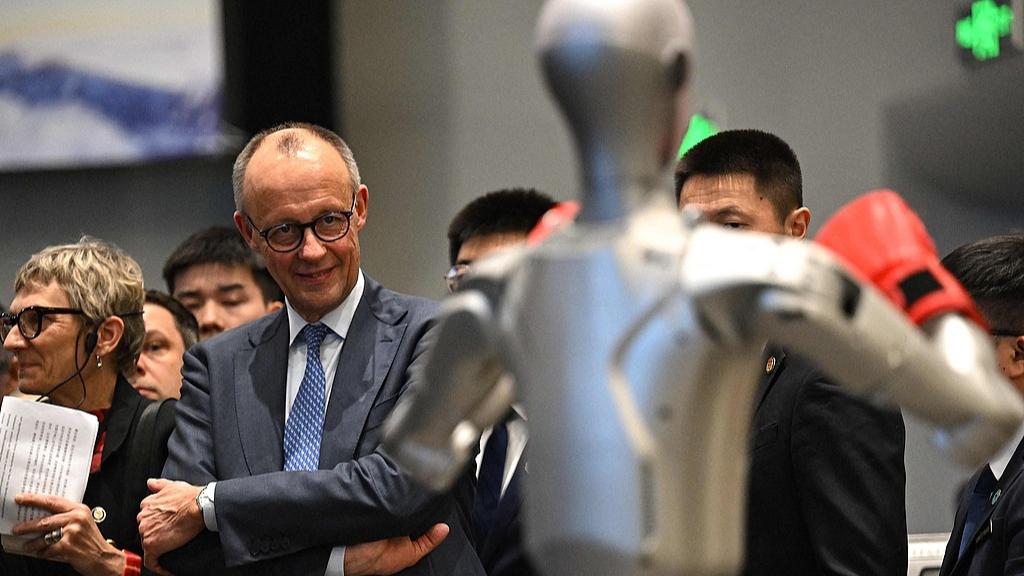
When the delegation not only visited the popular Yushu Technology in Hangzhou but also talked with entrepreneurs from Hangzhou, where Geely and Leapmotor are located, this can be regarded as Germany's recognition of the strength of Chinese domestic electric vehicle companies, highlighting the hard strength of the Chinese electric vehicle industry.
Behind these actions lies a fundamental change in the underlying logic of Sino - German automotive cooperation: In the past, German automotive companies came to China with core technologies, exchanged technology for the market, and dominated the industry. Today, China has formed indestructible structural advantages in electrification, intelligence, and batteries. German automotive companies not only need Chinese technology and the complete supply chain to reduce transformation costs but also the world's largest automotive market to ensure corporate profits and development.
Although Sino - German automotive cooperation is bilateral, and China also needs to cooperate with Germany to explore the European market and realize the global output of technology and brands. But this demand is significantly different from Germany's deep dependence on China.
When Chancellor Merz demanded a "balanced partnership" before his trip to China and the German government tried to convey a tough stance of "not depending on China", the actual actions of German companies and the cold economic data have long broken through this "balance" illusion. Germany's one - sided dependence on China has already penetrated into the industry and the economy.
It can be seen from the trade data alone that China has already become Germany's indispensable largest trading partner. In 2025, the trade volume between China and Germany reached 251.8 billion euros. China has once again overtaken the United States and taken the lead. Germany imported goods worth 170.6 billion euros from China and exported only goods worth 81.8 billion euros to China. The import was more than twice the export, and the trade deficit with China was nearly 90 billion euros. This means that the demand of the German market for Chinese goods is far greater than the demand of the Chinese market for German goods.
In the automotive industry, which accounts for 13% of Germany's industrial employment and 17% of its exports and is known as the "lifeline of the German industry", this deficit is even more obvious: Chinese electric vehicles, batteries, and intelligent components are continuously flowing into the German market, while the sales volume of German automotive companies in China is declining, and the export growth to China is weak. The trend of the trade structure has long determined Germany's passive position in Sino - German economic and trade relations.
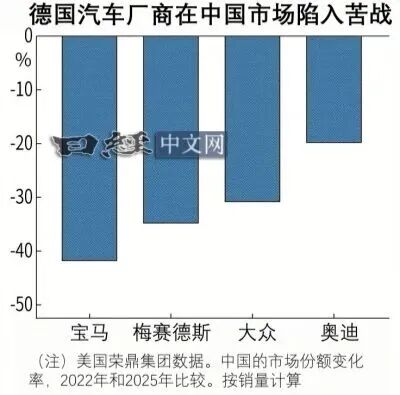
The objective data more clearly confirm this reversal of the industrial structure. Between 2022 and 2025, the market share of German automotive companies in China decreased by an average of 33%. Among them, BMW's market share decreased by 42% and Mercedes - Benz's by 35%. The traditional advantages of German brands in China are constantly shrinking.
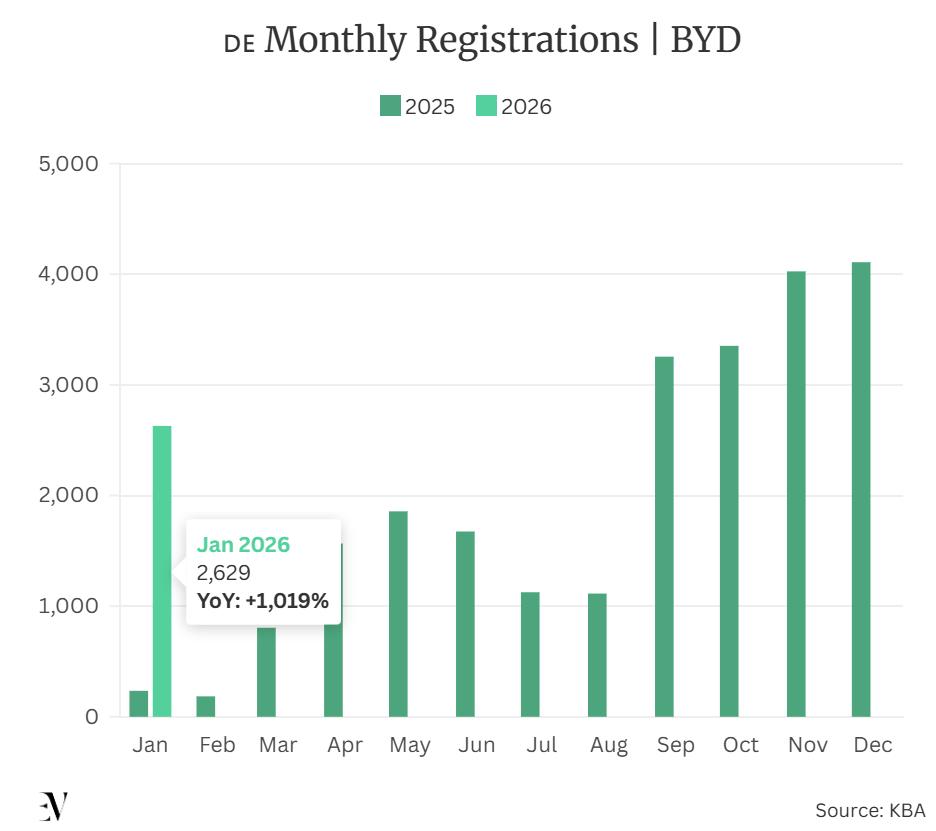
In contrast, Chinese brands are not only squeezing German cars out of the Chinese market but also making progress in the German home market. BYD delivered 23,306 electric vehicles in Germany in 2025, a year - on - year increase of 706.2%. In January 2026, sales increased by more than 1,000%. BYD also plans to set up more than 350 dealers in Germany by the end of the year and achieve the goal of 50,000 sales units per year. The comparison of competition between the Chinese and German automotive industries is already clear between the decline of German brands and the rise of Chinese brands.
The global location choices of German automotive companies more clearly confirm their deep dependence on the Chinese market. They are closing factories in Germany and reducing production capacity, while investing huge sums in China to expand their local presence.
Volkswagen has invested more than 20 billion euros in the Hefei plant and participated in XPeng. BMW has invested more than 10 billion euros in the battery center in Shenyang. Mercedes - Benz continuously focuses on local electric vehicle R & D in China. The actions of the three German automotive giants are consistent because they know that "only by succeeding in China can one succeed in other markets". As Oliver Zipse, Chairman of the BMW Group, said, ignoring the Chinese market means missing important opportunities for global growth and economic success.
Undoubtedly, the choices of companies are always more realistic than the explanations of the government. Although the German government wants to maintain a certain "political dignity", direct German investment in China increased by 7.5 billion euros in 2025, a year - on - year increase of 70%, which is a record high in the past five years. German companies have voted with real money and shown their firm confidence in the Chinese market.
This gap between the "stubborn stance of the government and the restraint of companies" is the biggest weakness of the Merz government and also confirms a fact: The German government's China strategy cannot resist the market choice and the deep dependence of German companies on the Chinese market and Chinese technology.
China's demand for Germany can be regarded more as "using the path" rather than "dependence", and it is not a passive dependence in industrial development. Due to the continuous tensions in China - US relations, Europe is an important new market for Chinese automotive exports. Germany, as the largest economy in Europe, is the "bridgehead" for Chinese brands to enter the European premium market. In 2023, China overtook Japan and became the world's largest automotive exporting country. In 2025, the monthly sales volume of Chinese electric vehicles in Europe exceeded 100,000 units, the market share was 9.5%, and the year - on - year growth was 127%. Europe is already the core market for the globalization of the Chinese automotive industry.
Obviously, the cooperation between China and Germany can remove many obstacles for Chinese brands to enter the European market. For example, the mutual recognition of Sino - German automotive standards enables brands such as BYD, Geely, and NIO to better adapt to European technology and environmental protection laws. For example, Germany's advantages in green manufacturing, carbon footprint management, and automotive chips can also fill some gaps in the Chinese automotive industry and complement each other's advantages.
At the same time, the involution of the Chinese electric vehicle market forces Chinese brands to seek growth opportunities outside. Europe, as the global premium automotive market, can not only bring sales growth but also increase the international premium value and influence of Chinese brands. But all this is a global progress that the Chinese automotive industry is seeking based on its structural advantages.
As can be seen from the reports of official media, Merz's trip to China has essentially set the tone for the cooperation between the Chinese and German automotive industries as "bilateral co - creation and deep bonding" and will bring the cooperation between the two sides to a deeper level. In the future, German automotive companies will accelerate their presence in China. In 2026, nine new Mercedes - Benz models will be equipped with Chinese driver - assistance technology, and new generations of BMW models will be presented in China for the first time. The electrification transformation of German automotive companies will become increasingly dependent on Chinese technology and the Chinese market. Chinese brands will also take advantage of the Sino - German cooperation to further expand the European market and accelerate the globalization process.
It is undeniable that behind this cooperation, the dominance in the Sino - German automotive industry has already quietly tilted towards China. China's structural advantages in electrification, intelligence, and batteries, the complete supply chain, economies of scale, and technological barriers force German automotive companies to actively approach. The huge size of the Chinese market is the core strength for electromobility.