I charged up an old mobile phone that was over a decade old and witnessed the end of the "phone flashing" era...
Some days ago, I replied to Clyde's post about tightening the BL lock in the community. To be honest, I've been extremely busy lately. I've collected a lot of materials for a long - form article about the history of phone flashing but haven't had the time to write it. Unexpectedly, there have been more and more news and revelations about phone flashing and unlocking in the past six months. It feels like these events are prematurely pronouncing the death of this already niche community. However, when it comes to phone tinkering, Xiaomi is a brand that can't be ignored. From the well - known MIUI V5 in the community, to the face - to - face interaction between Xiaomi community engineers and users, and the Orange Friday events, to the open unlocking mode and the continuously released development versions... Unfortunately, the demise of Xiaomi's phone - tinkering community was prematurely pronounced by Xiaomi's "college entrance examination" last year.
When I got home and opened the drawer, I remembered that my friend had sent me two old Xiaomi phones two years ago, which had been gathering dust. So, in 2026, I plugged them in and turned them on. I want to talk about the era when Android was still synonymous with openness. And once again, I'd like to thank @Akiri_Nakoha for sending me these phones.
You're awake. It's 2015 now. Let's start.
▍Fuel the Fire in Your Heart - Xiaomi 1S
Xiaomi gained recognition from tech enthusiasts worldwide in the emerging phone - flashing market with MIUI. Along with the myth of the 1999 - yuan price tag, it swept through the mid - range phone market with its extreme cost - effectiveness, selling over 3 million units. A year later, at the same launch event as the Xiaomi 2, the Xiaomi 1S was released as a supplementary model. Compared to its predecessor, it added a front - facing camera and used the newer Qualcomm Snapdragon S3. The price was 500 yuan lower than the flagship model. Undoubtedly, this showed Xiaomi's ambition to expand its market share. It also marked the beginning of phones as the new - era internet terminals entering thousands of households. A fire was about to sweep across the land.
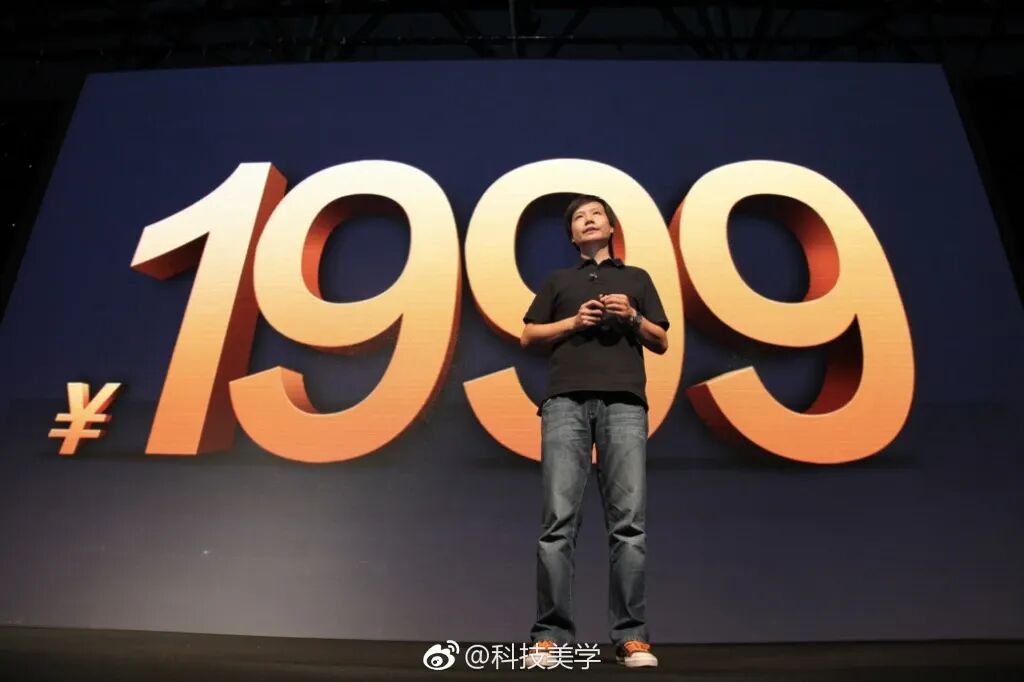
Duang~ 1999!
Holding this phone, the atmosphere of the era was almost palpable - the headphone jack, SD card slot, removable battery and back cover, and the three iconic keys on the front. The nearly 12 - mm thickness also indicated that Xiaomi was still a bit inexperienced in body stacking at that time. The problem caused by using Sharp's ASV screen in 2012 was more direct - the semi - reflective and semi - transmissive screen had significantly lower readability outdoors compared to the flagship phones of that era. The 1GB RAM + 4GB ROM configuration was considered mainstream at that time, but MIUI at that time didn't support storing photos in the phone's memory - in fact, the camera couldn't even start without an SD card inserted. These early Android flaws mean that the Xiaomi 1S can now only be used as a toy and is hard to take on more important tasks. However, it's really surprising that the Xiaomi 1S, a phone released 13 years ago, can still log in to the Xiaomi Cloud and receive system updates.
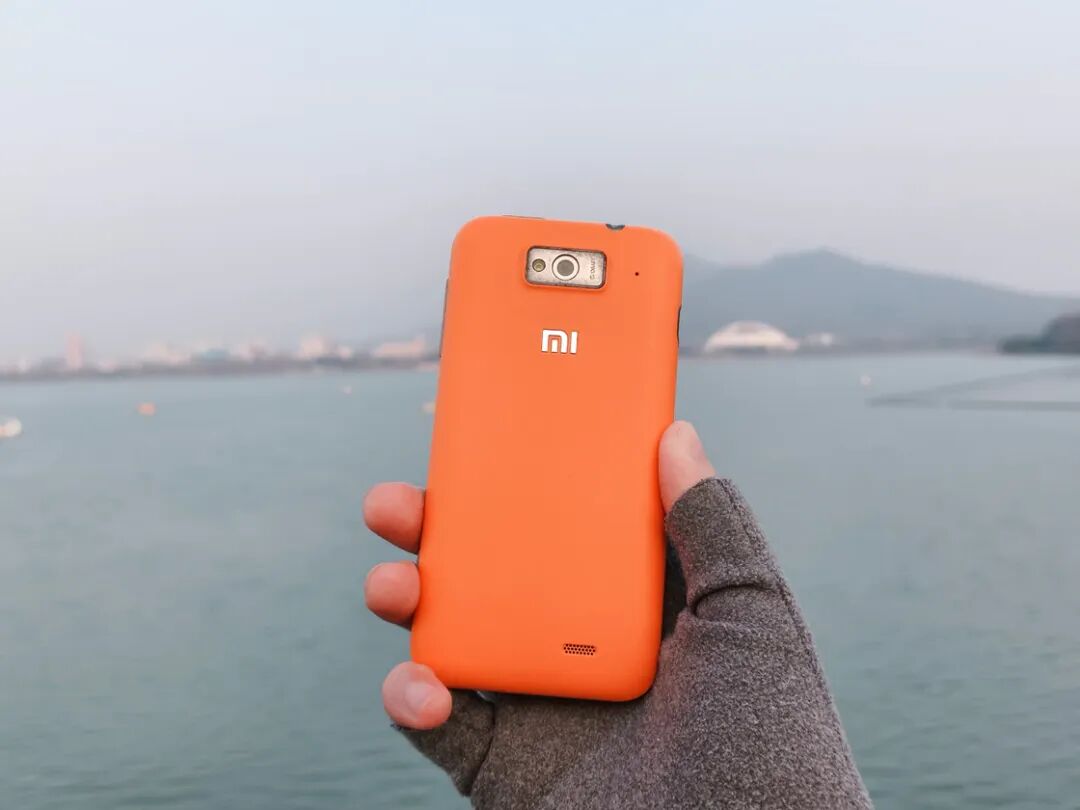
The orange back cover could be easily removed and replaced. At that time, Xiaomi also sold colorful back covers separately.
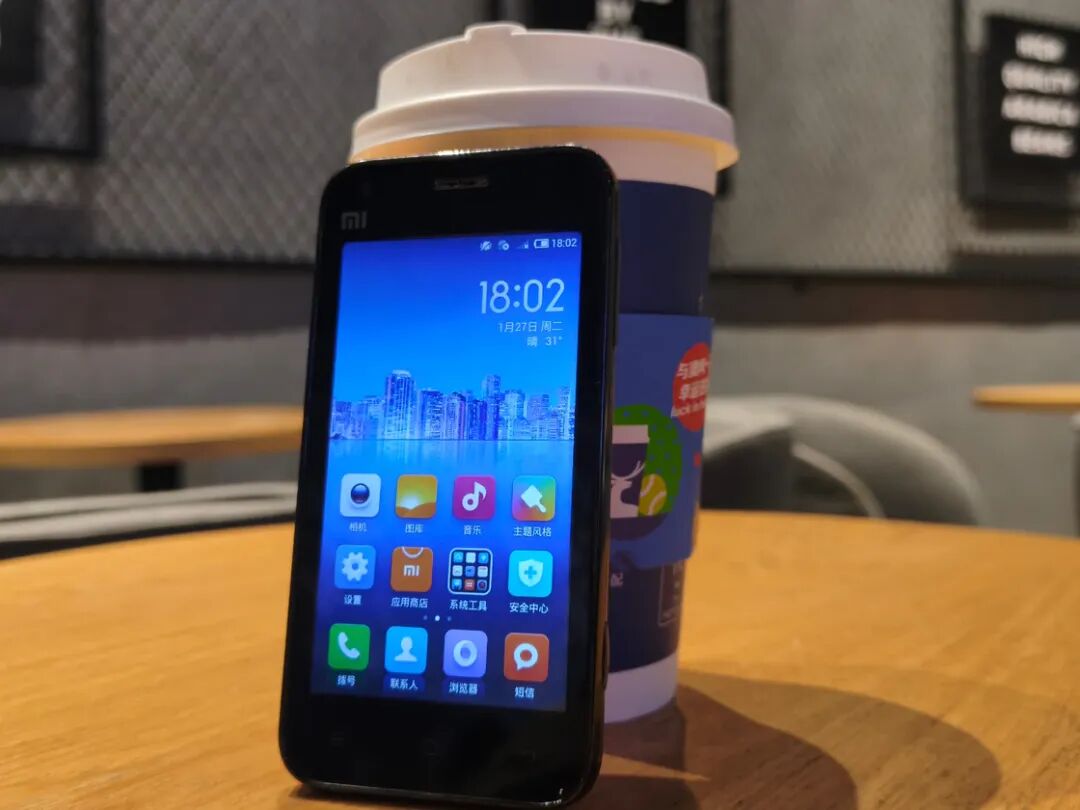
On the front, there are the three iconic keys full of a sense of the times and the original MI logo.
Of course, when it comes to early Xiaomi, MIUI can't be avoided. Different from the so - called "Xiaomi Bible" and the current community's evaluation of the Pengpai OS, MIUI at that time was indeed one of the best Android systems. When most manufacturers' understanding of UI/UX was still at the stage of a "bare - bones" Holo Design plus their own apps, MIUI brought a complete set of redesigned icons and widgets to users at that time, as well as the wallpaper of the Wuhan East Lake landscape, which cost 1 million yuan to collect. In addition, 13 years ago, MIUI had already introduced lock - screen shortcuts and a separate control center. The function of switching between the notification and control centers by swiping left and right wasn't even implemented by some systems until ten years later.
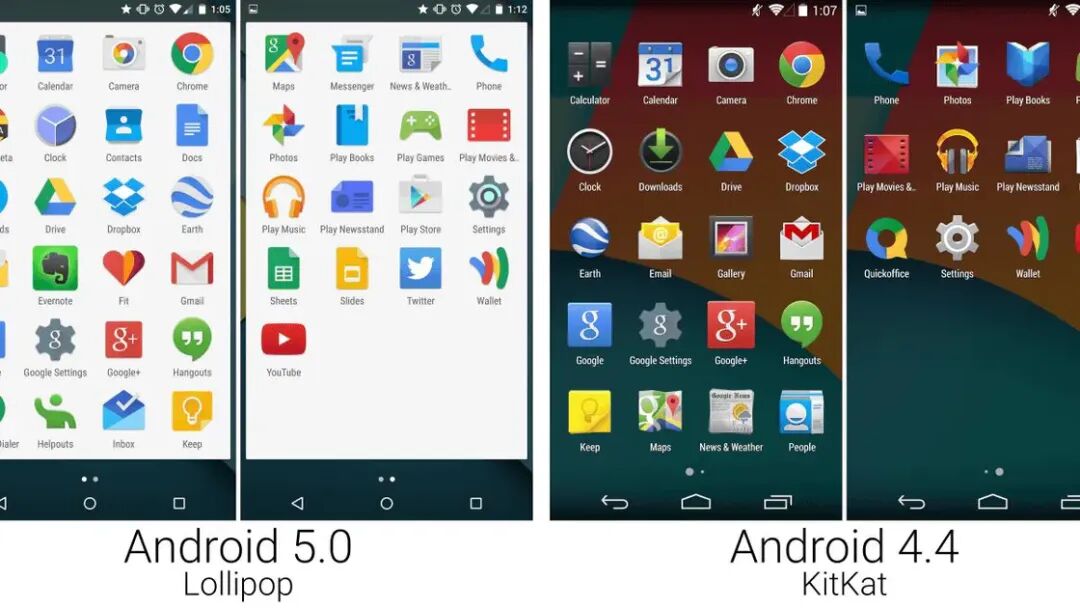
In fact, even after moving away from Holo Design, Google and most manufacturers at that time still didn't realize the importance of icon consistency.
Last year, with Apple's introduction of the Liquid Glass design language, various manufacturers began to follow the trend of using light and materials to show UI depth. This is actually the beginning of the transformation of flat design language back to skeuomorphism. Ironically, the set of skeuomorphic icons on MIUI V5 was exactly a design language between pure skeuomorphism and flat design evolution. Based on the unified rounded - rectangle mask, the icons had highlights on the edges, shadows that conformed to natural light, and a relief texture on the core content, giving a smooth but not greasy visual experience. It was ahead of Google's official Holo Design language for Android 4.4 in terms of consistency, and surpassed iOS 6 at that time in terms of readability and icon simplicity. More importantly, the shortcut switches in the control center, the function switches and sliders in the secondary menus of the settings, and even the quick - start disc on the lock - screen page all used the same shadow and highlight standards. Even today, few Android systems can achieve this. Thirteen years ago, the MIUI design team realized the general trend that the user - friendly demand represented by skeuomorphism and the efficiency improvement and intuitive enhancement represented by flat design must be integrated, which was really forward - thinking. In addition, some system apps also supported swiping down from the icon to open a quick page, similar to the pseudo - small window that Sony could call up in the multi - tasking interface later. It's hard to imagine that this was also a software function more than a decade ago.
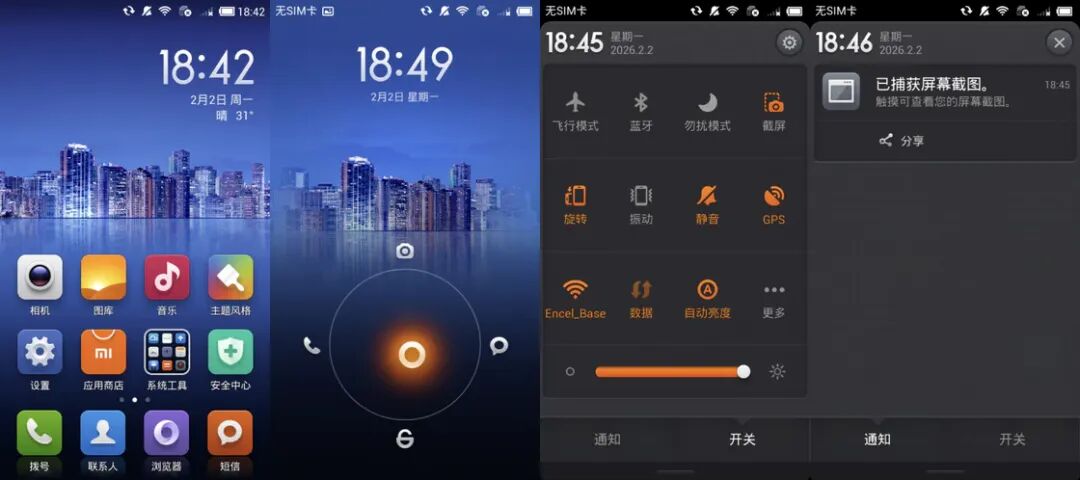
Unified shadows, reliefs, and lighting effects
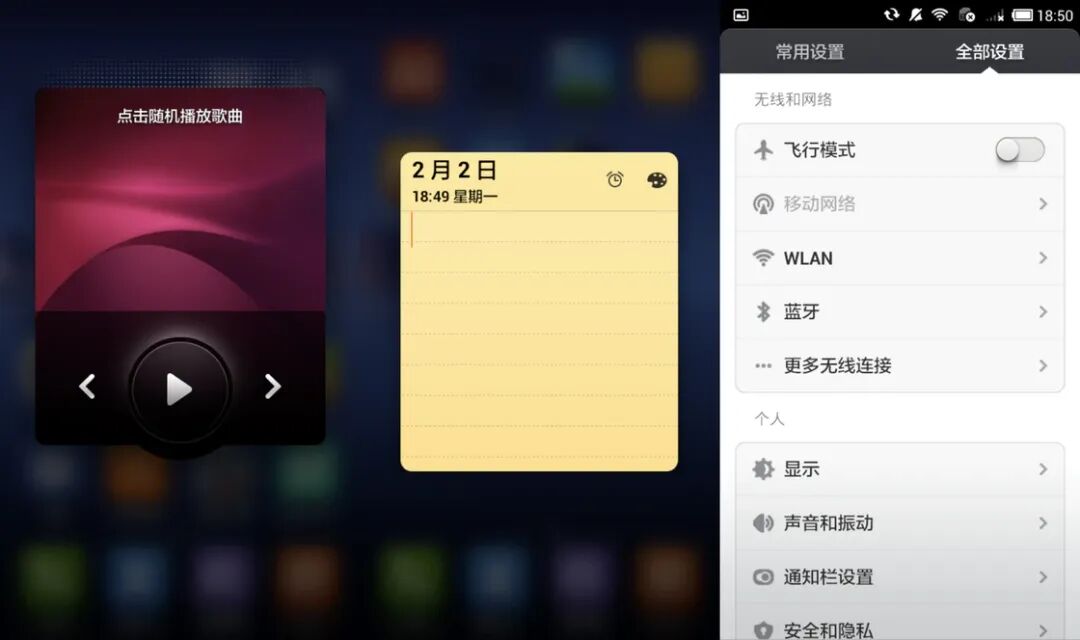
Call up the quick card on the desktop. Notice the unified rounded corners.
However, when we enter some of the system - built - in apps in MIUI V5, the skeuomorphic elements are more prominent. In 2012, Android phones were just emerging, and many people might still be unfamiliar with the pure touch - based interaction mode without a stylus or full - keyboard. The interaction system constructed by imitating real - life objects was obviously more conducive to users getting started quickly, just as Don Norman defined in his book "The Design of Everyday Things":
Affordances provide strong clues to the operations of things. Plates are for pushing. Knobs are for turning. Slots are for inserting things into... When affordances are taken advantage of, the user knows what to do just by looking: no picture, label, or instruction is required.
The clock app has a simplified but still shadow - and physics - effect - enabled clock, the radio has a speaker and a monochrome LCD screen, and the recorder has a rotating magnetic head and a tape with varying thickness. These are all design concepts that prioritize affordance. However, the idea of combining skeuomorphism and flat design isn't cut off here. In the note - taking app, a big clip holds a regular rectangular text box. The weather and calendar apps still mainly use the list mode to display more information. Since the information density required to be presented to users varies in different application scenarios, the balance between skeuomorphism and flat design naturally leans in different directions. However, no matter which app, the use of shadows and highlights follows a unified standard. As Hong (the leader) said himself: "We have an internal guideline for unified design language for V5 and V6, including the two - stage and T - shaped structures you mentioned. The goal is to make the design more modern."
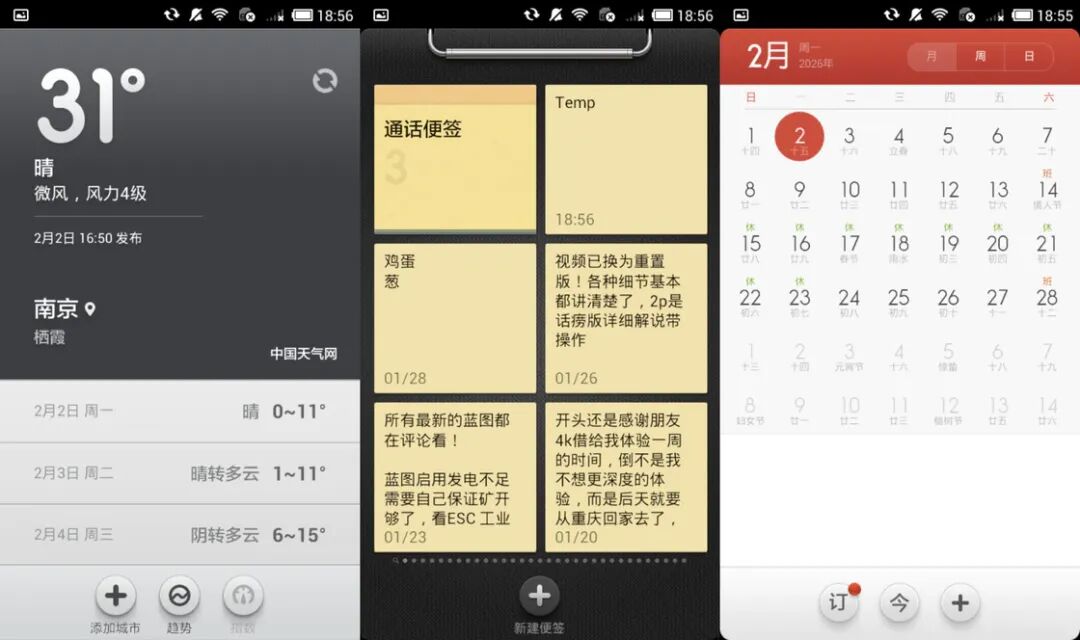
The balanced thinking between skeuomorphism and flat design
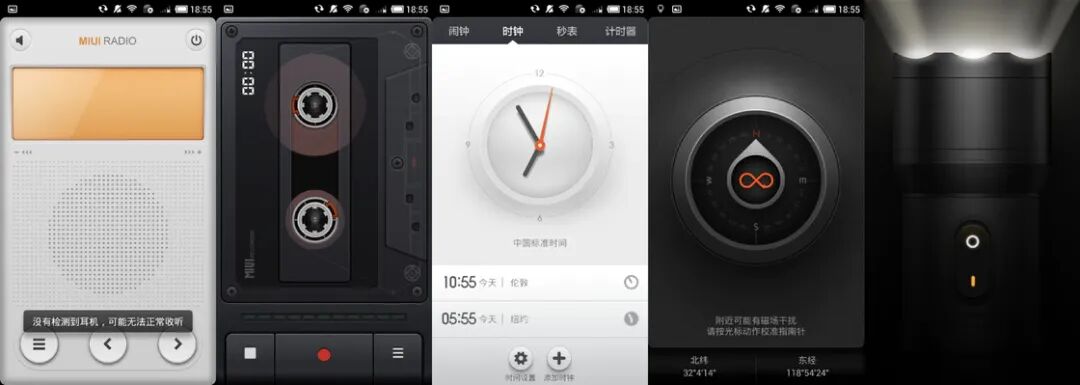
Extreme skeuomorphism - the projection of texture and the real world
In addition to the unified and forward - thinking design language, MIUI also led the way in terms of functionality at that time. The camera supported QR code scanning, WiFi password sharing by scanning, a more user - friendly T9 dialer, a system - level security center, and runtime permission management. These are all truly useful functions that have been carried forward to this day. For phone - flashing enthusiasts, the dual - system parallel partition created by Xiaomi on the Xiaomi 1S not only prevented the phone from becoming a "brick" but also allowed separate OTA updates. Google officially supported the AB partition until four years later in Android 7.0.
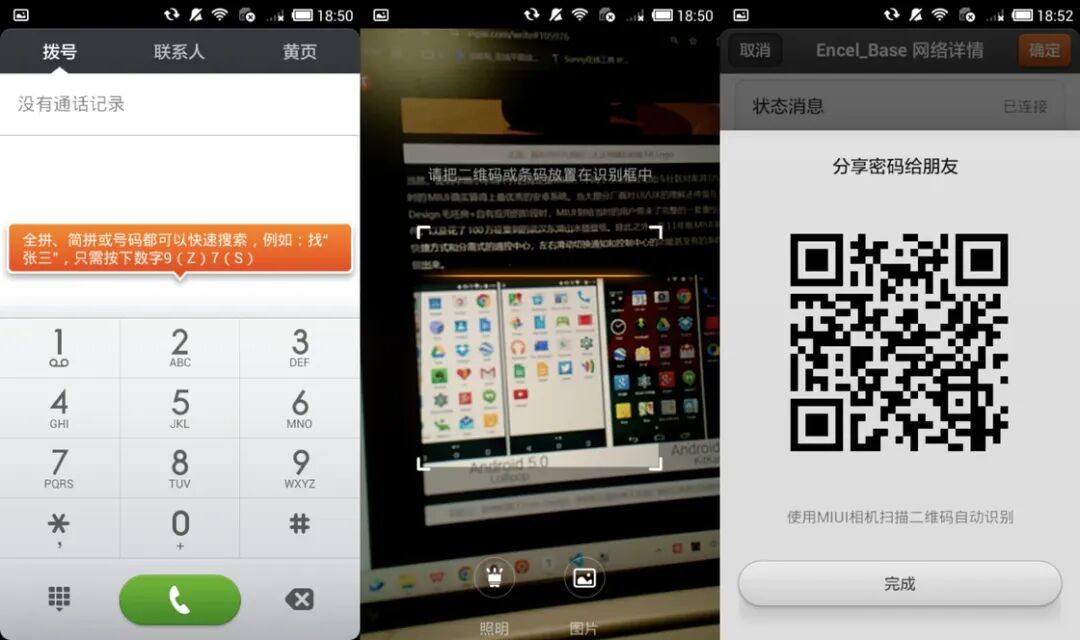
The latest system version supported by the Xiaomi 1S currently stays at the initial version of MIUI V5 based on Android 4.1.2. This small phone that carries so much history, I think it's the best choice to let it stay at the end of the skeuomorphic era. On the other hand, at that time, Xiaomi hadn't become the later king of phone flashing, and MIUI hadn't become the Android system with the widest and longest - lasting support. The 1 + 4 configuration also made it difficult to handle newer systems. However, another phone released two years later not only had a very long official system support but also witnessed the real heyday of phone flashing.
▍We Can't Meet Again - Redmi Note
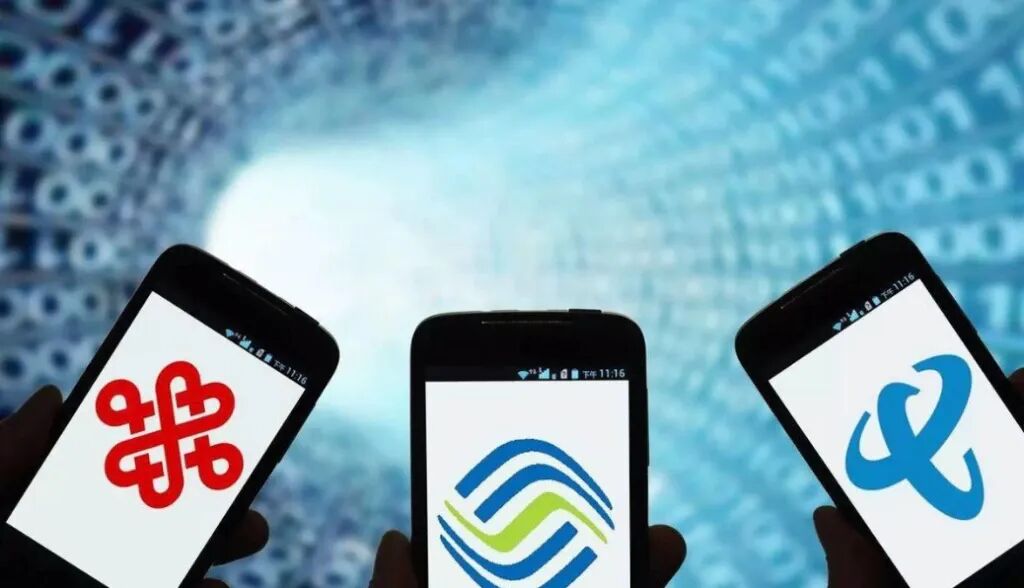
2014 was the first year of 4G in China. At the end of 2013, the Ministry of Industry and Information Technology officially issued 4G (TD - LTE) licenses to the three major operators, indicating another large - scale speed - up of the mobile network. Right after the release of the 4G licenses, Redmi launched the Redmi Note in March 2014. This was the second - generation product series of Redmi after the great success of its first - generation phone, and also the result of its first foray into the large - screen product line under the then - existing standards. However, the first - released Redmi Note didn't support 4G networks. The one in my hand is the single - SIM 4G version released five months later. In addition to supporting the 4G networks of China Mobile and China Unicom, it also used the Qualcomm Snapdragon 400 processor, but didn't support dual - SIM dual - standby.
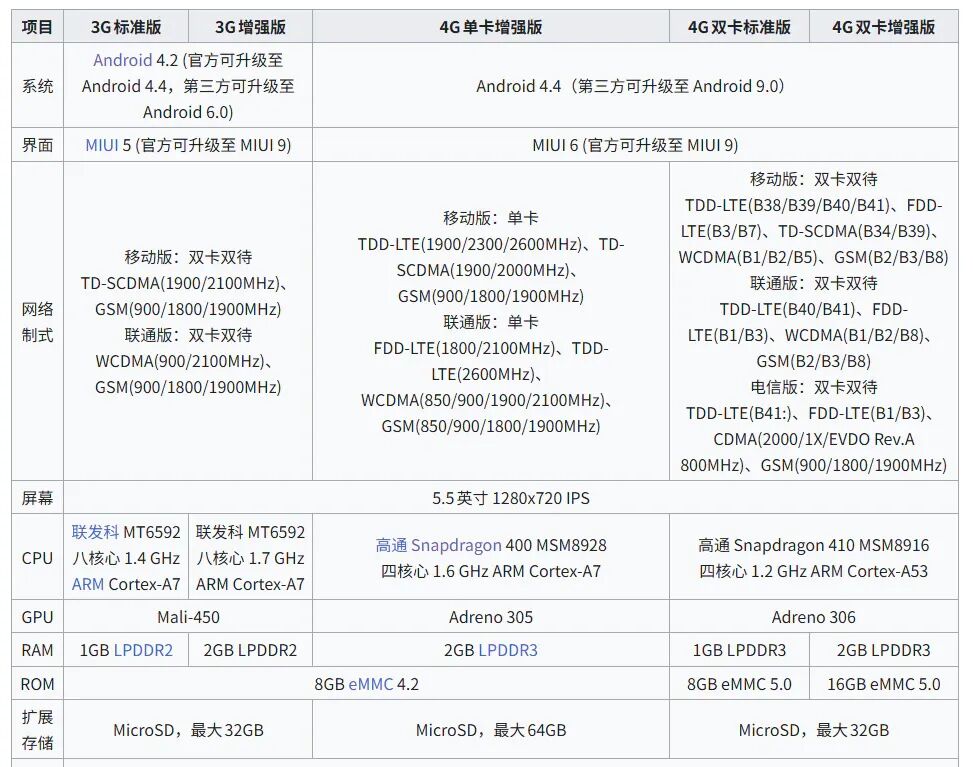
In the Redmi Note family, the 3G and 4G models have different codenames (lsch92/dior), and the flashing packages aren't interchangeable.
2014 was not only the starting point of the spread of 4G but also the starting point for phone SoCs to gradually embrace quad - core processors. Although the starting price was 1000 yuan lower, the Snapdragon 400 used in the Redmi Note was a genuine quad - core Cortex - A7 processor. The 2 + 8 memory configuration also gave it a higher performance ceiling. The IPS screen was also popularized in Xiaomi's product line at that time. The 5.5 - inch 720P display with 268 PPI is still not completely unacceptable even today. The 3100mAh battery and 13 - megapixel/5 - megapixel cameras also made it a great choice in the same price range. The breathing light and the three iconic backlit keys were also standard features in Xiaomi phones at that time. The all - plastic body was a common choice for mid - and low - end phones at that time, but the large curvature of the back cover of the Redmi Note 1 made it very comfortable to hold.
