Team von Shanghai Jiao Tong University und Tsinghua University arbeitet an Edge-AI: Zwei aufeinanderfolgende Finanzierungsrunden mit über 100 Millionen Yuan, Dienstleistungen für Apple, BYD und CATL | Erstveröffentlichung von 36Kr
Autor/in | Ou Xue
Redakteur/in | Yuan Silai
Hard Kr has learned that Shanghai Xinmier Technology Co., Ltd. (hereinafter referred to as "Xinmier"), a leading enterprise in edge-side AI applications, recently announced the successful completion of consecutive rounds of Series A and Series A+ financing worth hundreds of millions of yuan. Guotai Junan Innovation Investment, Guojing Capital, and Tongxin Capital participated in the investment; Yiren Capital served as the exclusive financial advisor.
The financing funds will be mainly used for the research and development of the next-generation sensor-computation integrated chip architecture; to accelerate global commercialization and systematically promote the proven solutions in China's high-end manufacturing sector to the markets in Europe, America, Japan, South Korea, and Southeast Asia; to expand high-end production capacity and recruit key talents to support the expected strong growth in orders over the next two years.
Founded in 2019 and headquartered in Shanghai, Xinmier's core products are a platform-based, full-stack product matrix built on the "sensor-computation integration" technology foundation. It covers the chip layer (sensor-computation integrated AI SoC chips and IP design), the module layer (a series of intelligent modules for video, audio, control, and sensing), and the system layer (hardware-software integrated solutions for benchmark scenarios).
The company's core team combines academic backgrounds with industrial experience and has the complete capabilities from technology R & D to commercialization.
Dr. Yang Minglun, the founder and CEO of the company, graduated from Shanghai Jiao Tong University. He once served as the R & D supervisor of FANUC, the world's largest robotics company, and was an early member and co-founder of several robotics startups. He has over a decade of experience in the R & D and large-scale implementation of industrial robot applications.
Cheng Yuan, the founder and CTO, is an associate professor at Shanghai Jiao Tong University. He once served as an assistant researcher/postdoctoral fellow at Tsinghua University. Many of his works have been published in top academic journals of the Nature series. He achieved the world's first million TOPS general-purpose sensor-computation integrated chip architecture, having a wide influence in research fields such as edge-side intelligence, high-efficiency computing, and optoelectronic chips. Other core team members also come from Shanghai Jiao Tong University/Tsinghua University and have over 15 years of experience in high-end manufacturing operation and management.
Technologically, Xinmier has achieved a breakthrough in the traditional von Neumann architecture and pioneered and implemented a new edge-side computing paradigm of "sensor-computation integration". The core of this technology is to deeply integrate sensing and computing in the same chip and conduct joint design optimization based on a large-scale reconfigurable architecture, thus eliminating the data transmission bottleneck between the sensing, storage, and computing units at the source.
This technology shows exponential potential for improvement in response speed, energy efficiency, and real-time performance when processing complex multi-modal streaming continuous data such as video and audio. It has been successfully applied in SoC chip design, providing true "hardware-native intelligence" for edge-side AI devices.
Currently, the products have been widely used in fields such as intelligent manufacturing, embodied intelligent robots, automobiles, new energy, smart cities, and precision instrument monitoring.

Sensor-computation integrated chip products (Source: Company)
As AI enters the second half of the pursuit of "high-energy-efficiency dedicated intelligence", edge-side AI is becoming the key to technology implementation. In the future, AI must penetrate into specific scenarios and be deeply integrated with sensors and actuators to embed real-time intelligence into a vast number of physical devices.
This shift marks the industry's transition from the "first half" of large models to the "second half" of in-depth collaboration with the physical world and the pursuit of system efficiency. The market is accelerating its expansion from the consumer Internet to the industrial Internet of Things, covering high-value fields such as intelligent manufacturing, embodied intelligent robots, and new energy, and is currently in the early stage of explosive growth.
Currently, Xinmier's performance has been in a stage of rapid growth. Its revenue has doubled for several consecutive years, and the gross profit margin has remained at a high level for a long time. Among them, the company's overseas business is the focus of continuous expansion in the next few years, with an annual growth rate of over 400%. It is expected that the proportion of relevant revenue this year will increase to over 40%.
Hard Kr has learned that Xinmier has served over 300 customers, including almost all automobile OEMs and parts brands, the world's largest mobile phone brand and its core contract manufacturers, the world's largest lithium battery company, and the world's top two commercial aircraft and aero-engine brands, both domestic and international giants.
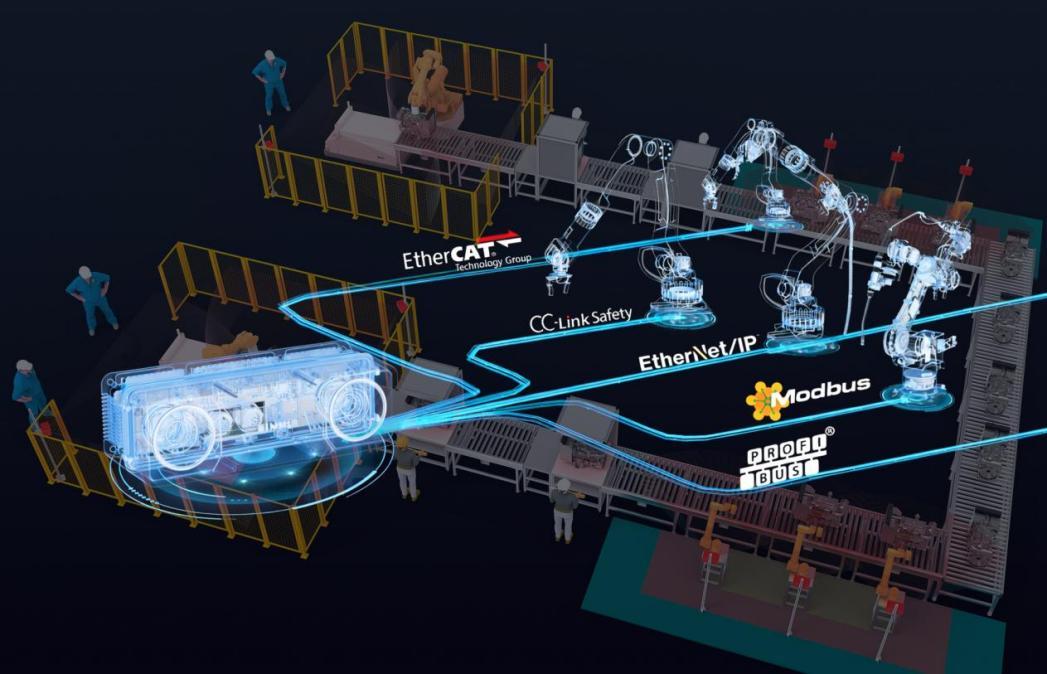
Benchmark solution for site-level industrial agents (Source: Company)
Regarding the core pain points currently faced by the edge-side AI application industry, founder Cheng Yuan believes that the industry is shifting from the pursuit of the general capabilities of "large models" to the pursuit of "high-energy-efficiency" dedicated intelligence. The core pain point lies in the "efficiency triangle" challenge faced by customers: they require both extreme real-time performance and reliability (such as millisecond-level response in industrial scenarios), extremely low power consumption and deployment costs, and the ability to process complex multi-modal sequential data (such as video streams and time-series signals). Existing solutions based on general computing and the cloud have difficulty meeting these conflicting requirements, and this is precisely where the "sensor-computation integration" architecture can create disruptive value.
"In the future, it will move towards 'intelligent agentization' and collaborative design of hardware and software. AI devices will no longer just be sensors but autonomous systems capable of independently completing the entire process of perception, decision-making, and action." Cheng Yuan said.
Cheng Yuan said that a large number of immediate response tasks (such as obstacle avoidance and emergency stop) will be instantaneously completed locally by the sensor-computation integrated modules, forming a response similar to an "instinct". The central cloud will focus on long-term planning and learning. This means that hardware will become the carrier of the "instinct" of intelligent agents and evolve towards standardized modules of "sensor-computation-control integration", thus greatly reducing the development threshold and energy consumption of complex AI systems and accelerating the popularization of intelligent terminals.
What Xinmier is building is precisely the core that supports this future - the "sensor-computation integrated system".
Regarding the company's development plan, Cheng Yuan said that in the short term, the company will continue to deeply cultivate the system-level deployment of industrial agents and build it into a general edge-side computing power base for global intelligent manufacturing.
In the medium term, relying on the "sensor-computation integration" technology platform, it will fully expand into the two golden tracks of "embodied intelligence" and "precision sensing". The former focuses on the core perception and decision-making modules of robots, and the latter targets scenarios such as scientific instruments and infrastructure monitoring, promoting the company's evolution from the "brain of intelligent manufacturing" to "intelligence for all things".
In the long term, the company will continuously integrate cutting-edge technologies such as neuromorphic computing and optoelectronic computing to improve the comprehensive energy efficiency of intelligent computing by several orders of magnitude, allowing AI capabilities to penetrate every corner of the physical world like water and electricity.
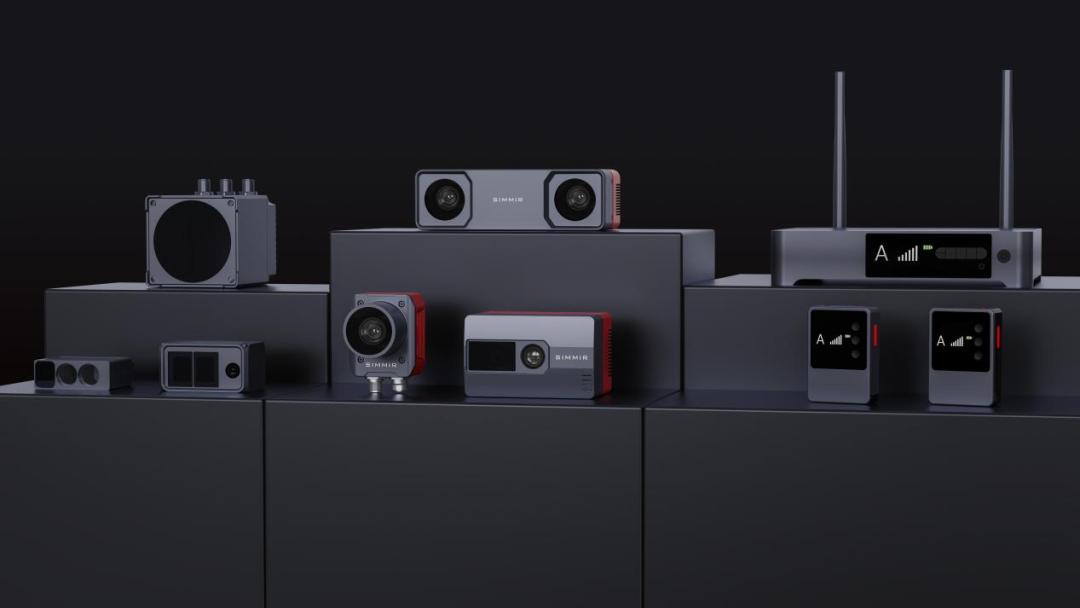
Sensor-computation integrated system products (Source: Company)
Views of the investors:
Liu Yezhou, senior investment manager of Guotai Junan Innovation Investment, said: Currently, the applications of large models and AI agents are pursuing to do "addition", training models with more data, and the whole process is highly redundant, resulting in high costs. I believe that in the next stage, the focus will be on the computing efficiency, energy consumption, and speed of AI use. Xinmier's edge-side AI infrastructure is a typical example. Through the design of the sensor-computation integrated architecture, it can complete efficient computing at the edge side, realizing real computing power reconstruction. Its implementation strategy is to do "subtraction": by entering industrial scenarios with strict requirements for real-time performance, cost, and privacy, and achieving "reducing latency, reducing algorithms, and reducing costs" through edge deployment, it is expected to become the key computing power infrastructure in the future era of intelligence for all things, promoting AI to truly enter an era of ubiquitous real-time and high energy efficiency.
Qian Yuanshun, vice president of investment at Guojing Capital, said: To truly realize the implementation and application of AI in specific scenarios, it no longer depends on the generalized general capabilities but on in - depth experts who can accurately solve the actual problems in the industry. Currently, the prosperity of the open - source ecosystem of large models has significantly weakened the barriers of algorithms themselves. The core of the competition among AI application enterprises has shifted to: 1) obtaining high - value closed - scenario data, 2) efficiently completing complex tasks with limited edge computing power. Relying on its unique sensor - computation integrated computing architecture, Xinmier has achieved edge - side Agentic AI that "drives large - scale operations with small computing power" and has taken the lead in entering the production processes of leading industrial customers, thus accumulating a large amount of scarce on - site operation data. This not only drives the rotation of its data flywheel but also effectively solves a series of core pain points in the production line, forming a complete closed - loop from technology, data to commercial value.
Zhong Yuli, investment director of Tongxin Capital, said: As AI moves towards edge - side and on - site intelligence, the core competitiveness has shifted from model scale to computing architecture. Xinmier's innovation in sensor - computation integration and Agentic computing power improves energy efficiency and real - time performance from the source, reconstructing the edge - side intelligent computing paradigm. At the same time, by deeply deploying edge - side agents in core industrial scenarios, the company continuously accumulates high - value, non - replicable on - site data, forming a solid data and technology barrier. We are optimistic that Xinmier will maintain long - term leadership in the field of edge - side AI infrastructure with its "architectural innovation + data threshold".
Zhao Yang, managing director of Atom Capital, said: Since its establishment, Xinmier Technology has demonstrated profound technical background and a long - term vision in edge - side AI and sensor - computation integrated architecture, which is also an important reason why Atom has continuously supported it in multiple rounds since the angel round. The company takes the collaborative design of algorithm - hardware optoelectronic integration as the core, continuously breaks through the bottlenecks of energy efficiency and real - time performance of edge - side computing power, transforms cutting - edge technologies into commercially viable products for large - scale implementation, and quickly builds an application ecosystem covering multiple industries and scenarios. Completing the transition from technology verification to global commercial implementation in just four years and successfully completing consecutive Series A and Series A+ financing fully confirm its product strength and execution ability. We believe that Xinmier Technology is expected to quickly become an important infrastructure - level enterprise in the era of edge - side AI and continuously lead "Made in China" to become bigger and stronger.