Is it true that the widely circulated Clawdbot on the internet can help you earn 1,500 yuan a day?
It's been a long time since an AI product gave people the feeling that science fiction has become a reality.
Recently, the AI circle has been flooded with news about the product Clawdbot. (It was later renamed Moltbot and now OpenClaw, but for the sake of habit, we still call it Clawdbot.)
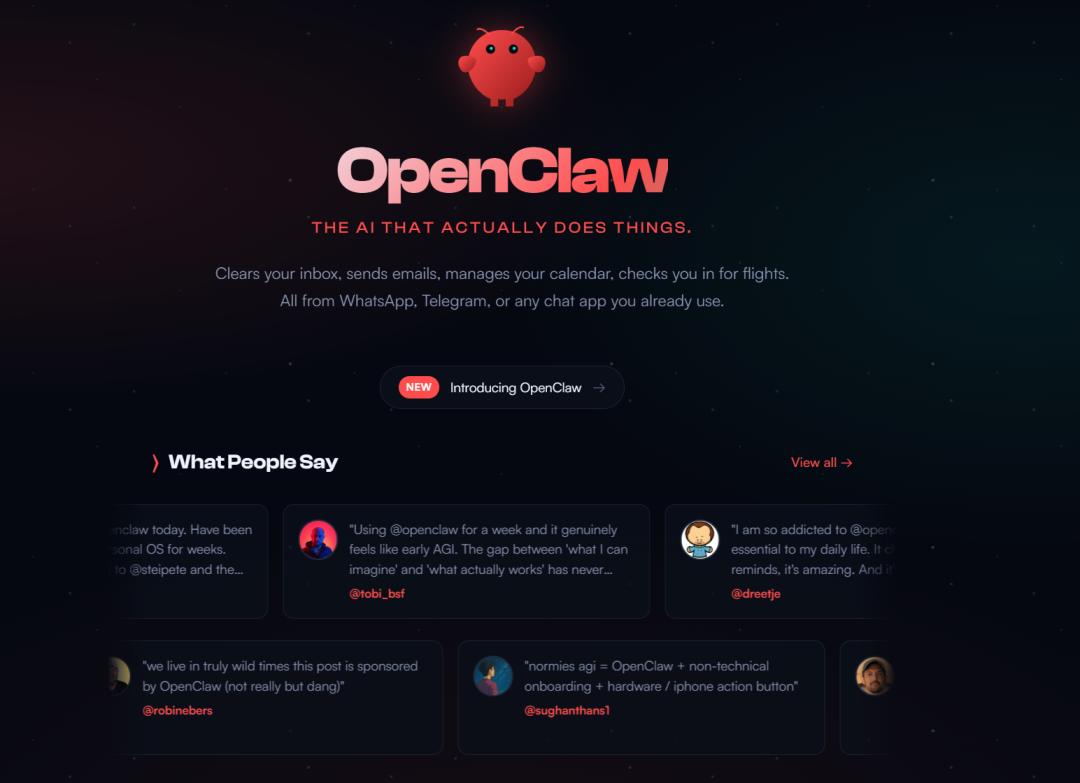
Whether on Telegram, WhatsApp, or Feishu, with just one command, it can automatically organize files, send emails, run code, and even independently advance an entire project without you having to stay in front of the screen.
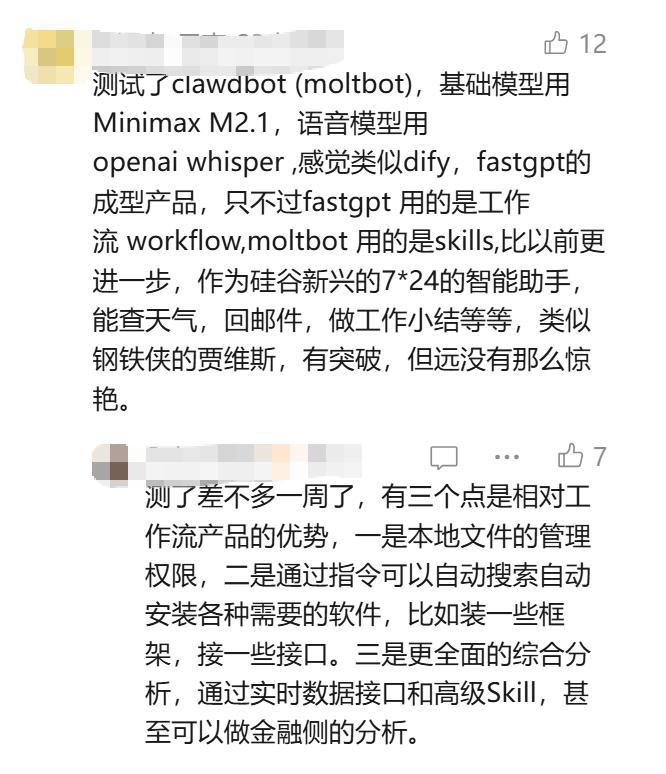
Many users have shared their experiences: Some returned from a meal out to find that the project on their computer was already completed; some took a shower and came back to find that it had cleared 75,000 emails; others directly used it to execute stock strategies and generate analysis reports.
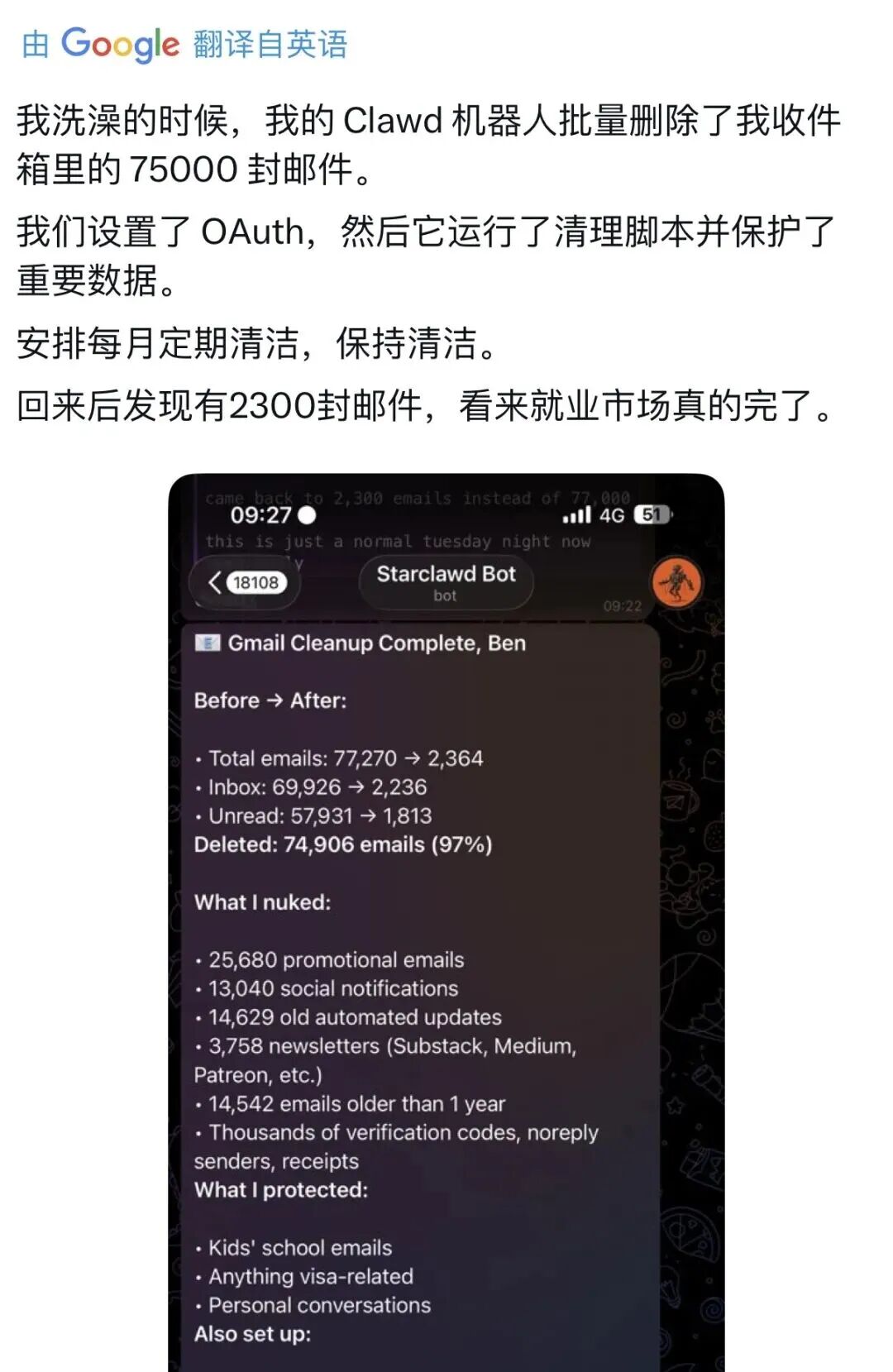
Many netizens sighed: This is simply the real - life version of "Jarvis".
Its amazing part lies in that it no longer just provides suggestions or answers, but directly takes over tasks and turns your ideas into reality.
The popularity of Clawdbot itself doesn't quite fit the public's imagination of a "genius product".
The author of Clawdbot is not a genius teenage dropout from a Silicon Valley garage, but Peter Steinberger from Austria, a character more like the one who "retired after achieving success" in a popular novel.
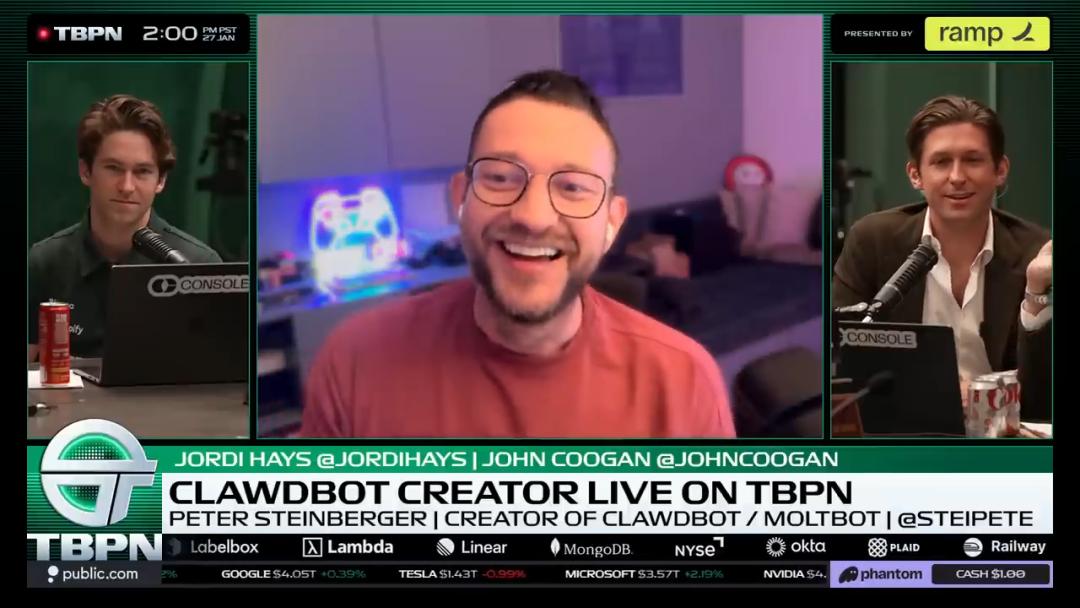
The PSPDFKit he founded earlier was successfully sold in 2021, netting him about 100 million euros. Normally, his life script should have turned to the second half of enjoying financial freedom.
But he candidly wrote in his blog that pleasure - seeking, moving around, and even psychotherapy couldn't fill the persistent void.
It wasn't until one day when he sat back in front of the computer and started writing code that he suddenly realized: All true happiness comes from the process of "turning ideas into reality".
So in 2025, he made a full comeback and went all - in on AI Agents. Less than a year later, Clawdbot emerged.
If you just regard Clawdbot as "another AI assistant", you basically don't understand its significance.
It is fundamentally different from tools like ChatGPT and Claude, which are based on the "question - answer" model. In simple terms, past AIs only had "mouths", but now it finally has "hands".
A truly capable AI agent can't do without three things: perception, decision - making, and action.
In the past two years, perception and decision - making have been pushed to the limit.
AI can view images, listen to sounds, understand complex instructions, write code, conduct analysis, and come up with solutions. In terms of "mental power", it has clearly exceeded that of ordinary people.
But "action" has always been a weakness. Most AIs can at most click a few times on a webpage for you or generate a script that you still have to execute yourself. The real operational power has always been in your hands.
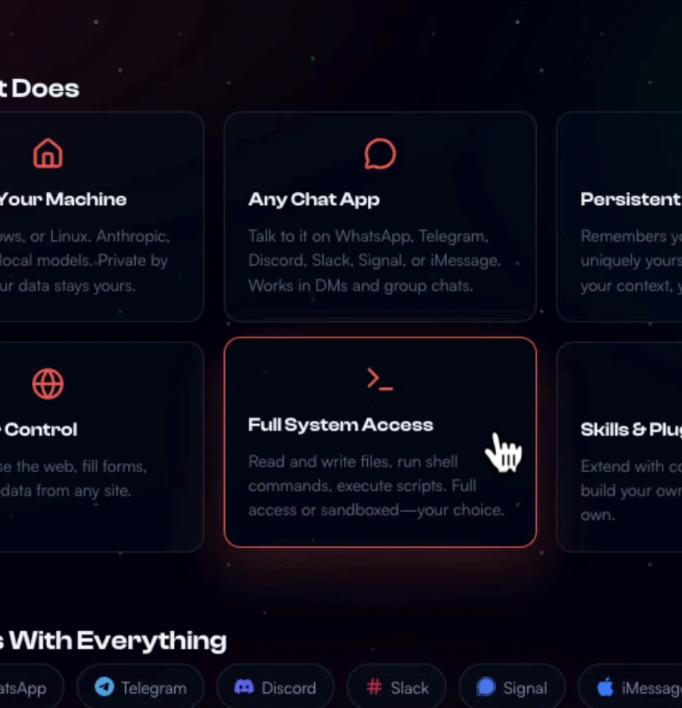
What makes Clawdbot different is that it runs directly on your computer or server and has system - level permissions.
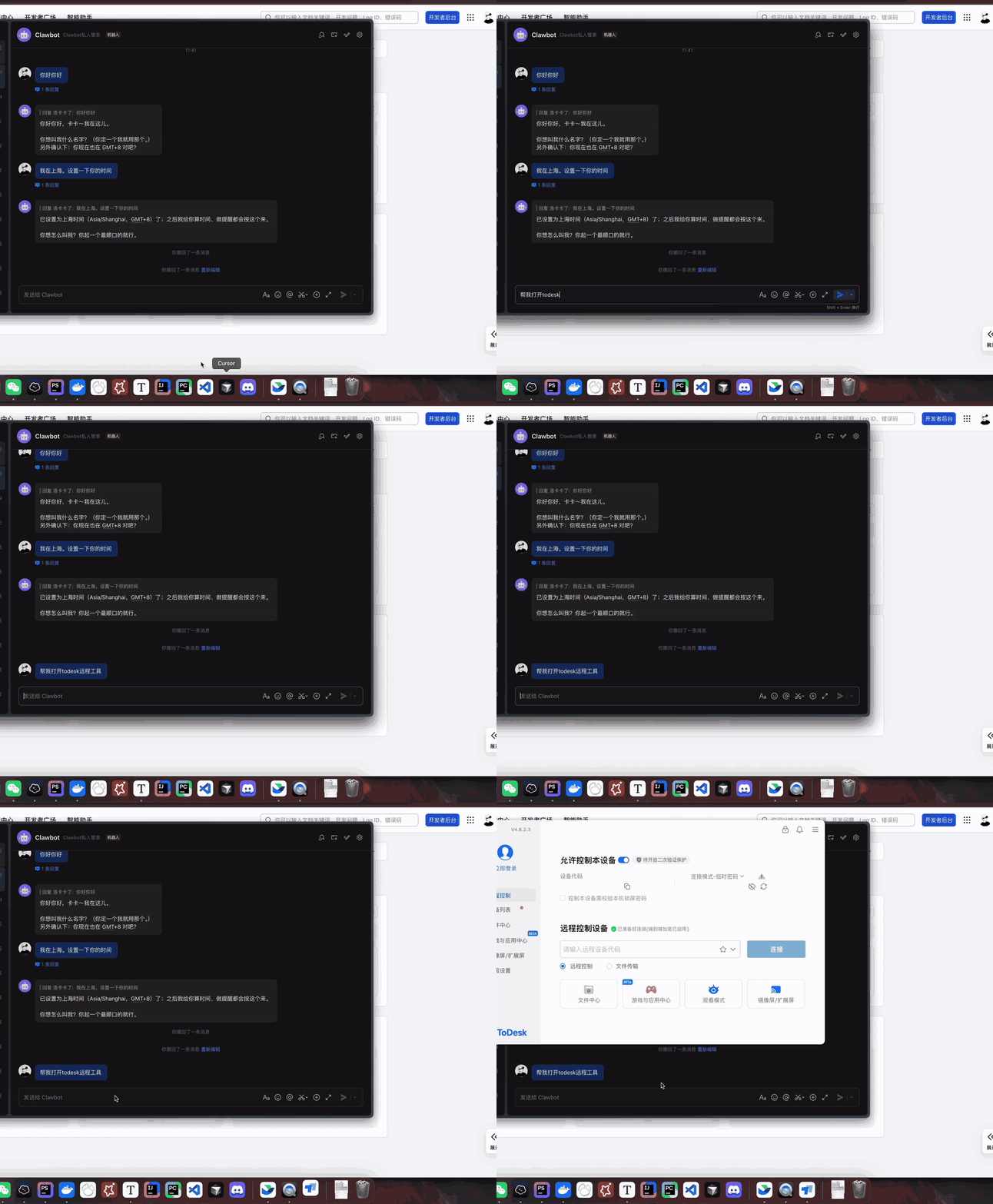
You don't need to stay in front of the screen. As long as you send a message through your daily chat tools, it will really operate your computer: open files, modify documents, send emails, run code, fill out forms, and organize folders.
You are no longer "using a tool", but more like commanding a digital employee who works 24/7, never complains, and never takes a day off.
It's exactly because of this change that it has become so popular.
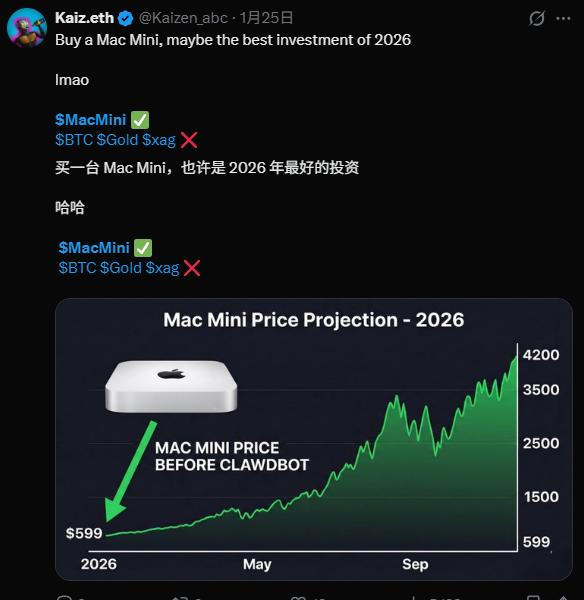
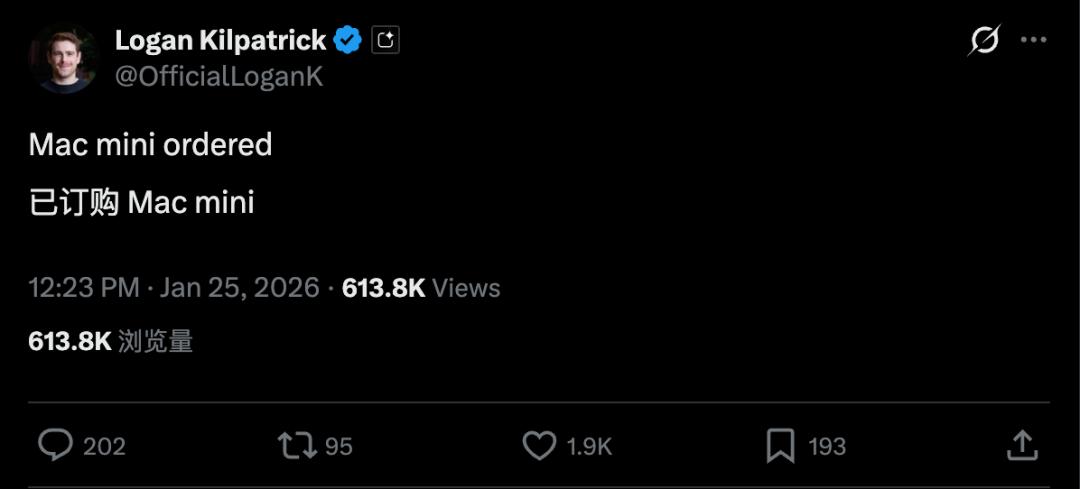
It got over 80,000 stars on GitHub in just a few days. Domestic cloud providers rushed to integrate it. Tencent Cloud, Alibaba Cloud, and UCloud all launched one - click deployment. Even the Mac mini has become popular. Many people specifically buy one and keep it at home just to keep Clawdbot online all the time.
Even the head of Google's AI products personally showed off using it, which shows one thing: This is not just self - indulgence in the geek circle.
What really makes people both excited and vaguely uneasy is that you gradually realize that this is not just about improving efficiency, but about reshaping the relationship between you and the computer.
In the past, when facing the computer, you were an operator; now, you are more like a manager.
You just need to describe the goal, and all the steps in between, such as breaking down the tasks, executing them, and dealing with any issues, can be handed over to the AI.
For example, when you come back from a business trip and there are hundreds of photos on your computer with garbled file names, you don't need to screen them one by one. Just say "categorize them by city and date and rename them", and it will handle the rest.

It sounds great, but you'll soon face the following problems.
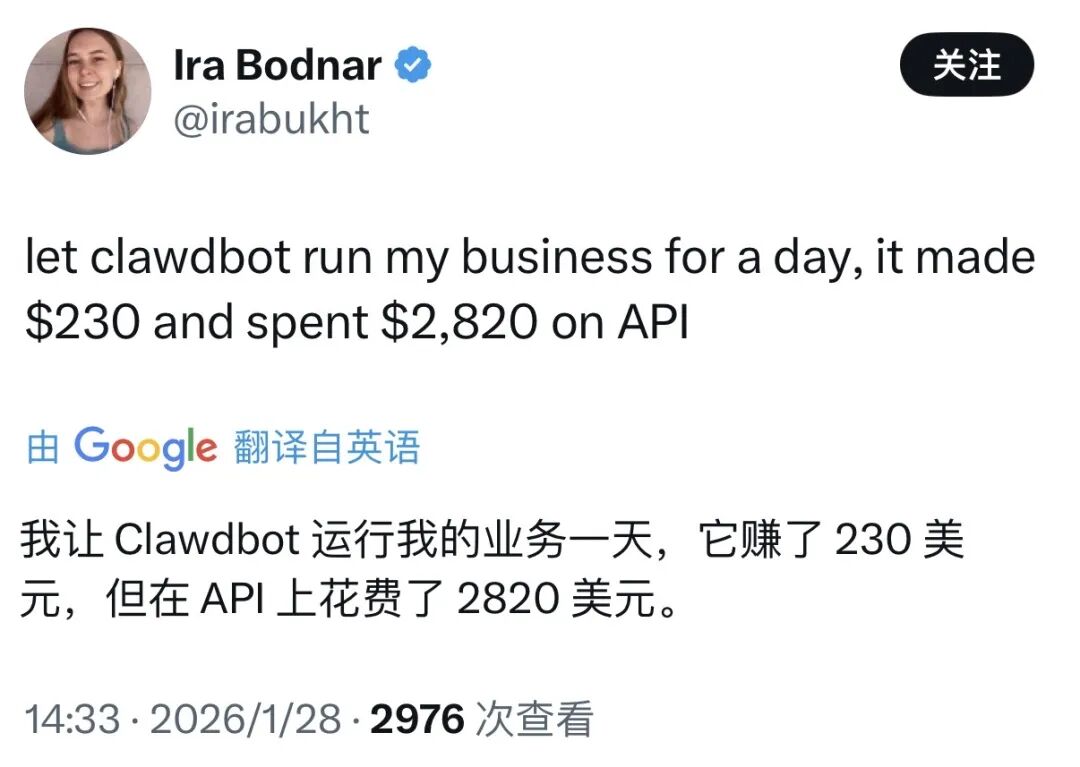
The first is cost. Agents are typical "token black holes".
To have memory and make continuous decisions, it needs to constantly feed context into the model, and every step costs money.
Some users have calculated that the API cost for running it all day can even exceed hiring a real - life assistant.
The second is the threshold. Don't be deceived by the "one - click deployment". For ordinary people, it's still not user - friendly.
The error messages are in English, the documentation is written from an engineer's perspective, and the logic is not intuitive.
Even if the deployment is successful, you may encounter situations where tasks get stuck, messages go into an infinite loop, and you have no idea what it's waiting for. The dropout rate is not low.

But what really sends shivers down your spine is the third problem: permissions.
The premise for Clawdbot to do all this is that you give it control of your computer.
This means that in theory, it can see, modify, and delete almost all the content on your computer: accounts, passwords, files, chat records, and bank card information.
A single prompt injection, a configuration error, or a malicious exploitation can have consequences far beyond just a "bad experience".
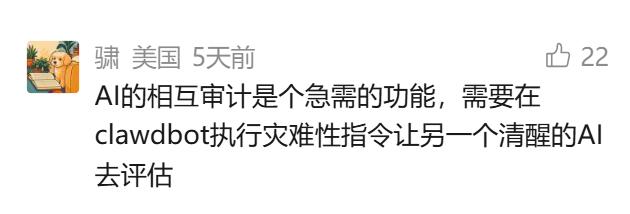
By now, you'll find that the emergence of Clawdbot makes many people both excited and scared. The things it can do are almost impossible for large companies to officially launch.
It's not that they can't do it, but they can't bear the risk of something that's not fully controllable. Independent developers can say "at your own risk", but large companies can't.
Precisely because it doesn't have the burden of layers of compliance and risk control, Clawdbot seems so "wild" and so real.
From another perspective, the popularity of Clawdbot is also sending a signal: The narrative of AI is shifting from "can it talk" to "can it do".
When AI starts to take the mouse and keyboard from you, it also gives you something back - thinking. You can no longer use "I'm busy" as an excuse for "I'm just going with the flow".
When execution is automated, the value of humans is forced to rise. This is a liberation for some, but a cruel screening for others.
If you're a tech enthusiast who loves to tinker or your work is full of repetitive processes, Clawdbot is definitely worth a try. If you just want a "smarter ChatGPT", it might be too early.
But whether you use it or not, it has accomplished an important thing: It has brought the "all - around assistant" from science fiction into reality, where it can be tested, criticized, and optimized.
A few years from now, looking back, Clawdbot may seem as bulky, expensive, and full of problems as the first - generation smartphones, but at that moment, it made people truly feel that the future has taken a step forward.
This article is from the WeChat official account "Tech Fox" (ID: kejihutv). Author: Lao Hu. Republished by 36Kr with permission.