Nine car manufacturers have launched "seven-year low-interest" offers, and the car market is off to a fierce start this year.
For automobile manufacturers, this "financial war" at the beginning of the year is not only a crucial layout to seize the first wave of traffic in the new year but also a life-and-death battle to pave the way for the annual sales target.
At the beginning of 2026, before the arrival of the Spring Festival consumption peak season, the automobile market has already been shrouded in a thick cloud of intense competition.
The involution trend in the industry that has continued since 2025 has witnessed a new upgrade at the beginning of the new year. The trigger point for this round of competition is the 7-year ultra-low-interest car purchase plan first launched by Tesla. This move, which breaks the industry's conventional car loan cycle, has quickly triggered a chain reaction. Eight car manufacturers, including Li Auto, Xiaomi, XPeng, Geely, and Dongfeng Yipai, have followed suit. Within just a few weeks, nine car manufacturers have entered the fray intensively, pushing the involution level of the automobile market at the beginning of the year to a new high.
Looking back at the evolution of competition in the automobile market, from the "price war" at the beginning of 2025 when more than 30 car manufacturers collectively cut prices to the subsequent "five-year interest-free" financial game followed by many car manufacturers, the competition in the automobile market has gradually shifted from simple cash rebates to in-depth competition in financial policies. The wave of "7-year low-interest" at the beginning of 2026 has pushed this game to the extreme.
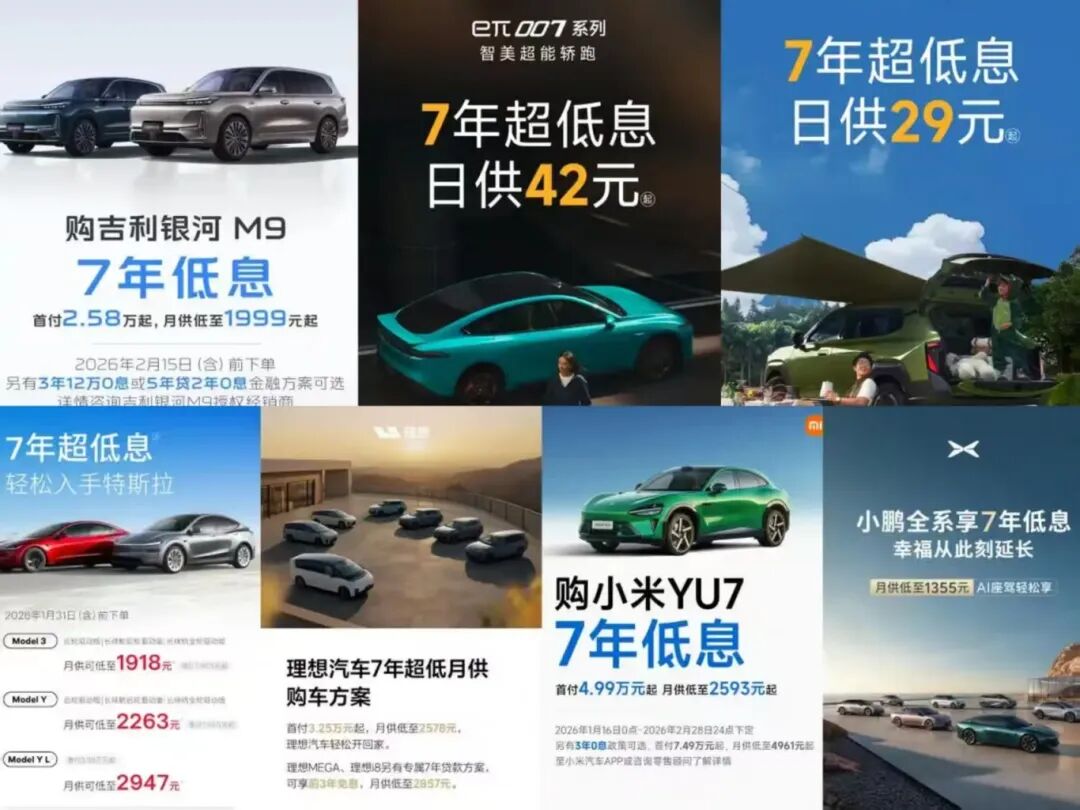
Differently, compared with the previous trial discounts in the thousands of yuan range, today's competition has been upgraded to a contest at the level of car purchase thresholds and capital costs. The efforts of the nine car manufacturers have not only pushed the automobile market before the Spring Festival into the "Warring States Era" in advance but also clearly sent a signal: the fierce competition in the automobile market has become the norm, and the industry involution in 2026 will only become more brutal.
For automobile manufacturers, this "financial war" at the beginning of the year is not only a crucial layout to seize the first wave of traffic in the new year but also a life-and-death battle to pave the way for the annual sales target. For consumers, although the intensive financial preferential policies seem to offer more choices, they also need to make rational judgments amidst the noisy promotions.
Launching the "7-Year Low-Interest" Financial War
Overall, the most prominent feature of the "7-year low-interest" financial car purchase plans launched by the nine car manufacturers this time is their wide coverage and low entry threshold. They have almost achieved full coverage of all models within the price range of less than 500,000 yuan, covering all categories and price bands. From economy commuter cars to mid - to high - end family cars, corresponding financial plans can be found, meeting the car purchase needs of different consumption levels.
As the initiator of this round of "financial war", Tesla's plan is quite powerful: for the Model Y, with a down payment of 79,900 yuan and a monthly payment of only 1,918 yuan, it has significantly lowered the threshold for young consumers to buy mainstream new energy vehicles.
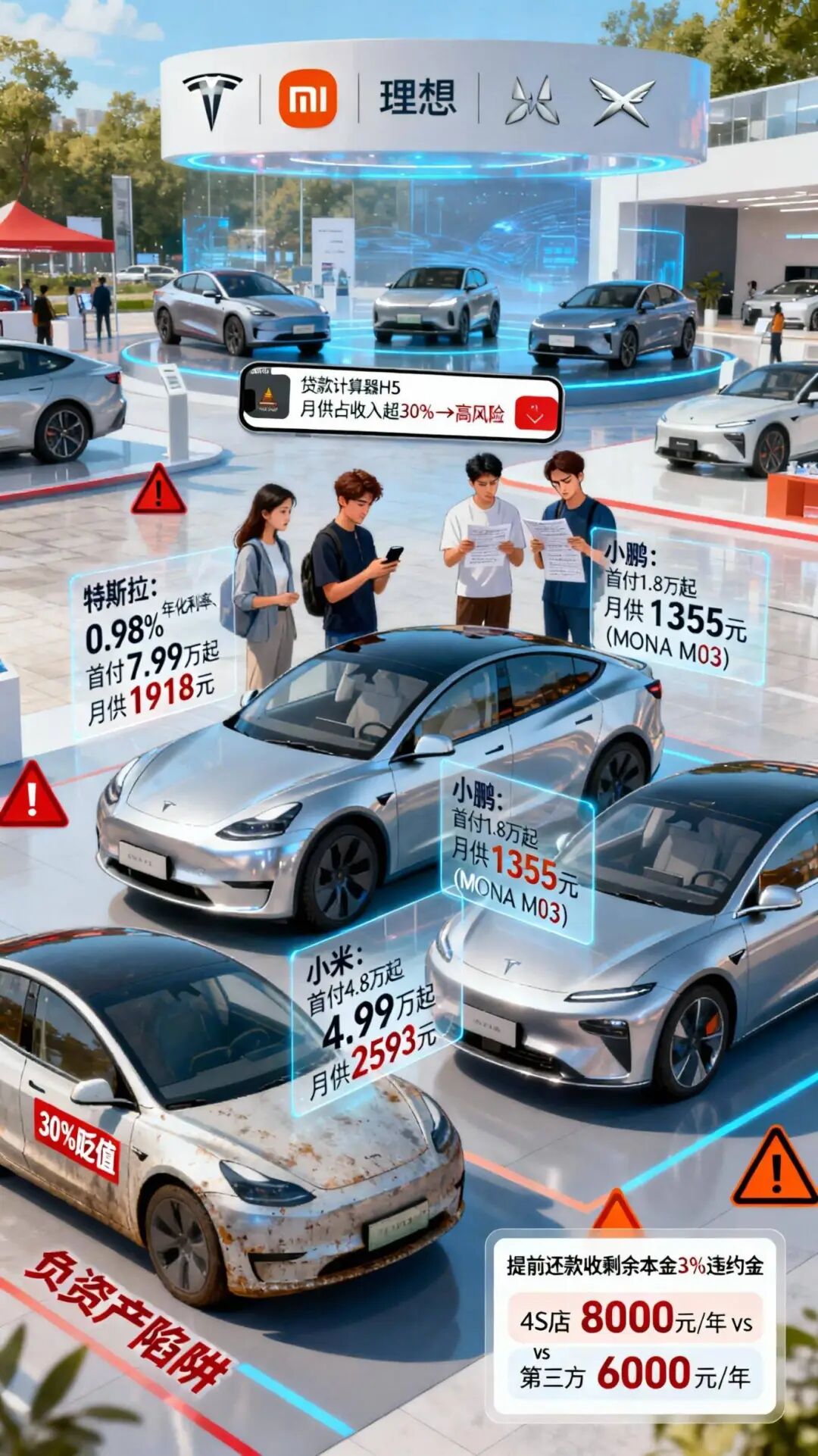
Driven by Tesla, major car manufacturers have come up with highly attractive offers. Among them, Xiaomi's YU7 offers a plan with a minimum down payment of 49,900 yuan and a monthly payment starting from 2,593 yuan; Li Auto allows customers to buy cars with a minimum down payment of 32,500 yuan and a monthly payment starting from 2,578 yuan. At the same time, for the MEGA and i8 models, an additional interest-free policy for the first three years is provided; XPeng Motors has adopted a strategy of following suit across the entire product line. For the MONA M03 model, the down payment is as low as 17,970 yuan, and the monthly payment is only 1,355 yuan, almost equivalent to the average monthly taxi fare in some cities... Some car manufacturers have even launched the option of zero down payment, lowering the car purchase threshold to the minimum.
According to industry conventions, the mainstream car loan cycle usually ranges from 3 to 5 years. However, this time, the nine car manufacturers have collectively extended the cycle to 7 years. This change brings significant benefits to both consumers and car manufacturers.
For consumers, the most direct benefit is the significant reduction of the car purchase threshold. The high down payment pressure that they originally had to bear has been greatly alleviated. With a down payment as low as tens of thousands of yuan or even a few thousand yuan, more consumers with limited budgets can fulfill their car purchase needs in advance. At the same time, the advantage of low monthly payments brought about by the ultra-long cycle also significantly reduces the subsequent financial pressure. Spreading the car purchase expenses over 7 years effectively reduces the daily consumption pressure, making car purchase no longer a heavy economic burden.
For car manufacturers, this wave of "7-year low-interest" plans is a multi - pronged layout.
Firstly, at a time when traffic competition is fierce at the beginning of the year, the highly topical financial plans can quickly attract market attention, bringing a large amount of traffic and exposure to the brand and models and standing out among numerous promotional messages. Secondly, the low - threshold car purchase conditions can effectively expand the potential customer base, converting consumers with limited budgets who were originally on the sidelines into actual car buyers, directly driving up sales.
More importantly, the 7 - year ultra - long loan cycle can significantly enhance user stickiness. During the loan period, car manufacturers can maintain in - depth connections with users through various means such as after - sales maintenance, charging services, and OTA upgrades, creating opportunities for subsequent value - added services and secondary consumption. In the long run, a stable user base and continuous service revenue can also provide considerable profit returns for car manufacturers, opening up new profit - growth points against the backdrop of narrowing profit margins due to simple price cuts.
However, the hidden drawbacks behind the seemingly win - win "7 - year low - interest" plan cannot be ignored.
The most prominent problem is the mismatch between vehicle technology iteration and the loan cycle. Currently, the new energy vehicle industry is in a period of technological explosion, and the speed of technological iteration is much faster than before. In 2026, semi - solid - state batteries have begun to be installed in vehicles in batches, all - solid - state batteries are on the verge of commercialization, and conditional L3 - level autonomous driving has been officially implemented in many cities. At this iteration speed, not to mention a 7 - year loan cycle, even a 3 - year cycle may leave the vehicle facing significant depreciation and technological obsolescence.
Therefore, in the next few years, when more advanced technologies such as solid - state batteries and high - level autonomous driving are fully popularized, consumers may still be repaying the loan for an "technologically outdated" old car. This psychological gap and the difference in actual use experience will become a hidden concern for many users. More importantly, the depreciation rate of the old car's residual value is likely to far exceed the decline rate of the loan balance. At that time, consumers will not only bear the loan pressure but also face the embarrassing situation of difficulty in realizing the vehicle's value.
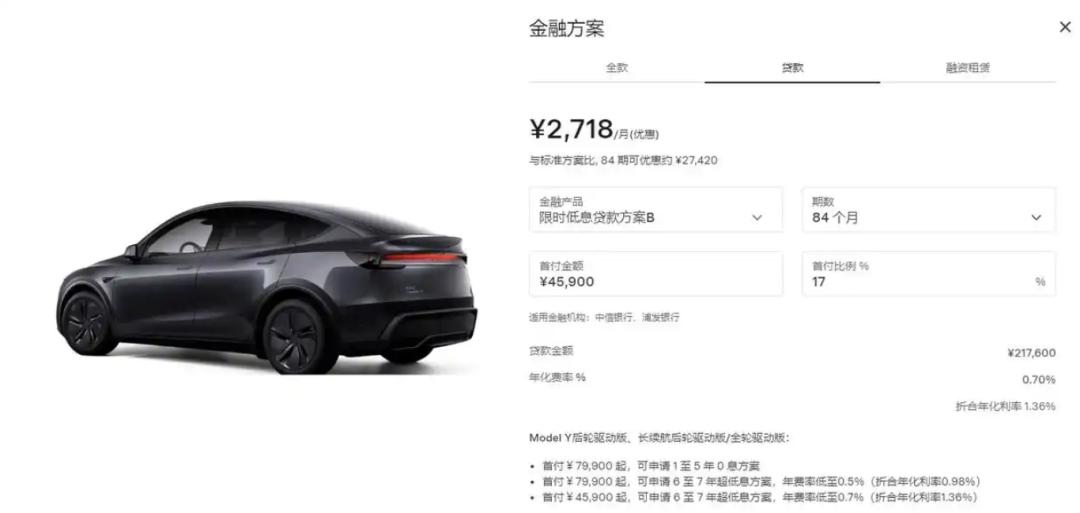
Moreover, behind the low down payment and low monthly payment is the hidden increase in the total car purchase cost. Many consumers are easily attracted by the seemingly low threshold but ignore the cumulative effect of interest. Take Tesla's Model Y as an example. The total price of the Model Y is 263,500 yuan. If you choose the 7 - year ultra - low - interest plan with a down payment of 45,900 yuan, an annualized interest rate of 1.36%, and a monthly payment of 2,718 yuan, the total interest for 7 years is about 10,700 yuan. This means that although consumers seem to have reduced the short - term financial pressure, they have to pay an additional interest cost for this "ease", and the final total car purchase cost actually increases.

In addition, the potential risks brought by long - term debt cannot be underestimated. The 7 - year loan cycle spans a long time, and it is inevitable that there will be unexpected situations such as income fluctuations and family changes during this period. Once these problems occur, the seemingly easy monthly payment may become a heavy burden. More seriously, loan delinquency will not only result in high liquidated damages but also have a negative impact on personal credit, posing potential risks to consumers' future lives.
The "Great Escape" in the Automobile Market Has Begun
Looking back at the past promotion history of the automobile market, the scene at the beginning of 2025 is still vivid in memory. At that time, more than 30 car manufacturers collectively joined the price - cutting battle. Domestic brands, new - energy vehicle startups, and joint - venture luxury brands all participated. The preferential methods included limited - time discounts, cash red envelopes, replacement subsidies, and policy guarantees. The discount ranges varied from several thousand yuan to nearly 200,000 yuan, which was a rare "price war" in the history of the automobile market.
Although that price - cutting wave boosted sales in the short term, it also led to a further decline in the industry's profit margin. The dismal situation of the automobile industry's profit margin of only 4.3% in 2024 was not fundamentally improved. Subsequently, many car manufacturers, including Tesla, launched the "five - year interest - free" policy, trying to replace direct price cuts with financial incentives. Although it alleviated the profit pressure to some extent, it also intensified the financial competition involution in the industry.
It is worth noting that the price - cutting wave and the "five - year interest - free" policy in 2025 were essentially passive measures taken by car manufacturers to cope with market pressure. Just as the automobile market in 2024 relied on policy stimulus to achieve a smooth transition, these promotional means are ultimately only short - term regulatory tools. At that time, some industry insiders were worried that large - scale promotions would overdraw future consumption, and in an economic environment that was not very prosperous, the automobile market might fall into a slump later.
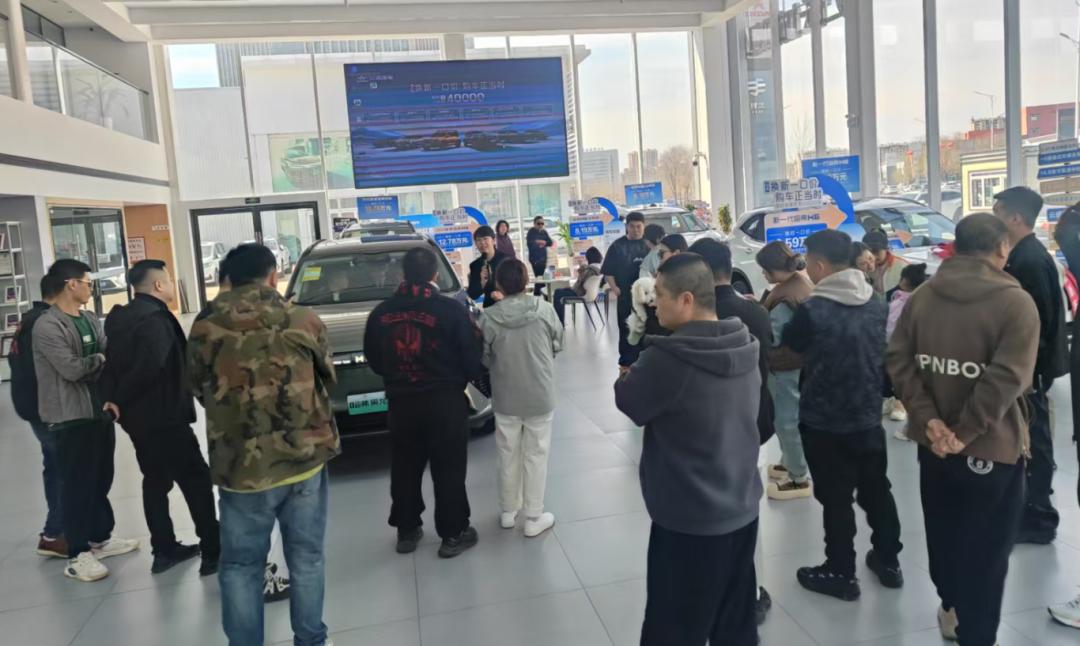
The wave of "7 - year low - interest" at the beginning of 2026 seems to be a continuation of this concern: in order to seize market share, car manufacturers have to continuously increase the intensity of promotions and extend the cycle of financial incentives.
Therefore, looking forward to the automobile market in 2026, the "7 - year low - interest" plans launched by the nine car manufacturers are likely to trigger a new round of industry follow - up. Just as more than 30 car manufacturers followed the price - cutting trend in 2025, if the "7 - year low - interest" plan achieves obvious results this time, more car manufacturers will surely join this "financial war" later, and the preferential intensity may be further increased. There may even be more financial plans that break the industry conventions.
For consumers, they may enjoy more benefits in the short term. However, in the long run, the excessive involution competition will further compress the profit margins of car manufacturers. The continuous decline in profits will inevitably affect car manufacturers' investment in technological R & D and product quality improvement. As warned by car industry leaders such as Li Shufu of Geely and Wei Jianjun of Great Wall, problems such as cutting corners and passing off inferior products as good ones may occur in the price war, ultimately harming the interests of consumers.
At the same time, the consumption over - drawing effect brought by the "7 - year low - interest" plan may put greater pressure on the automobile market in the second half of 2026 and even in the following years. After all, a 7 - year loan cycle means that a large amount of consumption demand has been released in advance, and the growth momentum of the automobile market in the next few years may be weakened.
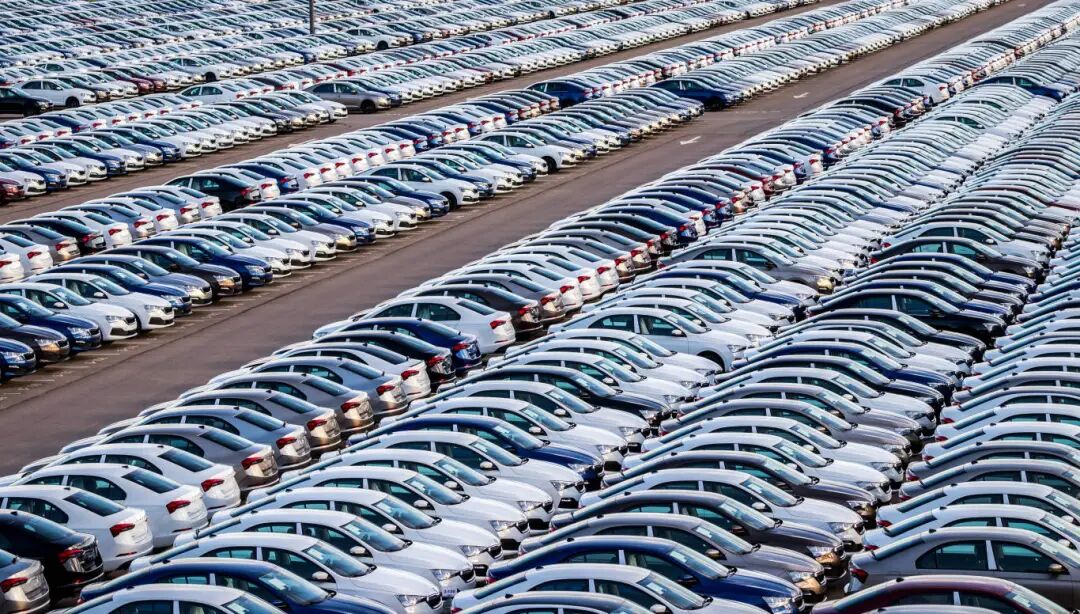
In addition, with the implementation of the new regulations for the upgrading of the new energy vehicle industry in 2026, the technological standards have been comprehensively improved, and the popularization speed of new technologies such as solid - state batteries and high - voltage platforms has accelerated. Consumers who choose to buy cars with the "7 - year low - interest" plan in 2026 are likely to face the dilemma of technological backwardness and significant shrinkage of the vehicle's residual value in the next few years. This will not only affect consumers' car - buying experience but also may have an impact on the stable development of the second - hand car market.
Overall, the wave of "7 - year low - interest" at the beginning of 2026 is an inevitable result of the upgrading of competition in the automobile market and also reflects the huge pressure faced by the industry. Whether this "financial war" is an effective way for car manufacturers to break through or a catalyst to exacerbate the industry's difficulties still needs time to test. But one thing is certain: the automobile market in 2026 is destined to be a year full of challenges.
Consumers also need to stay rational when faced with a plethora of financial incentives. They should comprehensively consider factors such as their own repayment ability and the risk of vehicle technology iteration to avoid falling into the consumption trap behind the "low threshold".
This article is from the WeChat official account "Automobile Commune" (ID: iAUTO2010), author: Li Chen'ai. It is published by 36Kr with authorization.