From Moltrbot to policy dividends, can the "AI one-person company" at the forefront of the trend grow and thrive?
AI tools + policy dividends have made the concept of a "One-Person Company" (where "one computer = one company") a hot topic in the venture capital circle! Technologies such as Clawdbot (Moltrbot) have broken down the implementation barriers, and subsidies in many regions have been increased to support low-cost entrepreneurship. However, beneath this boom, technological limitations, energy bottlenecks, and challenges in scaling up have emerged. The "AI + small team" model may become the new mainstream in entrepreneurship, balancing efficiency and potential.
As technological tools like ChatGPT, AI design tools, and intelligent data analysis systems become increasingly popular, the entrepreneurship field is experiencing an unprecedented efficiency revolution. The slogan "One computer + AI tools = One company" is circulating in the venture capital circle, and many single-person entrepreneurship cases have emerged in startup incubation areas such as the AI North Latitude Community in Beijing's Zhongguancun. For a while, the "One-Person Company (OPC)" seems to have become a new paradigm for breaking the high threshold of traditional entrepreneurship, allowing countless people with entrepreneurial dreams to see the possibility of launching projects at a low cost.
The recently popular Clawdbot (now renamed Moltrbot) is regarded as an open-source personal assistant that will revolutionize productivity in 2026. This AI agent, known as the "top LLM with hands," has become a sensation in Silicon Valley. Just three days after its release, the number of GitHub stars soared to 57,500. It breaks the limitation of traditional AI that "only talks but doesn't act." It can respond to instructions in real-time through multiple channels and complete practical tasks such as installing software, organizing files, and generating content on local devices. As a "full-stack digital clone" on standby 24/7, it compresses team-level processes into lightweight operations that can be handled by a single person, precisely meeting the cost - reduction and speed - up needs of "One-Person Companies" and providing solid technical support for the concept of "One computer + AI = One company."
More notably, this new form of entrepreneurship has received positive responses at the policy level. As early as 2016, the "Several Opinions of the State Council on Promoting the Sustained and Healthy Development of Venture Capital" clearly stated that individuals with capital strength and management experience are encouraged to engage in venture capital activities by legally establishing one - person companies. From the end of 2025 to the beginning of 2026, many regions such as Shanghai, Jiangsu, and Shenzhen have intensively introduced policies to explore the "single - person + AI" entrepreneurship model: Shenzhen has issued a special action plan, providing full - cycle policy support from office space, talent subsidies, entrepreneurship grants to computing power support. The continuous release of policy dividends has injected strong impetus into the development of "One-Person Companies."
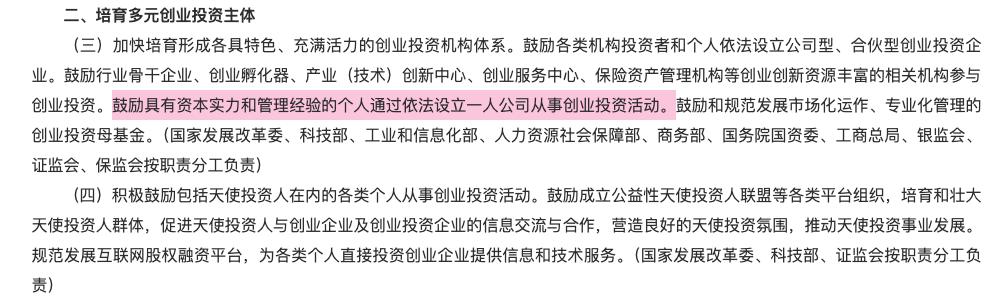
Several Opinions of the State Council on Promoting the Sustained and Healthy Development of Venture Capital
However, beneath the seemingly promising boom, a rational review is essential. With the current immaturity of AI Agent technology, can "One-Person Companies" really replace team collaboration and become the mainstream trend in future entrepreneurship?
The author believes the answer is no. Although AI has lowered the implementation threshold of entrepreneurship and policies have provided a growth environment, they cannot eliminate the core challenges in the essence of business. Although the single - person entrepreneurship model has its unique value, it is difficult to meet the large - scale and systematic business needs.
Double Empowerment of AI and Policy: The "Low - Threshold Revolution" of Single - Person Entrepreneurship
In the past, entrepreneurship often meant a complex process of "forming a team, raising funds, and hoarding resources." Forming a core team required a lot of time for screening and running - in, raising startup funds might face borrowing pressure or equity dilution, and accessing resources such as supply chains and channels was even more difficult. Due to the high threshold, many excellent ideas were buried, and many entrepreneurs encountered setbacks at the starting stage.
The explosion of AI technology and the precise support of policies have jointly broken this dilemma, turning the idea of "starting a project alone" into reality.
From the perspective of technological empowerment, the comprehensive coverage of AI tools enables individuals to undertake the work previously done by small teams. On the content production side, AI copywriting, design, and editing tools can produce promotional materials in batches, allowing brand promotion to be completed without professional skills. On the business execution side, intelligent customer service responds to inquiries 24/7, and data analysis tools quickly process market data, replacing the functions of some specialized personnel. On the product development side, AI code assistants and prototype tools lower the technical threshold, enabling non - technical entrepreneurs to promote project implementation.
Policy support further reduces the cost and risk of single - person entrepreneurship. Taking Shenzhen, China as an example, its OPC entrepreneurship ecosystem action plan clearly states that entrepreneurs who settle in the OPC community can enjoy low - cost office space, a maximum household subsidy of 100,000 yuan, transitional housing with a 60% rent subsidy, and a maximum personal entrepreneurship guarantee loan of 600,000 yuan, as well as a "training voucher" worth 10 million yuan and other multiple supports. Jiangsu's "Artificial Intelligence +" action plan clearly supports the innovation and entrepreneurship of artificial intelligence "One - Person Companies." Shanghai's Pudong New Area focuses on specific tracks and conducts targeted vocational skills training to help the implementation of the one - person company model.
These policies precisely meet the core needs of single - person entrepreneurship, empowering entrepreneurs in all aspects from funds, space, technology to talent cultivation, making "low - cost, low - risk" entrepreneurship possible.
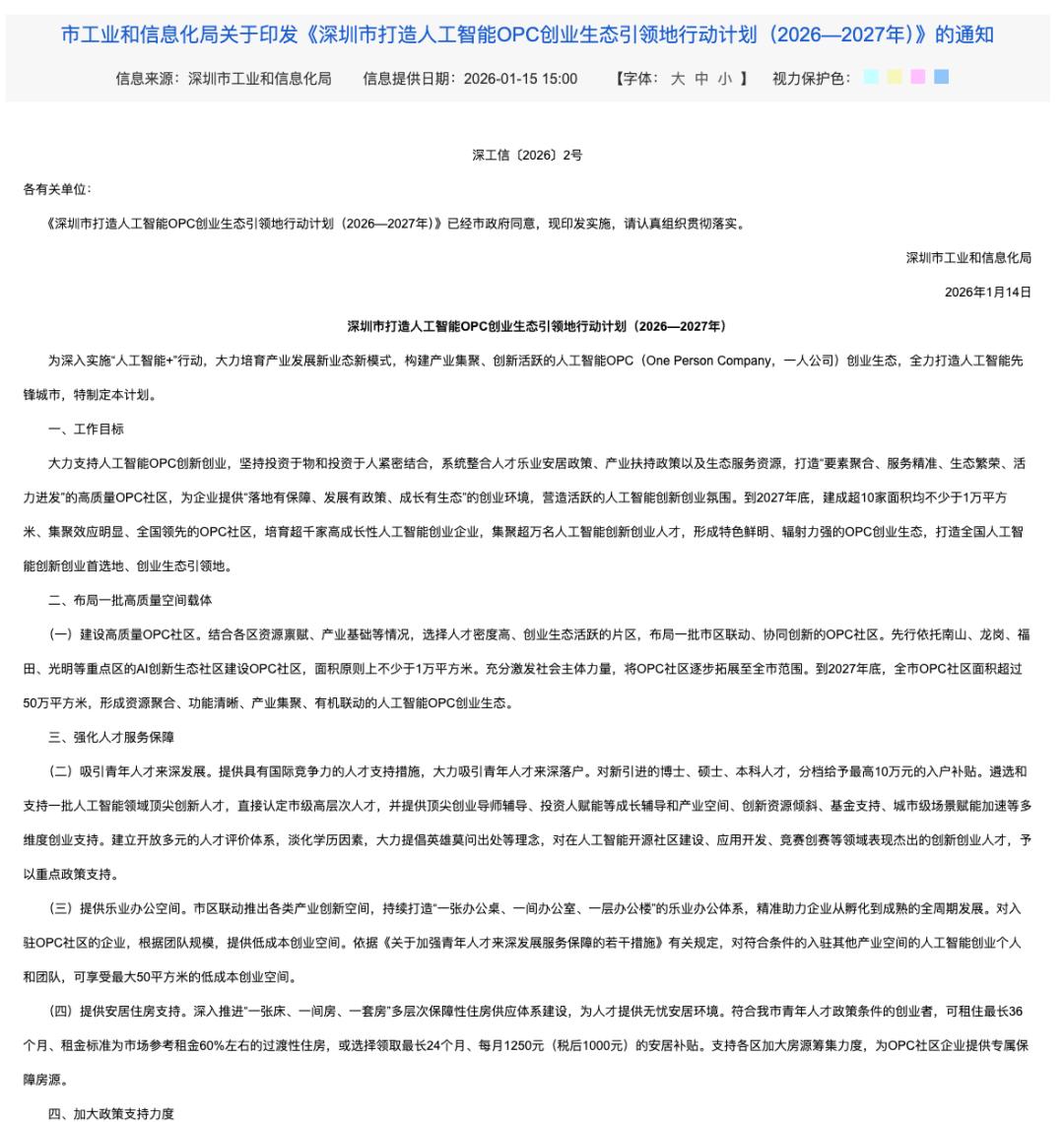
The Action Plan for Shenzhen to Build a Leading Area for the AI OPC Entrepreneurship Ecosystem (2026 - 2027) issued by the Shenzhen Municipal Industry and Information Technology Bureau
More importantly, "One - Person Companies" fill the gap between working for others and large - scale entrepreneurship, becoming the "intermediate entrepreneurship level" encouraged by policies. Individuals can achieve a "small and beautiful" business closed - loop without raising funds or managing a team.
According to the latest data from Carta in 2025, more than one - third of new companies are founded by single founders. Moreover, the proportion of companies founded by independent founders has increased by 53% in six years, from 23.7% in 2019 to 36.3% in the first half of 2025.
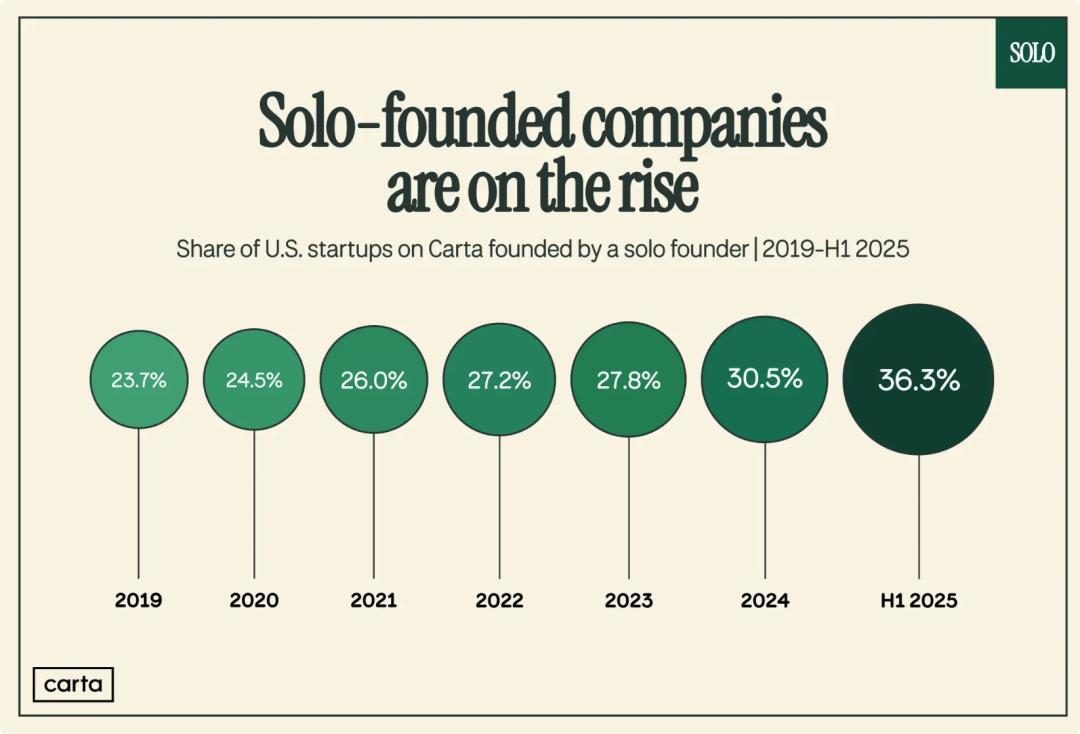
The proportion trend of One - Person Companies from 2019 to 2025. Image source: solofounders.com
The concept of One - Person Companies seems to be reshaping the definition of entrepreneurship.
Realistic Constraints: Three Core Bottlenecks That Make "One - Person Companies" Difficult to Become the Mainstream
Although the "single - person + AI + policy" entrepreneurship model has many highlights, it does not mean that it can completely replace team collaboration and become the mainstream form of future entrepreneurship. By delving into the essence of business, it is not difficult to find that the current boundaries of AI technology, the limitations of individual energy, and the inherent need for business scaling are still three insurmountable mountains in the "One - Person Company" model, which cannot be fundamentally eliminated even with policy support.
First, the boundaries of AI's capabilities determine that it cannot replace the core value of team collaboration. Current AI tools are essentially "efficient executors" rather than "strategic decision - makers," and it is even more difficult to replace the in - depth interaction and creative output in interpersonal collaboration - they can generate logical copywriting but lack brand tone and emotional resonance, can provide data suggestions but are difficult to generate disruptive ideas, and can handle standardized consultations but cannot accurately respond to the personalized needs and empathetic communication in complex scenarios.
Second, the contradiction between the limitations of individual energy and business expansion makes it difficult for "One - Person Companies" to form a sustainable business model. In the cold - start stage, AI can share repetitive work, and policy subsidies can ease costs, allowing individuals to handle multiple aspects. However, after business growth, with a surge in orders, diverse needs, and complex processes, the upper limit of individual energy becomes prominent. One person needs to handle tasks such as docking, modification, and after - sales. According to the startup data from Winsavvy: the probability of success for startups with a 2 - 3 person team is about 163% higher than that of single - person startups, and they are more likely to obtain capital and scale support.
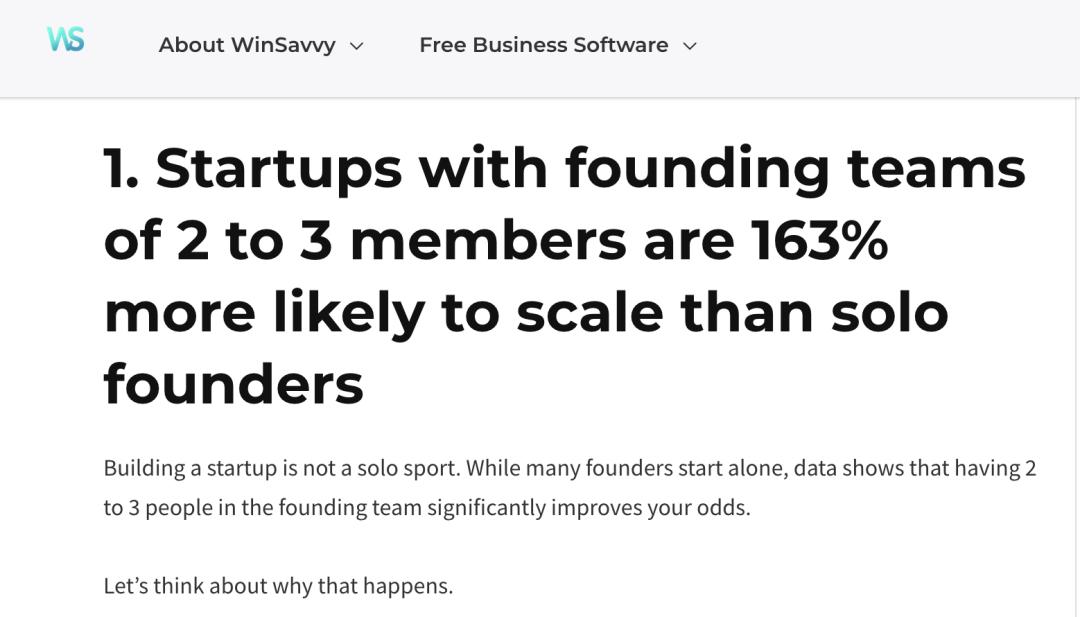
Winsavvy's statistics on factors affecting the success or failure of startup companies. Source: winsavvy
This dilemma essentially stems from the fact that individuals have difficulty breaking through the "multi - threading" bottleneck: human attention is limited, and frequent function switching will reduce efficiency, causing entrepreneurs to be occupied by trivial matters and unable to focus on core issues such as product iteration and market expansion. Moreover, after business expansion, the need for professional aspects such as supply chain management and financial compliance becomes prominent. These aspects are highly professional and have a low tolerance for errors. It is difficult for individuals and AI alone to handle them, and the core professional gaps still need to be filled by team collaboration.
Finally, from the perspective of the essence of business, the mainstream entrepreneurship trend needs to have the ability of scale replication, while the "One - Person Company" model naturally lacks this attribute. The evolution logic of traditional enterprises has always been towards the direction of refined division of labor and systematic operation - from a single product to a diversified business matrix, from a small team to a multi - level organizational structure. It is this large - scale and systematic ability that enables enterprises to resist market risks and achieve long - term development.
The "single - person + AI" model is limited by individual energy and ability boundaries, making it difficult to achieve large - scale replication. Even successful single - person entrepreneurship cases are mostly limited to niche and segmented tracks, serving specific groups of people, and it is difficult to meet broader market needs. In the entrepreneurship statistics of 2024, only about 17% of venture capital was invested in single - person startup companies. The team structure is still significantly more recognized by VCs. As isolated business nodes, "One - Person Companies" have difficulty integrating into the complex business ecosystem and are even more difficult to form a sustainable value - creation closed - loop. Judging from the existing policy texts and orientations, policy support is more inclined to cultivate the entrepreneurship ecosystem rather than keeping "One - Person Companies" in a small - scale survival state, which also shows from the side that large - scale development still needs to rely on the team model.
Conclusion: The "Optimal Solution" for Entrepreneurship with the Support of "AI + Small Team" Policy
Although "One - Person Companies" are difficult to become the mainstream, AI technology and policy support are giving rise to a more efficient "AI + small team" model - it absorbs the efficiency advantages of AI and policy dividends while retaining the core value of team collaboration, becoming the optimal solution for balancing the entrepreneurship threshold and development potential, and gradually becoming the mainstream of future entrepreneurship.
Its core logic is "human - machine collaboration and making the best use of talents": AI undertakes repetitive work and data processing, and a lean team of 3 - 5 people focuses on core aspects. Its efficiency is comparable to that of a traditional 20 - person team, and it can enjoy policy support such as computing power subsidies and scenario opening in various regions. A research paper titled "Intuition to Evidence: Measuring AI’s True Impact on Developer Productivity" reveals that AI platforms significantly improve productivity, including shortening the overall review cycle time of pull requests (PR) by 31.8%. Developers with the highest usage rate have increased the amount of code pushed to the production environment by 61%, and the overall code delivery volume has increased by 28%.
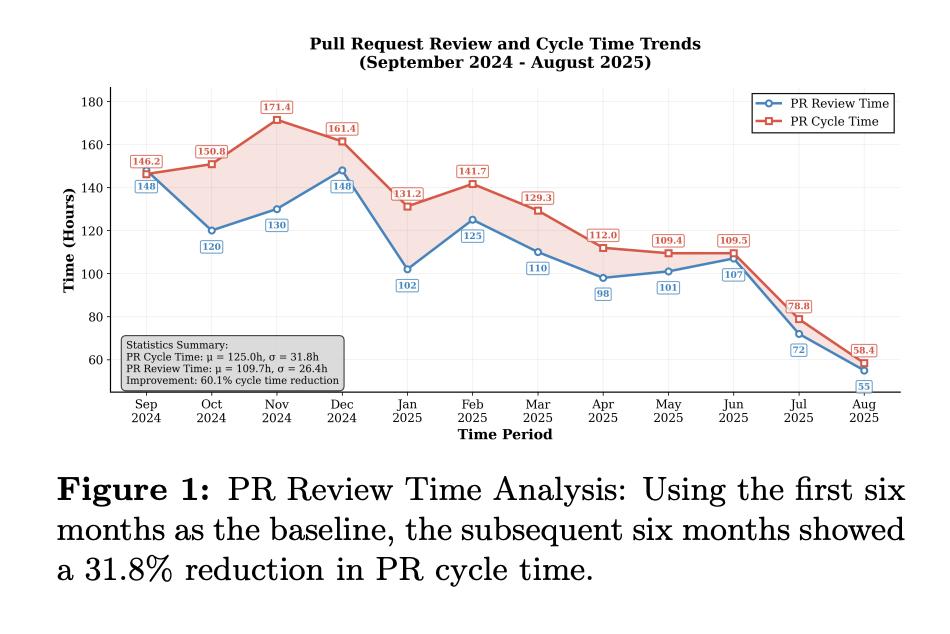
Schematic diagram of PR review time analysis
This model reconstructs the "minimum viable unit" of entrepreneurship: there is no need for a complete team to cover all functions. AI replaces non - core work, and the small team focuses on core positions, reducing costs and making decisions more flexible. However, it is not simply about reducing the number of employees. Instead, it requires team members to be "versatile" and cooperate efficiently. The entrepreneurship threshold has shifted from "funds and resources" to "core capabilities and collaboration efficiency."
In the future, the maturity of AI Agent technology and the deepening of policies will further expand the boundaries of human - machine collaboration. AI can undertake more complex work, and policies such as special subsidies and talent support will also help the growth of small teams. However, the core values of team collaboration such as creative collision, risk - sharing, and resource integration are still the support for large - scale development that AI cannot replace.
AI technology is reshaping the entrepreneurship ecosystem, and policy support is cultivating the entrepreneurship soil, but they have never changed the essence of business. Whether it is the supplementary value of "One - Person Companies" or the mainstream trend of "AI + small teams," the core of entrepreneurship is always to create value for the market. In an era of technological dividends, policy support, and market competition, only by grasping the core logic of human - machine collaboration and balancing the relationship between efficiency and innovation, flexibility and scale can one gain a foothold in the entrepreneurship track and achieve breakthroughs and growth from 0 to 1.
References:
1.https://www.gov.cn/zhengce/content/2016-09/20/content%5F5109936.htm
2.https://www.sz.gov.cn/cn/xxgk/zfxxgj/tzgg/content/post_12602687.html
3.https://medium.com/@gemQueenx/clawdbot-ai-the-revolutionary-open-source-personal-assistant-transforming-productivity-in-2026-6ec5fdb3084f
4.https://arxiv.org/abs/2509.19708
This article is from the WeChat official account "HyperAI Super Neural". Author: Ye Ye, Editor: Li Baozhu. Published by 36Kr with authorization.