Twenty-three years after its founding, Tesla has closed the first chapter of its story.
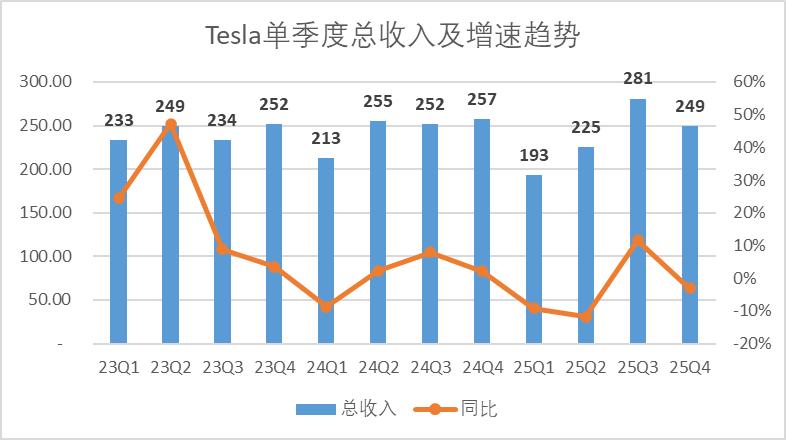
After the U.S. stock market closed on the 28th Eastern Time, Tesla released its financial report for the fourth quarter of 2025. The total revenue reached $24.901 billion, a year-on-year decline of 3.1%, slightly higher than analysts' relatively pessimistic expectations. The operating profit was $1.409 billion, and the EPS under Non-Gaap was $0.5, slightly lower than analysts' expectations.
For a one-picture overview of the financial report, please refer to the following figure (unless otherwise specified later, all units are in billions of dollars):
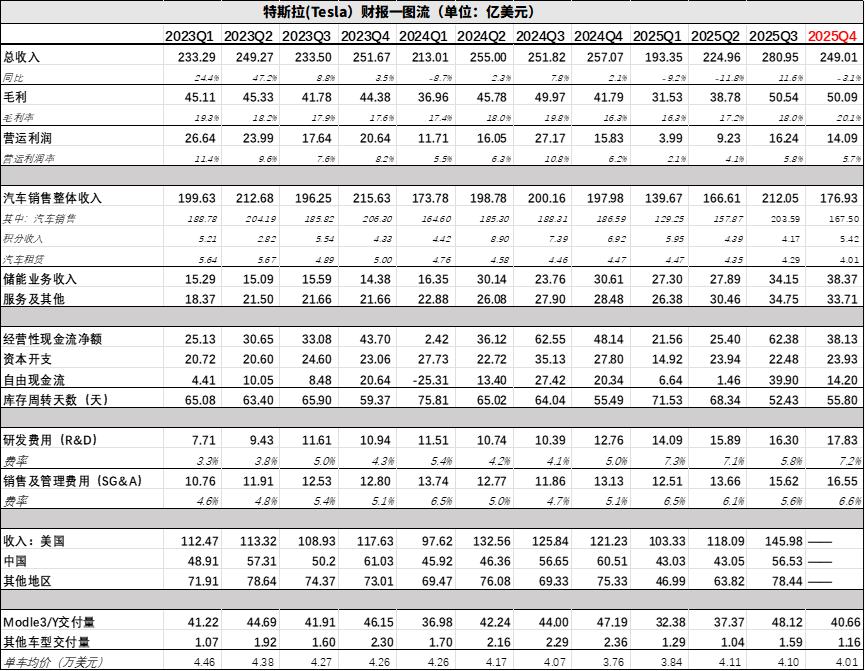
Figure: Summary of Tesla's financial report. Source: Company financial report, compiled by Jinduan Research Institute.
We generally divide Tesla's financial report into several parts for understanding. The market has different perceptions of different businesses. For example, investors in the energy storage business and the vehicle manufacturing business are more concerned about sustainability and specific gross profit performance; while investors in Optimus and Robotaxi are more focused on the early development layout and technology implementation.
Previously, we used the Gartner curve to roughly explain Tesla's business layout and development stages.
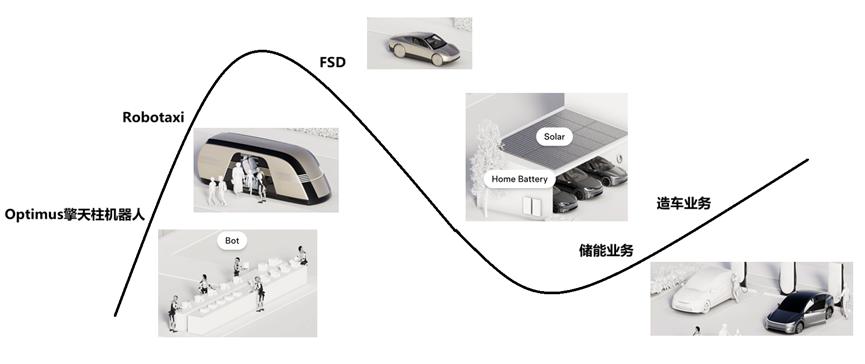
Figure: Combination of Tesla's product line and the Gartner curve. Source: Jinduan Research Institute.
In the latest earnings conference this year, after completing the investment in xAI, Tesla has completed its separation from the physical world. Musk has shown little interest in discussing the vehicle model layout and the profit margin trend of the vehicle manufacturing business. The focus of the narrative has shifted to the relatively cutting-edge discussions on Robotaxi, Optimus, and AI Infra.
This basically means that Tesla, founded in 2003 and taken over by Musk in 2024, has gone through 23 years of development, and the first chapter of its narrative about new energy electric vehicles is coming to an end.
Therefore, following this context, we will discuss the performance of Tesla's financial report and future expectations in two parts: the "old world" and the "new world".
01
The Old World
First, let's look at the "old world", based on the existing business conditions in the financial report:
1. Vehicle manufacturing business: Expected decline, Model S/X making way for Optimus
On the same day as the release of the financial report, Tesla officially announced the completion of its investment in xAI. Therefore, the market's focus quickly shifted from traditional existing businesses to future expectations. However, let's first take a look at Tesla's basic business at this stage.
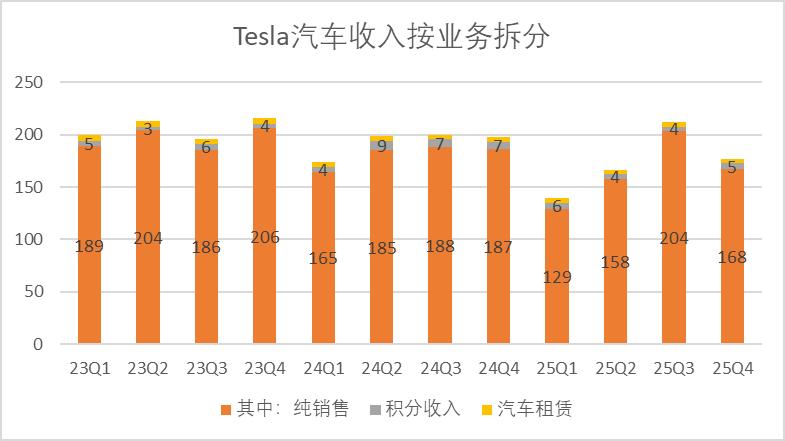
Judging from the paper data in the financial report, Tesla's vehicle manufacturing business performed poorly in the fourth quarter, but it was also in line with expectations. The single-quarter revenue reached $17.7 billion, a year-on-year decrease of 10.6%. The main reason was the withdrawal of subsidies, which led to a pulse growth in the third quarter, and subsequent demand was bound to be weak.
At the same time, in terms of delivery volume, Tesla delivered a total of 418,200 vehicles in the fourth quarter, a decline of about 15% both quarter-on-quarter and year-on-year. Fortunately, the gross profit margin remained stable. According to the information from the earnings call, the increase in the proportion of high-gross-margin regions such as the Asia-Pacific and new markets (Southeast Asia, EMEA regions) drove the growth of the gross profit margin of the automotive business.
Obviously, launching customized models for different regions (long-range models in China, stripped-down models in Europe) and implementing refined operations have indeed helped Tesla stabilize its basic business, and the gross profit margin has even reached the peak level since Q1 2023.
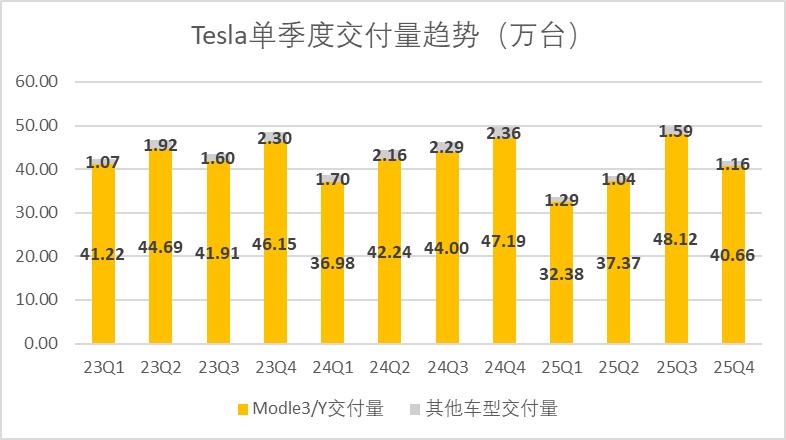
However, it is obvious that operational and product strategies cannot solve the problems of Tesla's vehicle manufacturing business at this stage. On the one hand, there is basically no possibility for Tesla's vehicle manufacturing business to achieve higher scale and reduce costs. It can only maintain a relatively stable inventory through the balance of production and sales, so as to cope with price pressure relatively calmly.
On the other hand, at this stage, the focus of Tesla's production capacity construction is not on the vehicle manufacturing business. In fact, the vehicle production line needs to give way to robots. At the earnings conference, the management officially announced the discontinuation of the Model S/X models and clearly stated that it was to transfer the production capacity to Optimus III.
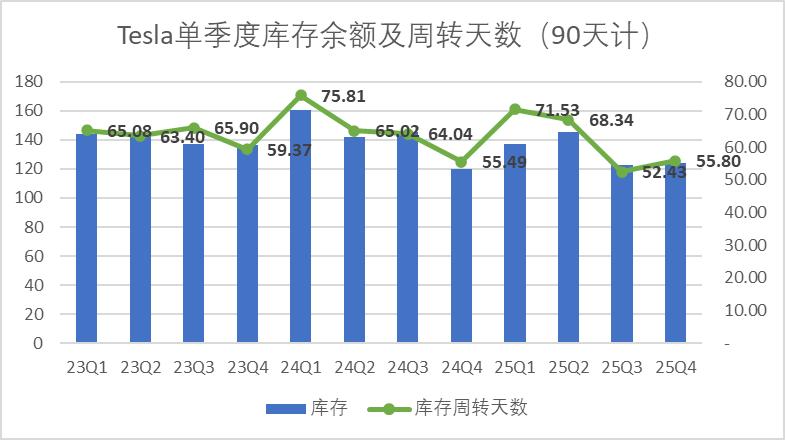
Of course, the current production and sales volume of Model S/X is not large, and it will not significantly impact the basic business of the vehicle manufacturing business in the short term. However, for Tesla, in the long run, a balance of 450,000 units in production and sales and a floating gross profit margin of 20% may become the norm, and it is difficult for the vehicle manufacturing business to show obvious growth.
Perhaps, as Musk replied to a netizen, in the future, no one may remember that Tesla used to manufacture cars.
2. Energy storage business: Maintaining high growth and praised by Musk
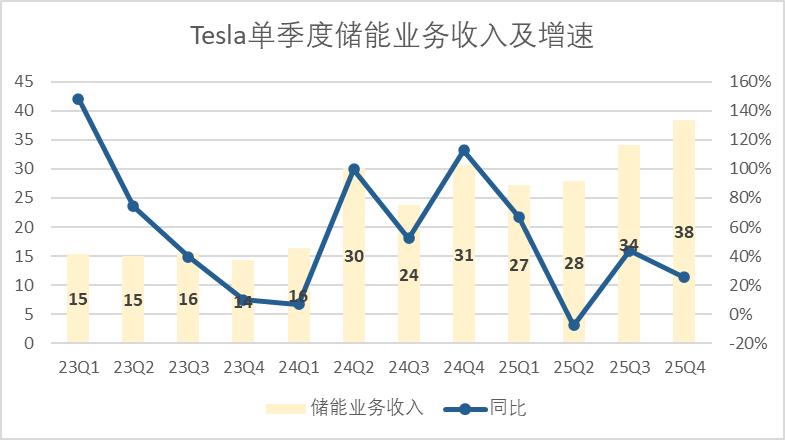
The energy storage business was the best-performing business of Tesla in 2025, without a doubt. The performance of the released products, Megapack 3.0 and Powerwall, was quite good. The overall revenue of the energy storage business in the fourth quarter reached $3.837 billion, a year-on-year increase of 25.4% on a high base.
Throughout 2025, the growth rate of Tesla's energy storage business reached 26.62%. More importantly, the gross profit margin of the energy storage business increased by 360 basis points throughout 2025, directly driving the overall gross profit of Tesla to gradually rise.
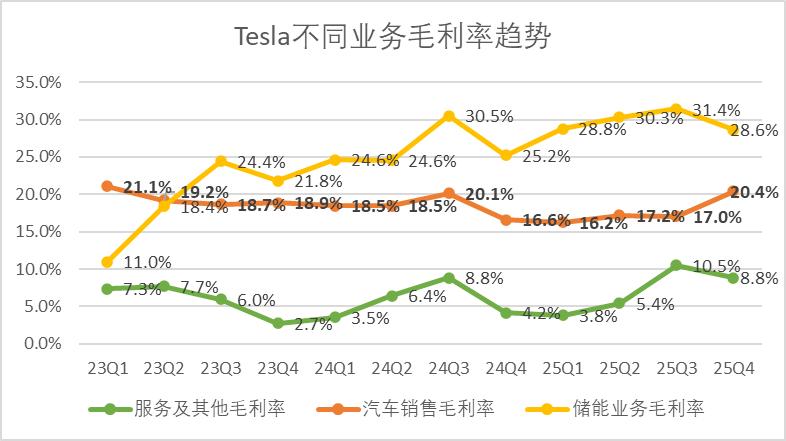
At the beginning of the earnings conference, Musk specifically praised the achievements of Tesla's energy team. Moreover, Musk believes that the potential of the solar energy market is seriously underestimated, and in the future, an annual production capacity of 100 GWh of solar cells will be achieved, and a complete supply chain from raw materials to products will be built.
Obviously, compared with the traditional vehicle manufacturing business, the energy storage business is closely related to the artificial intelligence data center. For Tesla, the growth rate expectation of the energy storage business is clearer in 2026. Tesla will also produce new products such as Megapack 4 and Megablock at the Houston factory, which is likely to become the core driving force for the growth of Tesla's existing business.
3. Operating conditions: The expense ratio remains high, and 2026 is the year of FSD expansion
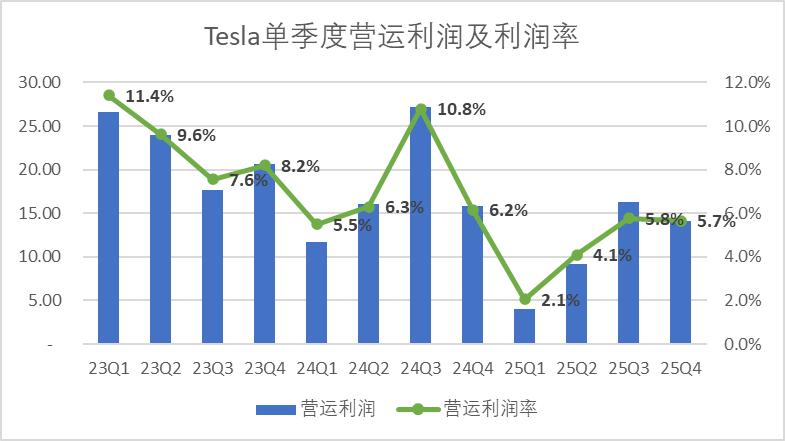
In 2025, it was the first time in Tesla's history that its annual revenue declined. The GAAP (Generally Accepted Accounting Principles) net profit was approximately $3.8 billion, a year-on-year decrease of approximately 46%.
In the market, compared with other technology companies, Tesla's performance in 2025 was also far from optimistic. In the past year and a half, its stock price has never broken through the $500 mark.
However, as we mentioned earlier, although the growth rate of the vehicle manufacturing business has significantly declined, through refined operations in different markets, the gross profit margin of the vehicle manufacturing business has actually stabilized at 20%. If we assume that there will be no large-scale growth in the vehicle manufacturing business after the transfer of production capacity, then in addition to the energy storage business, this part of the business gap must be filled. Tesla's answer is FSD.
In the fourth quarter, Tesla disclosed the FSD penetration rate for the first time. Currently, the number of FSD units in use is about 1.1 million, with a penetration rate of 12.4%, while the FSD penetration rate at the end of 2024 was only 10.96%. Obviously, the subscription system and the capabilities of FSD V12 have indeed driven a large amount of demand.
Judging from the management's attitude towards FSD, with the promotion of the Robotaxi project, FSD will be one of the few expected growth points in Tesla's "vehicle-related" business this year.
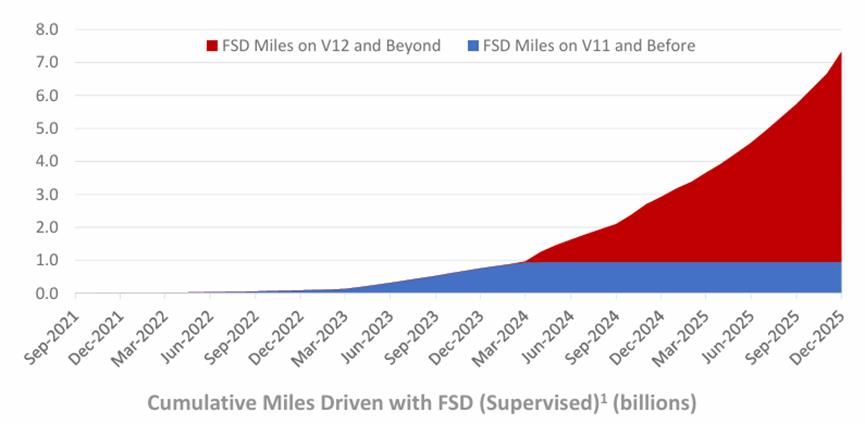
This quarter, Tesla will complete the transition of FSD to the subscription model. In the short term, it may affect the gross profit margin (especially service revenue), but in the long term, the monthly payment model of FSD will definitely drive the increase in penetration rate, which in turn will drive the growth of the gross profit margin.
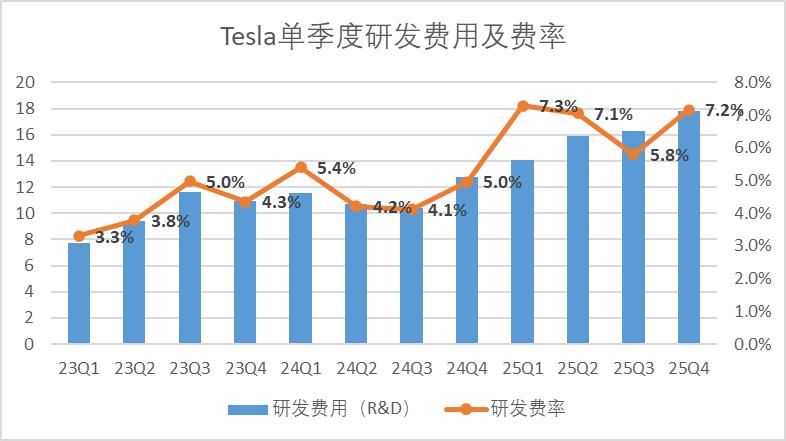
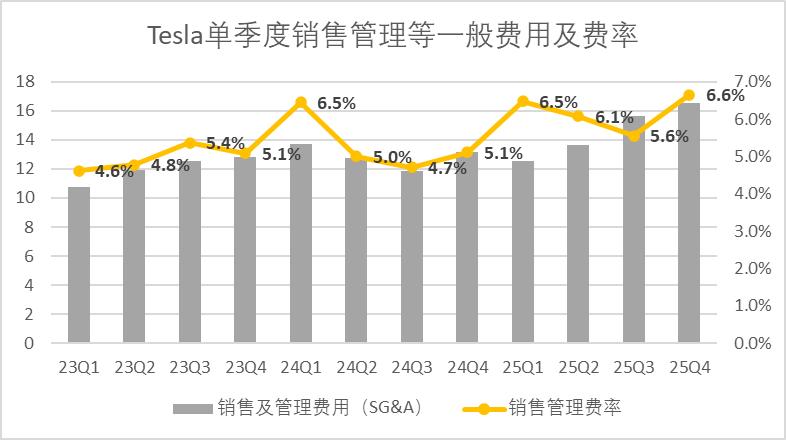
Tesla really needs to increase the FSD penetration rate to spread the cost. In the fourth quarter, Tesla's R & D expenses and sales and management expenses reached $1.783 billion and $1.655 billion respectively, both reaching new single-quarter highs. Combined with the relatively weak revenue performance in the fourth quarter, the overall expense ratios reached 7.2% and 6.6% respectively, approaching the highest level in the past three years.
02
The New World
Now, let's take a look at the "new world". Based on the statements of Musk and the management at the earnings conference, how is the development progress of the businesses that are not reflected in the financial report?
1. Unsupervised Robotaxi is in operation, and the development speed is slightly slower than expected
According to the management's disclosure at the earnings conference, by the end of last year, Tesla's Robotaxi had solved a large number of long-tail problems. At the beginning of this year, an unsupervised autonomous taxi service was launched in the Austin area.
For the Robotaxi business, this is indeed a significant improvement, but it is also within expectations. In the third quarter of last year, Tesla actively lowered the progress of Robotaxi. At present, the actual progress is still behind expectations.
By the end of 2025, the total number of Robotaxis providing services in the San Francisco Bay Area and Austin had exceeded 500. However, in the previous earnings call, the expectation at the end of 2025 was to provide services for about 100 vehicles. At present, the goals of deployment areas and the removal of supervisors have been achieved, and the overall development of the Robotaxi business is good, but slightly slower than the expected progress.
2. Musk wants to create a product stronger than all the robots being developed in China. The mass production progress of Optimus III is uncertain
The progress of another future business, Optimus, is uncertain. When talking about the robot business, Musk first spent a long time praising the robot industry in China, even using his iconic words: "Most people underestimate China's strength, especially in the field of robots."
From manufacturing capabilities to large model capabilities, Musk praised every aspect of the Chinese robot industry. Of course, he finally returned to Tesla itself. Musk believes that the greatest advantages of Optimus at present are: dexterous hands, artificial intelligence systems, and large-scale production capabilities.
Musk stated that the Optimus