Short dramas with over 30 million views "reap" investors. Is a 100,000-yuan investment down the drain?
In the world of short dramas, domineering CEOs showcase power and affection, and reborn individuals rewrite their fates with past memories... These high - intensity and fast - paced themes precisely hit the emotional projections and fantasy pleasures of contemporary people, making them more and more obsessed. Meanwhile, this has also turned short dramas into a new blue ocean that capital and creators are rushing into.
However, it's not easy to strike gold in the short drama market. After interviewing several investors and film and television industry practitioners, a reporter from IT Times found that there are many cases of breach of contract behind the booming short drama investments.
"Every few days, I'd ask her for the money, but she'd come up with all sorts of excuses like her husband having a car accident, her father being in the ICU, and the National Day holiday delay to avoid paying me." At the beginning of 2025, Li Jiajia met Wang Ke, a short drama producer, on a social platform. Having plans for project investment, she decided to invest as a natural person in two short dramas (hereinafter referred to as Drama A and Drama B) produced by Wang Ke's company after hearing the introduction.
Unexpectedly, after signing the contract, although the dramas were launched on schedule and Drama A even had a relatively good viewership, Li Jiajia failed to receive the agreed - upon earnings for a long time. "The other party kept delaying, and so far, I haven't received a single cent."
When paper contracts struggle to resist the entanglement of rights and responsibilities, how can investors' rights be protected?
Painting a Rosy Picture: Those Chasing the Trend
How popular have short dramas been in the past two years?
According to the DataEye 2025 Micro - short Drama Industry Data Report, the annual output value of micro - short dramas and comic dramas in China reached 100 billion yuan in 2025, while the total box office of national movies in the same period was 51.832 billion yuan. The market volume of micro - short dramas and comic dramas is nearly twice that of the movie box office. In terms of the number of viewers, the data estimated by the DataEye Research Institute shows that as of June 2025, the number of micro - short drama users in China had reached 696 million, accounting for nearly 70% of the total number of netizens.
Many industry insiders have reached a consensus: the short drama industry is developing towards high - quality production, and "big - budget" short dramas are emerging one after another, with investment amounts exceeding tens of millions or even hundreds of millions.
"I hadn't even watched a short drama before. I had a little extra money at that time and wanted to see if I could invest in some projects to make some money," Li Jiajia recalled. She saw Wang Ke soliciting investments on a social platform, so she added Wang Ke's contact information on January 14, 2025, and signed the contract as the "first party".
Liu Siyuan, whose main business is urban renewal, has run a bar and created short - video IPs. At the end of 2024, introduced by a long - time friend, he invested in a dating variety show planned to be broadcast as a short drama.
The company managed by his friend was the general planner and claimed to be a shareholder of the production company, which boasted to be one of the top three in Chongqing. Although the other party didn't promise how much profit they could make, considering it was a long - time friend, Liu Siyuan signed the contract and transferred the funds to a company under his friend's wife's name.

Image source: unsplash
Tug - of - War: Failure to Fulfill the Revenue - Sharing Contract
However, friendship came to an abrupt end after the investment.
What was originally promised as "launching in a month" became an indefinite wait, and finally, the person went out of contact. "He should have gone abroad," Liu Siyuan could only admit his bad luck.
Li Jiajia and Wang Ke are still in a "tug - of - war".
In the contract they signed, the overall revenue - sharing period for the project was set at six months after the movie's release. Including the more than ten thousand yuan that Wang Ke borrowed privately for reasons like actors' salaries and lighting and venue fees, Li Jiajia's total investment was nearly 100,000 yuan.
On January 28, 2025, Drama A was successfully launched. As of the time of publication, a reporter from IT Times noticed that on a certain platform, it had more than 30 million views. According to the contract, Li Jiajia should have received the first revenue - sharing payment in March 2025.
However, that wasn't the case.
"I'm still on my way back and slept all day." "I'll transfer the money tomorrow afternoon, 100% sure. I slept in the hotel all day today and will go back tomorrow..." Wang Ke was still active on the social platform, and her "laid - back attitude" left Li Jiajia feeling helpless and confused. Whenever the topic of money transfer was mentioned, although Wang Ke responded "positively" verbally, after nearly a year, Li Jiajia hadn't received any actual feedback.
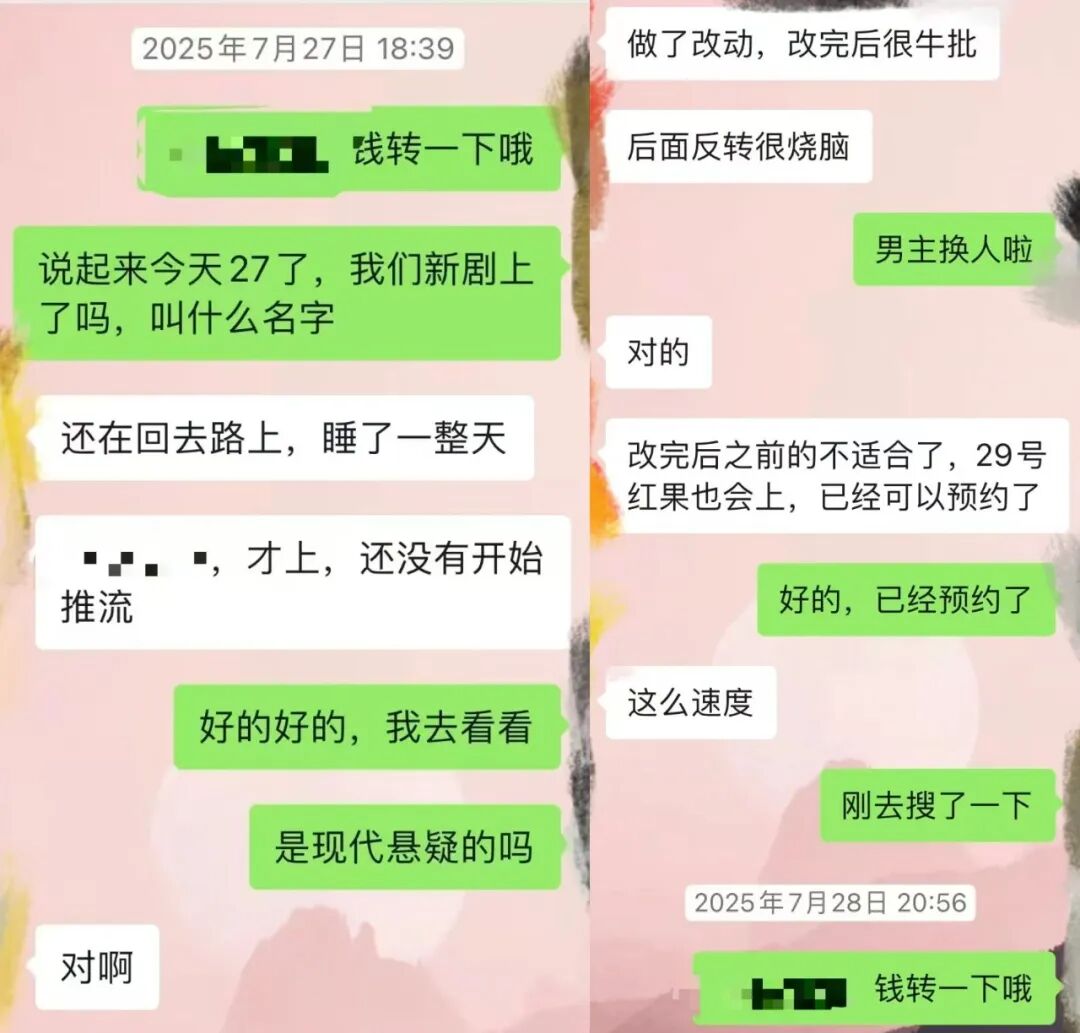
The latest development is that Liu Siyuan, the investors involved in the project, and several sponsors have decided to file a lawsuit. Wang Ke promised again that she would refund the money in batches by the end of 2025 and the end of January 2026. However, as of the time of publication, Li Jiajia still hadn't received a single cent.
Tricks: Risk - Shifting Defenses
Currently, there are three revenue models for short dramas: First, in - app native top - ups, such as native ads on Douyin, which may prompt viewers to top up; Second, back - end payment, where the works are freely played on platforms like Hongguo Short Dramas and Tomato Novels, and the production company gets viewership and advertising revenue; Third, promotion on overseas platforms.
Liu Shaobao is the director and producer of several short dramas. He told a reporter from IT Times that short dramas can be divided into levels such as top - end, high - end, mid - end, low - end, and trial - run dramas, with different costs and probabilities of making money.
The cost of top - end short dramas ranges from 1.5 million to 6 million yuan, featuring top - ten actors on the Hongguo actor list and scripts adapted from popular novels, along with refined production. The probability of making money is as high as 95%. For low - end short dramas with ordinary scripts and actors, the cost of modern - themed dramas is about 500,000 yuan, and that of ancient - themed dramas is about 700,000 yuan, with a profit - making probability of only 30%.
According to this standard, the cost of Drama A was nearly 900,000 yuan, and that of Drama B was nearly 400,000 yuan. Liu Shaobao believes that there should be some income.
Through Wang Ke's social account, a reporter from IT Times contacted Wang Ke herself. "We'll refund the principal. That drama (Drama A) did have a lot of problems, and it's our responsibility," Wang Ke said. "Because the distributor didn't share the revenue based on the real data and I don't have the backend data, I'm also raising money to file a lawsuit."
In addition, Wang Ke also said that she didn't publicly solicit investments and only handled Li Jiajia's contract.
"In recent years, there have been many similar Ponzi schemes in both the film and television industry and the short drama industry. At first, they organize some people to illegally raise funds to produce works, boasting about a luxurious lineup and painting a rosy picture of future box office and traffic for investors," an industry insider who once worked in a well - known domestic film and television investment company revealed to a reporter from IT Times. "These companies without professional backgrounds are prone to running away with the money."
"This kind of phenomenon is essentially the result of the combination of chasing the trend and irrational investment," said Yu Hao, the director of the Internet industry department of Hunan Tiandi Ren Law Firm. He has handled many short drama investment contract disputes and lawsuits of screenwriters and short drama actors demanding unpaid salaries.
He told a reporter from IT Times that the short drama industry has indeed developed rapidly in recent years, but its professionalism and opacity are also very high. Many non - industry investors only see the "blockbuster returns" and "recouping the investment in a few months", but underestimate the project management, platform rules, settlement cycle, and legal risks. Once the project goes wrong, investors often can't get the data or the money back and can only passively accept the other party's explanations.
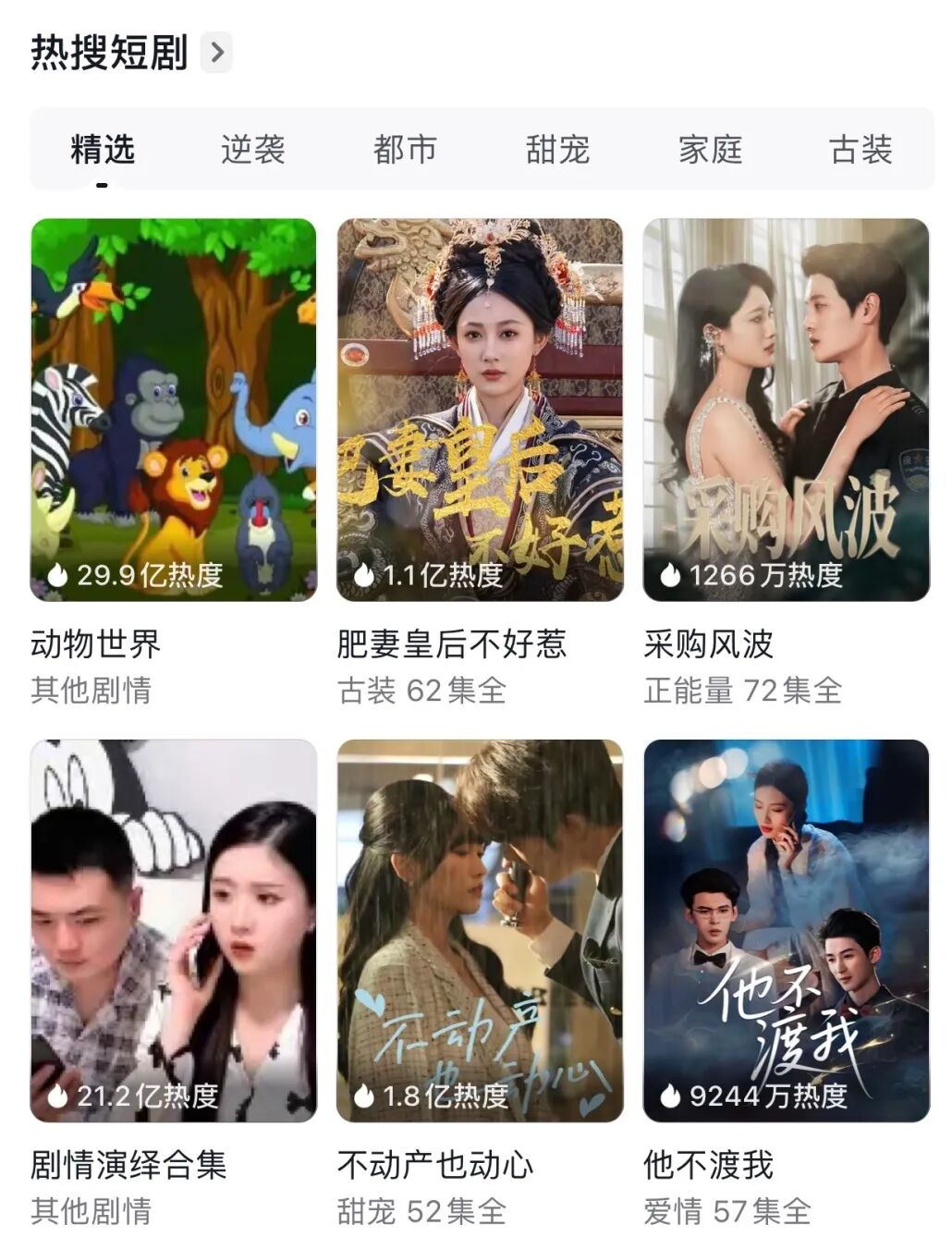
Zhao Liangshan, a senior partner of Shaanxi Hengda Law Firm and a well - known public - interest lawyer, believes that in the aforementioned case, Wang Ke's "actively replying to messages but constantly delaying" and using excuses like "a seriously ill relative" is a "soft - running - away" strategy aimed at wearing down the investors' will to safeguard their rights.
"I don't recommend that investors rely on the other party's conscience," Yu Hao further analyzed. For investors represented by Li Jiajia, the key now is to shift from a "trust game" to a "legal game".
On the one hand, fix the evidence as soon as possible instead of waiting. The fact that the other party's social account is still frequently updated is a signal that at least the other party is not completely unable to fulfill the contract. It is recommended to preserve the evidence as soon as possible. On the other hand, don't be led by statements like 'I'm also suing someone else' or 'The platform won't provide the data'. In law, this is a typical "risk - shifting defense". Investors only need to focus on one core issue - whether the revenue - sharing or refund obligation stipulated in the contract has been fulfilled. Other disputes are for Wang Ke to handle.
Moreover, entering the judicial process as early as possible is itself a bargaining chip. In many similar cases, the other party is not completely out of money but chooses the strategy of "the more anxious one loses". Once the case is filed, assets are protected, and even the execution process begins, the cost of delay rises rapidly, making it easier to get the money back.
Reporter's Observation: How Can Investors Protect Their "Wallets"?
According to Qixinbao data, as of October 2025, there were more than 350,000 short - drama - related enterprises in China, covering the entire industrial chain, including upstream IP copyright holders, mid - stream production companies, and downstream distribution and playback platforms. Among them, the mid - stream enterprises account for more than 70% of the entire industrial chain.
As more and more players enter this industry, problems are gradually increasing.
"To prevent risks in short drama investments, first check the'reliability'. The production company should have a formal license, and the project should be filed with the radio and television department and the platform. Use Qichacha to check if the company has any lawsuits or records of defaulting on debts. It's best to visit the office and shooting locations and avoid shell companies. Ask for real past revenue data and don't believe in 'empty promises of huge profits'," Zhao Liangshan said.
"The biggest uncertainty in the short drama industry lies not in whether the drama can be launched but in how the money comes back, when it comes back, and who settles it," Yu Hao suggested. First, look at the settlement path. Before investing, make sure whether the income comes from a single platform, who controls the backend data, and whether the settlement is directly by the platform, the producer, or the production company. If the settlement chain is too long and the responsible parties are unclear, the risk will be magnified layer by layer.
Second, write trust into the contract. Whether it's an acquaintance, an industry insider, or a so - called "senior producer", don't rely solely on personal credit. The contract should at least clarify three points: First, the settlement cycle and deadline; Second, the alternative solution when settlement cannot be made, such as refunding the principal or settling according to the minimum income; Third, the liability for breach of contract and the object to be held accountable. Many disputes occur not because the project fails but because the contract doesn't leave an "escape route" for investors.
Third, resolutely avoid mixing funds and identities. Investment is investment, and borrowing is borrowing. Don't blur the nature because of "project turnover" or "temporary payment". Otherwise, once the fund path is confused, investors often suffer losses during later rights - protection.
Finally, for ordinary investors, it's better to miss an opportunity than to increase the investment in a remedial way. Many losses expand precisely after problems occur in the project. In order to "get the previous money back", investors keep adding more investment, turning the originally controllable risk into an uncontrollable one.
(Li Jiajia, Wang Ke, and Liu Siyuan in this article are all aliases.)
Images / Interview subjects, Douyin, unsplash, Doubao AI
This article is from the WeChat official account "IT Times" (ID: vittimes), written by Sun Yonghui. Republished by 36Kr with authorization.