Eingebaute Lüfter werden populär, aber können sie nur für Spiele-Smartphones verwendet werden?
Already at the beginning of 2018, when Nubia (back then still without the RedMagic brand) presented its "concept phone" with four built - in fans at the MWC, no one would have thought that installing fans in mobile phones would one day become a trend.
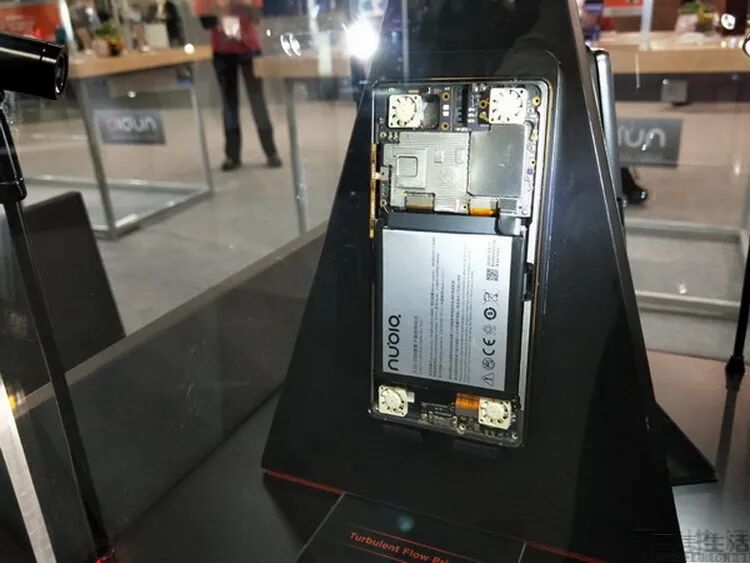
Why do we say this? On the one hand, we know that the four fans in Nubia's then - concept phone actually couldn't work because at that time, suitable blades and air ducts that could fit into a mobile phone and actually cool it hadn't been developed yet.
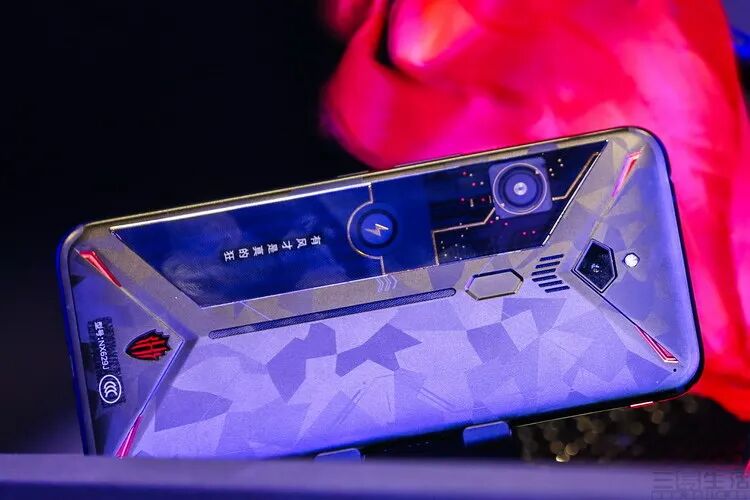
On the other hand, since the RedMagic 3 first introduced an integrated active cooling fan in 2019, there have been very few "followers" in at least five years.
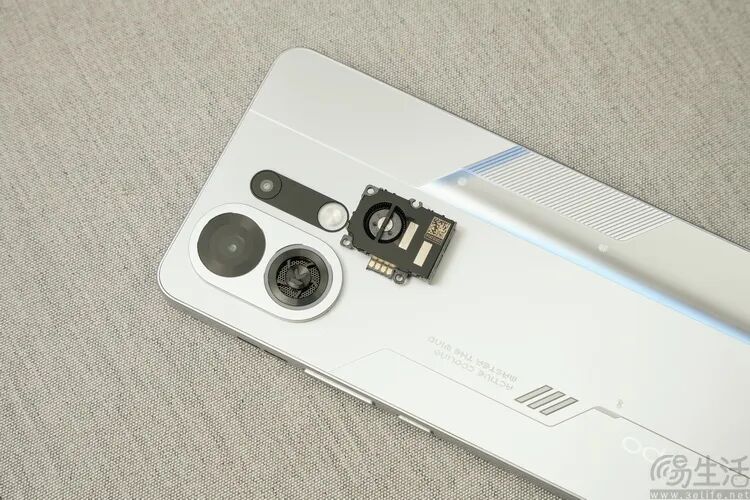
Abgesehen vom Lenovo Legion Gaming Phone 2 Pro, das ebenfalls ein Hardcore - Gaming - Smartphone ist und 2021 auf den Markt kam, wurde bis Juli 2025 das OPPO K13 Turbo Pro das erste Modell mit eingebautem Lüfter, das von einem führenden Hersteller neben RedMagic herausgebracht wurde.
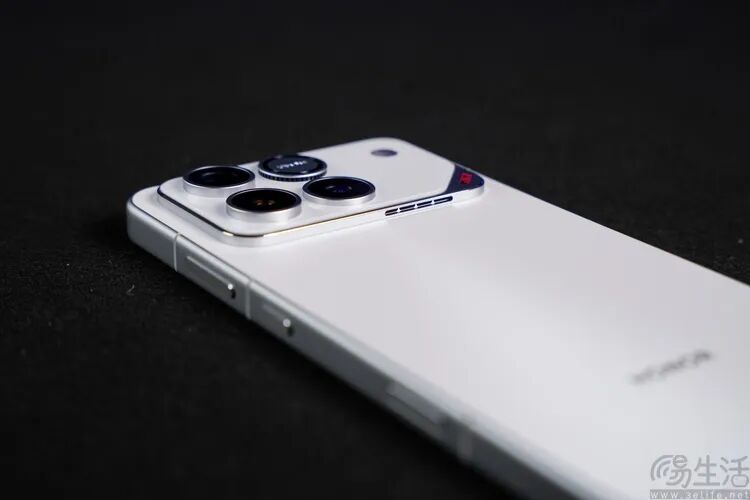
After that happened, it was "unstoppable". Honor WIN, WIN RT and iQOO 15 Ultra successively presented themselves with built - in fans. In addition, there are already rumors that REDMI may also be developing a new "flagship model" with a built - in fan, which could appear at the latest in the first half of this year.

Why is the smartphone industry suddenly so interested in the built - in fan design? A simple reason is that although top - flagship SoCs like the Snapdragon 8 Gen 5 Extreme and the Dimensity 9500 have really brought about huge performance improvements and the power consumption has been significantly improved compared to previous models, as long as the improvement in power consumption is slower than the performance increase, the maximum performance (and heat generation) of the phone in high - load scenarios like gaming can be higher than before. Therefore, stronger cooling measures are required.
In addition, software factors also need to be considered. Since the performance of high - end models is getting stronger and stronger, hardware manufacturers (chip and mobile phone manufacturers) encourage software manufacturers to develop more performance - intensive software, such as larger and graphically more complex games, to demonstrate the value of the new hardware. This in turn increases the performance load and makes strong cooling even more necessary.
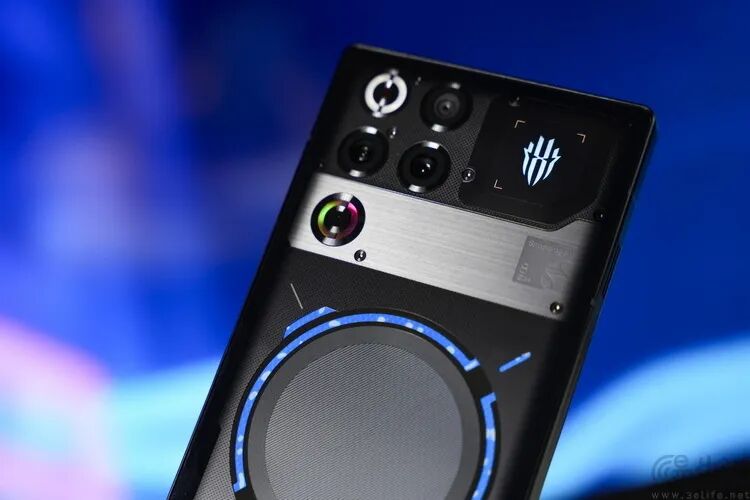
But here the question arises: Do only performance - and gaming - oriented mobile phones need a built - in fan? Is it possible that "non - gaming - oriented" flagship products also use similar active cooling measures?
Maybe some friends will say: If you don't play games, what's the point of active cooling on a mobile phone?
Of course, it makes sense. Users who are interested in camera - flagship models may know that in recent years, many mobile phones have been highlighting their video recording capabilities, especially to keep up with Apple's iPhone in terms of ultra - HD and high - frame - rate video recording.
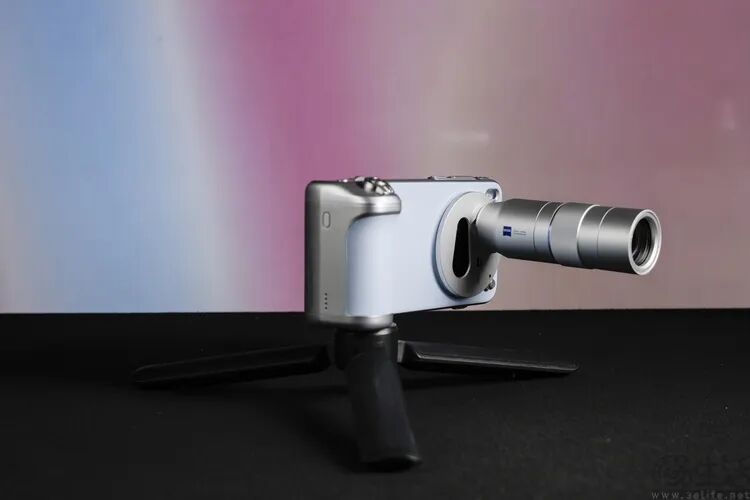
But then a problem arises. Apple has its own video file format and an exclusive efficient hardware encoder. On the Android side, almost all mobile phones still use the old and inefficient HEVC or H.264 coding. On the other hand, Android camera - flagship models now generally rely on "AI videos", which means that during video recording, an AI algorithm is used simultaneously to process the video frame by frame. In addition, Android camera - flagship models usually use powerful sensors. All this leads to higher power consumption and more heat generation during video recording.
In fact, manufacturers usually mention when presenting the corresponding models that they have specially optimized the internal structure for cooling the camera sensors. Other models usually don't have a similar design, which directly proves that long - term video recording is also very power - consuming and heat - generating.

Why is there still no "camera - flagship model with a built - in fan" so far? There may be two reasons. Firstly, the interior space of camera - flagship models is already very cramped due to the powerful camera equipment, and there is no room for a fan. And in recent years, even camera - flagship models generally strive for "lightness and thinness". A thick back with a fan and multiple cameras might just be too "against the trend".
Another reason is easier to imagine: A built - in fan always generates vibrations and noises during operation, no matter how precise it is from a materials science perspective. For the user, these "minor" vibrations and noises may not be very noticeable, but for the camera and microphone in the mobile phone, it's a disaster. You just have to look at the "performance - oriented models" with a built - in fan: Who would dare to activate the fan during photography?
Does this mean that a built - in active cooling system for Android camera - flagship models will always remain "unreachable"? That's not necessarily the case.
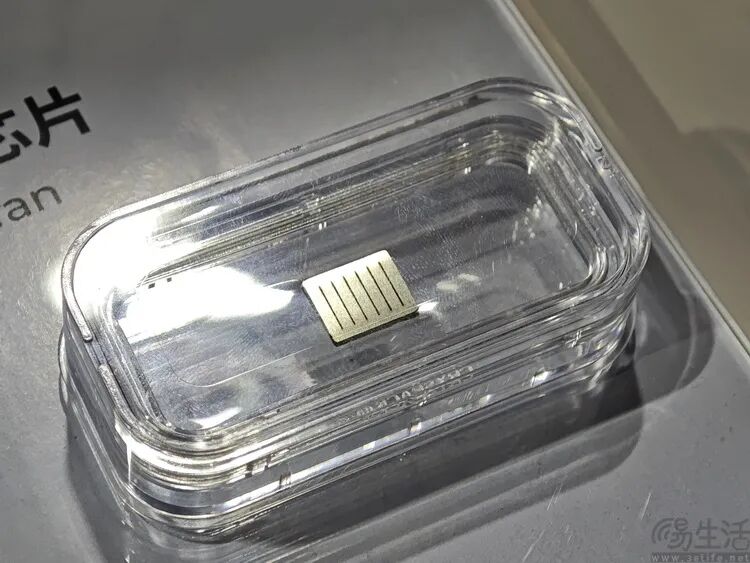
At the end of October 2025, when we participated in the AAC (AAC Technologies) Sensing Technology Summit from 3eLife, we saw a "bladeless cooling module" based on piezoelectric drive that they exhibited. At the CES at the beginning of this year, a similar bladeless "ion field" cooling module also attracted attention.
These new cooling technologies not only do without motors and fan components that cause strong resonances, but are also smaller and thinner. Therefore, they could possibly be the key to the next "revolution" in the built - in active cooling design of mobile phones.
This article is from the WeChat account "3eLife" (ID: IT - 3eLife), author: 3eLife - Author, published by 36Kr with permission.