LeCun's startup with 0 products is valued at 24.7 billion. He responds to Xie Saining joining the company.
No more hiding! After leaving Meta, LeCun has completely "let himself go"~
In a recent interview, he spilled all the beans about his new company.
As for his former employer, Meta, he didn't hold back either:
They're okay at research, but not so good at product development.
Especially some of Mark Zuckerberg's decisions... LeCun just shook his head.

But it would be a big mistake to say that they've completely fallen out, because:
Meta might be our first customer!
(Ahem) It's all about making money, nothing shameful about that.

LeCun also gave a subtle "advertisement" for his new company:
Thinking you can achieve human-level intelligence with just large language models (LLMs) is just wishful thinking. World models are the way forward!
Meanwhile, LeCun is also recruiting. Rumor has it that Xie Saining might join as the chief scientist.
Anyway, we'll know more details as early as February.
More details about LeCun's startup
The new company is called Advanced Machine Intelligence (AMI), which means advanced machine intelligence and also means "friend" in French.
It's headquartered in Paris and will set up operations in New York, Montreal, Singapore and other places.
Unlike the recent trend of closed-source in Silicon Valley, AMI is all in on open source.

LeCun has always believed that artificial intelligence should ultimately become a platform, and most platforms are usually open source. Only through open source can research be tested and applied in the industry.
Silicon Valley's choice of closed-source for competition is fundamentally the wrong path:
OpenAI has gone from being very open to very closed. Anthropic has always been closed. Google is a bit open, and Meta is also moving towards being closed.
(Ahem) It's not hard to see that LeCun's dissatisfaction with his former company is overflowing.

As we all know, Llama became popular at first because it was high-quality and open source. But once Alex Wang took over, he led Meta astray.
It all boils down to Zuckerberg's poor decisions. For example, disbanding the robotics team was a strategic mistake. There are many other such decisions that have dissatisfied LeCun... (doge)
As a result, Meta is really bad at product development. It's okay at research, but fails repeatedly when it comes to turning technology into products.
Anyway, Meta's current stance is contrary to LeCun's beliefs, so it's not surprising that he left and made open source the top priority for his new company.
In the early days, the company will focus on research, specifically on world models.

The reason he chose world models is that LeCun believes:
The right way to build intelligent systems is through world models, not LLMs.
It's true that LLMs are very useful and can help with research and coding. But it's unrealistic to think that just by processing language, you can achieve human-level intelligence.
First of all, we need to clarify a fact: LLMs are not completely equivalent to AI.
Although when we talk about AI, the first thing that comes to mind is the various LLMs or chatbots on the market. But there are also many other AI technologies in development, such as the assisted driving programs in cars, the rapid generation of MRI images, and the recommendation algorithms on social media.
Secondly, the real challenge in achieving human-level intelligence lies in understanding the real world.
Obviously, LLMs have a hard time with this because they are limited to the discrete world of text. They lack a systematic understanding of the physical world and can't do real reasoning or planning.
So LeCun frankly said that the academic community should give up researching LLMs as soon as possible.
On the one hand, in terms of simply scaling up LLMs, the academic community can't compete with the well-funded industry in terms of computing resources. On the other hand, LLMs are not the core of the next technological breakthrough.
To bridge this huge technological gap, we still need world models.
Fei-Fei Li has also realized this and is also starting a company focused on world models. But she and LeCun are taking very different approaches.
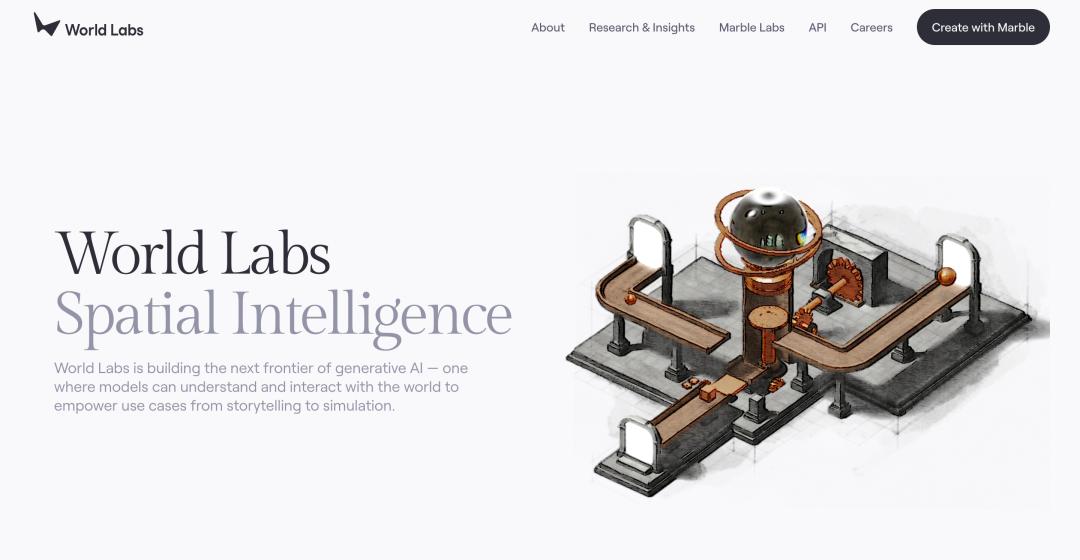
Fei-Fei Li's Marble aims for pixel generation, allowing people to directly create editable and shareable 3D environments from text or 2D materials.
LeCun believes that the key to world models is not rendering beautiful pixels, but understanding the underlying cognitive logic.
For AI, only the abstract representation in the middle matters. The model doesn't need to waste computing power on generating pixels. It just needs to focus on capturing the world states that can be used for AI decision-making.
In other words, what you do is not as important as what you think.
The former represents "world model as interface", reflecting the representation of the world. The latter represents "world model as cognitive framework", reflecting the essence of the world.
Although it's not yet clear which approach is better, LeCun has been laying the groundwork for a long time. His new company is using the Joint Embedding Predictive Architecture (JEPA) that he proposed at Meta.
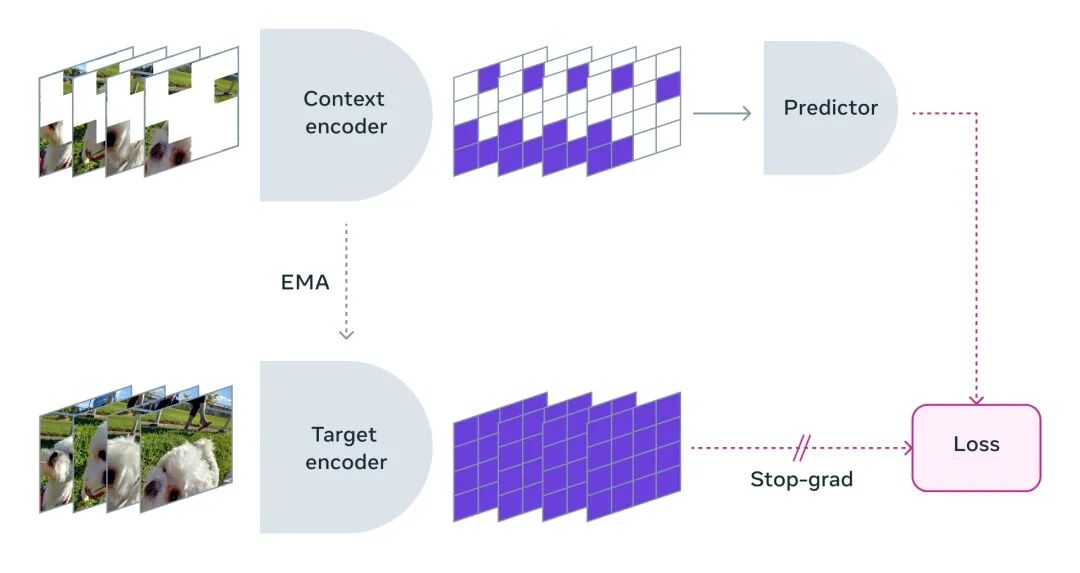
JEPA is not a generative AI and can't predict all future details. But it can learn from the abstract representation of the world and make predictions in the abstract space.
By learning the underlying rules of the world, it can achieve real-world reasoning and planning. JEPA will use not only text data, but also various video, audio, and sensor data.
Moreover, the new company won't just do research. It will also launch practical products around world models and planning capabilities. AMI's ultimate goal is to become one of the main suppliers of future intelligent systems.
For this reason, LeCun has been scouting for talent everywhere recently.
Just a couple of days ago, he poached Laurent Solly, the former vice president of Meta. I bet Zuckerberg didn't expect that while he's always poaching from Silicon Valley, his own backyard would catch fire.
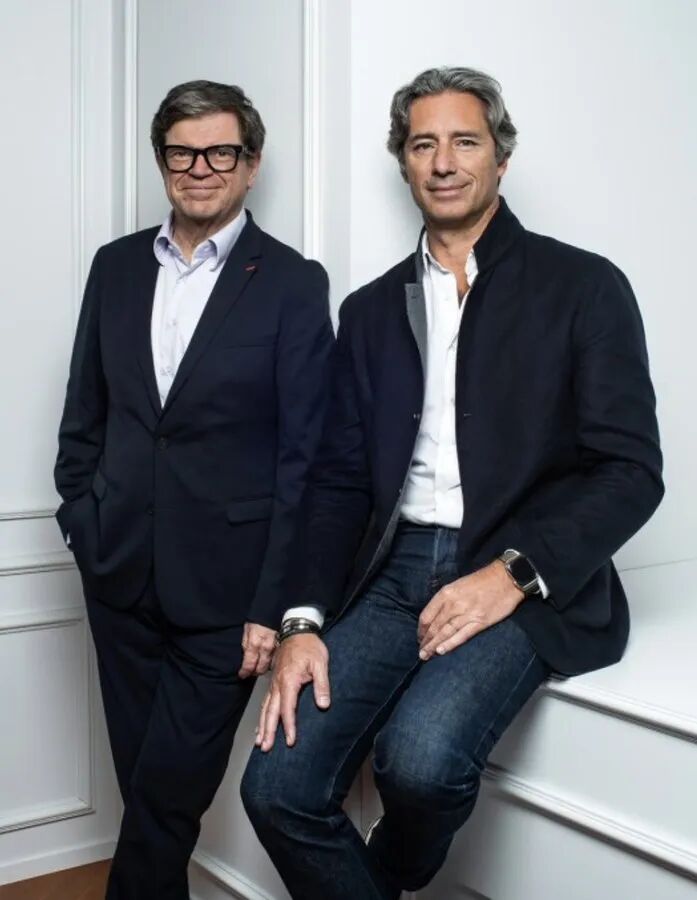
Recently, there are rumors that he's also eyeing Xie Saining and wants to recruit him as the chief scientist at AMI.
Although LeCun didn't give a direct answer in the interview, he didn't hide his admiration for Xie Saining:
He's an outstanding researcher. I've hired him twice before. At FAIR and New York University, I convinced my colleagues to recruit him.
But whether there will be a third time is still unknown. We'll just have to wait and see.
Valued at 24.7 billion yuan with 0 products
According to foreign media reports, AMI Labs is seeking financing at a target valuation of 3 billion euros (about 24.7 billion yuan in RMB). It has already attracted potential investors such as Cathay Innovation, Hiro Capital, and HV Capital.
It's expected to complete an initial financing of 350 million euros in the next few weeks, with a final goal of 500 million euros in the first round.
In addition, LeCun said that Meta won't be one of the investors, but he's happy to cooperate with Meta and hopes to make it AMI's first customer.
Meta will become a partner of the new company and have access to its innovative results.

Once the financing is completed, it means that AMI will join the ranks of startups with "0 commercial results but a valuation of over 1 billion US dollars".
What does that mean?
In the past, to convince the VC community to invest, you had to show the product-market fit or the feasibility of the technical path.
But now, take Ilya and Mira Murati as examples. After leaving OpenAI, the startups they founded, Thinking Machines Lab and Safe Superintelligence, both got a valuation of 2 billion US dollars with 0 products.
That is to say, the investment logic of the VC community in Silicon Valley has changed. They don't look at the product, but at the people.
When a startup has top-notch founders, it has the potential to be a winner-takes-all player.
Reference links:
[1]https://www.technologyreview.com/2026/01/22/1131661/yann-lecuns-new-venture-ami-labs/
[2]https://www.bloomberg.com/news/articles/2026-01-19/yann-lecun-s-ami-labs-draws-investor-interest-from-cathay-hiro
[3]https://www.ft.com/content/e3c4c2f6-4ea7-4adf-b945-e58495f836c2
[4]https://www.strategies.fr/actualites/mouvements/LQ5629955C/laurent-solly-rejoint-ami-labs-la-start-de-yann-le-cun.html
This article is from the WeChat official account "QbitAI". Author: Focus on cutting-edge technology. Republished by 36Kr with permission.