ByteDance AI Creates an Army from "Beans"
A single AI Recording Bean is opening up a new recording experience.
After an investor placed an order and tried it out, they posted a picture and commented on their WeChat Moments, saying, "It feels like the domestic market in this field is completely over."
In their view, this product is a comprehensive combination of the capabilities of China's best software experience company and best hardware experience company, with astonishing product strength.
Previously, the similar product they used daily was Plaud, which is also a relatively well - developed type of current AI recording hardware.
On January 19th, Feishu and Anker Innovations jointly launched a piece of hardware: the Anker AI Recording Bean. It weighs 10 grams, has a magnetic design, and is about the size of a coffee bean. Throughout the product development, Feishu provided the relevant AI software functions, while Anker Innovations was responsible for providing the hardware foundation of the device.
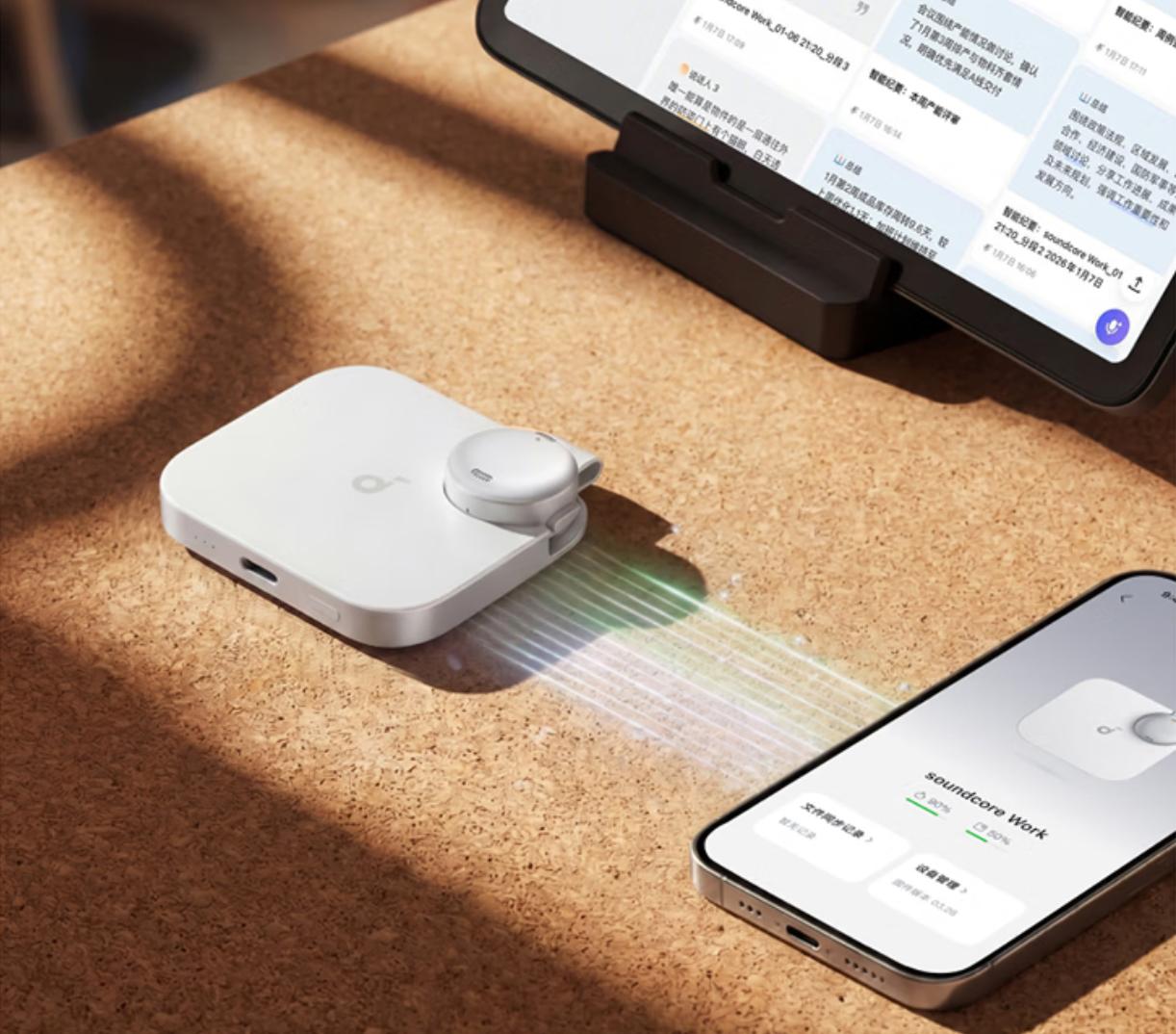
This is a hardware product that Anker Innovations launched overseas as early as last September: the Soundcore AI Recording Bean. The overseas version supports ChatGPT - 4.1 for recording summaries.
Comparing the domestic and overseas versions of the product, the Soundcore AI Recording Bean was already well - formed at the hardware level. Feishu only optimized the software on the existing hardware, transforming the product from an independent piece of hardware into a tool integrated into the Feishu ecosystem.
And this is just the tip of the iceberg of ByteDance's recent hardware layout.
From the joint launch of the nubia M153 Doubao AI phone with ZTE, to the R & D of AI glasses with Longcheer Technology and the release of the self - developed Ola Friend smart headphones by Doubao, then to the cooperation with Goertek to develop AI smart headphones, and the promotion of the Volcano Engine intelligent cockpit project with SERES and Mercedes - Benz, ByteDance's hardware territory has been expanding rapidly in the past six months.
It's worth noting that compared with the way of entering the hardware field in the 1.0 stage, ByteDance's current approach has obviously changed. A person close to ByteDance's hardware business revealed, "At the CES in early January this year, ByteDance started looking for potential acquisitions. They mainly focused on the popular trends in the consumer hardware market and the maturity of the corresponding hardware industry chain."
During the 1.0 hardware stage in the metaverse era, ByteDance pursued the model of investing heavily to build its own hardware team. It acquired companies to build a complete software - hardware integrated team from scratch. First, it acquired a VR hardware team to gain a ticket to the virtual reality world, and then gradually extended to acquisitions in the industry chain and even developed its own dedicated chips for MR devices.
In the 2.0 hardware stage of the AI era, ByteDance no longer pursues full control. Instead, it positions itself as a software ecosystem enabler. From the ZTE Nubia M153 Doubao AI phone, to the Doubao AI glasses developed in cooperation with Longcheer Technology, and now to the AI Recording Bean, ByteDance's actions seem more agile.
As ByteDance's hardware model shifts to finding mature contract manufacturers in the market to provide terminal scenarios for the implementation of AI technology, the teams and technologies accumulated during the metaverse era are beginning to bear fruit in the AI hardware era.
01 Planting Seeds in the Metaverse, Harvesting in the AI Hardware Era
On both sides of the Pacific, Meta and ByteDance, which are both focusing on the metaverse, are both taking a path from heavy - asset to light - asset models.
As the model that ByteDance emulated, after accumulating losses of over $70 billion, Meta's metaverse dream is waking up.
Recently, Meta announced a large - scale layoff in its core metaverse department, Reality Labs. The scale is about 1,000 to 1,500 people, accounting for more than 10% of the department's total employees, mainly covering positions in VR hardware and the metaverse social platform Horizon Worlds.
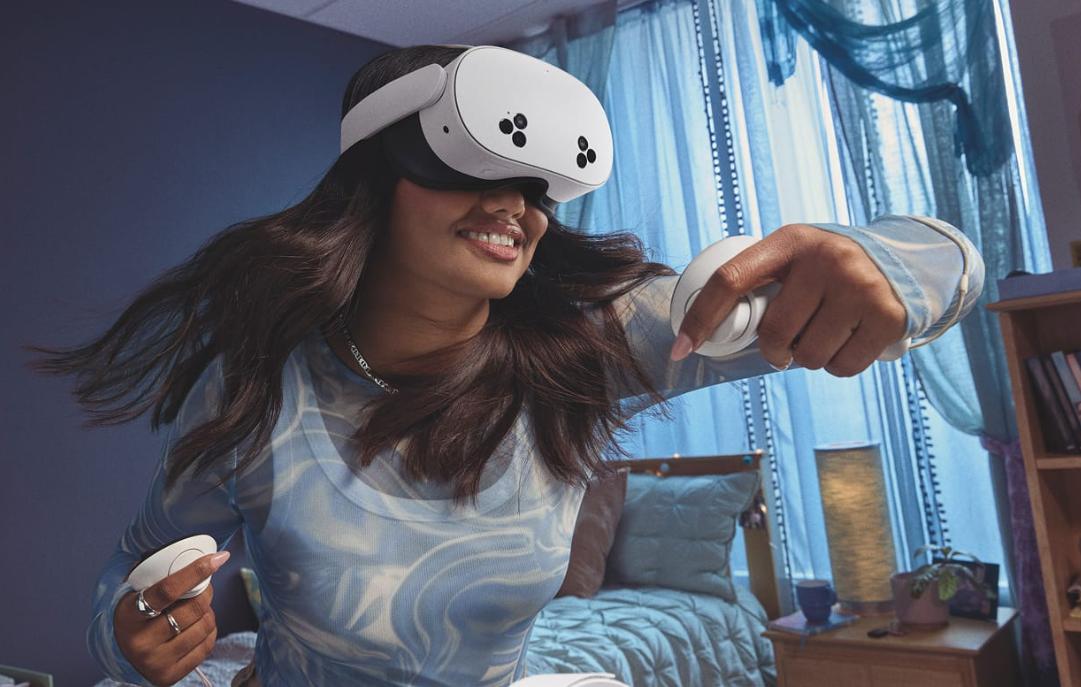
Meta said that after this adjustment, the saved funds will be used for the wearable device business. The department's strategy is shifting from heavy - asset metaverse projects to relatively lighter - model AI devices, such as AI glasses and mobile AI assistants.
Taking AI glasses as an example, the Ray - Ban Meta glasses jointly launched by Meta and the European eyewear giant Essilor Luxottica in 2024 were once out of stock due to high demand. Meta is considering increasing the annual production capacity of the Ray - Ban Meta glasses to over 20 million units by the end of 2026.
ByteDance's layout is similar. When it comes to developing metaverse head - mounted devices, it chose to emulate the Meta + Oculus model, grasping all the key links of the product in its own hands.
It started with ByteDance's acquisition of PICO, the leader in the VR hardware field. In terms of content, ByteDance acquired Wave Particle Technology, the holder of the second - dimensional virtual social application "Vyou", and merged the team into the PICO social center to be responsible for filling the content of the head - mounted devices. In the upstream hardware field, ByteDance successively invested in Guangzhou Lightcomm Semiconductor and Xinyuan Semiconductor to provide optical modules and storage chips for VR headsets.
Although the hardware exploration during the metaverse era failed to achieve a commercial closed - loop, ByteDance completed the resource integration of acquired hardware companies such as Smartisan and PICO during this period. The hardware experience and resources accumulated by ByteDance at this stage unexpectedly paved the way for the AI hardware era.
The most representative aspect is talent.
For example, the main R & D team of the Doubao phone is the Ocean AI hardware team under ByteDance, which belongs to the Flow AI product department. The core members mainly come from the hardware teams of Smartisan, VR headset PICO, smart headphones Ola Dance acquired by ByteDance, as well as mobile hardware talents introduced in recent years.
The experience of launching the PICO 4 allowed ByteDance to go through a complete and mature process of hardware R & D, production, and sales, which is also the foundation for ByteDance to enter the fields of AI glasses and headphones.
Over the past few years, almost all the hardware businesses acquired by ByteDance have experienced layoffs, restructuring, and the departure of core business leaders, which are not very optimistic. However, these pains may be an inevitable process for ByteDance to integrate the acquired hardware resources into its own ecosystem.
02 Unleashing the Imagination of Hardware Manufacturers
"If you observe 100 products, you'll basically know what to imitate next year. It's very clear."
A person close to Doubao revealed that at this year's CES, ByteDance was actively looking for AI hardware products to learn from and imitate, in order to determine the direction of its subsequent product lines.
In the era of APP factories, ByteDance was known for its lightning - fast growth ability. However, in the metaverse era, ByteDance got stuck in the quagmire of long R & D cycles and large capital expenditures. Like Meta, after a large amount of time and capital investment, it still failed to prove the prospects of the metaverse business model.
In the field of AI hardware, ByteDance has returned to its most familiar growth rhythm. It imitates, learns, and surpasses in the shortest possible time. The most effective way to solve the speed problem is to find mature but not very popular hardware products and production enterprises in the market and give them a "soul - changing transformation".
Take the AI Recording Bean jointly launched by Feishu and Anker as an example. Its predecessor, the Anker AI recorder, was mainly sold overseas. Its main selling points were recording, transcribing text, and content summaries provided by GPT. Users had to pay a monthly subscription fee of $15.99. In the domestic market, these selling points are a bit lacking, and the domestic payment habits are different.
Feishu's cooperation method is to bridge the last mile with the Feishu ecosystem on the basis of the existing hardware product. It links the recorded content with the Feishu knowledge base and integrates it into workplace applications. At the same time, it offers a 6 - month free Feishu membership after purchase, inheriting the quota of Feishu AI account rights.
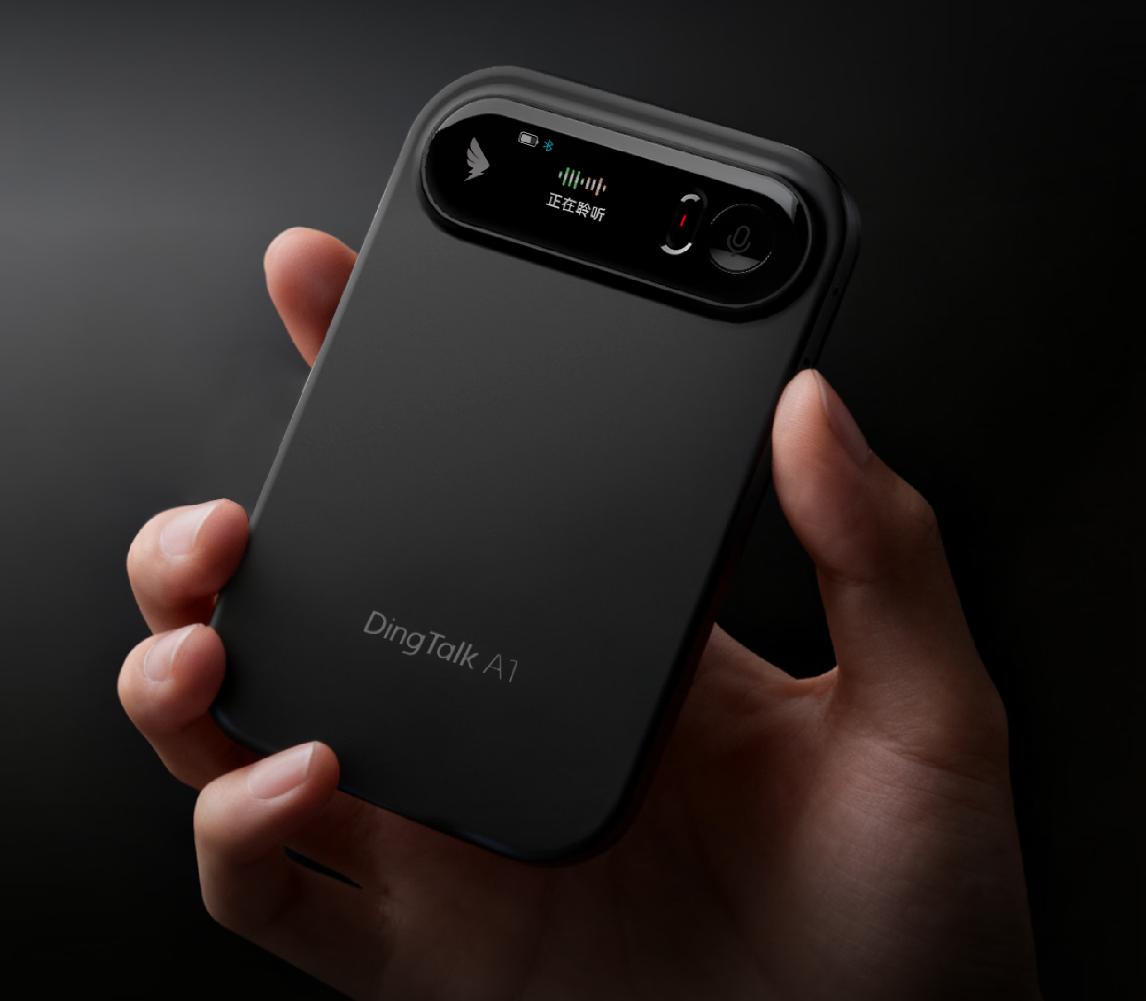
Compared with the DingTalk AI Recording Card DingTalk A1 with a similar positioning, Feishu avoids the self - research model and shortens the catching - up time to the maximum extent through cooperation with Anker Innovations. Currently, data from the JD platform shows that the sales volume of the Anker AI Recording Bean has exceeded 1,000 units.
The Doubao AI phone is a successful application of this light - asset empowerment strategy in another hardware entry point. Doubao chose the most cost - effective route to verify the plan. It selected ZTE, a second - tier player in the mobile phone market, as its partner. If it had cooperated with top brands like Huawei, Xiaomi, OPPO, and vivo, the Doubao mobile assistant might not have obtained such complete system permissions. In addition, only about 30,000 units of the first - batch engineering prototypes were prepared to avoid early direct competition with top brands like Huawei, Xiaomi, OPPO, and vivo.
The specific cooperation method is that ZTE provides hardware R & D and production, while Doubao controls the "soul" of the phone. The AI mobile assistant controls the permissions of the mobile operating system and can execute complex instructions such as cross - APP interaction and automatic cross - platform price comparison and ordering, which caused a huge shock in the mobile phone industry. ZTE's stock price soared in the short term, while apps like WeChat, Taobao, and Alipay directly restricted the operating permissions of the Doubao mobile assistant.
The Doubao AI glasses also follow this approach. Doubao provides AI capabilities and self - developed spatial algorithm chips, while Longcheer Technology only needs to provide underlying UI development and overall machine production, putting a pair of glasses on the Doubao large - model.
For hardware manufacturers, cooperation with ByteDance will not lead to excessive cost growth. Instead, it can help mature products quickly break through marketing barriers and boost sales with the influence of Doubao AI.
For ByteDance, avoiding Alibaba's self - research - based model and empowering mature products not only saves costs but also offsets the time difference. It can verify the technical route in the shortest time and open up market awareness. Once the approach is mature, ByteDance has many mature fields to enter, such as educational hardware, smart toys, and embodied intelligence. As long as it is consumer - grade hardware that requires AI interaction, there is a place for ByteDance.
03 The Mismatch of Cycles between Large - Models and Hardware
However, a fast - paced and light - asset approach does not mean that ByteDance has found an invincible strategy for AI hardware.
In fact, in addition to market acceptance, the main pain points of AI hardware also include the mismatch of the iteration cycles between hardware and software.
Taking the mobile phone industry as an example, Apple recently decided to abandon the previous model of releasing new models in autumn. The iPhone 18 Pro and Pro Max will be released this autumn, while the iPhone 18 and 18e will be launched in autumn 2027. For mobile phone users, the twice - a - year release rhythm is already fast enough, and many consumers' phone - replacement frequency is often more than two years.
But for the large - model field, this speed is not fast enough. In April 2025, the Doubao large - model released version 1.5, and two months later, version 1.6 was released. By December 18th, it had been upgraded to version 1.8, and the iteration speed is still accelerating. In terms of performance, the technical focus of the Doubao large - model has also changed, shifting from in - depth thinking and visual understanding in version 1.5 to multi - modal understanding ability and intelligent agent ability in version 1.8.
This means that the experience gap between different generations of AI hardware may be larger than that of mobile phones. Different generations of mobile phones may have significant differences in computing power, battery life, heat dissipation, screen, and camera, but the core experience is basically the same. This may not be the case for AI hardware.
When AI hardware takes large - model capabilities as the core selling point, its "body" is destined to have difficulty adapting to the rapidly developing "brain". From the R & D process, AI hardware often has to determine the specifications of core components such as chips at the initial stage of project establishment and match them with software in terms of computing power and battery life. It is a common phenomenon that old devices cannot keep up with the performance requirements of cloud - based models.
This is why AI hardware tries to avoid deploying general AI capabilities on the edge side in its design concept, but instead focuses on optimization in specific scenarios. The edge - side computing power is mainly used for perception and presentation, and the real core reasoning tasks are handed over to the cloud for processing.
This may be the reason why the Doubao AI glasses and AI phone limit the scale of the beta version to verify market demand first. When the edge - side computing power is destined to be unable to be updated synchronously with the model capabilities, enterprises must be more cautious in their product release. If they act too hastily, the experience gap between different generations of products will be too large.
ByteDance's answer to this is to first capture the next - generation data entry point and let the data flywheel that feeds back software start running. At the same time, whether it is AI glasses or AI phones, ByteDance tries to offset the differences through the structural design of edge - side perception and cloud - based reasoning, so that any generation of products can use the latest model capabilities as much as possible.
With the "hundred - glasses war" at CES, the full access of Qianwen APP to agent capabilities and consumer services, ByteDance's anxiety about the next - generation traffic entry point is increasing. Whether it's Volcano Cloud winning the Spring Festival Gala sponsorship or Doubao fully entering the AI hardware field, it's an active offensive to relieve this anxiety. ByteDance must find hardware support for its large - model to maintain its user - scale advantage.
This article is from the WeChat official account "Market Insights". Author: Market Insights. Republished by 36Kr with permission.